Biome is the community of living beings occupying a region. Biomes change not only animals and plants But also humans. Who, like every specie in these regions created adaptive tools in their way of living and cultural expressions.
<i>Ooops, almost! </i> Brazil is a rich country in diversity a continental size country that has 6 different biomes. And it’s through them that we’re going to discover which species of animals and plants live there how they live, and the effort in their conservation.
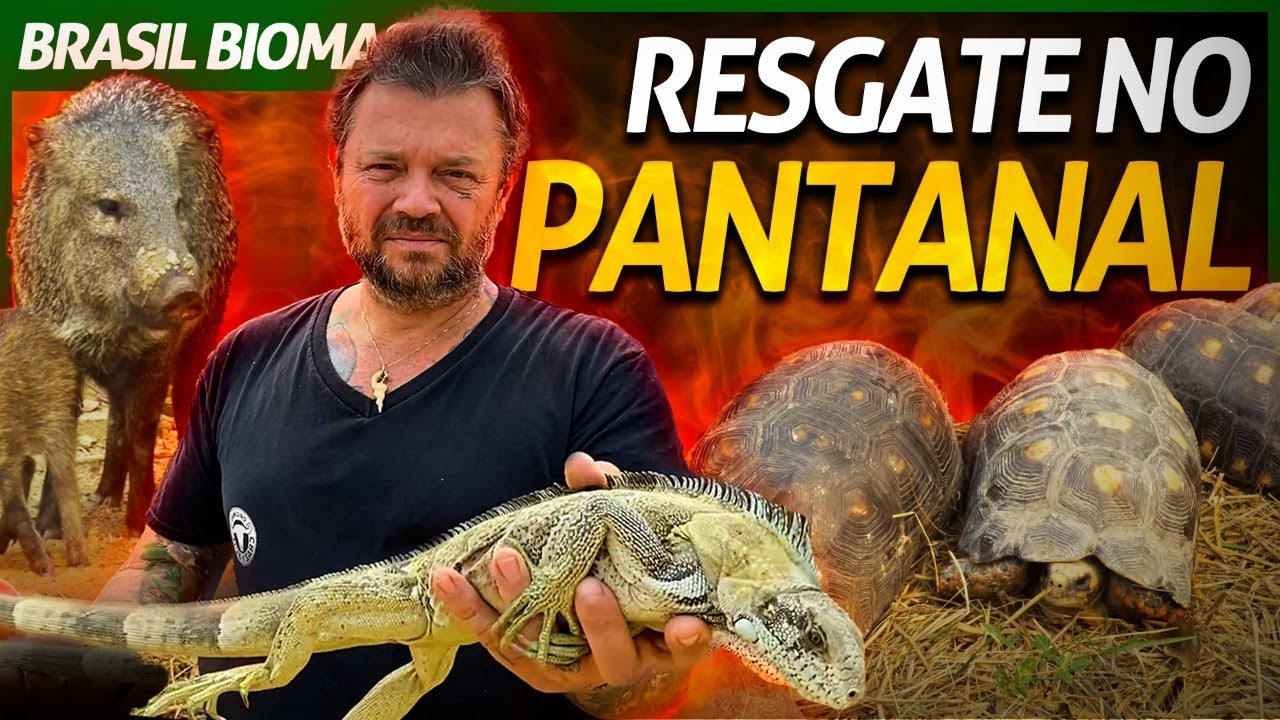
I am Richard Rasmussen biologist and conservationist. And this very new expedition will go through these 6 Brazilian biomes unveiling the fauna, flora and the people who live in. Brasil Biomas expedition is now in Mato Grosso!
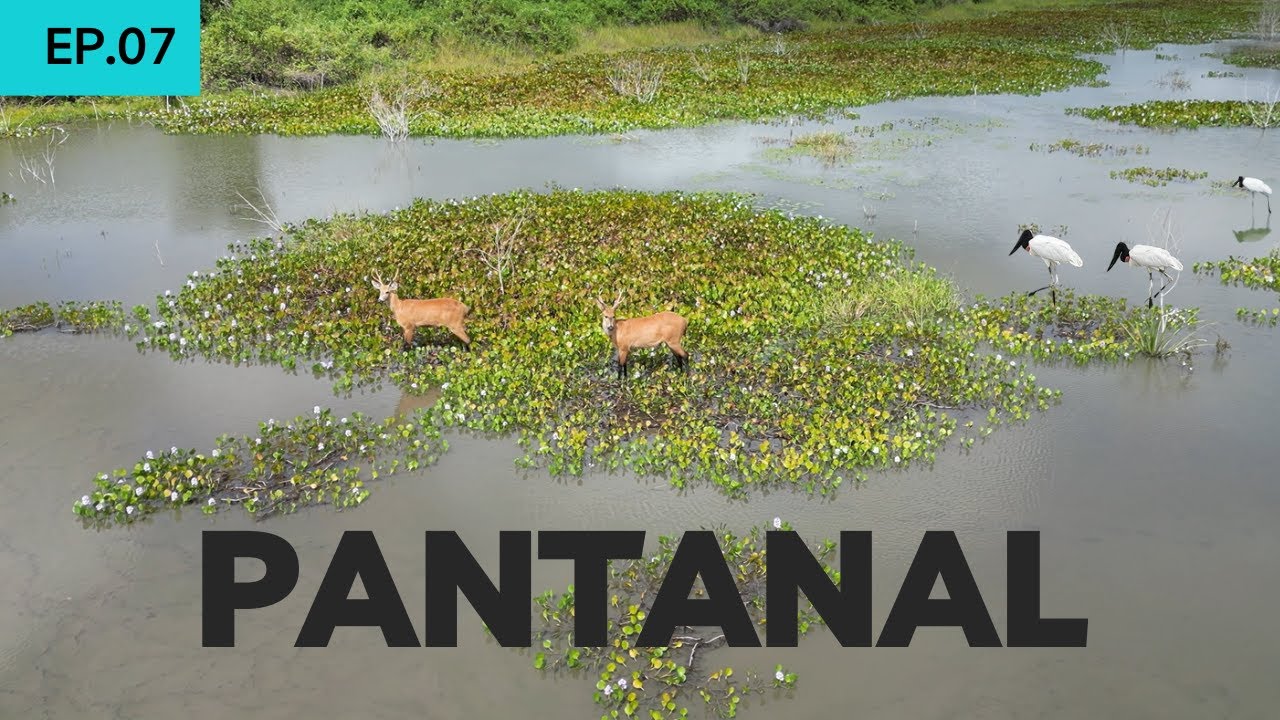
in a village called Poconé. Which is the front door for the rich wildlife in the Transpantaneira highway. A road that crosses Pantanal from end to end until the Porto Jofre region along the Cuiabá River.
This fire that we are fighting against there's been. . .
many days. And it was arson! We are experiencing an extreme drought Most of the fires started because of people.
-Right? -Uh-huh And once the vegetation is very dry and there's a lot of biomass What is the real situation? What will we find at Porto Jofre?
Well, it's a situation. . .
I would say it's a situation of desolation I am not afraid to use these words, you will be terrified. Especially you who came here before, now you're returning to Porto Jofre You will see a. .
. You will see from both sides of Transpantaneira highway A completely scorched Pantanal unfortunately. .
. An apocalyptic situation! I think that.
. . who really knows Pantanal.
We're the people who know Pantanal well We've been working here for over 20 years. It's hard to hold back the tears! We cry when we see this situation!
Unfortunately! And yet knowing that many animals died The mortality of animals was enormous! Unfortunately, bad news travels fast!
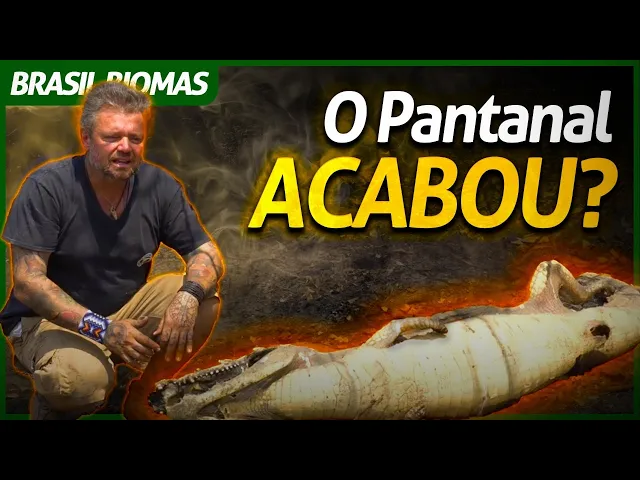
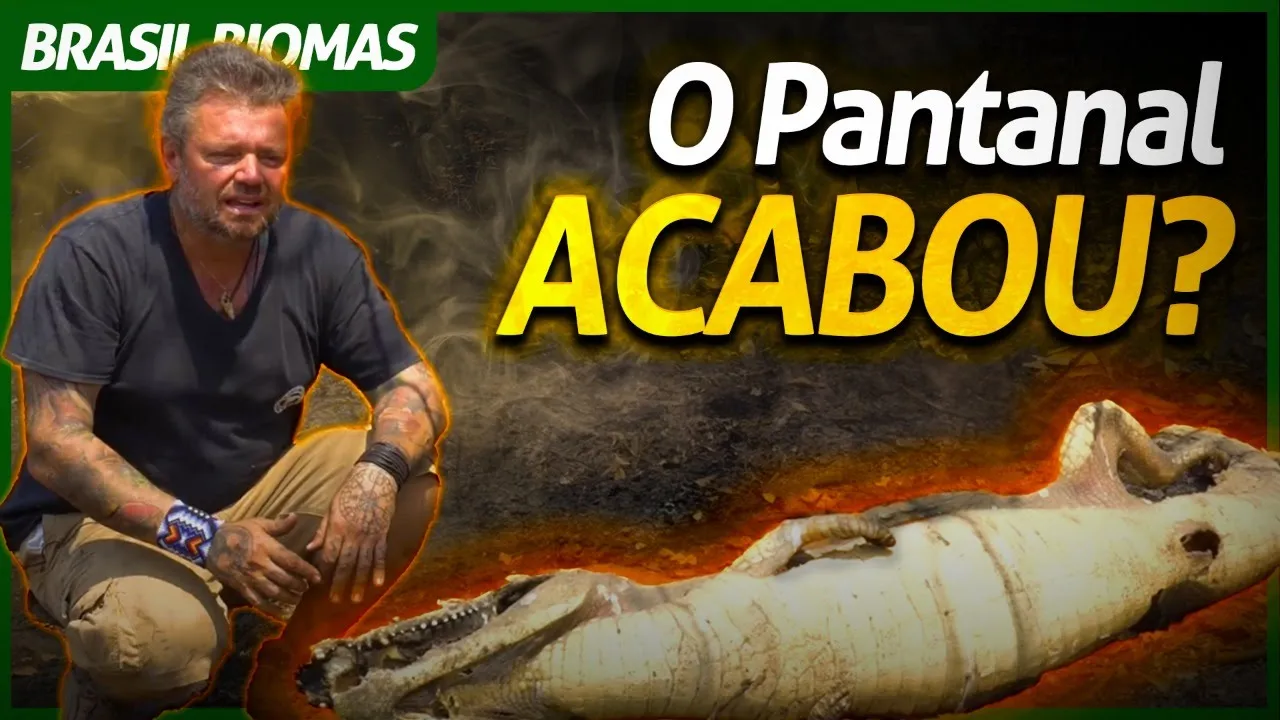
The fires occurring in this region are assuming frightening proportions We don't need to go far to see the effects of drought along the highway as well as the fires. Animals have to use their survival instincts in the midst of this bleak scenario It's burned! A burned yacare caiman, there are no other injuries.
It died due to the fire We're just beside the road. The road. .
. I mean. .
. Beside the road there are those moats It's where they removed soil to be able to raise the road Here in Pantanal. That's why the Transpantaneira Highway is elevated It's above the level.
Because of. . .
this soil that they dug from beside the road All along the Transpantaneira Highway. It's possible to find these moats. .
. And they often full of water! This is one of.
. . these depression areas.
That normally has loads of water! When we see an aquatic animal. .
. burned to death. .
. it is because the situation is untenable I've come here for over 40 years! And I had never seen something like this here in Pantanal!
Never ever! I was 10 years old when I started to come to this region! I don't remember having seen something like this I don't really remember!
Even when I talk to elder people They also say this is the worst period they have seen. From last year to this year. It's the worst drought period they have ever seen A period of drought and fires!
It's an explosive combination In 2009, all over Miranda in Mato Grosso do Sul I was accompanying a group of tourists when I came across a really sad scene This giant otter running across the road and suffering Its breathing compromised by being in the midst of smoke and fire that were occurring there. It didn't have a chance to be rescued and died in my hands. A feeling of helplessness washed over me A magnificent aquatic animal, killed because of man's actions!
Now we will follow the work of this team of firefighters in the difficult and hard mission of controlling fires that are occurring A battle that is far from ending! The difficulty they are facing to end the fire outbreaks Is easily seen once these are large areas as well as difficult to reach. Once there are many fire outbreaks.
And this peat fire, I don't know if Bruno already mentioned that, it's one of the most difficult to cease. -Which one? This one?
-Peat fire, turf fire. . .
-That accumulated one? -Yes, burning roots for long hours. .
. Between 200 and 600ºC. (392 ~ 1112ºF) And it burns the roots of the trees.
And once it burns the roots, the trees end by dying. Because its reserve for regrowth is located at the root -for having new leaves and so on. -Uh-huh!
It's also important for its balance There are many trees that end up falling after these peat fires. You're observing everything from above, right? You can see through the satellite, huh?
-The burn scars and fire spots, yes. -The active fire pits. What is the real prognosis of the situation now after 40 days of intense fire Can we say that it is already being controlled?
Or is there simply no more to burn? -Well, the fire is widespread! -Widespread!
The numbers aren't increasing because of the areas that were already burned. Because they can't burn again in a short period of time. But it's widespread, there are still many fire outbreaks Now we're even focused in protecting infrastructures We're now prioritizing infrastructure because.
. . -There are many fire outbreaks.
-The environmental situation is complicated! There are no conditions! There will probably be few refuge points for wildlife -So.
. . -You're defending this, right?
-Yes, that's our point, to save the. . .
-You showed those "islands". Little islands, yes. When we can yes, but actually our units haven't.
. . Our Federal Conservation Units haven't been so damaged until now.
We had a critical situation some 30 days ago at Pantanal Matogrossense National Park Including Encontro das Águas State Park? Well, at Encontro das Águas State Park the situation is getting worst. The situation is critical over there.
And there are many fire outbreaks heading to the park A huge part of the park has already burned, the East side! But this North-East part hasn't yet burned, but there are many fire outbreaks. .
. Firefighters, Prevfogo, and ICMBio are working in these areas. It's a loss-loss situation.
Nobody wins from it. Biodiversity loses, the hotel sector loses, the tourism in the region Now Brazil is the county of tourism, right? Yes, but not here in Pantanal.
. . not at this moment.
Spring is over because there will be no flowering Everything has burned. We're losing here. Even farmers lose!
Everybody loses! Nobody wins from this horrible situation! How.
. . Wow!
the fire must have razed this at a speed We know this is a slow animal -Yes -It's slow, but. . .
When the heat approaches, the animal feels it and moves <i>daaaash! </i> That's it? Yes, but actually, there are many factors involved dry leaves, a lot of organic matter, lack of rain The combination of fire and wind.
The wind makes the fire run faster And when the fire is coming the animals try to find the water, but where's the water? -There's no water! -There's no water!
It's the third animal of this specie that we find like this One was still alive, but two of them were in the same situation as this one. There was, let's say, a scalping of this animal. A very painful situation that this animal suffered extreme suffering!
And what we can observe in this route we're in, this part here just beside the Transpantaneira Highway. We're less than 20 meters away from that. Once they know the Transpantaneira, that is, the Highway a is "safe" area.
They prefer those areas where there's water and the "safe" area on the Highway But some animals don't have enough time to reach it! During our trajectory, we faced I mean, during our monitoring We saw a lot of animals of several different species including this one closer to the highway. Their sensory capacity is no longer detectable because.
. . Because they can't have it when there's only smoke There's only smoke and dust.
Dust and smoke! So they can't even detect where there's water and where there isn't. They run anywhere!
It's a scene, let's say. . .
a despair scene, animals are desperate! It is a slow and suffering death, huh? And that's when we see we need to do something!
It's necessary to do something! We have to stop and rethink our concepts, rethink our conduct and to know what we really want! for now and for the future!
Well, huhh. you've done a work here. .
. You and your team To. .
. To bring It's been what, 5 weeks you've been coming here? -Yes, 5 weeks in a row.
-In a row, OK! And you set up some islands with water and food. These are support islands for these animals that are looking for a fresh place.
They're looking for water! They cannot find food because everything is burned. So, you've been doing this work for 5 weeks.
They're short-term palliative measures, but they're extremely necessary to safeguard the lives of these survivors, huh? Yes, actually, what we're trying to do is at least the minimum That is. .
. finding places where animals used to come to find food and water and establishing a survival condition in this place, so to speak because we try to offer the foods most similar to what they would naturally find here But actually, at this time and under these circumstances they're eating anything! -Yes, they're eating anything, I imagine!
-Anything! And we've been setting these islands to provide food and water. On these islands, we try to keep up the quality of the water they will drink We even check the pH of the water and stuff And we also continuously alternate the food Actually, when we put new foods.
Because we don't change what we've put -There are no leftovers, right? -There's just the melon peel The bananas were all eaten Let alone the oranges, because it's very common here, so they eat a lot of it And, as I said before, they eat whatever they find! Well, first we'll.
. . Thank you for the invitation Thank you for contacting us!
I was really excited to get to know a work like this. We will see it happening on the spot. We will watch you setting up.
. . Because your work starts when you identify the place, right?
You'll explain us better when we get there, but on these refuge islands here all along the Transpantaneira Highway. -Yes, sure! -Let's go!
Well, so the first thing will be identifying the place where the ideal place where we could set up this. . .
Footprints are a point of reference for us Uh-huh, footprints, seeing the animals as you saw here. In another place we saw a perfect jaguar's footprint. We can show you later.
We've already set up the island there! -So, the jaguar is moving. .
. -There's also the information of local people they say that the bridges are places where the animals often pass by So we also use these references to set up the islands. the ideal is also to use transition environments Because I will help the animals that are in the forest Once some animals are specialists in being in the forest, they only stay there But when the fire comes they try to move to another piece of forest meanwhile, they may find the island, eat, drink water and continue -I got it!
-Because our idea is to provide them energy Here, some animals died by asphyxiation, they weren't even burned. they inhaled smoke, they got lost So, the idea is to provide them nutrition so they'll have more chance to live. It's the only way we can help.
At least is what we can do now! Yes, it's a palliative and emergency measure We choose a place to set up the island. If it doesn't work, we change the location!
-If we put the food and the next day. . .
-We also put the camera If the camera doesn't show a single animal and we see the food is still there So, it's not a good place That's why we don't put a lot of food at a first stage. Otherwise, we might waste food. Once we'll be here tomorrow, we make a trial today If it works, the next day we put a lot of food in this place The next day we bring 3 or 4 boxes of bananas, right?
-Because here. . .
-Because it worked! Papayas, bananas, cucumbers. .
. -Oranges -Oranges -Bocaiuva fruit -Bocaiuva fruit! -A varied menu, huh?
-Yes, a diverse menu! -OK! -Bocaiuva fruit is from this region!
-And what is this? -It's bran! Oh, it's bran!
OK! Just to remind you that these measures are. .
. emergency measures! Animals don't need that!
In nature, animals don't need to be fed! If you give them peace is quite enough! They know how to get by!
But the fact here is that we're facing an emergency situation because there's no food all the food was burned! Do you expect any animal will come here and have this food? I hoped they didn't need it!
But I think that. . .
It will happen! Right? And it's great that someone is doing this work here!
I didn't have any idea that someone was doing a work like this here! <i>Later I'll cut it in smaller pieces. </i> <i>Ooops, that's it!
</i> That's why you can speak about it! Because I got tired of people with their computers doing nothing and just complaining with a lot of points of view about something they don't understand You know? They've never been to Pantanal and speak about it!
They've never been to Amazonia and speak about it! Just because it's a beautiful ideology, it's a great one! Look how good is defending the environment!
They like creating all these antagonisms This, look! It's very easy to burn! It is uncontrollable.
How to control this fire? It's this bush fire that consumes everything! hot and dry.
. . In what direction will the fire head into?
Look, it's already inside the forest. Can you see it? It's not only in these open spaces!
The fire department was responsible for protecting not only the forest But also the bridges along the Transpantaneira. without the bridges it would be impossible to get supplies foodstuff and fuel for the aircrafts. As a result, they would be isolated!
Agricultural aviation played a key role in supporting the fire brigade in operation they helped to cool the ground so that the firefighters could control the fires pouring tons of water over the fire areas throughout the day Night and day, the fire continues to consume the vegetation It seems to have no end! Do you know why they come here? Because there's water here!
And the alligators that were here aren't here anymore because there's no enough water So, it's less risky for them. Can you carry this one for me? It died due to the drought, complete malnutrition!
Okay, let's put this here in the shade! What will kill most animals here. .
. won't be. .
. The fire. Of course, the fire kills.
But it kills less than people think, OK? But the great challenge now is not avoiding animals being burned. Now the great challenge is dealing with the starvation!
The wildfires. . .
will kill less than starvation here in Pantanal. That's it! Believe me!
There are many institutions doing their best here! There are veterinarians who came from far away and are doing this work So now, in addition to a rescuing an animal now and then But. .
. this is the greatest problem! starvation!
The scenario here in Pantanal is bleak! During these 40 years I've come to Pantanal, I had never seen a situation like this It's the second year in a row. I had the displeasure to see Pantanal like this last year too in November.
And now. . .
it happens again! We're in September! There's yet.
. . at least a month and a half So that the rain.
The rain that historically comes. . .
but didn't happen last year. . .
There wasn't a flood as well as for this year Right? There wasn't! And.
. . Now we have to stop and think, all of us.
It doesn't matter where you're sitting at this moment or the place you are at this moment. We have to discuss. .
. If you're a. .
. a farmer, a Pantanal citizen, if you're a guide, if you work with tourism, if you. .
. if you're a researcher. it doesn't matter!
Now it's the time to sit down and discuss openly Without radicalism, but in a pragmatic and true way What is really happening? We cannot let it happen every single year! What is happening?
Is it a mismatch in seasonality? Or these are old practices that should be used again or that should be extinguished? or that should be changed?
Because in the meanwhile our Pantanal is turning into this. . .
ashes! Either flora as well as fauna. And this loss of biodiversity is not acceptable!
So, we will listen That's what we want to do: We want to listen to people! of these different segments research, tourism, And also. .
. These brave Pantanal citizens! Who know this region a lot!
To know what we have to change. What do we have to do? <b>Subtitles:</b> Dheyvid Hendrew See the link in the description below for more information about our store!