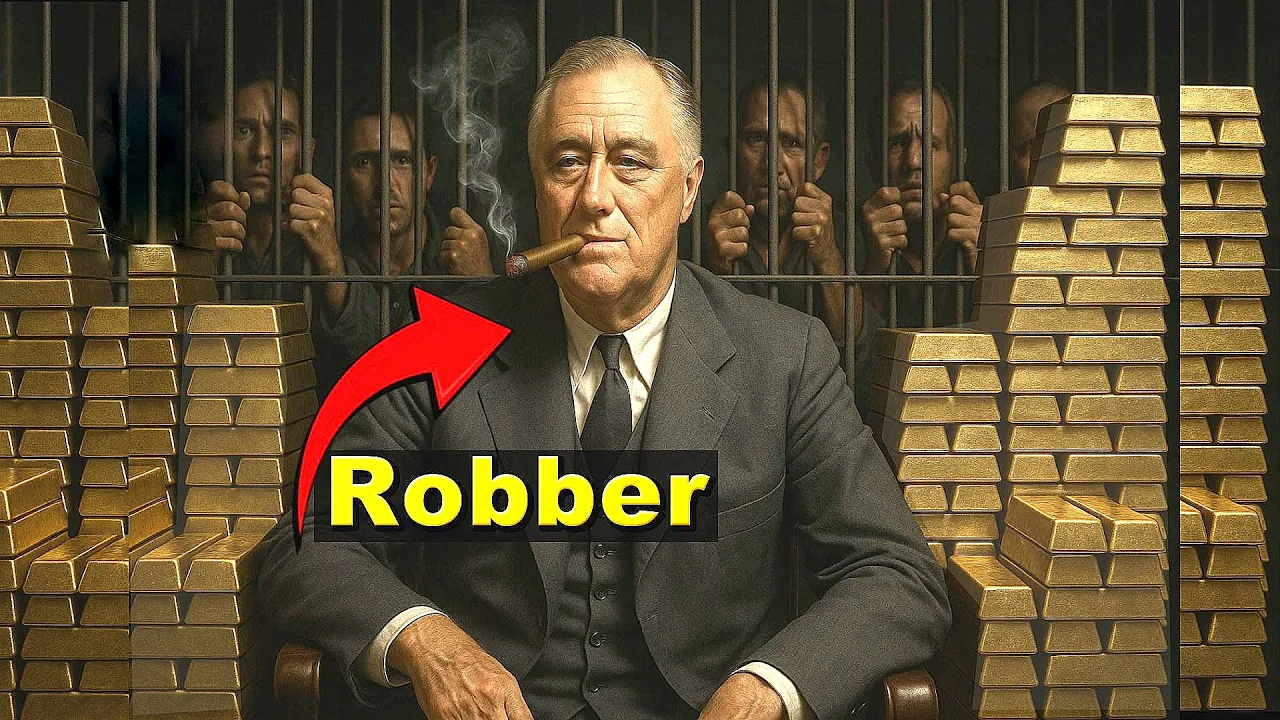
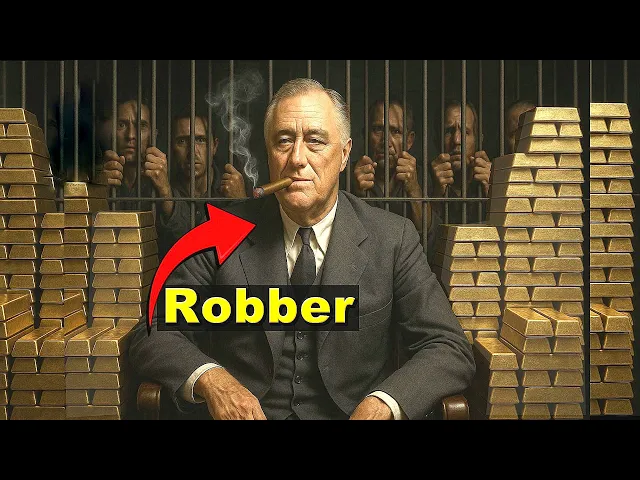
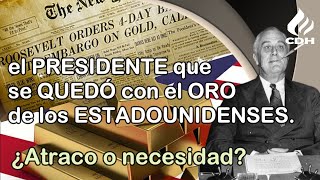
On the morning of April 6th, 1933, millions of Americans woke up as criminals. Not because they had stolen something, but because they owned gold. Yesterday, it was their legal right.
Today, it was a federal crime punishable by 10 years in prison. Overnight, President Roosevelt transformed gold from a symbol of wealth into an instrument of crime. And so began the most massive robbery in human history.
A robbery that the government committed against its own people. Today, we'll tell you how in 30 days, Americans voluntarily surrendered 3,600 tons of pure gold to the government, and why none of them suspected that they were simply being deceived. Picture 1933.
America is experiencing the most terrible economic crisis in its history. The Great Depression has turned a prosperous nation into a country of the unemployed and destitute. Every day, banks are closing, people are losing their savings.
Some are losing their homes and some no longer have the ability to feed their children. Fear and panic re in society. In such times, people seek security.
And for Americans in 1933, security had the color of gold. Gold coins, gold bars, gold certificates. This was the only thing that could be trusted when everything else was collapsing.
But the new president, Franklin Delano Roosevelt, looked at this gold with completely different eyes. For him, every ounce in private hands was an obstacle on the path to saving the economy. He devised a plan whereby saving America required taking all private and corporate gold from citizens.
To understand the scale of what happened, we need to return to the origins of the American financial system. Since 1879, the USA had lived under the gold standard. Every dollar was tied to a specific amount of gold.
This meant that the government couldn't simply print money out of thin air. Every bank note had to be backed in real gold in the treasury. The system worked for decades.
Americans got used to the fact that their money wasn't just paper, but real value. Many kept gold coins at home like we keep cash in our wallets today. But in 1929, everything changed.
The stock market crash triggered a chain reaction. When banks began collapsing one after another, people gripped by panic rushed to withdraw their deposits. But they demanded not paper money, but gold.
Real tangible gold. By 1933, the situation had become critical. The Federal Reserve's gold reserves were rapidly melting away.
Every day, tons of precious metal were being withdrawn from banks. If this continued, the gold standard would collapse and with it the entire American economy. Roosevelt understood to save the country, it was necessary to break the link between the dollar and gold.
But doing this required doing the impossible, taking gold away from an entire nation. April 5th, 1933. Roosevelt has been in the White House for only a month.
The economic crisis has reached its peak. After another cigarette, the president finally signs a document that will go down in history as one of the most controversial orders in American history. Executive order number 6102.
Official title forbidding the hoarding of gold coin, gold bullion, and gold certificates within the continental United States. But the essence was much simpler and harsher. All Americans were required within the next 25 days to surrender all their gold to the government.
Absolutely all of it. The exceptions were ridiculously small. Jewelry, dental crowns, rare collectible coins worth more than the regular price of gold, and small amounts of gold for industrial needs.
Everything else was subject to immediate confiscation. The price was fixed at $2067 per ounce. No bargaining, no negotiations, no consideration of market value.
The government simply announced, "We're buying your gold at this price and you have no choice. " And now the most interesting part, the punishment for disobedience. A fine of $10,000 or imprisonment for up to 10 years, or both simultaneously.
To help you understand the scale of this fine, in 1933, the average American salary was about $1,600 per year. A $10,000 fine was equivalent to 6 years of work. And 10 years in prison was more than many murderers received.
But Roosevelt understood threats alone weren't enough. It was necessary to convince Americans that surrendering gold was their patriotic duty, that it was for the common good. A powerful propaganda campaign began.
Newspapers across the country published articles saying that hoarding gold was a selfish act that harmed economic recovery. Radio stations broadcast appeals explaining that surrendering gold would help create new jobs. Banks turned into agitation centers.
Posters hung on their walls with slogans like surrender gold, save America, and your patriotic duty is to help the country in its time of need. The impression was created that those who didn't surrender gold automatically became enemies of the people and traders willing to sacrifice the entire country for their own benefit. And this propaganda worked.
Most Americans truly believed that they were giving up gold for the good of the nation. They didn't understand that they were participating in the most cynical robbery in human history. What?
By May 1st, 1933, the deadline for surrendering gold lines at banks stretched for blocks. People carried their family savings, gold coins inherited from grandfathers and greatgrandfathers, their last savings that could ensure them a comfortable old age. Instead of gold, they received paper bills that were rapidly losing their value.
The results exceeded the government's boldest expectations. In one month, Americans voluntarily surrendered 2,976,000 ounces of gold to the government. This was approximately $118 million at the prices of that time.
But converted to modern money, this is about $10 billion. But this was only the gold of private individuals. To this must be added the gold of corporations, banks, and various organizations.
In total, the government seized about 3,673 tons of gold from the American economy. And here lies the most tragic irony of this story. In those times, many Americans owned gold privately.
Many had inherited it from the days of the gold rush and passed it down from generation to generation. Between 1848 and 1860, brave prospectors panned more than 750,000 lbs of precious metal in the California mountains. This gold was turned into coins that were carefully preserved in American families.
$20 gold coins, double eagles, were minted from California gold starting in 1850. Each such coin contained within itself history and dreams of a better life. And now the government demanded that all this heritage be surrendered.
To help you understand the scale of this robbery, I'll provide some comparisons. 3,673 tons of gold is more than all of modern China's gold reserves and almost twice Russia's gold reserves. If this gold were melted down into standardsiz bars and stacked one on top of another, their height would exceed Everest.
If it were sold at modern prices, the revenue would be about $395 billion. With this money, you could build 26 nuclear power plants or buy all the real estate in San Francisco three times. If you are shocked by the scale of this government fraud, give this video a like and make sure to subscribe to the channel.
There are plenty more stories like this to come. But now comes the most cynical part of the story. Remember the government was buying gold at $20.
67 per ounce. On January 30th, 1934, less than a year after the confiscation, Roosevelt signs the Gold Reserve Act. And overnight, the price of gold is set at a new level, $35 per ounce.
Simple arithmetic. The government bought gold for $20. 67, 67 and a few months later it was worth $35.
Profit almost 70%. On the confiscated gold of American citizens, the government made about $2. 8 billion.
For those times, this was astronomical money. For comparison, the entire US federal budget in 1934 was $6 billion. This means that almost half of all American government expenditures in 1934 were financed by robbing its own citizens.
Americans who honestly surrendered their gold watched as their former savings brought the government incredible profits while they remained with rapidly depreciating paper bills. Of course, not all Americans meekly agreed to the robbery. Some tried to resist.
The most famous case is that of Frederick Barber Campbell, a successful businessman from San Francisco. He owned gold bars worth more than $200,000 and categorically refused to surrender them. Campbell hired the best lawyers and filed a lawsuit against the government.
He argued that the gold confiscation violated the fifth amendment to the Constitution, which protects citizens from seizure of private property without just compensation. The case reached the Supreme Court and there occurred what finally buried Americans hopes for justice. In 1935, the Supreme Court made a decision in the case Norman versus Baltimore and Ohio Railroad.
The court ruled that Congress has the constitutional right to regulate the value of money and gold clauses in contracts are invalid. In simple terms, the Supreme Court legalized the robbery. It recognized that the government has the right to unilaterally change the value of money and seize from citizens any assets that interfere with this process.
Campbell lost. It affected him so deeply on a psychological level that during one of the court hearings he suffered a heart attack and collapsed. But what was even worse, he became an example for everyone else.
The government made it clear resistance is futile. The system works in favor of the government, not the citizens. Some Americans tried to hide their gold.
But even here, unpleasant surprises awaited them. The FBI began active investigations. Banks were required to report suspicious transactions.
Informing became everyday practice. In the 3 years after the order, several thousand criminal cases were initiated. Most ended with prison sentences or ruinous fines.
Now the US government had a huge amount of gold and it needed to decide where to store it. Thus was born the idea of creating the most protected storage facility in the world, Fort Knox in Kentucky. Construction began in 1936 and cost $560,000, but no expense was spared for storing the stolen gold.
The vault was built like a real fortress. Walls more than a meter thick made of reinforced concrete. An entrance door weighing 20 tons.
A lock system so complex that no one person knows the complete combination. The code is divided among several people. Round the clock security, minefields around the storage facility, video surveillance systems that were revolutionary for the 1930s.
Even today, Fort Knox remains one of the most protected objects in the world. By 1941, more than 650 million ounces of gold were stored in Fort Knox, more than half of all US gold reserves. This was gold that had belonged to ordinary American families just a few years earlier.
But did this help save the American economy? There is no definitive answer to this question. Even today, most modern economists believe that Roosevelt's policy indeed accelerated recovery from the Great Depression.
But at the same time, this policy was completely immoral and violated promises made to the American people. Today, US gold is still stored in Fort Knox and other government storage facilities. Officially, there are 8,133 tons there, but nobody knows for sure.
The last public audit was conducted in 1974. Perhaps the government that once deceived its people out of thousands of tons of gold continues to deceive them today. But that's a completely different story.
On the morning of April 6th, 1933, millions of Americans woke up as criminals. Not because they had stolen something, but because they owned gold. Yesterday, it was their legal right.
Today, it was a federal crime punishable by 10 years in prison. Overnight, President Roosevelt transformed gold from a symbol of wealth into an instrument of crime. And so began the most massive robbery in human history.
A robbery that the government committed against its own people. Today, we'll tell you how in 30 days, Americans voluntarily surrendered 3,600 tons of pure gold to the government, and why none of them suspected that they were simply being deceived. Picture 1933.
America is experiencing the most terrible economic crisis in its history. The Great Depression has turned a prosperous nation into a country of the unemployed and destitute. Every day, banks are closing, people are losing their savings.
Some are losing their homes and some no longer have the ability to feed their children. Fear and panic re in society. In such times, people seek security.
And for Americans in 1933, security had the color of gold. Gold coins, gold bars, gold certificates. This was the only thing that could be trusted when everything else was collapsing.
But the new president, Franklin Delano Roosevelt, looked at this gold with completely different eyes. For him, every ounce in private hands was an obstacle on the path to saving the economy. He devised a plan whereby saving America required taking all private and corporate gold from citizens.
To understand the scale of what happened, we need to return to the origins of the American financial system. Since 1879, the USA had lived under the gold standard. Every dollar was tied to a specific amount of gold.
This meant that the government couldn't simply print money out of thin air. Every bank note had to be backed in real gold in the treasury. The system worked for decades.
Americans got used to the fact that their money wasn't just paper, but real value. Many kept gold coins at home like we keep cash in our wallets today. But in 1929, everything changed.
The stock market crash triggered a chain reaction. When banks began collapsing one after another, people gripped by panic rushed to withdraw their deposits. But they demanded not paper money, but gold.
Real tangible gold. By 1933, the situation had become critical. The Federal Reserve's gold reserves were rapidly melting away.
Every day, tons of precious metal were being withdrawn from banks. If this continued, the gold standard would collapse and with it the entire American economy. Roosevelt understood to save the country, it was necessary to break the link between the dollar and gold.
But doing this required doing the impossible, taking gold away from an entire nation. April 5th, 1933. Roosevelt has been in the White House for only a month.
The economic crisis has reached its peak. After another cigarette, the president finally signs a document that will go down in history as one of the most controversial orders in American history. Executive order number 6102.
Official title forbidding the hoarding of gold coin, gold bullion, and gold certificates within the continental United States. But the essence was much simpler and harsher. All Americans were required within the next 25 days to surrender all their gold to the government.
Absolutely all of it. The exceptions were ridiculously small. Jewelry, dental crowns, rare collectible coins worth more than the regular price of gold, and small amounts of gold for industrial needs.
Everything else was subject to immediate confiscation. The price was fixed at $2067 per ounce. No bargaining, no negotiations, no consideration of market value.
The government simply announced, "We're buying your gold at this price and you have no choice. " And now the most interesting part, the punishment for disobedience. A fine of $10,000 or imprisonment for up to 10 years, or both simultaneously.
To help you understand the scale of this fine, in 1933, the average American salary was about $1,600 per year. A $10,000 fine was equivalent to 6 years of work. And 10 years in prison was more than many murderers received.
But Roosevelt understood threats alone weren't enough. It was necessary to convince Americans that surrendering gold was their patriotic duty, that it was for the common good. A powerful propaganda campaign began.
Newspapers across the country published articles saying that hoarding gold was a selfish act that harmed economic recovery. Radio stations broadcast appeals explaining that surrendering gold would help create new jobs. Banks turned into agitation centers.
Posters hung on their walls with slogans like surrender gold, save America, and your patriotic duty is to help the country in its time of need. The impression was created that those who didn't surrender gold automatically became enemies of the people and traders willing to sacrifice the entire country for their own benefit. And this propaganda worked.
Most Americans truly believed that they were giving up gold for the good of the nation. They didn't understand that they were participating in the most cynical robbery in human history. What?
By May 1st, 1933, the deadline for surrendering gold lines at banks stretched for blocks. People carried their family savings, gold coins inherited from grandfathers and greatgrandfathers, their last savings that could ensure them a comfortable old age. Instead of gold, they received paper bills that were rapidly losing their value.
The results exceeded the government's boldest expectations. In one month, Americans voluntarily surrendered 2,976,000 ounces of gold to the government. This was approximately $118 million at the prices of that time.
But converted to modern money, this is about $10 billion. But this was only the gold of private individuals. To this must be added the gold of corporations, banks, and various organizations.
In total, the government seized about 3,673 tons of gold from the American economy. And here lies the most tragic irony of this story. In those times, many Americans owned gold privately.
Many had inherited it from the days of the gold rush and passed it down from generation to generation. Between 1848 and 1860, brave prospectors panned more than 750,000 lbs of precious metal in the California mountains. This gold was turned into coins that were carefully preserved in American families.
$20 gold coins, double eagles, were minted from California gold starting in 1850. Each such coin contained within itself history and dreams of a better life. And now the government demanded that all this heritage be surrendered.
To help you understand the scale of this robbery, I'll provide some comparisons. 3,673 tons of gold is more than all of modern China's gold reserves and almost twice Russia's gold reserves. If this gold were melted down into standardsiz bars and stacked one on top of another, their height would exceed Everest.
If it were sold at modern prices, the revenue would be about $395 billion. With this money, you could build 26 nuclear power plants or buy all the real estate in San Francisco three times. If you are shocked by the scale of this government fraud, give this video a like and make sure to subscribe to the channel.
There are plenty more stories like this to come. But now comes the most cynical part of the story. Remember the government was buying gold at $20.
67 per ounce. On January 30th, 1934, less than a year after the confiscation, Roosevelt signs the Gold Reserve Act. And overnight, the price of gold is set at a new level, $35 per ounce.
Simple arithmetic. The government bought gold for $20. 67, 67 and a few months later it was worth $35.
Profit almost 70%. On the confiscated gold of American citizens, the government made about $2. 8 billion.
For those times, this was astronomical money. For comparison, the entire US federal budget in 1934 was $6 billion. This means that almost half of all American government expenditures in 1934 were financed by robbing its own citizens.
Americans who honestly surrendered their gold watched as their former savings brought the government incredible profits while they remained with rapidly depreciating paper bills. Of course, not all Americans meekly agreed to the robbery. Some tried to resist.
The most famous case is that of Frederick Barber Campbell, a successful businessman from San Francisco. He owned gold bars worth more than $200,000 and categorically refused to surrender them. Campbell hired the best lawyers and filed a lawsuit against the government.
He argued that the gold confiscation violated the fifth amendment to the Constitution, which protects citizens from seizure of private property without just compensation. The case reached the Supreme Court and there occurred what finally buried Americans hopes for justice. In 1935, the Supreme Court made a decision in the case Norman versus Baltimore and Ohio Railroad.
The court ruled that Congress has the constitutional right to regulate the value of money and gold clauses in contracts are invalid. In simple terms, the Supreme Court legalized the robbery. It recognized that the government has the right to unilaterally change the value of money and seize from citizens any assets that interfere with this process.
Campbell lost. It affected him so deeply on a psychological level that during one of the court hearings he suffered a heart attack and collapsed. But what was even worse, he became an example for everyone else.
The government made it clear resistance is futile. The system works in favor of the government, not the citizens. Some Americans tried to hide their gold.
But even here, unpleasant surprises awaited them. The FBI began active investigations. Banks were required to report suspicious transactions.
Informing became everyday practice. In the 3 years after the order, several thousand criminal cases were initiated. Most ended with prison sentences or ruinous fines.
Now the US government had a huge amount of gold and it needed to decide where to store it. Thus was born the idea of creating the most protected storage facility in the world, Fort Knox in Kentucky. Construction began in 1936 and cost $560,000, but no expense was spared for storing the stolen gold.
The vault was built like a real fortress. Walls more than a meter thick made of reinforced concrete. An entrance door weighing 20 tons.
A lock system so complex that no one person knows the complete combination. The code is divided among several people. Round the clock security, minefields around the storage facility, video surveillance systems that were revolutionary for the 1930s.
Even today, Fort Knox remains one of the most protected objects in the world. By 1941, more than 650 million ounces of gold were stored in Fort Knox, more than half of all US gold reserves. This was gold that had belonged to ordinary American families just a few years earlier.
But did this help save the American economy? There is no definitive answer to this question. Even today, most modern economists believe that Roosevelt's policy indeed accelerated recovery from the Great Depression.
But at the same time, this policy was completely immoral and violated promises made to the American people. Today, US gold is still stored in Fort Knox and other government storage facilities. Officially, there are 8,133 tons there, but nobody knows for sure.
The last public audit was conducted in 1974. Perhaps the government that once deceived its people out of thousands of tons of gold continues to deceive them today. But that's a completely different story.









![227_Public Q & A Session with Engineer Muhammad Ali Mirza on SUNDAY [ 22_Mar_2026 ], Jhelum Academy](https://i.ytimg.com/vi/vZBsl2dq1-w/mqdefault.jpg)