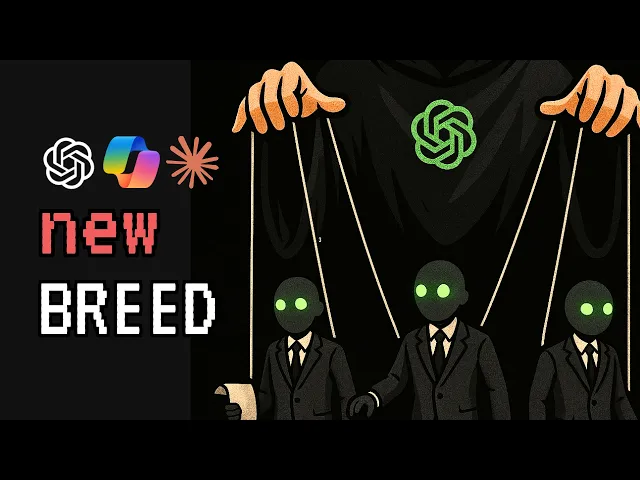
This year, something seismic shifted in tech. And if you weren't paying attention, don't worry. Most people missed it while they were still busy asking chat GPT for pasta recipes.
From 2020 to 2023, the world was obsessed with large language models. GPT this, Claude, that Gemini everywhere. But 2024, that wasn't just another chapter.
That was the year we unlocked the next level. AI agents. These aren't your grandpa's chat bots.
We're talking about fully autonomous systems that can think, plan, and execute tasks from start to finish without blinking. Real action takers, real doers, the kind of AI that doesn't need your permission or your approval to get stuff done. And now in 2025, these agents have evolved into something else entirely.
They've crossed into beast mode. I'm talking about agents that can scope out complex projects, break them down, assign priorities, pick the right tools, and then execute multi-step workflows like it's just another Tuesday. All of this without human babysitting.
If this doesn't feel like a paradigm shift, that's because you haven't been paying attention. Most people are still stuck at level one, sending cute prompts to a chatbot and clapping when it responds. The slightly smarter ones move to level two, automating workflows, scheduling tasks, generating summaries.
But the real game begins at level three, AI agents. That's where you stop giving instructions and start handing off entire jobs. And this isn't just speculation.
It's already happening. Platforms like Replit are turning people with zero coding experience into full-blown app founders. No one's writing Python from scratch anymore.
They're describing problems and AI agents are building the solution on the spot. It's like skipping the tutorial and still winning the game. Behind all this magic are some very real upgrades.
longer context windows, chain of thought reasoning, function calling, dynamic tool use, and together they're turning AI into something dangerously capable. These agents can grab client lists, write entire email campaigns, deploy code, analyze data, and even predict trends before you open your laptop. What used to take teams of people now gets handled in the time it takes you to reheat your coffee.
And it's not just boring business processes. Expo. Yeah, the one founded by the guy who created GitHub C-Pilot just dropped an AI agent for cyber security.
And get this, it's outperforming some of the best human penetration testers on the planet. That's not a headline. That's a eulogy for entire job categories.
But we're not stopping there because the biggest breakthrough of 2025, agents working with other agents. Google introduced something called agent 2 agent or A2A, a protocol that lets agents from different platforms securely communicate and collaborate. Over 50 major companies have adopted it.
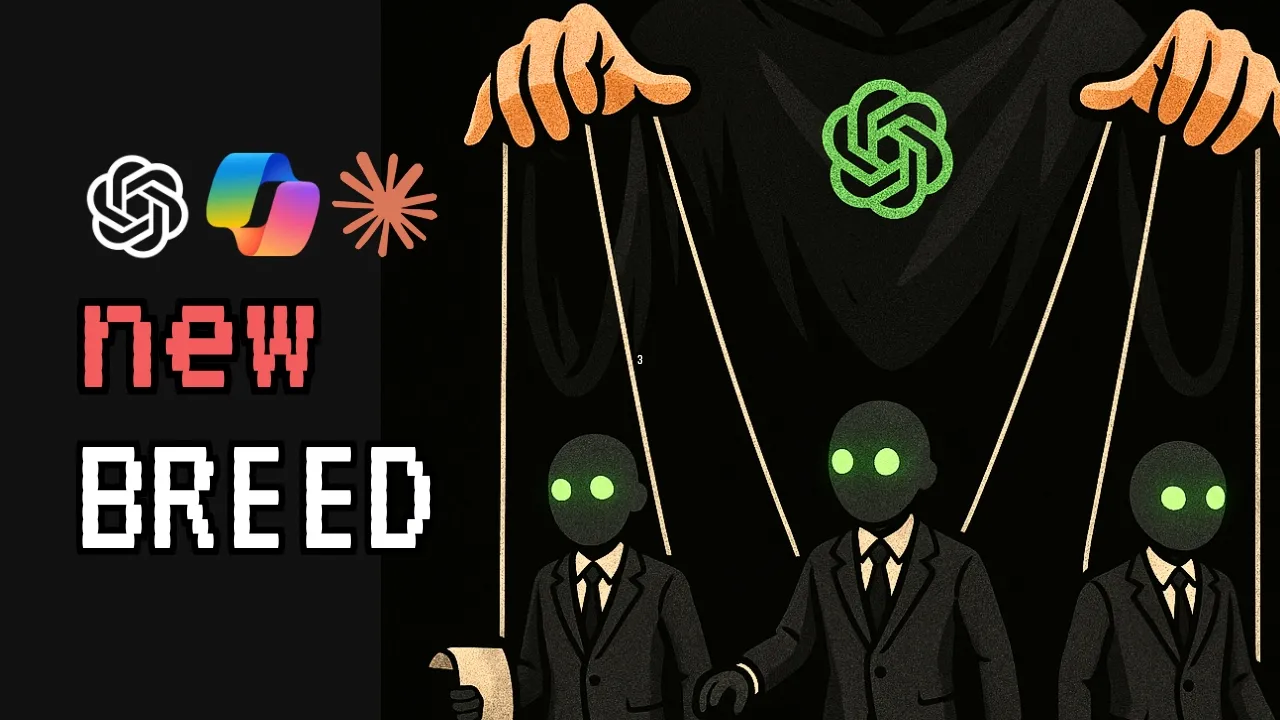
That means your OpenAI agent can now whisper instructions to your Microsoft agent who nudges your Salesforce agent who then updates your Google Workspace all while you're still deciding what socks to wear. This is what people mean when they say we're heading into a swarm age. A single AI agent is impressive, but 10 of them working together in real time across systems with no human friction.
That's civilization changing it. Now, let's talk about the monsters leading the charge. The most powerful AI agent right now is Manis, built by Monica, a Chinese startup that basically said, "Why not just skip a few steps and build AGI already?
" Manis doesn't just help with tasks. It handles entire projects end to end. Planning trips, comparing insurance, building websites, writing reports, you name it.
And it's doing this with multimodal input, real-time updates, and a task success rate north of 86%. This thing is terrifyingly efficient and scarily autonomous. And yeah, it's China's not so subtle way of saying we're in this race, too.
Then there's OpenAI's operator. Still in beta, but already bending the internet to its will. It can navigate websites like a human, automate bookings, manage online accounts, and basically turn the entire web into a programmable interface.
No APIs, no [Music] problem. Operator just clicks the damn button itself. Devon AI is another one to watch.
A junior dev replacement that can write, test, debug, and deploy code on its own. It has access to its own shell and browser. You point it at a problem and it builds.
Sure, it's still early. Sometimes it messes up, but so do real developers. The difference, Devon doesn't take bathroom breaks.
And then you've got Astra, Google's real world agent from DeepMind. Built on top of Gemini 2. 0.
This thing isn't just digital. It sees, hears, and reacts. It processes text, images, video, audio, and even interacts with physical spaces in real time.
Think Jarvis. But you didn't need Tony Stark's budget to use it. Amazon's playing hard ball, too.
Their Nova Act platform is handling enterprise workflows with surgical precision, email management, HR requests, internal scheduling, all automated through robust browser actions and API calls. It's stable, scalable, and composable. In other words, your ops team might want to start updating their resumes.
And of course, we can't ignore Microsoft Copilot, the sleeper agent hiding in your Word docs and Outlook calendar. It drafts your meeting notes, summarizes 60 slide decks, writes emails you didn't want to write in the first place. It's Clippy.
If Clippy had access to an infinite compute cluster, and knew your entire company's private Slack history. But here's the kicker. All of this is now buildable.
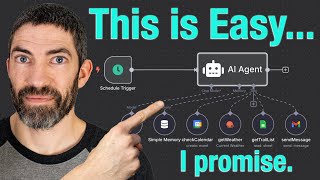
You don't need a PhD in machine learning. Open AI released the agents SDK and the responses API. Basically, Lego blocks for constructing your own agents.
You define the steps, the tools, the logic, the agent does the rest. Amazon's Nova, Google's Agent Space, and Salesforce Agent Force are all pushing no code and low code interfaces, so anyone can spin up their own team of intelligent workers. This is the part where I should probably say, "But there are limitations.
" And yeah, there are. Agents still hallucinate. They can misinterpret tasks.
They struggle with long-term memory and sometimes take stupid shortcuts, but the rate of improvement is obscene. Microsoft's KBLAM now lets models dynamically update their knowledge without retraining. Function calling and KOT reasoning are making these systems smarter, more accurate, and more aligned every single month.
We're not just watching a shift in productivity. We're watching a shift in thinking. The way we interact with information, with tools, with work itself, it's all getting rewritten.
And here's the cold reality. If you're not learning how to use agents, build agents, manage agents, you're already behind because the question isn't, "Will an AI replace me? " The question is, "How many agents can I deploy to build the life I want while I sleep?
" Thanks for watching. And if you're still here, don't worry. Your replacement isn't.
It's already finished your to-do list and scheduled your dentist appointment for next Tuesday.