I think it's so underappreciated the turnaround that has happened within link like I check it at least 10 times a day what was the strategy behind it I Stu backwards I'm just like what is the potential here if you start from the premise that LinkedIn ultimately is a platform for Economic Opportunity that sits on top of a very strong social grph almost every aspect of economic transaction is possible is there Anything tactically that just like wow that really made a big dent and people wanting to come here and post share interesting content to really set
the new purpose for it which was this is not a springboard for other products this is not a traffic jump start it's not an upsell feed it's really about people that matter talking about things that I care about professionally the first thing we did was really making AI first how do you actually like on the ground Help people shift their perspective and think AI first so it wasn't like oh we have this cool technology what can we do with it it was like let go of what you've built go back to the objectives you were
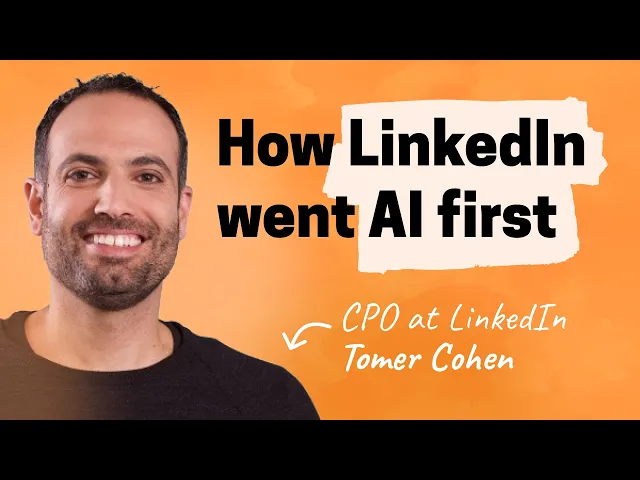
trying to solve and now with this techology how can you do that objective better there's so much I want to dig into here is there anything else you think would be interesting or useful for folks AI is the ultimate Matchmaker it's under UTI it's misunderstood it's Really [Music] about today my guest is toer Cohen toer is Chief product officer at LinkedIn overseeing all teams responsible for building and creating LinkedIn products and experiences including product development design business development content creation and customer operations during his tenure at LinkedIn toor was head of the mobile team led
the effort to revamp the LinkedIn feed and to many People surprise made it extremely interesting in a place I check regularly and he was also at the center of Shifting LinkedIn to an AI first mindset which started way before AI became cool in our conversation toer goes inside the strategy behind the transformation of linkedin's feed and how they approached making it a place that people wanted to check and make it much more social we also get into the one mindset that toer credits for helping him rise so quickly Within LinkedIn also why toor's most repeated
Mantra is we might be wrong but we are not confused and so much more this episode is for anyone wanting to see what great product leadership looks like and wants to be inspired to think bigger a big thank you to Shir gasar Dan Roth Josh Redfern and Spar Aral for question suggestions that made this episode so interesting with that I bring you tomr Cohen toer thank you so much for being Here and welcome to the podcast thank you for having me absolutely my pleasure uh so as I Was preparing for this podcast I reached out
to a bunch of people that have worked with you and asked them what I should ask you on this podcast and interestingly every single one of them said this one thing that I need to ask you which is about this phrase that apparently you use all the time so first of all can you guess what this phrase might be I have a few Sometimes people call them tomis but I would I would be uh to I might be wrong but not confused that's the one amazing okay so let's talk about this phrase I don't say
it so much anymore but uh I think it's ingrained into the culture people think of me they think of this sentence already those are the ultimate things where they you don't need to say them as much anymore okay so the phrase again is we might be wrong but we're not confused exactly let's talk about this So what does this phrase mean and why do you find it so powerful and important to say often Yeah by way it's like it's a simple phrase but it has in my opinion so much depth into that and ultimately something
I really believe in it's rooted in Clarity in principles that ultimately lead to leadership and the first first time I got the inspiration from it was from a a startup founder I met many many years ago their company was on the brink of failure they had Their last attempt and they decided on a path forward and after decided on a path forward he was still seeing people hedging in different directions you know and it kind of led into this confusion in the system where we decided people are still hedging they're still trying out things they
thought could work and he realized that unless they basically all pull through in the same direction there's no chance they'll be able to be successful now Pulling through in the same direction doesn't mean you're going to be successful but at least it gives you a chance of success and that confusion the system only luck can save you so that was when he shared that that was very impactful for me and I think it's a good one for life as well and for me it kind of comes down to two main parts one is Clarity of
thought and Clarity of execution and they're both equally important this episode is is brought to You by gamma an entirely new way to present your ideas powered by AI if you hate designing slides and Dread that feeling of staring at a blank slide gamma is here to help just upload your PRD and turn it into a beautiful ready to present presentation in seconds gamma works with all types of formats from Google Docs PDFs to PowerPoint you can even drop in a link to your favorite Lenny's newsletter post and turn it into a presentation for your
team gamma has Become one of the fastest growing AI web products in the world adding 20 million new users just this past year and is setting its sights on becoming the modern alternative to PowerPoint whether you have design skills or not gamma can save you hours of time synthesizing your ideas and shaping your content visit gamma. apppp and use promo code Lenny to get a free month of gamma Pro that's gma. apppp this episode is brought to you by Work OS if you're building a SAS app at some point your customers will start asking for
Enterprise features like saml authentication and skim provisioning that's where work OS comes in making it fast and painless to add Enterprise features to your app their apis are easy to understand so that you can ship quickly and get back to building other features today hundreds of companies are already powered by work OS including ones you probably know like versel Webflow and Loom work also recently acquired warrant the fine grain authorization service warrant's product is based on a groundbreaking authorization system called Zanzibar which was originally designed for Google to power Google Docs and YouTube this enables
fast authorization checks at enormous scale while maintaining a flexible model that can be adapted to even the most complex use cases if you're currently looking to build Role-based access control or other Enterprise features like single signon skim or user management you should consider workos it's a dropin replacement for azero and supports up to 1 million monthly active users for free check it out at work.com to learn more that's [Music] work.com on the clarity of f what I find people to be attached to especially when you build an environment with a lot of Uh kind of
alpha types is that they get attached to being right or wrong and that really creates a lot of lingering in the system a lot of confusion and they're still stuck to their ideas and for me I get attached to Clarity and focus I think that's much more important I that's why I think when I say I don't mind being wrong it really comes from a humble place I would rather go forward with everybody in the same direction then necessarily try to hedge All the time which will give me no chance of success and the way
we start we do this in our product gems right now is we start we actually spend sign significant time on what is the problem we're trying to solve for but not high level not like hey we want to launch this product we want to launch a video product it's exactly what type of video you're trying to launch for with audience what is your unique criter what are you trying what is very nuanced About what you're trying to Sol for ideally once the time you see the problem you know exactly the problem you're trying you actually
can imagine that mountain it's not just a mountain you can see exactly the road you can see exactly kind of the base camp but then when you move to solution uh I love solutions that are based on first principles that they have there's a principle thinking about it there's opinions about it if you talk to folks Who work with me they'll tell you I push a lot for like like what is actually your opinion what is your potentially you know controversial opinion and the best principles have teeth so saying that we should build a simple
product for me is useless who doesn't want to build a simple product but saying that I'm willing to sacrifice or trade off this that's when you that's where I get excited they like okay like that's a very strong opinion let's go into that Why were you willing to tread off those type of vectors to make it happen and you know one thing that I saw also in Clarity of thought was this is I came to the US in 2008 I came from Israel you know our Hobby in Israel is to argue so we we argue
a lot as like a it's our love language in many ways and I came to the US and I noticed people say a lot like I don't exactly understand or you know I'm not exactly clear on this and it took me a long time to realize They're actually disagreeing they're just masking it with a a layer of misunderstanding and a good Mentor of mine said hey just push back are you disagreeing or misunderstanding if you're misunderstanding let's spend the night let's get to a point where you can articulate uh my point of view in your
words and I can do the same but if we're disagreeing let's stop why are we spending why are wasting time just Arguing it through so those became really powerful that's on the clarity of f Clarity execution is even more important because many organizations actually reach a decision they don't act on it which is it's one of those like shocking things they decide this is a top priority but it doesn't make its way into the organization and I'll give you an example like somebody will say hey my top priority for you know for my Business is
this initiative and then I'll say but most of your engers are working on this migration and they'll say yeah we have to finish that I'm like so why don't you say the migration is my number priority it's like yeah it's like but that's exactly what you're doing you have to like make sure that what you're sharing as a priority is actually manifested in your resourcing then I'm like hey this is your top talent why is your top talent working on some Moonshots that are not in your number one priority and they're like yeah like this
is where you start finding that really it doesn't really translate into to execution as well and you can solve so much by just making that sure that focus is there so the the big lesson here is to push for clarity and push out anything that is unclear confusion either in thought and also in execution one of the folks that I talked to that Worked with you about this phrase Josh Redfern he said that this phrase became really liberating for him which is really interesting to hear because it forces you to make a call and to
be aligned and make sure everyone is is on the same page I guess yeah thoughts on just like why this concept is so liberating it goes back to like kind of little Alpha types or type folks who are like just so attached to not getting it wrong you When you need to move forward and it's not about being right or wrong it's really about not being confused and making sure everybody's ping the same direction that is actually really liberating and when you know that like the whole idea is to have a Socratic conversation about what
you're trying to do then coming to the table with some kind of half-baked ideas or uh or actually like not an opinion I think actually brings them to a conversation Of feedback but you have to manifest it through if you just play this through but then you potentially playing the right or wrong game that's that's really poor uh I also think it's the best way to learn like if you don't know exactly what you're doing how can you learn back from why you made that decision so if you had a clear understanding ultimately like it's
a growing on organization this is not a oneoff project we're going to build many projects in the future so if You're not sure about what we were trying to accomplish how can you know what you learned from it I love that so the idea here is make it very okay to be wrong but make it not okay to be be confused and not clear about here's what we're doing here's why we're doing it everyone's aligned exactly on the same how can I have a product conversation if I'm not sure what you stand for it's really
hard to it's really hard to have a Socratic Conversation really hard to have if you ask folks how many time you left a meeting in kind of corporate could be a startup or like larger companies and you were not sure exactly what was the problem discussed what are next steps more often than that they'll raise their hand that for me is a waste of building time so that actually that agitates me in a in not a great way but when we had a when I come in and I'm proven uh wrong or There's a strong
challenge or argument again that's a little bit my love language I actually enjoy those I think we leave the conversation much better you said there's some otherism what are some others just uh that you can share this is again this is classic to uh building a large organizations but I actually believe in especially when it comes to products to really set ambitious goals but then try To overd deliver on them like really set like what are you trying there almost like the opposite right people are like under you know under playing it and overd delivering
I don't understand what you're trying to do for me it's like we are here to make an impact we're here to make to really set our goals to something really massive and I'm trying when I'm trying to visualize this like I see a mountain you see the peak and you know the peak Exactly how it looks like you see base camp you know how to start and maybe the middle of the mountain is kind of blurry but you'll figure this out but at least you know the peak you're trying to share share the peak share
where you headed to and I think it's much more exciting way to build product it's a much more inspirational way for folks to be part of the prod the the product process kind of thing I was just uh chatting with Vlad who worked at Airbnb for many years He was actually my former manager at Airbnb and he reported to Brian for a long time and we talked about this trait that Brian also is really good at is just setting crazy high goals like 10x the goal that you thought you had and what would it take
and it worked really well forbb so I love that you're kind of Double Down doubling down on the same idea is there an example that comes to mind of one that us like a ambitious goal you said internally at LinkedIn That people are like no way and then ended up being effective actually there's a lot like I when I think about our LinkedIn feed and thinking about like you know when you started off it was hard to imagine what that product could be because it was more of a promotionally nature product and I was like
no this is going to be a place where like millions of people and not like just tens of Millions like will come daily and like that's insane that makes no sense based on the numbers today but like I I don't start building from the numbers today I start from what like I start backwards I'm like what this could be what is the potential here so how many professionals exist in the RO how many of them would love to find a place to share and and and engage with content and this is my starting point I
start from there uh so I don't start from The existence to set my ambition I start from like what this could be like based on really inspiration and excitement again it's it's it's it's not detached from reality completely but it's also not hooked to it but then base camp could be a good start like you know you're not not asking you to ni it the next day but if you don't have that ambition there's no way you're gonna hit that there's just no way and there's so many products across LinkedIn LinkedIn Is a 20 plus
year old company that many folks uh did not give it a chance in almost every phase of it and I think if anything it's one of those that just keeps getting better and better every year and part of it is you keep the landmark on this is this really has the potential to do so much for so many people uh it's really an economic platform so if you play from that like one billion members that's actually pretty small where we can actually go I'm so happy you went to this example this is exactly where I
wanted to take the conversation uh I was very much in like the camp you described of uh LinkedIn how could LinkedIn possibly become a place that I want to go and browse a feed and post content as you probably know for the longest time it was felt like this cringey place as you said where everyone comes and promotes themselves hey I got a promotion or here's my company's new launch and it's I think it's so underappreciated the turnaround that has happened within LinkedIn like I use it I'm a multi-day multi- dow user like I check
it at least 10 times a day most of my traffic to my newsletter comes from LinkedIn not Twitter where people think it's absurdly underappreciated and it's I think underappreciated what it took to make this happen and when I saw you guys starting to try to make it a place people post content I was like no way This is not gonna work why would people want to share stuff that on LinkedIn and it's working it's amazing so uh I want to spend some time here and just kind of try to go inside the strategy that you
guys put together to here's how we're going to make this happen come you sh already had this peak of like here's what we could become how did you actually turn this around how did what was the strategy behind it yeah by way I'm glad you're finding great uh kind of Audience and traffic on LinkedIn I think your content actually your content is exactly what we're trying to build for it's expertise it's advice it's people you can learn from and it's also the views that really matter not just the volume that matters I think like you
know if you take a step back there's so much conversation about zero to one products or scaling products but you don't have much conversations about minus one to run products like Turnaround products and I think there's a there's obviously the perception of the market you have to deal with but people I think in minus to one products at least from my experience it's and we had a few at LinkedIn pages is another one helping businesses build their presence on LinkedIn what you find is it's actually Mo most of the time it's internally harder to do
because there's so much entrenched flows and processes and metrics that people are using on That uh on that specific area so you almost have to like change the inner workings of the system to make it work you know going back to the analogy of the mount if you start from the premise that I deeply believe in is that LinkedIn ultimately is a platform for Economic Opportunity that has that sits on top of a very strong social graph then really almost every aspect of economic transaction is possible a knowledge Transaction is one of the most powerful
economic transactions you can have it's the biggest accelerant for uh for an experience and we were always very strong at helping people you know uh get a job we have seven hires per minute but as we were building more and more knowledge and part of it was we bought LinkedIn learn we B link that to make it LinkedIn learning a while back today we had 140 uh hours of learning every minute on LinkedIn happening across the Feed and Linkedin learning it's pretty it's pretty powerful and the transformation to the LinkedIn feed was exactly like you
said we we actually were the first company to have a social feed uh but I think we started wrong so it we we started with basically activity feed so it was like who changed what who changed the job who connected to who it was more of like a tracking your network feed and it became more promotional in nature so in a way just letting that be Just in naturally just moved into more of a professional type of feed and uh what we've done is we've shifted dramatically into building actually this was one of the things
I was excited about so after I was leading the mobile team uh there was no feed team there was no unified feed team there was no feed pm to an extent I asked to do this role nobody cared about it I really believed in it uh I have strong conviction about what they could do there and I asked to Do this role and reassembled the team around it and uh one of the main things we've done was to really set the new purpose for it which was this is not a a springboard for other products
this is not a traffic kind of uh uh you know a traffic jump start uh for it's not upell feed it's really about people that matter talking about things that I care about professionally it's about knowledge exchange it's about how can I get the right views to the right uh Experts in a way that actually helps them build the reputation and build their business and then we started from there backwards so it was basically setting that ground for that mountain peak that was nowhere to Be Imagined at the beginning and making our way backwards the
first thing we did was really making it AI first so the AI team back then was completely centralized it was not part of uh uh of any product team and we brought it together with Like one unified ai ai first team and we the belief I had was ultimately the engine of the car was Ai and that was almost like deprioritized or delegated to a team that was not unified in objectives so bring that in and then I spent most of my time on objectives and and algorithm features and data training which kind of led
me into my passion about training product people to be a first product people and that was a big transformation There really shifting and we had an incredible AI team but they were completely they were conf actually it was a confused operation they were building something for a whole different purpose and we were trying to aim to that mountain peak and they were pulling in a different direction not no bad intent that was that was they were that that's what they were told to do so bring it together into kind of this like SWAT team Uh
was the first thing that actually was uh extremely powerful but then became then came the hard work you have a product that works in a certain way and you almost want to change its DNA all together and it was very hard because whenever whenever we were trying to run experiments that were mass and scale I told you everybody was relying on the feed for their traffic it just scared the whole system because numbers were shifting up and down and teams were Freaking out about meeting their goals and then I realized that was just spending my
time in escalations instead of actually building a great product so what I did was I carved out two million members and I said those are my members I'm going to focus on building the few that mountain peak I'm going to build for them full Liberty and doing whatever it doesn't hurt numbers giving the scale and really focus on building a great experience for them and it wasn't Overnight and it wasn't over a week but over the course of months we've seen dramatic Behavior change for those members almost like secluded like a country of people that
were seeing a different uh experience of LinkedIn and once we saw that you actually had strong evidence that wow if I bring this in we don't need to spend time talking about how does this pie get slotted between different teams we can actually grow the pie The Experience just manifests itself In a whole different way and that was that was a big change internally it took it didn't wasn't overnight and but it was really powerful in getting everybody around to see wow we have this cohort that is doing extremely well which was a randomized cohort
then how we can bring it out I've also done some you know crazy things we've done some negative tests to prove some stuff out test for The sake of learning when you run something that you can show that you know if it's just a promotional feed and you play that organically over time engage with the ti weights We R some really important ad tests as well but we really shown separate almost like we carved out the different product and we showed that this could work and then we brought it out uh to the main experience
for everybody else and then that was kind of that would say the inner Workings of like minus one to one then the scaling part really became when we started to focus on professional opportunity so when people actually share how do they get the right views into the experience we don't compete for volume like it's not we're not in the same kind of category of meta in terms of the scale there but we will compete all all day long for the right people seeing your content in fact I think in many ways that's the most powerful
part Of LinkedIn how do we make sure that it's professionally productive and safe conversations how do we we trade off bad engagement all day long in fact one of the when we started Shifting the AI objective from you know click through into more Downstream conversations spammers actually took notice as well so they were jumping over the LinkedIn bag wagon so we had to spend a lot of time uh removing bad activity from LinkedIn and but that's been the evolution of This process that is amazing there's so much I want to dig into here okay so
this 2 million user carve out that you did basically everyone was just like what the hell are you doing to our metrics and goals you're causing all this trouble for the business why is this team causing hurting our metrics so that was basically a a group that uh those are two million users are the only ones that saw this new updated feed and they were they removed from everyone Else's metrics so they weren't fluctuate as much or was it just they could be kept in the overall because it wasn't important exactly but for us they
were like the world we were basically able to prove with them got it okay that's so smart okay so basically you just decided we're not we're only going to move your metrics a little bit worst case if we I tried for this I failed that I tried for a few months to you know play on the overall experience with everybody but it Was you know it was really hard almost like impossible because you have an organization that is so tied into how things work that I was just hitting walls after walls after escalations and it
was just unproductive and this is before you a cheap product officer where you could have just said we will take this bet we know this might hurt metric short term yes okay got it that makes sense okay the other piece so just like lessons I'm taking away from trying Something like this that's an ambitious bet within a company is put a PM and a team on it with a goal that feels like a core part of the success of just like somebody's asses on the line to doing this thing always always with focus on this
one problem and then there's the way kind of you describe there's this goal for this feed but how did you actually try to turn that into like a goal or metric or kpi what was that in the end was there something there yeah This is this is an interesting ones one thing we've done actually because the feed is the first thing you land on I can't just count how many folks engage with the feed because then I'm counting kind of bypassers kind of thing and by standers that actually coming into the experience so we actually
started to look at the more of a we go a lot into like you know active engaged and kind of high value engagement so we go Downstream we kind of put the onus on Looking at more downst string engagement there and we build that as the feed engagement so really trying to show that we're not just counting some overall you know whatever it's page FS or sessions at the top level that's not really helpful because any shifts can help there but really setting targets for that you know there obviously it's a Marketplace so there's the
creation side there's the consumption side it's making sure that's healthy uh and Engaging uh there was so much we went into that but I think the the best thing was it's almost like your car I think when you do minus one to one it's really hard unless the CEO says I don't care about you know how the company performs for the next two years we're going to go for it uh if you want to keep the site keep growing and the experience keep growing carving out and almost like sending very specific unique metrics that then
could easily be extended out Once you show it uh was was in retrospect the right way to do it and then to give people a glimpse into the way your brain works to identify this is a big opportunity so you talk about just like I see there's a lever that we're not investing enough in and I see a huge this big opportunity to grow all LinkedIn how did you decide I need to go and bet on this thing and Lead this team and I think feed is a huge opportunity I I start from beliefs a
lot so I start From like what do I believe this could be or where like I actually came to LinkedIn this way in fact my biggest change in my career was when I moved here and I shifted to more like what do I care about what am I excited about what do I have conviction on I think it's it's really hard to be a strong product leader without having strong conviction about something um so I start there and in fact coming to LinkedIn as an example when I came Into lead mobile LinkedIn was a desktop
first company the mobile team was kind of an offshoots of entrepreneurs I came from a startup that I ran and it wasn't it wasn't a big like it wasn't it was like okay want to do mobile gu fine like it's like noise at this point same with feed and same with I moved shifted into ads because I felt really strong about the ability to flip that into a great way for companies to grow uh so for me it starts with a conviction of where Things could go like where where did like what do I believe
in I believe LinkedIn can be an incredible superpower and daily use case for every professional in the role I believe knowledge sharing and knowledge exchange is the most amazing way to grow your career and to grow your business so that needs to be a strong pillar experience who didn't exist before and what is better than the feed experience the hom fig to actually build it so I don't get Attached to what have did not work in the past that's not um I don't know maybe it's a mistake sometimes but I don't that doesn't stop me
from thinking about the future how do you actually make time to think like this you know a lot of people are listening to this like okay I want to think about what could this become do you just is this the the way your brain works I'm always think you're always thinking how big what could this be you set time aside to Think like quarterly or yearly what could this be if we really made this amazing it's a good question I haven't thought about it uh as a it's like a process I do I don't set
time aside for this but I'm I'm I'm very reflective I try to focus love the conversations on like the dream like what what ultimately are we trying to achieve I think LinkedIn has a great process uh called Vision to values that started from our former CEO Jeff w which Is like if you said this is for company or for a product which is if you're successful what change would happen in the world which I love it's just a great phrase it's just a great empowering phrase so I actually tend to spend a lot of my
time there um I'm also very optimistic in nature again sometimes it's probably I'm not best for any role perspective you want somebody to be more more pessimistic about the future but I I tend to lead with beliefs versus Evidence I try to prove my beliefs with evidence but lead with evidence awesome okay and then maybe maybe just one more tactical question about this shift that I wish I could spend like hours on because it's so interesting the success you had making the feed so engaging is there anything tactically that just like wow that really made
a big dent and people wanting to come here and post and share interesting content like a feature or part of the strategy that really made The feed social I think the lesson would be uh for me that was the biggest learning going into AI force that gave me the why is AI so core and why I got to make it a priority all the way to my role today to make sure the rest of the organization thinks AI first the understanding is is that in a Marketplace if you're if I'm able to satisfy your need
on the other side I then I have then it's magic so ultimately it came down to AI Is the ultimate Matchmaker it's underutilized it's un misunderstood it's run separate from the team and in a Marketplace it's all about value exchange and if I'm able to do value exchange really well well then people would come back and they do and they engage and they actually they come back even more and they spend more time uh so for me was that is that depth into AI first as the engine that moves the whole organization forward got it
so Essentially making sure the content you're seeing is the most engaging you could see based on using AI to make the algorithm really smart on both sides if you play if you're the Creator if you're the person sharing remember like this was a while back I think it's about the former Olympics and uh a person shared like you know uh shared like an article on LinkedIn about how they should not call it Olympics they should call it like the commercial Olympics because It's all about commercials and less Olympics and then they they sent me this
amazing screenshot about how you know NBC exacts were covering the uh the Olympics were viewing the post this first them was gold was like oh my God my content is influencing people people are seeing it people that matter so that's that's what's really keyy making sure that when you share something you share your expertise the right people on the other side are relevant to your Content and they see it you that could make your a day or your week or actually it could make your you know it could make your living in many ways and
then on the receiving side when I come in it's the it's the things I'm excited about seeing it's the things that are relev I can actually the the reason I your content resonates so much with people I can actually take your podcast and I can apply them at work what could be a better way to learn I'll give you another example which was very very recent I met with a known professor in this field um and he shared with me how over the last year and a half he started using LinkedIn because somebody told him
you have great content why you just post it I like I don't want to post on social media I like oh LinkedIn is different share on LinkedIn and he was like I post daily I have so much content over the years I I post daily and he was like he basically Told me this is unbelievable in terms of Economic Opportunity I'm getting he's like I'm getting speaking engagements that are roughly half the salary I make in a year here at the University just by people seeing this content and building it getting to the right people
I was invited to advise prime ministers on their investment uh strategy for the country and it's like and they and I've been teaching for 20 years but this platform just completely Elevated my ability to reach and influence people that's the magic and that's the value exchange and that's the kind of matchmaking at scale amazing that's an awesome story this episode is brought to you by merge product leaders yes like you cringe when they hear the word integration they're not fun for you to scope build launch or maintain and Integrations probably aren't what led You to
product work in the first place lucky for you the folks at merge are obsessed with Integrations their single API help SAS companies launch over 200 product Integrations in weeks not quarters think of merge like plaid but for everything B2B SS organizations like ramp drada and electric use merge to access their customers accounting data to reconcile bill payments file storage data to create searchable databases in their product or hris data to autor Provision and deprovision access for their customers employees and yes if you need AI ready data for your SAS product then merge is the fastest
way to get it so want to solve your organization's integration dilemma once and for all book and attend a meeting at merge. d/ Lenny and receive a $50 Amazon gift card that's merge. deev Lenny I want to shift a little bit and talking about this AI first mindset that you've touched on a lot so you talked about how at the Beginning of this investment you've already been like focused on AI before it was really before was as hot as it is today and I've heard for many people that you're really big on getting people to
shift to this mindset of being very AI first clearly it's worked really well at LinkedIn I'm curious just what that actually looks like like I know you could be like hey guys we got to be AI first AI aii what but it's different to actually make people really think Differently how do you actually like on the ground help people shift their perspective and think AI first uh well I can spend days on this this is so so it's actually so important for me it's a key Focus for me actually to your point long before it
became cool to talk about AI in the last two years and in fact I think I've learned this on my on myself so when it came to the feed I took the role of the AI product leader it didn't exist in the company there was no person That was ever from a product perspective thinking about AI I think it start with a belief like like we talked about before I think every technological revolution has dramatically changed the way we buildt and AI arguably is the biggest one in our lifetimes and when I say I first
it's not about attack it's a mindset it's a start with strategy like you know it's rare maybe now you'll see it but it was rare two years ago go to see anybody in their strategy talk about The role of AI and how they build with AI then it goes to this to the product and then the talent itself you higher do they actually think this way the analogy I would give to people is imagine a river rafting boat and you have like you know everybody on the sides holding the pedals and adding accuracy adding speed
but there's the guide on the back and they're holding those two pedals those two pedals navigate pretty much the both and those pedals are Ai And the guy better be you and in most cases in companies the guide was somebody else it wasn't the product leader so then the question is if a actually is directing your productor success and it's the biggest factor and you as the product leer is not the one holding those two pedals what are you doing and then I realized that it was a bit of a lack of Education in that
like there's actually most prod used to think of AI as this like blackbox magic space Tells that they don't know how it's working so they're delegating and obviously that's further as further from the truth as possible but there's so many ways to unpack it like when it came to the feed where I push for example more specifically for the teams it doesn't stay as an AI first like there's the objective I would ask him what is the objective of the algorithm I would challenge you to ask folks you know more and the folks who Are
like leading products specifically with algorithms inherited built into them what is the objective of the algorithm and can you actually can you write it down for me on a board they should be able to do so ultimately it's a mathematical formula and then it's like what features have you added to to the algorithm and this is not user features this is specifically what parameters to learn on and then what investment do you Have in data Collections and fine tuning now everybody talks a big game about fine tuning but again two years ago fine tuning was
something that the product folks thought the ining team was supposed to do no it's the whole organization in fact you can build a whole strategy just on uh data collection and fine tuning and your product will see tremendous success or you can delegate it it will never happen so in many ways that was Bring into the fold in in our phase one which really started around 2016 for me in every team I went to uh AI the AI component was the the area I spent most of my time on I hired people for that product
leaders I spent most of my back to like how do I spend my resources most of my resources there and it was my top priority all the way from strategy to talent and ultimately with the last couple of years we've seen this metamorphous of AI and this Incredible New Wave and we've done pretty big change there as well over the last two years I I love this so I took some notes on what you're talking about so kind of the big message that I'm taking away so far is as a product leader you need to
think about things that you thought the engineering leader had to think about or the ml engineer was thinking about things like what is the objective of our algorithm what are the features that we're building into it What is the data collection strategy what how are we fine-tuning it like as a PM you should be asking these questions in fact you should go all the way to infrastructure like you can have massive lifts in in in your product outcomes and goals if you probably enhance your infrastructure how many product people talk about the infrastructure they have
right not not many uh inferences like those are things ultimately your goal is to you know your goal is to win with Your products and build a much more experience to your members and customers literally just changing the infrastructure on top of what you build it could be the biggest lever than you building another button or experience for your for your members on the top of it so like say the PMS at LinkedIn are you encouraging them all to like is it like how is AI integrating into what you're doing how do you just like
set this up so that teams do this well Within LinkedIn yeah so coming into this role in early 2 2020 we basically established an AI Academy every PM had to go through training just like we did Mobile in 20 14 we kind of moved the whole organization to be mobile for so everybody had to go through this process I spent a lot of time in my reviews on the AI strategy the objectives uh we make sure there's actually AI practitioners on the product side who are strong who can teach so we kind of Like you
know in wave started to build more of like expertise and kind of distinguished uh leaders cross that can actually bring this learning ac across the board and then you know in Fall 2022 when we all know what happened uh at least a few months after but we started early we completely changed our entire uh almost like product operations and portfolio so we can focus on this new web of AI with llms in the front so LinkedIn has been working with AI uh Very closely uh since the early days uh but mostly as a as a
Matchmaker so it was was the Matchmaker for our marketplaces somebody looks to hire this dream candidate and then you have a candidate looking for the dream job and AI would be the one doing the match making we talked about the knowledge sharing on the feed it happens in our in our Commerce platform as well so but the iso I was kind of in the background so you never saw it it was kind of making Those matches and then with uh the new new of AI we actually brought AI from the back of our marketplac as
really as the Matchmaker to the front and one of the things we've done there was really asking the teams to completely revisit their entire road map this is this is fall of 2022 the world will learn about jbd for several you know in March 2023 so we kind of had like a nice beginning there in terms of getting Started and the goal there was let go of what you've built let go of your road map go back to the drawing board with what are you trying to solve for but to that idea of like clarity
on your problem statement and now tell me what's the solution that's very much AI first it reminds me so one of the folks I pinged about you H Shir gasar she used this quote about you maybe you are made for such a time as this and it connects to a lot what You're talking about where you've been thinking a lot about and back then it was called machine learning right like it wasn't called AI for a long time now it's AI the fact that you've been on this so long is just like a perfect Synergy
for now it's working its way into everything here here's like an example that I think sometimes to bring it uh to people in a more kind of visceral way if you've been building products product leaders are used to Very much dictate The Experience they're building like I want this experience to be exactly like this like I want the member to come from here and this is the options they have and I want them to be able to select this and this will be my default and I want the onboarding to progress this way and I
think this is one of the biggest shifts with this when you become an AI first kind of leader is that there's a realization that you don't control the experience Anymore you control the ingredients it's like almost like being a chef at a restaurant and you're used to like deciding every part of the of the dish right you're like deciding everything from the Ambiance to the temperature of the broccoli and then you know this new technology comes in and say just give me the ingredients give me the you know the the guidelines of how you cook
and I'll I'll take care of it I'll take care of it for you it's a from many folks this Is a very uh scary feeling they're not used to kind of letting go of the control obviously you build safety guards and responsible AI around it and that's super critical but at the essence of it AI is not deterministic so giving that giving it the Rope to learn and do that experience for you ultimately would become much much better you have to have that belief going into it so along those lines I'm curious if there's anything
you do to Avoid you know everyone's like cool AI into everything and then they all these stupid thing ship that no one wants I saw this hilarious meme of like oh wait we built like a kind of dumb uh artificial person let's integrate it into everything now it's everywhere is there anything you've learned about just how not to ship stuff that like isn't great you know I can what we've done here and I've been we failed a lot but we learned so much along the way uh when We started it in Fall 2022 literally it
started with me calling out uh calling the leaders coming to the room and we we talked about okay let go of your road maps like what we've done great but I want to let go of the road maps and I want to instead go back to what you're trying to solve for and let's meet in a couple of weeks and tell me how you're thinking differently about what you're trying to solve for knowing we have this technology uh in a ro for us so that was Like a starting point around just setting out some ground
some ground and and principles around it but we didn't start with like new objectives to solve so it wasn't like oh we have this School Technology what can we do with it it was like go back to the objectives you were trying to solve and now with theology how can you do that objective better the second part is we actually allowed teams to run to really Inspire creativity I didn't want to contain them I would want To get them really excited about the potential here and uh even some we're building duplicates for uh for a
while of like you know similar ideas but un differently because part of it was I was learning I was very excited to see what people would come up with and see how they can do it and there was no playbook for building this really really well and in many ways we were writing the Playbook like prompt engineering became a Playbook internally for us which every Day was amazing like how do you cognitively you know a reverse engineer the brain a little bit that was incredible in fact a lot of things we've learned so much ahead
of the market and even shared uh with open Ai and shared with Microsoft but then after that period of like just everybody getting excited and building we we basically brought it down and we did like top down Garden so we basically picked the back to the objectives we had out of Everything that we've seeing those for us look like the best kind of four uh biggest bets we want to want to aim for and then want we want to converge resourcing across it so no more everybody's building whatever they want we also you know capacity
is also constraint cost is a constraint we want to start bringing them together so we really much allowed people to uh I would say many way diverge but then I would say like Several weeks after converge but we had a lot more excitement and understanding about how this thing works and what we can actually do with it love that advice basically give people a bunch of time and space to explore experiment R&D and then like as a top down uh strategy pick we did top down we were like there was I literally usually I do
product jams for every multiple topics we have throughout the corner I just did every week I just Reviewed the five kind of bets we had on a repeated basis nothing else because it was so important for them to understand that this is what I care about and and we have to be focused about it it feels like that space to exploring go crazy is important because otherwise people at the company gonna be like I wish there's so many this thing I want to try with AI I we should try it like and that'll just be
pissed because they don't have time to work on it so it's it's a great point It wasn't my intention but I love that you're saying it uh it's a great point because I think it give them that that I was actually for me sometimes almostly in a maybe too much but I Tred to focus on learning so I was trying I knew just going like this we weren't going to learn a lot but having people come back and like trying different things and sting going crazy and going you know pushing the boundaries we would learn
so much so for me it was learning but I Love the motivation also allowing them to have the energy it relates another point that a recent podcast episode had with Brian chesky where he introduces chaos sometimes when things are feeling too comfortable when road maps everything's calm everything's on schedule he's just like how do we like how do we do this in one day versus in two weeks let's just see what happens yeah cuz think people get like there is just inertia right people get into their It's it's human behavior people get into their Lanes
they start to feel really comfortable with your the lanes and then they don't know that there's a different way to do things yeah and you have to like almost like externally invoke that or trigger that so if we think about just your career Arc I'm zooming out a little bit you uh helped create the mobile experience on LinkedIn you help you built the feed initially now you're in front of AI I could see why you're so Successful at LinkedIn I was talking to folks about your career Arc at LinkedIn and you basically went from senior
pm to senior PM number two to group pm to director to senior director to VP to CPO in like not that many years it's a pretty meteoric rise I wanted to spend a little time here and I want to maybe start with the question of just like if you could give one specific piece of advice for someone looking to advance in their Career based on what you found to be really effective what what would that be I realize everybody's in the right different stage in their career and they have different ways to think about the
RO and what they need maybe I'll just share about my journey what worked for me instead of giving kind of uh kind of more of a general advice first of all I feel super fortunate like I'm building that's what I love doing I love building I love working with Builders uh you know sometimes I'm like I get paid for this this is insane but I love I love my craft and I love getting deep into it so in many ways I think like in in me like the the things I'm excited about is the things
I'm doing when people are starting off I usually like really focus on learning from great people like people you talk to or I have like amazing mentors and managers some of them don't even know they mentors like it's not like a mentor officially Like I try to like pick up things from people all the time and uh that's been just a remarkable experience like working with great people and in many ways a lot of those great people actually allowed me or empowered me to take on some b bigger challenges so I could you know I
can see Forks in the road where if it wasn't for that person saying something very specific probably would have done something differently and it just made me think a lot so I Really try to absorb learning from great people but by far for me personally again this is very personal versus generic advice it was when I moved here I was an engineer for many years before I moved here for graduate school in 2008 and I always love building uh that was all there was there from a young age but when I moved here I realized
my career path was very much dictated by one thing it was like what's most in demand what's most Challenging and how do I do that it was very childish in many ways it was not dictated by me it was in a way dictated by Society so what's the toughest engineering role what's the best company to go into uh what's the best army unit to serve in and I failed along a lot along the way but always going and then when I came here uh there was a really big challenging for me personally around like what
do I care about what matters most to me and that was again it's very Personal in many ways it was very much for me an impact on learning and actually how do I create impact more broadly and I shifted 180 in how my thought process used to go I was it was less about what was out there and exciting and in demand and challenging and it was more about like where did I have strong conviction on what was I passionate about and what where did I feel I could make a dent and learn and that
was my path forward so uh After school with a student visa and massive school debt I decided to start a company which was not you know a very intelligent kind of uh decision based on my uh economic C circumstances but I didn't care I was like this is my new path and then uh I got into LinkedIn I didn't apply for a job I met with who was who was in my role today DP nishar that time and we talked and I said this is how I think we should you know this is how LinkedIn
Mobile should be built and he was like okay how about you come and build it I was like amazing so I didn't apply to LinkedIn and then at LinkedIn I was always kind of like this is what I want to do this is what's exciting for me and this is the DTI I can make and this is my plan for it so I don't know if this is a recommendation for everybody but it's for me it's working really really well it was really pursuing the conviction I had uh and my excitement And kind of bring
that to the fold with people I do think that in products in in Building Product if you're not genuinely excited about what you want to build if you don't have conviction about it it's GNA be very hard for you to make a big impact that's a also similar theme from my most recent podcast with flad I've just if you don't actually buy into the mission of the place you're working on you're not going to have a good time yeah there's there's a for people it's a Very fortunate position I always tell people like if you're
in one of the most fortunate positions you can have because if you just measure thing for you just measure based on your career and so on people are going to evaluate you based on your actual work it's very special place it's not nobody cares about your title who cares nobody like it's not that maybe the company name for some people matters but for the most part It's about the impact you created with the products you've built so if I think about somebody's resume I think if it's with a product resume it would be it would
be the products you built and the impact you had with it I don't care about the companies you worked at I don't care about the logos I don't care about the titles slightly like again not to kind of overextend but somebody it's almost like an artist right it's like what your Musician it's the albums you took out and how well they did and I think for product people it's a very fortunate place to be that you get measured based on the impact you had that sounds like a LinkedIn feature uh idea right there I feel
like if there's any company that could make that happen I'd be you guys so kind of the some of the takeaways here essentially is try to index towards what are you actually excited about and motivated to work on and uh driven by Versus where it's the most amazing company to work at and the most challenging problem yeah I think sometimes you know great companies have great opportunities for you to have Dent that scale but you need you need to be the one doing it like it's if you are thinking about I don't know a title
or that that did not again you know for like once I did the change into my excitement around impact that's been at least my my yart stick when I look at People that I talk to or interview internally I the first thing to mind to me is like what did you build and what did you learn and how well did it do that's what I care about imagine there's also people on the other side where all they do is work on things that really exciting to them and they could use a little pushing towards the
other direction of what's actually important in the world 100% if you tell me again everybody has their different If you tell me like hey you can work on something super exciting but it's on the kind of the fringes of the company or you can work on something which is a bit more grindy but it's on the core of the company the ladder would like no no doubt like for me impact first yeah so and and just listening to the story you've told of the things you decided to focus on as a clear example that like
you saw hey there's this huge opportunity feed I'm going to go take Tackle that or mobile or AI so I think there's a lot of it's kind of this vent diagram is what I'm taking away of just what's important what am I excited about yeah it's for me yeah awesome okay so I know uh you gotta run relatively soon uh so we're going to get to our very exciting lightning round but before we do that is there anything else that you think would be interesting or useful for folks to know or leave them with I
know we covered a bunch of things already Yeah you know one thing that actually um I've now build it into a podcast but something I'm really excited about is I don't think there's one way of building remember like when the Steve job's biography came out everybody read it and oh that's the way to build and like that was unique to him and uh one of the things I love a lot is when I look at like great Builders they're all very distinct they're all different and I used to do This thing internally I used to
invite kind of product Builders of different disciplines and and have a fire side chat with them and I saw people across the company join not just PMS or designers but folks across and I buil that into a podcast it's it's I love your podcast mine is very different it's more around like what is their Edge a little bit like what what would uh it's this is from the co-founder of Pixar at cat mall to the CPO of canva or Spotify Roblox but all the way to like a chef Dan Barber who's like the number one
Chef in the US uh for many years and it's just everybody has their craft and they do it differently uh it's called building one I'm excited about it it's a little bit of a plug right now Lenny please yeah where do people find it let's blow it up what's called building one building one on Apple or Spotify it's it's short and it's really about showing you different Disciplines from a chef to an animation director and really the main learning there is like everybody builds differently and you can be very successful but it's very authentic to
how they are personally and it's how they push their craft to the Limit it's how well they've done their craft I love that and something I super believe is just the power of focusing on your strengths and the things that make you a little different versus trying to become Good at everything 100% that's so cool okay build one we link to it in the show notes building one building one building one okay amazing and it's on all the podcasting platforms okay great with that we reached our very exciting lightning round uh are you ready yes
all right first question is what are two or three books that you've recommended most to other people so I have this continuously it's this three I love that you have them right There just tell you they look very I'm not gonna destroy my study uh so I love fundamentals I love studying from fundamentals so if you're somebody who starts in your career my fundamental books is one mindset it's about growth mindset it's about basically the ability to continuously grow over time you know in one sentence is the whole idea is our skills our abilities are
valuable we can completely velop then we can build expertise and craft and and Mastery and It's really a mindset change and Carol wer wrote the book uh was also my wife's manager and that's how we got into that so awesome that's kind of like our second religion at home uh second book is thinking fast and slow um by Daniel canaman I'm I love Behavior economics when I think about products I think I always start from people like what is the member expectation How do they trying to do and this is like the Bible for Behavior
so If you're building front-end products or even like you're thinking about how you rally organization uh it's an Incredible Book every page is like a stopper you have to stop and think and lastly and on the fundamental side is high output management uh by Andy Grove it's like there's so much Basics to doing good manager it's like I think after you read this book your managerial skills should start from a B and then you can you know Over time become an A but like getting to a b is just a level of like putting the
effort in and knowing the best practices so I think like there's a those are all fundamentally uh great books that I really like to give to people it's awesome I love that there right there behind you is there a favorite recent movie or TV show you've really enjoyed yesterday I saw Bluey you know blue I've heard of Bluey my kid's not old enough for it yet oh you're in For a treat okay uh so I love blue so this like animation series from from Australia and it's this what's beautiful about is I can watch it
with my six-year-old 9-year-old and 12year old and we're all going to enjoy it we're all going to laugh at the same point But at the Nuance of the jokes it's like when I think about the product the way blue is built it's built for the whole family but it's built as layers there's like layers of of dialogue and and point Point that they're trying to get across and it's all packaged together into one experience so for me it's amazing that I could sit next to my six-year-old daughter we would both laugh at this anim it's
a sweet animation kind of thing like a family of dogs and she would laugh at the Nuance of the of of the point I look at the different Nuance for me it's like that that's a genius creation of how you build a product speaking of Ed catl the Pixar does that Really well as well um totally and I feel like the story of Blue is really incredible too it's like just like a random little independent group and they just are making tons of money with it it's just amazing the dialogue there is like one is
like it's slightly edgy but not too edgy like it's exactly right it's just exactly right okay makes me want to watch it okay uh do you have a favorite product that you've recently discovered that you really love whether It's physical or digital so I I like playing guitar it's like amateur I'm not I'm not that good uh but I love playing it uh and there is a combination of done recently I really like there's a spark amp I have which allows me to kind of play with effects easily but that's not what I use it
for I can I can tune my guitar based on the specific uh song I like so if I want to do pink Floy or Metallica or Nirvana or David Boe I can I can get that tune easily I don't have To be an expert I can just download the tune to my guitar which is so great and then I coupled that with the it's called the ultimate guitar app and basically doesn't give just give me the chords and the the tabs it gives me the other instruments so I can get the drums going I can
get the you know it's a violin going whatever that is that's going in the band as somebody who does not play so well and plays for itself and nobody's supposed to listen to how I'm Playing because it's it's really just a away for me to enjoy my time it's just anaz I would never get into any band so this is the closest I can get to get to a band so I love that combination I wish we could close this podcast episode with you playing your guitar but I don't know that will help the ratings
of the show oh man that's amazing okay uh two more questions do you have a favorite life motto that you often repeat to yourself find really useful in work your In Life share with folks for growth mindset there's a modotto that I really like it's called becoming is better than being it's like the moment you think you kind of achieved something is the moment you start to deteriorate down it's like you're like we're really trying to grow as human beings we're trying to learn we're trying to evolve uh you know product is a good example
I think the moment you think you actually mastered it is the moment that You become obsolete so I I love the idea that becoming is a better goal than continuously trying to reach some kind of level final question just to come back to LinkedIn is there like a fun feature of LinkedIn people don't know about should check out is there anything new that's like oh that's that's something you should try or that's something that might surprise you about LinkedIn these days maybe I'll give a couple so I don't Have to like pick the best right
off the bat but one right now we're like heavily in invested in video and it's doing so well for those creators we talked about it like immersive video we can actually come in we talked about like for us you know we're like video is you know obviously a best practice right now in the industry but on LinkedIn the right views really matter so highly encourage creators to kind of think about their video play at LinkedIn and then I think Our our what we call our coach experience in some cases is so powerful like we for
job Seekers out there you know we have people hired on Lin there's like seven folks hired every minute job seeking is a lonely journey I was actually in um a session recently meeting with job Seekers and I was talking to them and one started crying Midway into the session because they said I cannot share my journey with anybody because I feel Like I'm alone in this people don't get how hard it is I feel very accomplished but I can't get the job and I wish there was a buddy I wish there was something that I
could talk to brain stone with who wouldn't judge me who would just be trying to help me without paying hundreds of dollars to a coach of some sort I don't have that money and in many ways uh when we walked in through the job-seeking experience the coach experience we build This coach aspect where you can go to any job and you can Riff on the job with with this kind of really kind of this new RI this llm that is Stellar to you personalized to you private to you everything from your fit to how to
best apply to kind of Consulting about different opportunities to comparing this to others uh to feeling supported so when we talk to people around you know we always I love to measure the impact of our work by emotion when we Talk to job Seekers after that it was basically the sense of I felt supported in many ways getting to that ability to remove the loneliness uh is is amazing it's a little bit like people need to we're making it more and more visible and more and more um uh uh kind of ramp to everybody to
a certain point but that's a really powerful way to just humanize the job seeking experience for everybody awesome and to find that it's just is it Called LinkedIn coach or it's in the job so if you go to the jobs tab on LinkedIn it's uh it's actually we just a few weeks ago we just put it on the top so you don't have to go to the specific job and find it you can just start there and engage with it awesome just to Quick give a quick plug to a future podcast that's coming out there's
this book called Never search alone that we're going to have the author on the podcast soon and it's all about this same idea Of having a buddy that helps you search for a job yeah when I think about the future of AI in the sense of belief that relationship is going to be sacred the relationship between Ai and the human is going to be a very there's a do you know what nomophobia means nomophobia no nomophobia nomophobia no being afraid of something it's the fear it's the anxiety of being away from your phone I have
that I think we all I think think we're in for AI no Ai No phobia at one point where you're G to get to a point where AI is going to feel so intimate so personal that it would actually feel concerning to you to be away from it oh man there's reminds me of friend.com which just launched in a really fun I don't know if you saw friend.com in their launch video no I did not oh man check out friend.com it's like a digital friend that just is with you all the time and You're talking
to minut it's in AI oh we we're just getting started there it's going to be it's we're in for incredible reuion there I'm excited and scared at the same time toer thank you so much for being here this was amazing you're awesome two final questions working folks check out stuff that you're working on any you have a course also you have a podcast so just give people a sense of where to find that awesome so obviously I'm on LinkedIn reach out Anytime I read everything people send to me I don't always reply to everything but
I read everything sent to me and then if you want to go deep on AI first I have two courses they're free I think it's a phenomenal way for you to build or starting to build youri expertise especially if you're in product it's a great way to go deeper and not just stay kind of on the high level parts of things amazing we'll link to all those things In the show notes toor thank you so much for being here Lenny thank you this our pleasure bye everyone thank you so much for listening if you found
this valuable you can subscribe to the show on Apple podcast Spotify or your favorite podcast app also please consider giving us a rating or leaving a review as that really helps other listeners find the podcast you can find all past episodes or learn more about the show at Lenny podcast.com see You in the next episode