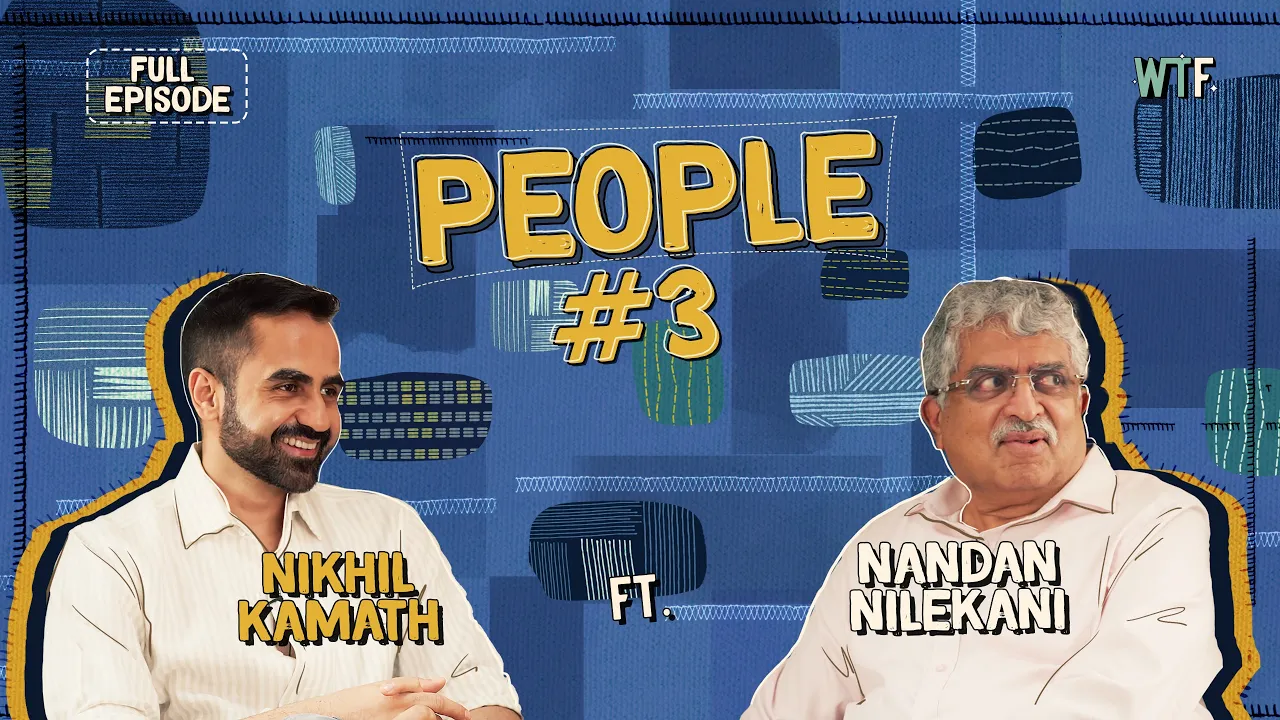
[Music] are we good ready guys should we [Music] start you have done so many interviews now no feel so intimidated there is so much information around the India stack uh that is so relevant to a young person who wants to be an entrepreneur in India hopefully by the end of it we can learn from you what should be built on top of the India Stack and what is the opportunity today from the lens of [Music] capitalism hi Nandan thank you for doing this my pleasure n uh I don't think many people know but I end
up meeting Nandan most often in his house or when he's traveling to one of 100 different countries that he goes to every year that's right uh so where are you going next Nandan in your travels actually this month is a slow month in the sense I'm going to be right here in uh uh uh Bangalore and in India but I'm going next month uh to Basil I'm going to London all around this technology broadly that you're involved with most of I basically have two hats I have a a public hat which is really the bulk
of what I do which is enabling digital public infrastructure mhm you know AAR UPI that kind of stuff and now we are trying to make that go Global so part of this is the Globalization of this DPI concept and then I have a private sector hat as the chairman of infosis and few Investments so some of my travel is that or if I go on a vacation and just work for a couple of days I watched a bunch of your interviews why would you do that over the last 48 hours seem to be a sucker
for punishment I feel like I know Nandan the person in private I I have never heard you speak at length publicly in that way I've heard you speak at your house when you host dinners and all of that so it was actually intriguing and there is so much information around the India stack uh that is so relevant to a young person who wants to be an entrepreneur in India so we thought we'll focus today on that sure uh so I'm going to play the part of a 20-year-old who knows nothing about the India stack I'll
start the journey from the very beginning and hopefully by the end of it we can learn from you what Should be built on top of the India stack and what is the opportunity today from the lens of capitalism what can me a 20-year-old start to make money out of it on top of the India stack in any way if we were to begin with emphasis uh is that where you would say the the journey began in that manner where you saw scale incrementally yeah I think infosis was a great uh Learning Journey in scale mhm
uh you know imposes was founded in 1981 under the leadership of Uh Mr Naran morti and I was one of the co-founders MH you're my favorite co-founder I know a bunch of them okay I mean well anyway so I uh so I was part of that Journey for a long time and I learned a little bit about scale now that's Enterprise scale and population scale is a completely different ball game so Enterprise scale how to think how to sort of look at what the future can be and sort of Drive something towards that future and
then uh uh That's how I you know I was still 2009 I was very much in infosis and then I got this offer to join the government and lead the adaa project infosis was the start of the it boom in India right and also Bangalore became what it is today yeah I think you can think of infosis as the original uh startup right um you know we we came we moved to Bangalore in 1983 from from Bombay initially we in Bombay Puna in that belt and uh we've been there ever since and I think yeah
We I mean Bangalore has had a series of Technology curves Hardware software internet you know so many things have happened but yeah we were part of that wave and I think we played a big role in establishing uh Bangalore as you know a tech City uh and also I think even today I meet so many people who are entrepreneurs M who said they were at infosis right so I think it also created Spawn so many other people what worked For in infosis in a world where the incumbent large business houses were typ typically family businesses
or uh I wouldn't like to say crony capitalism but some kind of a political element involved in a business that scaled what set emphasis apart at that point of I think the group of Founders were very uh uh synergistic we all had different strengths miti was our leader uh we had common values we wanted to build for the long term we were Marathon runners we not sprinters built for the long term MH we had a vision of creating a globally respected company of having very high standards of uh corporate governance so the whole set of
values infosis values which are deep in everyone and that I think uh sort of give the fuel to make it happen you have to have a vision you have to have passion about something you know we had all that and you moved from infosis you Retired first and then Adar came your way no what happened was in 2009 in 2008 I wrote a book called imagining India so sort of projecting how India could be in in the framework of ideas MH why ideas matter and stuff like that and among the ideas in that book was
you know digital ID and so on mhm so at the same time the government was planning a digital ID program mhm and uh they had got cabinet approval for that project and uh I was uh I had a chance to take Up that role so and then my enosis co-founders were very kind and said yeah you can go and do some national service so that's how I ended up in Delhi in July of 2009 to build India's digital program ID program and before INF fasis Nandan you were in uh Bombay before that yeah I I'm
I was born in Bangalore in that sense I'm an original bangalorean m I was born in Manas Hospital in Bangalore MH and my father worked in a Textile mill in uh Mar Road right in industrial area yeah and uh then the you know the mill sector got into difficulties so he he had to leave and he thought his job would be very uh uh wouldn't be in a fixed place that so he I got sent to darad to be in my uncle's house my uncle was very kind he took me in and uh I stayed
there for 5 years and then went to school in darad college also and then I went to I Bombay and then from ID Bombay I joined A company which then we're all working together and then infosis was set up and you met rohini in college I I remember you guys mentioned I met R because she was in Elston college right I was in IIT yeah and she described you as this badass person who did something when she narrated the story no no what happened was uh uh we had a quiz competition so I was representing
IIT in the quiz and the quiz was in elfon college and obviously We won the quiz so I think she was why obviously you won I mean we had that uh belief that we could good at this stuff so uh that's how I met her that's Way Back in 77 she's the more outspoken of the two of you right no she's uh more spontaneous she's more uh uh I would say more uh emotional or Mercurial or whatever I'm more sedate I'm I'm the boring type and she says what she's thinking right away impulsively yeah yeah
she's Obsessive about climate in particular right environment is a big theme for her part of her uh philanthropy she's the biggest probably environment philanthropist in Indiana do you agree and resonate with that belief oh yeah absolutely I mean I'm not that involved but she but I completely agree with what she's doing okay so if we were to start the India stag Journey I'm going to write it down because I'm learning with everybody Who's going to watch this uh so Adar first thing first so the government asked you to build a digital ID no the government
asked me to build a unique ID a unique ID there was no digital in it I made it digital right because I said in 200 9 if you're going to build an ID it has to be a digital ID okay it has to be online it has to be verifiable online with real time and all that stuff so those were the value ad that my team and I did was how do we execute this using a Digital first way H so in 2009 what was the Benchmark you set for yourself while starting the Adar project
who are you looking at who had done well with the unique ID who had nobody had done it so it was it was a brand new idea is social security in America a similar concept the number Social Security America came in 1936 right before technology and in fact the first use of mainframes was that so mainframes were used because there was SSN so SSN was a number but it Was a paper based number just tell us full forms of all of this because yeah so SSN is social security number which which the US did because
what happened that what happened then was that Franklin zelt uh during the uh you know the the 30s after the whole economic crisis in the US they came out with a scheme where people could get benefits in their old age MH if they worked and then they had to then keep track of a person throughout the age right because They would contribute while they were working and they would get their benefits when they retired so that's how the needed to have a number that's how the SSN came about is that the main purpose which with
with which governments ID unique IDs benefit transfer is that the me no benefits transfer is a big part of that uh in in our case in Indian case there were two drivers one was efficient benefits transfer Because since 2000 India has built more and more of a welfare uh programs which which meant you send money to people MH and they had to have a solid robust way of doing it so one part of this was to make benefit transfer more efficient and therefore make you know government targeting more efficient for benefits the second thing was
an equally important driver which was that most people didn't have IDs mhm because in in many societies like in the west 98% of Births are in a hospital right and they get a birth certificate when they are born right so that becomes the root document from which you can then get other documents in India births were not happen in hospital they were happening at home they were happening in a village so half the babies born in some states didn't have a birth certificate mhm so which was fine as long as you lived in a particular
areah mhm but if you started moving around you know migrating going To the big city to enter a car bus or to get a job or if the policeman stopped you on the road you had to show some ID and most people didn't have an ID so that was a very fundamental impediment for their progress so incl tion of people into the formal system with an ID and making benefits transfer more efficient where Government drivers of this initiative right and did the market play a large role in this process no what we we were Looking
at how do you create digital infrastructure on which Market or private Innovation could be done right so and we call this as public rails and private Innovation this is broadly DPI so the but I mean the ideas evolved but it was actually you know constructed on Concepts like I not on the internet if you look at the internet internet was funded by the US government right but on top of that you had all these start companies that came up right similarly GPS right was again created by the US Department of Defense but on top of
that we had you know Uber and all these things hola and so on maps mhm so the notion that if you create a digital public infrastructure at population scale M and open it up with application programming interfaces so anybody can build applications then it'll unleash Innovation right so that was the philosophy of the design of Adar and subsequently UPI as uh API Le Architecture which everybody could use and then whether it's a startup or a large company they could then build you know useful applications on top of it right and when you started on the
adhar project this was 2009 yeah how long did it take well I I was in the government for about 4 and a half years and I had made a commitment that I would deliver 600 million people with AAR by the time I quit and I did that so when I steep down I had 600 million people had An ID mhm and then of course it it continued with the new government and now 1.3 billion people have the ID so after Adar came ekyc and e sign on top of it yeah no AAR was an ID
that just said nikil is nikil right and this happened between 2009 and 13 yeah and scaled up to 600 million okay and with an online authentication so you could go somewhere put your finger and verify that nickel is nickel you say my number is 1 123 and The system would confirm that it is that so we call that as online authentication okay and then everyone's ID had a k had the name and address and date of birth and all that mhm that was considered sufficient kyc to open a bank account get a mobile connection or
buy a what does other have name date of birth mobile number address sex email ID and phone number it's quite simple but right it it was unique a person could have only one number which the design was how To make it unique right so then using the additional information in Adar you could do a kyc and then The Regulators agreed that this kyc was adequate to get a bank account or a mobile connection or buy a mutual fund or whatever how did that work how did you convince the regulator to accept Adar as a yeah
so we had to First work with the government of India under the you know many acts mhm uh because at that Time uh you know prevention of money laundering act and there's lots of things happening so we have to get it approved as a kyc in general then we to work with each regulator so we to work with the RBI to get them to accept it for banks we have to work with do and trai for mobile phon irda for insurance sebi for Capital Market so we had to work with each regulator and we got
all of them to accept it and how much time did that take that took maybe uh it took Several years two three but important thing was that the growth of that category happened at different times for example the use of Adar KY in banking happened after 2016 mhm or 2015 rather 2015 when Prime Minister Modi wanted to do the uh Janan yoga program which was to give bank accounts to everybody right and that was a big push from the government to issue bank accounts to everyone and Adar kyc accelerated that Because you could do a
kyc mhm uh immediately and get a bank account you mentioned somewhere that it brought down the time taken to give people bank accounts by from 47 years to 9 years yeah so on the normal GDP if you had looked at it will takeen 46 years to get to the level of banking penetration that we did in 9 years because you accelerated with digital technology ekyc was the reason for that huh ekyc was the main reason yeah I mean no no I mean That there was political push government push customer demand mhm you know Banks had
to execute so a lot of things went into it but the techn technological capability of doing a kyc online on the Fly within 2 minutes reduced your transaction time and cost right so it is an enabler same thing happened with mobile connections so we launched other kyc say 2012 13 but it's only when Geo got launched in 2016 MH that they used AAR kyc to enroll a Million customers a day wow yeah because uh they wanted to get to 100 million customers in 6 months M the only way to do that was to use Adar
kyc so they used it and the rest was history so to speak so they popularized the use of Adar kyc in mobile industry so jandan did it in banking mhm relio did in Mobile and of course zero did in Capital Market so you guys used it to get we big beneficiaries of ekyc and did eign happened at similar time yeah eign Happened in 2015 when ramsak Sharma who was my DG at when I was the chairman of UA he became the it secretary mhm so he launched eign and digilocker and all these other capabilities they
came together eign energy Locker yeah they came no they came yeah around 2015 they were launched at different time they became yeah but I would say they launch at the same time so let's say digilocker is a wallet for government IDE S no it's a it's a general purpose Omnibus wallet For all documents in a secure way right which you can keep on your phone or on the cloud MH and you can keep your driver's license your AAR card your driver uh you know your pan card but it can be used by private guys too
how did you describe that general purpose is a general purpose document wallet secure document wallet which can be in the phone or on the cloud mhm which then you can keep all kinds of do you can keep a high school graduations uh detail you Can keep your marks card it's not it can be any document so now there are billions of documents in this thing more than and what did people use eign for eign was to do digital signatures so you know to for example if you buy a property and you have to sign thing
you can do a digital signature or if you signing a contract you can use digital signature so and you couldn't do this up until now because you didn't have a unique ID and you could not authorize The unique ID to sign but now you could yeah yeah a number of things yeah but effectively that so ekyc came in 20123 eign in 2015 and digil Locker in 16 no they both came in 2015 2015 but the big year was 2016 H what what happened in 2016 it was a remarkable year for our digital transformation first on
April 4th 2016 India reached 1 billion nadas that was a landmark Agreement April 11 2016 India launched UPI mhm completely independent uh coincidence mhm September 5th 2016 Reliance Geo was launched mhm November 8th 2016 demonetization happened mhm and December 29th 2016 the Prime Minister launched the beam application mhm so in one year everything changed why do you add Reliance Geo to this list as a because It transformed India's mobile industry they launched M uh very low cost uh low lowest data rates in the world voice was free that created huge demand for uh smartphones so
smartphone prices fell M you can see the data they're very clear in 2016 onwards we saw the Boom in data now before that we had a voice economy mhm pre Geo we had a what call minute factories right very cheap voice calls and you know but they didn't have data or they had data but not it was Expensive what Gio did was completely collapse the price of data by creating a you know worldclass 4G network mhm and made voice free so chained the whole economics and demand perception of Telecom in India it's a huge achievement
and what did beam do beam essentially popularized online payments because beam was app launched by npci launched by the Prime Minister built by npci MH and it for the first time npci is npci is the national payment Corporation of India which runs India's Payment Systems it's a it's a amazing organization mhm so npcr launched beam and beam was the first exposure people got to a mobile payment app mhm and then of course everybody came in you had Google pay phone pay PTM all that and then of course today UPI does 14.4 billion transactions m in
a month can you explain the difference between uh beam kind of transaction and a UPI transaction a beam is a particular app M So I it's a cons consumer app on my phone on which I can initiate a payment mhm UPI is Unified payment interface which is the underlying protocol which makes the payment happen between two apps and two different bank accounts can you like break that down for me what do you mean by protocol I heard a bunch of I read a bunch of the stuff you've written as well where you use the word
protocol a lot yeah what is a protocol protocol is just a way of describing The packet of exchange of a transaction mhm so UPI protocol is uh for so you're saying exchanging of information let's say I have ABC I want to tell you you want to tell me DF that exchange is called a Protocol no that exchange is done through a protocol which is a way of describing if if you look at the internet the internet has a protocol tcpip which described how data moves on the internet mhm so UPI protocol is a protocol that
descri how payments Payment values move in a payment Network and that enables dissimilar organizations to talk to each other for that category of activity what do you mean by dissimilar organization I mean like two Banks huh and two mobile apps so example I am on beam I'm in State Bank of India you're using phone pay or Google pay and you are in HDFC Bank MH I can pay you in real time you know why is that because the protocol everybody talks the same it's like there's a Language of that that business of payments would I
be right in saying if UPI is the protocol that transfers value from one store to another and its first representation is INR and the first store is a bank account that same protocol can be used for other things yeah it's a it can be a multi-currency protocol it can be for wallets bank accounts tomorrow it can be used for cbdc mhm so you you can once you have That basic uh infrastructure on that you can add different types of accounts so UPI will work as seamlessly for let's say remittances coming into India no that requires
a little more work for example India npca of India under the uh ages of the RBI and Singapore under the ages of uh Mass which is their Central Bank MH uh they have built a connection between UPI and Singapore's fast pay or whatever it's called that now I can transfer money From my bank account in a Singapore Bank to somebody in India conver it from Singapore dollars to Indian Rupees yeah but you have to build those bridges so it's a bit cumbersome because you to go to each country mhm and the two countries have to
come out with the rules that's why so you say that bridge is like a translation between two protocols yeah but it's also about things like uh you know fraud prevention of money laundering Capital account Convertibility a number of issues in when you do a cross country right I mean India for example Indians can't transfer more than $250,000 a year lrs and so on so whereas singaporeans have Capital account convertibility so how do you match their different rules of the two countries mhm that a lot of the work goes in that right so tell us more
about UPI because it seems like it's this thing to change the entire ecosystem so you said it's a Protocol INR representation store Wars one back bank account to another bank account why did it scale in the manner that it did what did it provide that a traditional bank account to bank account transfer did not well at that time there was before UPI there was no way for two people to make a payment to each other I mean if I sit with you how do I send you money there there was no there was no way
to do it what if I go to my bank and do they used to have that net transfer And all yeah you can do net banking and all that all very you know you go there do something it's here I can just tap on my phone and send you money the convenience real time ease of Youth and convenience was a different League now UPI was conceived in 2013 and uh in 2015 I became an adviser to npci on Innovation and public policy and npci built it uh it took three years to build it and launched
it on said on May 11 2016 and it was you know designed by npci dilip ASB and others and pramode on the architecture side Dr promoda Who also the Adar architect so all these people got together and designed this amazing very high volume very lowcost highly scalable payment infrastructure so it made sending money as easier sending an email mhm or sending a WhatsApp message is that because now each person had a unique ID per se on no you could have multiple the UPI was actually more sophisticated in the sense that you could have a UPI
id M mhm so uh it could it could connect to a it's called a you know virtual ID it can connect to a bank account uh you could use a account number you could use a mobile number as the address you could use a virtual name as a address so nikel at some access bank or something so we all these possibilities are there so it just made it easy to use MH and real time so and then two big things happened Right so demonetization gave the first boost to digital payments because people had to make
payments and you know cash was not there and then the pandemic also people didn't want to hand over money they rather point to a QR code and send money so both these two Tailwinds also drove the and of course the ease of use and the amazing benefits people got from it right so DPI Journey let's say started in 2009 when you started building Adar by 2013 you had largely Solved for online authentication yeah already up and running and benefit transfer via Adar in a way yeah 2013 ekyc came about 2015 eign also happened with digil
locker and 2016 you had these inflection points of demonetization GE launch UPI beam being launched and other reaching 1 billion and othering scale at scale do you see this a lot whenever you talk about a problem you mentioned the world you Mentioned the word population scale a lot like in every interview I would have heard you say it two three times that's why I shouldn't watch my interviews why does that word matter so much to you why does everything you build because if you want to move the needle and if you want to use digital
technology to move the needle you can only do it if you reach everyone you know when you build a private company you build For 5 10 million people 15 million people the top people rich people whatever mhm but in building a society scale transformation you to reach everyone and India has a billion plus people so you have to think how do you do things in a way that everybody can participate how does everybody participate we had to give Adar to everyone we to make bank accounts for everyone mobile connections for everyone you know DBT for
everyone so the moment You want to do it for everyone mhm if you want inclusion to happen you have to think at population scale they say when most people get very rich very fast they sometimes hate thems and think the world is a terrible place and feel the world is unfair uh when they get rich when they get very rich why is that psychology says that I think it's a partly imposter complex partly something they feel that it's unfair that they got so much whereas the rest of the world Doesn't have oh okay post the
success of empasis what drove you on this journey and is that why population scale matters no because at infosis I had done a set of things but when I got a chance to do Adar I I genuinely believed that digital technology used properly can make a big difference to lives of people so add that belief and it's there in my book 2008 so that and then I got a chance to Practice those beliefs right I mean you it's not all you can have an idea MH but somebody say okay fine great idea now go and
do it right so it's a very different thing so I got a chance to get it done and then I realized that actually we have to do a number of things so over the last 15 years we have built different uh parts of this infrastructure and I think it's made a difference because it's made it more inclusive everybody is in the system It's helped to formalize it's driving economic growth you know all the all of that is happening because we have this way of thinking about digital infrastructure right and Beyond 2016 when these inflation points
happened what came in 2017 18 when did did account when did account aggregation come about interestingly account aggregation the first conversation also happened in 2016 because we if you look at the Digilock architecture M it all all about how documents could be stored exchanged and so on so it really a data Exchange in in some way right and then we wanted to implement that in uh different areas and we had a architecture defined for that and it so happened that the Reserve Bank of India had come out with a idea of account aggregator to for
aggregating data can you explain what is account aggregation so account aggregation is I as a consumer let's say I'm a financial consumer MH is it mainly for financial no it can be used for anything but Finance is the most obvious use case so if I want to create a b personal balance sheet of all my assets and liabilities right I have to get a bank statement from all my Banks mhm I have to get uh detail of all my mutual fund assets my insurance policies my Pension funds my you know NPA my epfo MH and
bring all that together and construct my personal balance sheet MH But how do you do that so each of them has to give that data to you so you need again architecture protocol to say go to my bank get my bank statement go to my mutual fund get my mutual fund details whatever so that ability to for individuals to construct their balance sheet out of all the various data is what account aggregation is but it has many uses so one US account if I have to summarize account aggregation should I say it's a repository of
one's financial Data no it's not a repository it's just an exchange the data decides where it is it's a real-time system so let's say I want a loan M I go to my account aggregator who's who's on working on my behal have mhm and the many of them I go to them and the account aggregator is not holding on to the data no they they don't touch the data right they only they conduit so I go to my account aggregator and say get my bank statement from bank X so it's a realtime request From me
via the account of the bank bank gives my statement for the last 6 months transactions or whatever then I say go to GST system and get my and they give you that data without being able to read the data yeah they it and give it right no they can read it because it's from the the bank knows what the data is but the account aggregator does not so when it comes to the account aggregator is encrypted and signed in a way that they can't peek into it right so they have to Give it as is
to wherever you want to send it right so whatever you start from a source and give it to a destination the source is called financial information provider right so bank or a mutual fund the destination is a financial information user right the guy who uses datah M so if it's a loan as an example I'll go to my bank get my bank statement I may get two three bank statements from two three different banks I may uh get uh my income tax Returns from the income tax system saying look I filed my returns and paid
TDS so that data mhm and I'll give all this to a lender and then the lender looks at their data and says yes this guy is eligible for a you know loan mhm and all this is happening in real time digitally mhm same thing for a business a business can also get its bank statement GST returns give it to A lender and lender gives a loan so it's actually enabling Reducing friction for financial activities right and this was conceived in 2016 yeah and it's it got implemented when oh over the last uh uh seven know
seven years right and uh uh it's been rolled out it's it's scaling up now there's a group called samati which is orchestrating this whole thing mhm and hopefully STI will become an SRO self-regulatory organization mhm all the banks have tied up many lenders are using It so but also it's you not just lending is just one activity lending is the bulk of it today but Personal Finance Management people are building apps other people are building Capital Market apps so it's it's again sebi is you know completely on board RBI so it's it's a it's a
mement to transform Financial Services right what comes next in the India India stack DPI Journey after account aggregation well a couple of other Things which happened was the fast tag system mhm which I had designed in 2010 mhm and that was to give everybody uh every vehicle an ID so just like Adar gave every individual an ID fast tag essentially gives every vehicle an ID which is connected to a a value instrument a wallet or a bank account mhm and that streamlined the M of vehicles on highways mhm and today that does 2.5 billion transactions
a year will it get to the point soon where you Don't have to stop yeah I mean you don't you have to slow down M because it takes time for the RFID tag to be but it's pretty efficient I mean compared if you want to it completely without stopping maybe you have to use a different technology but there was good in it reduced from people waiting for hours to you know seconds so it's not bad correct so fast tag happened but fast tag also platform fast tag was a platform where a vehicle could Make a
digital payment on the fly right so the first use case of that was electronic I mean uh to tools we can also be used for congestion charges right or for parking there are now startups that use it for parking right so it's again a platform thinking applied to um vehicles I also wrote down IPO applications online tax collection online remittances plans startups digital IDs digital rights oh no for example asba Which is a when you apply for an IPO you reserve some money for the IPO the money is deducted from your account only if you
get allocation in the IPO right that was completely made with uh uh UPI and now half the transactions IPO are on the mobile phone UPI asbar transactions that made IPOs so much easier to do mhm and now they're doing IPOs for secondary markets so I can buy I can do it so I think all uh using UPI for secondary incidence and then the whole you know Over time Indian everything goes to real time right so you know t t plus2 trading t+1 t plus 0 Trad on the Capital Market side realtime bank account transfers real
time like for example today when in Indians file income tax the refunds come in a matter of days right nowhere else you have this kind of stuff right so now me as a 20year old or 25 year old figured out the India stack Journey broadly what do I build today that is Your Innovation huh but give me some suggestions I mean look let's say I'm able to raise one CR rupees from somebody yeah and what do we build on top of any of this today which is like low hanging fruit opportunities well you know it's
up to people I mean I look I when I see the companies that use this I I see idea that I I would never have thought of you know other day I I Met a company from lakau which is helping roads roadside you know the street vendors to get supplies so they're like a B2B company that provides all the supplies for example if I'm running a small stall food stall I make omelets or masal DOA or whatever earlier the guy and then many of them right all earlier those guys would get up at 3: in
the morning and go to the Market and buy eggs and bread and you know spend 3 four hours buying stuff vegetables whatever now these guys built a app for them to order and it's delivered to the cart and they pay with UPI so this could not have been possible before that so suddenly that guy saves three or four hours a day and then he can spend he can have a longer day and he can have higher production and that's that can that thousands of uh Street vendors are using This so just I mean who thought
about this right or or there's like jar for example which does daily savings you know every day it takes a little bit of money from your account do you think that's a good idea yeah why not it was invented by syndicate Bank as you are aware there are there are examples of similar companies in the west which round up yeah but this not on this you can't it doesn't do it on this scale see in India the Pym deposit was invented by Syndicate Bank in the 1920s so that this pyme deposit collectors M who would
go to everybody's house every day and take five rupees and accumulate in the bank account m so it is invented here 100 years later M we completely digital version of that they they do 22 transactions per month per user that's a hell of a lot right so so the fact is that in India you can now build a system where I can set up a autopay and deduct 5 rupees a day from my account and save it in a bank account or save it in a gold loan or whatever they do that is a remarkable
way to bring everybody in what is feed and the beckin protocol yeah so what happened was we were uh thinking about how to three of you right yeah so so we had worked on UPI right so promod myself we had all worked on UPI and we saw how a well-designed UPI protocol could unbundle Payments and suddenly everything changed MH so we said if you can unbundle transactions then you can create new business models where different people can talk to each other explain what you mean by unbundle see let's take e-commerce right how does e-commerce work
today I go to a some platform I get an app from that platform I look up some product on that app mhm from one of the suppliers listed on that platform who has gone through the checks Of that platform then I order something and then their Delivery Agent delivers it to my house that's how that's a integrated e-commerce is but suppose you take this e-commerce transaction and unbundle it say and this like UPI thinking right UPI also it's not everything my account your account my it's all different so on my app I can place an
order from any supplier listed on the onc grid mhm and I can use any Delivery Agent to have a Delivered home would you say onc is something built is a protocol on which onc be is a protocol which is a general purpose protocol explain what that means it can be used for many application it can be used for anything it's a transaction protocol it's it's a way to do transactions to buy things and feed at Fe is a nonprofit which stewards this protocol this protocol is an open source so just explain protocol in another way
right so everybody Understands yeah so it's again going back to what are the rules what is the language of a transaction between two parties I need a way to describe that so UPI described as I explained earlier a payment transaction between two parties you're talking about the rules of the language rule the actual yeah actual what are the things in it mm the you know the structure of it what what are the fields and stuff so when you say Beckan is a protocol you mean it's a bunch of rules yeah of the language beckin in
a way no it's a a bunch of rules for transactional stuff for people to buy and sell things and it can be used in Commerce so onc uses beckon as underlying protocol and onc today does 12 billion transactions a month it's used in Mobility with namay yatri which does 50,000 transactions a a day where people are ordering Auto again you know it's a different model than an Aggregator because you pay directly to the taxi Auto guy mhm and it's being used in energy we building something called unified energy interface MH people can buy and sell
electricity so any any way that you have to buy and sell things between different people mhm in a consistent way mhm beckon is the way to do it Beck is a way to do it so if I want to build something on top of beckin how do I go about it well you have to choose where you want to do it Do you want to do it in Commerce Mobility Financial Services you to choose let's say Mobility let's say I want to build something using the transaction protocol beckon a financi uh something for like transport
no this what namay yatri has done right nayri has built a platform where I can find an auto on nayri exactly like I do it on my other platforms but when that auto comes to me I I bilaterally make a transaction and pay the auto Autoa M and I pay 100% mhm and I pay immediately M and the so this is a different from being an aggregator which is sitting between you and the auto it's it's just a it's more of a Discovery Place and the way the platform makes money is that autoa driver pays
a daily SAS fee to use the platform so it's a different business model when you say he pays a daily size fee what do you mean he pays the a Company 25 rupees a day to use that platform to get customers unlimited customer for the day so unlike in the other previous model if I pay 100 rupees then maybe 30 rupees goes to the platform in between mhm in this model if I pay 100 rupees 100 rupees goes to the driver of the auto so me if I'm a business called nay3 or onc I build
on top of beckin this transaction protocol a service and then I charge a SAS fee to the end user who uses it yeah does that Work in reducing the monopolies and duopolies which exist it will it'll open up the markets and create more opportunities I mean so right it's the the full scale of what saying what can guys do guys can disrupt many Industries using this approach which you could not do earlier and you're going to start seeing that I mean I'm seeing some early signs see the first use of these protocols was to mimic
what already happening right so Amayi already does what aggregate Mobility aggregators do or onc does what e-commerce guys do so they but now energy was a new idea that you could now have a way to transact energy like charging stations I can go to charging station and buy electricity through U UI or tomorrow somebody may say I'll do a beckon based version of quick Commerce where instead of my investing in dark stores I will use the retail in my neighborhood right and I'll provide a Quick Commerce capability is that a good business idea I don't
know I'm just you asking me ideas no I don't know you I'm not you're the guy who investing what do you think of AI I've heard you speak of AI in a manner where uh you firmly believe that large language models and building a model is going to be commoditized it's already commoditized yeah and nobody should spend energy on that but you speak a lot for the Indian language and the Nuance Of it and building rappers on top of these models to cater to that uh can you elaborate on that what do you think yeah
so there's a couple of two three different points here one is large language models in my view will become a commodity they are already becoming a commodity the drivers for the Western guys to spend billions of dollars is essentially because they're in a competitive Land grab situation mhm so they all have to invest because not to invest is dangerous for them so they collectively are investing $200 billion a year buying all you know chips putting data centers a all that but they have to do it because if they don't do it they'll fall behind so
that's they have a compulsion to do it but the good news for us is all that is going to lower the cost and access to AI over time it's already happening and then open source AI is coming people like meta have just launched Lama 3 and uh uh so and they're going to give it away free so I think this building a llm is a mugs game for us it's it's great for somebody there but not for us our job is to leverage all this technology in a very lowcost way to deliver value to our
people can you give us a couple of use cases yeah so and Indian language is the use case which we have taken as the one of the top priorities because India there are 22 official languages there are 300 or 400 many more thousands of languages dialects this that and if you really go back to population scale as we talked about it how does everybody interact with the computer to use a keyboard you need to know English even to use a touch screen you can do visually but you can't read but if you can speak to
the computer and if you can speak in Your language of choice your mother tongue then suddenly you can access the entire knowledge in the system so it's a dramatic increase in Access so if a farmer in a village in you know up can speak in Hindi to the computer and the computer can go and get some information on planting techniques to him and tell him in real time back suddenly we have made the world's knowledge accessible to that farmer in his or her language so That's why AI is useful to bridge this gap of communication
so that's why language AI is important for India I AI is going to be like electricity is everywhere so everything will have some AI component in we I'm we looking at how we can use this stuff to make people's lives better right do you think voice will be big I remember like when we were doing broking 10 years ago or 15 years ago there were systems where you could say By voice buy particular stock X quantity y quantity all of that it never really took off but do you think voice controlled automation is a big
use case in the near future well if you don't know how else to access I mean if you may have a choice by either saying buy x stock for y rupees or by keing in buy x stock for y rupees so you have a choice the guy who can't read or write the only way is by talking no right so Nandan growing up whenever I thought of Artificial intelligence AI per se maybe I was wrong in thinking of AI as AGI but I thought it's when somebody else can think for me whichever model I've kind
of used a little bit of it doesn't feel like somebody is thinking for me it feels like somebody's executing better what I'm thinking do you think it's right to call what we have today AI whatever those guys got together some 60 years back and Called it AI now we can debate whether the right name or wrong name but I perly believe what you said which is the stuff is going to make our ability to do things better certainly not a replacement for what human beings can do and in terms of all this money being spent
like I track the American markets and I look at how much money these guys are spending on billion across but the revenue from AI is far lower than than the capacity that people are building And to a large extent one can assume this capacity will become it'll depreciate very quickly in value over the next 5 years so do you think we are in bubble territory because the money going in is significantly higher than the revenue coming out no at some point if the returns don't happen and markets may choose to correct I'm not a markets
guy so I don't know about that you decide that but you to look at the incentives for these guys They can't afford not to do it so they would rather spend $50 billion a year each of them then not spend $50 billion maybe save $50 billion from they make lot of profits but if there's a big platform shift in 5 years and they don't have it then they're out of the game permanently right so the cost of not doing it is higher than the cost of doing it so you're think like that you're making a
lot of investments in AI companies right I once tanu in your house and I asked him tell me all that you guys are doing no we do most of this is philanthropic I mean I I fund a of bhat at I MRA they are mostly philanthropic but are you seeing anyone in India do anything relevant you can tell me India and outside of India which are the companies which are doing the coolest things in AI which have the biggest use case no I think uh there many I mean uh there's a company called Saram which
is doing AI stuff vahish is doing with Kim I I haven't I don't I'm not really interested in the company so much my interest is how do we use this stuff at population scale low cost to make a difference in education or health or farming or whatever so what is the fin in it sidhart has been talking about this for years I think he told me first about this two years ago or three years ago what is the finet and why is it so interesting as a evolution of whatever We have today well in some
sense finnet brings together the the traditional the mainstream Financial system that we have and marries it to the possibilities that cryptographic techniques have taught us you know the concept of uh blockchains the fact that everything is on one you know uh chain uh immutability of data and so on so very some very powerful ideas that the cryptography has Brought in what is fet what is cryptography cryptography is you know the the fact that you used uh all this uh technology to make things immutable in the sense you can if you create if you look at
a blockchain everybody can see the same thing and every change made is is also visible to everybody so it's a it gives you the tools to create instead of having a Reconciliation between you all Of us that act as a public reconciliation of whatever it is some transactions so that's what is used by the cryptocurrency guys so let's separate cryptography or crypto technology from cryptocurrency so that capability of immutability of creating chains was used to create Bitcoin and ether and all these basically everybody can see and verify the transactions that without any in the old
world in the current traditional world you know There's a custodian there's a settlement guy there's a regulator all the They the crypto cryptocurrency guys came from this saying that we don't need Authority so when if you don't have authority how do you resolve things we use software to resolve it that's the BR broad Theory right so but there's lot of good very technology there but that has gone to its own issues because when you start building Financial system that are not part of authority mhm then you end Up with all the uh you know cost
of that you know money laundering and terrorist financing and all that stuff and we saw what happened to many of these crypto guys can't that be scammed like whenever I looked at the crypto world if I were to think regulation is everybody viewing transactions verified either by proof of work or proof of stake or even proof of time uh if the chain in itself is not large enough can't it be easy easily uh scammed or conned into going In a certain direction I I don't know enough to answer that but they took a technology but
on top of that they layered currency and they layered ideology so they said we'll create our own currency mhm and they created some 15,000 everybody creat some coins Ico and all that MH and they said we don't want Authority we we don't trust the state so we'll do it through software so that got them into all their Issues so what we have done is we said look we should separate all this there's some great technology here which we can use for high volume lowcost transactions and if we can somehow bring that high volume lowcost transaction
capability to the current world by a common way of doing it then suddenly we can take our mainstream world and turbocharge it that's ex exact what fnet does so finnet allows you to essentially Airdrop like a modern engine into the existing system which is interoperable in which is interoperable so if it's in the banking system then I can take a bank deposit and following certain rules I can tokenize it and then I can trade the tokens like very fast and then when I want the deposit back I can un convert it back to a deposit
so the ability to take different kinds of assets convert them To tokens then use a highspeed engine to transact and then unoken eyesee them at the end is a common thing whether it's a bond or a stock or whatever so that ability in a nutshell is what the fnet does it's architecture to do that right and when it's implemented if it's implemented what will be the first use cases of it that depends I mean uh if it's in capital markets uh it could be uh you know a new types of ETFs right you know which
which allow you to do uh Which allow you to create consumer products which are different bundles of things but you can trade them very fast within banking it could be tokenized deposits it could be uh enabling uh private assets to be you know collateralized I mean we don't know exactly where this will go because we have given a a framework mhm and uh different sectors and different countries and different entrepreneurs and different Regulators we'll identify Different use cases the the interesting thing this goes back to our thinking that if you unlock something mhm then Innovation
will flourish because you defined the rules of the game so that's what we doing yeah I'm going to ask you some questions like really fast answer questions what do you think of cbdt where is it at what is the future cbdc is is uh is a central bank you know sort of currency But cbdc ultimately will be one more category in the Fnet right so you need uses I think the big use of CBDs actually in wholesale so when you do CrossCountry transactions you can do settlement much faster if you both use cbdcs so then
today settlement complexities go away capital account convertibility do you think India will change is it good that we are in the like you mentioned the lrs cap and all of that will that go away I mean again it's not my decision but but I I believe the trend is it'll go away in my view It'll get more and more liberalized because India will get lots and lots of dollars already get 108 billion dollars of remittances that will go to say 200 billion we'll get FDI we'll get andest outflow is maybe 20 billion is 20 billion
inflow is you know 100 billion just a remittance forget about other things so sooner or later the system will have to liberalize so but the way they do it is little bit progressively so they take the lrs cap up or NIS per Year now they can take a million out they'll so they'll keep on the edges liberalizing it in my view over the next 20 years whether it'll be full cability is not my decision it's a political decision but do you think more will come in and then go out if it because India high growth
economy the FDI will come fi will come remittances will come so and crypto what what's your opinion on the crypto world I I think uh crypto world is has a lot of issues uh and uh now we Seeing the cost of that so I think that's why the fnet is important because fnet essentially brings all the technology advantages of crypto world into the mainstream economy over regulation underregulation what's happening in India today it depends I mean I think uh some markets are well regulated some Maybe under some over I mean it's there's no nowhere in
the world there's one perfect answer for That where do you think we leaning on which side some total I think we are on on par with I I I really don't know about overall regulation but certainly on digital regulation I think we are on par better than most people socialism versus capitalism I I'm a Believer in markets and capitalism but I also believe Society must Define rules for competition and Innovation and last words to a 20-year-old me starting work tomorrow With one CR that I borrowed from someone what do I do I think uh I've
never seen so much opportunity I think the ability for young people today to create successful companies has never been higher but I'm confused with too much opportunity I want you to tell me one of no that is you have to I mean you you have to there's something called The Tyranny of choice you know there's so many things to choose from you go to supermarket there's a 17 varieties of You know cheese or something then you get lost so half of life is doing deciding what not to do so you chip away and remove stuff
from your thing and focus on a few things but the opportunity is huge sector wise any particular opinion like right now we're hearing a lot of defense is Big energy transition is big like I personally have been researching what to do in energy transition for a Year uh any outlook on that sector or any insight that energy transition is huge it's going to involve trillions of dollars but where do investors make money in the private markets is not clear because energy transition is a big Capital game right I mean building massive uh solar plants or
stuff like so we have to figure out see there's two there's big energy and little energy big energy is the grid little energy is thousands of homes having batteries and Rooftop solar so the opportunity is actually in in this little energy where there's lots of players and how do you make that efficient how do you create markets there right yeah that's it thank you Nandan thank you so much for taking the time to do this thanks n thank I hope you didn't get bored and not at all very very exciting okay super thanks guys boss
now I want to go how long was it 15 that you are used to shooting for 8 hours Yeah you shoot for 7even 8 hours I know [Music]