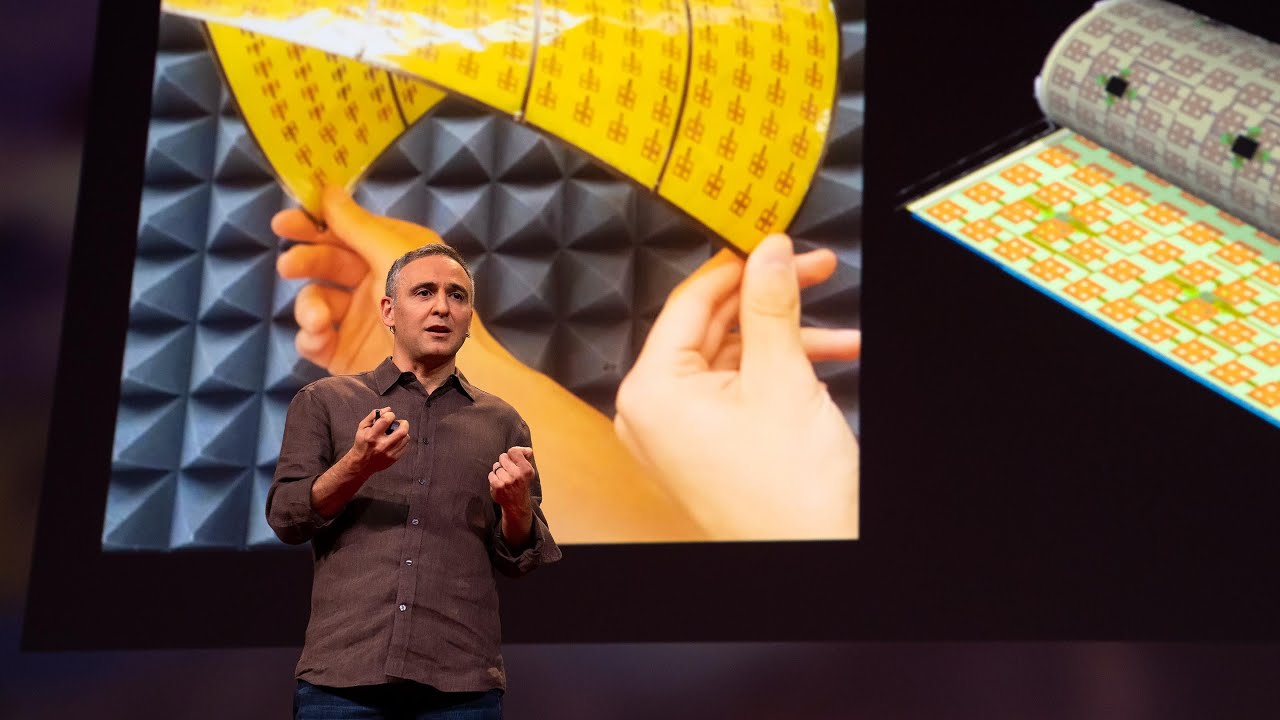
So computing has changed how we do many things today. And let me give you one example of an area that I particularly care about, which is product design. So if I was designing this car and I would use a 3D editor, it would be very easy for me to try out different colors and different appearances for this car.
I just make one click with my mouse and I have a red car or a blue car or a different pattern. Now, if you wanted to do the same with your car at home, that would be kind of difficult, right? You would have to go to a car garage or maintenance place.
They will spend many hours repainting your car. It would cost a lot. So you would probably not do this on a daily basis.
So in my research, I'm asking myself, what if you can actually give physical objects digital capabilities so that we don't have to use these complicated processes for our physical objects anymore, and we could change the color of a car as simple as a single mouse click? So this is what I'm going to talk to you today about, which is reprogrammable appearances. And let me show you the technology we developed.
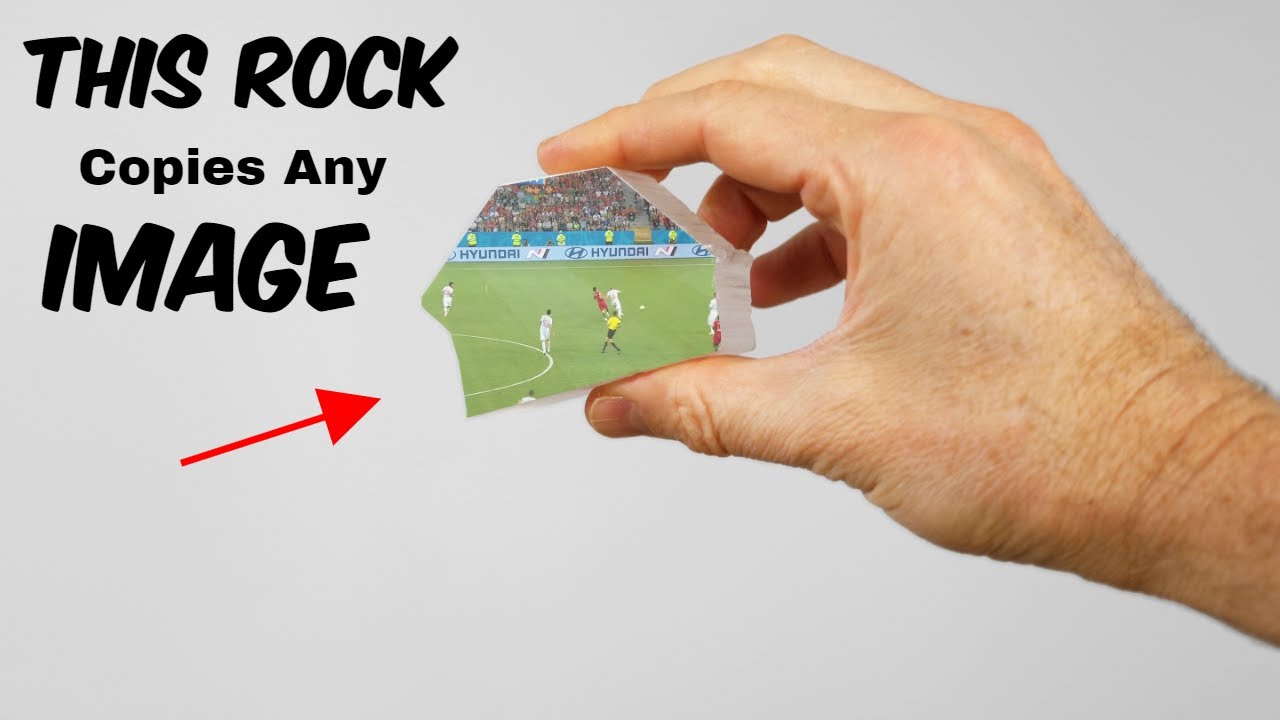
So we developed a material that you can spray onto any object, and by shining light of specific wavelengths on it, we can change the appearance of these objects. Our method is fully reprogrammable, so you can simply erase the texture you applied and apply a new one. Here you see a phone case, for instance.
What if in the morning, you're not only changing your outfit, but you can also reprogram the gadgets that you use on a daily basis? Same for your shoes, right? What if you only have one pair of a specific shoe, and then you just apply a new color texture.
You download it from an app, you apply it, and you're ready to go. Let's take cars, for example, maybe in car sharing, we can actually customize the cars to our liking so that it makes it more attractive for people to participate in these sharing economies. So here you see a summary of these.
Again, these are three different textures applied to the same phone case. So this is one physical object, the same for the shoe, for the car. And you can imagine other applications.
For instance, we are currently working on clothing. So you're not going to have 10 shirts with 10 different colors just to have something different to wear. And you can even imagine this for walls and entire rooms.
So maybe if you're owning an event space and you're having a different event, you can simply reprogram the walls to fit your event. So let me zoom out briefly before I go into the details of the technology. What is the long-term vision behind this?
So the vision here really is to transform analog product manufacturing business into digital business. So the idea here is that we are no longer going to sell these T-shirts or shoes or the phone cases as the main product. But instead, you may even get the physical product for free.
And instead, you're actually paying for an app from that company where you can download different visual textures and apply them to your objects. Maybe you remember the moments when we were still buying CDs with a single song, right? And it sounded really ridiculous that we, in the future, just pay a little bit to a company, and we can infinitely access songs.
This is the same idea here, extended to our other physical objects. So how does the technology work? Let me get a bit into the technical details.
So we are using a material called a photochromic dye. And these dyes, you can purchase from commercial companies. And if you shine light of a specific wavelength on it, they turn from transparent to being colored.
Now, they keep this color, so you can take out this dye, this bottle here, and use it in your environment. But if you apply a light of a specific other wavelength, they would go back to being transparent. So the process is fully repeatable.
You apply one wavelength, they desaturate. You apply a different wavelength, they desaturate. So normally, you can only buy them in a single color.
So that's kind of cool, but it's also a little bit boring because you would only be able to do like different shades of cyan, for instance. So how can we achieve these multicolored textures? The idea here is that we mix cyan, magenta, and yellow together-- this should sound familiar from your inkjet printer, for instance-- and we get a black ink.
But how can we now transform this black ink in the bottle into different colors? So again, on the side here, where we see the different bottles, this is the same bottle in each image, the same liquid, just that we programmed it to take on different colors. So how does this work?
So if you look at the CMY color model here, what we basically do is that we deactivate either the cyan, the magenta, or the yellow in this black liquid. So for instance, if you want to go from black to a red color, you would have to somehow deactivate the cyan dye in the black liquid. The same for the green-- if you want to have green color, you have to somehow deactivate the magenta in this bottle, so to then only have cyan and yellow, which gives you green.
So how do we do this? These different dyes, the cyan, magenta, and yellow, they have different absorption spectra. So here is a wavelength graph.
And what we need to do is we need to shine light of different wavelengths, so one wavelength for deactivating the cyan, one for deactivating the magenta, and one for deactivating the yellow. And interestingly, if you take a normal office projector, something that you would use for projecting slides, they already have three different light sources in there. They have RG and B light.
And lucky for us, with a little bit of applying optical filters, we can customize these wavelengths to deactivate individual dyes in the liquid. So this is basically what you saw here in this initial video, where we are applying either red, green, or blue light on a specific pixel to go from a black target, from a black color, to any specific target color that we want. So once you can see, the dark blue is already ready, because we go from black to dark blue.
That's much faster than going from black to a yellow, which needs a bit more exposure time from a combination of these different wavelengths. So since we're here at CSAIL, there's obviously a lot more behind it and a lot more math. So if you're interested, we have a paper out there and you can read more about it.
So let me show you a bit of a future work that we are doing. So right now, to apply a color texture, it takes between 15 to 20 minutes. That's not bad, but ideally, we would have it as fast as a single mouse click, right?
It would be instant. So if you actually double the amount of light that you shine, you also double the transfer speed. So in the end, it comes down to applying a lot of light power.
And then the question is, how practical is that in a commercial situation? Do you rather wait, or do you rather blow on full light? How can we make it faster in a different way?
We also tried out just grayscale previews. And we can now actually do this in less than 60 seconds. So here, you see one example where we are projecting.
So here, we are projecting again, a texture here. It's just a grayscale texture, but we can do this in less than 60 seconds. So it's just a trade-off.
If you are a product designer, do you just want to quickly try out the texture, or do you want to go for full color and wait a little bit longer? Another thing we are currently exploring is to get rid of these external light sources. So, so far, we are applying light via projectors.
So you see the normal office projector and the UV light in this box. But we are also trying out textiles. So there's a technology where you can now embed tiny LEDs into fibers.
And if you just apply these RGB and the UV light sources inside the fiber, we can maybe make this a standalone product as well. So here you see a first prototype of such a fiber. It's ongoing work.
We embedded a PCB board, added some LEDs, shown the light on it. And you see how our photochromic coating now adjusts the color. And we can even use this for other applications like 3D printing.
So if you know about 3D printing and resin 3D printing, it's typically a single color because there's only one tank of material. Now in the future, we can actually mix our photochromic dye technology into the resin and have a multi-colored DLP 3D printer. Again, here's a first test with the MIT logo.
So today, I talked about the technology that allows us to change the appearance of physical objects, getting closer to how we actually work with digital objects in the digital domain. So the long-term vision here really, is to give those physical objects the same capabilities as we have in digital. And I hope with the videos that I showed and the background on the technology, I could convince you that this is actually a future that is coming.
So I hope in the future, we will all get some free stuff, and we will just have an app where we can download different textures, we can apply and change our outfits. So thank you very much.