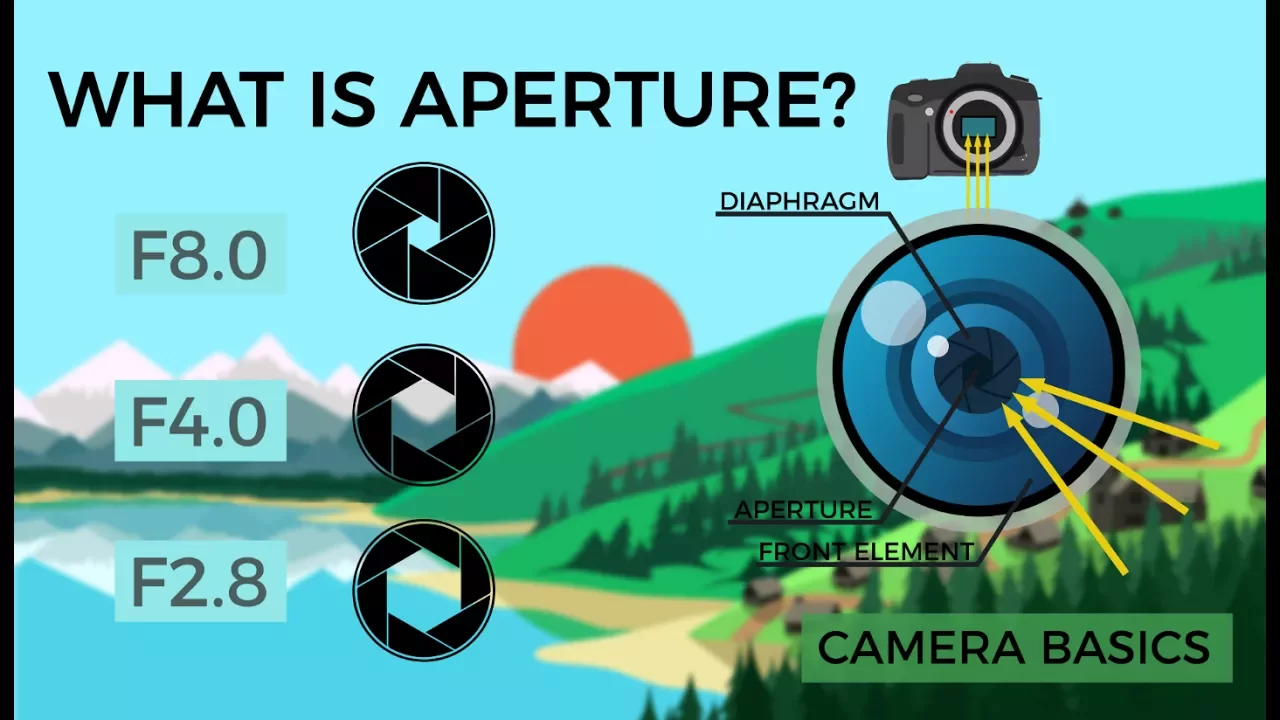
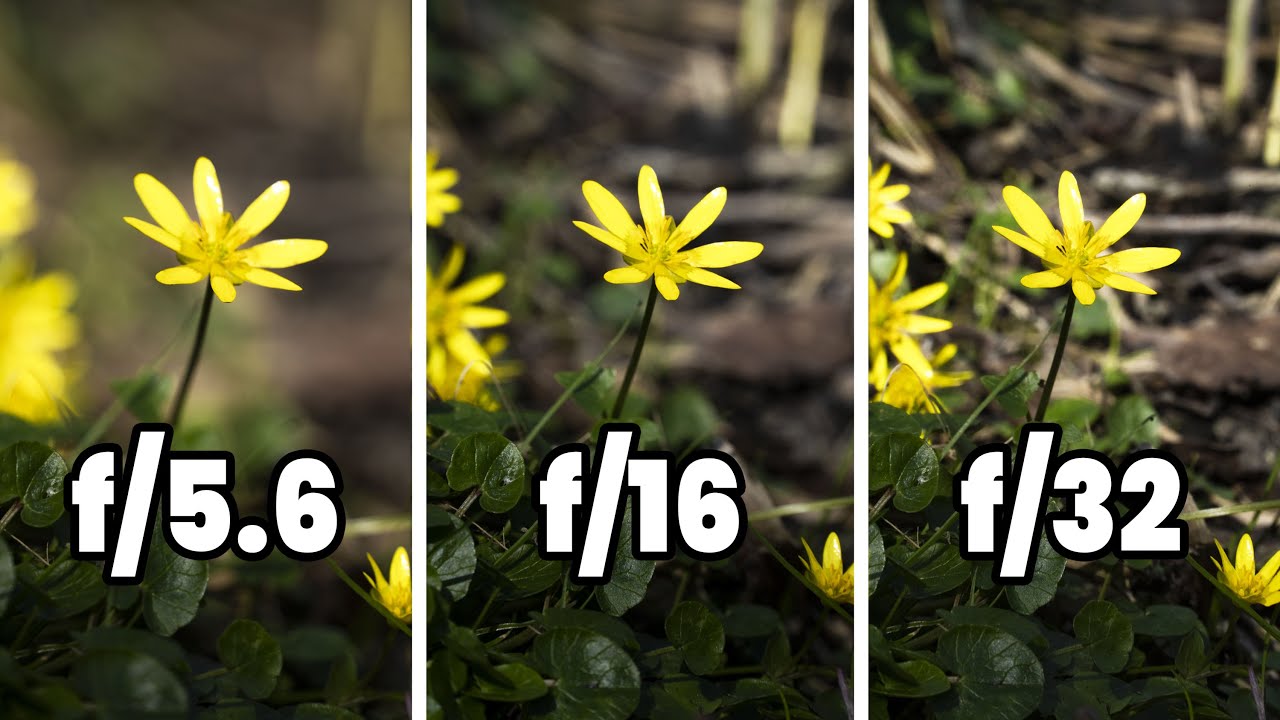
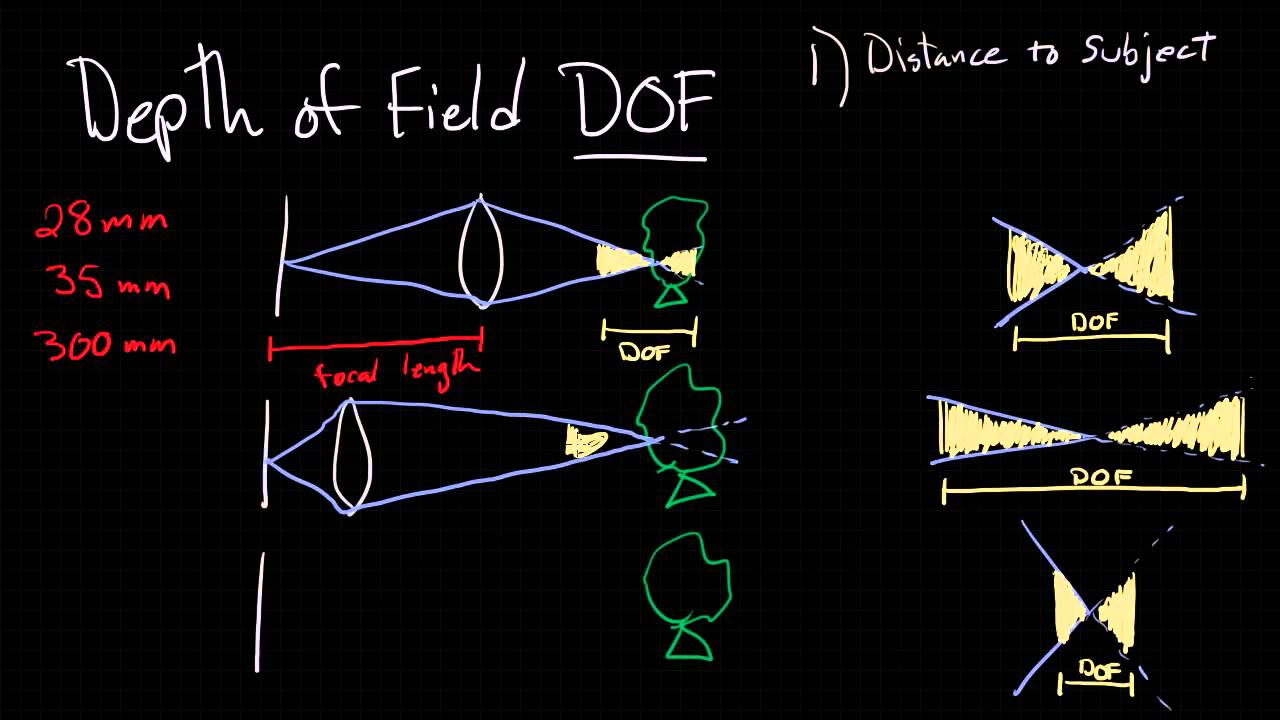
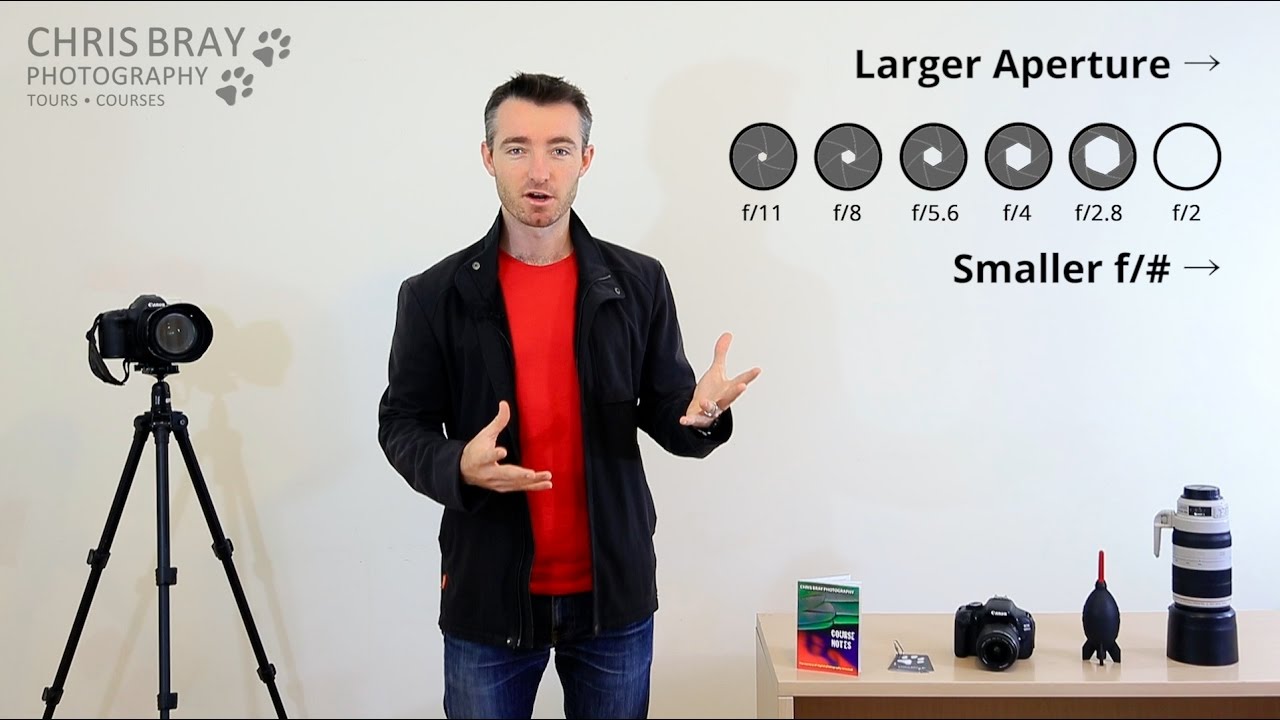
what is aperture perhaps the most influential parameter of photography aperture plays an important role in composition and setting up a shot let's take a closer look simply put aperture is the hole in the lens through which light travels into the camera body and on the camera sensor to understand let's look at the human eye all cameras are designed like human eyes corne to front of gather ir ir exping si of p e the pup is what we refer to as the aperture in photography the amount of light that falls onto the retina is determined by the size of the pup the larger the pup the more light falls onto the retina the larger the aperture of the lens the more light enters the camera the iris of the lens controls the size of the aperture and is called the diap diap is block all light exception of the that goes through theer in photography aperture is expressed in f numbers also known as f stops f stops are way of describing how open or closed the aperture is the smaller the f stop means a larger aperture while a larger f stop means a smaller aperture this can be tricky remember since large fops smaller sizes fop f 1. 4 is larger than f2. 8 and much larger than f8 or f11 aside from controlling the amount of light passing through the lens and into the camera the aperture has a direct impact on the depth of field the area of the image that appears sharp a large f number such as f16 will bring all foreground and background objects into focus while a small f number such f1.
4 will isolate either the foreground or background and everything else blurry every lens has a limit on how large or small the aperture can get if you take a look at the specifications of your lens it should indicate the maximum apertures lowest f numbers and minimum apertures highest f numbers the maximum aperture of the lens is much more important than the minimum aperture because it shows the speed of the lens lenses with apertures of f1. 4 or f2. 8 are considered fast lenses because they can pass more light into the camera than for example a lens with a maximum aperture of f4 or f5.
6 that's the reason night photography usually requires fast lenses the minimum aperture of a lens is usually not important and should rarely be used as diffraction will cause the image to lose clarity it is also worth noting the two types of lenses primes and zooms prime lenses have a fixed focal length meaning they cannot zoom without physically moving closer or further away from the subject zoom lenses give you the flexibility for you to zoom in or out of an object while remaining stationary while prime lenses will have a fixed maximum aperture the maximum aperture of a zoom lens will often get smaller as the focal length increases these lenses are called variable aperture lenses this is important because for a zoom lens with a focal length of 70 to 200 mm the aperture may increase from f3. 5 to f5.



![Ultimate Guide to Camera Lenses — Every Type of Camera Lens Explained [Shot List Ep. 7]](https://img.youtube.com/vi/uSsIqR3DuK8/maxresdefault.jpg)