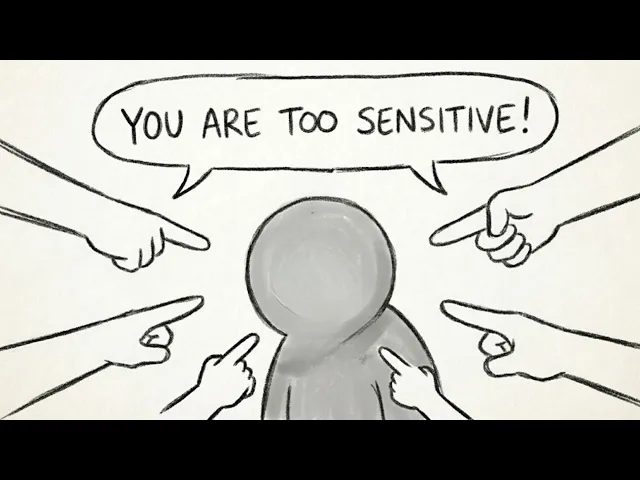
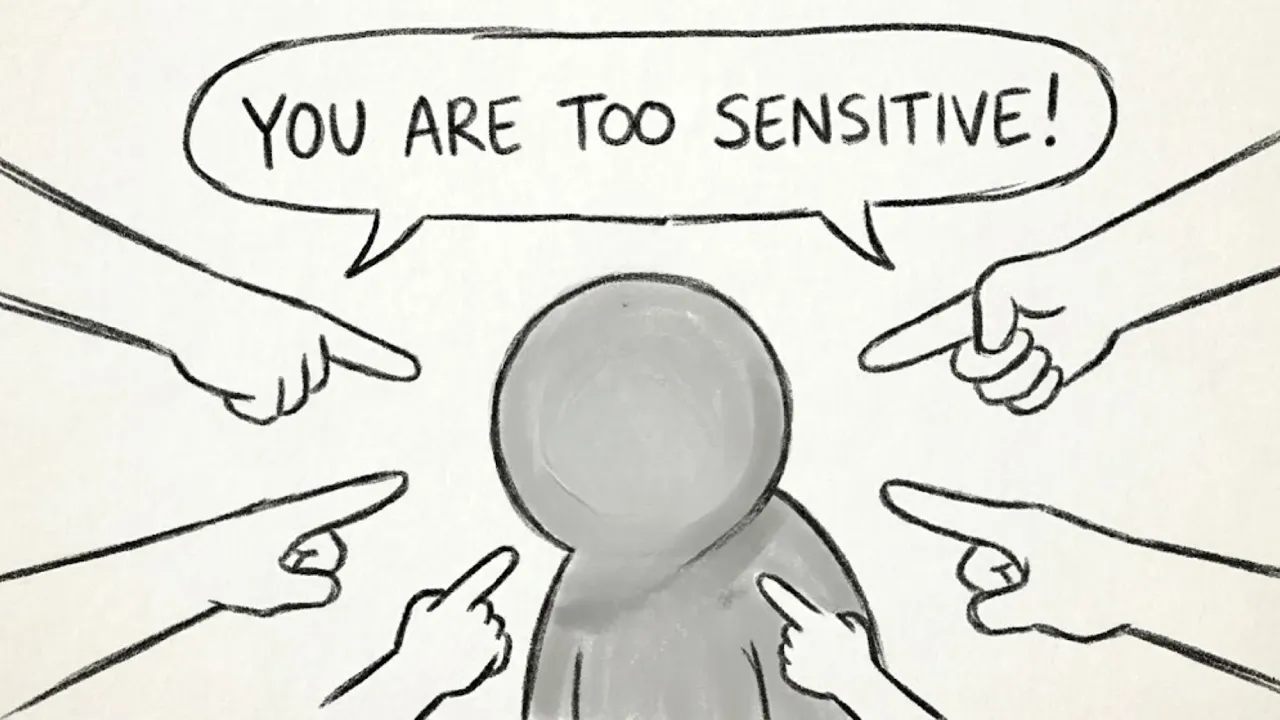
I know exactly what you have been told your whole life. You have been told that you are too sensitive. You have been told to toughen up.
You have been told probably a thousand times not to take things so personally. You have likely spent years apologizing for your tears. But I am here today to tell you that the diagnosis you've been given is wrong.
There is nothing wrong with you. You are not weak and you are certainly not a mistake. You are what psychologists call a highly sensitive person.
But I prefer a different term. You are a super sensor. While others are recording the world in standard definition, your brain is recording in 8K resolution.
And today we're going to look at the neuroscience that proves your sensitivity is not a defect. It is a high performance radar system that the world desperately needs. To understand yourself, we have to look at your hardware.
Because this isn't just a personality quirk, it is biology. Research shows that your brain processes information differently than the other 80% of the population. Think of the human brain like a camera.
Most people's brains are recording the world in standard definition, maybe 720p. It's a good picture. It's efficient.
It gets the job done without taking up too much memory. But your brain, your brain is recording in 8K resolution. Neuroscience has identified three specific upgrades in your hardware that explain why life feels so intense.
First, your brain lacks a filter. Neuroscientists call this low latent inhibition. Most brains are designed to ignore 90% of what they see to save energy.
They treat the background noise as irrelevant. But your brain treats everything as relevant. You process the texture of the chair, the hum of the refrigerator, and the mood of the person sitting next to you all at once.
This is why you get overwhelmed. But it is also why you notice the beauty, the patterns, and the solutions that everyone else misses. Second, your mirror neurons are hyperactive.
These are the neurons that allow us to empathize. But for you, you don't just understand that someone is sad. You physically feel their sadness in your own body.
You are not imagining it. Your brain is literally simulating their emotional state. You are an emotional sponge in a world full of spills.
And third, this leads to the most misunderstood feature of your hardware, depth of processing. Psychologists call this the pause to check strategy. In a conversation or when making a decision, you might feel like you are slower than others.
You might beat yourself up for hesitating or overthinking. But here is the science. You are not slow.
You are thorough. While others are engaging in shallow processing, just reacting to what is right in front of them, your brain is engaging in deep semantic encoding. You are unconsciously connecting the current moment to your past memories, predicting future outcomes and analyzing the meaning behind the words.
You aren't hesitating because you are confused. You are hesitating because your brain is running a complex simulation to ensure the best possible outcome. That is not a bug.
That is highle computation. Now you might be asking if this makes life so hard, why did evolution keep this trait? This is the most important part.
If being sensitive was a weakness, natural selection would have eliminated it thousands of years ago. But it didn't. It kept it.
Why? Because the tribe needs you. In ancient times, the warriors, the nonsensitive majority, were essential for hunting and fighting.
They were bold and risk-taking. But a tribe of only warriors would die. They would rush into danger without a plan.
The tribe needed royal advisers. That is you. You were the one who noticed the weather changing before the storm hit.
You were the one who sensed that the neighboring tribe was lying. Your weakness is actually a sophisticated early warning system. Society today is loud, fast, and aggressive.
It is built for the warriors. That is why you feel out of place. But do not mistake being out of place for being without value.
I know that carrying this radar comes with a cost. Because you process everything so deeply, you reach your limit faster. When you suddenly shut down or need to hide in a dark room, that is not you being dramatic.
That is your ram being full. Your system has overheated. But science has a beautiful metaphor for this.
Most people are like dandelions. They are resilient. They can grow anywhere in a crack in the sidewalk or a beautiful garden.
They are fine regardless of the environment. But you you are an orchid. If you try to grow in a harsh, noisy, or toxic environment, you will wither.
You will struggle more than the dandelions. And for years, you've probably blamed yourself for not being a dandelion. But the research shows something amazing called vantage sensitivity.
When an orchid is placed in the right environment with the right light, the right soil, and the right care, it doesn't just survive. It blooms with a complexity and beauty that the dandelion can never achieve. You don't need to toughen up to survive the sidewalk.
You need to move yourself to the greenhouse. When you curate your life to support your sensitivity, you don't just catch up to others, you surpass them. So, here is my prescription for you.
Stop trying to install a tougher filter. You cannot change your biology, and you shouldn't want to. The world has enough numbness.
We don't need you to be thicker skinned. We need you to be exactly who you are. But you must protect your gift, build your boundaries, honor your need for silence.
And the next time someone tells you that you are too sensitive, take a breath, smile internally, and remember the truth. You do not have a defect. You are just seeing the world in 8K resolution.
And in a world that is increasingly disconnected, your ability to feel is not a burden. It is the very thing that makes you human. And because you possess this highresolution radar, you might have instinctively built a wall around your private life.
You might be that person who logs on, watches, but rarely posts. To the outside world, you look like a ghost. But psychology suggests that this silence isn't empty.
It might be a sign of a completely different kind of strength. If you want to know if your digital silence is a sign of high confidence or hidden anxiety, click on this video right here. I break down the psychology of the online ghost and why stepping back from the feed might be the healthiest thing a super sensor can do.
I'll see you over there. I know exactly what you have been told your whole life. You have been told that you are too sensitive.
You have been told to toughen up. You have been told probably a thousand times not to take things so personally. You have likely spent years apologizing for your tears.
But I am here today to tell you that the diagnosis you've been given is wrong. There is nothing wrong with you. You are not weak and you are certainly not a mistake.
You are what psychologists call a highly sensitive person. But I prefer a different term. You are a super sensor.
While others are recording the world in standard definition, your brain is recording in 8K resolution. And today we're going to look at the neuroscience that proves your sensitivity is not a defect. It is a high performance radar system that the world desperately needs.
To understand yourself, we have to look at your hardware. Because this isn't just a personality quirk, it is biology. Research shows that your brain processes information differently than the other 80% of the population.
Think of the human brain like a camera. Most people's brains are recording the world in standard definition, maybe 720p. It's a good picture.
It's efficient. It gets the job done without taking up too much memory. But your brain, your brain is recording in 8K resolution.
Neuroscience has identified three specific upgrades in your hardware that explain why life feels so intense. First, your brain lacks a filter. Neuroscientists call this low latent inhibition.
Most brains are designed to ignore 90% of what they see to save energy. They treat the background noise as irrelevant. But your brain treats everything as relevant.
You process the texture of the chair, the hum of the refrigerator, and the mood of the person sitting next to you all at once. This is why you get overwhelmed. But it is also why you notice the beauty, the patterns, and the solutions that everyone else misses.
Second, your mirror neurons are hyperactive. These are the neurons that allow us to empathize. But for you, you don't just understand that someone is sad.
You physically feel their sadness in your own body. You are not imagining it. Your brain is literally simulating their emotional state.
You are an emotional sponge in a world full of spills. And third, this leads to the most misunderstood feature of your hardware, depth of processing. Psychologists call this the pause to check strategy.
In a conversation or when making a decision, you might feel like you are slower than others. You might beat yourself up for hesitating or overthinking. But here is the science.
You are not slow. You are thorough. While others are engaging in shallow processing, just reacting to what is right in front of them, your brain is engaging in deep semantic encoding.
You are unconsciously connecting the current moment to your past memories, predicting future outcomes and analyzing the meaning behind the words. You aren't hesitating because you are confused. You are hesitating because your brain is running a complex simulation to ensure the best possible outcome.
That is not a bug. That is highle computation. Now you might be asking if this makes life so hard, why did evolution keep this trait?
This is the most important part. If being sensitive was a weakness, natural selection would have eliminated it thousands of years ago. But it didn't.
It kept it. Why? Because the tribe needs you.
In ancient times, the warriors, the nonsensitive majority, were essential for hunting and fighting. They were bold and risk-taking. But a tribe of only warriors would die.
They would rush into danger without a plan. The tribe needed royal advisers. That is you.
You were the one who noticed the weather changing before the storm hit. You were the one who sensed that the neighboring tribe was lying. Your weakness is actually a sophisticated early warning system.
Society today is loud, fast, and aggressive. It is built for the warriors. That is why you feel out of place.
But do not mistake being out of place for being without value. I know that carrying this radar comes with a cost. Because you process everything so deeply, you reach your limit faster.
When you suddenly shut down or need to hide in a dark room, that is not you being dramatic. That is your ram being full. Your system has overheated.
But science has a beautiful metaphor for this. Most people are like dandelions. They are resilient.
They can grow anywhere in a crack in the sidewalk or a beautiful garden. They are fine regardless of the environment. But you you are an orchid.
If you try to grow in a harsh, noisy, or toxic environment, you will wither. You will struggle more than the dandelions. And for years, you've probably blamed yourself for not being a dandelion.
But the research shows something amazing called vantage sensitivity. When an orchid is placed in the right environment with the right light, the right soil, and the right care, it doesn't just survive. It blooms with a complexity and beauty that the dandelion can never achieve.
You don't need to toughen up to survive the sidewalk. You need to move yourself to the greenhouse. When you curate your life to support your sensitivity, you don't just catch up to others, you surpass them.
So, here is my prescription for you. Stop trying to install a tougher filter. You cannot change your biology, and you shouldn't want to.
The world has enough numbness. We don't need you to be thicker skinned. We need you to be exactly who you are.
But you must protect your gift, build your boundaries, honor your need for silence. And the next time someone tells you that you are too sensitive, take a breath, smile internally, and remember the truth. You do not have a defect.
You are just seeing the world in 8K resolution. And in a world that is increasingly disconnected, your ability to feel is not a burden. It is the very thing that makes you human.
And because you possess this highresolution radar, you might have instinctively built a wall around your private life. You might be that person who logs on, watches, but rarely posts. To the outside world, you look like a ghost.
But psychology suggests that this silence isn't empty. It might be a sign of a completely different kind of strength. If you want to know if your digital silence is a sign of high confidence or hidden anxiety, click on this video right here.
I break down the psychology of the online ghost and why stepping back from the feed might be the healthiest thing a super sensor can do. I'll see you over there.