A masked killer stalks the streets, searching for the next helpless victim of his insatiable lust for blood. As the police scramble to find a suspect, the body count climbs higher and higher. To make matters worse, the killer begins taunting the police, sending them clues, threats, and mysterious coded messages.
It's like something out of a horror movie, but for the people of California in the late 1960s, the nightmare was all too real. It was all the doing of a killer whose name is mentioned alongside the likes of Bundy, John Wayne Gacy, and Richard Ramirez. But unlike these other monsters, the Zodiac Killer was never caught.
In spite of decades of theories and chasing down leads, the case has never been solved. But why? What's so unique about the Zodiac Killer?
Let's start at the beginning, with his very first kill (as far as we know). Betty Lou Jensen was a bright, sweet Junior at Hogan High School, where she was an honor student. She was a member of the Sunshine Girls, whose self-proclaimed mission was to "lay a foundation of purity, service, and usefulness in all things that help to make the lives of those around us happier, and the world a better place to live in.
" Dave Faraday was a generous, conscientious Senior at Vallejo High School. There, he was active in a wide variety of extracurricular activities including student government, the wrestling team, and the Eagle Scouts. He was especially active in the Scouts, and was a winner of the prestigious God & Country Award.
They were two well-liked, All-American kids, and when Betty Lou and David met on a committee for a church-run music festival, it was love at first sight. On the evening of December 20, 1968, only two weeks after the two had first met, Betty Lou invited David over to meet her parents before their first official date. Betty Lou dressed up for the occasion in a purple dress with a white collar, tying the whole look together with a seasonal festive Christmas bell brooch.
David arrived at Betty Lou's home at 8 PM, where he met her family before the two set off for a Christmas concert at Hogan High. Unbeknownst to their parents, Betty Lou and David took a bit of a detour after the concert, driving David's Rambler station wagon over to a secluded little spot near a pumping station on Lake Herman Road, a local lover's lane tucked between Vallejo and Benicia. They wouldn't stay long- after all, they had promised their parents that they would both be home by 11 PM.
Tragically, it was a promise they would be unable to keep. Stella Medeiros, a local woman, left her ranch on Lake Herman Road at 11:10 PM. She was on the way to pick up her teenage son from the movie theater in Benicia, and had no idea that she was about to stumble on a crime scene that would kick off an American horror story.
About five minutes after leaving her home, Stella's headlights illuminated a pair of bodies, lying in the dirt outside of an abandoned car. It was David Faraday's two-toned Rambler. In the less than half an hour since the couple had parked, David and Betty Lou had been attacked.
Unsure of what else to do, Stella drove to Benicia as fast as she could, until she spotted a police car. Then, she honked her horn and flashed her lights until someone would listen to what she had seen. Around the same time, Detective Pierre Bidou was pulling into the police station parking lot with a pound and a half of confiscated marijuana, when he heard a call about a possible shooting on Lake Herman Road.
He drove to the scene and found David Faraday lying on the ground outside the passenger door of his car. As Bidou examined the body, spotting the apparent gunshot wound above David's left ear, he was shocked to see that the boy was still breathing. He was rushed to Vallejo General Hospital, but succumbed to his injuries on the way.
Betty Lou was found dead, lying 28 feet away from the rear of the vehicle in a pool of her own blood. More blood covered her head and face. Betty had been shot five times in the back "in close pattern on the right side," and twice in the front.
In addition to the injuries found on David and Betty, the car itself had bullet holes in the roof and back window. This led investigators to speculate that the killer had fired a warning shot, using it to threaten Betty and David out of the car before he finished them off. The final bit of notable physical evidence was the shell casings that littered the ground around the car and bodies.
These, along with ballistic evidence, identified the murder weapon as a . 22-caliber semiautomatic pistol, which had fired Winchester Western Super X copper-coated bullets. Deputy Russell T.
Butterbach of the Solano County Sheriff Department was promoted to investigator the following morning, and he, along with Detective Sergeant Les Lunblad, began to investigate the double homicide. They had only a handful of leads, but attempted to follow up on all of them. There was Betty Lou's ex-boyfriend, Ricky, but he had an alibi in the form of a movie night with his family.
There were some gun-toting locals spotted near the pump station that night, but they had been hunting raccoons with rifles that did not match the murder weapon. The investigative team questioned all of Betty Lou and David's friends, their classmates, anyone who might offer insight into what the police were certain had to be a drug-related crime. The police were treating the murder as if it were an ordinary crime.
Tragic, of course, but the same sort of violent crime the department had dealt with in the past. Have you ever wanted to create videos of your own, but didn’t know where to start or felt it would be too difficult? Well that's where invideo AI comes in.
invideo AI is the world’s most used AI video creator with over 10 millions users across 150 plus countries. We’ve tried countless AI video creator tools, and invideo AI is the only one that puts you in the driver’s seat and works as your personal sidekick to help you with the painstaking tasks of scripting, editing, and finding relevant footage so you can bring your ideas to life using simple text prompts. All you have to do is start with a simple text prompt and it creates the first rough draft for you.
From there you can get creative and fine tune your video using just text prompts in ways you’d have never imagined- want to change the intro. Done. Want it to find better footage for a scene?
Done. Want it to translate your video to Spanish? Done.
The best part - Clone your voice and make it narrate the video in your voice in any language! While plenty of people see AI as a threat, or that AI is replacing humans in some way, we feel the complete opposite, that it’s simply a tool that can help you level up your skills and bring projects to life that you never could have before. Plus, invideo AI can save you hundreds of dollars every month compared to what you’d have to spend on editing tools and stock footage subscriptions.
Just go to the link in the description and use my code to get twice the number of video generation credits in your first month. Now, back to the video. They couldn't be more wrong, but they wouldn't realize their mistake until July 5, 1969, when two more bodies turned up.
It was the night of the Fourth of July, and shortly before the clock struck midnight, a young mother named Darlene Ferrin asked her babysitters if they could stay until 12:15 while she ran out to buy some last-minute fireworks. Whether or not she actually intended to buy fireworks, we'll never know. Her first stop was not at a fireworks stand, but at the home of Michael Mageau.
She picked Michael up, and as Darlene's car sped away from his place, Michael noticed something unsettling: they were being followed by another car. Darlene sped up, and so did the car that was tailing them. Darlene struggled to lose the other car, and what was supposed to be an ordinary drive quickly became a car chase.
As Darlene and Michael reached the Blue Rock Springs Golf Course, their car suddenly hit a log, causing the vehicle to stall. The other car came to a stop, parking off to the left of Darlene's car for a moment, before it drove off. The two breathed a sigh of relief, believing the bizarre nightmare was finally over.
Sadly, they were mistaken. Only five minutes later, the car came back, parking in the same spot it had before. This time, it left its lights on.
The driver stepped out, and approached Michael and Darlene. At first, Michael thought it might be a police officer, and the two reached for their wallets, ready to have their IDs out. Then, the stranger approached the passenger side, and shined a bright flashlight through the window, temporarily blinding the pair.
Before they could ask a single question, the stranger fired a gun through the window, into the car. After firing several shots, the shooter walked back to his car. Michael, miraculously, was still alive, and able to catch a glimpse of the mysterious assailant.
Then, the man came back, firing two more shots at each of his victims. The golf course's caretaker heard the shots and called the police, but his account was dismissed. The authorities thought that the man had misidentified the sound of Fourth of July fireworks, and thought nothing of it.
. . until three teenagers stumbled upon the bodies.
When one of the teens called the police to report the bodies, they realized that the caretaker had heard more than fireworks, and arrived on the scene. If they had listened to the first call, they might have made it in time to catch the killer, but they still arrived just in time to save Michael's life. Though Michael's survival allowed him to give an eyewitness testimony, some of the details of the case called his account into question.
He had described a car chase, and at first the police were suspicious. After all, it made sense that he might come up with a wild excuse to justify winding up alone with a married woman in a spot known for being something of a lover's lane. But an investigation of Darlene's car revealed that the ignition was turned on, the car was in low gear, and the hand brake was not set, which was consistent with the detail Michael had provided about the car stalling.
Another red flag raised during the investigation was the contents of Darlene's wallet. She had left under the pretense of going to buy fireworks, but had only thirteen cents with her at the time of her death. Perhaps she was expecting Michael to pay for the fireworks?
Or perhaps she was never going to buy fireworks at all, and had met up with Michael for an entirely different reason. The investigators learned that Darlene had something of a reputation around town, known for going out on frequent dates with men other than her husband. Some of her lovers had even been police officers from the sheriff's office.
At first, the authorities suspected jealousy might be the killer's motive. Perhaps it was one of Darlene's past lovers, or even her husband. But then there was another possibility, something far more sinister, raised by a phone call that came in to the Vallejo Police Department switchboard at 12:40 AM, two minutes after Darlene was declared dead.
The officer who answered the phone heard a low, monotonous male voice say, "I want to report a double murder. If you will go one mile east on Columbus Parkway to the public park, you will find kids in a brown car. They were shot with a 9-millimeter Luger.
I also killed those kids last year. Good-bye. ” The call was traced to a pay phone in front of the Vallejo Sheriff's Office.
The call was made before anyone knew about the murders, aside from a few police and the witnesses who had called the police. Later, it was confirmed that a nine-millimeter gun was used in the attack, just as the caller had said. Whoever had made that phone call, there was a good chance that they were the killer.
It was not the only suspicious phone call made that night, either. Within an hour of the murder, three of Darlene's relatives received calls. When they picked up the phone, all they could hear was heavy breathing on the other end.
To some investigators, this suggested that the killer knew Darlene, at least well enough to know who her family members were. As strange as these calls were, the mystery was only just beginning. The next chapter began on July 31, 1969, when three local newspapers received a letter.
The correspondence, which arrived at the San Francisco Chronicle, the San Francisco Examiner, and the Vallejo Times-Herald, included details that only the killer could possibly know. Where an ordinary letter might include a signature, these letters were signed with a now-infamous symbol. All three letters were also accompanied by a cipher, the same one that the killer demanded the newspapers publish on the front page.
On August 7, the Examiner received another letter. This one was three pages long, and was the first time the killer gave himself a name: the Zodiac. All over the country, people were scrambling to crack the ciphers.
Agents at the NSA, the CIA, and the FBI, as well as dozens of code hobbyists who spotted them in the newspaper. In the end, it was two of these hobbyists that first cracked the code. Donald Harden, a high school history and economics teacher, and his wife, Bettye Harden, spotted the ciphers in the newspaper and got to work.
Donald's lifelong interest in cryptography, combined with Bettye's determination, made them the perfect team. Within twenty hours, they had managed to decode the ciphers. They cracked it on August 4, 1969, but it took them over a week to convince anyone to take them seriously.
Finally, their decipherment was published on August 12, 1969. About a month and a half later, the Zodiac struck again. On September 27, 1969, 20-year-old Bryan Hartnell and twenty-two year old Cecilia Shepard drove out to Lake Berryessa, a manmade lake thirty-six miles north of Vallejo.
They arrived at 4:00 PM to enjoy the sunshine and a picnic by the lake. It seemed like a safe activity, picnicking in the middle of the day. Like nothing could go wrong.
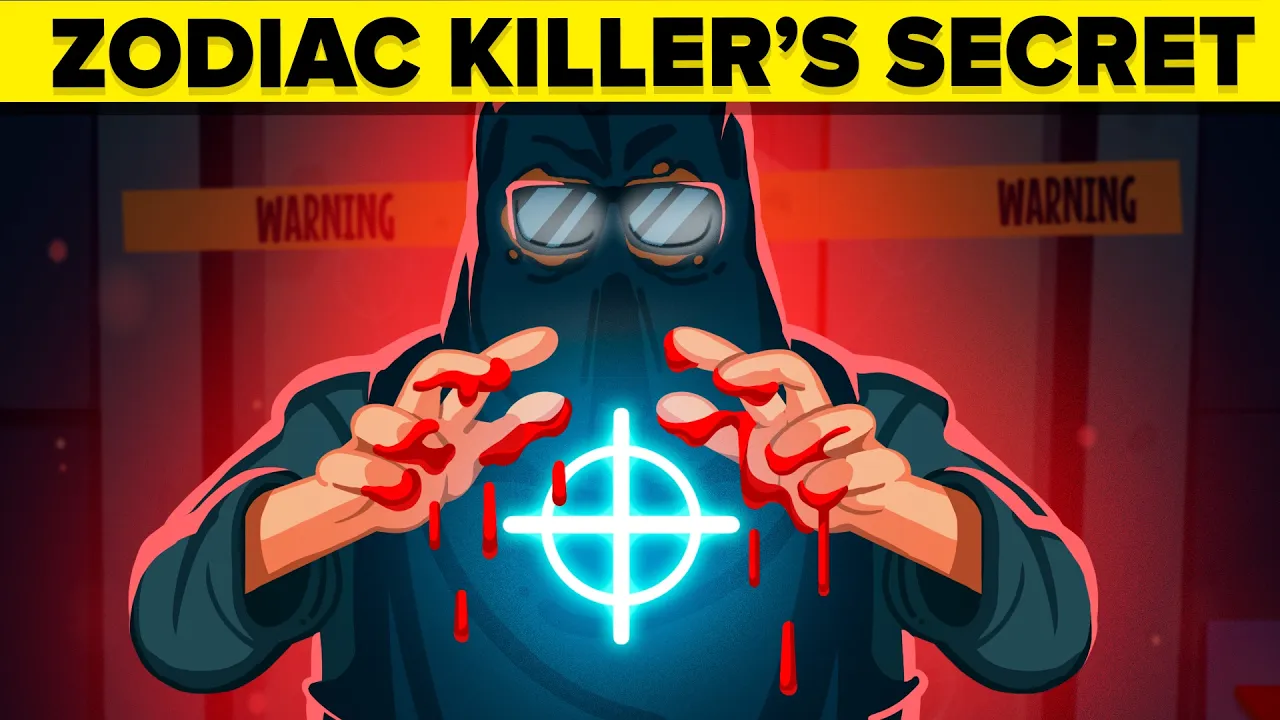
But as they looked up, they saw a strange man approaching them, dressed in a costume with a black hood, like that of an executioner. The hood covered his chest, and was emblazoned with the same symbol that the Zodiac had used to sign his letters. There was a slit for his mouth, allowing him to speak clearly, and he wore clip-on sunglasses over the hood, obscuring his eyes.
With him, he had lengths of rope, and a wooden sheath on his belt that concealed a large knife. The knife was not the only weapon he had, either. He brandished a semiautomatic pistol, which he held up, aiming the barrel at the couple.
Then, he spoke: "I want your money and your car keys. I want your car to go to Mexico. " Bryan immediately complied, handing over his car keys and all of the money he had with him, which was less than a dollar.
The masked man took the items from him, stuffed them into his pocket, and put the gun away. He continued to speak, explaining "I'm an escaped convict from Deer Lodge, Montana. I've killed a prison guard there.
I have a stolen car and nothing to lose. I'm flat broke. " After speaking to them a little while longer, he held up the lengths of rope: hollow-core plastic clothesline, cut into three-foot lengths.
He told Bryan to lie face down on the ground so that he could tie him up. Bryan argued at first, but allowed Cecilia to tie him up on the stranger's orders. Next, Cecilia was instructed to lie down, and the stranger tied her up.
He then redid the ropes on Bryan, tightening them aggressively. They continued to speak as the sun began to set. As the area grew darker, so did the conversation, until the man in the mask finally said: "I'm going to have to stab you people.
" And he did. First, he stabbed Bryan in the back Then, he stabbed Cecilia. As she struggled to get away from him, she rolled onto her back, so he stabbed her repeatedly in the front, too.
Bryan's injuries were not enough to kill him right away, so he played dead, hoping that the killer would be convinced enough to leave him there. The plan worked, and the masked man tossed the money and the keys down on the picnic blanket, then left. The demands for money and car keys had been a ruse all along, and he had never planned to let the couple leave with their lives.
Before he left the lakeside, the kiler did one more thing. He took a black felt-tip pen, and wrote a message on the door of Bryan's car. He wrote the symbol from his letters and costume, followed by the word Vallejo, and the dates of the previous Zodiac murders, accompanied by September 27, 1969, and the note "by knife.
" When the killer finally left the area, Bryan and Cecilia were still alive. They managed to free themselves from the ropes, but were too weak from the blood loss to make it to the car. Two nearby fishermen happened to hear their moans of pain, and called for help.
Meanwhile, the Napa Police Department received a call from the killer at 7:40 PM. When they answered the phone, that same monotone voice said: "I want to report a murder- no, a double murder. They are two miles north of Park Headquarters.
They were in a white Volkswagen Karmann Ghia. I'm the one that did it. " The police were able to trace the call to a pay phone, and pulled a palm print from the phone.
Both Bryan and Cecilia made it to the hospital, but only Bryan managed to survive his injuries. Cecilia succumbed to her twenty-four stab wounds the next day, at 3:45 PM. Two weeks after the attack at Lake Berryessa, the Zodiac struck again.
It was the night of Saturday, October 11, 1969, and twenty-nine-year-old San Francisco State Ph. D student Paul Stine was driving his cab in downtown San Francisco. While driving along his usual route, he stopped to pick up a passenger, a white male, not knowing that this would be the last ride he ever gave.
The man asked Paul to take him to the intersection of Washington Street and Maple, in the Presidio Heights District. When Paul's cab reached the destination, the cab's headlights illuminated a man walking his dog. At the sight of this potential witness, the passenger told Paul to drive up one more block.
Then, as the cab reached the corner of Washington Street and Cherry, the man in the backseat pulled out a nine-millimeter gun, and put the barrel to Paul's head. The killer wrapped his arm around Paul's neck, holding him in place, and pulled the trigger. Then, he climbed out of the backseat, and opened the front passenger door.
He climbed in, Paul's head in his lap, and took his victim's wallet. Then, he wiped down the interior of the vehicle. During this part of the process, unbeknownst to the killer, he had a witness.
A fourteen-year-old girl saw the killer, along with two brothers that she called over to the scene. At 9:58 PM, the three witnesses called the police to report what they had seen. They described a white man in a dark jacket, but when patrolmen Donald Fouke and Eric Zelms arrived on the scene, they were searching for a black adult male.
So, when they spotted a white man walking in the same direction the witnesses saw the killer heading after he left the cab, they didn't take him in for questioning. Instead, they asked him if he had seen anything suspicious. He told them that he had seen a man waving a gun running east, on Washington.
The police followed the false tip, and by the time they realized there was no man with a gun the way they were going, the killer was gone. When the correct description of the killer was released, along with a police sketch based on the witness descriptions, Fouke and Zelms informed their superiors that they had probably met the killer on the street. But even though the killer had slipped through their fingers, the police had another piece of evidence to go on: a bloody handprint from the cab, which was not a match for Stine.
So, it had to belong to his murderer. After Stine was killed, the San Francisco Chronicle received another letter from the Zodiac. Along with the letter, they were sent a torn three-by-five inch piece of grey and white cloth, spattered with blood.
It was matched to the shirt Paul Stine was wearing when he was killed. The letter contained details of the murder, taunts to the police, and a frightening threat. The Zodiac Killer takes credit for the recent murder of the taxi driver and mocks the S.
F. police for missing a chance to capture him. He also issues a chilling threat to attack a school bus, planning to shoot out the tire and kill the children as they escape, further adding to the fear surrounding his reign of terror.
This mention of a school bus could have been an empty threat, but no one wanted to take that risk. Napa Valley Unified School District put an extra man on each of their buses, to serve as a lookout in case of attack. There were also a total of seventy police units riding on the buses, armed to the teeth.
Plainclothes cops also watched the buses in San Francisco from unmarked police vehicles, while air patrols circled above. The Zodiac Killer never did attack a school bus, but he was far from finished with his reign of terror. On November 8, he sent a new letter, written on a greeting card.
The card featured an illustration of a pen, dripping what appeared to be blood, alongside the caption "Sorry I haven't written, but I just washed my pen. . .
" He signed the note with his standard symbol, and one final note: "Des July Aug Sept Oct = 7'', possibly a reference to the seven people attacked so far, or a reference to the number of people he had killed. The cipher accompanying this note is frequently referred to as the 340 cipher, due to the amount of characters that it contained. No one was able to solve this one, even those who had cracked the previous one.
The next day, the Zodiac sent a letter to the San Francisco Chronicle. The letter was his longest yet, and clarified the meaning of his inclusion of the number 7. Next, he described a recipe for a bomb, which he called a "death machine," as well as a full-page diagram of it.
Next, there was a strange diagram, and then a postscript, which read: "PS. Be shure to print the part I marked out on page 3 or I shall do my thing. To prove that I am the Zodiac, Ask the Vallejo cop about my electric gun sight which I used to start my collecting of slaves.
" Though Paul Stine was the last confirmed Zodiac murder, and none of his promised bombings ever came to pass, the Zodiac was not yet finished terrorizing the people of California. On March 17, 1970, Kathleen Johns was driving along 132 west from Modesto. It was just about midnight, she had her ten-month-old daughter with her, and she was seven months pregnant.
As she drove, the car behind her began flashing its lights and honking its horn. The man behind the wheel sped up and pulled up alongside her. He called out to Kathleen, and informed her that her left rear wheel was wobbling.
She was nervous, having a strange man approach her so late at night, but a wobbly back wheel could mean a deadly accident if left unattended, so she pulled over onto the side of the road. The stranger parked behind her, and offered to tighten the lug nuts on her wheel with a tire iron he had with him. She agreed, and he tended to the wheel for a moment, finished up, then climbed into his car and drove off into the darkness.
That brief moment of confusion and apprehension done, Kathleen started her car back up and pulled back onto the road. But as she did, her left rear wheel came loose, falling off entirely. She didn't realize at the time, but rather than tightening the lug nuts, the man had removed them, leaving the wheel with nothing to hold it in place.
The wolf in sheep's clothing masquerading as a rescuer had not gone far, and reappeared just in time to offer the stranded Kathleen and her baby a ride to the nearest service station. It wasn't far, and Kathleen could see it about a quarter of a mile down the road. But it would be better to accept the ride than to try and make the walk in the dead of night, pregnant, and with a baby in tow.
So, she joined the stranger in his car, in spite of her misgivings. Her stomach dropped as the man drove right past the service station, continuing onto the deserted farm roads beyond. Every few minutes, he would slow, beginning to pull over, before course correcting and getting back onto the road.
The ride from hell continued for hours, as the man repeatedly told the trapped Kathleen "You know I'm going to kill you," and "You know you're going to die. " It was when the man drove onto a freeway off ramp that Kathleen spotted a chance to escape. He briefly stopped the car, and she seized the opportunity.
She opened the door, grabbed her infant daughter, and ran for her life. There was no one around to hear her cries for help, so she climbed into an irrigation ditch and hid there. The stranger switched on a flashlight and began to search the area for his escaped victim, but before he could spot her, a trucker happened to be trying to exit the freeway.
Unable to access the ramp, he slammed on the brakes and climbed out of his truck. He shouted at the man with the flashlight, demanding "What the hell is going on? " The would-be killer panicked, jumped into his car, and sped away.
The trucker offered to help Kathleen, but she was afraid to accept a ride from another strange man. In lieu of driving her, the trucker stayed with Kathleen until a woman drove their way. The woman gave Kathleen and her daughter a ride to a police station, where she reported the frightening attempted abduction.
As she was making her report, she spotted a poster featuring the police sketch of the Zodiac Killer. There was little doubt in her mind that it was the same man who had threatened her life. The police searched the area, and found her car.
The back tire had been put back on, and then the car had been driven away from its original location, and set on fire. In Spring of 1971, the correspondence finally dried up. The Zodiac stopped writing to the Chronicle, and imaginations were running wild.
Had the Zodiac died? Been arrested for some unrelated crime? Was he injured, or ill?
In 1973, the investigation led all the way to the other side of the country, in Albany, New York. There, the office of the Albany Times Union newspaper had received an envelope on August 1, 1973. In the spot where a return address would normally be written, there was simply a drawing of a circle with a cross over it, the classic Zodiac signal.
In the letter, he denies rumors of his death and threatens to kill again, providing a cipher that reveals the name and location of his next victim at Albany Medical Center, with the ominous warning, “This is only the beginning. Investigators were unable to determine whether the writer of this letter was in fact the Zodiac, but it was certainly a possibility. The Chronicle received their first letter in three years from the Zodiac on January 29, 1974.
So, what did he have to say? What brought him out of retirement and inspired him to put pen to paper once again? Only a movie review and a reference to The Mikado, which he had referenced before in previous letters: He concluded the letter with a pair of numbers, a macabre final score: ""Me = 37, SFPD = 0.
" Over the course of the Zodiac investigation, one question has eaten away at everyone who digs into the case: Who is the Zodiac? Who is the man behind the letters, the ciphers, the mask, the murder spree? Some of the theories verge on the ridiculous, pointing the finger at other famous killers like Ted Kaczynski (the Unabomber), members of the Manson family, or the BTK Killer.
But there have been some credible suspects over the years, even if none of them ever lead to an arrest or conviction. One of the most prominent suspects was Arthur Leigh Allen, featured heavily in Robert Graysmith's books on the Zodiac. He was questioned by police twice, once in 1969, and then again in 1971 after a friend of Allen's told the authorities about some concerning statements that he had made.
According to this friend, Allen had expressed a desire to kill, and a specific interest in attaching a flashlight to a firearm, which the Zodiac had also done. There were plenty of other red flags as well. The watch that Allen wore was Zodiac-brand, and he owned the some caliber gun that was used in a Zodiac murder.
When the police searched his car, they found bloody knives, though Allen insisted the knives had been used for slaughtering chickens. He had a history of antisocial behavior, too. He had been dishonorably discharged from the Navy, and fired from a job as a teacher due to allegations of sexual misconduct.
Even more damning evidence surfaced in 1991 when a police informant told a story about Allen bragging to him about killing a cab driver. Michael Mageau, the survivor of the Vallejo attack, positively identified Allen as the shooter from a photograph. But for every bit of seemingly ironclad evidence, there was a contradictory piece of evidence that seemed to exonerate Allen.
He did not match the witness descriptions of the killer, and his fingerprints and palm print were not a match for the found in Paul Stine's cab and on one of the letters. In 2002, a partial DNA profile of the Zodiac was created from saliva on an envelope, and Allen's DNA was not a match for that either. His handwriting, both with his left and his right hand, did not match up to the writing on the letters, and nothing incriminating was ever found when the police searched his home.
Allen died of a heart attack in 1992, and the potential trail leading to him went cold. Over the decades, as the case has remained unsolved, it has drawn the fascination of more and more theorists, writers, and amateur sleuths, all attempting to crack the remaining ciphers and finally unmask the Zodiac. In December of 2020, an international team of cryptographers finally managed to crack the elusive 340 cryptogram.
The coded message was written in what is known as a Transposition Cipher, a mode of cryptogram considered outdated today. The FBI in San Francisco officially confirmed that the team managed to solve the cipher, and issued a statement saying that the investigation is still considered ongoing. In 2021, a team of independent cold case investigators known as The Case Breakers announced that they had, they believed, finally uncovered the identity of the Zodiac Killer.
Several pieces of key information led them to the conclusion that the killer was a man named Gary Francis Poste. First, an image found in Poste's darkroom showed scars on his forehead that seemed to match a police sketch of the Zodiac Killer. Next, Jen Bucholtz, a former Army counterintelligence agent, found that the Zodiac messages contained an alternate meaning when the letters of Poste's full name were removed.
Finally, the group looked to the death of Cheri Jo Bates in Riverside, California in 1966. Though the murder has never been officially attributed to the Zodiac, the Case Breakers claimed an FBI memo from 1975 confirmed him as the suspect. Several connections, including Poste's treatment at a hospital near the murder site, a paint-splattered watch found at the scene (Poste was a house painter for a living), and a boot print matching the size and style of both Poste and the footprints at the Zodiac crime scenes.
In spite of these claims the FBI insists that the case remains open. If, in fact, Gary Francis Poste was the elusive Zodiac Killer, we will likely never know for certain. He died in 2018, and any secrets he may have carried regarding the mystery of one of the United States' most notorious serial killers died along with him.
So why was the killer never caught? Because of the precise moment in time at which the murders occurred, before DNA analysis was even a possibility, some of the physical evidence was mishandled, damaging or contaminating potential DNA samples. So even as the technology has improved, there may never be a way to apply today's advancements to yesterday's mystery.
Everyone has a theory, and everyone with a penchant for the unsolved wants to be the one to finally crack the case. But when it comes to the Zodiac, it is quite likely that we will simply never know the full story. That's one cipher we may never hope to solve.