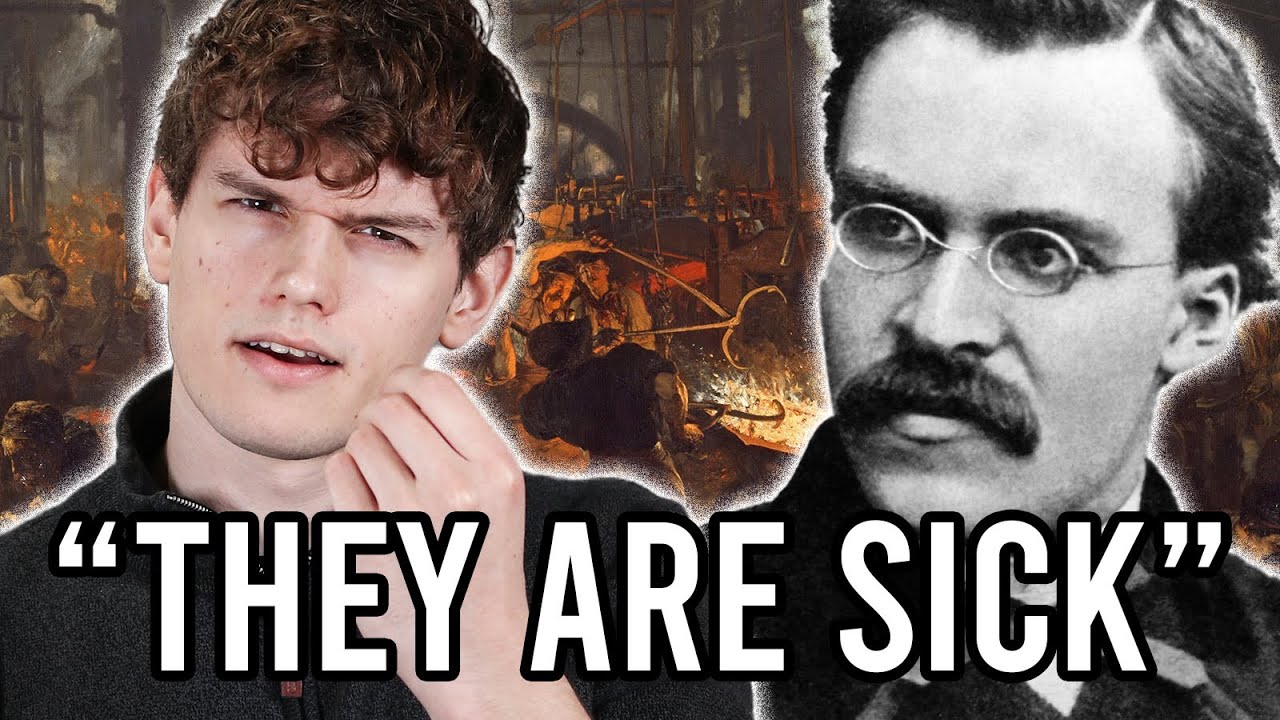
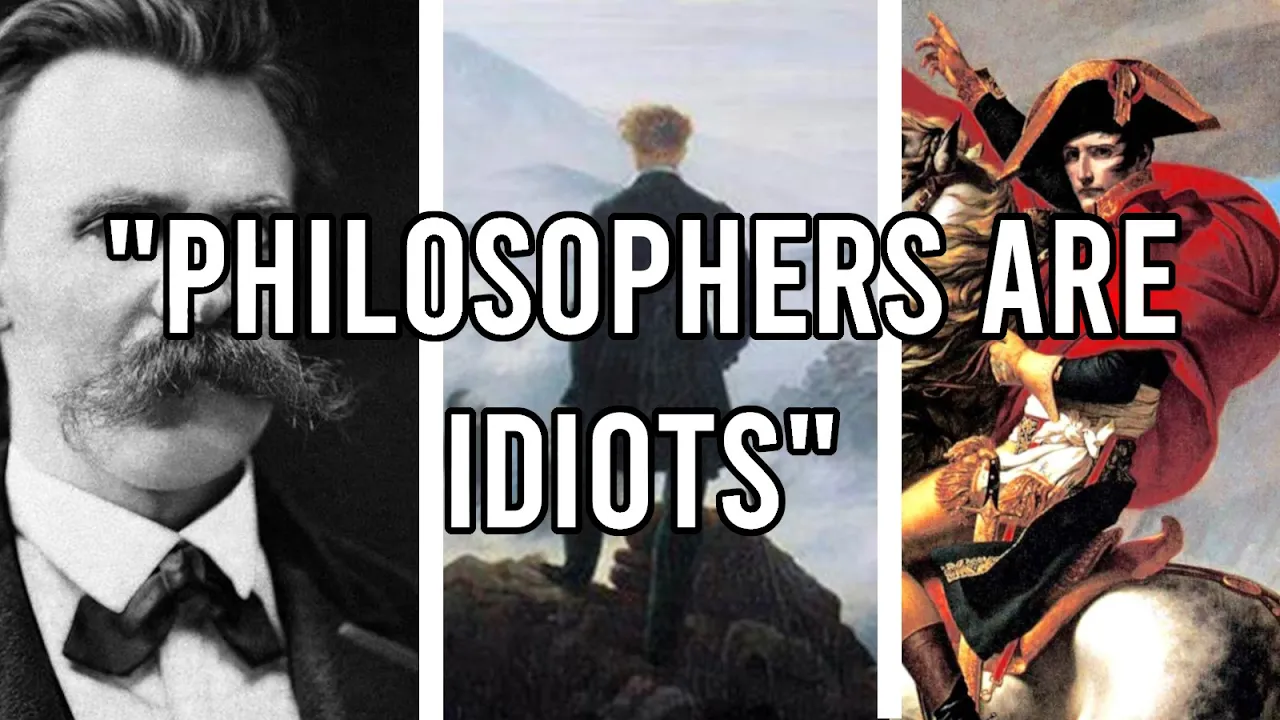
War has always been the great wisdom of every Spirit which has grown too profound and this little book is a grand declaration of war towards the end of his life friederick ner philosopher philologist and one of the most original thinkers of the 19th century sat down to write a four-part work which would be his magnum opus he wanted to tear down what he saw as the idols of philosophy the false gods that the so-called wise have been praying to for thousands of years and to build a new discipline in its place he went mad before
he finished the work but we have the first part in our hands Twilight of the idols is perhaps ne's most extreme work of philosophy it is at times profound at times profoundly maddening and it has the angry tone of a genius who has been ignored for most of his life in these Pages nature examines a number of the deepest held beliefs in philosophy that ethics is a legitimate discipline that we should use reason to find happiness in life and that we are the pilots of our own existence he reveals each of these to have been
Hollow all along ringing f in the face of his merciless interrogation it is arguably his most controversial work and as you watch this video you may feel a range of emotions anger curiosity outrage and recognition but I urge you to stick around to the end get ready to learn how almost all philosophers are delusional how reason and logic can make us fools and how the very foundations of inquiry are misguided and intellectually arrogant this work coupled with the Antichrist was ne's last stand against philosophy so let's look and see see what Secrets lie in Stall
one the delusion of philosophy n kicks off the book by attacking the Beating Heart of Western philosophy the grand figure of Socrates half man half myth all irritant Socrates had for the past two Millennia represented everything a philosopher should be he was incisive in his questioning ruthless in his criticism generous in his wisdom and humble in his character so ficha to open Twilight of the idols by going straight for Socrates sends a clear message No One Is Safe from this pitiless iconoclast far from appreciating the contributions that Socrates made to Western philosophy NE sees him
as the originator of some of its biggest mistakes he levels three points at the great Greek which vary in their controversy the first is that Socrates thought himself objective but was not the second is that Socrates injected a life-denying poison into thinking and the third is that the very method of philosophical dialectics is a sign of human degradation this is a lot to take in so we will tackle each in turn the first point is one that n levels at almost the entire philosophical Cannon philosophers like to paint a romantic picture of themselves as independent
Seekers of clinical truth but n thinks this is by and large a delusion he thinks that most philosophers do not use their philosophy to seek truth but instead to influence the world around them and to cope with the kind of mental sickness that draws somebody to loving philosophy take KS for example the traditional view on Kant is that of a logically minded Visionary who is intent in creating a rational system with which to understand ethics metaphysics and theology but n dismisses this idea out of hand instead he says that a philosophy like KS is the
result of mental weakness according to n k needs the certainty of a logical structure to his philosophy because he doesn't have the mental fortitude to cope with the chaotic nature of the actual World far from being a work of unique genius n thinks that the whole of K's philosophy is just a long-winded exercise in self soothing likewise he sees the great theologians of old not as investigating the inner mind of God or discovering some deep metaphysical truths but instead dead as enforcing a particular philosophy of Life onto the world one where material reality was secondary
to some spiritual plane and where pity and sympathy were crowned the king and queen of Virtues nowhere in philosophy does n come close to finding the kind of fearless truth Seeker that is painted by Socrates and put a pin in this idea because we're going to come back to it in much more detail near the end of the video secondly n takes severe issue in how Socrates greets his death in Plato's Foo Socrates has been sentenced to death by Athens and he accepts this fate with what most would consider admirable calmness he agrees to drink
Hemlock and ends the dialogue by comparing life to an illness from which he is now recovering calling his friends to buy a chicken in thanks to a god of medicine nature is incensed by this idea that life is a sickness to which death is the cure he seems to view it as almost the original sin of Western philosophy in his own words regarding life the wisest men of all ages have judged alike it is worthless and each sees this devaluing of life not as a sign of rationality or courage but rather a sort of mental
Affliction which Echoes Through the Ages and encourages us today to not fully embody our own lives to hold existence at a distance as if it was something to be endured rather than embraced and he lays the blame partly at the feet of Socrates for originating this damaging idea lastly n goes for the jugular and attacks socrates's famous method of philosophy the dialectic now I and many others see socrates's use of dialectic as a Great Leap Forward in the field of rational inquiry the way his application of precise questioning can illuminate the flaws in someone's worldview
provides both the means of examining our own philosophies and of putting the philosophies of others to the test but as we should be used to by now nature sees things differently he views the whole dialectical project as basically a sign of weakness he contrasts the way that Socrates would try to convince people through reason to what he thinks someone who is truly strong would do which is command their will and have it reshape reality nature Strikes Back Against the idea that our will should always be amable to reason or rationality it is not that he
thinks that we should abandon logic but for nature analytic thinking can only go so far in his view Socrates and thinkers like him have contributed to a situation where human instinct is demonized and despised causing us to be alienated from all that will make us most happy and fulfilled through his criticisms of Socrates NE is trying to redress an imbalance by holding in contempt everything that we worship as virtues and it's worth bearing this in mind as as we go forward naturee especially in his later works often presents extreme versions of his philosophy and this
can at times make him seem borderline mad but I think he writes this way partly because he's trying to provide a counterbalance to what he sees as the hegemonic principles of philosophy perhaps he thought a balance could be struck between the worldview he presents in Twilight of the idols and philosophy as he found it in the late 19th century or maybe his thinking had actually become more extreme over the years ultimately we will never know I just think it is worth considering as a possibility given that nature presents his ideas in a much more radical
light here than in some of his earlier works but enough about such things we are here to engage in some philosophical bulldozing and the next building in our path is the Bastion of reason if you want to help me make more videos like this then consider subscribing to my email list or my patreon the links are in the description two nature the unreasonable part of what makes naturee stand out in the history of philosophy is his ability to look at an idea that has been considered common sense for centuries and say I think we should
get rid of that and no is this clearer than in his gentle skepticism about reason first things first as I said in the previous section n is not anti-reason but he does come to despise the kind of reverence people give logic and Analysis by the late 1880s in particular there is one line of thinking that he views not simply as misguided but deeply destructive and that is reason equals virtue equals happiness to explain what he means by this let's take someone like Plato Plato spends much of the Republic justifying the idea both that to be
virtuous is the rational thing to do but also that it will make for a happy and fulfilled human being Aristotle does a very similar thing in his Nic kamakan ethics by the 18th century K argues that to be moral is simply the logical thing to do and if everyone could be persuaded by his categorical imperative then we would live in a sort of Utopia where no one was treated as an end in themselves and no injustices would be committed n has seemingly endless contempt for this idea he thinks it flattens everything interesting about humans by
this point he is deeply disillusioned by the standard philosophical narrative that man is fundamentally a rational being where philosophers before him emphasize the human capacity to make logical arguments reason out positions and consider criticisms nature highlights all that is fundamentally irrational about Humanity he talks about our instincts our Will To Power and our daian capability to Revel in all that is chaotic and extreme according to Nature none of this is strictly rational but it is a key part of our nature and to deny it would be to cut ourselves off from fulfillment forever a key
theme in much of Nature's philosophy is that whatever we deny or repress will eventually come back to bite us he is a bit of a precursor to psychoanalysis in that way he thinks that instincts like our Will To Power cannot be fully avoided but if we attempt to repress them even if we use immaculately logical means to achieve this it will only lead us to dissatisfaction in the long run nature points out that much of what makes people happy is neither logical nor virtuous but is in fact instinctual irrational and sometimes even immoral at least
by contemporary standards and he does not think that these drives will go away simply because we've decided Ed that they're irrational he thinks that we must deal with them headon give them their due and learn to control and accept them but none of this can be achieved if we're still thinking of humanity as fundamentally logical in its construction for nature the path to happiness may not be rational at all and it may even come across as mysterious or suspicious if we were to try and explain it but this only makes sense How could a non-rational
being achieve happiness through purely rational means in n's view the prioritization of Reason above all else is fine if you just want to achieve certain aims but it has the end result of flattening our potential as humans yes we are creatures that can think consider and reason says nature but we are also creatures that can Rejoice despair celebrate mourn and feel it is one of philosophy's greatest blind spots to ignore our sensuality in favor of our rationality because without acknowledging this part of our nature it is no longer talking about human beings nature charges philosophy
with not discussing people as they actually exist but rather people as philosophers wished they were and this will always limit its ability to provide wisdom comfort and meaning but there is an idol that n attacks perhaps more than any other throughout all his works it is a great Behemoth towering above our way of living issuing commands from on high for nature it is the ultimate Tyrant the great suppressor of our potential it is morality three the moral myth there are few philosophical debates that have as much relevance to our everyday lives as those of Ethics
the study of what is right and what is wrong and for a long time this issue was inexorably tied up with the question of God what was right and wrong was seen as directly related to God's Will and apart from a few denters theology was considered a vital component of philosophical ethics we still see The Echoes of this today much of the dominant moral system of both Europe and America is directly inherited from certain strains of Christian ethics but by ne's time there was change on the wind the question of values was becoming unstuck from
the question of God people were beginning to propose secular theories for what was right and wrong and this opened up a whole world of possibilities for what the new values of society should be this is partly what n meant by his famous phrase God is dead and we have killed him the old foundation for values has been broken and we now must ask what should we put in its place and in characteristic nian fashion he immediately criticizes the ethical system we have inherited from Christianity as nonsense suggesting we make a clean break from it in
ne's view the virtues that the Christian tradition has given us the equality of man the value of pity the submission to a superior power are all poisons to the spirit of mankind nature criticizes Christianity from many angles throughout his works but in Twilight of the idols he synthesizes them all into a key point he says Christian ethics suppresses our natural potential as I mentioned before n has a lot of reverence for human instinct that is our passionate Primal desires that are often condemned by philosophers he directly criticizes the idea put forward by Christ on the
sermon of the mount that if someone's eye is leading them to sin they should pluck it out for nature to do such a thing is to reject the instincts that have such potential to bring us joy the suppression of these Primal components of human nature may do many things protect the weak from the strong stop society from collapsing and even save us from a lot of suffering but for nature this comes at the cost of cutting off a key part of what makes us human and in his opinion we must recognize this fact head on
rather than pretend that moral systems don't come with any kind of price so far this is pretty standard for nature but there is another argu that he often hints at in both Twilight of the idols and the Antichrist one that I think is both subtle and sophisticated that to propose a universal moral system is to construct an Ideal World and so cut us off from the material reality that is in front of us while he would probably not like me calling him this n is in many ways a deeply analytical thinker and so he looks
around at the world and notices that there simply aren't any moral facts to be found at the scene of a murder where is this property of wrongness that we can pick up and examine for him morality is obviously not of the material world so it must be some sort of human construction that we place on top of it and he infers from this that morality is a delusion preventing us from engaging with the real world in a wholehearted way in fact he sees it as almost an exercise in intellectual arrogance to make objective moral judgments
after all in his view there is nothing in the world to justify these Grand pronouncements they are just specters we've created a school of philosophers discussing what is morally right and wrong is like a group of teenagers telling one another ghost stories around a campfire in each case they are simply discussing Phantoms with no relevance to this world the only difference is the teenagers know this whereas the philosophers somehow still manage to conceive of themselves as profound intellectuals and nature does not think that there are no consequences for this sort of hasty moralism as I
said before he thinks that morality has been used as a tool to suppress man's deepest instincts in his mind it seems that any philosophical talk about morality is misguided there is conduct and character that is conducive to the development of a person's Natural Instincts and there is conduct and character that serves to deaden those instincts any notion of good or evil is simply Superfluous but I could talk about nature or morality till the cows come home and arguably I have but let's discuss what nature takes to be an error not just with a single field
of philosophy or a claim made by philosophers but rather the very idea of philosophy itself for the false altar of explanation in philosophy of science explanation is often analyzed as having the following structure you first have a set of observations that requires explaining these could be positive observations like seeing the variance in the shapes of the beaks of the birds of the gapusan then we come up with a theory that is meant to explain that explanandum in the first case Darwin proposed his theory of evolution by natural selection and in the second we can appeal
to the concept of magnetism the explaining theory is known as the explanans a huge component of philosophy of science is devoted to the question of when something is explained by something else and how this might differ between fields and this is evidently an important issue we don't just use the concept of explanation in science we use it all the time in our everyday lives we try to explain the behavior of our loved ones or Global events or business failures but nature adds an important caveat to this vital concept our explanations are not some objective view
on reality but are at least partly emotional attempts to comfort ourselves against a world that does not care whether we exist and makes us suffer seeming arbitrarily as an example take the concept of accountability or responsibility these are undeniably useful and encouraging people to take responsibility for their own actions is generally seen as a net positive the reason it has this utility is because it is meant to explain our actions we are accountable for our actions because we cause our actions and there is some baseline empirical evidence for this we want to do something and
then we do it in that order but according to n this view is no longer strictly tenable he views us as products of our environments and decries the idea that our Wills are free as ridiculous but nonetheless the explanation of our actions in terms of accountability persists so the question for nature then becomes why do we cling on to such Concepts and he thinks it is because we find the notion of accountability comforting it places us at the center of the universe and provides justification for our desire to punish and control others it is this
that he sees as the driving force behind so many of our so-called explanatory Concepts Not A Love For What is genuinely truthful but instead a preference for what is most comforting regardless of whether it holds up to scrutiny and this is what nature sees as the root of so many of philosophy's Errors It Is What Makes Us consider human reason to Prevail over human instincts it would certainly be comforting if people were logical enough to be predictable and reasonable so we believe it regardless of whether or not it is actually true could we really face
a world where all the most powerful people on the planet with access to weapons of Untold destruction are at core not rational but instead instinctive and emotional It Is What Makes Us dream of concept like right and wrong and praise socrates's dialectical methods a world where morality and dialectic ruled would be much easier to make sense of than one that is chaotic and arbitrary where good and evil do not exist and no one has any reason to listen to our arguments so we cling on to these Concepts Like A Child's favorite comfort toy far from
being dispassionate explorers of Truth we are terrified beings attempting to make sense of an existence where so much is beyond our comprehension and N thinks we should face this fact this criticism cuts to the core of what n sees as philosophy's fatal flaw at least before he came along philosophers are engaged in a collective delusion that mankind and by extension they are capable of having an objective view on life and that they can detach themselves from their individual Neurosis biases and ideologies when engaging in philosophical thinking n says that such a position is not only
false but ridiculous as mentioned before he thinks that a philosopher's view on the world tells you just as much about them as it does the object of their philosophical inquire quiry and this criticism does not just apply to philosophers anyone who fools themselves into thinking that their particular psychological makeup plays no role in their thinking is ripe for nitian criticism and this is where n reveals himself both as one of the enlightenment's greatest critics but perhaps its most Ardent follower his criticism here clearly destabilizes the view of reality inherited from the empiricism of the Enlightenment
that the world is out there and we can make objective judgments about it but it does so not by criticizing a naturalistic view on the world but rather encouraging us to push it to its extremes he thinks that implicitly philosophers have tended to view the world as a natural object for us to explore while we remain objective quasi spiritual investigators who can hold it at a distance while we construct our theories but n points out that we too are natural objects with our own constraints and biases so when we are crafting our theories on philosophy
and nature we ought to do so with one eye firmly fixed on ourselves asking what sort of psychological peculiarities are influencing our view on the world if the enlightenment robbed the external world of its spirituality and brought it back down to material reality nature does the same to us he takes away our delusions of grandeur of pure logic and cold objectivity and presents us with what we are natural creatures attempting to cope in a universe that is Grand unsettling and uncaring all our endeavors of philosophy science and religion should be examined through this lens contrary
to popular belief this is not a criticism of naturalism but rather a development of it it encourages us to knock ourselves off our pedestals and bring us back into direct contact with the Earth we can still engage in all the inquiry we like and indeed we're going to have to if we want to survive and develop as a species but we can now do so with renewed self- knowledge sometimes we go so long without looking in the mirror that we begin to mistake our eyes for that of a God and if you want more on
N check out this video to see the horrific potential future he sees for Humanity and stick around for more on thinking to improve your life