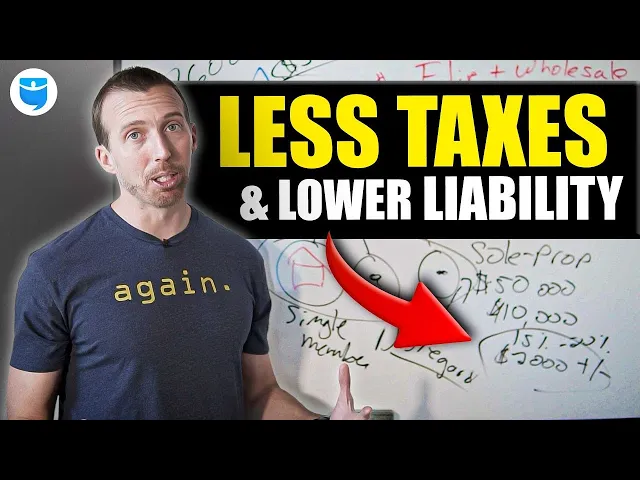
hey everybody I'm tarl yarber with fixated real estate and over the years I've been asked many many times how do I set up my real estate business to either reduce my liabilities or pay less taxes basically my entity structure my corporate structure should I be buying properties in an LLC or an S corp should I be doing it in my own name how should I be doing my business so that I can hopefully not get sued and if I do not lose everything from liability but also how do I reduce my tax obligation so I
could pay less taxes well I've been doing this business for quite some time I've done well over 600 homes in my career already and I can tell you I know a thing or two about paying taxes and also having liability and exposure out there I paid a lot of money over the years to attorneys and CPAs and even though I'm not an attorney or CPA I'm going to go over with you guys how I've set up my business please take it from me go hire a good attorney and go hire a good CPA at the
end of the day and I will show you how to hire those two so that you can set up the right entity structure for you in your real estate business so let's get after it right now so like I said earlier I've been doing this for a little while I have a lot of experience in this and I've definitely paid a lot of money to attorneys and CPAs but I'm just going to show you based on my opinion how I've set up my businesses take it or leave it but definitely go hire a professional to
help you out with this now before you do anything though the first question you should be asking yourself when it comes to a real estate business is why are you setting up any entity structure whatsoever is it that you want to have less liability exposure or is it that you want to have less taxes do you want both because sometimes it's a mix between one or the other additionally are you making your money in active income or in passive income now what's the difference between the two let's say that you're a wholesaler assigning properties for
a contract that's going to be active income maybe you flip houses like I flipped a lot of houses that is going to be active income now when you pay taxes on active income you're paid very differently than you are on passive income so what's passive income maybe you're buying properties and keeping them for the long term this would be your traditional Buy and Hold doesn't matter what kind of asset class it is whether it's single family multi-family commercial if you're buying it long term and you're getting that long-term term capital gains then at the same
time you're going to be paying passive income on the net income that you're receiving on those properties traditionally these are taxed slightly different for sure and very important to distinguish the two so everything that I do in my business I first have to ask why do I want to set anything up so what's the purpose of it and then additionally am I receiving my money actively or am I receiving it passively because you'll see that I'm going to have a different setup for both of these all together so if you're a wholesaler just starting out
of this business you're going to be focused on active income so I'm going to start with that and if you flipped a lot of houses like I have you're going to be focused on active income so I'm going to focus on that first for you guys to show you how I've set up my business structure specifically on this side and then maybe I'll go into a little bit on the passive now a quick side note on CPAs and attorneys spoiler alert I don't have the greatest handwriting so get over it so the CPAs and attorneys
when it comes to this when it comes to doing these things in my opinion you absolutely need both right but who's the right one who's the wrong one who's going to say when one thing who's gonna say the other here's the funny thing about a CPAs and attorneys this is uh uh you might have heard this before CPAs say that attorneys can't do math and attorneys say that CPAs can't read a lot of times they might give you different advice so how do you pick the right one first are they ask that you knew why
are you are they asking you about active passive income very important that you uh you make sure that they're asking you those questions and then second do they do anything real estate related whatsoever do they have past real estate clients do they have experience on their own investing in real estate I would prefer my CPA and attorney to actually have experience investing in real estate so they know what's actually up with this business there's a lot of people out there that are great CPAs that have very little experience working with Real Estate Investors you want
to avoid those people like the plague now at the same time there's also very little there's actually not a lot of good attorneys out there that understand real estate structure as well so asking them have they set up real estate business structures before do they understand what you're trying to accomplish between wholesaling and flipping or accumulating properties for passive income do they understand what you're trying to structure here and do these two agree on how to set it up correctly you could have some attorneys set up the most elaborate corporate structures that you've ever seen
that'll completely make you Anonymous but also make your accounting and bookkeeping the most horrendous and difficult situation that you can have so you could go too far down the rabbit hole for sure on protecting your liability and your anonymity of some sort in your structures for your business so an attorney might go down far in the rabbit hole collect a lot of money from you too setting up entity after entity and structure after structure and at the end of the day the CPA cannot follow the books and more importantly your bank cannot figure out where
you're getting your money so you can go too far in my opinion on setting up anonymity and liability protection on the other side your CPA would prefer you just to be maybe potentially a one LLC or one sole proprietor and with one set of books that all your properties fall into because it's easier for a bookkeeper and a CPA to follow that struck sure on a financial basis now the downside with that is that it can expose you to more on the attorney side of stuff when it comes to liability plus a good CPA is
hopefully going to set up your structure that will give you a balance between liability protection as well as tax reduction as well so if a CPA doesn't understand why you should have an S corp and an LLC or ysc Court might be a good thing versus an S corp when it comes to real estate then they're the wrong CPA for you for sure bottom line with all of that make sure you're interviewing these people and more importantly you can get referrals from other Real Estate Investors that have done it right because if they're still trying
to figure it out that's one thing that I've done it right so that they can maybe pass you along to other investors so other attorneys and other CPAs and help you out along the way okay so next I'm going to transition into how I've set up my entities for active income so that's going to be my flips my Wholesales whatever it is that revolves around active income in my real estate business for you there's other ways to earn active income but these are the two biggest ones flipping and wholesalings that most people are going to
experience now side note how you receive your active income is actually pretty important especially on a tax side for your state so always look at your state laws as well as your federal laws when it comes to how you should be paying taxes on these things good CPA is going to know that stuff so keep that in mind so let's say that we have this house here we have this beautiful home right and whether we're wholesaling it or whether we're flipping it doesn't matter if I flip it I'm earning active income if I'm wholesaling it
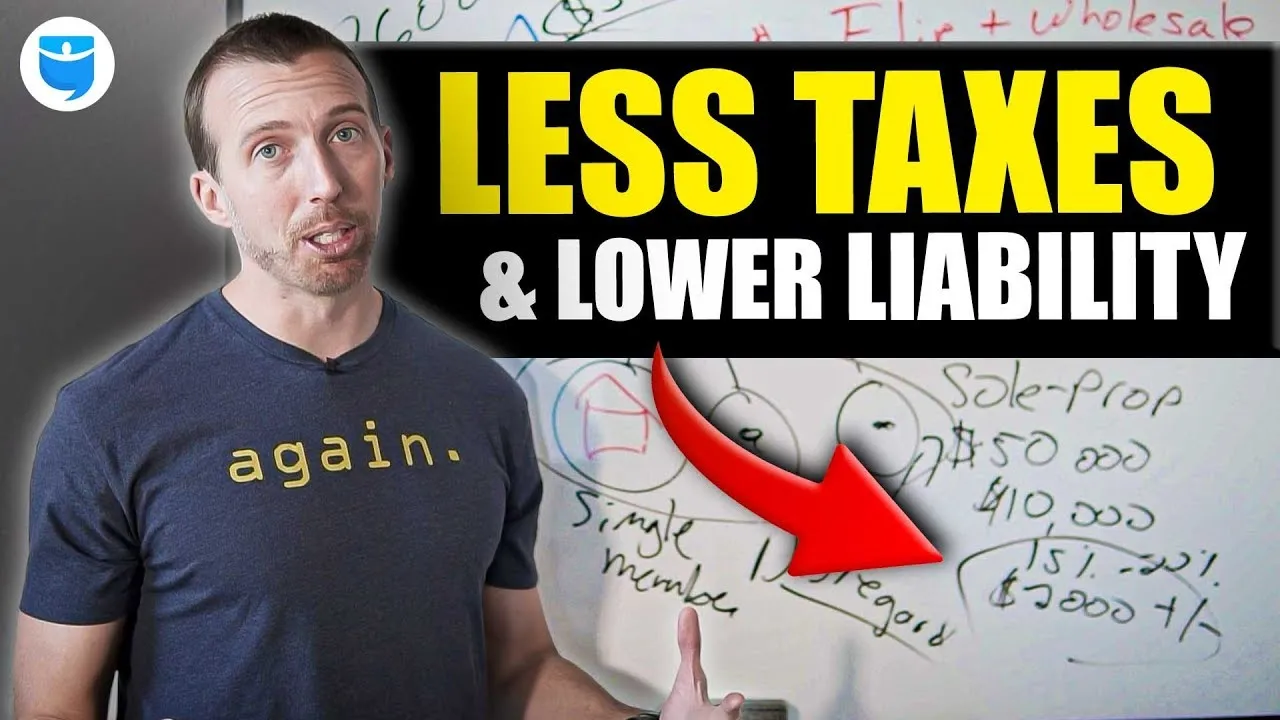
I'm earning active income so I want to be able to figure out how do I reduce my taxes or maybe also reduce my liability and exposure on that so I got this house here right now I could buy it in my personal name right so if I do that if I buy it in my personal name so I'm gonna sit there and have be what's called a sole proprietor right so prop right at the same time sole proprietor uh we'll shorten it so if I'm a sole proprietor then I sell this property and let's say
I make fifty thousand dollars selling this property then I'm gonna get taxed on that personally on my income bracket back based on my income tax right so I'm gonna get income tax on that for Inc active income and if you're somebody like me I don't want to brag but I make a decent amount of money my Inc my highest level income tax for federal is gonna be pretty freaking high right and so at this so I want to figure out a way how to reduce that now if I'm just a sole proprietor then yes I
am going to pay my Federal Tax right my income tax on that and that's going to be a higher tax bracket just because it is income right and not passive income it's not capital gains or any of that kind of stuff I haven't figured out a way how to flip a property and have that property qualify for capital gains versus income tax active income if you figured out how to do that let me know and definitely the answer isn't holding it longer than 12 months if somebody's telling me that they're probably wrong now if I
bought a rental that I rented with a tenant in it and that's what I had with my entire attention and I sold it after 12 months I would probably qualify for capital gains but if I bought a property to fix up and I was fixing up never put a tenant in it and I sold it because my intention from day one was to sell it as a flip I'm probably paying income tax on that uh in that scenario so if I have this in my personal name as a sole proprietor uh or what's called a
disregarded LLC which we'll get into a little bit then I'm going to pay my Federal Income Tax probably some state income tax depending on what state I'm in but I'm also more importantly going to pay self-employment tax self-tax let's just call it that self-employment tax right now what is self-employment tax basically that's where your workers not works out that's where your Medicare and your Social Security and all that great stuff comes out of at the end of the day from the federal government is your self-employment tax if you are a real estate agent a mortgage
broker or somebody that actually works for themselves Dr Laura whatever you're very familiar for the most part probably what self-employment tax is a lot of times it's between 15 it's like around 15.2 percent 15.3 percent don't quilt me on that I haven't paid self-employment tax in a while uh and you're going to have that come right off the top so why is that important so on a tax liability portion of it if I just if I'm a wholesaler I wholesale this house I'm paying self-employment tax as well as federal income tax with whatever my net
gains on that property is at the end of the day but that's essentially what I'm going to do on this and I'll pay a lot more money so the question that we want to do is how do we help eliminate this self-employment tax and that's what I wanted to figure out right and additionally maybe potentially reduce my federal income tax right and also reduce my liability on the fifty thousand dollars so how do I get that lower and lower and lower lower and also if I can also protect myself from getting sued so we're going
to look at that as well so what have I done right so jumping straight into it so I have set up for myself what's called an S corp now this is a sole proprietor basically a Solas Corporation a single member now in an S corp right it's treated as a corporation so it's not treated as a sole proprietor is treated as its own entity now traditionally what I'll end up doing on here for me personally is I'll create an LLC limited liability company and I will have it get taxed I'll file a piece of paper
with the federal federal uh with IRS those people and I'll have it be able to be transferred to be taxed as an escort talk to your attorney CPA about how to do that so I set up an S corp and then I create little bitty llc's baby LLCs right so these are llc's now LLCs are limited liability companies right now what's cool about an LLC is you can make an LLC into a corporation like I did with one of my S Corps you can also keep them as what's called single member now at the same
time that's also called disregarded now as far as the IRS is concerned they call it disregarded as far as attorneys they call it single members whatever so if it's a single member LLC or a disregarded entity basically they're taxed from my experience the same as a sole proprietor would be so there's no benefit on a tax structure to have a disregarded LLC right a single member LLC because it's just gonna get taxed as a sole prop as it is but there is benefit on a liability side because it protect basically puts this house inside an
LLC so if somebody sues me because of this house they're suing the entity and not myself and I'm protected if I keep Chastity if I keep also uh you know the veil of the corporate veil put together from being my other assets exposed basically if I have another house here if I have another house here if I have my personal stuff my personal home up here right then in that scenario I'm so far away from somebody getting my personal home because they can only Sue this LLC which that LLC is owned by this S Corp
and that S Corp has nothing to do with my personal home whatsoever because it's my personal name and blah blah blah blah and I got levels of protection there that's why people might create these now why do we do an S corp up top or why do I do that and then why do I have baby llc's well for the most part the reason why is because if I have a single member LLC in this house right that single member the only member is the S Corp so on one side I get my liability protection
by having individual entities at the bottom with houses or wholesaling or whatever right and I but on a tax structure each one of these aren't taxed at all they actually get rolled up into my S Corp and I have one tax return so the tax return that I file I don't file three four five different Tax Returns on this scenario I only file one tax return for the S Corp because the members are sorry the members of these llc's is this S Corp right and the S Corp has to file a tax return I'm going
to show you why we want to do that so and that tax return is going to be a corporate tax return and it's going to show on its corporate structure that it has these baby llc's and the income from these llc's roll up to my S Corp that I have here right now this is important because it's going to help me pretty much eliminate my self-employment tax right which is what I want to do that's almost that's 15 of taxes right there right so additionally it gives me that layer of protection for uh liability but
more importantly for myself because I'm really not too worried about getting sued uh is I'm also going to get rid of some tax obligation here now once this once this S Corp files a tax right files the corporate tax I get a corporate tax return right I get what's called a K1 for myself and that K1 then goes to little old me at the end of the day right over here with my 1040 tax return which is my my personal tax return so all the money that I made here gets taxed to me right it
gets sent to me at the end of the day on my 1040 in various ways and there's two ways that I receive income personally from my S Corp over here one of it is called distributions and the only catch which is why an S corp is not for everybody is the other way I receive money from the S Corp is I get W-2 income right so I'm an employee so this is important right so an S corp this is the catch this is why it's not for everybody requires some requires the owner of the business
to file W-2 income right as an employee or at least one of the members somebody has to be it so for me I have to be an employee of the S Corp which means I'm going to pay employment tax on money that I make here but there's a catch right so if I go back down over here to this fifty thousand dollar example for for math purposes the 15.2 percent self-employment tax right in that example now I don't have the biggest brain in the world to be able to do that math on point so I'm
just going to do on my calculator here at 7 600 in self-employment tax that I'd have to pay if I made 50 Grand give or take don't quote me on that because that number might be wrong so we're going to keep that over here and we're going to put 7 600 right now how do I reduce that now if I only made fifty thousand dollars in the S Corp I had to pay myself a salary right of some sort so that's going to variously change between on how much money you're making as an S corp
so if I'm making 500 000 my salary has to increase if I'm making fifty thousand dollars my salary can decrease right it's based on an equation that the IRS has that you're going to have to talk to your CPA about but I could probably realistically in my opinion get away with paying a ten thousand dollar salary to myself out of that right so automatically right of the way I have to pay 50 000 sorry out of that ten thousand dollars I have to pay taxes on that so on an employment tax so let's keep it
the same let's for math math wise let's say it's another fifteen percent so in reality it's probably gonna be a little bit more than that so we call 15 to 20 percent uh give or take as I'm going to pay in employment tax and so forth on there so that's going to be you know the roughly two thousand dollars maybe a little bit more plus or minus right depending on my income tax bracket at the end of the day now if I'm only making ten thousand dollars plus some distributions then I'll probably be around that
20 ish uh give or take employment tax for myself right so that's two thousand dollars so right off the bat if I'm paying 76 on the 50 and instead I'm paying 2 000 I just saved myself was that fifty six hundred bucks right in taxes so that's awesome there's a reason to do an S corp right now here's the and that's the biggest reason to do the S Corp is be your pain you're getting rid of that self-employment tax you're also being able to isolate yourself from the liability and all my flips and all my
Wholesales go into these sub llc's now here's the catch on this the biggest catch and why it's absolutely not meant for everybody filing a corporate tax structure right as far as tax returns for myself I have to pay CPAs to do this I also had to pay attorneys to set it up right and I also need to maintain it correctly with all the bookkeeping from all these sub llc's so all the bookkeeping has to make sense all of this has to be done correctly and it rolls up to the escort and then this has to
make sense so somebody has to maintain all that stuff and if that's not you that has to be somebody else that you're paying additionally on top of that I have to file tax returns for this as well and my personal tax return and the more of these I have the more tax returns I have to have which costs a lot of money I've paid up to five grand for tax returns on really complicated stuff and you can definitely pay a heck of a lot more than that on really really complicated stuff so your basic one
you're gonna have to balance between fifteen hundred to three thousand bucks for a simple LLC uh sorry simple S Corp every single year so if your tax savings that you're making doesn't justify the expenses of paying for CPAs to do all this stuff for you plus all the bookkeepers to make sure it makes sense and you're not making enough money to make it make sense then in my opinion I would just have a single member LLC for liability protection only and get rid of all this other stuff right now once somebody's made some money and
once maybe this is how I started out I only had a single member LLC right for my entity and I did everything through that and then I made money got bigger and better and realized holy I need to figure this out because I don't understand any of it paid money to attorney CPAs figure it out they set up the escort for me they said I made enough money now I can do that and they structured it created some other entities for me to start spreading out the risk right and it all started to make sense
to me over time so I didn't do this from day one and if I were starting out and I only plan on doing a couple Wholesales here and there right uh so maybe I'm new or maybe one property I'm probably not going to go crazy on this corporate entity structure I'll probably just have a basic LLC to keep my life Simple and Clean and also reduce liability until I make enough and have done enough business to start justifying the Supernova here that we've created now on another note how many of these LLCs do you need
there's some people that are watching this that are saying my attorney says I need an LLC for every property that I ever do that's one school of thought my school of thought on that is I don't want to deal with that right so I'm not right or wrong on that and neither is your attorney it all depends on going back to what I said earlier what's your why right for me I'm okay having a few properties and multiple llc's I'm okay having a little bit of exposure there because I do a good business and I
have insurance and I also don't mess people up or screw them over and additionally I just make everything clean right the few attorneys that we've sorry the few lawsuits that we've had have all been really simple ones that we've been able to basically win really really quickly because we keep a clean business and we do what's right 100 of the time that said how much you want to have your risk out there and your liability is totally up to you okay so I want to wrap this section up about passive income so as I said
earlier active and passive very different ways that you get taxed how I get taxed and I was told and advised that to set up my entity structure differently and have a separate set of entities for my passive structure now this this is important right the reason why I say it's important for myself is that active income like I showed you that's taxed differently that's taxed at a higher income bracket that's taxed at a different level and it can get very messy uh from based on my experience if we have all our passive income and our
active income mixed in the same bag of goods especially in an S corp situation where I have to play my own I have to pay myself as an employee and all that great stuff and it can get a little complicated and convoluted right that's important that you talk to the CPA in those details I'm not going to get into those nuances in this video for the sake of time and also my own liability of telling you something potentially wrong so this is how I've said it this is exactly how I have my stuff set up
so we have these houses let's say I got three homes right it's going to be a very similar situation as earlier I'm going to have these three homes in different llc's right so these are going to be baby llc's like I like to call them right little sub disregarded baby llc's right and sometimes for me I like to put a couple more houses into each one but for my little like thing that I like to to do I usually do a geography based or any of my commercial properties are in their own LLC completely I
do not mix those up because I feel I have more liability in those my houses right that I have I'll Bunch them together based on geography for the most part but what I always do though is I take the advice from my attorneys and they said hey have a basically a holding LLC we're just going to call it holding now this is not an S corp right it's not a C Corp right it is a literal LLC right now what's a little different for it what some recommendations I have is make this some sort of
partnership LLC for a lot of reasons for liabilities and that could be you know it can be a smaller percentage partnership with somebody you give somebody one percent or whatever but there's reasons why you might want to consider this to be a partnership LLC versus just a standard LLC and I'm not going to get into that for this video but there's some cool strategies there so you might want to look at it so in this I also have my wife right I forgot to put here here right so we have these entities roll up to
a holy LLC that then rolls up to us right we don't pay ourselves as employees in here we don't do to anything like that this doesn't even technically file a tax return unless it's a partnership LLC because I'm married to my wife it's not a partnership LLC this technically does a uh liability protection going in here puts it into a nice pretty bank account at the end of the day too which we do some other fancy things with and then it rolls up directly to our 1040 right which is our personal return so uh now
what's a little different on these ones that we're kind of big on is we're big on doing Wyoming llc's for ourselves when it comes to this and then we do state specific based on these right so uh spot alert my properties are in what a lot of them are in Washington right so these would be Washington llc's because I don't want to file this property as a foreign entity in the state of Washington there's a lot of stuff going on in this video guys hope you're keeping up uh I want it to be State specific
so that way I have this LLC is filed at the state doing what it needs to do but the member of this LLC is my Wyoming entity that my holding company that I have now why Wyoming Google it there's a lot of good reasons but a lot of the reasons the biggest reason is anonymity and I'll keep it that simple if you're just starting out definitely ask questions to your CPA and attorney on how to do this the right way for you maybe you're going to plan on doing 20 plus houses a year right and
you know without a doubt you're going to be doing that day one maybe you think about structuring your LLCs the way I've talked about it but if you think you're going to ramp that up you really aren't sure you're going to do one maybe you might get lucky get another one maybe it'll take you years to build it up maybe then at that point you could do what I did which was start small and then add on but don't do what I really did which was start small grow a lot keep going keep going put
off the bookkeeping put off talking to CPAs and turn put off all that stuff and figuring it out as I go and then all of a sudden it was so big and so messy that I had to pay a lot of money for it to fix everything for a couple of years of mistakes right that costs a lot that's a pain in the butt you learn a lot right but it sucks and unfortunately that's the comment thread that most people that do this business do they go grow they go bigger than they thought and then
they pay the price later by fixing it or they never fix it uh so do yourself a favor measure when you think you should start getting to the next level of how you set up your entities and just be aware of that go interview the right ones and that said make sure you guys follow me on Instagram at tarl yarber you can also comment like subscribe to this I'll do my best to look at the comments This Is Bigger Pockets people do reply to that and if you're somebody watching this right now that say he
should have done this way he should have done that way yeah probably right there's tons of ways you can do this right I'm just showing you guys how I did it so take it or leave it hope it helps see you guys on the next video and peace out [Music] [Music]