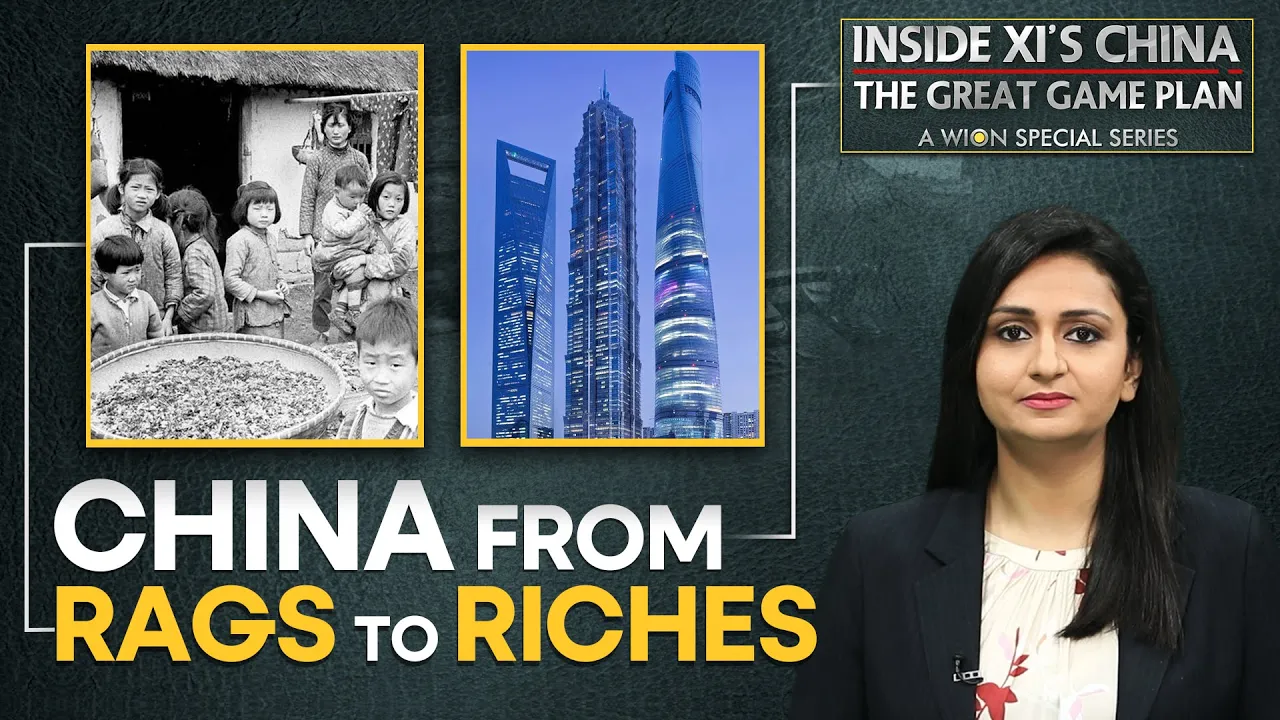
[Music] [Music] china but it was deng xiaoping who built modern china both its political process and its economic machinery but deng's rise to the top was anything but smooth it was only after the death of country's founder mao sethum that deng xiaoping was able to claw his way back to the top from where he masterfully ran china for almost two decades along the way he faced power struggles from his chosen successor it threatened to even weaken his iron grip over the party but a crafty deng dropping managed to blunt any political challenge despite being his trusted deputy mao seto never appointed tank shopping as his successor even though he had demonstrated both administrative skills and financial acumen in the mid-1960s instead chairman mao repeatedly purged him for what he believed were his righteous tendencies deng xiaoping had famously said watch out for the rightists but be more careful about the leftists in 1976 deng xiaoping made his final comeback to active politics and by 1978 he had successfully sidelined mao's chosen successor hua hua fung [Music] soon deng emerged as the supreme leader in china real power centers are the heads of the military and the communist party and both these were firmly under denjaping's control so despite not being the president of china deng xiaoping was the final authority and left his stamp on the very fabric of modern china this arrangement remained even after he had relinquished all posts until his death in 1997. [Music] in its post-mouth phase that was riddled with both poverty and corruption deng xiaoping dismantled the agricultural communes that formed the backbone of mao's economic vision as deng undid mao's planned economy he brought down the god-like status of the leader and admitted that the famine and the cultural revolution were two of mao's biggest failures so don chapping was very much a realist and as far as economic policy goes from the beginning of the prc starting in the 1940s he was in the faction that was in favor of more gradual efforts to communize the economy um and socialize so for example when mao zedong started pushing for very very rapid creation of huge communists of collectivizing agriculture uh deng xiaoping and his were holding back they wanted to go a little more slowly a little more cautiously than this in the political struggles of those early decades of the people's republic of china uh deng payne and the other lost out and of course mao you know searched ahead with the great leap forward and the cultural revolution in 1978 the new agricultural policy was announced whereby peasants were no longer required to pool everything and instead were responsible for the productivity of their own land next up blueprint for economic reforms was also drawn up in 1979 at the third plenum of the 11th party congress deng xiaoping's economic reform and open door policy was formally adopted this paved the way for the much doubted chinese economic model unlike mao seton deng xiaoping never really had any ideological positions and instead was driven solely by pragmatism and for him all that mattered was getting the job done he said if you open the window you get flowers but you also get fresh air and sunshine he opened the window he let people become entrepreneurs he let people make as much money as they could if they wanted to and when you have nothing even if you open a restaurant hit things look great because now there's a restaurant and a factory and everything else people started making clothes and bicycles and cars and everything else and it became an astonishing success story for ten shopping it was important to kickstart the economic growth even if it meant creation of enclaves of prosperity an economic reality that has now become one of china's biggest social economic problems tong chao ping said i don't care if it's a black cat or a white cat as long as it catches mice communists didn't have a very good economy they didn't have a very good anything in anywhere in the world not just china you know but since deng xiaoping started opening up china it's been the most successful country in the world since then they've got the best airports in the world they've got the best just about everything in the world because they have spent a lot of money developing their economy and many people have gotten very very very rich in 1979 deng xiaoping became the first chinese leader to visit america deng charmed the american public with the american media reached out to american businesses and normalized ties with the u. s his message was clear communist china was opening up and welcomed american businesses on his return deja ping pushed the pedal on economic reform yeah people who go to china now um don't even recognize the china of you know the late mao era the early young era to the way it is now when i first went to china everyone was on bicycles the cities at night were quiet people didn't have cars only party members and government officials had cars everyone else was on a bus in 1979 china's first three special economic zones were created these were located in shenzhen shantou and zhuhai in the guangdong province the following year xiamin in the focaine province was selected as china's fourth sez these coastal regions were chosen due to their close proximity with hong kong which was a thriving port economy these se z's were large areas that were carved out to attract foreign capital with few restrictions shenzhen which was china's largest scz was 320 square kilometers or half the size of the city of mumbai or three times the area of paris within the essie sets private and foreign firms were granted attractive tax incentives and exemptions along with flexible labor laws concessions that weren't available on the mainland in essence the ccp's tight grip was loosened in these four sea sets in 1984 14 other coastal cities were identified for attracting more investment the same year america became china's third largest trading partner buoyed by the success of the first four economic zones china soon started its fifth ses in the southernmost province of hainan in 1988.
the chinese government also experimented with a variety of schemes including setting up of free trade zones export processing zones free ports and enterprise zones china's economy on the path of rapid growth and development was jettisoning socialism deng xiaoping came in and broke up the communes and said you know to well paraphrasing here to get rich is glorious and we're going to allow some people to become rich first we're going to let the coastal regions develop first and then we're going to spread the wealth to the interior and he invited foreign firms in and he allowed state-owned enterprises to become shareholding corporations and people can buy shares of stock in chinese corporations now so employees of state-owned corporations could buy shares of stock and then foreigners and so all of that radically changed the chinese economy in 1992 six yangtze river ports were created again meant to boost export-led growth in a decade china's export-led manufacturing driven and coastal city-centric economic model had begun showing results chinese exports rose on average 5. 7 percent in the 1980s this jumped to 12. 4 the following decade in the 1990s and to a whopping 20.
3 percent between 2000 and 2003. by 2003 china's export growth rate was seven times higher than the export growth rate recorded by the entire world these zones became so successful that china was the largest recipient of foreign direct investment amongst developing countries for almost two and a half decades in 1980 china received only 23 million dollars in foreign direct investment in just a decade china's fdi had increased more than 30 times to 672 million dollars estimates suggest during this period it was these se sets that accounted for anywhere between 50 to 80 of gdp growth in china but this continued to be a period of green shoots and recovery and the chinese economy was still some time away from achieving scale in fact china and india had almost similar economic growth till 1990. eleven years after establishing its first scz china's gdp was still sub 360 billion dollars compared to india which was around 320 billion dollars by 2000 though china had leapfrogged to a 1.
2 trillion dollar economy and india continued to languish at sub 500 billion dollars the se zeds were firing on all cylinders in 2001 four years after deng xiaoping's death china entered the world trading organization the nodal body of global trade till this time china was the world's sixth largest economy had developed deep trade links with the u. s but was still yet to be interconnected with the world then u. s president bill clinton backed china's candidature for wto and hoped that economic prosperity would eventually pave the way for individual freedom and liberal values in china a hope that two of clinton's successors george bush and barack obama also had but for china entry into the wto marked a pivotal point in its economic destiny as it embarked on a high growth trajectory in just eight years china became the world's largest exporting nation and surpassed japan as the second largest economy by 2010.
foreign investment in beijing mushroomed from 47 billion dollars in 2001 when it entered the wto to 124 billion dollars a decade later and in less than two decades of its wto membership china's economy grew a whopping 11 times china proved successive american presidents wrong it continued to ride the economic boom and did not provide any concessions to its citizens by way of personal liberty or individual freedom it also exploited the loopholes in the multilateral trading platform that allowed it to grow so quickly despite being bigger than the economies of germany japan and the uk china continued to claim developing country status while the latter were treated as developed nations wto allows developing countries leeway in fulfilling their commitments related to economic reforms and opening up for foreign investments china joined the wto after committing to international standards of global trade this included free currency lower tariffs protection of ipr and unwinding domestic subsidies it had a 15-year grace period to become a market economy but most of these conditions continue to remain unfulfilled america had championed china's entry into the wto but later became its biggest critic and filed 23 cases of non-compliance within just 12 years of china's entry into the wto america lost 2. 5 million manufacturing jobs it battered factory towns that were once known for manufacturing made in america labor-intensive products the chinese economy despite its stupendous growth continued to face severe challenges on one end there was rising corruption due to the compulsive involvement of local ccp leaders to ensure businesses stayed firmly under the party's grip on the other end was china's lopsided growth behind its double-digit growth figures hit a dark fact about china's stark growth inequalities obsession with port-led development caused concentration of population in a handful of cities over time 51 percent of china moved to just seven percent of land area unlike its vibrant eastern coast engines of growth continue to sputter in the hinterland and the western regions of china from the third plenum that was held in beijing on a cold winter evening deng xiaoping became a catalyst for the transformation of what was an economic backwater into the world's second largest economy but deng xiaoping's legacy was not just the economy he also shaped china's ties with its neighbors india and soviet union wishing for a mao like legacy deng xiaoping was open to escalating tensions with india over sundarangchu a small area in arunachal pradesh he even hinted at teaching india a military lesson similar to the 1962 defeat in response india under then-prime minister rajiv gandhi declared full statehood for arunachal pradesh since 1986 sundar rancho had witnessed repeated clashes between india and chinese soldiers and with no breakthroughs in sight deng xiaoping finally invited rajiv gandhi to china in 1988. this ended the long rough patch between the two countries years after pandit nehru visited china in 1954 his grandson rajiv gandhi traveled to china to improve ties and look at a better future for sino-indian relations for soviet union deng xiaoping wished to repair the broken communist camaraderie which had seen its nadir during mao tungsten within three years of embracing american capitalism deng xiaoping announced a policy of neutrality it was meant to strike a balance between usa and ussr as reproachments began despite opposing camps being backed by china and ussr in vietnam and afghanistan the two sides managed to build bridges and this culminated into the visit of russian president mikhail gorbachev's trip to china in 1989.