Whenever I feel like quitting, whenever I feel like it's not working, whenever I feel like it's impossible, whenever I feel like I can't possibly go on any longer, I go, I know this feeling. I've dealt with this before. [music] The Stoics were successful, busy people.
They had day jobs. They had families. They were of service to their country and their causes.
So, how did they get it all done? I mean, that's the question we're all asking. I get that question all the time.
People say, "Ryan, h how have you written the books that you've written? How have you spoken to the groups that you've done? How did you manage to open up a bookstore on the side?
" And the answer for me as well as for the ancient Stoics was a set of foundational [music] habits. A wise philosopher once said that no one should be pied more than the person whose wing who's treating everything as a new uncertain decision. The person who has habits, who has best practices, who has rules they observe, that is the person in a position to be successful.
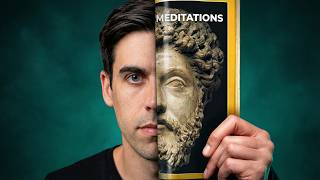
And so in today's episode, I wanted to give you eight foundational [music] stoic habits, things to do and practice every single day that will make you better at whatever [music] you do, whoever you are, wherever you live, and whatever stage of life you happen to be in. What's really interesting about philosophy is that that's what Marcus Aurelius's Meditations was. It's one of the few philosophical books that we have that wasn't published as a book.
The most powerful man in the world wasn't writing what he thought. He was writing what he felt he [music] needed to know for himself. And it's only a complete accident that this work survives to us.
He'd probably be mortified that we're reading his his [music] diary or journal, but he's dead, so it doesn't matter. Um the the point is it it's philosophy is not just [music] this thing you read about one time and understand. It's an active practice.
It's something you're doing with yourself. It's a dialogue with oneself. [music] I talked about the missile crisis a little bit.
Um, what I think is so fascinating about the missile crisis is that we have Kennedy's doodles and notes from the missile crisis on legal pads. He would write [music] these things to himself, sort of reminders. He would write missile, missile, missile.
He write consensus, consensus, consensus. [music] He was journaling out, working out what he was thinking as he was thinking it. Journaling is not the only way to do this.
I know people that doodle in the morning [music] or sketch the but the point is to have kind of a a a creative practice [music] um where there are very low stakes and it's just sort of a getting the juices flowing. Uh Julia Cameron calls uh morning pages a sort of a form [music] of spiritual windshield wipers. And I really like that analogy.
Kennedy really liked uh boating and so he drew these pictures of [music] sailboats. You can imagine the entire world is about to blow itself up if he and if he's not careful he's [music] going to contribute to that. The the idea of of just getting out of that zooming out think [music] sort of calming his mind you can see what how valuable and important that would be.
Um and Frank writes that paper is more patient than people. And so [music] you think about the stresses of the missile crisis, it makes sense why he's [music] writing on he he wants to dump out his anger and his frustration and his fears and the ideas that [music] he's workshopping where there are low stakes so he can perform better where there's really high stakes. So I think journaling is a really important part of it.
[music] I do this one thing every single day. And you can see I'm I'm a little sweaty right now. I just went on a long walk with my kids.
This is the property there. But we just went on this long walk around our property. We we talked, we threw sticks, we told stories.
We were just outside. You know, [music] there's this great expression from NZ. He says only ideas had when walking have any worth.
And I think that's right. Even Senica talks about how how the mind must be given over to wandering walks. He says fields that are not allowed to rest will not bear plant.
He even says that, you know, the mind will break like an anvil if not rested. And so this is really important for [music] me. Walking is physical activity.
It is exercise. But it's really about letting my mind rest. I leave my phone at home.
I leave my thoughts at home. I leave my work at home. And I just go outside and I walk.
And I don't even consider it exercise. [music] It's exercise for my mind. It's time I spend with my family.
It's time I spend on my property. It's time I spend outdoors. It's time I spend practicing [music] gratitude and appreciation.
This is a thing I do every day without fail. Whether it's in a parking lot or on a beautiful beach somewhere, [music] I go outside and take a walk and so should you. People ask me what the secret to writing, you know, 10, 11 books in 10 years, writing bestsellers, and I tell them there is no secret.
I just work every single day, right? I do a little bit every single day. I try to make a little bit of progress every single day.
This is a core precept of stoicism. Zeno says well-being is realized by small steps [music] but it's no small thing. Mark Cerelius says assemble your life action by action.
No one can stop you from that. [music] Right? We focus on what we control which is did you show up today?
Did you make a little bit of progress? And Senica [music] says look even wisdom is acquired quote insight story you know experience by experience. And and that's how books are written too.
There's a great rule in writing just a couple crappy pages a day. I just try to produce work and [music] then I refine and edit later. But the main thing is showing up, doing the work, trying to get a little bit [music] better every single day.
I am not here to make you a better sociopath. The point of stoicism isn't to make you care less about other people, to focus more on yourself. It's not just a productivity system to make you better.
Marcus Aurelius says, "The fruit of this life is good character and acts for the common good. " One of the four virtues of stoicism is justice. It's about fairness.
It's about integrity. It's about serving something larger than yourself. [music] And so if you think stoicism is somehow divorced from politics, divorced from being responsible to the rest of the world, if you think when Marcus really says it's okay to have no opinion, he means have no opinion about nothing, never get involved, focus on yourself, you are missing the [ __ ] point of this philosophy.
[music] A stoic is engaged in the world. A stoic cares. A stoic tries really hard to do the right thing for themselves and for other people.
They are not an uncaring sociopath. They are not some uh alt-right troll. Stoicism is about doing good for more people.
That's what the philosophy is about. And if you're missing the point, you don't have to follow this stuff. One thing you learn in endurance [music] sports is that you always have further to go than you think is possible.
Your body is telling you to quit or your mind is telling you to quit, but actually your body is capable of more. And you you have to override this. You have to push past it.
And so for me, the endurance sports [music] and philosophy have helped me even as a writer cuz whenever I feel like quitting, whenever I feel like it's not working, whenever I feel like it's impossible, whenever I feel like it [music] can't possibly go on any longer, I go, I know this feeling. I've dealt with this before. Epictitus talks about putting every impression up to the test.
He talks about how a money changer knows what a counterfeit [music] coin feels like and sounds like. And when you do endurance sports, you get to that place where you know what weakness [music] sounds like and feels like and what it's telling you to do and how you don't have to listen to that. You also know when your body is really hurt, when you really do have to stop, when you really are at your breaking point, when you do hit that limitation, but because of your practice, you know that most of those limitations, most of that desire to quit or stop or slow down is a lie.
And you push past it. You push through it. [music] And this gets you to where you want to go.
All growth is on the other side of that resistance. Whether it's writing, whether it's in a relationship, whether it's a in your work, whether it's in a creative pursuit, whether it's a business, all growth is on the other side of that resistance. And [music] so having an endurance sport practice, something that you're trying to get good at, whether it's crossfit or [music] uh weightlifting or or or running or rock climbing, something where you're constantly testing those reservations and and [music] the whole practice is learning when to push through and when not to push through.
I can't recommend it highly enough. I know that getting outside and doing that stuff, it might not seem like uh what the Stoics were doing, what philosophers were [music] doing, but in fact, it was what they were doing. You know, Marcus Aurelius hunted.
He rode horses. He [music] wrestled. Pricus and Cleanths who were boxers and and and distance uh runners.
The Stoics [music] were athletes. And this practice is deeply important into getting to that philosophical place of resilience and fortitude. [music] My friend emailed me on a Friday.
I saw it. I told myself I was going to respond on Monday. And by Sunday, [music] he was gone.
He'd fallen dead of a heart attack. This is why the Stoics practice momento mory. Life is short.
You can go at any moment. But also, they said the people who are precious to you, you do not possess them. You can't take them [music] for granted.
You can't assume they're going to be here forever. You can't assume you're always going to have them. You don't have them now.
They are here on loan. They are here under shaky status at best. So, you can't take people [music] for granted.
You can't take time for granted. You can't go to bed angry, as they say. You You can't hold on to grudges.
Be with them now while you can. Forgive them now while you can. Appreciate them now while you can.
Enjoy them now while you can. That's the only thing we can do. Momento my you could leave life right now as Marcus says, but also they could leave life right now.
Let [music] that determine what you do and say and think, particularly with the people who matter most to you. A couple rules for reading. One, do it all the time.
Two, speed reading is a [music] trap. It's fake. It's not real.
You just have to spend a lot of time reading. Three, I think older books are almost always better. Classics are classic for a reason.
Four, quit bad books. The great rule is 100 pages minus your age. Five, you have to take notes.
[music] If you're not taking notes, if you're just trying to get through the book as fast as possible, you're doing it wrong. Six, I try to find one book in every book that I read to read next. Seven, ask yourself, how am I going to use this information in my actual [music] life?
The point of books is not to look smarter, it's to become better. Eight, if it's good, recommend it and pass it along to other people. Those are my Ryan Holidayiday's rules for reading.
There's two words that come to us from the ancients that I think we should remind ourselves of, repeat to oursel in any and every situation we're in. [music] You win the lottery, you strike it rich, you get recognized, you get an award, you say to yourself, "Momento [music] my remember you will die. " You go through [ __ ] you go through trouble.
Someone cheats on you. Someone betrays you. Someone lies to you.
Someone steals from [music] you. Someone gets what you earned. Someone gets promoted over you.
You say to yourself, "Momento my remember that I will die. [music] You could leave life right now. " Marcus Aurelius said, "Let that determine what you do and say and think.
" You get in a [music] fight with your girlfriend or your boyfriend. Your parents say something mean [music] or let you down. Your neighbor pisses you off.
You break your leg. [music] You blow out your knee. You fall out of love with someone.
You're stressed out by work. Your kids are sick. [music] You say to yourself, "Momento my life is short.
I'm going to die. " And what that means is you can't take any of [music] this seriously. You can't let it weigh on you.
You can't hold on to it. You can't let it puff you up [music] either. If you're rich, you're famous, you have a million Instagram followers, [music] you just got hired, you just got into Harvard, you just got nominated for [music] a Nobel Prize, you just got a call from the president, you just got a promotion, you just got a raise.
Momento my you will die. You can't take any [music] of this with you. It pales in comparison to the idea of eternity.
How many [music] people have come before you and had these same honors and where are they now? They're [ __ ] dead just like you will be. [music] What Marcus really said is this practice of momento mori of saying to the good things and to the bad things in life that we [music] will die.
It's a reminder that helps you accept the [music] good things without arrogance and to let the bad things go with indifference. Your [music] plane is delayed. You're stressed.
You're tired. You're hungry. You're frustrated.
[music] You're cynical. You say, "Momento my I'm going to die. What does any of [music] this mean?
Why am I taking any of it so seriously? Why am I letting it [music] get to me? What's 3 hours here or 3 hours there?
Remember, you are going to die. [music] What you do control is whether you waste time getting upset by this, whether you waste time taking it personally. Whether you're the best in the world at what you do [music] or you're an unpaid intern.
Whether your work is being beloved by the critics or savaged by the critics. Whether you have more opportunities than you [music] know what to do with. Whether you can't get the one shot, no one will even [music] give you a chance.
Whether you have all the money you need or you can barely get by. [music] You say momento my remember I will die. None of this matters in light of that.
Whether you're having sex with a beautiful supermodel, [music] whether you're putting your kid down to bed, whether you're sitting there in your pajamas [music] eating cereal, or you are standing in front of a prestigious audience, momento my you will [music] die. Is this how you want to spend your time? Are you wasting it?
Or are you living it? [music] Are you embracing it? Or are you letting it escape from your grasp?
Momento my remember I will [music] die. You could leave life right now. Now let that determine what you do and say and think.
Whatever you're experiencing, [music] whatever you're going through, however awesome your life is, however frustrating it is right now, [music] mmentoto my remember you will die. This too shall pass. [music] You must not forget that Epipita said that philosophy wasn't this dry abstract thing.
It was a thing he said you should be talking about, writing down, reading about, exploring with other people all the time. He said, constantly have it at hand. That's how I think about philosophy.
And it's weird. For the last 5 years, every single day, I've been writing this free email about Stoic philosophy. It's been not just cool to meet all these fellow practitioners of Stoke philosophy, but in writing about it, talking about it, reading it for our podcast, I have got to internalize these ideas in a way that I never would have been able to under any other circumstances.
That's the idea. Philosophy is something you're supposed to engage in, not keep in these dusty old books or read once and be done with. It's a constant process.
And I think that's why the email has worked so well for the people reading about it and sharing it and talking about it, all of that as well. So, I'd love to have you join us on this email. You can sign up at daily stoic.
com/dailymail. It's totally free, no spam. You can unsubscribe whenever you want.
I basically given away a book for free every single year for 5 years. And I'm going to keep [music] on doing till I drop dead. Check it out.
daily stoke.