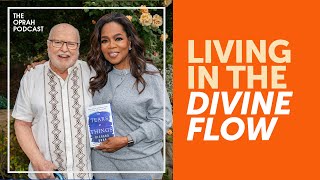
Somebody else can't learn their lessons in your life. Only you can. >> Somebody else can't learn their lessons in your life. >> And if you don't enjoy your life, your mother's misery will. >> So you got to enjoy your life. >> Church is over. Welcome to the Oprah podcast. Hello to this beautiful audience of our listeners in New York City. >> I just love saying New York, New York. It's great to be here even on a rainy day. So, I want to ask the audience just a few questions. Um, am I seeing clearly? Ask yourself
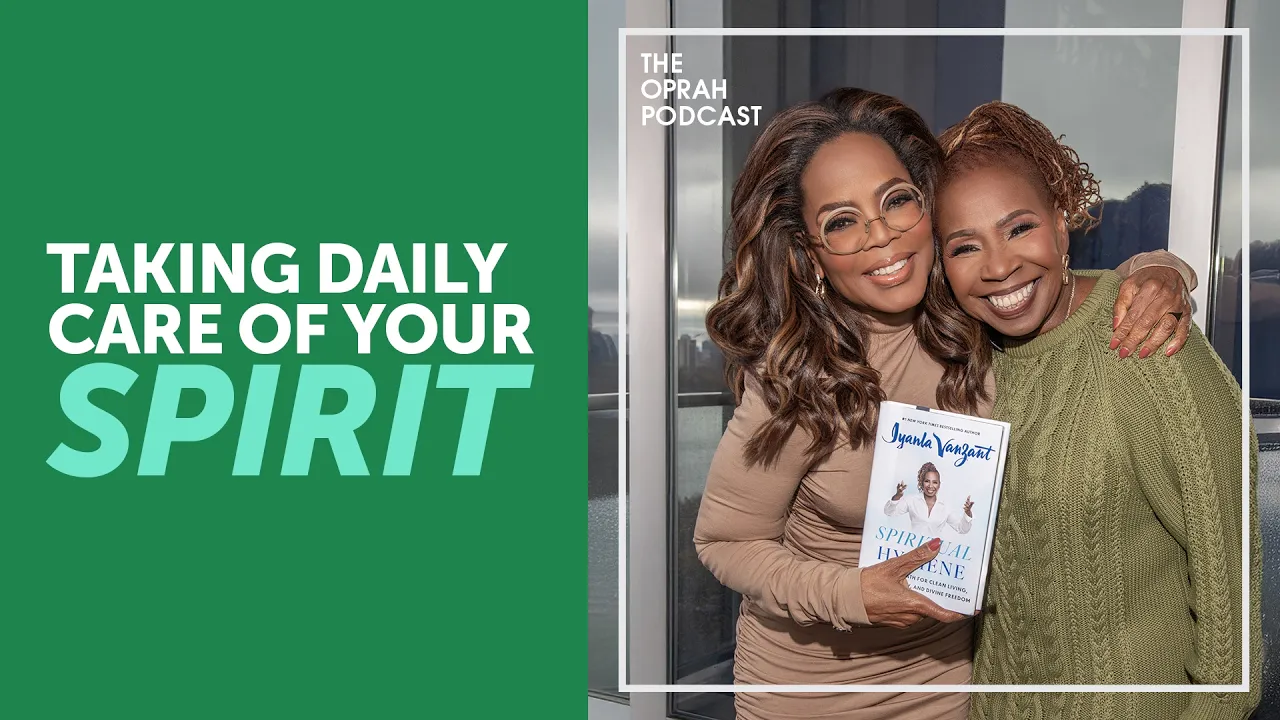
that. Am I seeing clearly or through a lens of pain? Am I trying to control, fix or rescue anybody other than myself? Am I present enough to sit with what is? All of these questions are in Leanzant's new book that she asks us to ask of ourselves. So, what's missing? what my guest calls divine freedom is what's missing from so many of our lives. She says we each have a sacred responsibility and it's our job to find out what is that responsibility. She is one of the most powerful spiritual teachers, healers, fixers in the world.
Ian Leanzant has written a book called Spiritual Hygiene: A Practical Path for Clean Living, for inner authority, and for divine freedom. What even is divine freedom? Whatever it is, I want some of that. Please help me welcome Vanza. Look at her. Wow. M >> been a while. >> A long time. >> Been a while. >> It's been 6 years since we sat together. >> Since we've seen we talk and text and all that. >> God bless a text. >> Yeah. God bless your text. >> But my lord, I haven't seen you. >> Yeah, but you
looking good. >> And are you not one to no one? >> Iana Vanzan is a worldrenowned spiritual teacher, best-selling author, and the fixer who suffers no fools. You may have lost your femininity, but you found your in that moment, right? Yes. >> I first met Ayama on the Oprah Winfrey show. >> If you don't have a test, you won't have a testimony. And so when you have a challenge, >> you are an adult. >> She hosted eight seasons of the hit show Eyama Fix My Life on Own the Network. >> Go get you a Bob,
a battery operated boyfriend. And this January 17th, make sure to check out Iana's return to own. I've come to unpack with her powerful new series, the inside fix. I want to share how you began spiritual hygiene because it's such a helpful analogy. I think you say you brush your teeth and you wash your body every single day. We do, right? You can see all these people are all brushed up in here to prevent diseases and stay clean. But what do you do every day to heal your soul? >> I love the term spiritual hygiene. >>
Yes. >> How did it come to you? >> Well, really it's something that I had done. just checking in with my mind, my heart, my body every single day and to stay clean. >> Yeah. And I knew when I was dirty, when I was feeling dirty, thinking dirty, behaving in dirty ways. We won't have that conversation. Uh but I don't know, maybe 10, 15 years ago, I said, "Okay, let me do my hygiene. I got to I got to be on top of my hygiene." Born into poverty, Ian Benzadant, whose birth name was Rhonda, says
her mother was an alcoholic and died when she was 3 years old. Ianla was raised by her grandmother who Yanla says neglected and physically abused her. At age nine, Ayana was raped by an uncle. She became a mother at 16 and by the age of 21, Ayamala was raising three children. In 2003, Yama Vanzant lost her eldest daughter, Jia. She died from a rare type of colon cancer at the age of 31. And in 2023, Yama's daughter, Nissa, passed away. She was 48 years old. Yama also has a son, Damon. Jia had good spiritual hygiene.
Nissa, on the other hand, did not. And I began to say, "You've got to clean that up. You've got to clean that up." And so it kind of stuck. >> One of the things you say in the book, I mean it really when I read the sentence where you say, "I can't bury another child. >> I cannot do it." >> But Ila has lost another child. She lost her daughter Nissa two years ago. >> Yeah. And it's the interesting thing you say in the book that you weren't prepared for the first loss with Jia and
then when Nissa became ill and you realized that she was going Tell us about that. >> I because I had good spiritual hygiene. One thing spiritual hygiene does is it gets you clear. >> Yeah. You don't see through distortion or illusion. And the key ingredient of spiritual hygiene is truth. You tell the truth. So just based on what I was seeing and sensing and feeling, I said, "Oh my god, she's not going to make it through this." I knew it. >> What was she going through? >> Diabetes. But she was a non-compliant diabetic. She was
in total denial. So she wouldn't accept the fact. And I taught her that, Oprah. I I talk about that in the book. Yeah. >> I taught her that anything less than perfection and performance cannot be tolerated. And so she wouldn't acknowledge, she wouldn't care for, she wouldn't do what was required to manage and to embrace the diabetes. So she she was non-compliant and so many people are, >> right? I know. I had a mother who shot insulin every day and every now and then you'd see her sitting in the kitchen eating coconut cake. Yeah. And
you're like and she, you know, and in our culture a lot of people just think it's a little sugar. Oh, I got a little sugar. Hey, sugar. I got to handle my sugar. Yes. >> I want to tell you this not to freak you out or gross you out. Um, it took me a minute to process. Nissa died at home. Um, on the sofa by herself with a half gallon of fruit punch in her hand and a container of honey roasted peanuts right by her side. as a diabetic. >> as diabetic. >> Wow. That must
have been really challenging, hard for you as the fixer. You've done hundreds of shows. You've helped thousands of people. And in your own family, your daughter, your baby girl, you weren't able to get her to see clear enough to do it for herself. On social media, people were saying, "Oh, she lost another kid. She trying to fix everybody." You know that thing is so mean. >> Yes. >> And and oh yeah, I told you she was a fraud. I told you she was a fake. And I saw that just accidentally and I said, "Oh, I
see. They think they going to stop me." But you know, one of the things that I talk about in spiritual hygiene is our greatest challenges come not from the outside, from the inside. Yes. Inside you, inside your family, inside your marriage, inside your circle of closest people. Those are the things that you have to address. Like I didn't go to niece's funeral. I didn't go to my daughter's funeral. I didn't go because her son was emotionally unsafe for me. He was just out of his mind and his grief and in his whatever. So I did
not go to my daughter's funeral and ask me if I care what people think about it. Cuz had he lost his mind and jumped on me, I would have been beat up and they just would have been shocked. Mhm. >> But so you've got to be clean on the inside so that you can address those things when they come from the outside. >> And you were ready to address it. >> I was really ready to I like I said, the spiritual teacher in me knew she was going to die. I knew it. I could see
it. >> The mother was hysterical. Okay. And she's running around with her hair on fire trying to do every here. Rub this crystal on your head. Lick this stone. What can I do? Praying all day. Yeah. >> But the spiritual teacher knew this is her choice. This is her lesson. Mind your business and just be present for her. That's all you can do. Because I would much rather have been present for her than have her push me away because I'm telling her, "Read this book. Take this thing. Do this." I did that for a while
and it just didn't work. >> Yeah. And so to bury yet another child, did that nearly break you or were you more prepared? >> I knew how to do it this time. >> I know that sounds crazy. >> Mhm. >> When Jia left her body and I had to bury my first child, my best friend. She was my best friend. >> But that was many years ago. >> Many years ago. >> Doesn't seem like it as a mom. It seems like last Tuesday, >> but it's been 21 years now. >> So, spiritually, she was complete.
She did what she came to do. >> Mhm. >> Um, so when she passed, so much I didn't know. When Nissa passed, I remembered I know how to do this. >> Mhm. >> You don't have to do everything by yourself. I'mma call somebody. You don't have to figure everything out. Get some help. I knew how to do it. And so very often, one of the reasons we have spiritual hygiene, poor spiritual hygiene, is because we meet every challenge as though it's new. >> You've been left before. You've been disappointed before. What did you learn that
time that you can use now? We meet every challenge with our hair on fire. What is that? Listen, >> this is your third breakup. >> Act like you done broke up before. What has the grief and loss of two daughters taught you? How much I can love? Grief is such a powerful teacher. Grief is such a powerful healer. Grief is such a powerful lesson. It teaches us how the heart can contract and expand at the same time. contract because of the hurt and the ache, but expand because you have to learn how to love the
unseen. I still love my babies. Those are still my babies. I love them deeply. And now grief takes you out of the attachment of to physical. I'm not attached to their physical anymore. Now I'm loving them hearttohe heart, soulto soul. Grief taught me how to do that because I couldn't grieve forever. I had to come out of it. What impact did this have on Damon, your son? >> Well, you know what? It's funny about Damon. Damon, I had Damon when I was 16. We grew up together. So, almost everything I learned as I learned it,
I was teaching it to him. We grew up attached at the hip. And I've always told Damon the truth. And when Damon had his challenges in life, I'll never forget the day he called me and he went off. I mean, I was just the wretched of the earth. Child, please. He was out, you did this, and you didn't do that, and you did this. And everything he said was true, but as a mom, I had to hear it with spiritual ears. And when he finished lamblasting me, I said, "Tell me how I can do it
different now." Wow. I didn't defend. I didn't explain. I had had a little spiritual hygiene by then. I said, "Tell me how I can do it different now." Cuz I couldn't go back and clean up >> what I did as a frightened, guilty, crazy 16, 17 year old. And you know what he said? He said, "Stop being my mother and just be my friend." >> And that's what I did. Now, now he's older. I'm older. Now I can be his mother again cuz I got good sense. >> But back then I was healing myself. You
know, all of my infectious diseases of my mind and heart I visited upon my children. I have to tell the truth about that. And Nissa struggled the most because she was my greatest miracle. >> And this is really why you've written the book is because you want to stop other people in their tracks of doing that and passing it on to their children. >> There's a chapter in there, spiritual hygiene for parenting. >> Yes. >> Because I her lesson was different and and her choices were different. Uh, but I can see the contributions that I
made to her dysfunction and destruction. Her choice was to hold on to it cuz she had choices. She could have healed it. She didn't. That was her choice. And you were able to let that go. I had to. You write in the book so candidly. I mean, wow. You open up your soul and you say, "I failed my children." I failed my children. I think I've said that publicly many times that I was a horrible mother. Horrible. I was a great father. I was a horrible mother. Mothers nourish, nurture, teach. Mothers affirm. I didn't do
that. I protected. I provided. That's what dads do. >> I was a horrible mother. When I recognized I failed my children from the perspective of spiritual hygiene was because I denied my pain. I ignored my pain. I covered it. I called it something else. I put myself in unclean, unhealthy, unproductive situations, dragging my kids along with me and expected them to stay quiet about it. I lived for nine years in an abusive marriage and never talked to my children about it. >> Expected them to see their mother with a black eye, a busted lip cooking
franks and beans. So, I taught them to lie. I taught them to deny. I taught them to avoid. I mirrored it for that and then that's what they did. That's a failure on my part as a mother. >> As I was reading your book, I thought so many families could be healed if parents would just admit the truth to their children because they can't say, "I made a mistake. I was wrong." >> We're taught that it's bad to be wrong, that you're bad if you're wrong. >> Oh, >> and just in in general, you're bad
if you're wrong. I mean, if you make a mistake on your taxes, the IRS penalizes you. >> Yes. >> You know, if you make a mistake in doing anything, you know, >> I think that's such an interesting distinction. Don't you all? >> The difference between being wrong and being bad, but you can be wrong >> and and it's a mistake. >> It's a mistake. >> Yeah. But we live in a law and punishment society where it you're afraid. This society is set up where you're wrong if you tell the truth. Really, if you tell the
truth, you're wrong. And if you're wrong, you're bad. >> So, people don't want to tell the truth. I had to tell the truth because looking at my children and all I thought I had done for them and looking at what I was looking at, you know, I what the hell happened? You know, you boo, you happened. Don't look at the fruit, look at the tree. But all of those failures, this is what I love about what you write in spiritual hygiene. All of those failures have brought you to a more clear understanding of who you
are now. And you have used those failures. You've used that pain to create power and spiritual awakening in your own life and hopefully in the world. >> Yes. Because one of the things that I think is killing this country, the world in general is dishonesty. And people will look at somebody telling them a lie and grin. >> Yeah. >> What the hell? >> Yes, >> that's a lie. >> Now, you don't have to say it like that. That's not spiritually, >> you know, you have to find a better way to say that. But the truth
is just so uh contaminated today. Uh and and that's poor spiritual hygiene. We don't tell oursel that dress is too short. Go somewhere and sit down and take that thing off. We won't even say that to ourselves. Yeah. >> And then we lie to each other. This whole thing catfish. The catfish thing. We the people you be having to relate and the people what is >> we're not really real. >> Bad spiritual hygiene. Bad. >> Yes. >> So people won't tell the truth. And truth is a key element of clean living and divine freedom. >>
Wow. Divine freedom. What does it when I was describing that and I was asking the audience to think about the questions that you ask in the book. What does divine freedom? >> The freedom God gave us. The freedom to be who we are. We are programmed and conditioned to perform. There's probably people sitting in this room right now. I ain't talking about I'm not going to look at anybody in particular. >> Yeah. >> Who got all kind of wala and conglomeration going on in their life. But they'll go out in the street. >> Yeah. >>
And somebody will say, "How you doing?" "Fine. I'm good." No, you're not. Now, you don't have to spill your guts out to everybody you see. But just we've lost that level of connection and trust where you can say to somebody, I need help. And you don't say that long enough. That's why suicide rates are up. That's why things like diabetes >> is up. >> Lack of joy. We we we we taught to perform. God gave us everything that we need to be a unique and a divine expression of God. And we walk around selling and
camouflaging what we think are faults. >> And you write that practicing uh spiritual hygiene has brought you to another level actually of consciousness where everything is energy. >> Everything. >> And understanding that can you explain what that means? >> Everything is energy because energy frequency vibration energy is the essence of life. It's the movement of life. It's the flow of life that manifests both physically and visibly but intangibly and invisibly. So we are perform at the physical level. Make yourself look nice, do this, do do but it's at the invisible level, the being level where
everything is born. Somebody gets pregnant, they don't get pregnant on the outside. They get pregnant on the inside. And that energy is in there. That life force is in there and the egg and the sperm and they're doing all the little wonderfulness to make the human being. That's all invisible energy. It's there. We are so addicted to the physicality, the third dimension if I can see it. So what happens is we get to doing we do do and forget about our being. >> Our being is what sets us free. Well, this is what's so interesting
how you've been able to use everything that's happened in your life to become as I was introducing you one of the great spiritual teacher healers in the world and I know so many people are here because they want to talk to you and uh Camry Camry question right >> yes so I built a life becoming an author a speaker an advocate for people who are often hidden in plain sight and I thought healing others would be a way of healing myself. So, I I've watched you guys for a long time talk about daddyless daughters. And
I grew up without my father. And a part of me thought I was healing that part by, you know, healing other people until I realized that once I got older, he started having one child and two child and three child and four child that he was being a father too. >> Your father? >> Yes. And he had never been present for me. M. >> So that brought a new level of grief that I thought that I had healed. Like that little girl who was without her daddy. I thought that part was healed until I saw
you're present for all these other little babies you got running around. So how do you and how do I how I'm sorry. How do I I know you spoke about the grief that you have when you lose someone physically, but when he's 10 minutes up the street, >> how do I begin to grieve the loss of someone that is here physically? Well, is it a loss or is it a disappointment? You got to get clear about what it is that you're trying to heal. You haven't lost him. He's there, but you're disappointed in the way
he shows up, >> which means you have an expectation that daddy would do this, that, or the other. Would that be accurate? >> Yes. Because he he was never present. >> So, yeah, it's a disappointment that you were never there. Absolutely. >> How do you know that's not a good thing? >> I'm a parent and I know that I can't go a day without my babies. >> But that's your experience. >> Yeah. >> How do you know that for your soul, your purpose, your mission in life, >> perhaps who he was would not have been
healthy for you? See, I believe everything is just as it needs to be. God doesn't kick us out and then abandon us. So there's a reason, a purpose that your daddy would be around the corner and seeing you see him every day. And maybe that purpose wouldn't have been served with him being in your life. My mother was an alcoholic >> who died when I was three. And so the good news is I didn't know. They forgot to tell me she was dead. So they told me this woman was my mother. She wasn't. That's a
whole another story. But I often wonder, did I benefit not growing up as a child of an alcoholic? >> Can you hear me? Yeah. >> I don't know what that would have looked like. >> So, how can I tell myself that when, of course, we've all heard these stories and I heard you guys talk about it many of times when >> those daddyless daughters grow up and then they seek for love and validation in all the wrong places. And I guess that's why it was so hard for me to tell myself that because I did
go through that process of seeking for love and validation and expectation from the love that I did not get from my father. >> Do you know this man right here? >> Is it obvious? >> Huh? >> No. I said, "Is it obvious? >> He's getting ready to eat you with his eyes." I'm a little >> I was a little nervous for a moment. >> That much love, you ain't missing nothing. But anyway, um I would say let the little girl grieve >> because you know daddies make us princesses. Not you grown woman, that little one.
>> Yeah. >> Let her grieve. Ask her, the three-year-old, the 5-year-old, the sevenyear-old, what did you want from daddy? And then you give it to her. >> Yeah. Let her grieve. Let her weep. Let her cry. Let her feel it. Let her heartbreak. Because that's what's going to teach you how to love him from a distance. And forgive him. And forgive yourself for thinking you shouldn't miss your daddy. You've been so busy trying to be strong. Yeah. >> Until you're ignoring her pain. It's her pain. It's not really yours cuz you big girl all grown
up and you got this hunk of hunk of burning love over here. >> Hunker hunk of burning love. >> Thank you. So, but let her grieve and also let her know >> that she can still love her daddy even though he chooses not to be in relationship with her. >> She how she going to do that? >> Just love how just let her feel the love. Not comparison, not jealousy, but let her heart open in love and not focus on the ache. Can I share something? Can I share something? So, I have all of these
wonderful daughter girls, I call them, who had come to the United States from South Africa, and most of them had grown up without their fathers. Almost every single person had some form of trauma because my school is for underserved poor girls who come from traumat traumatic backgrounds. And uh in the beginning it was such a mess going on all the time that I called y'all when we had 20 girls crying and screaming and yelling crying about their daddies. And I remember there was one girl cuz I never had my daddy to walk me to school.
And you were like but you're 19. You can walk your own self to school now. Now you can walk your own self to school now. And these girls are now coming here for college. And what you shared with those girls were was that you need to let as as you were just saying to Camry, let your young self mourn the father or grieve the father, but your older self is already grown and taking care of yourself. So you need to make the distinction between the two. Yes. That it needs to be acknowledged. But what you're
looking at and seeing him doing with the his other kids all over the place, you don't actually need that now. You have been able to take care of yourself. Take care of yourself. >> Absolutely. So, but the good spiritual hygiene is acknowledging this hurts and I have the right to grieve it and I have the right to live beyond it. Spiritual hygiene as a daily devotion to taking care of your mind, your heart, and your spirit will clean up any residue for you. And it'll bring that little one who's grieving into alignment so that she's
not running your life. >> Yeah. Yeah. How do you fix the daddy hole? I mean, it's not one answer. I mean, there's so many daddy. >> They do. But again, it's not the grown person. It's not you today that's grieving. It's the 5-year-old. It's the seven-year-old. Even when she uses your eyes, she's not counting how you're not counting how many children daddy has. You as an adult, you may say, "Boy, you need to stop it." But she's a >> for them, but he didn't do it for me. I want my daddy, too. That's her. That's
not you. >> That's your younger self. >> Yeah. So, but what you want? I know, baby. I know. But what is it that you wanted daddy to take you to the park? Let's go to the park. I don't care if it's 18 inches of snow on the ground. Take your butt out to the park and let you know, you can fill that hole by giving yourself what it is that you thought you would should have gotten from the other person and then forgive them for not >> and also giving it to her children. Now, she
said their ch her her children are the same age as her father's children. >> Wow. Well, I want to just from a spiritually hygienic perspective, I want to be careful with that because that was my goal to give my children what I didn't have. And in doing so, I forgot about the kids. I got into the giving them. >> You understand what I'm saying? I got into the giving. I didn't have the things. They should have the things. >> I didn't have a stable home. I They had to have a stable home. I didn't have
I didn't I had food uh scarcity even now at my age with everything that I I have two refrigerators full to the brim right now. You can come to my house, you want anything. Why? Because I live with food scarcity. I didn't know always where my next meal was coming from. And so today I can afford two refrigerators that's full to to the brim full right now because that keeps my little girl safe. keeps her safe and it don't and I love the shop. I don't go on there. I don't care. Oh, they got wings
on sale. Let me go put that makes me happy. So, it makes me happy to make her happy. So, just be careful trying to give them what you didn't have or what you wanted. Make sure that's what they need. That's not what my children needed. >> That's not what Nissa needed. Nissa needed hugs and kisses. Her love language was word were words of affirmation. Jir's love language was quality time which she got because I took my kids everywhere with me. Her day and na I was dragging them along like little ducklings. >> But that's not
what she needed. So in my quest to work two jobs and to keep the home and to have the food and to buy the clothes. I miss giving her what she needed which were words of affirmation. >> Did this help you? >> Absolutely. Absolutely. Yes. Thank you. >> And you've been watching us a long time. So, yeah. >> I think the the shows about the daddyless daughter. I think that came out before I was born and I just caught it up on YouTube. So, yeah, that was a long time ago. >> Yes. >> Yeah. >>
What are some basic spiritual I don't know practices that we need to create our own daily spiritual hygiene? >> Number one, breathe. There's 50 people sitting right in here that ain't breathing. Air is going in and out their nose. But I'm talking fill the lungs. Let your whole body participate in your breath. Because we walk around and schedule and tight and performing and and as soon as something happens, >> we tighten up. >> Tighten up. >> Yeah. >> On the dur um devices, people aren't breathing. I'm like, breathe. >> Number one. >> Number one, breathe.
stillness. Be still and know what's next, what to do, what not to do. Be still and know how you feel. How are you feeling, not fine? That means effed up, insecure, neurotic, and excited about it. That's what fine means. That's an acronym. >> You know, people will just It's habitual. Fine. No, you're not. Everybody is going through something. This is what we know. >> And in this contam, our world is contaminated right now. >> Yeah. >> Spiritually, physically, emotionally contaminated. People are scared to death. >> And so spiritual hygiene is about coming to terms with
what is the truth of you. Acknowledging that >> moment by moment by moment by moment by moment. Matthew. >> Yeah. This is so good because I in the beginning of my life, my mother and father were not the best human beings. They made decisions that they shouldn't have made and it I got the bad end of the stick as the boy. Uh whereas my sister did not. So I had to be placed in the state until my aunt uncle had to come and raise me until my mom got clean and then I got with her.
So with all of that, it's almost like no one told me nothing. They just said >> good. >> They they they they just said >> good. >> They just said your daddy is on vacation or whatever. And I saw my mom every now and then, but they didn't tell me why she had visitation rights. Why did she have to come in and come out? >> So it's not that they didn't tell you anything. They didn't tell you the truth. >> They did not tell me the truth. The reason I said good that they didn't tell
you anything is because that meant you had a lot less to unlearn. >> See, a lot of us were told stuff that we then had to unlearn. Nobody told me anything either. So, I didn't have a lot to unlearn. I had a lot to learn, but unlearning, woo, that's rough. Sure. So, so we grew up in a family where we kind of just dealt with things we didn't really express. And I guess my question is how cuz I'm a feeler. She calls me sensitive sometime. But how do you learn to how do I learn to
express in a family that does not they just deal? They just they don't feel they just sweep right away. >> They do feel what they do is they numb >> or dissociate. >> You can't Everybody's made the same way. God gave us all a brain, a heart, a nervous system. They It's not that they don't feel. It's that the dishonesty, the emotional dishonesty, so they numb or dissociate and move on in performance. >> But let me say this to you. Um, thank you for sharing that. >> I want to support you and kind of re
um recreating the beginning. I heard you say my parents made decisions that they should not have made and I got the bad and >> the stick. Yeah. >> That makes them wrong. >> Mhm. >> And in spiritual hygiene, we don't want to make people wrong. We want to see their humanity and tell the truth about it. >> They made the best decisions they could make >> based on who they were and the information they had at the time. And those decisions had a negative impact on you. That's the truth. Mhm. >> Your mother and father
never got up one morning and said, "Let me destroy my kids by going out here and get some drugs." >> Right. >> That would have been a bad decision. >> Yeah. >> So, I I just encourage you and invite you to relanguage that story not to make yourself a victim. >> Yes, ma'am. >> It had a negative impact on you. That's the truth. And then everyone partic the family participated in it by not being telling the truth about it. >> Imagine nobody told you your mother was on drugs or incarcerated. Nobody told me my mother
was dead. >> Duh. >> So I grew up thinking one person was my mother who wasn't >> until I was 30. >> Wow. >> Okay. >> That's a lot to unlearn. >> A a lot. Not only is that a lot to unlearn and then you have to go through the process of is everything a lie? >> That's it. Is everything a lie? >> Everything is a lie. >> And so for me, I can smell a lie, >> you know. So truth for me, you know, that is like that is my minimum daily requirement. >> I
can't deal with a lie. So what I would say first of all start rellanguaging your story and again let me go to the base. Everything happens the way it needs to happen. >> It may not be the way we like it. So the thing becomes what did I learn? What did you gain? What did you grow? See for me I became a guardian of the truth. >> That's my spiritual high. Don't lie to me and I won't lie to you. Mhm. >> I became a guardian of the truth because of the very devastating experience. What
did you learn that you can then use? I learned how to bury my second daughter by the mistakes I made burying the first one. I know that sounds bizarre, but this is like spiritual hygiene. You know, this is what we do. Like you have to take chemo, >> which could have devastating effects to cure cancer, >> but you want to be healthy, so you you deal with the effects. There's something lesson, a mission, a purpose in what you went through. And don't compare yourself to your sister. You got what you needed. She got what she
needed. Her soul had a docket. Your soul has a docket. >> Spiritual hygiene has >> docket. Meaning your own. You your s just because you all come from the same family. This is for everybody. Everybody has their own soul contract. >> You come to the planet for a different reason than she came to the planet. even though you came from the same people and your job, your role is what she's telling us in spiritual hygiene is to figure that out and to work at every day enhancing what is the real reason why you are here.
>> And I think I I think this is just really incredible advice for everybody to reorder the way you tell the story so that you are not the victim in the story. you're not the victim in the story because so many people have made themselves the victim of what they didn't get and then missed the power of what they did get. >> That's good. >> You know, we signed up for this. We did. And and again, that's another be the beauty of grief. While grief takes you into the pain, it also expands you because once
you learn the meaning >> I know you just said that and that went over a lot of people's heads when you say you signed up for this. I know I can hear a lot of people saying, "But I didn't sign up for it." Because what you think you signed up for is the life you see everybody else living. >> Uhhuh. >> Yeah. >> Bad spiritual hygiene to compare your life to anybody else's life. >> But you if if you're living it, if you're experiencing it, you signed up for it. >> You signed up for it.
The soul contract signed up for it. >> You know, like when you do certain things online and they say read and accept, you don't read that, do you? You go down there, click that button so you can get to the next page, right? You don't read it. >> Yeah. >> And then when they come back later on and they're asking you to see, well, what is you signed? You accepted it, right? >> You accepted it. Yes. >> But does that make sense to you all? >> Yes, that makes a lot of sense. in this from
the spiritual realm. We all signed up for for what we you know it's why Maya Maya used to say to me all actually not only say she wrote a book called wouldn't take nothing from a journey now I wouldn't take nothing that we forget >> Miss Oprah >> you're equipped to handle it >> that's the piece we think that we're not equipped to handle being left or being diseased or being this or that or you are equipped to handle handle it. You really are. Every car is built with the tank of gas that'll get it
where it needs to go. So are you. I, you know, I would have never said, "Well, yeah, let my mother die. Let my uncle rape me. Let me get pregnant as a teenager. That sounds like an exciting thing to do." I would have never picked that thing. But when I look back now and my evolution from the little girl Ronnie into Rhonda the woman into Yanla the writer into I say, "Wow, yeah, I did have what I needed cuz I made it through." >> Mhm. Yeah. I always use this metaphor because I hike a lot
now and when you're looking up at the mountain and it looks like you have so far to go, it feels like every step is a burden. So I always now I turn around and I look back at how far I've come. And when you look back at how far you've come, it gives you so much more energy and power to keep going. Look at how far you've come. >> Yeah. >> And also that's why God built roads that curve. So you can only see from here to there, then you got to go around the curve.
And then you see from there to the next then you got to go around another curve cuz you have to sit here and look there you I can't do that. I can't do it. I can't do it. >> Yes. But if you can hit the curve >> and keep on going. >> And that's why the switch. >> Isn't that life like that? Isn't life like that? >> Life is like that. >> You hit the curve and you got to maneuver but you get around and then when you get around got that one and then before
you there's another one. And sometimes you go a long stretch before you hit a curve or a ditch or whatever. But we are equipped. We have so little faith in ourselves. >> Yeah. But I I I love this idea of sitting in the space and in the peace of how far you have come and all of us has our own story. We all have our own story about how far that is. Where's Jenna? Jenna, what's your question for you? Yes. >> Hi. Grateful to be part of the conversation. Um, I've always had a very complicated
relationship with my mother. I was parentified and made to feel emotionally responsible for her as a child and growing up >> later financially. Um, and she was numbing her own pain and her own trauma with shopping and spending and debing and denial and then mental illness. And um, for the last 12 years she's been homeless. And I tried everything to prevent that. Um, I spent money. >> Wait a minute. Bad spiritual hygiene to have that feeling and ignore it. Let it come up. Honor yourself. It won't kill you. Look how far you've come. >> Breathe.
Breathe in it. Yeah. No. Don't shake your head. No. Yes. See how brilliant the body is. The body is cleansing itself. Tears cleanse. It's bad spiritual hygiene to feel an emotion and then to keep everybody comfortable. You keep on going like the thing won't even there. >> Breathe. Let >> go ahead. We'll just be We'll just wait for you. >> Listen. Take >> Don't really cry about it anymore. Okay. >> But you're releasing. Breathe. >> But that's >> Please. Please don't. >> That was not my plan. Um my plan. Yeah, I know that wasn't your
plan, Jenna. But here's the thing. The fact that you're still crying about it means it's still there and it needs to come up to be cried about >> and bad. That's bad spiritual hygiene. That right there, that's a fibroid. That's a raising your blood sugar. >> Who wants to cry on that's >> Oh, everybody cry. That's what everybody >> Everybody. >> Okay. >> Breathe. >> So to give >> Wait a minute. Breathe. check in >> better. >> Yeah. >> Okay. Go ahead. >> So, I tried to um fix and prevent her consequences and her current
reality. Um I gave over $50,000 and my own finances, career, sanity were destroyed. Like, I put them at risk. However, I knew that was not like what was in store for my highest self. So, I before I hit my own bottom, I got help in Alanon, which for some people don't know, it's friends and family of those with addiction. My mom was numbing um her pain like an addict. And no matter what I did, I couldn't prevent where she was going. And I finally saw that by getting help and learning to have boundaries, you know,
it and and really it came down to her or me. It it really was her or me. I chose me. I got help. And I had to let her go. Now I have a husband and two children now, and I choose them, and I choose them over her. And so I don't engage with her because I can't show up as the best version of me for my children or my husband and I deserve to do that. >> Now I refuse to pass this trauma to them. So I do the work. But if I share about
this part to this other professional side of my life, it's just it's too much for me. >> So what are you feeling? The the main question is you're feeling guilt. >> Guilt and shame. And it's not the shame of her life. It's the shame of how could you let her be homeless? >> Well, okay. You know, sometimes you got to let your loved one hit rock bottom cuz God made the rock. God made the rock. So if she down in rock bottom, that's her business and God's business. That's number one. Number two, helping somebody out
of obligation >> is not helping them at all. It's destroying you. And in your >> preach this morning, >> preach this morning. And in in helping her out of obligation, sacrificing yourself, that is not only poor spiritual hygiene, it's abuse, self abuse >> to put yourself out. But in this contaminated world we live in, that's what we think we're supposed to do. >> But each of us is given the gift of a life, each of us. And each of us gets to choose. But always, beloved, vote for you first. And people who love you and
care about you. Like I hear that story and you say, you know, she's homeless. You had to let her go and vote for you. I'm like, yes. Good spiritual hygiene. Good spiritual hygiene. Good spiritual, you know, but I'm weird. Don't. >> But what a courageous act. What a courageous act. >> Yeah. I can't be in conversation with her. can't have communication anymore. And I tried up until about eight months ago and finally I was like, it's it's taking pieces. >> If she ever comes to you and asks for anything and needs it and you can
give it to her, you can give it to her through the door. You don't have to take the chain off. Just reach it out here, Mom. No guilt, no shame. And maybe you don't have to talk to everybody about it. Talk to your weird friends, people like me. Yeah. I mean, Alan, >> talk about how hard it is. >> I do every week. >> How hard it is to watch her make this choice for herself. >> That's what's hard. >> Not her being homeless. >> No. >> The fact that she doesn't have to be, but
this is the choice that she made. >> And even when you were saying, "I spent $50,000 and I did this and I did everything to try to get her." You know what I'm thinking is? Well, that's you. She's not doing any of that. That's all on you. >> Did she ask you to do it? >> She expects it. She holds me responsible. >> Here's the question. Here's the question. Did she ask you to do it? >> Yeah. And demanded it. >> How could I? She's still >> You didn't have a sacred no or or a
holy yes. Very important in spiritual hygiene. Your no has to be sacred. Meaning it's protecting, it's governing, it's guiding. When you give your no, it has to be solid and firm from the inside out. >> A sacred no. >> A sacred no and a holy yes. Meaning your yes inspires, enlightens, evolves, help. You don't just give a sacred no, y'all. >> A sacred no is a boundary. >> Matthew, you're taking that in. >> I know. I'm Can you give an example of the Yes. >> A sacred no? >> No, I got I got the no
down path. Give me Yeah. Give me an example of the yes. A holy yes. Holy yes >> is when I make a commitment about a promise to do something because I want to. >> And it's coming from the center of myself. I have to. That's right. And it's coming from the center of >> betraying myself. You're not betraying yourself. >> And you're not just performing. >> You're just showing up because you think you have to because you feel obligated or because you're afraid of what other people are going to say. You know, we get to
a age where I forget what people say, so I really don't care. >> Say that if you want. I won't remember next week, but go on, say it. >> So, it's about releasing yourself to the freedom of honoring yourself. You said, "I've honored myself, but you have not made yourself comfortable with the honor that you're giving yourself because somebody, I don't know who's in your head or or what are you on social media or whoever is telling you that you need to be doing something different." What part of you tells you you should be doing
something different? Because again, everything is energy. The laws of the universe are flowing. This is the law of cause and effect. Yeah. >> The cause always comes on the inside and then it'll show up on the outside. So, she is voicing something you're holding. What part of you is saying, "I need to be doing more." >> That's the truth right there. >> That's what I was taught from day one. I was filling a hole in her. She did. But look at her. Why are you taking her left? >> Yeah. Can you forgive yourself for not
being able to do more >> to save her? >> Yeah. I mean, I like this has been going on for a long time. >> Yes or no? >> Can you forgive yourself for not being able to do more based on her choice? That's number one. Can you forgive yourself for no longer being willing to participate in her self-destruction? Can you forgive yourself for that? >> I think so. >> Work with it. >> Hear what I said. >> Forgive yourself for no longer being willing to participate >> in her choice. >> That's huge, isn't it, y'all?
for and I know y'all got some stuff going on that this applies to because I could see the nods. Forgive yourself for no longer being willing to participate in someone else's self-destructive choice. And why I say no forgive yourself for no longer being willing because there's a part of you that thinks you should the evolved part, the clean part, no is no longer willing to participate in that. Yeah. >> So you're forgiving. The part of you that's forgiving is the part that's saying to that other part, "No, no, I'm not willing to participate with you
in that conglomeration." >> Yeah. And the forgiveness is accepting the fact that you now realize that everything that you've done, that's all that you can do. You have to accept that. Isn't that true? >> Absolutely. >> Yeah. >> And that it didn't make a dang difference. >> It did make a difference. It taught you. >> Ah, preach this. See, preach this morning. Lord's good spiritual hygiene brings everything back to you. This was your lesson, beloved. >> Oh, that's not hers. >> Oh my god, the little hairs just >> You think this was about her? It
was about you. >> You can't Somebody else can't learn their lessons in your life. >> Hear me? >> Only you. somebody else learned their lesson in your life. >> And if you don't enjoy your life, your mother's misery will. >> So you got to enjoy your life. Church is over. >> Going to the church. >> Oh my god. >> To receive the offering. Spiritual hygiene. >> Spiritual hygiene. Yeah. your that was all about you. >> How far will you go before you say no? When will you set up a boundary? When will you go? >>
Anybody else get some ahas off of that? >> Yes. >> Oh my god. >> The eyes are watering from the IHA. Wow. Wow. Wow. >> You think this is deep? Wait till you get the book. >> Oh my god, I was so good. >> But isn't that true? Everybody, you think you're doing it for them. You're not. >> It's your lesson. It's your lesson. M >> it's your lesson. >> But see, we're programmed and conditioned to reach out. >> No, it's all about you. So get your no sacred. >> Yeah. >> Get your no your
yes holy. Create your boundaries. So your work now again is about forgiving yourself for believing A you did anything wrong. B, that you should have done more, and C, forgive yourself for feeling guilty about no longer being willing to participate in her choice. >> Thank you. >> Thank you. >> Thank you, Miss >> Vanzant. Did some preaching up in here today. >> New book, Spiritual Hygiene: A Practical Path for Clean Living, for inner authority and divine freedom. is available wherever you buy your books. And thank you to my guests, to Camry and to Jenna and
to Matthew and to you audience for being here in New York City today. Thank you so much. Thank you. You can subscribe to the Over Podcast on YouTube and follow us on Spotify, Apple Podcasts, or wherever you listen. I'll see you next week. Thanks everybody.

![SACK AMORIM TONIGHT!!! 🤬[EXPLOSIVE RANT] MAN UTD 1-1 WOLVES](https://img.youtube.com/vi/heBpypEt3xs/mqdefault.jpg)