Thank You Meredith and goodie good afternoon good evening for me it's a pleasure to be joining you I'm just very sorry I can't be with you in person so this is what yeah whenever you are it's going to talk about the global demography aging you'll be awash with statistics so here are some of them here this is the percentage change in the world's population by age so that the fastest growing age group in the world is the number of people aged over a hundred now the standard aging Society stories which is just focused on a
shift in the population structure few young people nor old people is what leads you to that negativities now what my starting point is that of course those facts are true I mean are there projections and they're being slightly wrong but and XI demography is one of the easier things to predict going forward but somehow returned a good news story into a bad news story because here's the key statistic on average people are living for long enough and they're healthier for London so what I want to propose is there are two things happen there's an aging
society in which the demographers focus on the average age of societies increasing and if nothing else is changing then that is a problem in terms of economic resources the working population there's also something else happening our aging is changing I want to call that the longevity economy because this is about everyone having the time and the potential to age better and have more time to explode so I don't think about longevity is having two parts one is the malleability of age improving our age but the second thing is having gained more time let me come
back to the age malleability issue and one of the ways we've got a bit about age is that we have a society that is now cest about chronological age but actually for most of human history people haven't known how old they were for most of human history whether you're young or old has been about your physical prowess or possibly your stage of life in our young or grandfather etc if you measure age chronologically then of course aging is not malleable we always age one year every year because that's chronological tonight but if the most important
concept of age is not chronological but biologic order of sociological or psychological then of course age can be malleable but I want to focus not just rage by lethality but on time if you look to 70 the other hundred and twenty-five thousand ends if you live to a hundred you have turned during twenty thousand productive members that's an increase of nearly $100,000 so what do we want to do with this extra time and you can see I hope already that that's not about end of life when you have this word aging and we then slip
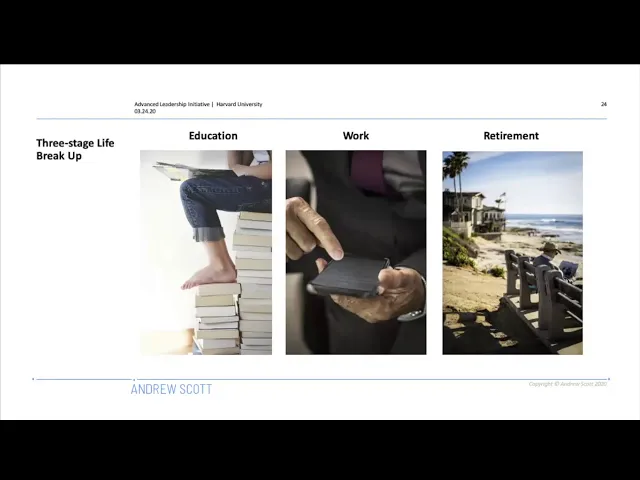
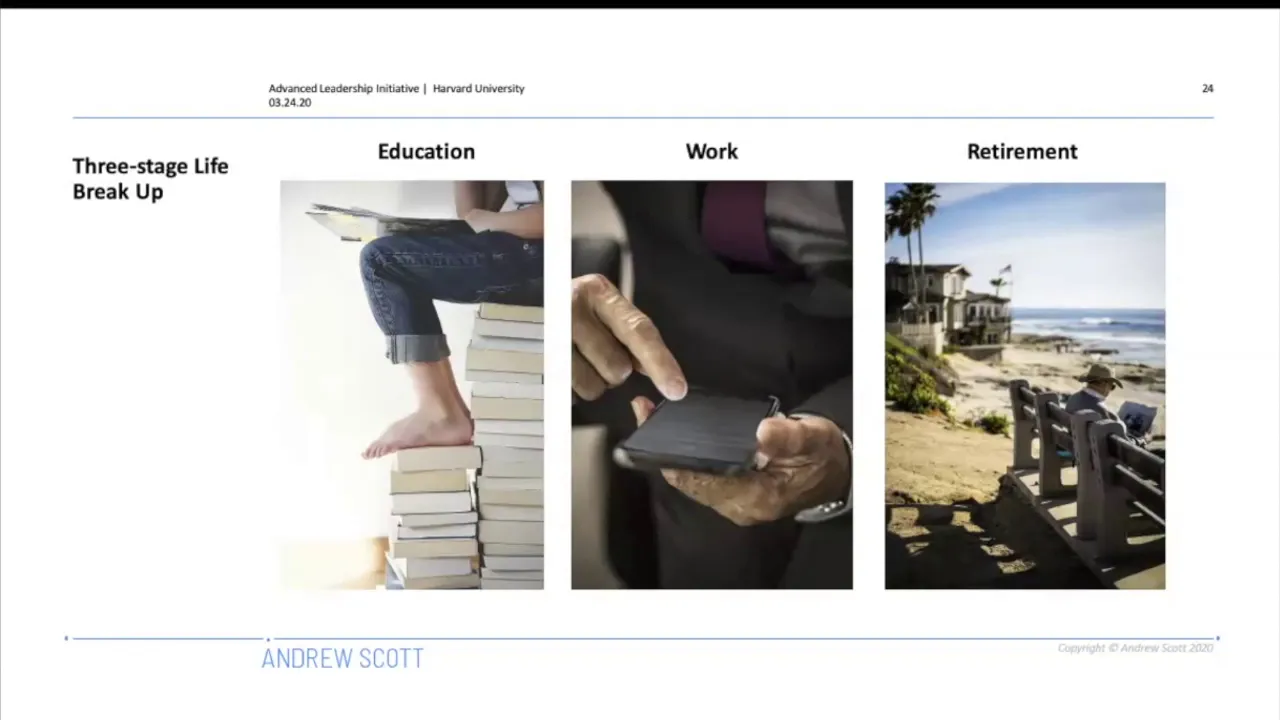
into being old and being aged and we think that all these extras of life have come at the end but actually it can be distributed across many different periods what does it all mean well our current structure of a three stage life of education work and retirement just really cannot be stretched to survived in 90 100 years so what we're beginning to see is a breakup of a three stage life we're seeing a multi stage nurse one where you may have several periods of education spread over time sometimes you might have a traditional linear career
other times you might be self-employed there'd be periods of transition and there was the great thing about this multi stage life as it can be arranged in lots of different ways this leg longevity has huge implications but I get stressed it's not about being old it's about all of life at the end of life this in the creation of new stages and whole new ages there's a massive corporate agenda here the financial system the education system or needs to respond and economically this is a huge emerging market I think there's three different parts this longevity
economy there's what I call the aging society the gray economy then there's the aged malleability industry the younger or what I call the wreath creation industry this could be Jim's this could be cheap Congolese modern el de Kamp's but we're gonna see a great growth because of course what is the most important things if you age well and then there's what I call the reshaping of time so you know education is no longer going to be front-loaded a bit struts out across all of life so does all this mean well the aging Society story says
demography is destiny but if age is malleable if there is a longevity of John and the agenda we can do something about so how do we maximize longevity economy we need to support older workers and find ways of maintaining work if they wish we need to support longer productive life so I say adult education is crucial all's well that ages well we need to make sure that people do age well diversity is important we have to make sure no is left behind and then here's I think a request I would make as an economist we
need to target longevity because only if we target healthy longevity when we start to see guns take this topic seriously what I find is very few firms governments or investors understand what is happening but we focus way too much on an ageing society and we need to start getting individuals and governments to understand the importance the longevity economy we can't deny that aging has its challenges but if we are living for longer and healthier for longer we should be lots of opportunities the weakened seats