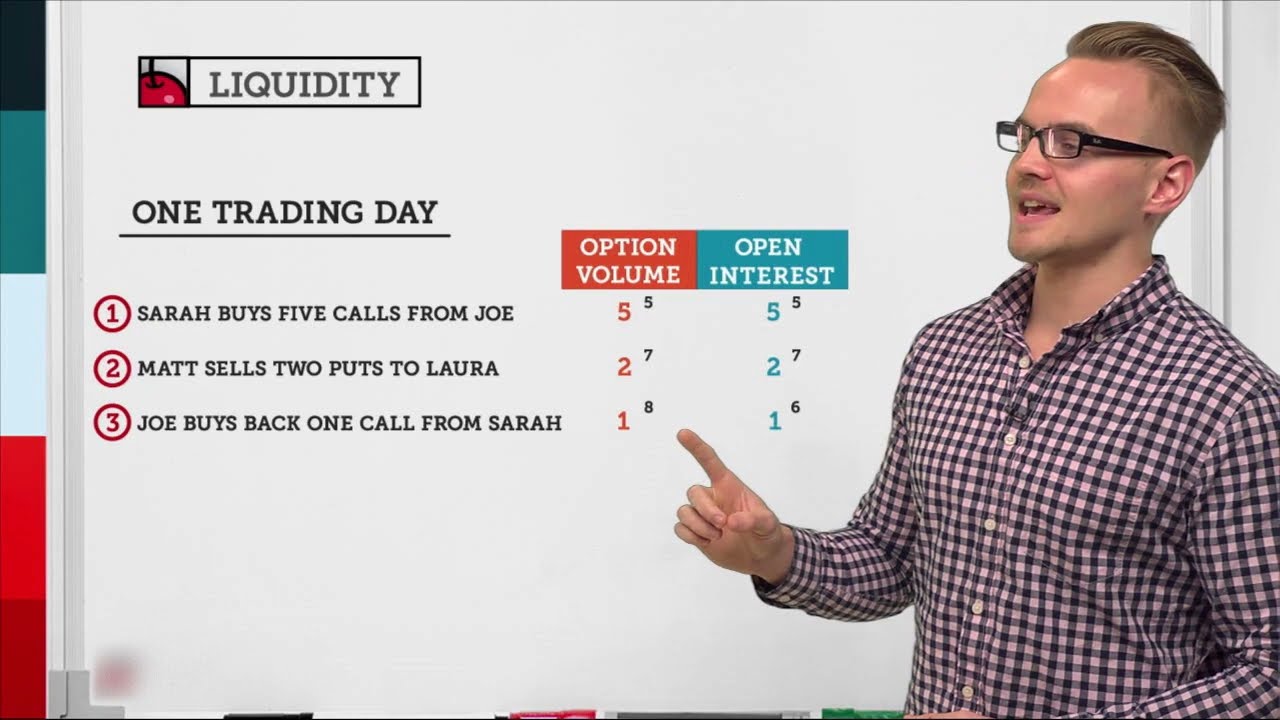
[Music] hey guys and welcome back to mike and his whiteboard my name is mike this is my whiteboard and we're going to continue talking about liquidity today so we're going to talk about another aspect of liquidity which is the bid ask spread so we covered liquidity yesterday in the terms of open interest and volume and how the numbers that we're looking for there can affect our trading decisions but now we're going to dig a little bit deeper and talk about bid-ask spreads which is really the difference between what the market is willing to sell me
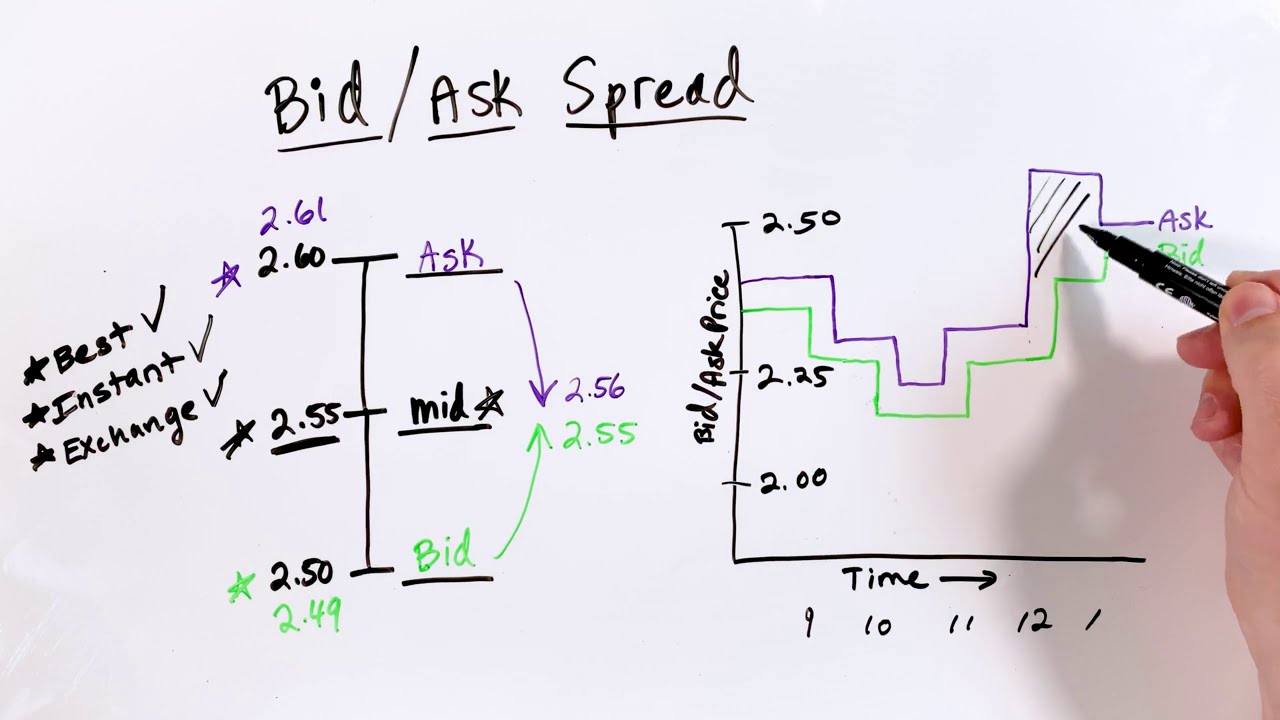
something for and what the market is willing to buy something from me for so let's get into it and we'll start discussing it with the bid ask spread definition here so essentially the bid price is the price the market is willing to buy something from me for so when we're talking about buying and selling options we don't really know who we're buying and selling the options to or from so we like to think of it as just a general market so we know that the market is giving me prices for something i can sell and
the market's giving me a price for something i can buy so when we talk about the bid price we're talking about the price that the market is willing to buy from me so when i'm when i'm selling something or i'm selling an option i know that the bid price is the price where i can sell it to the market now on the other side we're going to be talking about the ask price so the ask price is the price that the market is willing to sell to me for so when we're talking about an ask
price if the market is selling it to me that's going to be meaning that i'm going to be buying from the market so really quickly when we're talking about debit trades we're talking about the ask price being the natural price because naturally when i'm buying something the ask price is going to be the price i'm going to be looking at because that's the price that the market is willing to sell me that contract for and inversely the bid price if i'm looking to sell options that's going to be something where the market's going to be
buying from me so when i'm selling an option the market's going to buy that from me so that's going to be the natural price for the bid price so let's get into a couple examples here and we'll discuss how this can be affected in certain trades so when we're talking about debit trades as we just discussed we're looking at the ask price as the natural price so you might see it in the dope platform or the toss platform so the systems are smart enough to know that when we have a debit trade on and it
shows you the natural price you might also see it as just nat for nat it's going to know whether you're buying or selling something so it's going to show you that natural price so if i have a debit trade for example a debit vertical spread if i'm buying a call spread or buying a put spread it's going to give me the ask price as my natural price on the inverse side if we look at buying a call so we're going to give an example here of buying a call so we've got a spread here of
5 cents so you can see that if i'm buying a call just a naked call i know that i can buy that in the market for 145 and if i was looking to sell a call i can sell it for 140. so when we're talking about the spread or the bid ask spread we're simply referring to the difference between these two bid and ask prices so for this this would be a 5 cent bid ask spread so because i can sell it at 140 or buy the option at 145 since there's that five cent difference
there that's going to be our bid ask spread so now let's look at credit trades and credit trades are pretty much the same but just a little bit different so you take the debit trades you flip it on its axis so now the bid is going to be our natural price so with credit trades since we're talking about selling something so if i'm selling a put spread or selling an iron condor or selling a strangle anything where i'm looking to sell something for a credit my natural price is going to be the bid price so
if we look at an example of this we're going to look at selling a put spread so we're going to look at a 3 cent wide bid ask spread so this is indicating that if i'm looking at selling a put spread for 314 and if i wanted to buy that put spread for 317 i've got a three cent difference between the bid and the ask so i've got a very tight bid-ask spread of three cents so what's really important to note is pretty much the difference between the bid and ask and we want to have
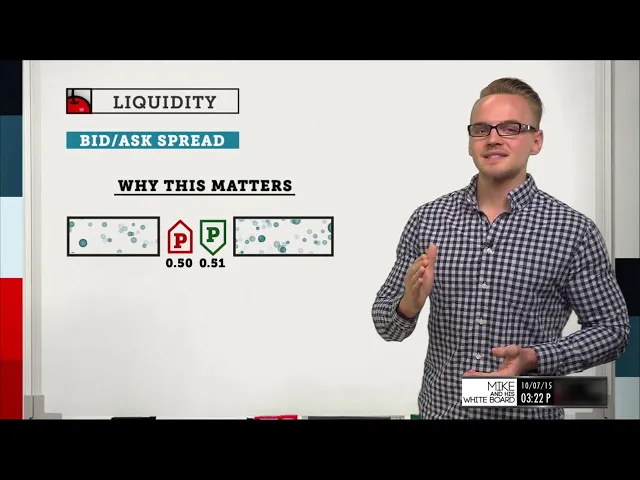
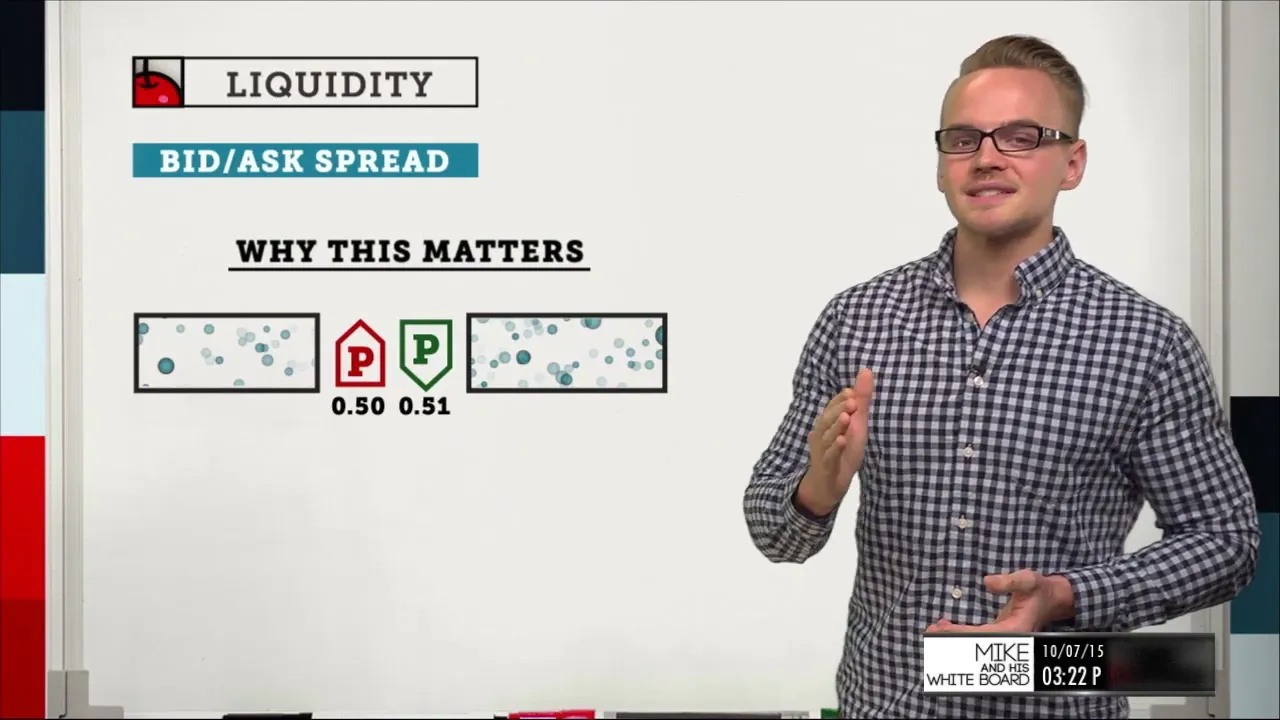
the tightest bid as spreads possible because that's going to give us the best chance for having a fair market price so if we go to the next slide here we can see a visualization of this so we're looking at a one cent wide bid-ask spread so the red we've got indicated for selling and we've got the other option indicating for buying so if i can sell something for 50 cents and buy it back in the market for 51 cents this is pretty much the tightest spread that we can possibly have in the current market where
uh ticks are one cent wide with options so you might see something like this in spy which is pretty much the most liquid underlying in terms of options you'll see open interest and volume in the tens of thousands every single day so this is going to be a very very liquid product and the reason this is liquid is because we have a lot of market participants so we talked about yesterday how open interest and volume can give you a gauge for market participation well the bid ask spread is pretty much the result of that so
if i've got a ton of buyers on this side so these bubbles are pretty much the frequency of action so we're looking at transactions we're looking at open interest so the more activity there is on both of these sides think about it as buyers and sellers being very active and being able to agree on a market price so the more action there is on each side as you can see here it's going to push that bid and ask spread or the difference between what i can sell something at and what i can buy something at
it's going to push that very tight together and right here we pretty much have a one cent wide bid-s spread which is the tightest possible for the option market now if we look at something that's a little bit less liquid so this would be an indication of a very wide bid-ask spread so now instead of selling the option with one cent difference between where i can sell it and buy it now we're looking at a 30 cent difference and you can see here there's very little dots so now we've got two people on each side
that are actively participating in this market which is pretty much why this spread is very wide so since there's not a lot of activity there's not a lot of participants that are able to agree upon a certain price there's some people over here that think that this push should be worth 80 cents and there's a couple people on the other side that think that the put should be worth 50 cents if they're selling it and 80 cents if we're buying it so there's not a mutual agreement on the price which is why the bid ass
threat is very wide so the easiest way to think about this is again when we're looking up here there's a ton of market market participation so when you look at something like spy where there's tens of thousands of contracts traded each day lots of volume lots of open interest you're going to see a lot of agreements on this price which is why we've got a one penny wide bid-ask spread and you'll see that in the markets whenever you look at it it'll be one or two cents wide usually for spy now on the other hand
if you look at something that is barely traded at all so maybe there's 10 open open interest contracts or 10 contracts that are traded that day that will give you the volume number when we're looking at something that's much lower like that you're going to see a pretty wide bid-ask spread so there's not a lot of agreements so the reason that this is very important is because if we were to take out the mid price so basically the mid price is the difference between the bid and ask so in this example if we've got 50
here and 80 here we've got a 30 cent wide spread so the mid price would be 65 cents so we just take the 30 cent wide divide it by two our mid price would be 65 cents so there's 15 cents on each side now let's assume that we could not use that mid price for routing the order so let's say that i went to go buy this put for 80 cents and i decided that i wanted to change my mind after 10 or 15 minutes if i could only sell on the natural price of the
50 cents i would res i would essentially lose 30 cents so out of the 80 cents i just paid if i could only sell it back to the natural price of 50 cents i would automatically lose 30 cents which is almost 50 of the value of that option now if we're looking at this example above it's not going to be that big of a difference if i end up buying this put and it's for 51 cents if i want to sell it back for 50 cents it's only a loss of one penny so it's not
going to affect me as drastically as this example would so that's one reason we care so much about liquidity just the fact that we pretty much have a locked-in loss here if we're dealing with just selling or buying on the natural prices but also we might be locked into this position just because there's not a lot of people out there trading it so if i were to get filled on something like this so let's say i sold a put for 50 cents and i wanted to close it out let's say maybe i was starting to
see profits on that if there's no one over here that's buying these options then i'm not going to really be able to close it out i might be locked into this trade just because of there's such a huge lack of market participation so that's another reason why we care so much about liquidity and we really only stick with the highly liquid underlyings which is why we were talking about those numbers yesterday so for volume and open interest we really want to see things that are above a thousand and if we're talking about stock shares we
want to see things over a million so a million shares traded per day for stocks and over a thousand open interest or over a thousand volume per strike if whatever strike we're looking at so that's going to give us a good indication of high liquidity which is going to result in the tighter bit s spreads like this so if we go to the next slide here we're going to talk about these takeaways here so essentially liquidity is one of the most important things we look at it's pretty much the king of all things in terms
of options trading and being able to get in and out of positions at a fair market price but in terms of bid ask spread specifically again the bid is the price the market is willing to buy a trade from me at so if i'm looking to sell an option the bid price is going to be the lowest price because the market's willing to buy that from me so if i want to sell to the market it's usually going to be lower than if i were to buy from the market so that's where that bid ask
differential comes into play ask is the price the market is willing to sell a trade to me for so on the other side if i wanted to buy something like a call spread or a put spread as long as it's a debit trade it's going to be the ask so that's the mark that's pretty much the price that the market is willing to sell me that trade or contract for and mid price is the difference between bid and ask so you'll see on the network a lot we're going to be routing things for the mid
price for the doe platform actually everything is pretty much routed for the mid price unless you've changed your settings in the upper left corner but naturally it's going to be routing things for the mid price because that's where we believe is the fair market value so again trading liquid underlyings is going to help us get that fair market value a lot easier and tight bid s spreads are directly related to high levels of market participation so just like we were talking about before yesterday with open interest and volume essentially the more open interest and volume
or the more activity we see in a particular strike price or just that underlying in general it's going to give us a tighter bid-ask spread generally and it's going to help us get that fair market price that we're looking for and be able to maneuver in and out of trades easily so that concludes liquidity so if you have any questions at all please shoot me an email at supportdoe.com or support or you can tweet us at do trading do trader mike thanks so much for tuning in we're actually going to be off tomorrow so we'll
be back on tuesday for another segment have a great weekend [Music] what's up everyone thanks for watching our video if you like this video give it a thumbs up or share it with a friend click below to watch more videos subscribe to our channel or go to our website [Music]