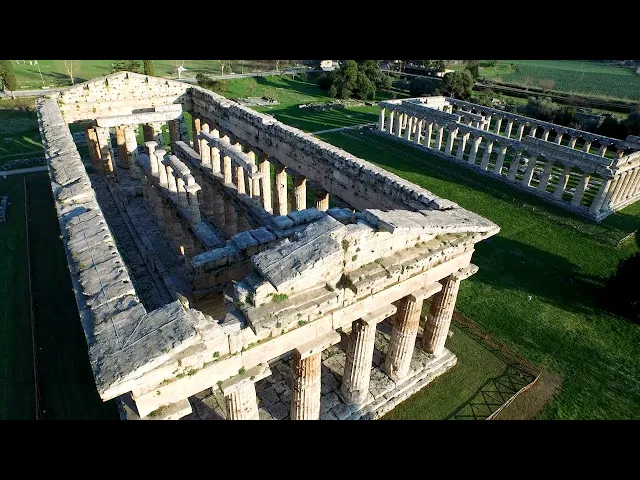
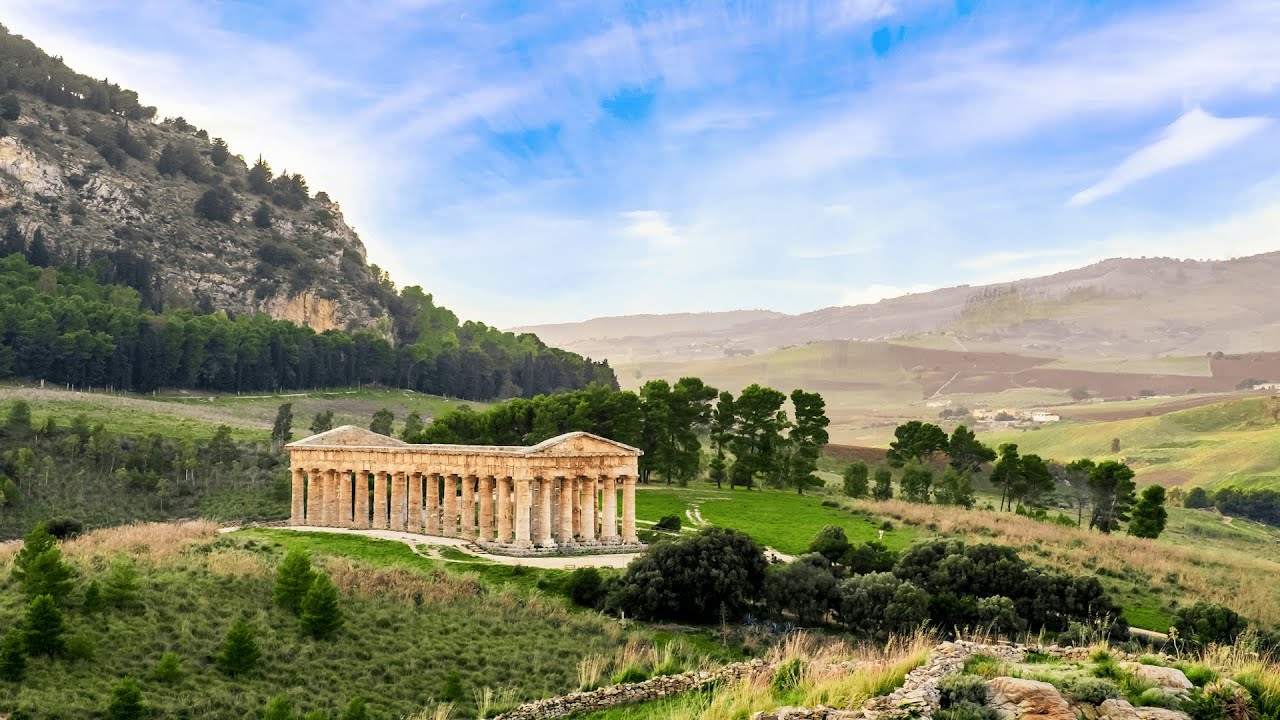
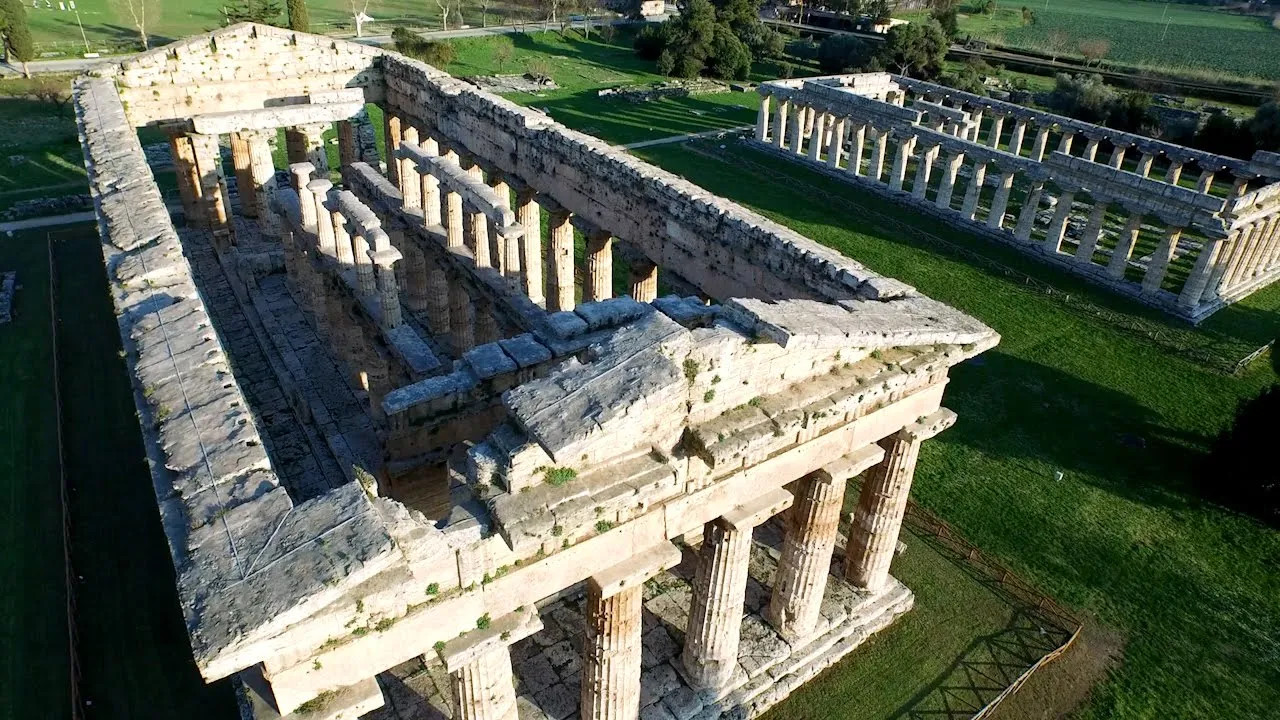
Out of all the Greek temples that survived, not a single one has its original roof. Even in the best preserved ones, the roofs are gone. Why is that?
The answer is simple, but it might surprise you. Greek temples were built with Post and Lintel architecture, which means horizontal beams resting on top of the vertical columns and walls. While this architecture looks good, it has its limitations.
Stone as a material handles compression very well, meaning that it can support a lot of weight from above. That part's obvious, but stone cannot handle tension very well. When a long slab of stone is laid horizontally above an empty space, gravity creates tension on the part that's not supported.
If you make the gap wide enough, it will crack and collapse. That's why, if you want to use stone to span a wide distance, you have to build arches, which can sustain more weight, and across a wider gap. While the Romans didn't invent the arch, they perfected it, and used it all the time.
The Greeks didn't use that in their temples, but they did figure out what the distance limit is for each type of stone. And they made sure to space the columns within that limit, so that the lintel doesn't collapse. If the roof above was also made of stone, obviously that would have added a lot more weight.
The columns could handle the extra weight, but not the lintels. A stone roof would put too much stress on the structure. So the best solution was a light wooden roof, called a truss.
Wood is not only lighter, but it can also take a lot more tension. So you can lay long beams across wide open gaps, and up at an angle to make a slope. The slope was covered with tiles made of marble, limestone or terracotta, depending on the resources the city had.
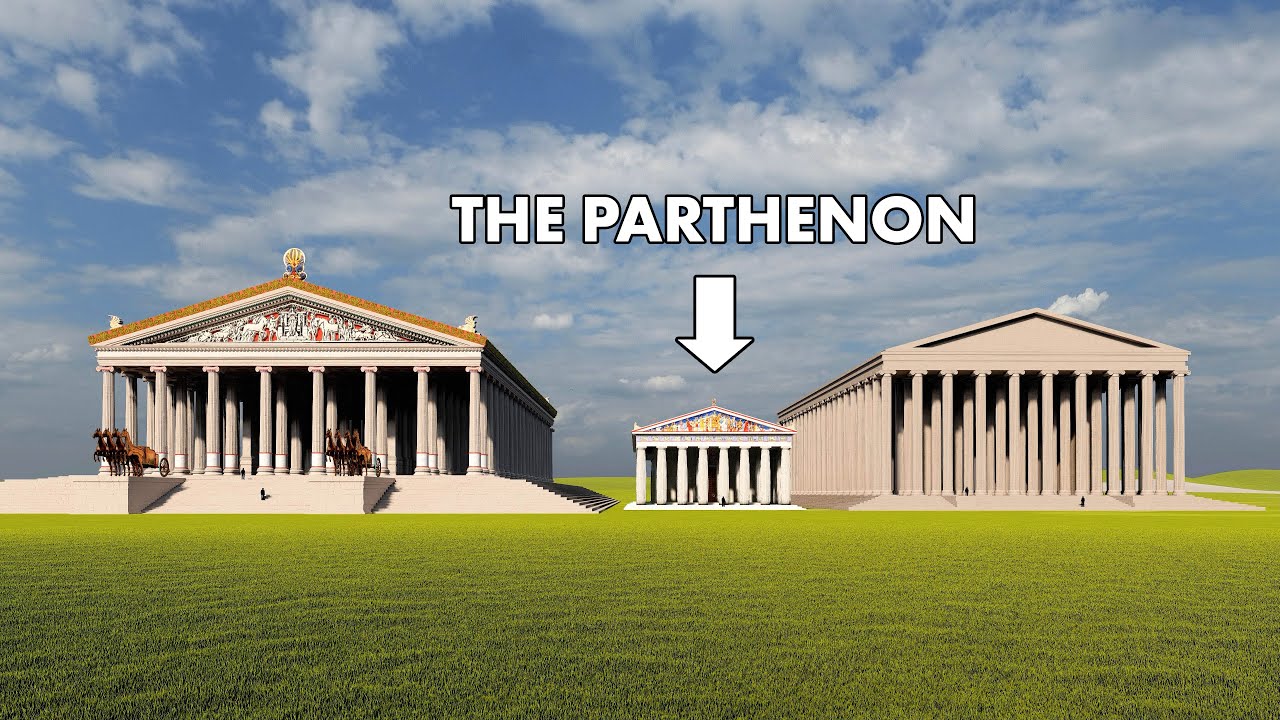
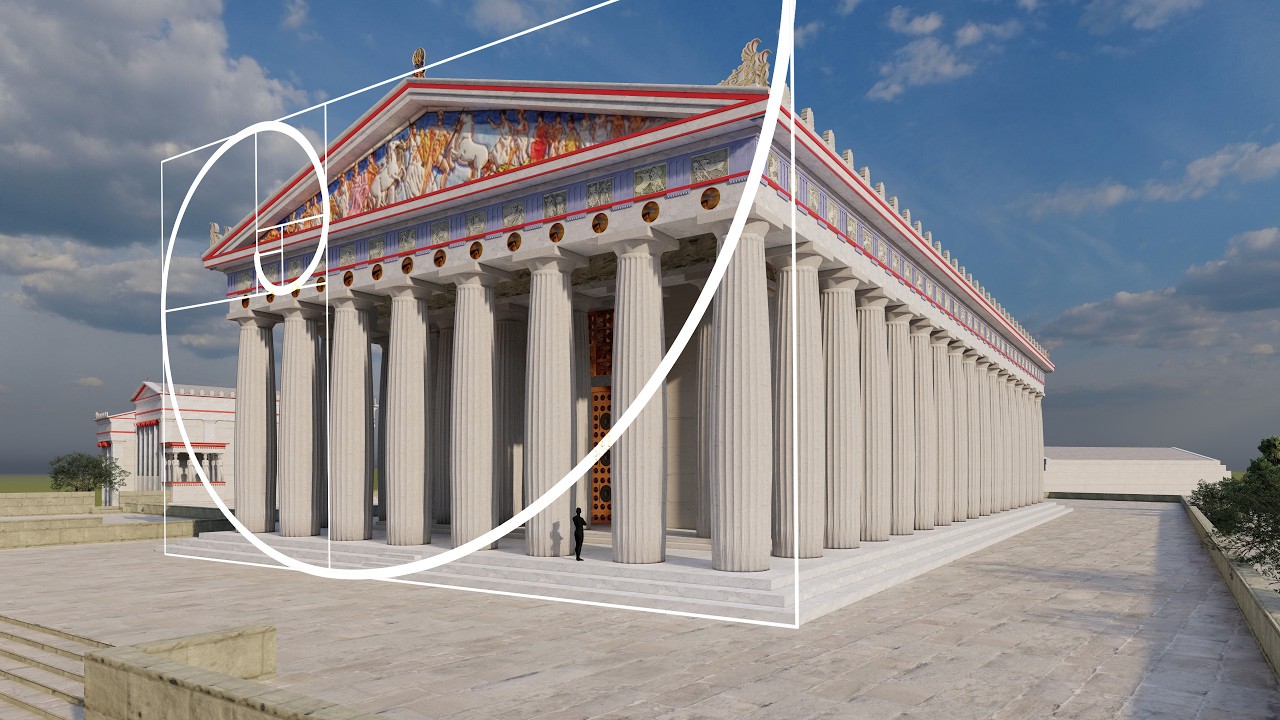
Marble was the most beautiful and expensive type. The Parthenon for example, which was built with the best the money can buy, had a roof entirely covered with marble tiles. The space inside the truss was mostly air, so the whole thing was relatively light, and way more practical than a stone roof.
But of course wood rots with long exposure to moisture. Strong winds can loosen the tiles, and ice can crack and pop them off, exposing the wood to more moisture. Wood needs to be protected with paint, and inspected regularly for cracks, insect infestations, and decay.
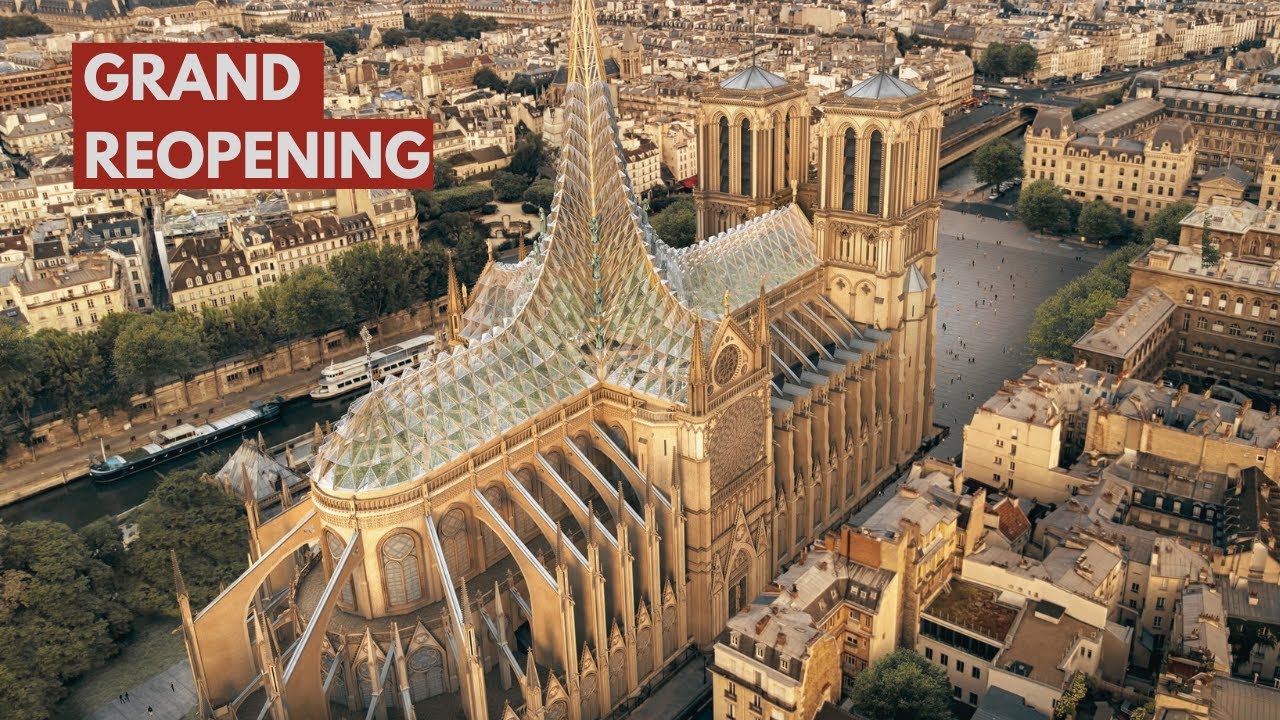
A properly maintained wooden roof can last for centuries. The Notre-Dame in Paris had one of the oldest wooden roofs of any Gothic cathedral lasting around 800 years, because it was maintained. Until it tragically burned down in 2019.
This was an accident of course, but fire can also be caused by war and arson, and often in history, that's what happened. 800 years is quite an achievement for the Notre-Dame. But for a wooden roof of a Greek temple to last more than 2000 years?
That's hard to imagine. In late antiquity, the Christian persecution of Pagans led to the shutting down or destruction of the temples. Most temples were either abandoned and left to decay, or they were spoliated for their materials, like taking the roof tiles and reusing them in newer buildings, Many temples also suffered from earthquakes throughout the centuries.
Some got lucky though, and were converted into churches, which ensured that they would be kept active as religious centers, and their roofs would be maintained. But even then, nothing lasts forever. The Temple of Concordia for example, was converted into a church, but its roof didn't last.
Interestingly, the Temple of Hephaestos in Athens, was also converted into a church. And would you look at that! It has a roof!
But no, that's not the original roof. The original one was burnt down, and this later stone roof was built by the Christians in the early Middle Ages. But it's a vaulted roof, so it works like an arch.
That's why they could build it with stone. And this one doesn't even have to span a wide gap. Just the cella.
And like I said, it wasn't the ancient Greeks who built it. So this one doesn't count. However, there is one Greek temple that did survive with an ancient wooden roof, all the way to the 1600’s.
And that's the granddaddy of them all. . .
The Parthenon. The Parthenon was also converted into a church, then into a mosque, which miraculously preserved its wooden roof for 1400 years to then be dramatically destroyed. But that is a long and fascinating story, and is the topic of my next video.
So in the end, sadly, we don't have a single example of a Greek temple with an original roof. But if you want to learn about some of the best preserved Greek temples in the world, check out my last video, by clicking here.