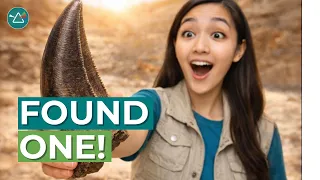
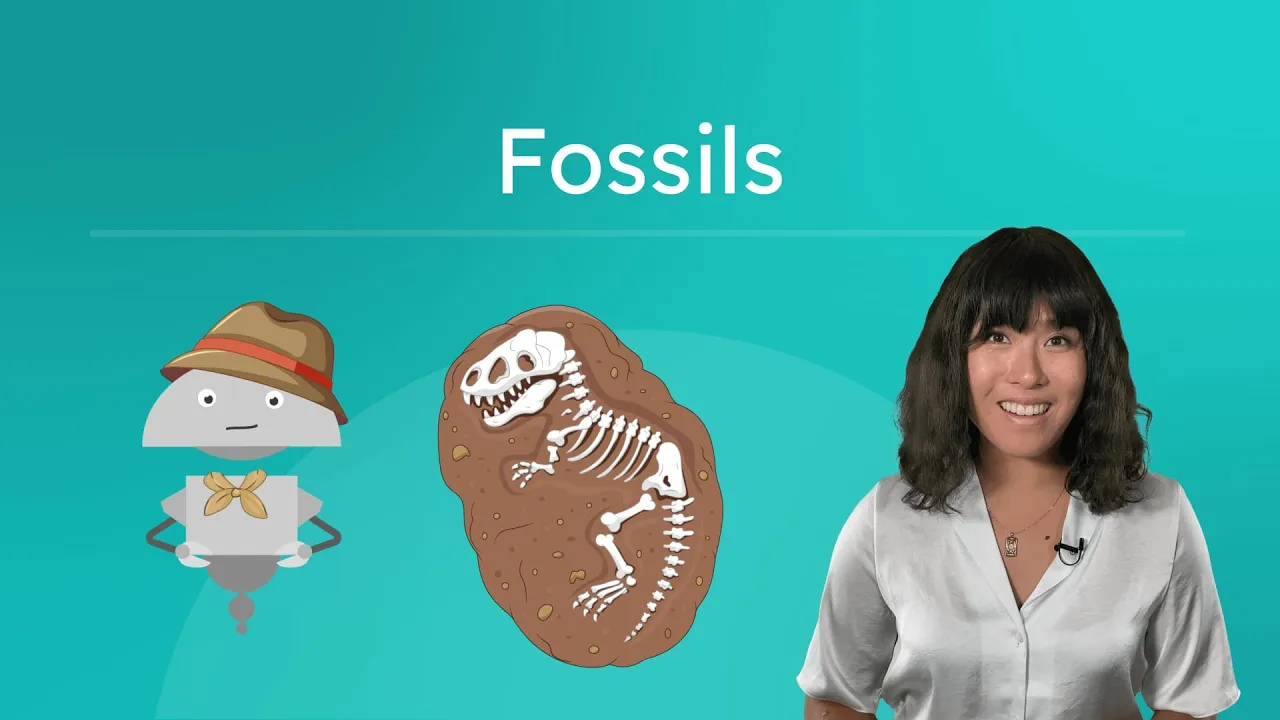
Hey there, Earth scientists! It's Bea, and I'm so glad you could join us here at the dig site. We're on the cusp of an amazing discovery!
Check it out! What do you think it is, bones, rocks, or maybe something else entirely? The treasures we're uncovering here tell an incredible story about the processes that shape our planet, a story that connects Earth's crust to the living things that walk upon it.
Today, we're going to explore the world of fossils to discover what mysteries they hold and what they have to do with our study of rocks and minerals. So cool! By the end of this lesson, you'll be able to identify different types of fossils, explain the natural processes that form them, and explain how fossils help us learn about our planet's history.
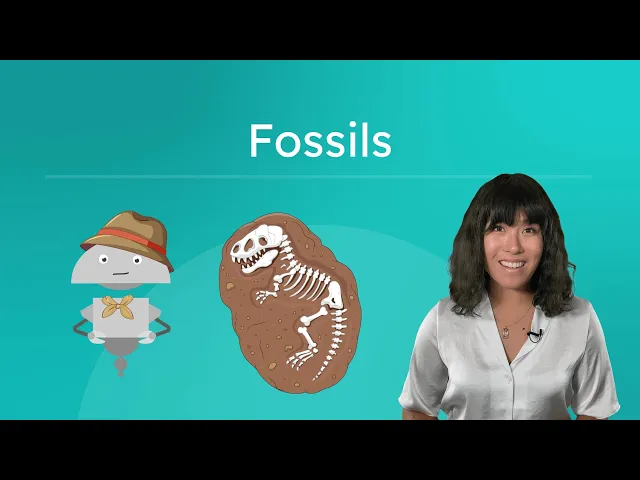
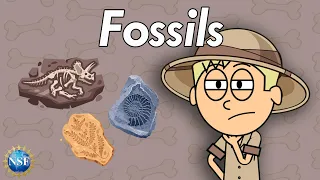
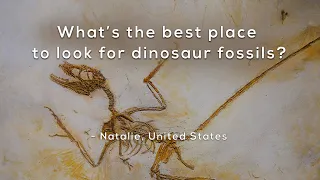
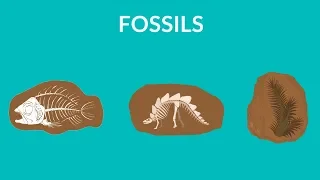
Let's dig in. Let's start with what we've actually uncovered here: a fossil. Fossils are the preserved evidence of living things from long ago.
They can come from anything that was once alive: an ancient fern, a woolly mammoth, or even a T-Rex. Now you might be wondering, why do fossils always seem to be found in the desert when so few creatures live out here now? Well, to understand where to find fossils, we'll first need to understand how they form.
Many people think that fossils are actually the bones of an ancient creature, but that's not the whole story. Fossils are closer to a unique type of rock, and they can be formed in a few ways. Most fossils form through permineralization.
This process happens when water seeps into organic material left behind from a living thing. Then minerals dissolved in the water are left behind in the empty spaces within the organic material. Over time, the organic material breaks down, then only these deposited minerals remain, all while sediment piles up around it.
This forms a fossil encased in rock. Another way fossils form is when an organism's remains leave an impression in a rock, but the remains themselves completely decay and disappear. The leftover impression is called a mold.
Over time, this mold might fill up with sediment, which creates a cast of the remains or a rock in their exact shape. So, fossils don't really form when a living thing's remains are turned into rocks; they form when those remains are replaced with rock instead. And did you notice that both these common methods of fossilization involve sedimentary rocks?
Why don't you think fossils are usually found in igneous or metamorphic rocks? Pause the video here and record your thinking in your guided notes. The processes that form both metamorphic and igneous rocks are pretty likely to destroy any organic materials that get mixed up in them.
On the other hand, as sediments slowly pile up over time, they create the perfect conditions to bury and preserve the remains of living things. As a result, fossils are almost always found in sedimentary rock. They're also most likely to form in places with lots of water seeping into the ground.
So, why out here in the desert? Well, remember, the Earth's surface is always changing. When this creature was alive, this might have been a swamp or a rainforest, which would create the right conditions for a fossil to form through permineralization.
It might be a desert now, but underneath the sand, there are rocks that were saturated with water long ago, and in these rocks, we can find fossils of everything from dinosaur skulls to bird nests. The fossil we've discovered here is a body fossil. A body fossil is a fossilized part of an ancient living thing.
Usually, body fossils are of the hard parts of living things, like their bones, teeth, shells, and bark. That's because softer parts, like fur or leaves, decay way too quickly for a fossil to form. Most body fossils that we discover are just small parts of a living thing, like one tooth or a single bone.
It's like assembling a jigsaw puzzle. Even after just a few pieces, you can get an idea of the overall picture, but the more pieces you find, the clearer it becomes. Paleontologists, or scientists who study fossils, often have to learn about the organisms they find piece by piece.
Complete body fossils are really rare. That's what makes our discovery such an amazing find. But wait a moment, check this out.
We unearthed another fossil nearby, but it's a bit different. Does this look like a body fossil to you? This isn't a fossilized part of the organism's body.
It must be a trace fossil instead. Trace fossils are fossils that show the activities of organisms from long ago, rather than their actual bodies. They form in similar ways to how body fossils form, but instead of an organism's remains, their footprints, nests, burrows, and even droppings become fossilized instead.
But are these fossils really useful? I mean, what do you think we could learn from studying a fossilized nest or footprints that we couldn't learn from just studying fossils of the creature that made them? Pause the video here and record your thinking in your guided notes.
While body fossils help us learn about how organisms long ago may have looked, trace fossils help us learn about how they behaved. For example, fossilized nests can tell us where a creature lived, how it hid from predators, and how it took care of its young. Fossilized droppings can tell us what the creature ate, and fossilized footprints, like these?
They can reveal how the creature moved, its speed, its posture, and even social behaviors, like that it might have lived in a pack. Pretty incredible, huh? So, what makes fossils so invaluable to Earth scientists?
Why do we search through layers of rock to find even fragments of them? Well, fossils are more than just the traces of ancient life. They're like a time capsule offering us a glimpse into our planet's history.
Fossilized plants can tell us about the climate they grew in. Fossils of ocean animals found on mountaintops can show us how the Earth's crust has shifted and moved our continents over time. Patterns of fossil formation can give us hints about events like asteroid strikes and volcanic eruptions that happened long ago.
Fossils help us understand how changes on our planet's surface impact all the living things that call it home. After all, fossils are a unique blend of geology and biology, connecting the stories of life on Earth with the story of the Earth itself. Now, while we finish unearthing this specimen, let's recap what we've learned today.
Now you know that the main kinds of fossils are body fossils and trace fossils, that fossils are formed through processes like permineralization and the creation of molds and casts, and that fossils help us learn how our planet has changed over time. Be sure to check out the practice questions and extension activities that go with this lesson to dig even deeper into the world of paleontology, and remember, in all branches of Earth science, as in life, you rock! [Electric guitar plays] See you next time.