Guys, before we start, we would like you to know that if you watch this video to the end, you can participate in the giveaway of $200 for one simple comment. Everything is fair and simple, so don't miss your chance. Here we go.
You know, I was stumped one day when a little boy asked, "Do you draw Mickey Mouse? " I had to admit I didn't draw anymore. "Then you think up all the jokes and ideas?
" "No," I said, "I don't do that. " Finally, he looked at me and said: "Mr Disney, just what do you do? " "Well," I said, "sometimes I think of myself as a little bee.
I go from one area of the studio to another and gather pollen and sort of stimulate everybody. I guess that's the job I do. " The animator, which we will discuss today, forever changed the history of world cinema.
His company has been existing for almost 100 years. Several generations of children grew up on good cartoons that taught them friendship, courage and that all dreams can come true. However, was this person who created this empire as kind as we would like him to be?
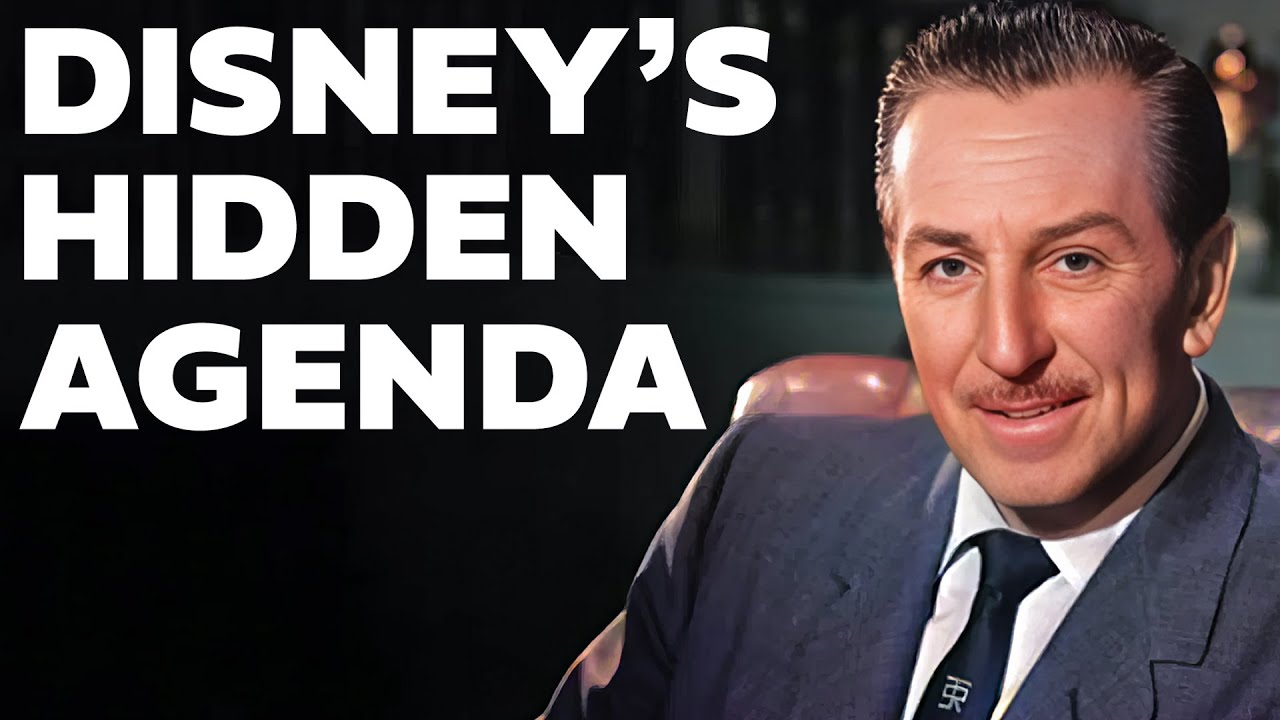
Few people know that Walt Disney was famous not only for his talents, but also for his complex character. He was a man who was accused of anti-Semitism, sexism, and tyranny that drove his employees almost to depression and suicide. Are all these rumors true?
You are on the Biographer channel and today we will try to figure out what is a myth and what is true. If you end up enjoying this video — please consider subscribing and liking this video. It's free and you can always change your mind.
Enjoy the video On December 21, 1937, the news was more interesting. This day was the day of the premiere of an animated film that forever changed the history of animation and film industry, it was “Snow White and the Seven Dwarfs” by Walt Disney. The hall was full.
You could meet Hollywood big stars among ordinary viewers. This premiere caused a strong reaction from the public and everyone was looking forward to it. The lights go out, the audience stops whispering and sits down in their seats, silence falls on the hall.
From the very first shots, the viewer realizes that he has witnessed a new chapter in the history of world cinema. The fear that provokes the appearance of the queen, the laughter that causes the simple jokes of the dwarves, the viewer experiences the whole range of emotions and even the one that Walt so dreamed of - the audience is in tears and then the audience applauds standing up. "Snow White and the Seven Dwarfs", quickly became a worldwide hit among both viewers and critics.
The cartoon set a world record at the box office at that time. “CHILDHOOD” But first things first. How did the maestro become an innovator of animation?
Walt's childhood wasn't a fairy tale. He was born on December 5, 1901, in Chicago, in the family of Irish immigrants. The boy's father was a carpenter, and his mother was a teacher.
Apart from Walt, the family had four other children. Being the youngest child in the family, at the age of eight, he earned his first coin by drawing the village doctor's favorite stallion. Yes, he was interested in drawing from an early age.
"It was a successful drawing of Mr Sherwood's horse that gave me the idea of becoming an artist" - Disney would later recall. As a child, Walt Disney was very fond of movies. Together with their best friend, they parodied the funny walk of Charlie Chaplin and spent all their pocket money on movies.
His first love was cinema. These days, in the dark halls of cinemas, it was already possible to watch not only movies, but also short sketches, as well as the first attempts at animation. It were these primitive, animated films that would become a symbol of progress for Walt.
Moreover, taking into account that there were no big names in this young art form, he quickly realized that such a cherished fame could come to him if he was engaged in animation. But that will be later. In the meantime, as a teenager, Walt started taking Saturday classes at the Kansas City Art Institute, as well as taking part-time drawing classes.
Disney liked to draw, but due to the lack of paints and pencils, he once used resin and a stick to draw his first projection on the wall of his parents' house. The punishment that followed did not discourage the boy from drawing, but he realized that he needed money to buy pencils and paper. From an early age, Walt got up at three o'clock in the morning to deliver newspapers, as well as advertisements for his father's firm, with his older brother Roy.
His father took all the money, but Walt did not complain: keeping secret from his "strict boss", he worked twice as much and in his worn-out shoes he ran around the city to deliver the mail on time and earn pocket money. The family moved several times, and when Walt found himself in Kansas City, he learned that there was a beautiful mansion in the city with a luxurious garden and a high fence. Young Walter wanted so much to get inside this fairy-tale castle!
Boundless imagination drew the boy unearthly riches, but all his attempts to penetrate the private territory ended in failure. Then the boy swore that one day he would certainly build a huge house with entertainment for children and a picturesque garden for games. So the cherished dream was born, it came true in 40 years in the form of Disneyland.
There is also one story related to Disney's childhood, which, according to his biographers, greatly influenced the further work of the animator. When Walt was either seven or eight years old, he killed an owl. In the Missouri wilderness suffering from loneliness and the beatings of his father, Walt dreamed of a pet, and the dream almost came true when one afternoon in the dark thickets of the garden, he found a half-asleep owl and took it home.
Scared by the light of day, the bird suddenly attacked Walt, and he, either frightened or angry, trampled it to death. The event was a turning point in Walt's life: "It seems that after that owl, I developed a fondness for animals. " Some believe that it was this traumatic episode from childhood that caused the numerous deaths of small animals in Disney movies.
MILITARY SERVICE With the outbreak of World War I, 16-year-old Walt, unable to stand his abusive father any longer, left for France. He forged the date on his birth certificate, and for eleven months worked as a driver on a Red Cross ambulance. There, an enterprising young man, along with his colleague, came up with the idea of bringing German helmets from the front line and selling them as souvenirs to American soldiers returning to their homeland.
The bullet-riddled helmets of German snipers were the best, but they were rare, and Disney's artistic talent showed up. Together with the partner, they collected ordinary German helmets, drew on them a special camouflage pattern, which was only on the helmets of snipers, made a hole, as if a bullet formed it, and for greater persuasiveness smeared it with blood. It seems that the First World War left pleasant memories for Disney.
When during the Second World War, one of his employees announced that he was going to fight in Europe, Disney said that he would like to go instead of him. THE BEGINNING OF CAREER Back in Kansas City, Walt became the art director of a commercial advertising studio. There he began to create his first advertising films - at the same time he had a desire to continue his experiments in the world of hand-drawn animation.
During this period, he met the talented animator Ub Iwerks. The person who would later draw the Disney character, Mickey Mouse. Their acquaintance grew into a joint experimental project "Laugh-O-Gram Studio" In 1920, Disney released 3-minute cartoons that didn't earn him a dime.
To somehow recoup the work of the studio, Disney began production of "Alice’s Wonderland", in which live action would be combined with animation. The result was a 12-and-a-half-minute film, but it was finished too late to save the studio. Animation had no prospects in small Kansas City, and the company went bankrupt.
Bankruptcy would have forced other people to abandon the realization of ghostly dreams into reality, but not Walt. He's as poor as a church rat, the barn that housed the studio is being sold for debt and the Disney family is leaving for Hollywood, literally with an empty wallet. As a colleague, Walt took the already familiar Ub Iwerks, whose achievements largely determined the characteristic style of early Disney animation.
Also, this time, he invited on the post of co-founder his own brother Roy Disney, who was already, at that time, an experienced accountant. Together they opened the "Disney Cartoon Studio". Imagine, the first room in which the cult studio was located was a very ordinary garage.
With the borrowed money, Disney bought everything necessary to create cartoons and the company started working. Disney's attempts to sell “Alice’s Wonderland” were futile until it received an offer of collaboration from New York-based film distributor Margaret J. Winkler.
In October, they signed a contract for six comedies about Alice. On March 1, 1924, Disney presented its first trick film, Alice's Day at Sea, inspired by the characters of Lewis Carroll's “Alice in Wonderland”. His series of films drawn in 1926-1927, the director also named after the heroine of this book - "Alice Comedies" (in total, Disney made 56 films about the adventures of Alice).
At the same time, the style of Disney films began to form. However, the relationship between the three of them was very strange. Ub Iwerks, as we have already mentioned, was the original creator of Mickey Mouse, without Roy, Walt could not make a move, but he thought that none of them can be trusted to the end.
He constantly proved to others and to himself that he was the main one, and given that the studio still bears only his name, he managed to prove it. Disney did not pay Ub extra money and did not give him any real power. What is more, in the studio, he often even fought with his brother, Roy.
Nevertheless, this trio did create one of the greatest, cinematic empires. Although it all started very modestly, with short cartoons that did not stand out too much against the background of other products of this kind. The first author's character, which was created by Disney, was not the famous Mickey Mouse, but Oswald the Lucky Rabbit.
A cartoon about him was released in 1927 and became very popular. But Walt drew up an illiterate contract and the customer stole the rights to "Alice Comedies”, and at the same time appropriated the Disney rabbit Oswald. The small studio was in a difficult situation, but Ub saved everyone, he made the first sketch of Mickey Mouse.
THE BIRTH OF LEGEND The legendary mouse appeared in the 1928 film "Plane Crazy", and at first his name was Mortimer. In the same year, he became the hero of the first Disney sound film - "Steamboat Willie". Walt gave the mouse a character, voiced it, and also came up with the main thing that allowed Mickey to become insanely popular.
Walt decided that it was necessary to use music and sound design not just for the background or for creation of atmosphere conveying emotions, but as a leading element, in the rhythm of which, his mouse would move, perform simple manipulations and also, he wanted that the sounds would serve as a source for gags. Thus, "Steamboat Willie" became the first ever hand-drawn film with synchronous sound. It was a success.
The first, high-profile, certainly significant, both for the career of Disney, and for the evolution of the entire art form. At the same time, the personal life of Disney was finally good. In early 1925, Walt married his assistant, Lillian Bounds.
The marriage was generally happy, and the wife supported Walt in everything. But it should also be mentioned that Walt Disney is often accused of sexism. He joked that he preferred Mickey Mouse to all the women in the world.
For example, after several losses at the Oscars, Disney stopped taking his wife Lillian with him to the ceremony, because he was sure that she, like any woman, could jinx him. He forbade his daughters to watch his cartoons, fearing that they would not laugh loudly enough. The specific attitude towards women was shown not only at home, but also at the studio: Disney officially banned the hiring of female animators, because he was afraid that at the most crucial moment they could get pregnant and quit, jeopardizing the entire project.
In addition, according to Disney, this specialty required a sense of humor and the ability to draw, and neither the first nor the second in the opinion of Walt wasn’t peculiar to women. Before the war, the only place in the studio where women were accepted was the technical department, whose employees transferred drawings to film. But with the entry of the United States into World War II and the beginning of the mobilization, the number of employees decreased dramatically, and Disney had to hire several women — but even then he took only married, with children and as assistants.
In the meantime, the universal Mickey Mania begins. Children and adults fall in love with Mickey Mouse and look forward to new cartoons. Walt, being not just an enterprising person, but a gifted PR expert, instantly understands how to monetize his mascot and how to properly popularize his studio, and himself.
Very soon, the studio began to produce toys similar to Disney characters. Images of Mickey Mouse or Donald Duck were used in the production of watches, clothing items and other merchandise. They were often used to advertise products.
Disney sold licenses abroad that allowed the commercial use of images from its cartoons. Well, as you can see, even at that time the company's policy that Disney is guided by to this day was gradually being born. Almost from the very beginning, it was not just a studio producing cartoons.
No it wasn’t. Even then, Disney step by step was turning into a huge corporation, which in the future would look for ways to make money on absolutely everything that concerned its works and like a predator, would take over other studios to get rid of the competition. Now Disney is more often associated with money and greed than with creativity.
We have argumentatively analyzed in our other video why in our time Disney can be easily called a corporation of evil. Do you want to know all the ins and outs of the studio? Click on the pop up card or find the link in the description.
Believe us, you will be blown away by this information. Well, let’s go back to the twenties of the last century. The Mickey Mouse stories were followed by a huge series of more than 70 musical stories under the general title "Silly Symphonies".
There, the viewer first got acquainted with the cult heroes - Donald Duck, the dog Goofy, the yellow dog Pluto and many others. Moreover, the public success was supported by the first, significant award for Walt, in 1932, he received his first "Oscar" for the cartoon "Flowers and Trees" from the same series of Silly Symphonies. It was the first Disney animated short to be drawn entirely in color.
And, from that point on, until the end of the pre-war decade, Disney cartoons won an Oscar each year. Starting from this period, Walt's company will produce short cartoons of various kinds, the distinctive feature of which will be naturally phenomenal, for those years, work with sound and a unique style of drawing. The main thing is that the theme of all Disney's works will be the fight against evil.
He adored happy endings and put all his characters in the space of his own chaste worldview. That is how he captured the image of a morally upstanding person, but he, for a second, was a heavy smoker and almost an alcoholic, he cheated on his wife, and his affair with the actress Dolores Del Rio was known to everyone in Hollywood. However, not a single reporter dared to ruin his reputation.
Why? Disney created for the viewer of those years - peace, happiness, a refuge from the troubles of reality. The interwar period, which was already full of pain, found joy in the Disney worlds.
And it would be ungrateful to offend its creator. Motherhood, apple pie, and Disney, many reporters wrote that was the holy American trinity. However, despite the phenomenal success and universal adoration, Walt is restless.
He understands that you won’t get very far with jokes and happiness and the viewer needs to be brought to real emotions, it's time to show the whole world what animation is capable of, what his studio is capable of, which by that time has already significantly increased both in size and in the number of staff. And most importantly, what he is capable of personally. When Disney was 14 years old and working part-time as a newspaper salesman, he saw a short silent cartoon about Snow White in Kansas City, which he remembered for the rest of his life.
In the fall of 1934, Disney made the first draft of the script based on the fairy tale of the Brothers Grimm. SNOW WHITE AND THE SEVEN DWARFS So Walt decides to launch a new project, ”Snow White and the Seven Dwarfs". Today we began our story with it.
And there comes this turning point in the life of the cartoonist, as you remember, Walt went all-in and won. However, this premiere, or rather its success and what followed after it, showed the world its true face, which was not always bright, full of romance and glare. With all the postponements, refinements and constant budget increased, "Snow White" already managed to get another name "Disney Madness" , which was whispered among the employees.
Walt himself, of course, wanted to surpass everyone who had produced similar works before him. Moreover, he pursued to show the whole world that animation was just as good as classic movies. An animated film could and should claim the right to have equivalent awards at all festivals.
And for this, he decided to conduct an experiment, to create a cartoon that would not just entertain the viewer, but would provoke in him a much more complex emotion - the sympathy, and, as a result, cause tears. Moreover, everything was at stake. The future of his company depended on this premiere show.
Walt Disney: Somehow I can’t believe there are any heights that can’t be scaled by a man who knows the secret of making dreams come true. This special secret, it seems to me, can be summarized in four C’s. They are Curiosity, Confidence, Courage, and Constancy and the greatest of these is Confidence.
When you believe a thing, believe it all the way, implicitly and unquestionably. And the risk paid off. A resounding success, a full house in cinemas and real fame.
For Walt, this was not the first time that he became a byword, his main secret was innovation, fresh ideas, courage and their implementation. New technologies and inventions always attracted him and he was able to apply them in practice. Perhaps, no one had done such serious work on animation before him.
Snow White is the result of three years of hard work by 570 artists. Disney showed the talent of a manager and decided to optimize the work of animators: a group of leading artists drew so-called "keyframes" showing the essence of the movement, which then were supplemented with in-betweening. It is striking that the scene of the return of the seven dwarfs home, which lasts one minute, required the work of five artists for six months.
After “Snow White", Disney became one of the Olympians, he turned into a cult figure of American cinema, it was then that the Disney myth began to take shape, the main character of which was a smiling friend of children and animals, sowing the good seed. In fact, there were many contradictions between Disney and its studio behind this cute picture. In Walt's mind, his success at the Oscars was quite relative.
So, in the thirty-ninth, he received that very award for "Snow White" “For outstanding achievements". And this offended him so much. “How’s that?
" - you may ask. It’s simple, his film was not just included in the list of candidates, along with other full-length films. It is obvious, that even despite the fact that Disney was awarded seven more small "Oscars", according to the number of dwarfs in the film, it didn't please him as much as it could have been.
However, despite the lack of recognition, Walt still fulfills his main dream, he becomes the father of a large family of the community, a clan called "Walt Disney Studios". He always dreamed of a large family, so he wanted about ten children, but for a long period of time he and his wife could not have any at all. Someone said that it was all the fault of the busy work of Walt, he hadn’t strength for his wife, while other sources reproached the wife, but whatever it was, in the end, they still had a daughter, and then they adopted another baby.
Nevertheless, the real home for Walt would always remain the backstage of his company, which constantly moved, renting more space, as the staff constantly grew. In these years, after the premiere of “Snow White” and before the Second World War, it became a kind of El Dorado. For all self-respecting animators, it was prestigious to work with Disney, and the conditions of the work itself, at first, were almost fantastic.
Walt, receiving dividends and success, wanted to create an ideal place to work. He did not want to be the boss who was constantly in his office and was not interested in the affairs of his employees. No, on the contrary, he spent a lot of time with other animators, tried to be a friend for them, an older brother, so he even asked everyone to call him by name, he played volleyball with his friends, and for the youngest, he even tried to be a father.
After the success of " Snow White”, he immediately launched three powerful projects - ”Pinocchio”, “Bambi” and “Fantasia”. Three large-budget projects were created simultaneously, and the number of employees grew to an incredible, for those years, one thousand people. In order to accommodate everyone, he finally decides to build a huge studio in Burbank.
The studio itself became Disney's first, important architectural project. Everything was arranged so that the work was comfortable, there was a lot of greenery, places where you could work in the open air, moreover, he built a campus in which the animator could live or spend the night, if it was necessary. On the territory there were also cafeterias, theaters, fountains, ping-pong tables, a gas station, and private parking, a gym, the best employees could even get a personal trainer.
Walt didn't economize, his studio was supposed to be the best in California. And it practically was, and everything turned out just fine, if not for a series of tragic events that dropped from clouds. In 1938, his mother died, the situation was heightened by the fact that she died in the house that Walt bought her, in a new building that he built specially for his family.
There were problems with gas and his mother suffocated. Walt never commented on this situation, but he probably blamed himself for what happened, hence the suggestion that perhaps for this reason, in the next Disney movies, the main characters would often have problems with their parents, and the death of their mother would become a permanent element of the script. SECOND WORLD WAR Besides, all these major already launched projects will not bring Walt the proper profit, since the Second World War will begin.
It is hard to believe that they were not very successful at the box office, given that Bambi and Pinocchio are still considered one of the best works of the studio. And then we are interested in your opinion: What is your favorite Disney cartoon? The one that you watched a bunch of times and you still don’t get tired of it.
Share it’s name in the comments. Let's see which of the studio's creations is more popular among modern viewers. So, with the outbreak of the war, the priorities of both the audience and the state shifted from entertainment events to propagandist ones.
Therefore, the budget had to be cut down and the company had to transform the previously utopian studio into a kind of factory. Employees were regrouped into sections, a clear hierarchy was built and the line was drawn between the working staff and the so-called elite of the studio, the animators who worked directly with Walt. To ensure that none of them wasted their working time, Disney applied Henry Ford conveyor method.
Each of his artists drew some one detail, one movement, thousands of images, a wide smile of the mouth or raising the hands. The work was hard and very monotonous. Disney did not pay so much for it, he was firmly convinced that creative work should bring joy, and money was number ten on the priority list, especially his money.
In Walt's own opinion, nothing changed a lot in the studio. DISCORD IN THE FAMILY But Disney was wrong. Calling him by his first name wasn't enough for his team to treat him like a father or a good dad, because he paid well and gave bonuses only to his main core of animators, the people who were very close to him.
The rest of the team that did the rough work, in his opinion, did not deserve a rate of more than $12 a week, because it was said ”anyone could come in their place”. What’s more, it was his quote and it was unacceptable, because, at the same time, the minimum rate was already approaching $ 15 a week, so there were disturbances inside the studio and soon it all resulted in a strike. Disney continued to pat his subordinates on the back, call them by their names, joke with the secretaries, shining a bright smile, rush between the rows of artists leaning toward the paper, but the studio employees were of a different opinion.
The negative mood inside the studio began to grow when the employees realized that the studio continued to bring huge income to Walt. Also, the war brought a lot of money to Disney, his paintings teach the pilot to land on an aircraft carrier, infantrymen to handle a grenade launcher and use field ration. In the meantime, only a certain segment of employees continue to receive bonuses from the accumulated capital.
In Walt's opinion, they deserve it the most. They had their own bar, their own individual gym, hair salon, sauna and even, in modern terms, a mini spa with massage services. While their assistants and other employees worked in a standard office, in a standard mode, for almost a penny, taking into account all the processing, the average salary was $ 12 a week, while the national average, at that time, was $ 15.
In Walt's opinion, it was fair, since they weren't artists, so anyone from the street could do their job, replacing them. The troubles continued to brew, but Walt, who believed that he was as close to his team as possible, blindly ignored them. So little by little, he became the person he didn't want to be, a standard boss who completely misunderstood his own employees.
But his ignorance will not last long, so since 1935 the working class in the United States has had the opportunity to unite in collective unions, in order to improve their working conditions. It was easier to organize strikes and protests this way. And already in the 1940s, the Walt Studio workers ' union was created and on this occasion, the head of the company decided to explain himself to the team in order to resolve the conflict.
He says a speech that only makes it worse: In the 20 years I've spent in this business I've weathered many storms. It's been far from easy sailing. I have always felt, and always will feel that the men that contribute most to the organization should, out of respect alone, enjoy some privileges.
My first recommendation to a lot of you is this; put your own house in order, you can't accomplish a damn thing by sitting around and waiting to be told everything. If you're not progressing as you should, instead of grumbling and growling, do something about it. And the workers will do, but not what Walt thought.
On May 29, 1941, after a valuable senior animator named Art Babbitt was fired for joining the union, almost half of Disney's art department quit. The studio's stock plummeted and the films began to lose money, too. However, Walt refused to negotiate.
Along with Art, his friends David Silverman and John Hubley left the company, who soon founded their own studio and even succeeded. David Silverman was a Jew of Russian descent, his parents were from Russia. Americans in general recognize him to this day as one of the greatest animators for his contribution to art.
The story of his relationship with Walt is quite significant, so we would like to reveal it in a little more detail. ROUGH PATCH After being fired, David opened his own studio, as we said, and during the Second World War, he worked for the benefit of his company, while Walt fell into deep depression. Walt was discouraged, confused by what had happened.
He began to talk madly about conspiracy theories, claiming that the pickets, the dismissals, were instigated by the Communists, but this time, he was powerless. The animators were highly skilled workers who were difficult to replace with newcomers and this gave them extra leverage. Walt's reaction to this situation was to escape to South America.
“It will give me a chance to get away from this terrible nightmare” He wrote that he was disappointed, while his brother settled the conflict by raising salaries, meeting all the requirements of the employees and the problem was finally solved. But Walt held a grudge against all the employees and the company. He, being a man who fancied himself the father of a large, close-knit family, no longer wanted to contact the staff, and even came back tired from creative activity as a person.
More often, he simply proposed and approved ideas, entrusting responsibility for artistic decisions to the leading animator at that time. What's more, he personally took out his anger on David, because he had a chance. David, being a descendant of Russian immigrants, spent six months as a student in St.
Petersburg, studying the cultural heritage of his relatives, which served as a reason for Walt to believe that he was a communist. And put all the blame for the riot in the forties on him. After the end of the Second World War, the Cold War began and the Communists were fiercely hated in the United States.
Therefore, having provided evidence to the authorized bodies, Walt, dismissed responsibility, accused the person who worked for him and as a result, David was forced to leave his company and even fly out of the country, for several years, settling in Europe with his family. Later, David will return and build a successful career, but Walt has ruined his life significantly. Whether he did this to David because he was Jewish, we do not know, history is silent, and we do not dare to draw conclusions.
However, it seems to us that most likely it was all the fault of Walt Disney's ego. David insulted him, in Walt’s opinion, and Disney decided to take revenge on him in this way. In the late 40s, the Walt Disney studio began to expand its capabilities, previously limited only to animation.
Feature films, mainly aimed at children's audiences, began to appear on the screens. There were also released Disney's educational films about wildlife - "The Disappearing Prairie", "The Living Desert" and others. In the following years, several really good cartoons, which made a profit, were released.
In the 1950th, “Cinderella" became an unexpected hit, but Walt could only see the failures, only the failures that happened to him. And it must be said that they were the results of cost-cutting. He said he would never be able to create anything as outstanding as ”Snow White.
" Even though his attention was no longer focused on the movies. DISNEYLAND Instead, he became interested in trains. He had liked the miniature trains and railways for a long time, and they reminded him of his childhood in Marceline.
Nature, farms, animals, trains that were close to where he spent his summers. He spends his days working on his train and building mini-versions of his favorite town, and then he comes up with a new, truly brilliant idea. He wants to create a park where people can experience the same emotions that he experienced when he sat on his train, the warm feelings of returning to childhood.
However, visitors should associate these childhood memories with cartoons and,first of all, with those that were made and created by him and his team. Therefore, he decides to immodestly name his park "Disneyland". Yes, there were two very different people inside Disney.
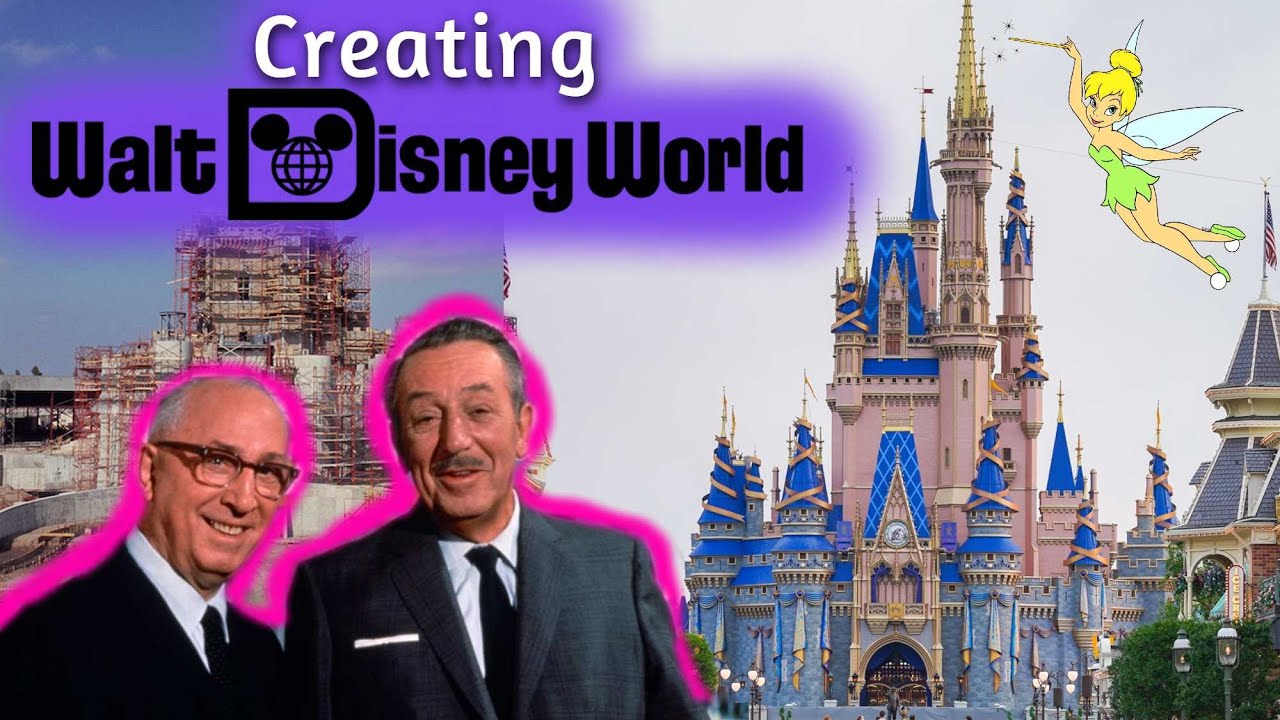
A tough, unflinching businessman who created an ambitious company, and a slightly crazy, idealist who was trying to embody his own utopia on Earth. The millionaire built Disneyland, and then Disneyworld, opened after his death. Two of the largest parks in the world, where a fairy tale represented itself as true.
A large plot of useless land was purchased, and soon there was a toy railway, which we’ve mentioned, a river full of electronic crocodiles, Snow White's castle, countless amounts of Mickey Mouse statues and other wonders. No one believed in the success of Disneyland. When Walter was looking for investors, he was turned down 302 times.
Even his brother, who always supported him in everything, this time doubted that the idea would pay off. Disney spent all of its money, but brought the idea to life. Its park opened in 1955, and within six months it was visited by 1 million people.
Meanwhile, the three directors who shot "Cinderella" at the Walt Disney studios created a new masterpiece in 1953 — the film "Peter Pan". It was followed by such famous films as "The Lady and the Tramp" (1955), "Sleeping Beauty" (1959) and "One Hundred and One Dalmatians" (1961) In addition to building Disneyland, Disney worked on other projects outside of the studio. He was a consultant to the American National Exhibition of 1959 in Moscow.
And acted as chairman of the competition committee for the 1960 Winter Olympics, where he designed the opening, closing, and award ceremonies. MOVIES Also, in parallel with the parks, Disney was engaged in game adventure films designed for young viewers. For example, "Treasure Island" that was released in 1950, "Robin Hood", released in 1952, as well as the musical-film fantasy "Mary Poppins" (1964), which was awarded five Oscars", and directed by Robert Stevenson.
In all of these films, Disney acted as a producer, followed the course of filming, and had a great influence on the artistic side of the movies. By the way, Mary Poppins has quite a long and interesting history of creation. It all started in the early 1940s, when Walt Disney told his daughter Diana that he wanted to film her favorite book.
But it was not so easy. Disney spent 20 years trying to buy the film rights from the author of the book, Pamella Travers, back in 1938. It was only in 1961 that the author agreed to this deal, solely because she was desperate for money.
Disney had to use all its charm to persuade the writer to cooperate in the preparation for the shooting. Even so, Travers didn't like the movie. Although the writer approved the first version of the script, she was not shown the final version.
When she saw the result at the premiere of the film, she burst into tears. Between the early and mid-1960s, Disney was developing a plan to build a ski resort in Mineral King. On December 15, 1966, Walt Disney passed away.
The plans left by Walt Disney for several years contributed to the development of the company, which was taken over by Roy Disney. The cartoons "The Jungle Book" and "The Aristocrat Cats", which were released in 1967 and 1970, respectively, confirmed the company's superiority in the field of animated films, and the picture "The Love Bug" became the highest-grossing film of the year. The second project, Disneyworld, was even more successful.
In addition, already at an advanced age, ceased to be an innovator and became conservative, Walt seriously thought about his legacy. It wasn't enough for him, he decided to build an ideal commune, a utopian city of the future called "EPCOT". Unfortunately, his idea never came to fruition, as he left this world earlier, we would even say too early, he died from lung cancer.
"EPCOT" eventually became part of Disneyworld, and the Walt Disney Company became one of the most influential in the world. INTERESTING FACTS Traditionally, we will tell you some more interesting facts about Walt Disney. His favorite song was "Feed the Birds" from Mary Poppins.
Not just his favorite song from the movie, but in general the most favorite song in his life. Richard Sherman said in several interviews that Walt came to their office every Friday and asked them to play it for him. Disney was a great father and adored his children.
At Disneyland, Walter also built his own apartments. They are located above the fire station on the main Street of the park. The fact that the creator of all this miracle is at home, visitors learned by the lighted windows.
Now the lights are on all the time in memory of Walt. After Disneyland, Walter decided to build a city of the future-without poverty and crime. To do this, in 1964, he bought 14 thousand hectares of land in Florida.
However, the death of the great animator did not allow this dream to come true. As a result, the famous Disney World is now located in this place. Disney left a huge fortune not only to his descendants, but also to his housekeeper, Thelma Howard.
On every holiday, he gave her a share of his company. As a result, the woman accumulated about $ 10 million. Walt Disney is a pioneer of creating music, sound, and full-length animated films.
During his life, he shot 111 films and produced almost 600 film works. Disney is the record holder for the number of awards and prizes in the field of cinema, the owner of two stars on the Hollywood Walk of Fame, the initiator and creator of the largest children's country Disneyland. All these facts show that he was not a very bad person.
But, for sure, he was wayward and complex. Well, it's up to you how to treat Walt Disney, as for us, We respect him for his contribution to cinema and animation. For the fact that he gave millions of children an unforgettable experience and created truly unique things in his time.
The key to Walt Disney's success, perhaps, is willpower, risk-taking and perseverance. All his cartoons are the eternal struggle between good and evil. Disney was able to bring joy to people, the speech of his creations is understandable to all peoples of the Earth.
He was certainly a dreamer who wanted to change the world. However, it is unlikely that many modern people would like to work under Disney. So, here are the terms of the giveaway of 200 bucks.
You haven't forgotten about it, have you? It's very simple. That time you need to come up with a name for a movie with you in the main role.
Take the name of your favorite movie and replace 1 word in it with your name. Then you should write it in the comments. Among the authors of the funniest ones, we will randomly choose a winner who will get money.
It is also advisable for you to click on the bell, because we will announce the results in the next video. Click on the button not to miss anything. On the example of Walt Disney, you can understand the main thing: you shouldn't forget that it is necessary to separate the personality of the author and his works - films, books, comics, in order to perceive them independently of each other and not to spoil the impression.
And, of course, we'd really like to know exactly what you think about Walt Disney. Write about it in the comments. We hope this video helped you learn more about this legendary person.
Well, that's all for today. Thank you, it was Biographer. Don’t forget to like this video and see you again!

![What's My Line? - Walt Disney; Jerry Lewis [panel] (Nov 11, 1956)](https://img.youtube.com/vi/7FRpJZWhxso/maxresdefault.jpg)