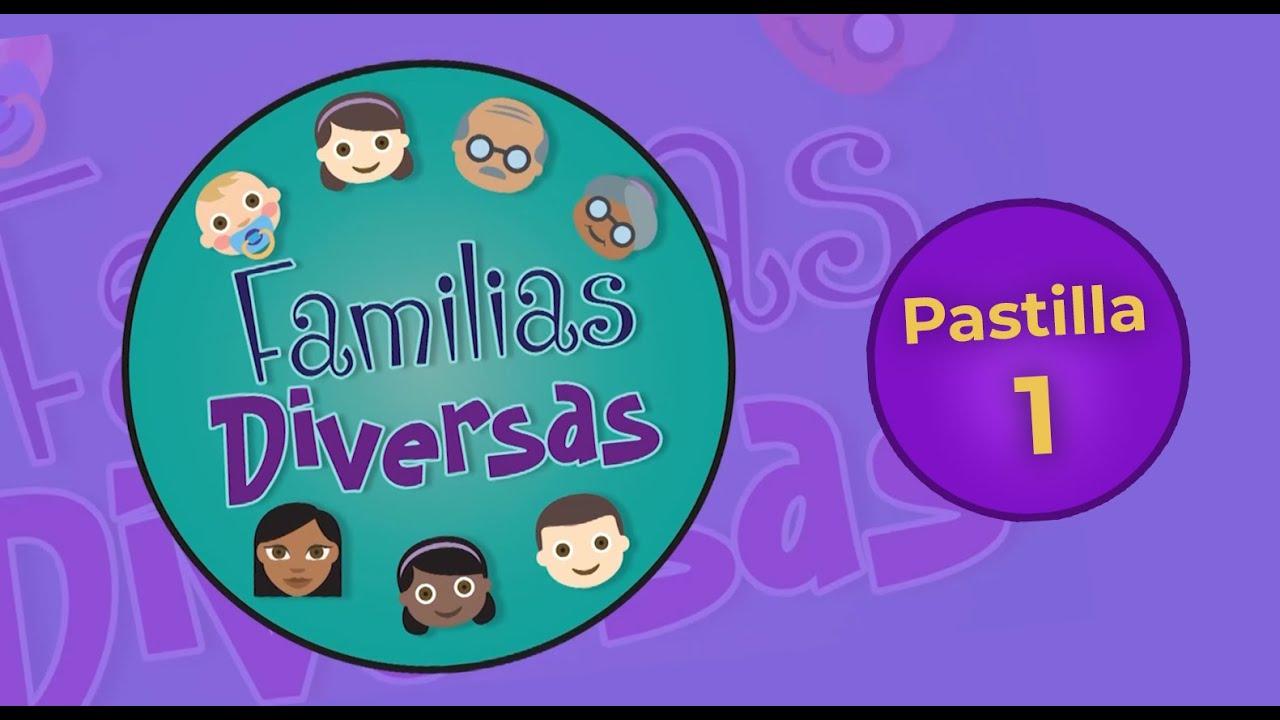
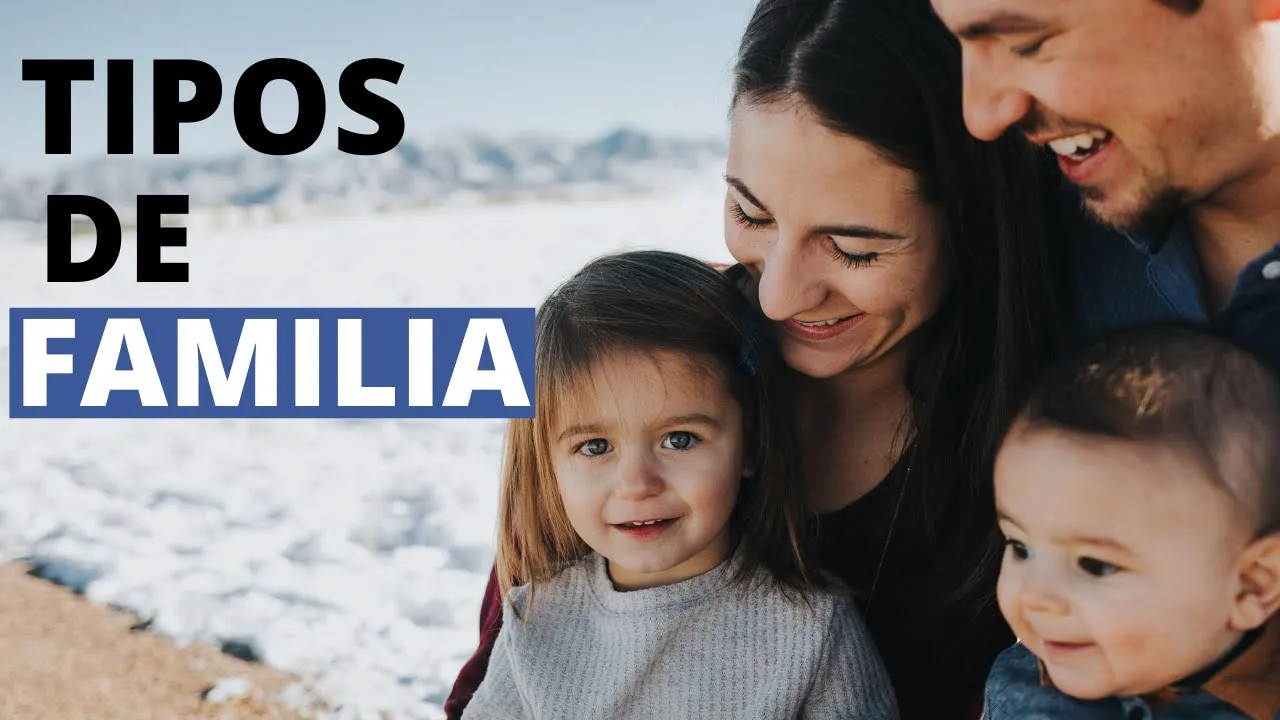
There are different types of family: nuclear, homoparental, childless, single parent, reconstituted, extended, adoptive, grandparent and foster. Below we explain its characteristics in detail. The characteristics of today's families in Mexico, Spain, Colombia, Argentina or other Latin American countries are very different from those of forty or fifty years ago, just as the families of that time were very different from those of another forty or fifty years.
years ago. And so on until the origin of humanity. It is what could be defined as the Evolution of family models.
The family is a union of people who share a vital project of existence that is desired to last, in which strong feelings of belonging to said group are generated, there is a personal commitment among its members and intense relationships of intimacy, reciprocity and dependence are established. . The main elements of the family are: The members of the group: an adult man, an adult woman, a heterosexual or homosexual couple, the couple's children, etc.
The links between the members: biological, legal, emotional… The functions of the family. What are the functions of the family? The most important function of the family is socialization.
Socialization is the process by which the beliefs, values and behaviors that a society considers significant are acquired. It is the means by which the behavior of children is regulated and their impulses are controlled, it helps the personal growth of the individual and perpetuates the social order. Thus, the family environment is the first that the little ones can access to interact and learn these things, so it is important that the family is able to cover this basic need for the proper development of its members.
In addition to socialization, families help in the education and emotional development of people, including the development of self-esteem, self-confidence and the development of social skills. What are the different types of family that exist? Currently, you can find a lot of diversity in terms of family models.
The different types of family can be classified into: Nuclear families Nuclear families are made up of a couple of adults who take care of one or more biological children. It is therefore the classic family. Its main functions are raising children and ensuring the socio-affective well-being of its members.
In fact, there is research that says married men are happier than single men. However, it is not clear if this is a correlation or a cause. That is, it could be that men who are happier marry precisely because it helps them find a partner.
The nuclear family is the traditional concept of family. When talking about "family" in popular language, people refer to this type, although the term is becoming more and more widespread. Reconstituted, assembled or compound families This family modality is perhaps the most abundant today due to the large number of divorces that occur.
They are formed, for example, by the biological children of the father and the biological children of the mother. They are therefore step-siblings who form a family because their parents have joined after separating from their previous partners. Three-generation or extended families They are formed by members belonging to different generations who live together.
For example, a family formed by a couple -father and mother-, their children and the grandfather. This is another traditional type of family, more widespread in countries with fewer economic resources and in cultures with family values in which the group is valued more. Adoptive families A couple or single adult with one or more adopted children.
These families are more common in developed countries, whose families have more economic resources to adopt children from their own country or from others. For example, in Spain there are nuclear families, single parents and homosexual couples who adopt children from Russia, Asia, Ukraine and African countries. Foster families A couple or a single adult decides to foster one or more children in their home until they find a permanent home.
This type of family is also more frequent in developed countries. On the other hand, they are more frequent after times of war, when the parents have died or have not been able to flee their countries. Families without children They are those formed by two adults, heterosexual or homosexual, who do not have children, either because they have decided or because they have been able to.
Due to the current social and economic situation, in which young people have more difficulty accessing housing, with generally lower salaries, having children has become a non-priority and is postponed until 30 or even 40 years. Related to this type of family is the birth crisis in countries like Japan or Spain. Especially in Japan, women have begun to value more the professional area of their lives, leaving in second place the possibility of having a partner and children.
Grandparent family This type of family occurs when grandparents take care of their grandchildren, because the parents have abandoned them, have died or have addiction or legal problems. Depending on the particular situation of the grandparents, the children can stay with them until they are of legal age and can decide, or enter adoption programs. Homoparental families These are families formed by two homosexual fathers or mothers and one or more children.
Until recently, when talking about adult couples, especially on these issues, it was assumed that they were only heterosexual couples. The existing rejection towards this family modality, predominant in certain social sectors, stems from the beliefs that are still held about homosexual people and from the deep-rooted beliefs about gender roles in motherhood and fatherhood. These prejudices still persist despite the numerous investigations and studies carried out by important institutions such as the American Psychological Association (APA) or the American Academy of Pediatrics (AAP).
These show that children with parents of the same sex lead a very normal life and that this does not negatively influence their development. Moreover, there are even data that defend the opposite. Children of same-sex couples have better mental health, higher self-esteem, and more flexible gender roles.
This is because it is usually a very thoughtful maternity and paternity, which leads them to investigate child development, promoting appropriate educational styles and a family environment in which children feel loved and protected, while encouraging autonomy and independence. Single-parent families Single-parent families are those made up of only one parent, whether male or female. This type of family is also not exempt from criticism and speculation, both in the case of single women and men, although the latter continue to be in the minority.
A few years ago, when talking about single- parent families, the most common profile was that of the divorced mother who had to take care of the children alone because the father had neglected. There were also the cases of adolescent girls who had become pregnant and, again, the biological father had disregarded. Today that profile has changed a bit.
Although it is true that divorced mothers continue to abound, in recent years there has been a considerable increase in women who have decided to be single mothers through assisted reproduction methods. Likewise, there are more and more fathers who, after divorce, decide to keep custody of their children, thus claiming their right to exercise paternity on equal terms with women. In the case of women who decide to be single mothers or end up being so because they have no other choice, their capacity as a mother is not questioned as much as the effect that the absence of a father figure will have on the little ones.
However, when it comes to single parents, doubts about the proper development of minors skyrocket, based above all on arguments that question the capacity and ability of men to be parents.