do you ever feel like all the effort you put into learn the drums will never pay off the thing is you could be right the way you practice matter is because if you're practicing the wrong stuff all the time you put in goes to waste so how do you fix that I've helped hundreds of drummers level up their playing and even Go Pro by showing them this one technique that drastically speeds up their progress in this video I'm going to show you what this technique is the tricks Pro drummers use to make it sound amazing
on the drum and I'll give you my simple six-step process to master it so you can actually play what you hear in your head to start let me show you the technique in action so have you spotted the technique yet you can use it for so much it's kind of insane it gets you greater endurance with one hand with a lot of repeated notes it gets you faster cleaner rolls double stroke rolls and it makes so many other patterns and rudiments easier and cleaner pretty much on autopilot so let's break down what this technique is
and how you can use it to completely transform your rudiments and how you apply them on the kit get everything so much faster and cleaner it's something that didn't have a name when I was taught at by my teacher and it's not the same thing as push pull this was something that you've probably heard of push pull a lot of people see my technique and come to me and asking hey can you teach me push pull and I say no I can't teach you push pull I can't play it I don't find it very effective
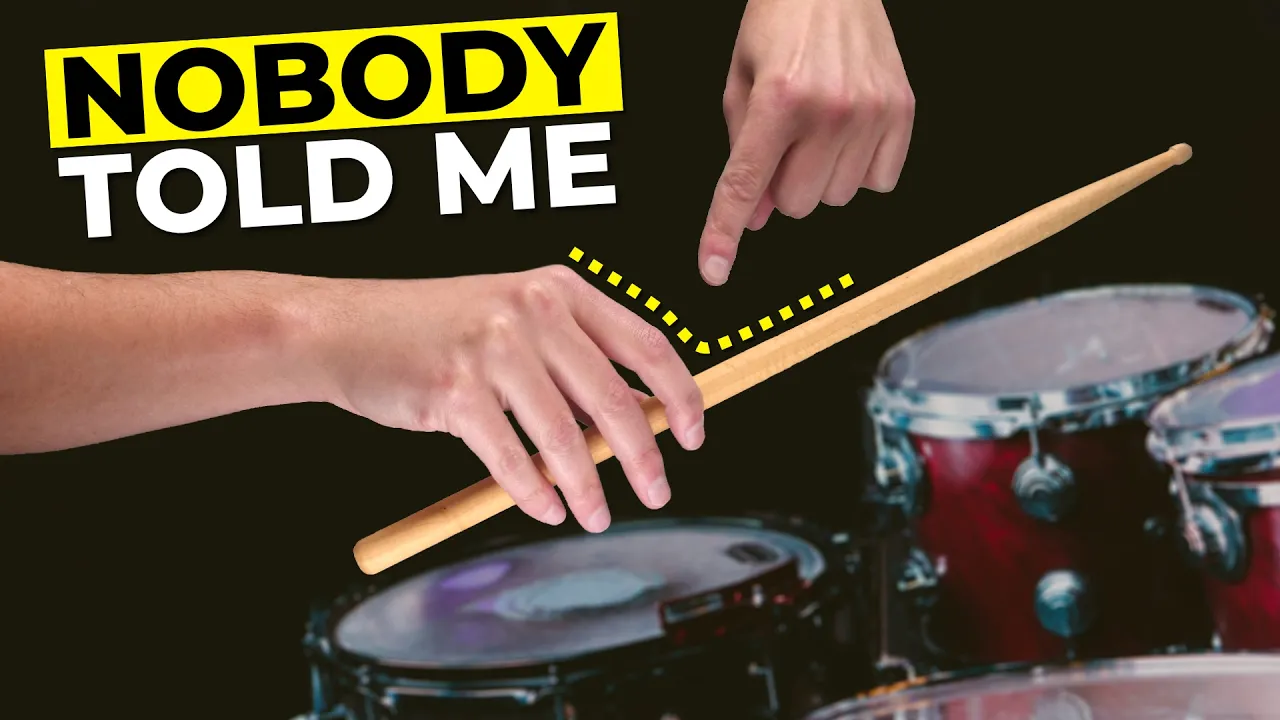
anytime that I've tried to use it so it's not push pull eventually with the popularity of push pull online I realized you know what I'm doing is not really a push and a pull it's more of of an open with the fingers and a close it seems like a lot of other people in the world have kind of settled on the same name but it's really rare to see it taught right and even played correctly so I'm going to break this down for you now the advantage of open close technique is that you actually get
to use two different movements and really muscle groups to move the stick and when you do that it means that you can play more efficiently it means you can play faster in sequence and it means that you can get everything more even because well I'm going to show you what this does to like your stick height it's actually kind of fantastic we're going to start with just breaking down what it looks like and then I'm going to give you the steps to feel it yourself so nice and slow it looks a little something like this
the other amazing thing about open close technique is I would actually call it the cure for and I'm sorry if there's any watching the cure for what I call the high school band teacher double stroke technique cuz if you learn drums in middle school or high school you're typically learning to play double Strokes with an adapted Buzz stroke technique if you play a buzz roll which is all about back finger pressure so it like starts to bounce really fast you let off that pressure so it starts to dble slower and then you just stop it
after two that's the high school band teacher double stroke roll technique the problem is that the second stroke doesn't bounce very high you get da da you get this right it's not very pretty has a lot of limitations because it's not even it doesn't have Clarity and attention to detail on every single note on a snare Dr on the two side by side here's our high school technique and here's our open close technique right nice and even and crisp so you get really crisp doubles and it's so useful not just for on the high hat
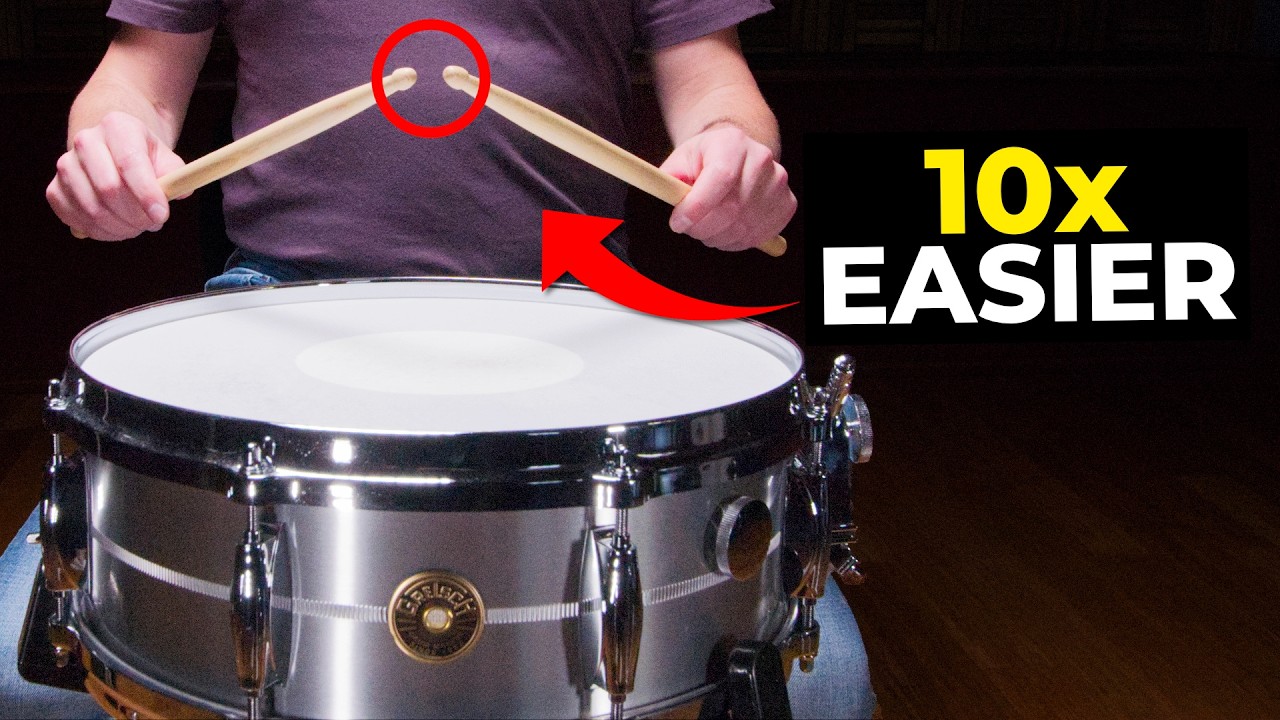
or on the snare but also any rudiment that has doubles paradiddles have doubles in them doubles right there right left right right left right left left and so if you do it for all of your rudiments you get extremely even clear paradiddles parad ddles swis armor triplets we're going to show you how to do this step by step we're going to do this really fast check it out I want you to hold the stick in the air I want you to actually I like doing this dropping your elbow so that you're kind of in this
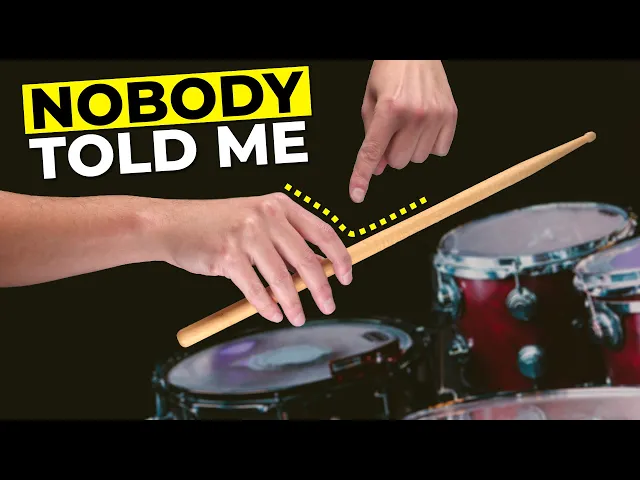
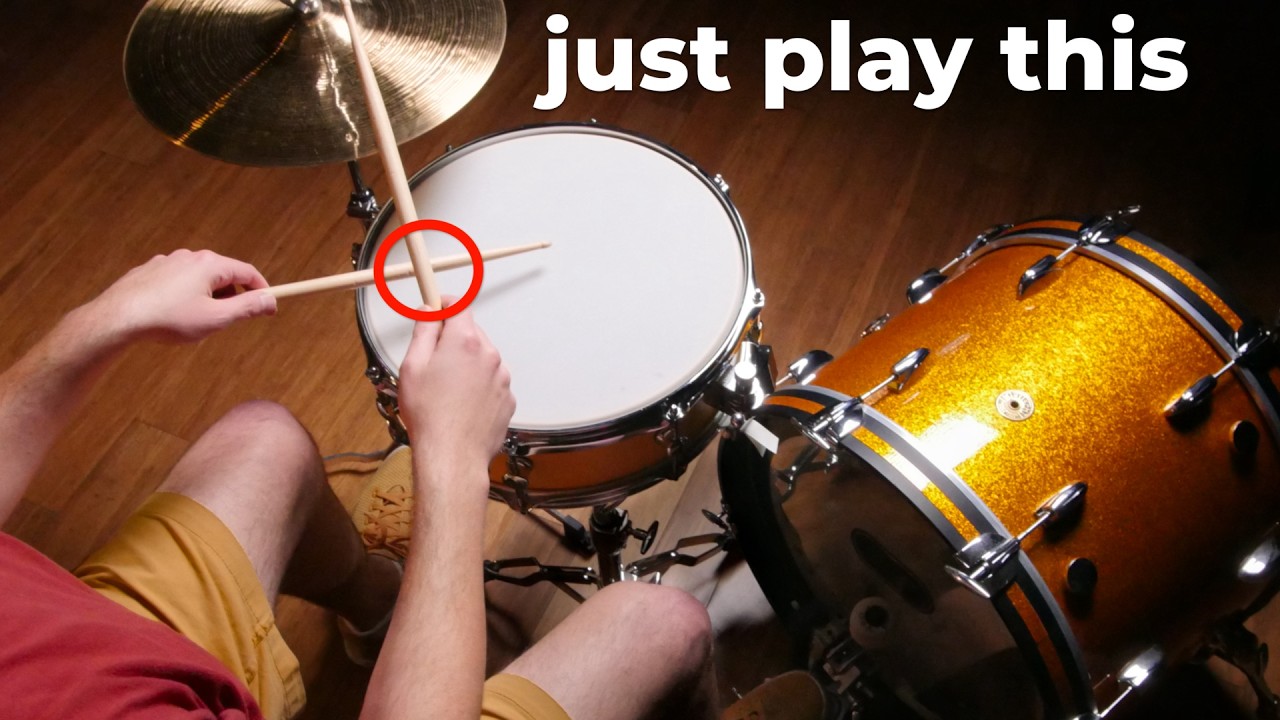
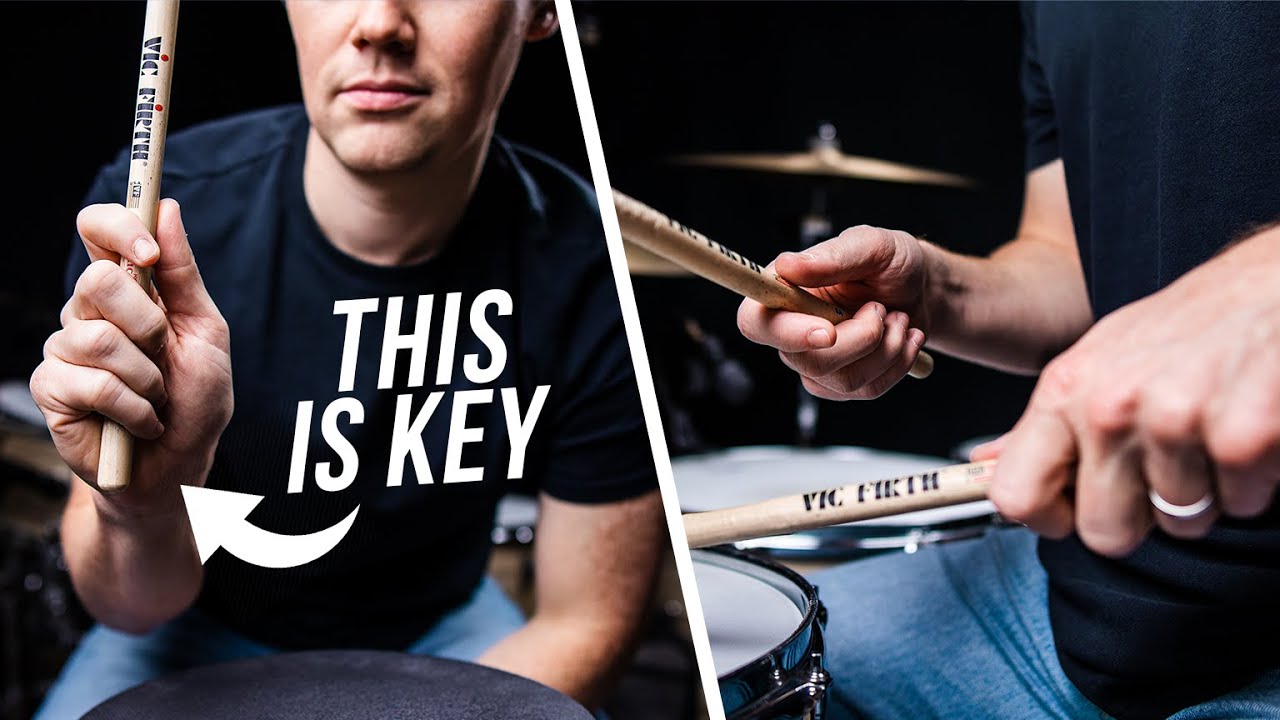
T-Rex position back finger should all be on the stick and you should see this Gap as well between the thumb and first finger so so all the back fingers on it's against the hypothenar in the middle of that and then we're going to first actually take our fingers off back fingers I should say so you have an index and thumb on the stick next with another stick lift up this end you're not allowed to move your hand you're not allowed to move your fingers your wrist your arm only the stick pivots at the fulcrum so
it kind of seesaws you lift it up and it falls back down right that's step one the back fingers off step two put the back fingers back on like I said in the beginning so then the back fingers are on and what you do is you make sure that your hand doesn't move your wrist doesn't move your arm doesn't move the only things that move are the stick which pivots at the fulum and your back fingers the back fingers specifically move with the stick and they actually they get opened by the stick that's the key
thing so that you're not actually flinging them out but they're getting pushed open while the stick goes up on the other end this is why a big thing that you don't want to do is you don't want to do this with only one hand this stage of practice is two hands two sticks so make sure it's always with both sticks both hands if you do it with one hand a lot of people try to do this but it's not the same thing trying to push it open with your fingers it's an entirely different mechanic and
movement to try to do that which isn't happening on the drums so we have to push it up over here and when that goes up goes down on the other side of the fulum goes down over here and that's going to push your fingers open so I really recommend you do it with another stick like so so do it really slow the really key thing is that you don't let any of this move your wrist doesn't move your hand your arm it stays completely still all that moves stick and your back fingers so if you
can do that slow I then want you to hold it here kind of looks like like that like you know like a sock puppet and it should be you should be able to hold it with your fingertips like so and then you close your fingers back to the first position you close them slow you can close them fast but we have this hold it and then close it back make sure you close back to a relaxed position that means you're always going to be coming back to this to practice so step three looks like this
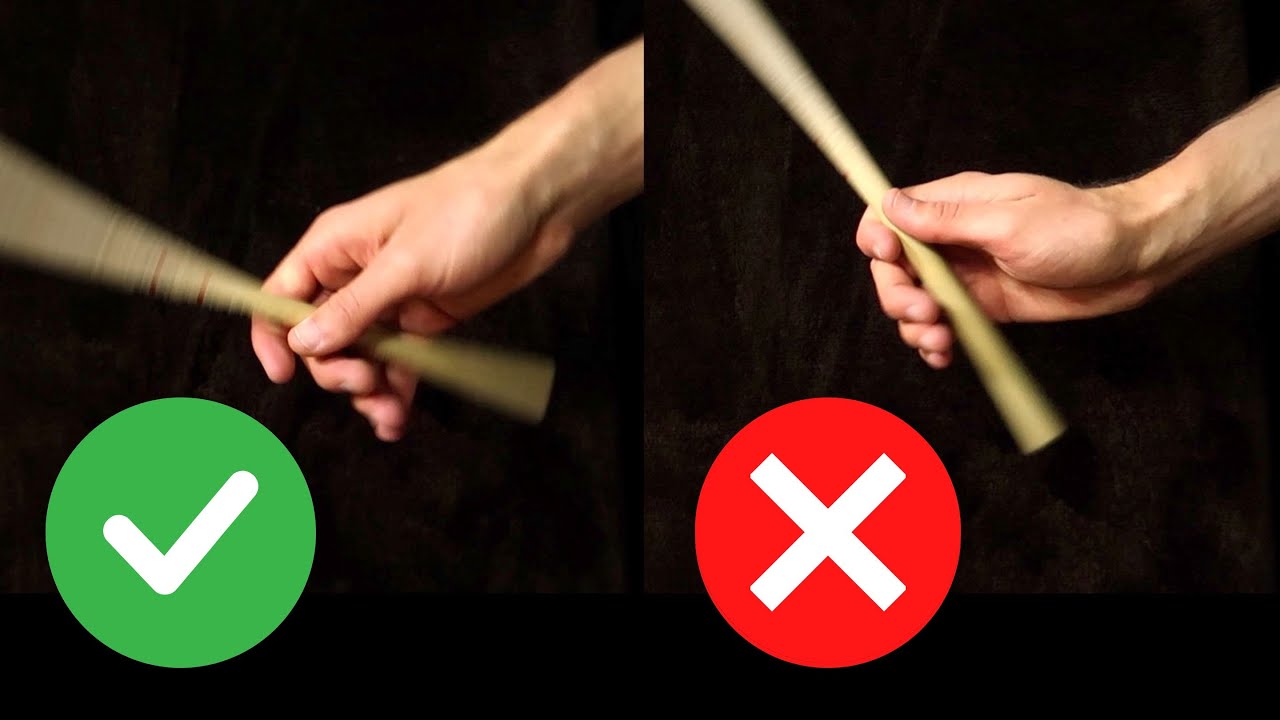
now what am I doing I'm doing step two but I'm knocking it up fast what's going to happen is the stick gets knocked up on the other side it goes down pushes your fingers open with some actual force and the first thing that's going to happen if you've never tried this before is your wrist is going to go back even if you let your fingers open a little they're not going to open enough they're going to be too slow opening your instinct is going to be to have your hand go back with a stick like
like this even a little bit right there is too much what I want you to try to master is getting it to stay completely still and of course you got to do the other hand as well by the way if you're having trouble mastering this then the first step is actually mastering your grip and getting that truly right making sure you're not making any mistakes I have a free technique fundamentals course that you need to check out and go through I'll put the link down below for you so we're doing it fast and I want
you to hold it and I want you to close it and when you close it make sure that you do not squeeze and clench up and get tense cuz then you're going to do it on every stroke and you're going to wreck your hands really fast and you might even be able to do the technique but you're going to have so much tension as you play your doubles it's just going to be really rough on you for playing just 10 minutes so we can't have that you have like a lot of relaxation to be able
to play with with endurance and be able to endure a one two hour set right if you have the core mechanics like we just broke down well you need to apply to the kit but how do you do that let me show you it looks something like [Music] this now what's happening instead of knocking the stick up in the air I'm coming down with either a wrist stroke or some sort of Moler stroke or some somewhere in between or some combination and then as I strike the drum it bounces up and in the back of
the hand it goes down it pushes my back fingers open a really key thing is that your wrist drops you want to make sure that you don't go down hit it open the fingers and have your wrist go back up like that no wrist going up it's got to go down dropping and then it's got a hold there now if you open it a ton your pinky does not reach a stick and that's okay but if you go smaller your pinky stays on the stick and you're good with that right I would recommend when you
can keep the pinky on you use [Music] it but it's not like 100% required to get a good grade here so you've applied it to the drones but how do you actually do like a proper double stroke roll with it or apply it to your rudiments well it's going to look something like this we're going to take that action on the drum and make sure that it's super even in terms of stick Heights when you come down the stick bounces back up to the height that it was originally so I'm going to come down and
the stick is going to come right back up to this point and I'm in position two with my fingers open I close my fingers going to come back up to that point again I'm using my stick Heights as a measurement to make sure both Strokes are even do that with your right hand and then your left hand for playing double Strokes which means right right open closed left left open close with all of that in mind you want to make sure your stick Heights always come down and back up that exact same height and then
you can keep the other stick there so you have a frame of reference call this my uh stick leveling exercise exes it works wonders for my students it's really fantastic all this together means once you have your stick leveling practice together you're playing extremely even double Strokes the other important thing to remember is that Tempo it doesn't matter I don't want you to worry about Tempo at all I don't want you to get this fast I want you to get this even and I want you to get it perfect so don't just think about how
do I get this roll to sound fast like a roll think about is this as clear as possible every single stroke every single one completely even in terms of stick height and velocity and volume so really listen to volume really listen and watch for your stick Heights I'd honestly recommend quarter notes at 40 or 50 BPM and the reason for that is you need enough time to make sure every single stroke has all the parameters that we talked about every single one has the volume that we need the height we need the Motions you need
to make sure that your Technique has all the other steps in place so how do you actually get this into your music well the first thing is keep doing that step don't move forward until it's completely perfect and what do you do do when it's perfect guess what don't go faster I want you to repeat it the key thing is repetition because repetition becomes muscle memory it becomes something that's encoded into your brain and only once it's encoded into your brain can you repeat it on autopilot and you need it on autopilot or you're not
going to be able to do it fast correctly and those mistakes were going to keep creeping in because you jumped ahead and tried to do it too fast and I do not want you going fast so crucial so how do you know when you do bump up the tempo well you're allowed to speed it up when it's perfect and it's automatic you have to have both those things in place if you sit down and you go to practice this for the fifth time and you're like oh I can do this just smoothly naturally evenly then
BPM can go up just a little bit if you were at 50 quarter notes go to 60 if you were at 60 try 6570 eventually you're going to get to 100 BPM quarters and the thing is 100 BPM quarters is the same as 50 BPM a so you know you could put it at you could put your metronome at 50 BPM turn on the eighth notes and play along with it and then let's say your 50 BPM eth notes you gradually rise it all the way up to 1008 notes which is the same thing as
506th notes then you just gradually gradually get that faster and faster until you're at 16th notes at 100 16th notes at 120 that's where it starts to sound like oh I got the doubles I'm doing doubles cleaner than ever before and we're in fantastic shape that's truly what you're looking for now there's so much you can do with this like I said this is going to transform your other rudiments as well you should be doing it during your paradiddles you see that open closed open closed Left Right open closed right left open closed open close
you should do it during your parad dle ddles right left open close open close right left open close open close should do it during your Swiss Army triplets as a variation not the main swis Army triplet if you're doing Swiss Army triplets with accents I don't really do open closed but it's really pretty spicy to do it this way which is open closed open closed and then the same thing in a slightly different uh displacement with the left hand so I really like doing Swiss Army triplets in unison so not a flam but together with
the open close technique as you can see right hands open close open close and the left hand is it's hard to say open close open close if you look at the left open close once you've got the hang of this technique you're going to be playing with way way more accuracy and confidence but you need to make sure you know where to apply it on the drums so you don't sit down and just go completely blank so watch this video next where I'll show you how to use your new found powers to play these spicy
pills with these