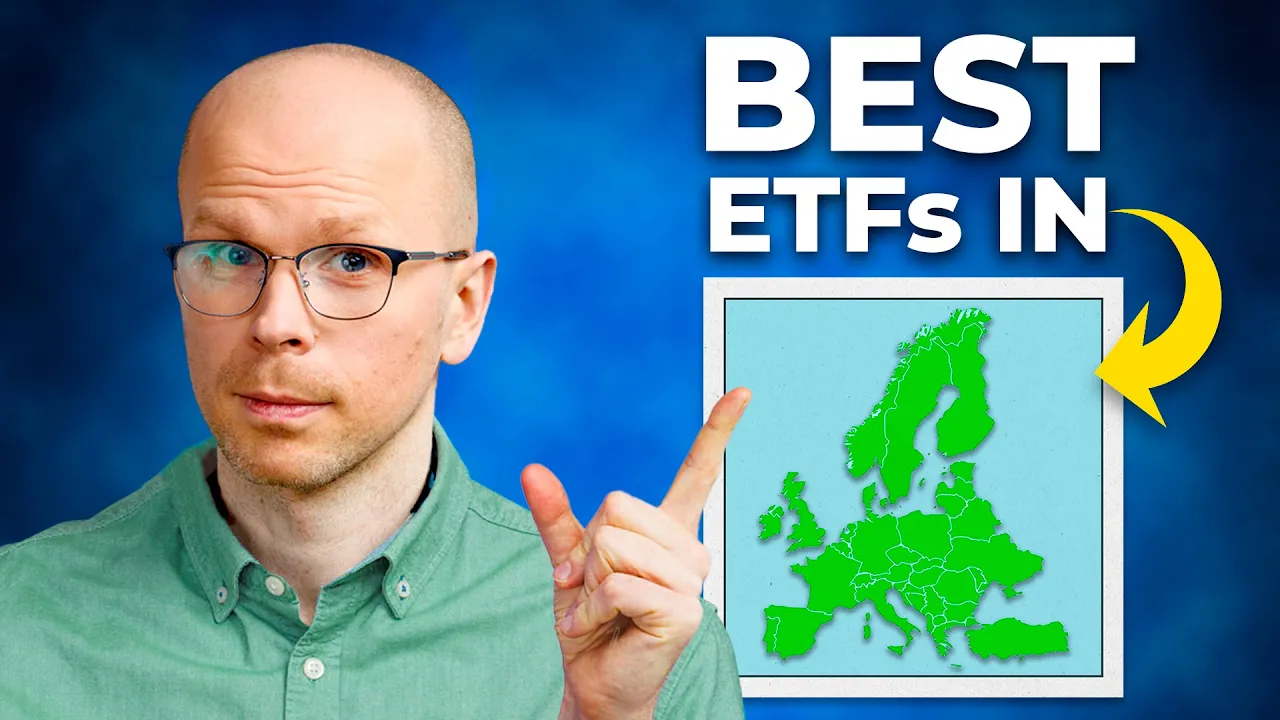
Here's what happens when you try to buy an American ETF if you live in Europe. Put in a symbol, click and denied. Okay, so you live in Europe, and you want to invest in ETFs.
Maybe you've read that with ETFs, you get better results than up to 90% of professional investors. Or maybe you've heard about the FIRE movement. Financial independence, retire early, where regular people working normal jobs like teachers, doctors, programmers invest their money in ETFs and get passive income and retire at 40 or 50.
But if you're new to ETF investing, it's confusing, especially in Europe. How do you buy an ETF and which ETFs do you buy? Most videos online recommend American ETFs, which we can't even buy in Europe.
And when you can find ETFs that you can buy, you run into a lot of jargon, like accumulating and distributing funds, or physical and synthetic funds and more. So it's really confusing, and you get stuck. If that sounds familiar, then you're in luck, because this video is the ultimate guide to ETF investing for Europeans.
I'll give you a seven step checklist that will let you pick the best ETFs for you wherever you live in Europe. This checklist could save you thousands of euros, prevent tax paperwork, and let you choose the best ETFs customized for you individually, depending on the country where you live. Okay, so step number one pick your ETF strategy.
A lot of people assume ETF investing means buying the S&P 500. As if the only valid investment out there is investing in the 500 biggest American companies. Look, I know it seems like Biden and Trump and the Kardashians are the only real people in the world, but I have discovered the shocking truth.
America is NOT the whole world. And ETFs are not just a way to buy US companies. You can invest in America, Europe, Asia, Emerging markets.
You can invest in sectors like technology, clean energy, real estate. Or you can invest in factors like small cap,value or dividend stocks. So,as Step 1, you've got to pick your ETF strategy.
And let me give you a hint– for many people, just buying the S&P 500 is not the smartest choice. Later I'll share some ideas for how to choose the best strategy. But for now let's move on to step number two– pick ETFs based in Europe.
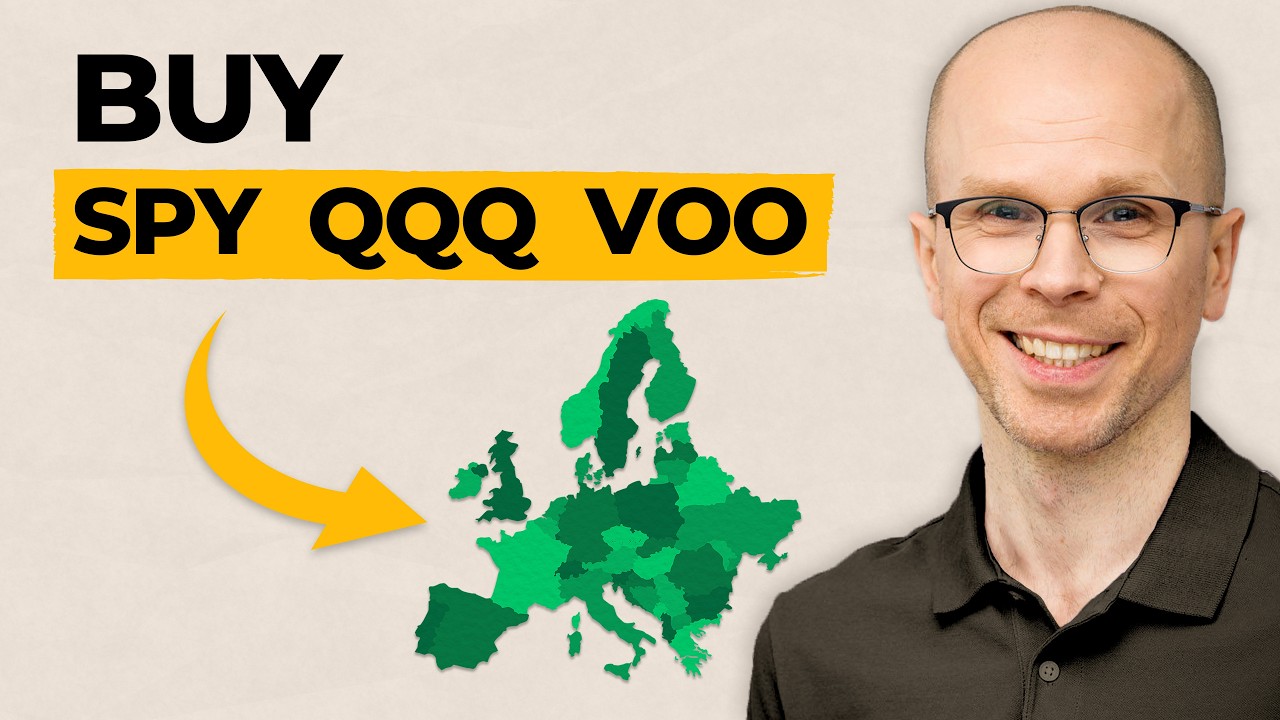
EU regulations won't let us buy ETFs legally based in America. Damn you, nosy European lawmakers! So we can't buy the big famous US ETFs like SPY or QQQ.
But there are thousands of ETFs legally based or "domiciled" in Europe that we can buy. This has nothing to do with where the ETF invests, by the way. There are plenty of ETFs legally based in Europe which invest in the US or Japan or other markets.
For example, here are just a few of the biggest European ETFs which invest in the S&P 500. So we Europeans can easily build a global ETF portfolio. All we need to do is follow step number two and pick ETFs legally based in Europe.
Step number three choose physical versus synthetic ETFs. In America, cowboys are cowboys, a burger is a burger, and an ETF is an ETF. In Europe, ETFs come in many varieties.
Choosing the right kind can make a big difference. As step number three, you want to choose between physical and synthetic ETFs. Think of physical ETFs as real food and synthetic ETFs as a meal replacement powder.
Physical ETFs actually buy the stocks in a given market. For example, a physical S&P 500 ETF will buy the stocks in the S&P 500. So that's really simple.
Synthetic ETFs will get you roughly the same financial result, the same profit or loss as the physical ETF without actually buying any of the same stocks. Whaaat? Synthetic ETFs do this through financial wizardry.
They use something called a total return swap. So that sounds really transparent and risk free, right? Seriously, though, synthetic ETFs are quite safe and reliable, and sometimes they can be a little more profitable because of tax reasons.
So that's step number three. Choose physical versus synthetic. And in a second I'll show you where you can find if an ETF is one or the other.
All right, but now we're getting to step number four, which is super important. A lot of people mess this up. But first, make sure to hit like subscribe and the notification bell.
Don't miss my next video and help other people discover this channel. Step number four – Choose Distributing versus Accumulating ETFs. Imagine you're a teenager.
Distributing ETFs are parents who give you an allowance every month in cash. Accumulating ETFs are parents who say– Let's put your allowance in your bank account for when you get older. So an ETF buys the stocks of a lot of different companies.
Some of these companies will hopefully be profitable and pay dividends. When Distributing ETFs receive dividends, they turn around and pay them out to you. By contrast, Accumulating ETFs keep the dividend money and use it to buy more stocks.
So you, as the investor, don't get cash from an Accumulating ETF. Instead, the price of the ETF goes up because there's more money left inside the ETF. Does that make sense?
With both Distributing and Accumulating ETFs, you get the benefit of dividends. In one case, you get cash in your brokerage account. In the other case, the value of your ETF goes up.
So which is better? Well, that depends on your goals and on the tax laws in your country. By the way, I've got a cool video about taxes for European investors over here, which might be helpful.
And later in this video, I'll cover a great way to decide between Distributing or Accumulating ETFs. Step five– Go cheap. When buying chocolate, shoes, or a car, you get what you pay for.
When buying ETFs, you get what you don't pay for. Every euro that ends up in the pocket of the ETF manager is a euro that you can't spend on pizza and schnapps when you retire. So look for the absolute cheapest ETFs that fit your other criteria.
I'll show you how to find the cheapest ETFs in a second. And make sure you consider not just one, but two or three of the cheapest ETFs, because you've also got to do step number six – Go big. When it comes to ETFs, size matters.
If the cheapest ETF you found has only 5 million euros invested in it, I would think twice about buying it. You might pay a bad price for it because of what's called a wide bid-ask spread. Also, small ETFs are often shut down by the fund provider.
If that happens, you do get your money back, but it's a hassle, and you may need to pay taxes. So when I pick ETFs for my portfolio, most of the time I stick to ETFs with a size of at least a few hundred million euros. All right, and here's step number seven – Choose the right ETF listing.
Imagine you need to buy some sugar. Will you go to the store next door or drive across town to a big mall? It's the same exact sugar, the same packaging, and almost the same price.
You'll buy where it's convenient, right? Well, it's the same with ETFs. You can buy the same exact ETF on many different stock exchanges and in different currencies.
The combination of stock exchange and currency is called the ETF listing. Let's look at the biggest ETF in Europe. The iShares Core S&P 500 UCITS ETF Accumulating.
if we go to the iShares website for this fund and scroll down to the section listings, we see that this fund is available in many different listings. You can buy it on Borsa Italiana, Xetra or Euronext in Euros. You can buy it on the London Stock Exchange in two different listings pounds and dollars.
You can even buy it on the Bolsa Mexicana De Valores in pesos. And there are other listings, too. All of these listings are of the same identical ETF.
So which do you buy? Well, first, pick the currency. If possible, avoid exchanging currencies, because that's expensive and it may complicate your tax reporting.
For example, I live in the eurozone, so I always buy Euro listings. And second, check liquidity. You want to make sure that there are enough buyers and sellers for the ETF on your chosen exchange so that you always get a good price.
So that's step number seven. Pick a listing in your preferred currency with good liquidity, and then you're ready to invest. But how do you actually do these seven steps?
Where do you find the ETFs that are available in Europe, and how do you compare them? I'll show you the number one resource that I know for this, and it's pretty amazing. But first, let me warn you, depending on your goals and where you live in Europe, ETF.
Investing can be tricky. There are over 30 different tax systems in Europe. In every country, the best brokerages and the best ETFs are different.
And it gets even harder. If you are an expat or a digital nomad, is Accumulating or Distributing better in my country, should I pick Ireland or Luxembourg ETFs? Which listing is the best?
Should I use ETFs which hedge currency risk or no? Which brokerage should I use and how do I set up my taxes so that I'm paying less and have less paperwork? Plus other important questions, of course.
In many European countries, it really pays off to take a little time and figure out the right answers. I'm talking about thousands of euros saved and many hours of tax paperwork avoided. So I've got two solutions for you.
One, follow this channel because I'm all about helping Europeans invest. And two, check out my investment training. I do a really cool course called The Index Masterslass.
It's helped thousands of people all across Europe, and you can find out more at go. Indexmasterclass. com Or you can find the link in the description of this video If you live in Europe, I think you'll find this very helpful.
But now let me share the single best resource that I know for researching and comparing ETFs in Europe. This resource is called Just ETF and it's amazing. So let's go to justetf.
com. Hit ETF screener. Here you have a fantastic tool that lets you basically search all the ETFs available in Europe.
You can filter them by many different factors – target market, target index, Domicile, Accumulating vs Distributing, Physical vs synthetic, and much more. You can also sort ETFs by costs or size. It's pretty great.
Now, this tool can get a little technical. You need to learn what all the many settings mean, and I teach that in my training programs, but once you learn it, it's really useful. Full disclosure Just ETF isn't paying us for this recommendation, but we do collaborate with them at my company because I love this tool and I recommend it to my students.
All right, I hope this video helps you start investing in ETFs. Hit like,comment,subscribe and check out this video that I did on taxes for European investors.

![MST: This (NEW) Weekly Dividend ETF Can DESTROY MSTY...[MST ETF Review]](https://img.youtube.com/vi/yXeOvJGi50I/maxresdefault.jpg)

![Best ETFs for European Investors [2025] | S&P 500, All-World, Europe & Emerging Markets](https://img.youtube.com/vi/1ZuYohV3Nvs/maxresdefault.jpg)