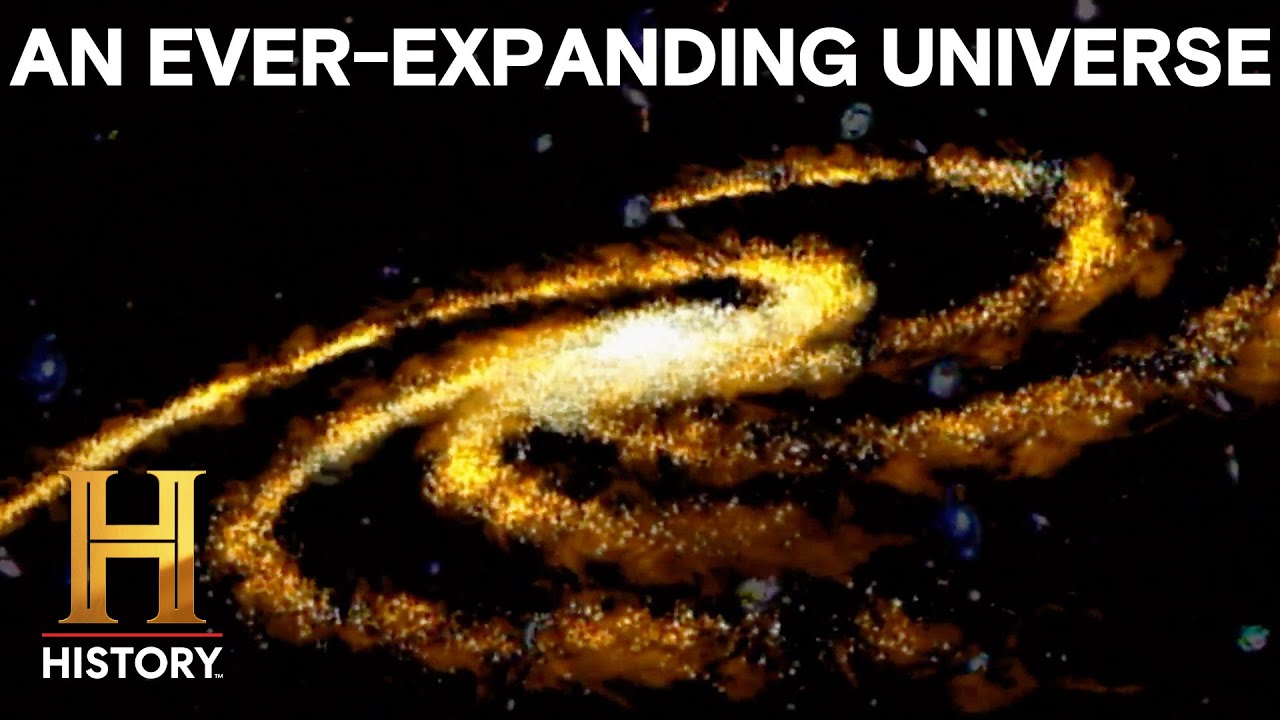
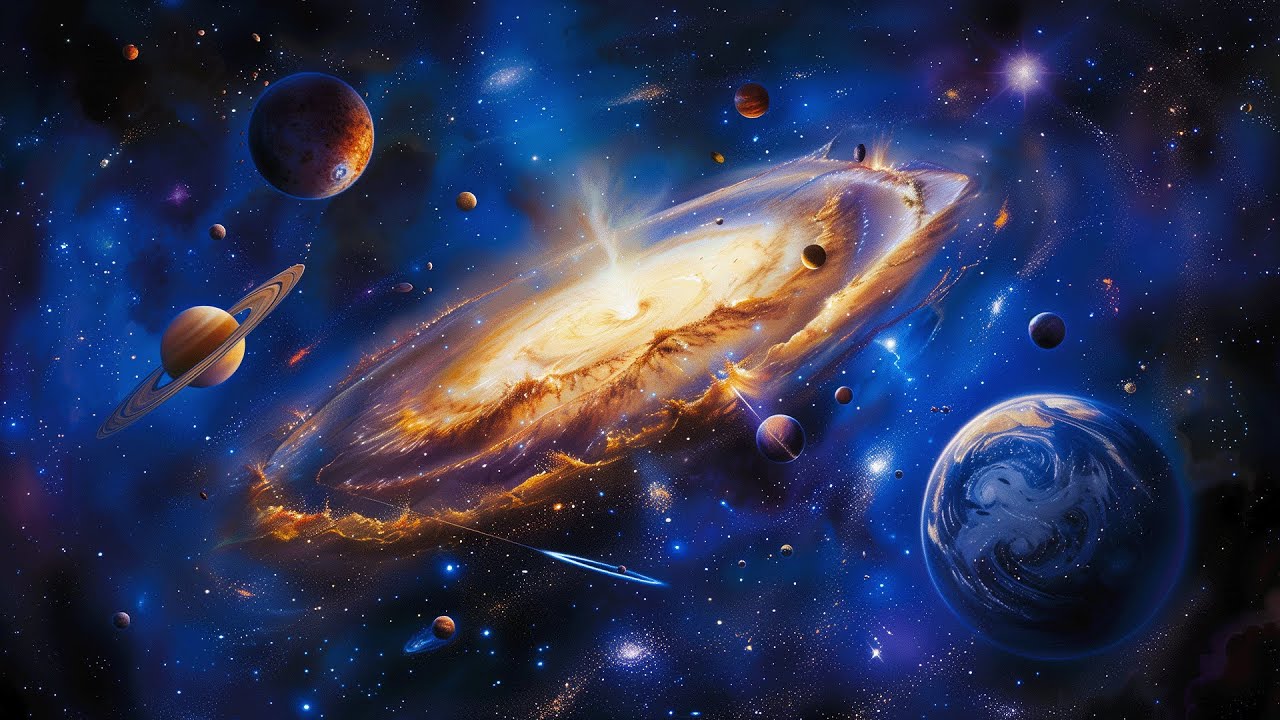
Our galaxy, a place filled with countless mysteries and wonders beyond our wildest imaginations. Created from what seems to be nothing, our galaxy is just one among potentially hundreds of millions we haven't yet seen. Floating in the vast universe, these galaxies, each with their own secrets, all share one unanswered question. How did they form from what appears to be nothing? The universe, an ever-expanding mix of galaxies, stars, planets, and myriad forms of matter and energy, presents a profound mystery that has captivated humanity for centuries. At the heart of modern cosmology is the understanding that the universe
began approximately 13.8 billion years ago with the Big Bang, a colossal explosion that marked the inception of everything we know. This event set into motion the expansion of space, creating the cosmic web we observe today. Scientists have gleaned much about the universe's composition, revealing that ordinary matter, the stuff making up stars, planets, and us, constitutes a mere 5% of the universe's total mass and energy. The remaining 95% is a mysterious concoction of dark matter and dark energy, invisible forces that govern the universe's structure and expansion yet elude direct detection. Delving deeper, the universe's vastness is
almost beyond comprehension, stretching over billions of light-years across. This immensity houses an estimated two trillion galaxies, each a collection of billions of stars and untold planets, offering a humbling perspective on our place in the cosmos. The laws of physics, consistent throughout the universe, govern the motion of galaxies, The lifecycle of stars, and the intricate dance of particles at the quantum level. These laws have allowed scientists to predict cosmic phenomena with astonishing accuracy, from the paths of planets to the behavior of black holes, those enigmatic entities whose gravitational pull is so strong that not even light
can escape. In this cosmic journey, the role of dark energy in accelerating the universe's expansion poses a tantalizing puzzle. Discovered through observations of distant supernovae, dark energy works against the gravitational pull of matter, driving galaxies apart at an accelerating rate. This discovery has profound implications for the fate of the universe, suggesting a future in which galaxies drift ever farther apart, leading to a cold, dilute cosmos. The Big Bang Theory stands as a cornerstone of modern cosmology, offering a compelling explanation for the origin and evolution of the universe. It posits that the universe began as an
extremely hot and dense point approximately 13.8 billion years ago and has been expanding ever since. This theory is supported by a wealth of scientific evidence, including the observation of the cosmic microwave background radiation, a faint glow left over from the early universe, which provides a snapshot of the cosmos just 380,000 years after the Big Bang. This radiation, discovered accidentally by Arno Penzias and Robert Wilson in 1965, has a uniform temperature throughout the universe, confirming predictions of the Big Bang Theory and offering concrete evidence of the universe's hot, dense origin. Another pillar supporting the Big Bang
Theory is the observation of the redshift of galaxies, indicating that they are moving away from us and, by implication, from each other. This discovery, made by Edwin Hubble in the 1920s, revealed that the universe is not static but expanding. The farther away a galaxy is, the faster it appears to be moving away from us, a relationship now known as Hubble's Law. This expansion is a key prediction of the Big Bang Theory and suggests that the universe was once much smaller, hotter, and denser than it is today. Moreover, the theory elegantly explains the relative abundances of
light elements such as hydrogen, helium, and lithium observed in the universe. According to Big Bang nucleosynthesis, these elements were formed in the first few minutes after the Big Bang, as the universe cooled enough for protons and neutrons to combine into nuclei. The predicted abundances of these elements closely match observations, lending further credence to the Big Bang Theory. Despite its widespread acceptance, the Big Bang Theory also raises profound questions And puzzles. For instance, it does not explain what preceded the Big Bang or what lies outside the observable universe. It also introduces the concept of cosmic inflation,
a rapid expansion of the universe that occurred fractions of a second after the Big Bang, to solve the horizon and flatness problems. This inflationary period predicts that the universe should appear flat and uniform on large scales, which is consistent with observations of the cosmic microwave background radiation. Following the Big Bang, the universe embarked on a monumental journey of expansion, transforming from an infinitesimally small point to the vast cosmos we observe today. This expansion can be likened to a balloon being inflated, where galaxies move away from each other as the space between them grows. In the
earliest moments, the universe was a hot, dense soup of particles and radiation, Too energetic and chaotic for atoms to form. As it expanded, this primordial fireball cooled, allowing quarks to combine into protons and neutrons, which then formed the simplest nuclei, predominantly hydrogen and helium, through the process of nucleosynthesis. This phase of rapid expansion, occurring less than a trillionth of a second after the Big Bang, is theorized to have been driven by cosmic inflation. Cosmic inflation posits that the universe expanded at a rate much faster than the speed of light during this brief period. This exponential
expansion smoothed out the distribution of energy and matter across the cosmos, laying the groundwork for the uniformity we observe in the cosmic microwave background radiation. It's a concept that challenges our everyday understanding of physics, suggesting that The rules of the cosmic scale can differ vastly from those governing our observable world. As the universe continued to expand and cool, gravity began to sculpt the distribution of matter, pulling particles together to form the first stars and galaxies. These celestial bodies acted as cosmic furnaces, forging heavier elements in their cores and releasing them into space when they died,
seeding the cosmos with the building blocks for planets and life. The universe's expansion is not uniform; it's influenced by the distribution of matter and energy, leading to the formation of a web-like structure of galaxies and galaxy clusters, interspersed with vast voids. This expansion is still ongoing, with galaxies moving away from us in all directions. The discovery that this expansion is accelerating was a groundbreaking revelation, hinting at the presence of dark energy, a mysterious force that permeates space and exerts a repulsive Force, counteracting gravity. The exact nature of dark energy remains one of the most pressing
mysteries in cosmology, with researchers striving to understand how it will influence the future evolution of the universe. The Early Universe The first second after the Big Bang presents a timeline of incredible transformations that laid down the fundamental structure of our universe. Imagine the universe at its inception, an unimaginably hot and dense point. Within a fraction of the first second, the universe began expanding rapidly in an event known as inflation, stretching far beyond the realms of our current comprehension, setting the stage for everything that would follow. This initial expansion was so rapid that it took less
than a blink of an eye for the universe To grow from smaller than an atom to a size larger than a galaxy. As it expanded, the temperature began to fall, allowing the fundamental forces of nature to start separating from each other. During the first tiny fraction of a second, gravity separated from the grand unified force, marking the first major transition in the early universe. Following this, as the universe cooled further, the strong nuclear force, responsible for holding the nucleus of an atom together, separated from the electroweak force, which is a combination of the electromagnetic force
and the weak nuclear force. This separation marked the universe's transition from a state where all forces were unified to a state where the distinct forces we observe today began to emerge. Within the first second, the universe cooled enough for quarks, the building blocks of protons and neutrons, to start combining. These quarks initially existed in a free state due to the extreme temperatures but as the universe expanded and cooled, they began to bind together, forming protons and neutrons. This process, known as baryogenesis, was crucial for the formation of matter as we know it. Simultaneously, the universe
was filled with a dense, hot plasma of quarks, electrons, and neutrinos. As it continued to expand and cool, interactions between these particles started to change. For instance, as the universe cooled further, quarks combined into protons and neutrons, and eventually, these protons and neutrons would form the nuclei of the first elements. The end of the first second marked a universe that, while still incredibly hot and dense by any standard we're familiar with today, had cooled sufficiently for the basic forces of nature to have taken their present forms and for the first building blocks of matter to
solidify into existence. The stage was set for the next phase of cosmic evolution, leading towards the formation of atoms, stars, galaxies, and eventually, the complex structures we observe in the universe today. This rapid sequence of events in the first second after the Big Bang illustrates not just the dynamic nature of our universe's birth, but also the intricate interplay of forces and particles that underpin the fabric of everything we know. Quarks are the very essence of the matter that makes up the world around us, yet they remain shrouded in the mysteries of quantum physics, a field
that fascinates and perplexes even the most seasoned scientists. To grasp the concept of quarks, imagine them as the fundamental building blocks of matter, smaller than atoms, protons, or neutrons, and playing a crucial role in the composition of the universe. These particles are so minuscule and elusive that they cannot exist independently in nature; they are always found in groups, binding together to form larger particles like protons and neutrons, which in turn make up the nucleus of an atom. The story of how quarks formed takes us back to the very beginning of the universe, in the immediate
aftermath of the Big Bang, during a period known as the quark epoch. This epoch occurred within the first microsecond (one millionth of a second) after the Big Bang, a time when the universe was so hot and dense that particles as we know them could not yet exist. The temperatures were so extreme, reaching trillions of degrees, that matter existed in a state known as a quark-gluon plasma. In this plasma, quarks, along with gluons—which act as the exchange particles, or "glue," holding quarks together—moved freely in a soup of primordial energy. As the universe expanded, it cooled at
a rapid pace, allowing quarks to finally combine to form protons and neutrons. This process required the universe to cool to a point where the strong nuclear force, one of the four fundamental forces of nature, could take effect. The strong force is incredibly powerful but operates over very short distances, and it was this force that glued quarks together in combinations of two or three to form composite particles, such as mesons (made of one quark and one antiquark) and baryons (made of three quarks), respectively. Protons and neutrons are the most stable and familiar types of baryons, essential
components of atomic nuclei. Following the journey from quarks to the more familiar protons and neutrons that form the nucleus of an atom, we delve into a fascinating process that unfolded in the universe's infancy. After the Big Bang, as the universe expanded and cooled, conditions became ripe for the binding of quarks, leading to the formation of protons and neutrons, a crucial step in the cosmic recipe that would eventually give rise to atoms, stars, planets, and life itself. During the quark epoch, the universe was a hot, dense soup of quarks and gluons. Quarks are the fundamental constituents
of matter, coming in six flavors: up, down, charm, strange, top, and bottom. For protons and neutrons, only up and down quarks are directly involved. Gluons are the carriers of the strong force, acting as a powerful glue that holds quarks together despite their tendency to repel each other due to their charges. As the universe cooled down from its initial fiery state, it crossed a threshold temperature that allowed quarks to start combining, a momentous event occurring approximately one microsecond after the Big Bang. This cooling period allowed the strong nuclear force, one of the four fundamental forces of
nature, to dominate over the thermal kinetic energy that kept quarks apart. When this happened, quarks began to stick together in stable groups known as hadrons. Protons and neutrons are types of hadrons. A proton is made of two up quarks and one down quark, while a neutron consists of two down quarks and one up quark. The specific combination of quarks determines the properties of the particle, such as its charge; protons are positively charged, and neutrons are neutral. This distinction plays a vital role in how atoms and molecules, the building blocks of matter, are formed and interact.
The formation of protons and neutrons from quarks was a critical step in the early universe's evolution. It marked the beginning of the end for the quark-gluon plasma state and the start of a universe filled with matter as we know it. Once protons and neutrons formed, they could begin to come together, forming the nuclei of the simplest elements, a process known as nucleosynthesis. This sequence of events set the stage for the chemical complexity necessary for the stars, galaxies, and life to eventually emerge. As we continue to unravel the universe's early moments, the role of the fundamental
forces becomes a pivotal chapter in the cosmic saga. These forces, which are gravity, electromagnetism, the strong nuclear force, and the weak nuclear force, acted as the architects of the universe, sculpting the raw materials created in the aftermath of the Big Bang into the complex structures we observe today. In the universe's first moments, all forces were unified into a single force. As the universe expanded and cooled, this unified force began to break apart in a process known as symmetry breaking. The first to separate was gravity, which plays a crucial role in shaping the large-scale structure of
the universe by influencing the motion of galaxies and clusters of galaxies. Despite being the weakest of the four forces, gravity's influence grows with the mass and distance, making it the dominant force on a cosmic scale. Following gravity, the strong nuclear force separated. This force is responsible for holding the nuclei of atoms together, overcoming the repulsive electromagnetic force between the positively charged protons. It was during this separation that quarks began to combine into protons and neutrons, as we've previously explored. The strong force ensured that these particles could form stable nuclei, setting the stage For the creation
of the first atoms. The weak nuclear force and electromagnetism were the next to differentiate as the universe continued to cool. The weak force is key in the process of nuclear fusion and radioactive decay, playing a vital role in the life cycles of stars and the synthesis of elements heavier than hydrogen. Electromagnetism, on the other hand, governs the interactions between charged particles. It's the force behind the light, electricity, and magnetism, shaping the behavior of atoms and molecules and thus the chemistry that underpins all of life. Together, these forces dictated the universe's evolution from a homogeneous soup
of particles to a structured, diverse cosmos filled with galaxies, stars, planets, and ultimately life. They determined the formation of the first hydrogen and helium atoms in a process known as recombination, leading to the universe's transparency to light and the release of the Cosmic Microwave Background radiation, a relic from this era that provides us with a snapshot of the infant universe. The interplay between these forces also drove the formation of stars and galaxies. Gravity pulled matter together, while electromagnetism and the nuclear forces governed the internal processes of stars, including nuclear fusion, which powers stars and generates
the heavier elements essential for planets and life. Formation of Atoms and Molecules Delving deeper into the mysteries of the universe, we pivot our attention towards the formation of the very first atoms, a seminal event that marked a turning point in the cosmic narrative. This process, known as recombination, occurred approximately 378,000 years after the Big Bang. Before this epoch, the universe was a hot, dense plasma of electrons, protons, and photons. The temperatures were so extreme that atoms could not form without being immediately torn apart by the rampant energy. As the universe expanded, it cooled down, allowing
for the first atoms to emerge. Hydrogen, the simplest and most abundant element in the universe, was the first to form. This element, consisting of just one proton and one electron, marked the dawn of a new era in cosmic history. Helium atoms, slightly more complex with two protons, two neutrons, and two electrons, followed shortly after. These elements laid the foundation for the chemical diversity we observe in the universe today. The formation of these first atoms was a turning point that significantly altered the universe's structure and future evolution. With atoms now stable, they began to gravitate towards
each other, slowly building the first stars and galaxies. This era set the stage for the complex chemical processes that would eventually lead to the formation of planets and life itself. Following the monumental formation of the first atoms in the universe, an equally remarkable phenomenon unfolded: the birth of the first molecules. This transition from solitary atoms to the earliest molecules marks a significant chapter in cosmic history, laying the groundwork for the complex chemistry that underpins the universe as we know it. The story of how the first molecules came into existence is not only a testament to
the intricacies of the cosmos but also to the relentless pursuit of knowledge that drives our understanding of it. As the universe continued to expand and cool, conditions gradually became favorable for these freshly formed atoms, primarily hydrogen and helium, to interact in novel ways. Hydrogen, with its single electron, was particularly predisposed to forming bonds with other hydrogen atoms. The emergence of molecular hydrogen, or H2, was a critical step forward. This molecule, though simple in structure, played a pivotal role in the universe's early chemistry. The formation of molecular hydrogen provided the first building blocks for more complex
chemical reactions. It acted as a coolant, allowing gas clouds to collapse more efficiently under gravity, which in turn led to the formation of the first stars. These nascent stars were the crucibles in which the first heavy elements were forged, Elements that would eventually give rise to the rich chemical tapestry that makes up planets, asteroids, comets, and all living organisms. The exact timing of the first molecules' formation is a subject of ongoing research, but it is believed to have occurred a few hundred thousand years after the Big Bang, following closely on the heels of atomic formation.
This era set the stage for the intricate interplay of forces that would eventually lead to the universe's structure, from galaxies to planets, and the very essence of life itself. As we trace the cosmic lineage back to its origins, the roles of helium and hydrogen emerge as foundational to the early universe's evolution. These two elements, the simplest and most abundant in the cosmos, were instrumental in shaping the universe from its nascent stages. Their significance cannot be overstated, as they were the primary constituents of the Primordial universe, setting the stage for all subsequent astronomical phenomena and the
complex chemistry that characterizes the cosmos today. In the aftermath of the Big Bang, the universe was predominantly filled with hydrogen and helium. Hydrogen, being the lightest element with just one proton and one electron, formed the bulk of the matter in the early universe. Helium, slightly heavier with two protons and two electrons, was the second most abundant element. These elements were crucial for several reasons. First, their simplicity made them the building blocks for all other elements and molecules that would later emerge through nuclear processes within stars. The significance of hydrogen extends beyond its abundance. It played
a central role in the formation of the first stars, known as Population III stars. These stars were massive, hot, and short-lived, but they were critical for the synthesis of heavier elements through nuclear fusion. As these first stars ended their lives in spectacular supernovae, they seeded the cosmos with heavier elements, which would eventually give rise to new stars, planets, and, ultimately, life as we know it. Helium's role, while less directly involved in chemical complexity, was no less important. Its presence influenced the dynamics of stellar evolution. Stars fuse hydrogen into helium in their cores, a process that
releases vast amounts of energy and light. As stars age, they begin to fuse helium into heavier elements, leading to different types Of stellar outcomes and contributing to the diversity of astronomical objects we observe today. Moreover, the ratio of hydrogen to helium in the universe provides critical insights into the conditions of the early universe and supports the Big Bang theory. Observations of this primordial helium abundance, along with the cosmic microwave background radiation, offer compelling evidence of the universe's hot, dense beginnings. Cosmic Microwave Background Radiation Building on our journey through the cosmos, where we've uncovered the roles
of helium and hydrogen, we arrive at another cornerstone of cosmology: the Cosmic Microwave Background (CMB) radiation. This phenomenon is essentially the afterglow of the Big Bang, the ancient light that bathes the universe, providing us with a snapshot of the infant cosmos. Discovered accidentally in 1965 by Arno Penzias and Robert Wilson, the CMB radiation is a pivotal piece of evidence for the Big Bang theory, offering a window back in time to when the universe was just about 380,000 years old. At this juncture in cosmic history, the universe had cooled sufficiently for electrons and protons to combine
and form neutral hydrogen atoms, a process known as recombination. Prior to this, the universe was a plasma of charged particles and photons (light particles), which scattered off each other frequently. However, as the universe expanded and cooled, photons could travel freely without being scattered, leading to the universe becoming transparent. The CMB is the relic of this transition, stretched to microwave wavelengths by the expansion of the universe over billions of years. The significance of the CMB radiation lies not only in its confirmation of the Big Bang Theory but also in the detailed information it provides about the
early universe's conditions. The tiny temperature fluctuations within the CMB are particularly revealing. These minute differences in density and temperature are thought to be the seeds from which all the current structures in the universe, such as galaxies and clusters of galaxies, have grown. Measurements of the CMB radiation have led to precise determinations of various fundamental parameters of the universe, including its age, composition, and the rate of its expansion. For instance, the CMB data suggest that the universe is approximately 13.8 billion years old and composed of about 5% ordinary matter, 25% dark matter, and 70% dark energy.
Venturing further into the cosmic narrative, we explore how the Cosmic Microwave Background (CMB) radiation underpins the Big Bang Theory, a pivotal concept in cosmology. The Big Bang Theory proposes that the universe originated from an extremely hot and dense State and has been expanding ever since. The CMB radiation is a critical piece of evidence supporting this theory, offering tangible insights into the universe's early moments. The discovery of the CMB radiation in the mid-20th century was a landmark event that provided the first direct observational evidence of the universe's hot, dense beginnings. The CMB's uniformity, with its temperature
incredibly uniform across the sky at about 2.7 Kelvin (-270.45 degrees Celsius), yet punctuated by tiny fluctuations, paints a picture of the early universe's state. These tiny temperature variations are crucial; they indicate regions of slightly different densities, representing the seeds of all current cosmic structures, from galaxies to clusters of galaxies. The Big Bang Theory predicts that after the initial explosion, the universe was in a state Of extreme heat and density, filled with a primordial soup of particles and radiation. As the universe expanded, it cooled, leading to the formation of neutral atoms, which allowed photons to travel
freely. The CMB radiation is the relic of this epoch, stretched to microwave wavelengths by the universe's expansion, and observed today as the cosmic afterglow of that monumental event. Furthermore, the detailed analysis of the CMB's temperature fluctuations through experiments like the COBE (Cosmic Background Explorer), WMAP (Wilkinson Microwave Anisotropy Probe), and Planck satellite missions has provided precise measurements of the universe's age, composition, and rate of expansion. These observations match remarkably well with predictions from the Big Bang Theory, reinforcing its validity. For instance, the slight anisotropies (irregularities) in the CMB reveal the distribution of matter And energy in
the early universe, which, according to the Big Bang Theory, should be relatively uniform but with minor variations that led to the formation of galaxies and larger structures. The CMB's existence and its properties are thus in strong agreement with the theoretical predictions of the Big Bang, providing compelling evidence that our universe did indeed begin from a hot, dense state and has been expanding over time. Delving into the Cosmic Microwave Background (CMB) radiation has opened up new vistas in our understanding of the universe. This relic radiation, a faint cosmic afterglow from the Big Bang, serves as a
cosmic treasure trove, revealing details about the universe's infancy and its subsequent evolution. By studying the CMB, scientists have gleaned invaluable insights that have significantly advanced our comprehension of cosmology. One of the most profound learnings from the CMB is the confirmation of the universe's Age. Precise measurements of the CMB's fluctuations have enabled scientists to estimate that the universe is approximately 13.8 billion years old. This provides a concrete timeline for the universe's history, from its fiery origins to the present day, grounding our understanding of cosmic evolution in empirical evidence. The composition of the universe is another area
where the CMB has provided critical information. Analysis of the CMB data has helped scientists determine the universe's makeup: roughly 5% ordinary matter (the matter that makes up stars, planets, and living beings), 25% dark matter (a mysterious substance that exerts gravitational pull but does not emit light), and 70% dark energy (a mysterious force that is causing the universe's expansion to accelerate). These proportions have profound implications for our understanding of the universe, highlighting the dominance of dark matter and dark energy in cosmic dynamics. Furthermore, the CMB has shed light on the geometry of the universe. The size
and distribution of the temperature fluctuations within the CMB suggest that the universe is flat with a margin of error. This flatness implies that the geometry of the universe is such that parallel lines will never converge or diverge, influencing the universe's overall shape and expansion. The study of the CMB has also contributed to our understanding of the inflationary theory, which posits that the universe underwent a rapid expansion in the first fraction of a second after the Big Bang. The uniformity and structure of the CMB across the vast expanse of the sky support the idea that the
universe expanded exponentially during its earliest moments, smoothing out any initial irregularities and leading to the uniform universe we observe today, albeit with slight variations that gave rise to galaxies and other structures. Moreover, the CMB has acted as a backdrop for exploring the potential for new physics beyond the Standard Model. Anomalies and unexplained aspects of the CMB, such as the Cold Spot or slight discrepancies in temperature fluctuations, invite ongoing research and theories that may extend our current understanding of physics. The Dark Ages and Structure Formation As the afterglow of the Big Bang began to fade, the
universe entered a period known as the cosmic dark ages, a time that lasted for about 380,000 years to a billion years after the universe's inception. During this era, the universe was filled with a dense, cooling fog of hydrogen gas, rendering it opaque and, in a sense, invisible to the kind of light we can now observe with telescopes. Without stars or galaxies to illuminate it, this epoch stands as an enigmatic chapter In cosmic history, a stretch of time when the cosmos was eerily silent and dark. The cosmic dark ages are a critical period in the universe's
evolution, laying the groundwork for the formation of the first stars and galaxies. As the universe expanded, the primordial gas that filled it began to clump together under the influence of gravity. These regions of higher density eventually became the nurseries for the first stars, known as Population III stars. Unlike the stars we see today, these celestial bodies were massive, luminous, and short-lived, composed almost entirely of hydrogen and helium. The nuclear reactions within these stars eventually reionized the surrounding hydrogen gas, piercing the opaque veil of the cosmic dark ages and bringing the universe into a new era
of transparency and light. This transition, known as cosmic reionization, marked the end of the cosmic dark ages and set the stage for the rich tapestry of structures we observe in the universe today. The light from these first stars and galaxies began to travel through the cosmos, gradually illuminating the once-dark universe. This period is of intense interest to astronomers and cosmologists, as it holds clues to the formation of the first cosmic structures and the nature of dark matter, a mysterious substance that exerts a gravitational pull yet does not emit, absorb, or reflect light. Studying the cosmic
dark ages poses significant challenges, as the light from this period is exceedingly faint and difficult to detect. However, with advancements in technology and the advent of next-generation telescopes, scientists are beginning to pierce this veil. Observations of distant quasars and galaxies, along with the cosmic microwave background Radiation—a relic from the Big Bang—provide valuable insights into this pivotal era. These studies not only shed light on the dark ages themselves but also help us understand the fundamental processes that have shaped the universe from its earliest moments to the present day. Emerging from the cosmic dark ages, the universe
embarked on a transformative journey, culminating in the birth of the first stars and galaxies. This pivotal epoch, occurring roughly around 100 million years after the Big Bang, signifies a monumental shift in the cosmic narrative. Initially, the universe was a homogenous soup of hydrogen and helium gas. However, subtle fluctuations in density, possibly amplified by the mysterious dark matter that pervades the cosmos, began to create pockets where the gas was slightly more concentrated. Gravity, the architect of cosmic evolution, took hold within these denser regions, pulling The gas inward. As these clouds of gas grew denser and hotter,
they reached a critical threshold, igniting the nuclear fusion processes at their cores. This marked the birth of the first stars, colossal and bright, primarily composed of hydrogen and helium. These Population III stars were giants compared to their modern counterparts, burning with such intensity that their lifespans were relatively brief on a cosmic scale. The ignition of the first stars introduced light back into the universe, ending the cosmic dark ages. These stars were not solitary beacons; they began to clump together under gravity's relentless pull, forming the nuclei of the first galaxies. These early galaxies were smaller and
less structured than the ones we see today, yet They were the seeds from which the grand spirals and vast ellipticals of the current universe would grow. As these first stars aged, they played a crucial role in the chemical enrichment of the cosmos. The nuclear fusion processes at their hearts forged heavier elements like carbon, oxygen, and iron, elements that had not existed before. When these stars reached the end of their lives, they expelled these heavier elements into space through supernova explosions, seeding the cosmos with the building blocks necessary for future generations of stars, planets, and eventually,
life. The formation of the first stars and galaxies set in motion a complex web of interactions that would shape the universe's evolution. The radiation from the first stars helped to reionize the surrounding medium, clearing the fog of the early universe and making it transparent to light. This process, known as cosmic reionization, was a gradual one, stretching from about 150 million to a billion years after the Big Bang, and was essential for the universe to become the starlit expanse we observe today. As the first stars and galaxies began to illuminate the cosmos, an invisible scaffold was
already in place, guiding their formation and distribution across the universe. This unseen framework is known as dark matter, a term that encompasses a vast portion of the universe's total mass. Unlike the stars, planets, and gas clouds that emit or reflect light, dark matter does not interact with electromagnetic forces, making it completely invisible to our current observational instruments. Despite its elusive nature, dark matter plays a crucial role in the cosmos, especially in the formation of large-scale structures like galaxies and galaxy clusters. The existence of dark matter was first inferred from the gravitational effects it has on
visible matter. For instance, galaxies spin at such speeds that, without the presence of a significant amount of unseen mass, they would simply fly apart. Furthermore, the way galaxies cluster together, along with observations of the cosmic microwave background radiation—the afterglow of the Big Bang—suggests that there is far more matter in the universe than we can directly observe. Studies estimate that dark matter constitutes about 85% of the total matter in the universe, a figure that underscores its importance in cosmic evolution. Dark matter played a pivotal role in the formation of cosmic structures. In the early universe, slight
density fluctuations became the seeds for the first structures to form. Dark matter, unaffected by anything but gravity, began to clump together in these denser regions, forming vast halos that would serve as gravitational wells, pulling in the normal, or baryonic, matter. This process accelerated the formation of stars and galaxies, as hydrogen and helium gas fell into the gravitational pits carved out by dark matter. These dark matter halos provided the necessary gravitational framework for the gas to cool and condense into stars. As these stars formed and grouped into the first galaxies, they followed the underlying dark matter
distribution, leading to the large-scale structure of the universe we see today, with galaxies and galaxy clusters woven into a cosmic web of filaments and voids. This structure, predicted by simulations that include dark matter, matches observations of the universe at large scales remarkably well. The role of dark matter in cosmic structure formation is a topic of ongoing research and fascination in cosmology. Its presence is inferred from its gravitational effects, yet its true nature remains one of the biggest mysteries in science. Various candidates have been proposed for what dark matter might be, ranging from exotic particles like
WIMPs (Weakly Interacting Massive Particles) to axions, particles much lighter than electrons. Despite extensive searches, direct detection of dark matter particles has yet to be achieved, making its study a frontier of both theoretical and experimental physics. Formation of Stars Following the threads woven by dark matter in the cosmic tapestry, we find that the formation of stars from cosmic gas is a natural progression in the story of the universe. Stars begin their lives within vast, cold clouds of gas and dust, known as molecular clouds or nebulae. These clouds are mostly composed of hydrogen, with a sprinkling of
helium and trace amounts of heavier elements. Within these nebulae, regions of higher density can form, often triggered by the gravitational influence of dark matter, as well as by the effects of nearby supernova explosions or the collision of gas clouds. When these denser regions reach a critical mass, gravity begins to overpower the internal pressures resisting collapse. The cloud starts to contract, and as it does, the material at the center of the cloud becomes increasingly dense and hot. This process can take millions of years, but it's the crucial first step toward star formation. During this phase, the
collapsing material forms what is known as a protostar, a hot core that is the precursor to a star. As the protostar continues to accumulate mass from its surrounding cloud, its temperature rises. When the core's temperature reaches about 10 million degrees Celsius, nuclear fusion ignites. This process involves hydrogen nuclei fusing to form helium, releasing a tremendous amount of energy in the process. This energy generation marks the birth of a new star. The onset of nuclear fusion halts the gravitational collapse, establishing a stable balance between the inward pull of gravity and the outward push of the energy
produced by fusion. This delicate balance is what sustains a star throughout most of its life. The size and mass of the resulting star depend on how much material from the surrounding cloud it can gather before nuclear fusion begins. More massive stars form from denser or more extensive clouds and have shorter lifespans because they burn through their nuclear fuel more quickly. In contrast, smaller stars, like our Sun, have longer lifespans, burning their fuel more slowly and steadily. Stars do not form in isolation. Within a single molecular cloud, many stars can form simultaneously, creating a cluster of
newborn stars. This communal birth often results in stellar associations and open clusters, where stars remain gravitationally bound to each other for some time before dispersing. The process of star formation from cosmic gas is not only a testament to the dynamic Nature of the universe but also to the interconnectedness of all cosmic phenomena. Each star's birth contributes to the chemical richness of the cosmos, seeding the universe with elements critical for the formation of planets and, potentially, life itself. The life cycle of a star is a fascinating journey that spans millions to billions of years, showcasing the
dynamic processes that drive the evolution of the cosmos. This cycle begins in the dense, cold cores of molecular clouds, where stars are born from collapsing pockets of gas and dust. As we've seen, the gravitational pull within these regions leads to the formation of protostars, which eventually ignite into full-fledged stars once nuclear fusion starts in their cores. The path a star takes through its lifetime depends largely on its initial mass. Smaller stars, like our Sun, enter what is known as the main sequence phase after their Birth. During this stage, which constitutes the majority of a star's
life, hydrogen fusion occurs in the core, producing helium and releasing energy that supports the star against gravitational collapse. For a star like the Sun, the main sequence phase can last about 10 billion years. As stars exhaust their hydrogen fuel, their lives continue to evolve dramatically. In the case of a Sun-like star, once the hydrogen in the core is depleted, fusion ceases, and the core begins to contract under gravity. This contraction heats up the core, allowing hydrogen fusion to occur in a shell surrounding the helium-rich core. The increased energy output causes the star's outer layers to
expand and cool, leading it to become a red giant. During the red giant phase, the star can engulf planets that are in close orbit, dramatically altering its solar system. The final stages of a star's life are determined by its mass. For stars with masses up to about eight times that of the Sun, the core will eventually shed its outer layers, creating a beautiful, glowing gas shell known as a planetary nebula. The remaining core becomes a white dwarf, a dense, hot remnant about the size of Earth, which will gradually cool and fade over billions of years.
More massive stars, however, meet a more violent end. After burning through different layers of elements, their cores eventually collapse, leading to a supernova explosion. This catastrophic event can outshine entire galaxies for a short time and is responsible for producing and dispersing many of the heavy elements found throughout the universe. What remains after a supernova can be a neutron star, an incredibly dense object only a few kilometers in diameter, or, if the star was massive enough, a black hole, a point in space with gravity so strong that not even light can escape. The life cycle of
a star is not just a sequence of events; it's a cornerstone of cosmic evolution, contributing to the chemical complexity of the universe and influencing the formation and evolution of galaxies. Within the crucibles of stars, a process unfolds that has puzzled and fascinated scientists for generations—the creation of heavier elements from lighter ones. This alchemical process, known as nucleosynthesis, is the heart of a star's contribution to the cosmos. It begins with the fusion of hydrogen, the most abundant element in the universe, into helium, the second lightest element. This process releases energy, which provides the light and heat
we associate with stars, including our Sun. But the story doesn't end there. As stars evolve, particularly those more massive than the Sun, their internal conditions become extreme enough to fuse helium and other lighter elements into heavier ones. In the cores of these stars, temperatures and pressures reach staggering levels, enabling a series of nuclear fusion reactions that form elements such as carbon, oxygen, silicon, and iron. Each step up the ladder of complexity requires increasingly harsh conditions, only found in the cores of the largest stars or in the explosive environments of supernovae. For instance, carbon is formed
from the fusion of three helium nuclei, a process requiring temperatures exceeding 100 million degrees Celsius. The journey from lighter to heavier elements culminates with iron, the most stable of all nuclear matter. Here, the process of fusion reaches a critical threshold. Unlike lighter elements, fusing iron does not release energy—it consumes it. Thus, when a star's core is converted to iron, it marks the beginning of the end of the star's life. Without the energy release from fusion to counteract gravity, the core collapses, leading to a supernova explosion for the most massive stars. It is in the cataclysmic
violence of these supernovae that the heaviest elements of all, such as gold, uranium, and plutonium, are created. The remnants of these explosions, enriched with a cornucopia of elements, are then cast into the cosmos, seeding future generations of stars and planets. This cosmic recycling process ensures that the elements necessary for life are not confined to the interiors of distant stars but are instead spread throughout the universe. The iron in our blood, the calcium in our bones, and the oxygen we breathe are all forged in the fiery hearts of stars long gone, a testament to the profound
connection between the cosmos and every living thing within it. When stars reach the end of their lives, the universe stages a dramatic farewell, showcasing a variety of cosmic phenomena that depend on the mass of the dying star. The death of a star marks not just an end but also the beginning of a new chapter in the cosmic cycle of matter. For stars like our Sun, the final act begins when all the hydrogen in the core has been fused into helium, and the star expands into a red giant. This expansion is the star's attempt to find
a new equilibrium, as it starts fusing helium Into heavier elements like carbon and oxygen in its core or in shells around the core. Eventually, the star sheds its outer layers into space, creating a visually stunning planetary nebula, leaving behind a hot core that cools and dims over time, becoming a white dwarf. This dense, Earth-sized remnant will spend billions of years cooling and fading into the cosmic backdrop, its nuclear fires extinguished. The fate of more massive stars is far more violent and spectacular. When these stars exhaust their nuclear fuel, they undergo a series of increasingly rapid
and energetic fusion reactions, creating a layered structure of elements with iron at the core. Since iron cannot produce energy through fusion, the star no longer has a source of pressure to counteract gravity, leading to a catastrophic collapse of the core in a matter of seconds. This collapse triggers a supernova explosion, one of the most energetic events in the universe, Briefly outshining entire galaxies and dispersing the elements forged within the star into space. The remnants of this explosion can lead to the formation of either a neutron star, an incredibly dense object only about 20 kilometers in
diameter but with more mass than the Sun, or, if the star was massive enough, a black hole, a point in space where gravity is so strong that not even light can escape. These end-of-life events are not just spectacular cosmic fireworks; they play a crucial role in the evolution of the universe. The elements produced and dispersed by dying stars seed the cosmos with the materials necessary for new stars, planets, and potentially life itself to form. Supernovae, in particular, are responsible for creating and distributing the heavy elements essential to our existence, such as iron, calcium, and carbon,
across the galaxy. Formation of Galaxies Delving into the cosmic ballet of galaxy formation, We embark on a journey that spans billions of years, where the universe's fundamental forces choreograph the creation of these colossal celestial entities. Galaxies, vast islands of stars, gas, dust, and dark matter, are the building blocks of the cosmos, and their formation is a tale of both simplicity and complexity, woven by the laws of physics. In the beginning, following the Big Bang, the universe was a hot, dense sea of particles. As it expanded, temperatures dropped, allowing protons and electrons to combine and form
neutral hydrogen atoms. This era, known as recombination, marked the universe's transition from opacity to transparency, allowing light to travel freely for the first time. However, the universe was not perfectly uniform; slight density variations, or ripples in the fabric of space-time, left by the Big Bang, set the stage for galaxy formation. Gravity, the architect of the cosmos, took center stage, amplifying these tiny fluctuations. Regions slightly denser than their surroundings began to attract more and more matter, growing increasingly more massive. This process is beautifully illustrated by the concept of gravitational collapse, where gas clouds, primarily hydrogen, begin
to collapse under their own gravity. As these clouds condensed, they formed the first stars and protogalaxies, simple structures that would evolve into the complex galaxies we observe today. However, galaxy formation is not solely a product of gravity's inward pull. Other forces played pivotal roles, such as dark matter, a mysterious substance that does not emit, absorb, or reflect light but exerts gravitational effects on visible matter. Dark matter makes up about 85% of the universe's total matter content and acted as scaffolding for galaxy formation. It clumped together in the early universe, creating gravitational wells into which ordinary
matter could fall, accelerating the process of galaxy assembly. Moreover, feedback processes, where energy from star formation and supernova explosions heated and expelled gas from early galaxies, also significantly influenced their evolution. These energetic outflows prevented the gas from cooling and collapsing too quickly, regulating the pace of star formation and leading to the diverse array of galaxy sizes and shapes observed today, from spiral galaxies like our Milky Way to elliptical and irregular galaxies. As galaxies grew, they did not evolve in isolation. Collisions and mergers between galaxies were common, especially in the crowded environment of the early universe.
These cosmic encounters could dramatically alter a galaxy's structure and star formation Rate, creating new morphological features, such as spiral arms, and seeding the growth of supermassive black holes at their centers. Today, galaxies continue to evolve, influenced by their interactions with their environment, including other galaxies and intergalactic gas. The study of galaxy formation and evolution not only sheds light on the history of the universe but also provides crucial insights into the fundamental processes governing the cosmos. It's a narrative of creation, transformation, and interaction, highlighting the intricate dance of matter and energy that shapes our universe. In
the vast expanse of the universe, galaxies are the grand assemblies of stars, gas, dust, and dark matter, presenting themselves in a variety of magnificent forms. These cosmic entities, numbering in the billions, are classified into several main types, each With its own unique characteristics and origins, painting a rich tapestry of the cosmos's diversity. Among these types, spiral, elliptical, and irregular galaxies stand out, each telling a different story of cosmic evolution and interaction. Spiral galaxies, such as our Milky Way, are distinguished by their flat, disk-like appearance, featuring swirling arms that emanate from a central bulge. This bulge
is a dense concentration of older stars, around which the arms, sites of active star formation, wrap themselves in graceful arcs. These arms are rich in gas and dust, the raw materials for new stars, and are often highlighted by bright nebulae and young, hot stars that give them a distinct glow. The spiral pattern is thought to be a result of density waves that sweep through the galaxy, compressing gas and dust to spark star formation in a ripple effect. Elliptical galaxies, in contrast, lack the defined structure and spiral arms of their Disk-shaped counterparts. They range from nearly
spherical to elongated shapes and are composed mostly of older, redder stars, with minimal gas and dust. This makes them relatively barren in terms of new star formation. The size of elliptical galaxies can vary widely, from giants that dominate their local clusters of galaxies to dwarfs that flit like shadows around their larger neighbors. The formation of these galaxies is often attributed to the merging of smaller galaxies, a process that strips away gas and leaves behind a smoother, less structured formation. Irregular galaxies, as the name suggests, lack the coherent structure seen in spiral and elliptical galaxies. These
galaxies are often chaotic in appearance, without a defined form, and are rich in gas and dust, making them fertile grounds for star formation. Their irregular shapes can be the result of gravitational interactions or collisions with other galaxies, which distort their structure and trigger bursts of star formation. These galaxies are important to astronomers as they often provide insights into the processes of galaxy interaction and evolution. Beyond these broad categories, there are also subtypes and peculiar galaxies that defy easy classification, often resulting from the dynamic and sometimes violent interactions between galaxies. For example, lenticular galaxies possess a
large central bulge and a disk but lack the spiral arms, sitting in a category between spiral and elliptical galaxies. This diversity underscores the complexity of cosmic evolution and the influence of gravity, collision, and merger events in shaping the universe's structure. In the vast expanse of the universe, galaxies are the grand assemblies of stars, gas, dust, And dark matter, presenting themselves in a variety of magnificent forms. These cosmic entities, numbering in the billions, are classified into several main types, each with its own unique characteristics and origins, painting a rich tapestry of the cosmos's diversity. Among these
types, spiral, elliptical, and irregular galaxies stand out, each telling a different story of cosmic evolution and interaction. Spiral galaxies, such as our Milky Way, are distinguished by their flat, disk-like appearance, featuring swirling arms that emanate from a central bulge. This bulge is a dense concentration of older stars, around which the arms, sites of active star formation, wrap themselves in graceful arcs. These arms are rich in gas and dust, the raw materials for new stars, and are often highlighted by bright nebulae and young, hot stars that give them a distinct glow. The spiral pattern is thought
to be a result of density waves that sweep through the galaxy, Compressing gas and dust to spark star formation in a ripple effect. Elliptical galaxies, in contrast, lack the defined structure and spiral arms of their disk-shaped counterparts. They range from nearly spherical to elongated shapes and are composed mostly of older, redder stars, with minimal gas and dust. This makes them relatively barren in terms of new star formation. The size of elliptical galaxies can vary widely, from giants that dominate their local clusters of galaxies to dwarfs that flit like shadows around their larger neighbors. The formation
of these galaxies is often attributed to the merging of smaller galaxies, a process that strips away gas and leaves behind a smoother, less structured formation. Irregular galaxies, as the name suggests, lack the coherent structure seen in spiral and elliptical galaxies. These galaxies are often chaotic in appearance, without a defined form, and are rich in gas and dust, making them fertile grounds for star formation. Their irregular shapes can be the result of gravitational interactions or collisions with other galaxies, which distort their structure and trigger bursts of star formation. These galaxies are important to astronomers as they
often provide insights into the processes of galaxy interaction and evolution. Beyond these broad categories, there are also subtypes and peculiar galaxies that defy easy classification, often resulting from the dynamic and sometimes violent interactions between galaxies. For example, lenticular galaxies possess a large central bulge and a disk but lack the spiral arms, sitting in a category between spiral and elliptical galaxies. This diversity underscores the complexity of cosmic evolution and the influence of gravity, Collision, and merger events in shaping the universe's structure. The story of the Milky Way's formation is a cosmic saga that spans billions of
years, weaving together the forces of gravity, the mysteries of dark matter, and the lifecycle of stars. At the heart of this narrative is the concept of hierarchical assembly, a process by which smaller components merge to form larger structures, a principle that underpins the evolution of galaxies across the universe. Our Milky Way, a barred spiral galaxy with vast, swirling arms wrapped around a luminous core, began its life about 13.6 billion years ago, not long after the Big Bang. In the early universe, a period marked by a cosmic soup of hydrogen, helium, and traces of lithium, slight
irregularities in density—perhaps influenced by the enigmatic nature of dark matter—began to coalesce under the relentless pull of gravity. These denser regions attracted more matter, growing into the first protogalaxies, the building blocks of modern galaxies. As these protogalaxies orbited each other, their mutual gravitational attractions pulled them closer, leading to a series of mergers. With each merger, the nascent Milky Way grew in size and complexity. Dark matter, invisible yet detectable through its gravitational influence, played a pivotal role in this process, guiding the assembly of gas and stars into the fledgling galaxy's growing structure. The formation of the
Milky Way's disk, where our Solar System resides, is a testament to the gradual, yet dynamic, nature of galactic evolution. Over billions of years, gas settling into the galactic plane spiraled inward, conserving angular momentum, and began forming new stars. This process enriched the galaxy's composition, as successive generations of stars synthesized heavier elements in their cores and seeded the galaxy with the materials necessary for planets and life. Central to the Milky Way is the bulge, a dense concentration of stars, including many of the galaxy's oldest, which formed in the early stages of its history. Surrounding the bulge
and disk is the halo, a more diffuse region populated with globular clusters—spherical collections of stars bound together by gravity—and the remnants of smaller galaxies that were consumed by the Milky Way. The Milky Way's spiral arms, sites of active star formation, trace their origins to density waves that ripple through the galaxy's disk. These waves compress gas and dust, triggering the birth of new stars, which in turn illuminate the arms, making them visible across cosmic distances. Throughout its history, the Milky Way has continued to grow and evolve through the accretion of gas and the merger with other
galaxies. One of the most significant upcoming events in its life story is the predicted collision with the Andromeda Galaxy, our nearest spiral galaxy neighbor, expected to occur in about 4 billion years. This event will mark the next chapter in the Milky Way's evolution, transforming it and Andromeda into a new, larger galaxy. In the cosmic tapestry of galaxies, supermassive black holes occupy a pivotal role, acting as both anchors and architects that shape the evolution of galaxies. Nestled at the heart of nearly every large galaxy, including our own Milky Way, these gravitational behemoths, with masses ranging from
millions to billions of times that of our Sun, exert a profound influence on their cosmic surroundings. The relationship between supermassive black holes and their host galaxies is one of the most fascinating topics in modern astrophysics, highlighting a complex interplay between the seemingly insatiable gravity of black holes and the vast ecosystems of stars, gas, and dust that comprise galaxies. One of the key insights into this relationship is the discovery of a correlation between the mass of a galaxy's central black hole and various properties of the galaxy's bulge, such as mass and velocity dispersion. This correlation suggests
a deep, intrinsic link between the growth of supermassive black holes and the evolution of galaxies. Supermassive black holes influence their host galaxies in several profound ways. Perhaps most notably, they are capable of regulating star formation. As material accretes onto a supermassive black hole, it can emit vast amounts of energy in The form of radiation and outflows. These outflows can heat up the surrounding gas or expel it from the galaxy's core, reducing the material available for star formation. This self-regulation mechanism ensures that the galaxy does not burn through its gas reserves too quickly, promoting a more
sustained period of star formation and evolution. Moreover, the energy released by the accretion of material onto a supermassive black hole can trigger the reionization of surrounding gas, making it too hot and energetic to collapse into new stars. This process, known as feedback, is critical in shaping the size and structure of galaxies, preventing them from becoming too massive by limiting the amount of cold gas available for star formation. Supermassive black holes also play a key role in the dynamics of galaxy centers. Their immense gravitational pull can influence the orbits of stars in the galaxy's core, contributing
to the unique stellar distributions observed in many galaxies. In some cases, the interaction between supermassive black holes and stars can lead to high-velocity stars being ejected from the galaxy entirely, showcasing the dynamic and sometimes violent nature of galactic centers. The formation and growth of supermassive black holes remain areas of active research, with theories suggesting they may begin as smaller black holes that grow over time through the accretion of gas and dust, as well as through mergers with other black holes. This growth process is thought to occur in tandem with the development of the host galaxy,
further highlighting the interconnected evolution of galaxies and their central black holes. The Milky Way Galaxy The structure of the Milky Way, our galactic home, is a marvel of cosmic architecture, embodying the complexity and elegance of the Universe's vast expanse. Envisioned as a colossal spiral, our galaxy is a composite of several distinct components, each playing a critical role in its overall makeup and functioning. At its core lies a bulging sphere of stars, enveloping a supermassive black hole known as Sagittarius A*, a silent yet influential force driving the galaxy's dynamics. This bulge, dense and packed with stars,
some of which are among the oldest in our galaxy, hints at the Milky Way's ancient history and the evolutionary processes that have shaped it. Surrounding the central bulge is the galaxy's disk, a vast plane extending up to 100,000 light-years in diameter, composed of stars, planets, gas, and dust. This disk is not uniform but is punctuated by spiral arms—sites of intense star formation and vibrant cosmic activity. These arms, named after the constellations that can be seen from Earth, such as the Perseus and Sagittarius arms, weave through the galaxy, their patterns believed to be shaped by density
waves that compress gas and dust, sparking the birth of new stars. Embedded within the disk is the Sun, our own star, situated in a smaller arm called the Orion Spur, about 27,000 light-years from the galactic center. This location offers us a privileged vantage point from which to observe and study the broader structure of the galaxy, although our view is obscured by interstellar dust and gas, making much of the Milky Way a mystery waiting to be unraveled. Encasing the disk and central bulge is a spherical halo, an extended cloud of stars and globular clusters orbiting the
galaxy's core. These clusters are tightly bound groups of stars, relics of the Milky Way's formative years, offering clues to its composition and the processes of galactic evolution. The halo also contains the majority of the galaxy's dark matter, an invisible substance that exerts a gravitational pull, influencing the motion of stars and gas within the galaxy and holding the Milky Way together. Additionally, the Milky Way features a complex system of satellite galaxies, including the Large and Small Magellanic Clouds, visible from the Southern Hemisphere. These smaller galaxies, along with others, orbit the Milky Way, engaged in a gravitational
dance that, over billions of years, influences their structure and may eventually lead to their merger with our galaxy. The age of the Milky Way, our sprawling galactic home, is a topic that captures the imagination, offering a window into the ancient past of the universe itself. Through the diligent efforts of astronomers and astrophysicists, using a combination of observational data and theoretical models, we've come to understand that our galaxy is Approximately 13.6 billion years old. This remarkable age places its formation not long after the Big Bang, which is estimated to have occurred about 13.8 billion years ago,
making the Milky Way one of the universe's older galaxies. Determining the age of the Milky Way involves piecing together evidence from various sources. One of the key methods scientists use is studying the oldest stars within the galaxy. By measuring the abundances of different elements in these stars, researchers can infer their ages. Older stars have fewer heavy elements, as these were formed in the cores of stars and distributed into space as stars died, enriching the galaxy with the materials for new stars. The ages of these ancient stars, many found in the galaxy's halo and in globular
clusters, offer clues to the Milky Way's early years. Another approach to gauging the galaxy's age comes from understanding the age of the universe itself, derived from observations of the cosmic microwave background radiation—the afterglow of the Big Bang—and the expansion rate of the universe. By comparing the age of the oldest stars with the age of the universe, scientists can confirm that the Milky Way formed early in cosmic history. The age of the Milky Way not only tells us about the longevity of our galaxy but also provides insights into the processes of galaxy formation and evolution. It
suggests that the Milky Way began forming soon after the dawn of the universe, growing over billions of years through the accumulation of gas, the formation of stars, and the merging with other galaxies. This gradual assembly process, influenced by the mysterious dark matter that pervades the galaxy, has shaped the Milky Way into the spiral galaxy we observe today. Understanding the age of the Milky Way also puts into perspective the cosmic timeline on which astronomical events occur. For instance, the Sun, around 4.6 billion years old, is a relatively young addition to the galaxy, highlighting the ongoing nature
of star formation and the dynamic evolution of the Milky Way. The Galactic Center is a term that evokes a sense of intrigue and mystery, pointing us towards the dense, luminous heart of the Milky Way. This region, bustling with astronomical activity, is located about 27,000 light-years from Earth and houses a remarkable array of cosmic phenomena, central to which is Sagittarius A* (Sgr A*), a supermassive black hole that serves as the dynamo at the core of our galaxy. With a mass equivalent to about 4 million times that of our Sun, Sgr A* is the gravitational anchor around
which the galaxy's vast spiral structure coalesces. Surrounding this enigmatic black hole is a bustling environment of stars, gas clouds, and other astronomical objects, all tightly packed into a relatively small volume of space. This region teems with a variety of stars, from young, hot, blue stars that blaze with intense brightness to older, cooler stars that have orbited the Galactic Center for billions of years. The presence of young stars in such a hostile environment, close to a supermassive black hole, puzzles astronomers, as the tidal forces exerted by the black hole should theoretically tear apart the gas clouds
from which stars form. Yet, their existence suggests that star formation processes in the Galactic Center are somehow different from those in the galaxy's less tumultuous regions. In addition to stars, the Galactic Center is awash with vast clouds of gas and dust, some of which are in the process of being pulled into Sgr A*, while others may be forming New stars. The region is also crisscrossed by filaments of magnetic energy and bathed in the intense radiation emitted by the accretion of material onto the supermassive black hole, creating a dynamic and complex astrophysical laboratory. The area around
the Galactic Center is also the source of various high-energy phenomena, including flares and other emissions resulting from the interaction of Sgr A* with its surroundings. These events provide astronomers with valuable insights into the physics of black holes and the mechanisms of energy transfer in the extreme conditions near a galaxy's core. Observing the Galactic Center is a challenging endeavor due to the vast amounts of interstellar dust that lie between it and Earth, which obscure our view in visible light wavelengths. However, astronomers have employed radio, infrared, and X-ray telescopes to pierce through this veil of dust, revealing
the center's complex structure and activity. These observations have not only confirmed the presence of the supermassive black hole but have also allowed scientists to study the properties of Sgr A* and its impact on the Galactic Center's environment. The Milky Way, our grand spiral galaxy, does not exist in isolation in the vast expanse of the universe. It is accompanied by a retinue of smaller satellite galaxies, each with its own unique characteristics and trajectory, yet all are bound to the Milky Way by the invisible tethers of gravity. These interactions between the Milky Way and its satellites are
not merely distant, passive relationships but are dynamic and, at times, tumultuous, playing a significant role in the evolution of our galaxy. Among the most notable of these satellite galaxies are the Large and Small Magellanic Clouds, visible from the Southern Hemisphere. These dwarf galaxies, rich in gas and dust, are in a close gravitational dance with the Milky Way, one that has implications for the structure and future of all the galaxies involved. As they orbit our galaxy, gravitational forces act between the Milky Way and the Magellanic Clouds, resulting in phenomena such as tidal stripping, where gas is
pulled away from the satellite galaxies. This stripped gas can feed into the Milky Way, contributing to the reservoir of material from which new stars form. Moreover, the interaction between the Milky Way and its satellites is not a one-way street. The gravitational pull of the Magellanic Clouds, for example, has been implicated in the warping of the Milky Way's disk, a subtle yet telling indication of the interconnectedness of cosmic structures. Additionally, these gravitational interactions can spur the formation of tidal streams—elongated trails of stars and gas stripped from the smaller galaxies. These streams, some of which can be
traced back to long-lost satellites now fully merged with the Milky Way, provide archaeologists of the sky with clues about the Milky Way's history and its satellite interactions. The Sagittarius Dwarf Spheroidal Galaxy offers another vivid example of these galactic interactions. Currently in the process of being cannibalized by the Milky Way, this small galaxy is being torn apart by our galaxy's gravitational forces. The remnants of this ongoing merger, in the form of stellar streams wrapping around the Milky Way, are a testament to the dynamic nature of galactic evolution and the eventual fate of many satellite galaxies. These
interactions are not merely incidents of cosmic violence but are fundamental processes That drive the evolution of galaxies. The accretion of satellite galaxies brings fresh gas into the Milky Way, fueling new generations of stars and contributing to the chemical complexity of our galaxy. At the same time, these mergers and interactions help to redistribute matter within the Milky Way, influencing its structure and dynamics. Peering into the future of the Milky Way galaxy unveils a narrative rich with cosmic evolution and dramatic transformations. As astronomers gaze through their telescopes and run simulations on powerful computers, they forecast a future
in which the Milky Way undergoes significant changes, shaped by the inexorable forces of gravity, the ongoing process of star formation, and impending galactic collisions. One of the most monumental events predicted to occur in the Milky Way's future is its Collision with the Andromeda galaxy. Currently, Andromeda, also a spiral galaxy like the Milky Way, is about 2.5 million light-years away but is moving towards us at about 110 kilometers per second. In approximately 4 billion years, the skies above Earth (or any planet hosting observers at that time) will bear witness to this grand cosmic merger. As these
two galaxies begin to intertwine, their mutual gravitational forces will draw them closer, eventually merging into a single, larger elliptical galaxy, sometimes humorously dubbed "Milkomeda" or "Milkydromeda" in scientific discussions. This merger is not expected to be a cataclysmic destruction of either galaxy but rather a complex dance of stars and gas clouds. Given the vast distances between stars, direct collisions are unlikely. Instead, the gravitational interactions will send stars and planetary systems into new Orbits, possibly ejecting some from the newly formed galaxy altogether. The gas clouds within the galaxies, however, will collide, leading to intense bursts of star
formation, lighting up the merging galaxies with new stellar nurseries. Following the merger, the center of the newly formed galaxy will be dominated by the combined mass of the Milky Way's and Andromeda's supermassive black holes. These colossal black holes will gradually spiral towards each other and eventually merge, releasing vast amounts of energy and possibly sending ripples through the fabric of spacetime itself in the form of gravitational waves. In the long term, the future of the Milky Way—like that of all galaxies—will also be influenced by the life cycles of its stars. As stars exhaust their nuclear fuel,
they will evolve through their life stages, with massive stars exploding as supernovae and less massive stars shedding their outer layers To form planetary nebulae. Over trillions of years, this will leave behind a galaxy populated by dim white dwarfs, neutron stars, and black holes. Moreover, the universe's continuous expansion will have a profound effect on the Milky Way's future. Distant galaxies will recede far beyond our observational reach, making the universe appear increasingly empty from our vantage point. However, the gravitational bond between the Milky Way and its local group of galaxies will keep these cosmic neighbors together, forming
a small oasis of matter in an accelerating, expanding universe. The Solar System and Earth The formation of the Solar System is a captivating chapter in the story of the cosmos, revealing the processes that led to the creation of Our Sun, the planets, and the myriad smaller bodies that orbit our star. This cosmic tale began around 4.6 billion years ago, in a dark corner of the Milky Way, when a vast cloud of gas and dust, known as the solar nebula, started to collapse under its own gravity. This collapse was likely triggered by the shockwave from a
nearby supernova, which injected energy into the cloud, causing it to compress. As the nebula collapsed, it began to spin, flattening into a rotating disk with the densest material gathering at the center. This process of accretion led to the formation of a protostar at the heart of the disk, which would eventually ignite to become our Sun, fueled by nuclear fusion reactions converting hydrogen into helium. Surrounding the newborn Sun, the remaining material in the disk began to coalesce. Through a process known as accretion, particles collided and stuck together, gradually building up to form the larger bodies of
the Solar System. Closer to the Sun, where temperatures were higher, metals and silicates were able to condense, forming the terrestrial planets—Mercury, Venus, Earth, and Mars. These rocky bodies are composed mainly of silicate rocks and metals, with Earth being the only one to harbor life as we know it. Further out, beyond the so-called frost line, where temperatures were cold enough for ice to remain solid, gas giants and ice giants began to form. Here, planets like Jupiter and Saturn were able to accumulate massive amounts of hydrogen and helium, growing to enormous sizes, while Uranus and Neptune, the
ice giants, gathered their bulk from water, ammonia, and methane ices. The outermost regions of the Solar System saw the formation of the Kuiper Belt and the Oort Cloud, home to countless icy bodies, comets, and dwarf planets, such as Pluto. These objects are remnants of the early Solar System, largely unchanged since their formation. One of the most fascinating aspects of the Solar System's formation is the role of Jupiter, the largest planet. Its immense gravity influenced the orbits of other bodies, shaping the architecture of the Solar System and possibly flinging some objects into the Sun or out
into the vastness of space. Throughout billions of years, the Solar System has been a dynamic and evolving place, marked by collisions and migrations that have shaped the planets and their orbits. The late heavy bombardment, a period of increased comet and asteroid impacts about 3.8 billion years ago, is one example of the dramatic events that have left their mark on the Solar System. In understanding the formation of the Solar System, scientists rely on a combination of observational data, computer simulations, and the study of meteorites, which provide direct evidence of the early Solar System's composition. These investigations
not only shed light on our cosmic origins but also offer insights into the formation of other planetary systems across the galaxy. The Milky Way, our galaxy, played an indispensable role in the formation of the Solar System, setting the stage for the series of events that led to the birth of the Sun and its surrounding planets, moons, asteroids, and comets. This grand cosmic narrative is rooted in the Milky Way's vast reservoirs of gas and dust, its gravitational forces, and the life cycles of its stars, which together fostered the conditions necessary for the Solar System's emergence about
4.6 billion years ago. At the heart of the Solar System's formation story is the interstellar medium of the Milky Way—a mixture of gas, mostly hydrogen and helium, along with dust. This medium, enriched over billions of years by the remnants of dead stars, provided the raw materials from which the Solar System was formed. Supernovae, the explosive deaths of massive stars, played a crucial role by seeding the galaxy with heavy elements like carbon, oxygen, and iron, which are essential for the formation of rocky planets and the development of life on Earth. The Milky Way's gravitational landscape also
influenced the Solar System's formation. The galaxy's spiral structure, characterized by its rotating arms, is thought to trigger the formation of new stars as it sweeps through the interstellar medium, compressing gas and dust. It's within such a dynamic environment that our Solar System found its origin, in a dense region of a molecular cloud, where the conditions were just right for the solar nebula—the Cloud of gas and dust that collapsed to form the Sun and its planets—to coalesce. Furthermore, the Milky Way's chemical composition, a record of its history of star formation and death, provided a critical backdrop.
The particular mix of elements available in the region of the galaxy where the Solar System formed influenced the types of planets that could emerge. The inner, rocky planets—Mercury, Venus, Earth, and Mars—formed from materials that could condense at the high temperatures close to the young Sun. In contrast, the gas giants and ice giants formed farther out, where cooler conditions allowed for the accumulation of volatile compounds. The Solar System's location within the Milky Way is another aspect of the galaxy's role in its formation. Situated in the Orion Arm, a relatively quiet region between the major spiral arms,
the Solar System has been spared from the intense radiation and gravitational disturbances that might disrupt planetary systems closer to the galaxy's bustling center. This stable environment has been conducive to the development and persistence of life on Earth, providing a vantage point from which we can observe and study the galaxy and the broader universe. The formation of Earth is a chapter in the grand narrative of the Solar System's birth, unfolding over 4.6 billion years ago within the swirling disk of gas and dust known as the solar nebula. This process, driven by the laws of physics and
the dynamic environment of the early Solar System, led to the creation of our home planet, a world uniquely suited for life as we know it. As the solar nebula collapsed under its own gravity, it spun faster and flattened into A disk. At the center, the Sun began to form, igniting its nuclear furnace and casting light and heat out into the surrounding space. In the cooler regions of the disk, far enough from the young Sun's warmth, particles of dust and ice began to stick together as they collided, forming clumps that grew into larger bodies over time.
These early building blocks of the planets, known as planetesimals, continued to collide and merge, driven by their mutual gravitational attraction. In a process termed accretion, these planetesimals gradually built up the rocky cores of the inner planets, including Earth. This early phase of Earth's formation was marked by intense bombardment, as it grew through the accumulation of material, reaching about 60% of its current size relatively quickly, In a few tens of millions of years. As Earth grew, its interior heated up due to the energy released from these collisions, along with the decay of radioactive elements within its
materials. This heat caused the young Earth to partially melt, allowing it to differentiate into layers: a dense, metallic core; a silicate mantle; and a crust on the surface. The formation of Earth's core was crucial for generating the planet's magnetic field, which plays a key role in protecting the surface from harmful solar and cosmic radiation. Meanwhile, the intense heat and volcanic activity released gases trapped in the rocks, contributing to the formation of Earth's early atmosphere. Water vapor, carbon dioxide, methane, and ammonia were among the gases released, creating a primordial atmosphere very different from the one we
breathe today. Water vapor in the atmosphere eventually condensed as the Earth cooled, falling as rain and filling The basins that formed on the planet's surface, creating the oceans. The presence of liquid water, essential for life, along with the stability provided by Earth's size, orbit, and its protective magnetic field, set the stage for the eventual emergence of life. Over billions of years, Earth's atmosphere and surface evolved. The emergence of life, particularly photosynthetic organisms, transformed the atmosphere, increasing the amount of oxygen and making it hospitable to a diverse range of life forms. These biological and geological processes
have continued to shape Earth, making it the dynamic, life-supporting planet we know today. The emergence of life on Earth, a planet teeming with diverse forms of organisms, is the result of a unique combination of conditions and events that unfolded over billions of years. These conditions, ranging from the planet's placement in the solar system to the composition Of its atmosphere and oceans, created an environment conducive to the development and sustenance of life as we know it. One of the most fundamental conditions that made life possible on Earth is its location in the solar system, often referred
to as the "Goldilocks Zone" or the habitable zone. This region is not too close to the Sun, where it would be too hot for liquid water to exist, and not too far, where it would be too cold. Earth's orbit within this zone allowed for the presence of liquid water on its surface, a critical ingredient for life. The formation of Earth's atmosphere was another crucial step in creating a habitable planet. Initially composed of gases released from volcanic eruptions, such as water vapor, carbon dioxide, and ammonia, the atmosphere underwent significant changes over time. The emergence of photosynthetic
organisms, which could convert carbon dioxide and water Into oxygen and glucose using sunlight, gradually increased the oxygen levels in the atmosphere. This oxygen-rich atmosphere not only supported the development of new life forms but also formed the ozone layer, which protects the surface from harmful ultraviolet radiation from the Sun. Earth's magnetic field, generated by the movement of molten iron in its outer core, shields the planet from solar and cosmic radiation that could strip away the atmosphere and harm living organisms. This protective field ensures that the atmosphere remains intact and provides a stable environment for life. Moreover,
Earth's geological activity has played a significant role in creating conditions favorable for life. Plate tectonics, the movement of the Earth's lithospheric plates, has led to the formation Of continents and ocean basins, the recycling of carbon through the carbon-silicate cycle, and the regulation of the planet's temperature. This dynamic geological activity has also facilitated the distribution of minerals and nutrients essential for life, creating diverse habitats and environments. The presence of water in all three states—solid, liquid, and gas—on Earth's surface is another condition pivotal to life. Water is a solvent, facilitating chemical reactions necessary for life, and its
unique properties, such as its ability to dissolve a wide range of substances, have been crucial in the development of complex biological molecules. Lastly, Earth's natural satellite, the Moon, has contributed to the stability of the planet's climate by stabilizing its axial tilt, which influences seasonal variations. The relatively mild and stable climate resulting from this axial tilt has allowed for a wide Range of ecosystems to flourish over millions of years. Advanced Topics Dark energy, a term that evokes mystery and intrigue, plays a pivotal role in the cosmos, fundamentally influencing the universe's fate and structure. This enigmatic force,
which makes up about 68% of the universe, is responsible for the accelerated expansion of the universe, a discovery that has reshaped our understanding of cosmology since it was first observed in the late 1990s. The concept of dark energy emerged from observations of distant supernovae, which showed that galaxies are moving away from each other at an accelerating rate, contrary to the expectation that the universe's expansion should be slowing down due to gravity. This acceleration suggested the presence of an unknown form of energy that permeates all of space, exerting a repulsive force that overcomes gravity on cosmological
scales. Dark energy's role in the universe is still not fully understood, and it remains one of the most profound mysteries in physics. However, its effect on the universe's expansion is a key aspect of its influence. By accelerating the expansion, dark energy impacts the structure of the universe, affecting the formation and evolution of galaxies. Without dark energy, the universe might have collapsed back on itself under gravity or expanded much more slowly, leading to a very different cosmic landscape. One of the leading theories about the nature of dark energy is the cosmological constant, a concept introduced by
Albert Einstein as a modification to his theory of general relativity. The cosmological constant represents a density of energy that fills space, with a constant value that does not change over time. Another possibility is that dark energy is a dynamic field, similar to an electromagnetic Field, with properties that vary across space and time. This scenario could lead to a changing rate of cosmic expansion and even to future changes in the universe's fate. The presence of dark energy also has implications for the ultimate fate of the universe. If its density remains constant or increases over time, the
universe could continue to expand indefinitely, becoming colder and emptier as galaxies drift apart. Alternatively, if dark energy changes in a way that strengthens its repulsive force, the universe could end in a "Big Rip," where galaxies, stars, and even atoms are torn apart by the accelerating expansion. Understanding dark energy is not only crucial for cosmology but also for fundamental physics, as it challenges existing theories and may hold the key to new laws of nature. Scientists are actively researching dark energy through observations of the cosmic microwave Background, the distribution of galaxies, and supernovae, as well as through
experiments designed to probe the nature of space and energy. Galaxies, the vast assemblies of stars, gas, dust, and dark matter that populate the universe, are not static entities but are instead constantly evolving. This evolution is a slow process on human timescales, unfolding over billions of years, driven by a variety of cosmic forces and phenomena. Understanding how galaxies evolve is key to unlocking the secrets of the cosmos, revealing the lifecycle of the universe's fundamental building blocks. The evolution of galaxies is influenced by their initial mass, the environment in which they reside, and the interactions they have
with other galaxies and intergalactic matter. In the early universe, shortly after the Big Bang, galaxies began as small protogalaxies, which grew over time through the accretion of gas and the mergers with other protogalaxies. These processes contributed to the diversity of galaxy shapes and sizes observed today, from spiral galaxies like the Milky Way to elliptical and irregular galaxies. For spiral galaxies, star formation plays a crucial role in their evolution. The spiral arms, rich in gas and dust, are sites of active star formation, where new stars are born from the gravitational collapse of gas clouds. Over time,
as these galaxies use up or lose their interstellar gas to star formation or ejections from supernovae, their rate of new star formation decreases. This leads to a gradual aging of the stellar population, as older, redder stars dominate the galaxy's appearance. Elliptical galaxies, on the other hand, often result from the mergers of smaller galaxies. These catastrophic events can trigger bursts of star formation as gas clouds collide and collapse, but they also tend to scatter and heat up gas, making it less likely to form New stars in the future. As a result, elliptical galaxies typically contain older,
redder stars and have less interstellar gas available for star formation compared to their spiral counterparts. Galaxy interactions, including mergers and close encounters, are another significant driver of galactic evolution. These interactions can profoundly affect a galaxy's structure and star formation rate. For instance, when two galaxies of similar size merge, they can form a larger elliptical galaxy, disrupting the original spiral structure and triggering a short-lived but intense period of star formation. Gravitational interactions with nearby galaxies can also distort a galaxy's shape, leading to the formation of features like tidal tails or bridges. Additionally, galaxies evolve through internal
processes such as the feedback from supernovae And active galactic nuclei (AGN). Supernovae can inject energy into the interstellar medium, heating it and driving out gas, which can inhibit further star formation. AGN, powered by material accreting onto a supermassive black hole at a galaxy's center, can also expel large amounts of gas from the galaxy, affecting its ability to form new stars. As galaxies age, their star formation rates generally decline, leading to an older and redder stellar population. This process is influenced by the galaxy's environment, with galaxies in denser regions, such as the centers of galaxy clusters,
often evolving faster due to more frequent interactions and the stripping of gas by the hot intracluster medium. Galaxy collisions, a dramatic and fundamental aspect of cosmic evolution, play a pivotal Role in shaping the universe. These colossal events, occurring over hundreds of millions of years, are not merely spectacles of cosmic scale but are key processes that drive the evolution of galaxies, influence their structure, and ignite star formation, profoundly impacting the cosmos. When galaxies collide, the gravitational forces between them lead to a complex interplay of interactions that can alter their shapes, spark new generations of stars, and
even result in the formation of entirely new types of galaxies. Despite the vast distances between stars within galaxies, the immense gravitational forces at play redistribute the gas, dust, and stars, creating intricate patterns and structures such as tidal tails, rings, and bridges. One of the most significant outcomes of galaxy collisions is the trigger of starburst events. As galaxies merge, their interstellar gas clouds can be compressed, leading to regions Of intense star formation. These starbursts can give birth to millions of new stars over a relatively short period, dramatically changing the appearance and composition of the resulting galaxy.
This process is crucial for understanding the life cycle of galaxies and the distribution of elements essential for life, as these new stars will eventually synthesize heavier elements in their cores. Furthermore, galaxy collisions can lead to the formation of supermassive black holes at the centers of galaxies. The merging of galaxies brings their central black holes closer together, eventually leading to their collision and merger. This process can release vast amounts of energy and influence the dynamics of the surrounding galaxy, including regulating the rate of star formation. Galaxy collisions are also instrumental in the formation of elliptical galaxies.
Many astronomers believe that elliptical galaxies, which lack the defined structure and spiral arms of spiral galaxies, are the result of mergers between spiral galaxies. These mergers mix the stars and gas of the original galaxies, resulting in the smoother, more uniform appearance of elliptical galaxies. On a larger scale, galaxy collisions and mergers are a fundamental aspect of the hierarchical model of galaxy formation, a theory that describes how galaxies form and evolve through the accumulation of smaller systems. This process has been occurring since the early universe and continues to shape the large-scale structure of the cosmos, influencing
the distribution and evolution of galaxies within clusters and superclusters. The significance of galaxy collisions extends beyond the immediate changes they bring about. They are a testament to the dynamic and ever-changing nature of the universe, providing astronomers with critical insights into the processes of cosmic evolution, the behavior of dark matter, and the gravitational forces that govern the cosmos. Observations and simulations of galaxy collisions not only help us understand the past and present of the universe but also offer glimpses into its future, as our own Milky Way is on a collision course with the Andromeda galaxy, promising
a spectacular merger in about 4 billion years. Predicting the future of the universe is an endeavor that sits at the heart of cosmology, combining observations, theoretical physics, and simulations to peer into the cosmic depths of time. While certainty in prediction remains elusive due to the complexities and unknowns of cosmic physics, scientists have developed several theories based on our current understanding of the universe's fundamental laws and components, including dark energy, dark matter, and the Force of gravity. One of the key factors in these predictions is the role of dark energy, the mysterious force driving the accelerated
expansion of the universe. If dark energy continues to dominate the universe's energy budget, as it does today, the universe will likely continue expanding indefinitely. In this scenario, known as the Big Freeze or Heat Death, galaxies will move away from each other increasingly fast, star formation will gradually cease as galaxies use up their gas reserves, and the universe will cool as it expands. Over trillions of years, existing stars will burn out, leaving behind white dwarfs, neutron stars, and black holes. Eventually, even these remnants may decay or be swallowed by black holes, leaving the universe a cold,
dark, and empty place, with black holes themselves evaporating over vast Spans of time due to Hawking radiation. Another possibility hinges on the nature of dark energy. If dark energy changes over time, increasing in strength, it could lead to a scenario known as the Big Rip. In this future, dark energy's repulsive force would become so strong that it would overcome all other forces, tearing galaxies, stars, planets, and eventually atoms apart, ending the universe in a cataclysmic finale. Alternatively, if the universe contains enough matter, including dark matter, to overcome the expansion driven by dark energy, it could
start to contract in a process known as the Big Crunch. This scenario envisions a future where the universe reverses its expansion, collapsing back on itself in a mirror image of the Big Bang, potentially leading to a new universe In a never-ending cycle. The Big Bounce is a related theory suggesting that the universe could cyclically expand and contract. According to this idea, the current expansion phase, following a Big Bang, might eventually reverse, leading to a Big Crunch, which then becomes the seed for another Big Bang, and the cycle repeats. This concept ties into quantum gravity theories
and remains speculative, awaiting further evidence and theoretical development. Predicting the future of the universe also involves understanding the fate of cosmic structures like galaxies, stars, and black holes. Over time, galaxies will evolve, stars will exhaust their nuclear fuel, and black holes will dominate the cosmic landscape before potentially evaporating through Hawking radiation, Given enough time. While these scenarios outline possible futures for the universe, they are based on our current understanding of cosmological principles and observations. As our knowledge deepens and new observations are made, particularly regarding the nature of dark energy and dark matter, our predictions about
the universe's fate may evolve. Nonetheless, these cosmological forecasts highlight the dynamic and ever-changing nature of the universe, offering a glimpse into the profound questions that drive the field of cosmology. Observational Astronomy Venturing into the vast expanse of the universe, astronomers employ an array of sophisticated techniques to observe distant galaxies and stars, unraveling the mysteries of the cosmos. At the heart of these endeavors is the use of telescopes, not just the kinds you might Find in an amateur astronomer's backyard, but colossal instruments equipped with cutting-edge technology. These telescopes are stationed around the globe, and even beyond
the Earth's atmosphere, to capture the faintest whispers of light from billions of light-years away. The light we see from these distant celestial bodies is not just a beacon in the dark; it carries with it the secrets of the universe. By analyzing this light, scientists can determine not only the composition of stars and galaxies but also their distance from us, their age, and even their velocity in the cosmic dance of the universe. This analysis is made possible through spectroscopy, a technique that breaks down light into its component colors, much like a prism turning sunlight into a
rainbow. Each color corresponds to a specific wavelength of light, and certain wavelengths are characteristic Of specific elements. Thus, by studying the spectral lines, astronomers can discern the chemical makeup of distant stars and galaxies. Moreover, the shift of these spectral lines towards the red or blue end of the spectrum, known as the redshift or blueshift, respectively, tells us if the object is moving away from or towards us, and at what speed. This phenomenon, rooted in the Doppler effect, has profound implications for our understanding of the universe. It was the observation of the redshift in the light
from distant galaxies that led to the groundbreaking discovery of the expanding universe, a pillar of modern cosmology. Advancements in technology have further expanded our cosmic horizons. The Hubble Space Telescope, orbiting the Earth, has sent back images of unprecedented clarity, Revealing the intricate structures of distant galaxies and nebulae. Its successor, the James Webb Space Telescope, launched to peer even deeper into the universe, aims to observe the first galaxies that formed after the Big Bang. These space-based observatories evade the distortions of Earth's atmosphere, allowing for sharper and more detailed observations. In tandem with optical telescopes, radio telescopes
listen to the universe's whispers in a different spectrum of light. These giant dishes capture radio waves emitted by celestial objects, offering a different perspective on the cosmos. For instance, they can detect the faint glow of cosmic microwave background radiation, the afterglow of the Big Bang, providing critical insights into the universe's earliest moments. The integration of observations from telescopes operating across the electromagnetic spectrum, From radio to gamma rays, offers a more complete picture of the universe. This multi-wavelength astronomy has led to the discovery of phenomena such as quasars and pulsars, further enriching our understanding of cosmic
evolution. Building upon the foundations laid by telescopes and spectroscopy in our cosmic exploration, a myriad of technologies plays a pivotal role in studying the galaxy, each contributing a unique piece to the puzzle of the universe. Among these, adaptive optics stands out as a game-changer in ground-based astronomy. This technology corrects the blurring effects of Earth's atmosphere in real-time, allowing telescopes to capture images of space with clarity that rivals those taken from space. By using a reference star or a laser guide star to measure atmospheric distortion, adaptive optics systems can adjust the telescope's optics to counteract these
effects, enabling astronomers to observe the fine details of distant galaxies and celestial phenomena with Unprecedented precision. Another critical technology in galactic exploration is interferometry, which involves combining the light collected by multiple telescopes to create a single, more detailed image. This technique effectively creates a telescope as large as the distance between the individual telescopes, dramatically increasing its resolution. The Very Large Telescope (VLT) in Chile and the Atacama Large Millimeter/submillimeter Array (ALMA) are prime examples of interferometry in action, allowing scientists to study the birth of stars, the formation of planetary systems, and the intricate structures of galaxies
far beyond our own with clarity that was once thought impossible. Radio astronomy continues to be a cornerstone of our quest to understand the galaxy. Unlike optical telescopes that capture light visible to the human eye, radio telescopes detect radio waves emitted by celestial objects. This capability is crucial for observing phenomena that are otherwise invisible, such as the cosmic microwave background radiation, remnants of the Big Bang, or the mysterious fast radio bursts from deep space. The Square Kilometre Array (SKA), an international effort to build the world's largest radio telescope, promises to revolutionize our understanding of the universe,
from exploring the universe's early epochs to mapping the distribution of galaxies. Space missions and satellites also play an indispensable role in galactic studies. Satellites like the Gaia observatory are mapping the positions and movements of billions of stars in the Milky Way, providing data essential for understanding the structure, formation, and evolution of our galaxy. Meanwhile, missions like the Kepler and TESS (Transiting Exoplanet Survey Satellite) have been scouring the galaxy for exoplanets, planets orbiting stars beyond our solar system, offering Insights into the potential for life elsewhere in the universe. Computational astronomy has become an increasingly vital tool
in the astronomer's arsenal. The vast amounts of data generated by these various observational technologies are analyzed and interpreted using sophisticated computer models and simulations. These computational tools allow scientists to test theories about the formation of galaxies, the behavior of black holes, and the evolution of the cosmos in ways that were previously unimaginable. Delving deeper into the heart of astronomical discovery, the working of telescopes unfolds as a tale of human ingenuity, enabling us to extend our sight far beyond the confines of our earthly existence. At their core, telescopes serve as the eyes of the world into
the universe, designed to collect and magnify the light from celestial objects so distant that they appear to us As mere pinpricks of light in the night sky. The principle behind telescopes is rooted in optics, the branch of physics that deals with the behavior and properties of light. There are primarily two types of telescopes that astronomers use: refracting and reflecting. Refracting telescopes employ lenses to bend or "refract" light. When light from a distant star enters the telescope, it passes through the objective lens, which is located at the front of the telescope. This lens gathers the light
and bends it to a specific point, known as the focal point. At the focal point, the light rays converge and form an image, which can be magnified and examined through the eyepiece lens at the other end of the telescope. The larger the objective lens, the more light the telescope can collect, and the better its ability to reveal faint objects in the night sky. Reflecting telescopes, on the other hand, use mirrors instead of lenses to collect and focus light. A typical reflecting telescope has a large, curved primary mirror at the bottom of the telescope that reflects
incoming light to a focal point. Before the light reaches this focal point, however, it is intercepted by a smaller secondary mirror, which redirects the light to an eyepiece or a detector, such as a camera or a spectrograph, where the image is formed. Reflecting telescopes have the advantage of avoiding the chromatic aberration, a type of distortion that can occur in refracting telescopes because lenses bend different colors of light by different amounts. Beyond these traditional designs, modern telescopes incorporate a variety of technologies to enhance their capabilities. Adaptive optics, for instance, compensates for the blurring effects of Earth's
atmosphere by making rapid adjustments to the shape of the telescope's mirror or by using additional optics. This system relies on measurements from a reference star or an artificial laser guide star to determine the atmospheric distortion and correct for it in real-time, allowing for sharper images of celestial objects. The effectiveness of a telescope is not solely determined by its ability to magnify distant objects but also by its "resolving power," which is its ability to distinguish between objects that are close together in the sky. This power is influenced by the diameter of the telescope's mirror or lens—the
larger the diameter, the finer the details it can resolve. In the tapestry of human knowledge, the last century stands unparalleled in its contributions To astronomical discovery, each finding peeling back layers of the universe's mysteries. As we've journeyed through the cosmos with telescopes and technology, the discoveries have not only reshaped our understanding but have also expanded the realms of possibility. One of the most profound discoveries was the expansion of the universe, a concept that emerged from observing the redshift in the light from distant galaxies. This observation, which indicates that galaxies are moving away from us in
all directions, led to the formulation of the Big Bang theory, suggesting that the universe began from a singular, incredibly dense and hot state and has been expanding ever since. This foundational theory, which dates back to the 1920s, has shaped our understanding of cosmological evolution and the dynamic nature of the cosmos. The discovery of the cosmic microwave background radiation in 1965 further bolstered the Big Bang theory. This faint glow, detected almost uniformly in all directions, is the afterglow of the universe's infancy, offering a snapshot of the cosmos just 380,000 years after the Big Bang, before stars
and galaxies formed. Its detection was a monumental moment, providing concrete evidence of the universe's hot, dense beginnings and its subsequent rapid expansion. Another landmark discovery was the first observation of a black hole. While the existence of black holes was predicted by Einstein's theory of general relativity in the early 20th century, it wasn't until 1971 that astronomers identified what is now considered the first black hole, Cygnus X-1. This finding was a monumental leap in our understanding of the universe's most enigmatic objects, regions of space where gravity is so strong that not even light can escape. The
exploration of exoplanets, or planets outside our solar system, has also been a Major area of discovery in recent decades. The first confirmed detection in 1992 of planets orbiting a pulsar and the subsequent discovery in 1995 of a planet orbiting a sun-like star have opened a new frontier in astronomy. These discoveries have led to a surge in exoplanet research, with thousands now identified, challenging our ideas about planetary systems and their formation, and fueling the quest for understanding the potential for life beyond Earth. The Hubble Space Telescope, launched in 1990, has been instrumental in many of the
era's significant discoveries. Its observations have led to breakthroughs in our understanding of the age of the universe, the existence of dark energy—a mysterious force accelerating the expansion of the universe—and the detailed properties of galaxies, stars, and planets far beyond our own solar system. In recent years, the detection of gravitational waves, ripples in the fabric of spacetime Caused by catastrophic events such as the merging of black holes, has opened a new window into the cosmos. First observed in 2015, this discovery confirmed a major prediction of Einstein's theory of general relativity and introduced a new method of
observing cosmic events, providing insights into phenomena that are otherwise invisible through traditional electromagnetic observation. Theoretical Astrophysics Theoretical models are the scaffolding upon which our understanding of the universe is built, offering profound insights into the cosmos that stretch beyond the reach of current observational capabilities. These models serve as a bridge between the concrete world of observation and the abstract realm of what could be, enabling scientists to predict phenomena that have yet to be seen and providing explanations for those that have been observed. At their core, theoretical models are grounded in mathematics and physics, embodying principles That
govern everything from the smallest particles to the largest structures in the universe. One of the cornerstone theoretical models in cosmology is the Standard Model of particle physics, which describes the fundamental particles and forces that constitute the universe. This framework has been instrumental in predicting the existence of particles before they were detected experimentally, such as the Higgs boson, discovered in 2012. The Higgs boson was a pivotal piece of the puzzle, providing evidence for the mechanism that gives particles mass. This discovery was a triumph for theoretical physics, showcasing the power of models to guide empirical research. In
the realm of the cosmos, Einstein's theory of general relativity is another monumental theoretical model that has shaped our understanding of the universe. General relativity describes how gravity is not merely a force between masses, as Newton Proposed, but rather a curvature of spacetime caused by mass and energy. This theory predicts phenomena such as the bending of light by gravity (gravitational lensing), the orbit of Mercury, and the existence of black holes—predictions that have been confirmed through observations. Furthermore, general relativity laid the groundwork for understanding cosmic expansion and provided the theoretical framework for the detection of gravitational waves,
a prediction made by Einstein nearly a century before it was experimentally confirmed. Theoretical models also play a crucial role in understanding the universe's large-scale structure and its evolution. The Lambda-CDM model, which incorporates the presence of dark matter and dark energy, offers a comprehensive explanation for the formation and distribution of galaxies, the cosmic microwave background radiation, and the accelerating expansion of the universe. Through numerical simulations based on this model, astronomers can recreate the universe's evolution from shortly after the Big Bang to its current state, offering insights into how galaxies cluster and how large-scale structures form. Moreover,
theoretical models are indispensable in the study of phenomena that are currently beyond our observational reach. For example, theories of cosmic inflation propose a period of exponential expansion in the early universe, solving several cosmological puzzles like the uniformity of the cosmic microwave background radiation across vast distances. Although direct evidence for inflation is still sought, the theoretical framework fits well with existing observations and has guided the search for new empirical data. The interplay between theoretical models and observations is a dynamic and iterative process. Models predict phenomena that guide the design of experiments and observations, while unexpected Findings
from these observations can challenge existing models, prompting refinements or the development of new theories. This symbiotic relationship drives the progress of cosmological science, continually refining our understanding of the universe. Simulations in astrophysics act as a digital cosmos, a realm where scientists can explore the intricacies of the universe in ways that physical experiments cannot. These simulations are sophisticated computer programs that model astrophysical processes, allowing researchers to study the behavior of galaxies, stars, planets, and other celestial phenomena over time. By inputting the laws of physics and initial conditions into these simulations, astrophysicists can watch cosmic events unfold
in a virtual universe, providing insights into the dynamics of the cosmos that are otherwise beyond our reach. The power of simulations lies in their ability to handle the complexity and vast scales of space and time inherent in astrophysical phenomena. For instance, the formation of galaxies, a process that spans billions of years and involves the interplay of gravity, gas dynamics, star formation, and feedback from supernovae and supermassive black holes, can be modeled through simulations. These digital experiments allow scientists to vary parameters, such as the density of dark matter or the rate of star formation, to see
how these changes affect the evolution of galaxies. This not only helps in understanding how our galaxy and its neighbors formed but also in predicting how they might evolve in the future. Simulations also play a crucial role in testing theories of the universe's large-scale structure. The cosmic web, a vast network of interconnected filaments of dark matter that forms the backbone Of the universe, hosting galaxies and galaxy clusters in its nodes, is a concept that has been extensively studied through simulations. By comparing these simulated structures with observations from telescopes and surveys, scientists can refine their understanding of
dark matter and the forces shaping the universe. In the realm of planet formation and the search for extraterrestrial life, simulations offer a window into the processes that lead to the birth of planets and their atmospheres. These models can explore various scenarios for how planets form around stars, the conditions that might lead to habitable environments, and the potential signatures of life that future missions could search for. This theoretical groundwork is essential for guiding the design of telescopes and missions aimed at finding Earth-like planets and investigating their atmospheres. Furthermore, simulations are invaluable in the study of cosmic
events such as supernovae, black hole mergers, and the collision of galaxies. These cataclysmic events can be modeled in detail, allowing researchers to predict the gravitational waves they would produce, the distribution of elements forged in the fires of supernovae, or the intricate dance of galaxies as they merge over billions of years. The predictions from these simulations can then be tested against observations, providing a powerful tool for verifying theories about the universe's most energetic events. At their essence, simulations in astrophysics serve as a bridge between theory and observation, offering a controlled environment in which the laws of
physics can be tested against the cosmos's vastness. They enable scientists to explore the universe's past, understand its present, and predict its future, pushing the boundaries of our knowledge and bringing us closer to unraveling The mysteries of the cosmos. Through these virtual universes, we gain not just predictions and explanations but also a deeper connection to the cosmos, enriching our quest to understand the universe and our place within it. Modeling the formation of galaxies is a fascinating endeavor that merges the art of simulation with the precision of astrophysics, offering us a window into the birth and evolution
of these colossal structures in the universe. At the heart of this process is the use of computational models that incorporate the laws of physics to simulate the complex interplay of matter and energy that leads to galaxy formation. These models begin with the conditions of the early universe, just after the Big Bang, and evolve forward in time, allowing scientists to observe how galaxies might have formed And changed over billions of years. The formation of galaxies is influenced by a multitude of factors, including the distribution of dark matter, the cooling and condensation of gas into stars, the
formation of black holes at the centers of galaxies, and the feedback from stars and supernovae that can blow gas out of galaxies and regulate star formation. To model these processes, astrophysicists use a combination of analytical theories and numerical simulations. Numerical simulations, in particular, are a powerful tool in this field. They allow researchers to create virtual universes within supercomputers, where particles represent dark matter, gas, stars, and other components of the universe. The simulations use equations derived from the laws of gravity, thermodynamics, and hydrodynamics to describe how these particles interact over time. By adjusting the initial conditions
and physical laws applied in the simulations, scientists can explore how different factors influence galaxy formation and compare the outcomes with observations from telescopes to test the accuracy of their models. One of the key elements in these simulations is dark matter, an invisible substance that does not emit, absorb, or reflect light, but exerts gravitational forces on visible matter. Dark matter is thought to make up about 85% of the total matter in the universe and plays a crucial role in galaxy formation by providing the gravitational scaffolding around which galaxies are built. In simulations, the distribution of dark
matter in the early universe is often modeled based on observations of the cosmic microwave background radiation, the afterglow of the Big Bang, which shows the distribution of matter just 380,000 years after the universe began. As the universe evolves in these simulations, dark matter clumps together under the influence Of gravity, forming dense regions called dark matter halos. Gas falls into these halos, where it cools and condenses to form stars and galaxies. The feedback processes from stars, such as supernova explosions and winds from massive stars, are also modeled, as they can eject gas from galaxies and regulate
further star formation. These galaxy formation models are continually refined as new astronomical observations provide additional data on the properties of galaxies at various stages of the universe's history. For instance, observations of distant galaxies allow scientists to look back in time and see galaxies as they were billions of years ago, providing critical tests for the models. Mysteries and Unknowns Despite the significant strides made in understanding the cosmos, several fundamental puzzles remain that challenge our grasp of the universe. Among these, a few stand out for their profound implications on physics, astronomy, and our Place in the cosmos.
One of the most intriguing questions is the nature of dark matter. Although it constitutes about 85% of the universe's total matter, dark matter neither emits nor absorbs light, making it invisible and detectable only through its gravitational effects on visible matter. Its exact composition remains one of the biggest mysteries in cosmology. Various candidates have been proposed, including weakly interacting massive particles (WIMPs) and axions, yet despite extensive searches, dark matter has eluded direct detection, leaving its true nature a profound mystery. Equally perplexing is the puzzle of dark energy, which accounts for approximately 70% of the universe's total
energy content. Dark energy is thought to be responsible for the accelerated expansion of the universe, A discovery that upended previous notions of a slowly decelerating cosmos. Understanding what dark energy is and how it behaves could revolutionize our understanding of the universe's fate, yet it remains one of the most elusive aspects of modern cosmology. Another major question involves the universe's rate of expansion, known as the Hubble constant. Observations of distant galaxies and the cosmic microwave background radiation have provided different measurements of this rate, leading to a discrepancy that cannot be easily resolved. This inconsistency suggests there
may be new physics at play beyond our current understanding, possibly related to dark matter, dark energy, or another unknown factor influencing the universe's expansion. The mystery of the universe's initial conditions, including the cause of the Big Bang and the nature of cosmic inflation, also looms large. Cosmic inflation theory proposes a period of exponential expansion in the first fractions Of a second after the Big Bang, setting the stage for the universe's evolution. However, what triggered inflation and how it proceeded remains unclear, with several competing models and no consensus on the exact mechanism. Lastly, the question of
why there is more matter than antimatter in the universe puzzles scientists. Theories predict that the Big Bang should have produced equal amounts of matter and antimatter, which would annihilate upon contact, leaving behind a universe filled with light but little else. Yet, we exist in a universe dominated by matter, indicating an asymmetry in the laws of physics that favored the creation of matter over antimatter. Unraveling this mystery could shed light on the fundamental forces and conditions of the early universe. Diving into the enigmatic realms of dark matter and dark energy invites us into one of the
most captivating chapters of modern cosmology. These two invisible constituents of the universe pose profound mysteries, as they do not interact with electromagnetic forces, meaning they neither emit nor absorb light, rendering them invisible and detectable only through their gravitational effects. Dark matter, which makes up about 85% of the universe's total matter, is perceived through its gravitational pull on galaxies and galaxy clusters. Unlike ordinary matter, which can be observed through telescopes due to the light it emits or reflects, dark matter does not interact with light. Its presence is inferred from phenomena such as the rotation speeds of
galaxies and the way light bends as it travels through the universe, a phenomenon known as gravitational lensing. The rotation speeds of galaxies, for instance, are far greater than would be expected based on the visible matter alone, suggesting the presence of a substantial amount of unseen mass. Despite its invisibility, dark matter plays a critical role in the structure and evolution of the universe, helping to bind galaxies together and influencing their formation and movement. The nature of dark matter remains one of the biggest unanswered questions in science. Various hypothetical particles have been proposed as dark matter candidates,
including weakly interacting massive particles (WIMPs) and axions, but none have been directly detected so far. Experiments around the world are attempting to capture these elusive particles through detectors placed deep underground or by trying to create them in particle accelerators, yet The mystery persists. Dark energy, accounting for about 70% of the universe's total energy content, is even more mysterious. It is thought to be responsible for the accelerated expansion of the universe, a discovery that came as a surprise to scientists in the late 1990s. Unlike dark matter, dark energy does not cluster in the same way; it
is uniformly spread throughout the universe and has a repulsive effect, pushing galaxies apart. This repulsive force is contrary to the attractive force of gravity, and understanding how it works is crucial for unraveling the fate of the universe. The precise nature of dark energy is a topic of intense debate and research. It is often associated with the cosmological constant, a term Einstein originally introduced in his equations of general relativity, then later called his "biggest blunder." The cosmological constant represents a density of energy that fills space, but whether dark energy is truly constant or changes over time
is still under investigation. Some theories suggest it could be a form of vacuum energy, while others propose it might be due to a new field or force unknown to current physics. Together, dark matter and dark energy form the foundation of the cosmic web, shaping the universe's structure and driving its expansion. The question of whether there are other universes, beyond our own, opens a captivating chapter in the story of cosmology, one filled with the potential of infinite possibilities and the allure of the unknown. This concept, often referred to as the multiverse theory, suggests that our universe
might be just one of countless others, each with its own laws of physics, constants, and structures. The multiverse theory is not just a product of science fiction but has emerged from the Realms of theoretical physics and cosmology as a serious proposition that attempts to address some of the most perplexing questions about the nature of existence and reality. One of the pathways that leads to the multiverse theory is the framework of cosmic inflation. Cosmic inflation proposes that the universe underwent a period of exponential expansion immediately after the Big Bang, smoothing out and homogenizing the observable universe.
However, some theories of inflation suggest that this process could be eternal, happening in different regions in different times, leading to the creation of multiple, causally disconnected regions or "bubble universes," each potentially harboring its own version of physics. This model of the multiverse emerges naturally from the mathematics of inflation, presenting a cosmos where our universe is but a bubble in a frothy sea of universe bubbles. String theory, a candidate for the theory of everything that attempts to reconcile quantum mechanics with general relativity, also lends itself to the idea of a multiverse. In string theory, the fundamental
constituents of reality are not point particles but tiny, vibrating strings. The way these strings vibrate determines the nature of particles and forces in the universe. String theory allows for a vast landscape of possible solutions, each corresponding to a different set of physical laws and constants, implying a vast multiverse where each solution represents a different universe. The multiverse theory also offers a potential explanation for the fine-tuning of the physical constants in our universe. Some physical constants, like the strength of the gravitational force or the mass of the electron, seem to be finely tuned for the emergence
of life. One explanation offered by the multiverse theory is that with a vast number of universes, each with different physical laws and constants, it is not surprising that at least one—our Own—has the right conditions for life. This statistical argument, known as the anthropic principle, suggests that we observe these conditions simply because we are here to observe them. Despite the compelling nature of the multiverse theory, it remains highly speculative and controversial, primarily because of the significant challenge in testing it empirically. The very nature of the multiverse—separate universes causally disconnected from our own—places it beyond the reach
of direct observation or experimentation. As such, the theory straddles the fine line between physics and philosophy, offering tantalizing solutions to fundamental problems while challenging our ability to provide empirical evidence. The Role of Gravity Gravity, the weakest yet most pervasive of the fundamental forces, is the master sculptor of the universe, shaping the cosmos on every scale, from the smallest particles to the vast expanses between galaxies. This force, described by Einstein's general theory of relativity as the curvature of spacetime caused by mass and energy, dictates the cosmic ballet of celestial bodies and the evolution of the universe
itself. At the heart of gravity's influence is its role in the formation of structures in the universe. After the Big Bang, the universe was a nearly uniform, hot soup of particles. As it expanded and cooled, slight variations in density, magnified by the gravitational pull of denser regions, led to the accumulation of gas and dust into the first stars and galaxies. These initial structures acted as gravitational wells, pulling in more material and merging with other structures to form the vast web of galaxies we observe today. Gravity's reach extends beyond the formation of galaxies, influencing their behavior
and interaction. Galaxies can be drawn together into groups and clusters by their mutual gravitational attraction, forming intricate networks connected by filaments of dark matter. This dark matter, which constitutes about 85% of the universe's total matter, exerts gravitational forces that shape the large-scale structure of the universe, even though it does not interact with light and remains invisible to our direct observation. The dance of galaxies under gravity's guidance can lead to dramatic events. Galaxies can collide and merge, an act driven entirely by gravitational attraction. These cosmic collisions are not destructive but transformative, leading to the birth of
new stars as gas clouds within colliding galaxies compress and ignite. Our own Milky Way galaxy is on a collision course with the Andromeda galaxy, with their eventual merger expected in about 4 billion years, a testament to the relentless pull of gravity. On a grander scale, gravity is responsible for the overall dynamics of the universe. It competes with dark energy, a mysterious force driving the accelerated expansion of the universe. While gravity seeks to pull structures together, dark energy pushes them apart. The balance between these forces determines the fate of the cosmos, whether it will continue to
expand indefinitely, slow down, or eventually collapse back on itself in a "Big Crunch." Gravity also plays a crucial role in the life cycles of stars. It is the force that initially compacts gas and dust to form stars and, later, drives their evolution and demise. In the cores of stars, gravity creates the intense pressure and heat necessary for nuclear fusion, the process that powers stars and produces the heavier elements essential for life. When a star exhausts its nuclear fuel, gravity can lead to its collapse, resulting in a supernova explosion or the formation of a neutron star
or black hole, objects so dense that not even light can escape their gravitational grip. In the realm of planets and their orbits, gravity again takes center stage. It keeps planets orbiting around stars, moons around planets, and dictates the trajectories of comets and asteroids. The tides on Earth, caused by the gravitational pull of the Moon and, to a lesser extent, the Sun, are daily reminders of gravity's influence on our world. Gravitational lensing is a remarkable phenomenon that serves as a cosmic magnifying glass, bending the path of light around massive objects like galaxies or clusters of galaxies,
allowing us to observe distant parts of the universe that would otherwise be hidden from view. This effect, predicted by Einstein's theory of general relativity, occurs when the massive Body's gravitational field distorts the fabric of spacetime, bending the light from more distant objects around it. The result is much like that of an optical lens, magnifying, distorting, and sometimes even multiplying the image of the object behind it. The beauty of gravitational lensing lies in its ability to provide astronomers with a powerful tool for observing the universe. It can magnify distant galaxies that are so far away their
light is faint and would not be detectable with current telescopes without the boost provided by lensing. This allows scientists to study the properties of these galaxies, including their structure, rate of star formation, and overall composition, providing valuable insights into the early universe. Moreover, gravitational lensing can reveal the presence of dark matter. Since dark matter does not emit, absorb, or reflect light, it is invisible to direct observation. However, its mass contributes to gravitational lensing, affecting the degree to which light is bent. By analyzing the lensing effect, astronomers can map the distribution of dark matter around galaxies
and clusters, offering clues about its nature and the role it plays in the structure and evolution of the universe. Gravitational lensing is classified into three main categories based on the observed effect: strong lensing, weak lensing, and microlensing. Strong lensing creates highly visible distortions, such as Einstein rings, arcs, and multiple images of the same galaxy. Weak lensing, while more subtle, affects the shapes of background galaxies on a larger scale, slightly distorting their appearance in a way that can be statistically measured To infer the distribution of mass in the foreground structure. Microlensing occurs when a single star
passes in front of another, causing a temporary increase in brightness that can reveal objects that might otherwise be too dim to see. One of the most exciting applications of gravitational lensing is the search for exoplanets and the study of dark energy. By observing the way light from distant stars is bent by the gravitational field of an intervening object, astronomers can detect planets orbiting stars in our galaxy. Similarly, by studying how the distribution of mass in the universe has evolved over time through lensing, scientists can gain insights into the nature of dark energy and its effect
on the expansion of the universe. Black holes, the universe's most mysterious objects, are regions in space where gravity is so strong that nothing, not even light, can escape from them. The formation and evolution of black holes are fascinating processes that stretch our understanding of physics to its limits. Black holes can form in several ways, but the most common method is through the collapse of massive stars. When a star much more massive than our Sun exhausts its nuclear fuel, it can no longer produce the energy needed to counteract the gravitational force trying to compress it. The
core of the star collapses under its own gravity, and if the star is sufficiently massive, this collapse will continue until it forms a singularity, a point of infinite density where the laws of physics as we know them break down. The boundary surrounding this point, beyond which nothing can escape, is known as the event horizon. It is the point of no return for matter or light and marks the birth of a black hole. The size of a black hole is directly related to its mass. The more mass that collapses into the singularity, the larger the event
horizon and, consequently, the larger the black hole. Stellar black holes, formed from the collapse of individual stars, are among the most common types. However, black holes can also grow by accreting matter from their surroundings or by merging with other black holes. This accretion of mass can lead to the formation of supermassive black holes, which reside at the centers of most galaxies, including our Milky Way. These giants can have masses that are millions to billions of times that of our Sun. The evolution of black holes over time is a subject of intense study. As black holes
accrete matter, they can emit powerful jets of particles and radiation, A process that is not fully understood but is thought to involve the magnetic fields of the accreted material and the rotation of the black hole. This emission can influence the black hole's surroundings, affecting star formation and the evolution of galaxies. Black holes can also evaporate over time through a process known as Hawking radiation, named after the physicist Stephen Hawking who proposed it. According to this theory, black holes are not completely black but emit small amounts of thermal radiation due to quantum effects near the event
horizon. This radiation causes the black hole to lose mass and, over very long timescales, could lead to its complete evaporation. However, for most black holes, this process is exceedingly slow compared to the cosmic timescales over which they accrete mass, making it a minor effect in their overall evolution. Life in the Universe The conditions necessary for life as we know it are a blend of chemical, physical, and environmental factors that converge in a delicate balance, enabling the emergence and sustenance of biological organisms. Central to our understanding of these conditions is the concept of the habitable zone,
also known as the "Goldilocks zone," a region around a star where temperatures are just right for liquid water to exist on a planet's surface. Water is the lifeblood of biological processes on Earth, serving as a solvent in which biochemical reactions essential for life occur. Beyond the presence of liquid water, life requires a suitable atmosphere for several reasons. An atmosphere can offer protection from harmful cosmic and solar radiation, help retain heat to maintain a stable temperature range, and contain the gases critical for life processes. For example, on Earth, oxygen is vital for most forms of life,
while carbon dioxide plays a crucial role in photosynthesis, a process that underpins the food chain. Chemical elements are also foundational to life. Carbon, hydrogen, nitrogen, oxygen, phosphorus, and sulfur are considered the building blocks of life, making up nucleic acids, proteins, carbohydrates, and lipids. These elements combine in various ways to form the complex molecules necessary for life. The ability of carbon to form stable, long chains makes it uniquely suited as the backbone of organic molecules. The source of energy is another critical condition for life. On Earth, life primarily derives its energy from the sun, with plants
capturing sunlight through photosynthesis and converting it into usable energy. However, the discovery of life forms in extreme environments on Earth, such as near hydrothermal Vents on the ocean floor, has expanded our understanding of possible energy sources for life. These organisms rely on chemosynthesis, using chemical reactions to derive energy, suggesting that life could exist in environments without sunlight, provided there is a suitable energy source. Stability of environmental conditions over time is essential for the development of complex life forms. Sudden changes in temperature, atmospheric composition, or radiation levels can disrupt life processes. Planets with stable orbits and
protective magnetic fields are more likely to maintain the consistent conditions necessary for life. The quest to understand the conditions necessary for life extends beyond our solar system to Exoplanets orbiting other stars. Scientists search for exoplanets in the habitable zone of their stars and with characteristics that might indicate the presence of liquid water, a suitable atmosphere, and the potential for life-sustaining chemistry. The discovery of such planets excites the imagination and fuels scientific inquiry, pushing the boundaries of our search for life beyond Earth. The question of whether there is life elsewhere in the Milky Way is a
profound one that has captivated humanity for centuries, blending the realms of science, philosophy, and even fiction. As we delve into this inquiry, it's essential to understand that, despite extensive research and exploration, definitive evidence of extraterrestrial life within our galaxy remains elusive. However, the scientific pursuit to answer this question has yielded fascinating insights And increased the possibility that we are not alone. Our galaxy, the Milky Way, is home to hundreds of billions of stars, many of which are likely to have planets orbiting them. The discovery of these exoplanets, particularly those situated in their star's habitable zone
where conditions might allow liquid water to exist, has significantly expanded the scope of our search for life. To date, thousands of these exoplanets have been identified, and among them, a number have characteristics that suggest they could potentially harbor life. The criteria for habitability extend beyond just being in the habitable zone. Factors such as the planet's atmosphere, magnetic field, and geological activity also play crucial roles in determining its potential to support life. For instance, an atmosphere can protect life forms from harmful cosmic rays and provide Essential gases for biological processes, while geological activity can recycle vital
elements and support a stable climate. Astrobiology, the study of the origin, evolution, distribution, and future of life in the universe, employs a multidisciplinary approach to investigate these possibilities. Scientists use a combination of astronomy, biology, geology, and chemistry to understand the conditions under which life can arise and persist. This includes studying extreme environments on Earth, such as deep-sea vents and arid deserts, where life exists in conditions previously thought to be inhospitable. These studies help refine our understanding of the potential for life to exist in extreme conditions elsewhere in the galaxy. One of the most promising tools
in the search for extraterrestrial life is the analysis of atmospheric compositions of exoplanets. By studying the light from a star as it passes through a planet's atmosphere, scientists can detect the presence of gases like oxygen and methane, which, on Earth, are closely linked to biological activity. Future telescopes and missions are being designed with the capability to carry out these detailed observations, bringing us closer to identifying signs of life. The search for extraterrestrial life also includes the search for microbial life within our solar system. Missions to Mars, Europa (a moon of Jupiter), and Enceladus (a moon
of Saturn) aim to explore environments where life might exist, or might have existed in the past. These environments include subsurface oceans on Europa and Enceladus and the ancient river valleys and lake beds on Mars. While the search for life elsewhere in the Milky Way is ongoing, it's clear that the Galaxy is filled with a vast number of planets and moons, many of which may offer the conditions necessary for life to emerge and evolve. The absence of evidence is not evidence of absence, and as our technologies advance and our understanding deepens, the possibility of discovering life
beyond Earth remains an open and tantalizing question. The search for extraterrestrial life is an exhilarating journey that stretches the boundaries of our knowledge and technology, exploring the vastness of space to answer one of humanity's oldest questions: Are we alone in the universe? This quest employs a variety of methods, each designed to uncover signs of life beyond Earth, ranging from the microscopic to intelligent civilizations. One primary method is the study of exoplanets, planets that orbit stars outside our solar system. Astronomers use telescopes equipped with sophisticated instruments to detect these distant worlds indirectly by observing the effects
they have on their host stars. The transit method, for instance, watches for the slight dimming of a star's light as a planet passes in front of it, while the radial velocity method measures the star's slight wobble caused by the gravitational pull of orbiting planets. These observations can reveal not only the presence of exoplanets but also essential characteristics such as their size, orbit, and, critically, their position relative to their star's habitable zone. Advancements in technology now allow scientists to push the search further, analyzing the atmospheres of exoplanets for chemical signatures that might indicate the presence of
life. By examining the light that passes through a planet's atmosphere, researchers can identify the fingerprints of specific molecules, such as oxygen, methane, and water vapor, which On Earth are closely associated with biological activity. Future missions aim to refine these techniques, offering the potential to detect more subtle indicators of life. Another avenue in the search for extraterrestrial life is the direct exploration of bodies within our solar system. Robotic missions to Mars, for example, have sought evidence of past or present microbial life by analyzing the planet's soil and atmosphere. The search extends to the icy moons of
Jupiter and Saturn, such as Europa and Enceladus, where subsurface oceans beneath their frozen crusts could provide habitable conditions for life. These missions collect data on the composition, geology, and potential hydrothermal activity of these moons, seeking environments where life might exist. The search for intelligent life forms, known as the Search for Extraterrestrial Intelligence (SETI), takes a different approach, scanning the cosmos for signals that could only be produced by advanced technologies. Using radio telescopes and, more recently, optical telescopes, SETI researchers listen for deliberate signals or look for evidence of megastructures that alter the light of their host
stars in detectable ways. Although no definitive signs of intelligent life have been detected, the search continues, expanding to new wavelengths and more sensitive instruments. In addition to these targeted searches, scientists also explore the possibility of detecting life through the study of meteorites and the interstellar medium. Some meteorites found on Earth, believed to have originated from Mars, contain complex organic molecules, raising questions about the potential for life elsewhere in the solar System. Similarly, the detection of complex organic molecules in the clouds of gas and dust between stars suggests that the building blocks of life might be
more common in the universe than previously thought. The Cosmic Web The cosmic web is a vast, intricate structure that forms the backbone of the universe, comprising galaxies, galaxy clusters, and intergalactic gas, all interconnected by filaments of dark matter. This immense network, spanning billions of light-years, reveals the universe's large-scale structure, resembling a web with dense nodes of galaxies connected by filaments, surrounding vast, empty voids. This cosmic architecture results from the gravitational pull of dark matter, an invisible substance that makes up about 85% of the universe's total matter content. Although dark matter does not emit, absorb, or
reflect light, making it invisible to traditional telescopes, its presence and distribution can be inferred through its gravitational effects on visible matter, such as galaxies and galaxy clusters, as well as through gravitational lensing, where the path of light from distant galaxies is bent by the gravitational field of dark matter. The formation of the cosmic web began shortly after the Big Bang, during the era of cosmic inflation when the universe expanded exponentially in a fraction of a second. Tiny quantum fluctuations were stretched to macroscopic scales, creating slight variations in the density of matter across the universe. As
the universe continued to expand and cool, gravity began to amplify these initial irregularities, pulling matter into denser regions and leaving behind voids. Over billions of years, this process led to the formation of the cosmic web's filamentary Structure, with dark matter acting as the scaffold on which visible matter congregated and formed stars, galaxies, and galaxy clusters. Observations of the cosmic microwave background (CMB), the afterglow of the Big Bang, provide a snapshot of the universe approximately 380,000 years after its inception, showing the earliest seeds of the cosmic web. These tiny fluctuations in the CMB's temperature correspond to
regions of slightly higher and lower density, the precursors to the filaments and voids of the cosmic web. The filaments of the cosmic web are not only made of dark matter but also contain intergalactic gas and dust, the raw materials for star and galaxy formation. These filaments can span hundreds of millions of light-years and are the sites where galaxies are born and evolve, drawn together by gravity. Where filaments intersect, the density of matter is highest, leading to the formation Of galaxy clusters and superclusters, the most massive structures in the universe. Studying the cosmic web is crucial
for understanding the universe's evolution, the distribution and behavior of dark matter, and the processes that lead to galaxy formation and evolution. Astronomers use a range of observational techniques, including large-scale galaxy surveys and simulations, to map the cosmic web and probe its properties. These studies not only shed light on the universe's large-scale structure but also help to constrain cosmological models, offering insights into the nature of dark matter, dark energy, and the overall dynamics of the cosmos. The cosmic web, with its vast network of dark matter filaments crisscrossing the universe, plays a pivotal role in the formation
and evolution of galaxies, acting as the cosmic framework within which galaxies are born and grow. This immense structure dictates not only where galaxies form but also influences their properties And the pace at which they evolve. At the heart of galaxy formation within the cosmic web is dark matter. Though invisible and detectable only through its gravitational effects, dark matter constitutes the majority of the universe's matter. It forms the skeleton of the cosmic web, with its dense regions attracting baryonic matter—normal matter that makes up stars, planets, and living organisms—through gravity. In the early universe, shortly after the
Big Bang, matter was nearly uniformly distributed. However, slight over-densities, magnified by the gravitational pull of dark matter, began to attract surrounding matter. These over-densities are the seeds from which the cosmic web and, subsequently, galaxies grew. Dark matter's gravitational attraction caused gas and dust to accumulate in the denser regions Of the web, forming the first galaxies in areas where dark matter filaments intersected, creating deep gravitational wells. The filaments of the cosmic web act like cosmic highways, channeling gas and dust into these intersections, or nodes, where galaxy clusters and superclusters form. This process is not static but
dynamic and ongoing, with galaxies continuing to accrete matter from their surroundings, leading to new star formation and the growth of galaxies over time. Moreover, the cosmic web's structure influences the way galaxies interact and merge. Galaxies within the same filament are drawn toward common gravitational centers, leading to interactions and mergers that are fundamental to galaxy evolution. These mergers can trigger bursts of star formation, leading to the rapid growth of galaxies and the formation of elliptical galaxies from the merger of spiral galaxies. The distribution of galaxies within the cosmic web also affects their properties. For instance, galaxies
in denser regions of the web, such as galaxy clusters, tend to be older, redder, and more elliptical, having exhausted their gas reserves and ceased forming new stars. In contrast, galaxies in the less dense regions, or the filaments themselves, are typically younger, bluer, and still forming stars. Galaxy formation within the cosmic web is also influenced by feedback processes. For example, supernova explosions and active galactic nuclei can inject energy into the surrounding medium, heating it and preventing the further collapse of gas into stars. This feedback can regulate star formation within galaxies and influence the evolution of the
cosmic web over cosmic time. The existence of the cosmic web, a vast network of interconnected filaments of dark matter That governs the distribution of galaxies and galaxy clusters across the universe, is supported by a confluence of observational evidence and theoretical predictions. This evidence comes from a variety of sources, painting a picture of the universe's large-scale structure that matches the predictions made by models of cosmic evolution. One of the primary pieces of evidence for the cosmic web comes from the mapping of galaxies and galaxy clusters. Large-scale galaxy surveys, such as the Sloan Digital Sky Survey (SDSS),
have cataloged millions of galaxies, revealing a pattern that matches the filamentary structure predicted by the cosmic web. These surveys show galaxies are not randomly distributed but are clustered along filaments, surrounding vast voids where few galaxies are found. The distribution and motion of galaxies within these structures are influenced by the underlying Dark matter, which, although invisible, exerts gravitational forces that shape the web's architecture. Gravitational lensing also offers compelling evidence for the cosmic web. This phenomenon occurs when the gravity of a massive object, such as a galaxy cluster, bends the light from more distant galaxies, acting like
a lens that magnifies and distorts the background light. Observations of gravitational lensing not only confirm the presence of massive structures along the lines of sight but also map the distribution of dark matter within these structures. The lensing patterns observed are consistent with a universe filled with filaments of dark matter, as predicted by the cosmic web model. Cosmological simulations provide additional support for the cosmic web's existence. These simulations use supercomputers to model the evolution of the universe from shortly After the Big Bang to the present day, based on the laws of physics and initial conditions derived
from observations of the CMB. The results of these simulations, which show the gradual formation of a web-like structure of dark matter filaments and voids, closely match the distribution of galaxies and dark matter inferred from observations. Moreover, studies of the intergalactic medium (IGM), the diffuse gas that fills the space between galaxies, have detected the presence of filaments through absorption lines in the spectra of distant quasars. These lines, caused by gas in the IGM absorbing light at specific wavelengths, indicate the presence of hydrogen gas in structures that correspond to the predicted filaments of the cosmic web. The
Expansion of the Universe The expansion of the universe is not akin To galaxies moving through space away from a central point, but rather, space itself is expanding, carrying galaxies along with it. Imagine the universe as a balloon with dots representing galaxies; as the balloon inflates, the dots move away from each other. This analogy helps visualize how galaxies can move apart without implying there is a central point from which everything is retreating. One of the key pieces of evidence for the universe's expansion comes from the observation of the cosmic microwave background (CMB) radiation, a faint glow
left over from the Big Bang. The uniformity and distribution of the CMB across the sky support the theory that the universe has been expanding from a hot, dense state to its current cooler, more spread-out condition. The rate of this expansion is quantified by the Hubble constant, which measures the velocity At which galaxies are receding from us per unit of distance. However, precise measurements of the Hubble constant have revealed a tension between the value obtained from observations of the early universe, such as the CMB, and the value derived from observations of the local universe, such as
supernovae in nearby galaxies. This discrepancy suggests that our understanding of the cosmos might be incomplete, hinting at new physics or the need to refine existing models. Moreover, the universe's expansion is not only continuing but accelerating, a discovery made in the late 1990s through observations of distant supernovae. This acceleration is attributed to dark energy, a mysterious force that permeates all of space and exerts a repulsive effect, counteracting gravity. While the exact nature of dark energy remains one of the biggest questions in cosmology, it is thought to constitute about 70% of the total energy content of the
universe. The ongoing expansion and acceleration of the universe have profound implications for its fate. If dark energy continues to dominate, the universe could expand forever, becoming colder and emptier over time—a scenario known as the "Big Freeze." Alternatively, if the properties of dark energy change, it could lead to different outcomes, such as the "Big Crunch," where the universe collapses back on itself, or the "Big Rip," where galaxies, stars, and even atoms are torn apart by the accelerating expansion. The expansion of the universe, a fundamental concept that has shaped our understanding of cosmology, has significant implications for
galaxies and their evolution. This process, driven by the mysterious force of dark energy, affects galaxies in several profound ways, influencing their formation, interaction, and ultimate destiny in the cosmos. At the largest scales, the universe's expansion means that galaxies are moving away from each Other. This observation, first made by Edwin Hubble in the 1920s, is often described by the analogy of raisins in a rising loaf of bread; as the bread expands, the raisins (galaxies) move further apart. This expansion is uniform, meaning that on average, every galaxy sees every other galaxy moving away from it, with more
distant galaxies receding faster—a relationship described by Hubble's Law. However, the expansion of the universe does not mean that all galaxies are continually getting farther apart in all circumstances. Within local groups or clusters of galaxies, such as our own Local Group, gravitational attraction is strong enough to hold galaxies together despite the overall expansion of the universe. Our Milky Way, for instance, is gravitationally bound to the Andromeda Galaxy, and they are on a collision course, expected to merge in about 4 billion years. Thus, while the universe expands, local clusters of galaxies can still come together, merge, and
form larger structures. The expansion of the universe also influences the formation of galaxies by stretching the fabric of space, which in turn affects the distribution of dark matter and baryonic matter (the matter that makes up stars, planets, and life). Dark matter, which does not interact with light but exerts gravitational force, forms the cosmic web's structure—filaments and halos that attract baryonic matter. As the universe expands, the growth of these structures follows, guiding the formation of galaxies along the dense regions of dark matter. Moreover, the universe's expansion affects the light traveling through it, a phenomenon Known as
redshift. As light from distant galaxies travels towards us, the expansion of space stretches the wavelengths of this light, shifting them towards the red end of the spectrum. This redshift not only helps astronomers measure the universe's expansion rate but also provides clues about the age and distance of galaxies, allowing us to peer back in time and observe galaxies in their infancy, shortly after the Big Bang. The future impact of the universe's expansion on galaxies depends on the nature of dark energy. If the expansion continues to accelerate, as current observations suggest, distant galaxies will eventually recede from
view, their light stretched to wavelengths too long to detect, and the universe will become a much lonelier place, with galaxies isolated in their local groups amidst an ever-expanding void. The Influence of Magnetic Fields Magnetic fields, though invisible to the naked eye, play a pivotal role in shaping the cosmos, influencing a wide array of astrophysical processes and structures across the universe. These fields are not merely isolated phenomena but are interwoven into the fabric of the cosmos, from the smallest scales of planets and stars to the vast expanses between galaxies. Within stars, including our Sun, magnetic fields
are generated through the process of dynamo action, where the convective movement of electrically conducting fluids, such as plasma, generates magnetic energy. These magnetic fields can lead to phenomena such as sunspots on the Sun’s surface and the spectacular eruptions known as solar flares and coronal mass ejections. Such events can have direct impacts on Earth, affecting satellite communications, power grids, and even creating the natural light displays known as auroras. On a larger scale, magnetic fields play a crucial role in the life cycle of stars. In the cold, dense clouds of gas and dust where stars are born,
magnetic fields can influence the collapse of these clouds, affecting the formation rate and initial mass distribution of new stars. The fields can also direct the flow of gas and dust in protostellar disks, shaping the formation of planets. Furthermore, magnetic fields are integral to the dynamics of the interstellar medium, the gas and dust that fills the space between stars in a galaxy. They contribute to the support of these clouds against gravitational collapse, help regulate star formation, and can channel the flow of charged particles throughout the galaxy. The interaction between magnetic fields and the interstellar medium is
a key factor in the evolution of galaxies, influencing their structure and the distribution of matter within Them. In the realm of galaxies and intergalactic space, magnetic fields also play significant roles. They can be found within galaxy clusters, the largest gravitationally bound structures in the universe, where they are thought to be amplified by the turbulent motion of the intracluster medium. These fields can extend over millions of light-years and impact the propagation of cosmic rays, charged particles that travel through the universe at nearly the speed of light. The origin of cosmic magnetic fields, particularly those that permeate
intergalactic space, remains one of the great mysteries in astrophysics. It is theorized that they could have been seeded in the early universe and amplified over time through various dynamical processes. Understanding these primordial fields could provide insights into the conditions of the early universe and the nature of cosmic evolution. Despite their ubiquity and importance, magnetic fields in the universe are challenging to study directly. Astronomers rely on indirect methods, such as studying the polarization of light or the behavior of charged particles, to map and measure these fields. Advances in observational techniques and theoretical models continue to shed
light on the role of magnetic fields in the cosmos, revealing a complex and dynamic universe shaped by these unseen forces. Magnetic fields play a nuanced and critical role in both star and galaxy formation, acting as an invisible scaffold that influences the behavior of cosmic gas and dust. These fields are not merely passive participants but active elements that shape the universe's Structure and dynamics. In the realm of star formation, magnetic fields exert a significant influence right from the initial stages. Clouds of gas and dust in galaxies, known as molecular clouds, are the birthplaces of stars. Within
these clouds, magnetic fields interact with the charged particles in the gas, influencing the cloud's collapse under gravity. These fields can provide support against gravitational collapse in certain directions, leading to the elongation of the cloud and potentially affecting the rate at which stars are born. As the cloud collapses, the magnetic field lines become more concentrated, a process that can channel material onto the forming star and help regulate its growth. Moreover, magnetic fields are thought to play a role in the formation of protostellar disks—rotating Disks of gas and dust that surround a new star. These disks are
the sites where planets can eventually form. Magnetic fields can transport angular momentum away from the central regions of the disk, allowing material to move inward toward the nascent star while also possibly influencing the disk's stability and the formation of planets. On the larger scale of galaxy formation, magnetic fields are also at work. While the precise role of magnetic fields in the initial formation of galaxies remains a subject of research, it is clear that they affect the evolution of galaxies once formed. Magnetic fields permeate the interstellar medium, guiding the movement of charged particles and influencing the
structure of the intergalactic medium. They can affect how gas flows into and out of galaxies, a critical factor in star formation rates and the growth of galaxies over time. In galaxy clusters, magnetic fields stretch across intergalactic space, influencing the behavior of the hot, ionized gas that fills the space between galaxies in a cluster. These fields can affect the propagation of cosmic rays, impact the dynamics of the intracluster medium, and play a role in large-scale shock waves and turbulence within the cluster. Through these mechanisms, magnetic fields contribute to the thermal history of galaxy clusters and the
evolution of their member galaxies. The study of magnetic fields in star and galaxy formation is challenging, requiring sophisticated observational techniques and theoretical models. Observations of polarized light, which can be altered by the presence of magnetic fields, and the study of synchrotron radiation, emitted by electrons spiraling along magnetic field lines, are among the methods used to probe these invisible forces. Additionally, simulations of cosmic structure formation increasingly incorporate magnetic Fields to provide more accurate depictions of the universe's evolution. The Interstellar Medium The interstellar medium (ISM) is a fascinating and complex mixture of gas, dust, and cosmic rays
that fills the vast spaces between the stars in galaxies. This medium is not a uniform or empty void but a dynamic and integral part of the galaxy, playing a crucial role in the life cycle of stars and the evolution of the cosmos. Comprising about 99% gas and 1% dust by mass, the ISM contains a variety of elements. The gas is primarily hydrogen, both in atomic and molecular form, along with helium and trace amounts of heavier elements like carbon, nitrogen, and oxygen. The dust, composed of tiny solid particles, includes compounds such as silicates and carbon-based molecules,
and even complex organic molecules that can be the precursors to life. The ISM exhibits a wide range of physical conditions. Its temperature can vary from less than 100 Kelvin in the dense molecular clouds—dark, cool regions where the formation of stars and planetary systems can occur—to over a million Kelvin in hot, ionized areas surrounding massive stars and supernova remnants. These variations create a diverse tapestry of regions within the ISM, including: * Molecular Clouds, which are the coldest and densest parts of the ISM, where molecules form and stars are born. The most famous molecular cloud, the Orion
Nebula, is a nursery of new stars, visible to the naked eye. * * H II Regions are areas of ionized hydrogen gas (denoted as H II) surrounding young, hot stars. The intense ultraviolet light from these stars strips electrons from hydrogen atoms, creating vast, glowing clouds that can be seen across great distances. * * Warm Neutral Medium and Warm Ionized Mediums, these regions have moderate temperatures and can be either neutral or ionized. They make up a significant part of the ISM's volume and are important in the transition of gas between different phases. * * Hot Ionized
Medium, created by supernova explosions, these are extremely hot, ionized regions that can extend for hundreds of light-years. They are key to understanding the ISM's energy balance and the recycling of material in the galaxy. The ISM is also threaded with magnetic fields and permeated by cosmic rays, high-energy particles that travel through space at nearly the speed of light. These components interact with the gas and dust, influencing the ISM's structure and dynamics. For example, magnetic fields can guide the flow of gas, affecting how clouds collapse to form new stars, while cosmic rays contribute to the ionization of
the ISM and can drive chemical reactions in molecular clouds. The cycle of matter in the ISM is a fundamental process in galaxies. Stars are born from the dense regions of the ISM, and as they evolve and die, they return material to the medium in various forms—through stellar winds, planetary nebulae, and supernova explosions. This enrichment process adds heavier elements to the ISM, which will be incorporated into future generations of stars and planets. The interstellar medium (ISM) is not just the backdrop against which stars are born; it is a fundamental participant in the process of star formation,
providing the materials and conditions necessary for stars to coalesce from the vastness of space. This intricate dance between gravity, gas, and dust within the ISM sets the stage for one of the most fundamental processes in the cosmos. Star formation begins in the densest regions of the ISM, within molecular clouds, also known as stellar nurseries. These clouds are cold and dark, with temperatures often dropping below 100 Kelvin, and they contain a rich mixture of molecular hydrogen, helium, and dust, along with a sprinkling of heavier elements and complex organic molecules. The cold temperatures and the shielding effect
of dust grains allow these clouds to maintain the low energies necessary for molecules to form and persist. The process kicks into gear when parts of a molecular cloud begin to collapse under their own gravity. This can be triggered by a variety of external pressures: the shock waves from nearby supernova Explosions, the gravitational pull from passing stars, or the compression from ionization fronts in H II regions surrounding massive stars. Once initiated, the collapse can lead to the formation of a dense core within the cloud, where conditions may become favorable for the birth of new stars. As
a cloud collapses, it fragments into smaller pieces, each potentially forming one or more stars. The conservation of angular momentum causes these fragments to spin faster and flatten into disks as they contract, leading to the formation of protostellar disks around nascent stars. These disks are not only significant for star formation but are also the sites where planets can form, making them a key component in the creation of solar systems. Throughout this process, magnetic fields and cosmic rays within the ISM play crucial roles. Magnetic fields can slow down or channel the collapse of gas and dust, affecting
the rate of star formation and the initial mass distribution of stars. Cosmic rays, on the other hand, penetrate dense clouds, ionizing gas and facilitating chemical reactions that wouldn't otherwise occur, contributing to the complex chemistry of star-forming regions. The efficiency of star formation is surprisingly low; only a small fraction of the gas in a molecular cloud is converted into stars. The rest is dispersed back into the ISM by stellar winds, radiation pressure, and supernova explosions from the most massive stars. This feedback mechanism enriches the ISM with heavier elements synthesized in stars and can trigger further rounds
of star formation, perpetuating the cycle of stellar birth and death in the galaxy. The contribution of the ISM to star formation is a dynamic and ongoing process, integral to the evolution of galaxies. Through the complex interplay of physical and chemical processes within molecular clouds, the ISM provides the raw materials for stars and planetary systems, influencing the characteristics of stars and the architecture of galaxies. Nebulae are vast, luminous clouds of dust, hydrogen, helium, and other ionized gases in space, often considered the "nurseries" of the galaxy where new stars are born. Visible to the naked eye under
dark skies, these spectacular formations are not only a testament to the beauty of the cosmos but also to the dynamic processes that drive the evolution of galaxies. The term "nebula" originates from the Latin word for "cloud," aptly describing these diffuse objects that come in various shapes and sizes, each playing a unique role in the lifecycle Of stars. Nebulae play a crucial role in the galaxy by contributing to the cycle of matter and energy. Emission and reflection nebulae, often sites of star formation, mark regions where the galaxy's raw materials coalesce under gravity to form new stars.
The process of star formation also involves the complex interplay of gas dynamics, magnetic fields, and radiation within these nebulae. Dark nebulae, with their dense dust and gas, are the birthplaces of future stars and planetary systems. The material within these clouds can collapse under its own gravity, forming protostars that will eventually ignite to become new stars, continuing the cycle of stellar evolution. As we end our journey through the mysteries of our galaxy and universe, we are left with Multiple questions about our future and existence. Could everything really have formed from nothing, or is there an unknown
part we have yet to discover? Will we humans even be capable of understanding what we may discover? What do you think? Make sure to leave your comments below, and subscribe to our channel for more videos like this. Thanks for watching. ________________