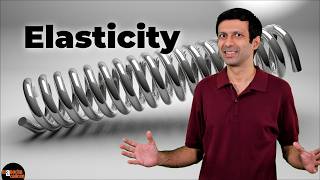
[Music] when we hear the word elasticity the first picture that comes to our mind is something like this but is this really what elastic meets we will find that out in this video let's take an example of a helical spring when a force of compression or tension is applied the helical spring gets deformed that is it changes in shape or size this force is referred to as the d-forming force and the ability of an object to regain its original shape when the influence of this d-forming force is removed is called elasticity more examples of such
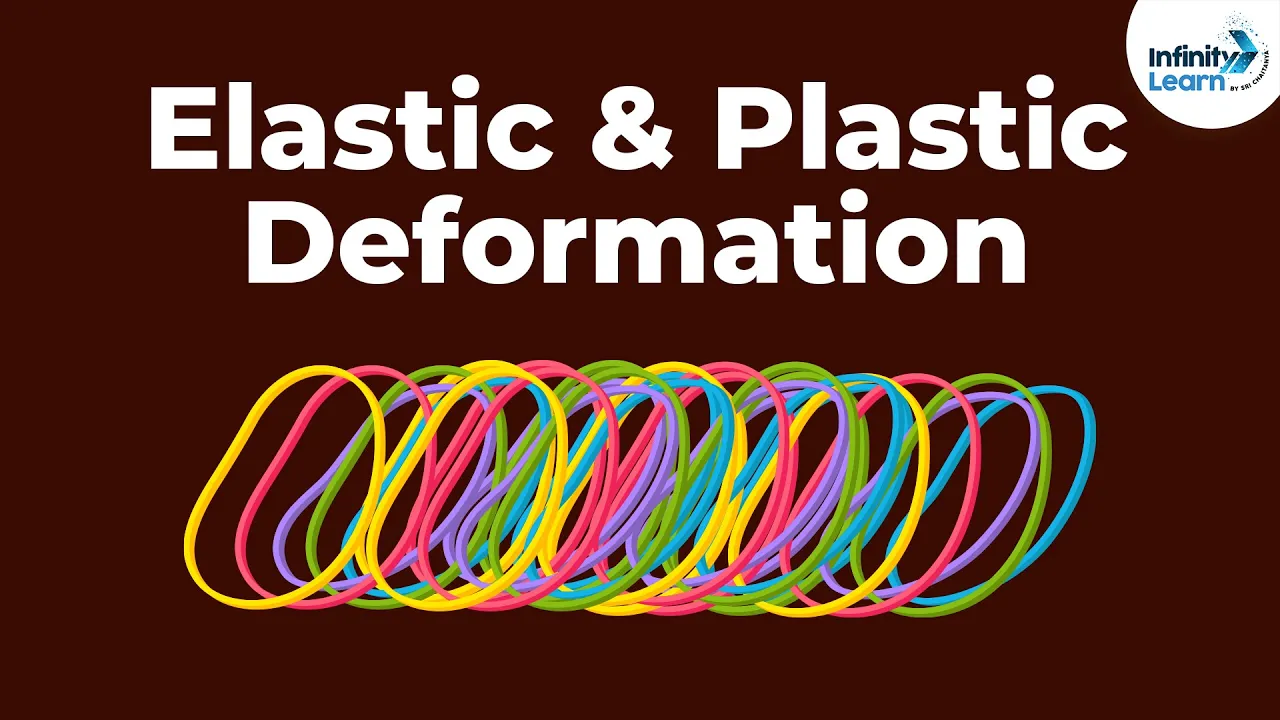
objects include sponge balls and rubber bands when compressed or stretched they get deformed but they soon returned to their original shapes this sense reversing deformity the object goes through when forces applied and removed is called elastic deformation but is there a limit to the elasticity of an object due elastic objects remain elastic forever not really for instance if a great amount of force is applied to a spring it simply won't be able to stretch further than a certain point but if the force becomes excessive the spring will get permanently deformed and may even break if
we keep increasing the force hence the spring does not remain elastic forever this type of deformation where the object is unable to attain or if it only partially attains its original shape once the d-forming force is removed is called plastic deformation now let me ask you a question suppose we have a rubber string and a string made of steel both of very tiny thicknesses both are identical to each other in terms of size and shape if we stretch them from both the ends with equal and opposite forces then which one will stretch the furthest assuming
the deformation is elastic in both the cases quite obviously the rubber string will stretch the farthest so steel string would barely stretch but it is important to note that it would indeed stretch no matter how little it doesn't stretch as far as the rubber string because steel applies more resistance to the d-forming force than the rubber does moreover as soon as the forces removed the steel string regains its original shape and size quicker than the rubber string it won't allow a d-forming force to change its dimension as easily so which one would you say is
a more elastic seal or rubber you would think that the obvious choice has to be rubber but unfortunately that's incorrect there is a general misconception that a lot of us have about elasticity we think that the more the object gets stretched or compressed the more elastic it is but elasticity is not the same as flexibility in the language of physics the term elastic has a very different meaning in physics we say a body is more elastic if it resists more to the d-forming force and reverses back quicker to its original shape after the force is
removed and since steel resists more and reverses back to its original shape quicker it's more elastic than rubber we can mathematically define elasticity as the ratio of stress to strain we've teach you what stress and strain mean in the upcoming videos but get ready to be hooked to our next video on Hookes law [Music] you