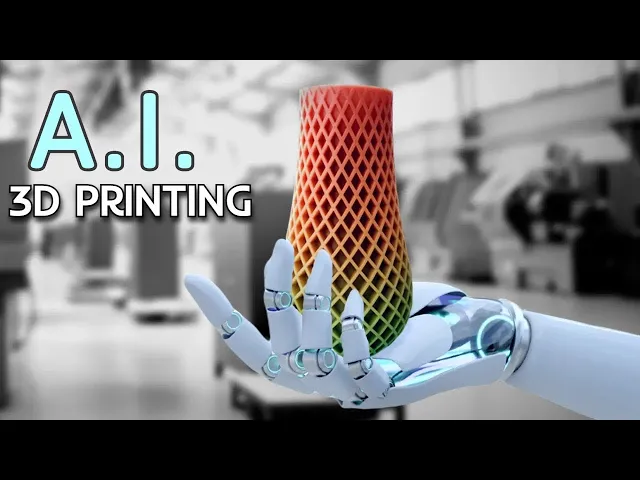
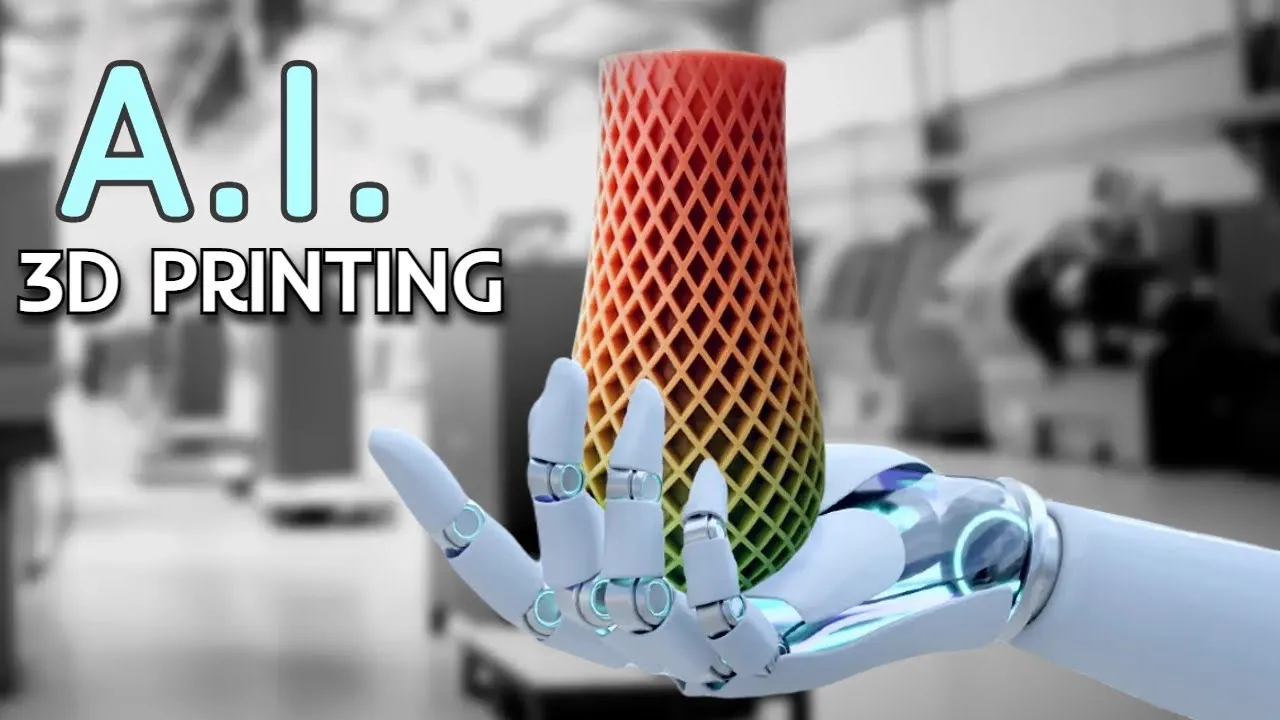
everyone seems to be talking about Ai and the human's impending Extinction at the hands of Skynet every industry is looking to apply this new technology in every way imaginable so in this video we will explore the ways AI is currently being utilized in 3D printing and how it can be applied in the future for better or worse designing is the most time consuming phase in the 3D printing process from idea to conceptual design to refining specific details this phase can take days weeks or even months before something is ready for the print bed by using
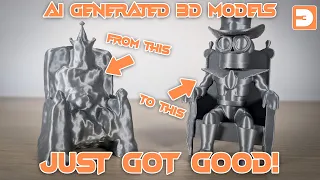
ai's ability to process information and produce an answer to a question or problem quicker than humanly possible designers can produce preliminary results faster and with less refining there are currently three different types of AI integration within 3D modeling the first one is the most basic form and it uses AI to generate a 3D model through a text prompt this version produces a model based on existing knowledge of shapes and attempts to add the custom descriptions detailed in the text Nvidia most recently showcased this during its unveiling of its magic 3D software the presentation had a
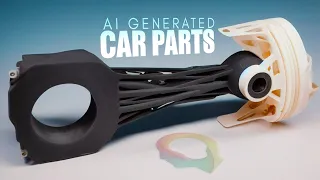
host of examples from a blue dart frog to a metallic bunny sitting on pancakes this type of AI is the most user friendly but is limited in its usefulness outside of creating fun little statues and art for more advanced integration AI is being used to create designs based on more than just a text prompt of what the part will look like this version has the ability to generate a design based on more than just the size dimensions it can utilize other information such as weight constraints load requirements materials used and even manufacturing costs imagine having
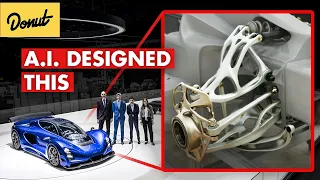
the software design a part that can hold 50 pounds of pressure made of aluminum and only cost twenty dollars to manufacture although that example is very rudimentary it does give an idea of how this type of AI can be used to significantly cut manufacturing costs and even Explore new variations of products with less trial and error the best example of this would be Fusion 360's extension called generative design which enables the user to explore rapid design by generating multiple Solutions based on manufacturing constraints cost and product performance requirements however the real benefit of AI is
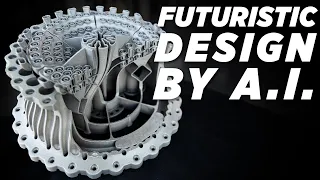
design optimization this uses AI to analyze how a part will work for its intended use and then produce a design with potential enhancements NASA is using this type of AI in their designs of the Artemis Mission by analyzing large amounts of data from past rocket engines their AI system can predict which designs are most likely to succeed allowing Engineers to focus on the most promising options using 3D printing physical models of their AI generated designs can be quickly produced and tested for fit Form and Function once a design is finished then the question arises by
how to print it and which material to use researchers at MIT are exploring where AI can improve on that part of the printing process the materials used in 3D printing such as plastic cement and metal are still developed through a manual process with AI custom formulations could be made based on the desired characteristics for example a material developer selects a few ingredients and defines the mechanical properties that new material should have the algorithm then increases and decreases the amounts of those ingredients and checks how each formula affects the material's properties this process allows the part
to be printed in the perfect material to optimize its function theoretically 3D printing is expected to print any three-dimensional object however compared with traditional manufacturing methods 3D printing is still limited due to its geometrical attributes time consumption and the specific material required to work in the printer itself to reduce this complexity of product fabrication and ensure that the 3D mono can be made in an optimal way research created an ai-based printability Checker to judge whether an object is suitable to be 3D printed or produced through other ways the AI system comes to a decision based
on the complexity of the design the time it would take to complete and the materials needed further research will explore different ways AI can alter traditional G-Code to optimize the print path with the hopes of creating more accurate models and reducing print time there is one company specializing in an AI based slicer program AI build is a london-based company with a software called AI sync that enables industrial 3D printing manufacturers to fully automate the additive manufacturing process from plan to print radically improving speed quality scalability and application range across the entire Enterprise the software uses
AI to create the optimal non-linear toolpath to print an object all while running its defect detection feature before a 3D printed object can be used for its intended purpose it must be inspected and repaired for Flaws such as holes and other imperfections if the flaws or defects are significant the entire part may need to be reprinted or even redesigned however with AI and machine learning the detection of faults can be done during the printing process and would save time money and hundreds of trial and error tests MIT researchers are currently developing a machine learning system
that uses cameras and light to monitor the manufacturing process and fix faults in how the material is handled in real time they are utilizing simulations to train a neural network to modify printing parameters to reduce error and then apply that controller to a real 3D printer engineers at Cambridge University are developing a similar AI by training it using images during the printing process giving it the ability to detect printing issues such as a slow nozzle speed or over Extrusion once trained the algorithm can figure out just by looking at an image which setting is correct
and which is wrong or if a particular setting is too high or too low and then apply the appropriate correction 3D printer manufacturer Nano Dimension wants to go a step further by applying Ai and machine learning to its cloud-based neural network of 3D printers they recently acquired deep cube a machine learning company whose technology is a number of deep learning algorithms that can improve data analysis and deploy complex artificial intelligence systems the result of this merger would be to have a cloud-based AI monitor the printing from their machines and make adjustments and recommendations to improve
the printing process integrating Ai and 3D printing can do wonders for the manufacturing industry but that doesn't mean you can't have a little fun with it researchers at University College in London have combined x-ray artificial intelligence and 3D printing to reproduce a lost Van Gogh painting they developed a process where x-ray Imaging can be used to see through layers of paint including works that have been painted over and create an outline of figures identified the resulting data can then be fed into a neural network that learns from the artist's previous work and predict how the
painting would have looked from colors down to the fine details such as brush Strokes creating a basis for a 3D printable replica and then to really stretch the usefulness of AI and 3D printing Tick Tock user 3D printer stuff shared a series of videos on how they programmed a 3D printer to produce homework with the answers that chap gbt wrote with the incorporation of AI into 3D printing a massive transformation is anticipated in how companies tackle manufacturing and building operations automating the printing process from design to fabrication with minimal human interaction seems beneficial but let's
hope that the machines don't learn how to print better humans thanks for watching