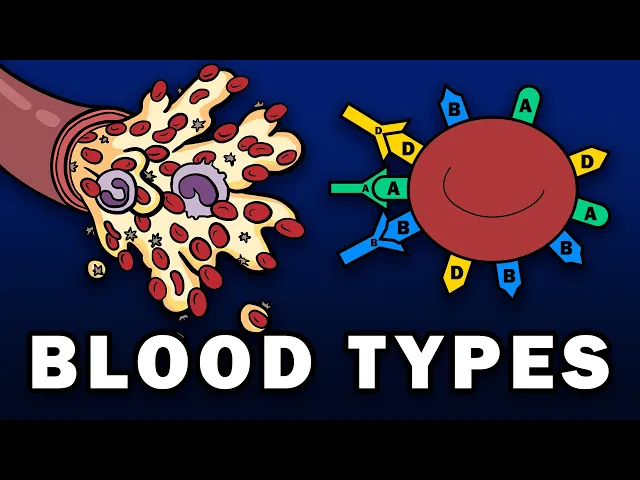
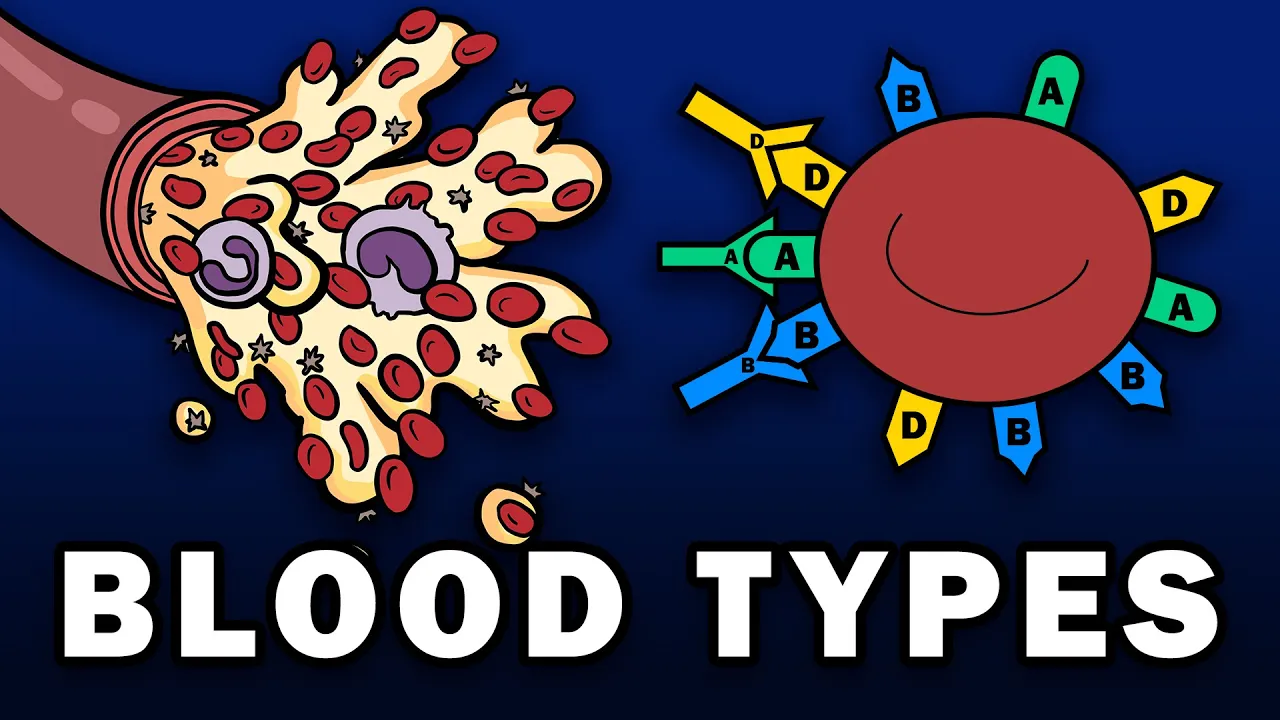
a blood type or blood group is a means of classifying blood based on the presence of specific antibodies and on whether red blood cells have specific inherited antigenic substances on their surfaces there are 38 of these blood group systems based on various antigens these antigens can be proteins carbohydrates glycoproteins or glycolipids the most important blood group systems are those that denote and rh status since these determine suitability of blood for transfusion we will be discussing them in this video the blood group system involves two antigens and two antibodies found in human blood antigen a and
antigen b and antibody a and antibody b the a and b antigens are found on red blood cells while antibodies a and b are in the serum the antibodies are usually igm or immunoglobulin m antibodies humans have one of four combinations of antigens along with a corresponding combination of antibodies which we'll get to next people with blood type a have antigen a people with blood type b have antigen b people with blood type a b have both antigen a and antigen b and people with blood type o have neither antigen if you're blood type a
then you have antibody b if you are blood type b you have antibody a if you are blood type a b you have neither antibody finally if you are blood type o you have both antibody a and antibody b if antibody a encounters antigen a or if antibody b encounters antigen b an agglutination reaction results this is very dangerous and we'll cover this in a follow-up video blood transfusion is safe only as long as the recipient's serum doesn't have antibodies for the donor's blood cell antigens the second most significant blood group system for blood transfusion
is the rh system rh stands for rhesus and it involves 50 antigens the most significant rh antigen is the d antigen as it's the most likely to cause the immune system to react the presence of d antigen is signified by a plus sign after the blood type lack of the d antigen is signified by a minus sign for example someone who has b antigen and rh antigen would be signified as b positive it's common for someone who is d negative to not have anti-d antibodies but these people can develop these antibodies after a sensitization event
this can happen for instance during a blood transfusion or during a fetal maternal transfusion of blood during pregnancy this can result in the development of rh disease so a d negative patient without sensitization to d positive red blood cells can receive a transfusion of d positive blood once then they become sensitive to d antigen so a future transfusion of d positive blood would result in a dangerous transfusion reaction and in the case of d negative females without prior sensitization receiving d-positive blood results in a risk of hemolytic disease of the newborn hence rhd-positive blood is
not given to d-negative women of child-bearing age meanwhile d-positive patients do not react to negative blood the same kind of matching is done for other rh antigens now let's apply what we've learned to fill out this red blood cell compatibility table o negative is the universal donor since there are no a b or d antigens o negative can donate blood to anyone without triggering an immune response from a b or anti-d antibodies a b positive is the universal receiver since there are no antibodies that will trigger an immune response to a b or d antigens
blood plasma is the liquid component of blood which holds blood cells and other constituents of whole blood in suspension this is where you find a b or anti-d antibodies hence plasma compatibility is the inverse of red blood cell compatibility someone with blood type o can receive plasma from any blood type while someone with blood type a b can only receive plasma from other people with blood type a b someone with blood type o can only donate plasma to others with blood type o while those with a b blood can donate plasma to anyone it must
be noted that with rare exceptions an individual has the same blood group for life on rare occasions it can change through addition or suppression of an antigen during infection malignancy autoimmune disease or due to a bone marrow transplant if someone with a different type donates bone marrow to you your blood type will eventually convert to the donor's type you