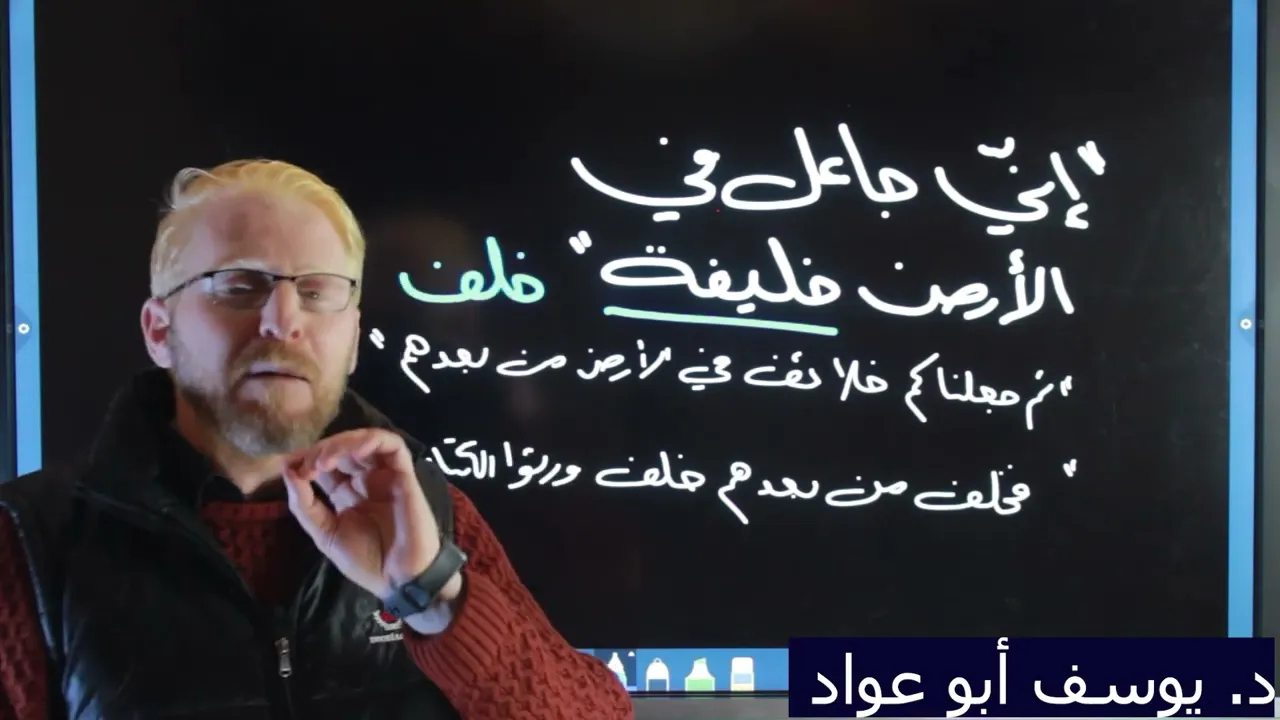
Perhaps you, friends, have ever wondered who told the angels that humans will make mischief on earth and shed blood, and perhaps you have read in the interpretations that the angels compared that to the jinn, for they were before humans, but that is not true. Language tells us otherwise, that whoever told the angels that humans will make mischief on earth and shed blood is him. God, Blessed and Most High, when He said to them, “Indeed, I will place a caliph on earth,” but the text did not mention that God informed them of that, because that was mentioned in the context.
And what is mentioned in the context and understood from the context, the rhetoric is to be omitted. Notice the origin of the words, “I will place on the earth a caliph,” who will spread corruption on it and shed blood. They said, “Will you place on it?
” Whoever makes mischief and sheds blood, and if he mentioned that sentence, the verse would be far from eloquent. By the way , this phenomenon is present in many verses in the Holy Qur’an. Dear followers, this video serves as a commentary and clarification of the previous video.
God Almighty is the one who told the angels that humans are making mischief on earth and shedding blood. This is what language indicates with its various sciences, but this video received many comments on various means of communication and brought a lot of confusion to many followers. Here I must clarify a number of matters.
First, God Almighty said, “We sent it down as an Arabic Qur’an, so that you may understand if you want to understand. ” A book, any book, the best way to understand this book is what the author of the book itself and the author of the book itself guides you to, and the Holy Qur’an guides us to the fact that the way to interpret it and deal with it is by returning to the Arabic language. It says in many verses: We sent it down as an Arabic Qur’an so that you may understand.
This is an example, and thus We made it an Arabic Qur’an. And if We had made it a foreign Qur’an, they would have said, “If only its verses had been separated from a foreign language and Arabic,” and other verses that indicate that the Qur’an was revealed in the Arabic language, and that this Arabic of the verses of the Holy Qur’an is the means that will make you understand these verses. Examine the words of God Almighty.
And if We had made it a foreign Qur’an, they would have said, “If only His verses had been separated from a foreign language and Arabic. ” We were sent by a Messenger only in the language of his people to make it clear to them. Therefore, the Arabic language must be our first reference in understanding the Holy Qur’an.
Hence, we interpreted the noble verse based on the language. If we take the interpretation, we delve into it from a linguistic standpoint only, and we interpret the verses linguistically, so we will not enter into the fatwa. Neither in jurisprudence nor in these fields, for they are not our field.
Rather, we speak about the issue of language only in the noble verses of the Qur’an, and we speak about it from a linguistic standpoint of research, from an Arabic standpoint of research, and from a scientific standpoint in which we believe that many years have been spent in tracking down the sciences of the Arabic language and understanding it as much as possible before considering it. The verses of the Holy Qur’an, so what we say is based on the sciences of the Arabic language, on understanding the Arabic language, and on what the Arabic language requires, and not on the Israelites or on the narrations. Now, if we wanted to put the issue in comparison and contrast, which is stronger, to interpret the Holy Qur’an according to what the Arabic language requires, as he has instructed you to do so?
Or do you explain it in terms of the Israelites, the authenticity of which is not known from the false, or do you also explain it with narrations quoted from the Companions and Followers, which, if authentic, many of which are essentially authentic according to hadith scholars, are not authentic, but if they are authentic, then they are no more than ijtihad, so no one claims when he interprets a specific verse that what he mentioned is the entire interpretation. The verse is his effort and understanding of the Noble Verse, and as I said, I am speaking from a linguistic standpoint and not anything else. This is with regard to the major rule in which we deal with the verses of the Noble Qur’an, so we compare the verse with similar ones and what is similar to them in the Qur’an, and when understanding the term we strive to collect everything that resembles it in the different verses of the Qur’an, as this is better.
The most accurate way to understand the message brought by the Holy Qur’an. If we agree on this point, let us move to a point that has in fact become a subsidiary point, which is that many followers said: How can they read God, or God informs, or God permits, or God tells the angels that He will place on earth a caliph who will spread corruption there and shed blood? How does God permit this?
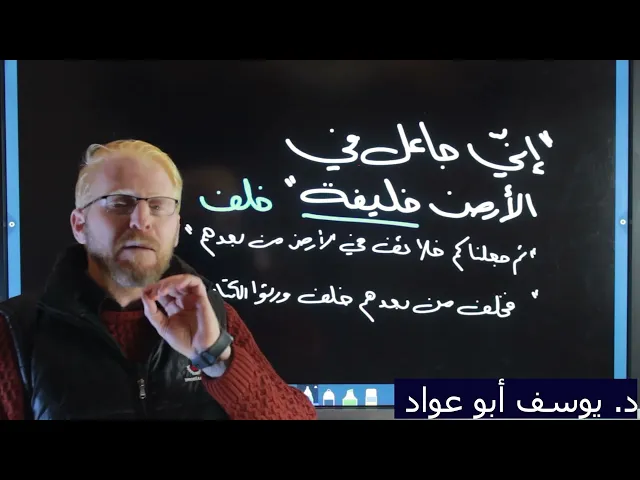
Is that consistent with God’s exaltation and exaltation? It is said, firstly, that the meaning of “caliph” is not what you think. The word “caliph” is not intended to mean that he is a successor on behalf of God, for God does not succeed him .
He went before him, so Abu Bakr was named the successor to the Messenger of God, may God bless him and grant him peace, after his death. He was not named a successor while he was alive. The same was said about Omar ibn al-Khattab.
Likewise, the caliph is not called a successor until the one who was before him dies and goes. Therefore, this is the meaning of his successor. Humans are God’s successors in the sense that they are representatives of God, for God, no one can act on his behalf.
If we say the successors of God, this is only out of honor and not out of the fact that they are acting on behalf of God. Rather, they came after peoples who preceded them. The word “caliph” found in Surah Al-Baqarah clearly indicates that there were other people or beings before them on earth, but God has gone and put an end to those beings, so humans became successors after them.
Now who says that they came after the jinn? The jinn did not go at all. The jinn still exist and the messages from heaven still address the jinn as well as they address humans.
How can humanity be successors to the jinn if this is actually the meaning of the word “caliph” in Language: Have you seen how language will open up many horizons for us to understand many dimensions in the Qur’an, so we can revise these narrations and these Israelites? And we begin to understand the message of the Qur’an in a deep and accurate understanding from a purely linguistic standpoint, as the Qur’an refers to: Look at the Almighty’s saying: Then We made you successors on earth after them so that we may see how you do this verse. God addressed the Quraysh and the Arabs with it when He mentioned the previous nations.
And indeed We destroyed the generations before you when they wronged and came to them. We sent them with clear proofs, and they did not believe. Thus We recompense the criminal people.
Then these fourteenth verses of Surat Yunus came and said, “Then We made you successors in the land after them, and there is no one with them after them. ” He also said, “So after them successors were left, and they inherited the Book. ” And this is in the children of Israel when the other successor came.
And God said, “God promised those who Believe among you and do good deeds, He will appoint them as successors in the land. And here I note the verses that contain the same linguistic root so that I understand what is meant by the word in a true and decisive understanding and penetrate to the message that the noble verse wants to convey. So if we now understand what the meaning of a caliph is, then it is said: Is it from God’s exaltation?
And it is appropriate for God to give permission and be pleased to Humans shed blood, so he says to the angels, “Indeed, I will place a successor on earth. They will find therein and shed blood. ” It is said that this is just news.
And I say to whoever says this, in the end, did humans really shed blood and spread corruption in the earth, and did God Almighty know that before he appointed them as caliphs? The answer is simply yes, because Even if you disagree with me in my understanding of this noble verse, you will acknowledge that when God responded to the angels, He did not say to them that they will not be corrupted, or that He did not permit them or that I did not permit them, or that this is not my destiny. Rather, He said that I know what you do not know, but here is an important point that we must pay attention to.
It is that there is a difference between God ordering something or authorizing it because of the nature of the test and the will that He gave to humans, so pay careful attention to what I will say. God commanded humans to do good and forbade them from evil, but He knew with His foreknowledge that it would be their doing to spread corruption on earth and shed blood. He told the angels that it would be He did them, Kate and Kate, but it does not indicate that he commanded them to do this nor was he satisfied with this.
Rather, he gave permission for there to exist. Yes, he gave permission for it to exist, so nothing can happen except with God’s permission. But why did he permit it, because he gave them the will and gave them the human freedom that distinguishes humans from others, so the requirement of freedom and its natural result was that it should happen.
As a result of that, there was bloodshed and corruption on earth. So where are the problems in that? When God tells the angels that He will place a caliph on earth and it will be his business to spread corruption there and shed blood, the angels are in power over them because they fill the universe seeking forgiveness and obedience to God.
How can something happen that contradicts God’s pleasure? So he said to them, “ I know what is. ” You don't know, so let's agree that this is not a problem, and that you originally acknowledge that God knew about this, even if you do not acknowledge that God was the one who told the angels about it.
In both respects, there will be no difference between you and me, because God knows in advance, and because the angels knew that as well, and God approved it as you knew. So where? The disagreement, then, is the third point: Did God want humans to become corrupt and shed blood?
This is what we summed up earlier. We said that God was not satisfied with that, but He permitted this to exist by the will of humans as a result of His testing and examination of humanity. The actual result of the existence of the will for humans is that good exists and evil exists.
Otherwise, there will be no will. It is true, and this never impugns the exaltation of God, and it never impugns the supremacy of God, and it never impugns the position of God. Rather, it is the nature of the human experience that God willed.
Thus, we understand then what the meaning of a caliph is, and we understand from the linguistic context, as we mentioned, that it is in the nature of the Arabs and even other people of languages in Rhetoric is to delete what is understood from the context. Understanding from the context is that the angels knew who God taught them. If you tell me that they saw the jinn or were seen by humans, they concluded that humans will do such and such.
I will tell you how this conclusion will be logical and how God spoke about it. How did the angels speak to God about that? He originally made humans successors over what came before them.
Does that mean that they will behave in the same way? What is the benefit of succession? If it can never happen, neither by logic nor by reason, that the angels would say that about humans by analogy with those who preceded them, because God removed those who preceded them and destroyed them for reasons, so it cannot be the successors.
Like them, or at least it is not correct to draw a definitive conclusion by addressing God, that they will do such and such only by analogy with those who preceded, and you do not know that they will be like those who preceded. If this were a conclusion from the angels, the answer would be very simple, and you do not know that they will behave like the predecessors. You have no right to conclude in this regard.
This is the position, but God approved their words, and this is evidence that he was the one who told them these words, so he said to them, “I know what you do not know,” and he proved to them that his knowledge is vast when the case of Adam occurred in learning the names that were mentioned in the following context of these noble verses.