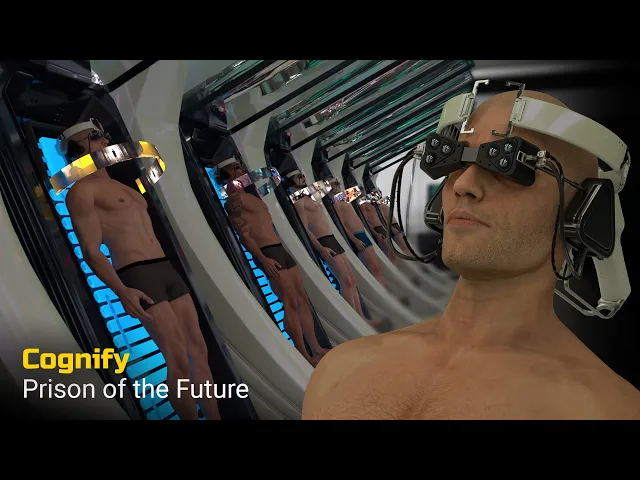
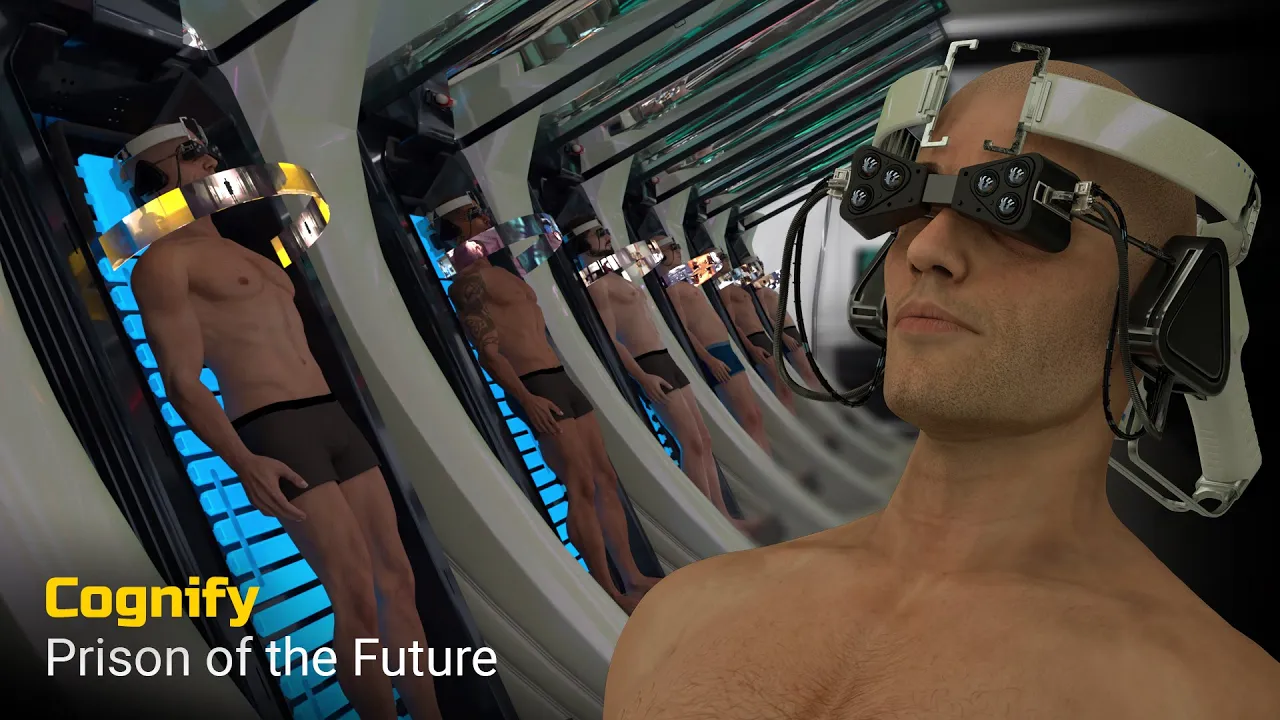
Welcome to Cognify, a facility designed to treat criminals like patients. Instead of spending years in an actual prison cell, prisoners could finish their sentence here in just a few minutes. Cognify could someday create and implant artificial memories directly into the prisoner’s brain.
These complex, vivid and life-like memories are created in real-time using AI-generated content. Depending on the seriousness of the subject’s crime and their sentence, the memories could be tailored to the rehabilitation needs of each subject. The artificial memories implanted by the Cognify would be seamlessly incorporated into the existing neural networks of the brain, preventing cognitive dissonance and ensuring the subject experiences the memories as if they were real.
The Cognify concept offers a new approach to criminal rehabilitation, transforming how society deals with offenders by focusing on rehabilitation rather than punishment. First, the prisoner is given a choice either spending tens of years in a prison cell or seeking fast-track rehabilitation through artificial memory implantation. If the prisoner chooses to undergo fast-track rehabilitation, the Cognify device is used.
Next, the prisoner undergoes high-resolution brain scanning to create a detailed map of their neural pathways. This brain map helps guide the Cognify device to target specific brain regions responsible for memory, reasoning, and logical thinking, such as the hippocampus, prefrontal cortex, amygdala, parietal lobe, and anterior cingulate cortex. Once the target brain regions are identified, Cognify is then placed around the head of the prisoner.
The intensity and the type of artificial memories is then adjusted depending on the crime. Inside the criminal’s mind, time would pass differently slower than in real life, making them experience years-worth of artificial memories in just a few minutes. Synthetic memories are customized depending on the crime committed and the unique brain structure and psychological profile of the individual.
Violent offenders could experience memories that are designed to trigger empathy and remorse. Seeing their crime from the perspective of their victim, feeling their pain and suffering firsthand. Some memories are designed to trigger consequences and trauma.
Such memories could simulate the long-term consequences of violent actions, such as the grief of the victim's family or the physical and emotional trauma endured by the victim. Artificial memories could cover a wide range of crimes, including domestic violence, hate crimes and discrimination embezzlement, insider trading, theft and fraud. Cognify emotion regulation system could modulate neurotransmitters and hormones to induce specific emotional states, such as remorse or regret, which is crucial for rehabilitation.
Real-time monitoring and feedback mechanisms could track the prisoner's neural responses throughout the process, allowing the system to adapt and optimize the rehabilitation in real time, with new visuals, sensation, and realistic AI-generated content. To ensure the long-term effect of the therapy session, the memories could become permanent, fully integrated into the subject’s mind, as if they were part of their own personal experiences. While subjects are undergoing therapy session, valuable data are collected from all the prisoners into a central computer for scientific research, which will help understand the criminal mind and determine the best approach to tackle crimes in society.
AI-driven analytics could enhance the device's functionality, optimizing future procedures based on gathered data and insights. Cognify could feature encrypted storage for sensitive prisoner information and rehabilitation data. A compact and portable design would allow Cognify to be used anywhere in the world, it would be constructed with durable materials to withstand frequent use.
Its energy-efficient design would ensure long operational life, reducing the need for frequent recharges. It would have the ability to integrate seamlessly with other prison systems, like security cameras and biometric identification. Once the therapy session is concluded, family members of the subject could be provided with a comprehensive report on the new artificial memories that have been implanted, offering them a chance to adjust to the subject’s new, positive personality traits.
The subject is then released back into society to start a new life away from crimes. The Cognify concept could revolutionize the criminal justice system by significantly reducing the need for long-term incarceration and its associated costs. Traditional prisons require substantial budgets for construction, maintenance, staffing, and prisoner care, including food, healthcare, and rehabilitation programs.
By replacing extended prison sentences with brief, intensive rehabilitation through artificial memory implantation, the costs of maintaining prison facilities and supporting inmates could be drastically lowered. The funds saved from reduced incarceration and recidivism rates could be reallocated to other critical areas. These might include education, healthcare, infrastructure development, social welfare programs, or research and development initiatives that benefit society as a whole.
By rehabilitating offenders more quickly, Cognify could enable them to reintegrate into society sooner and contribute to the workforce. This increased productivity could boost the economy and generate tax revenue, further offsetting the initial investment in such technology. Successful rehabilitation through Cognify could lead to safer communities, reduced crime rates, and improved social well-being.
This could have far-reaching positive impacts on individuals, families, and society as a whole, contributing to a more stable and prosperous future. Apart from treating criminals, Cognify could also be used to treat severe memory loss by helping patients recall their past memories. It could also treat patients with PTSD by implanting positive memories that replace the negative ones.