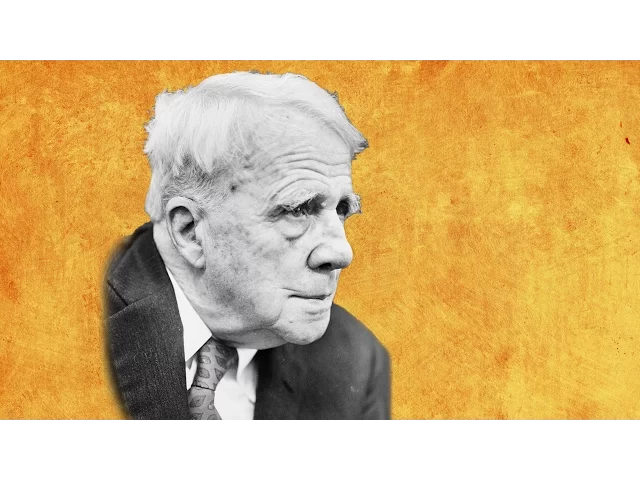
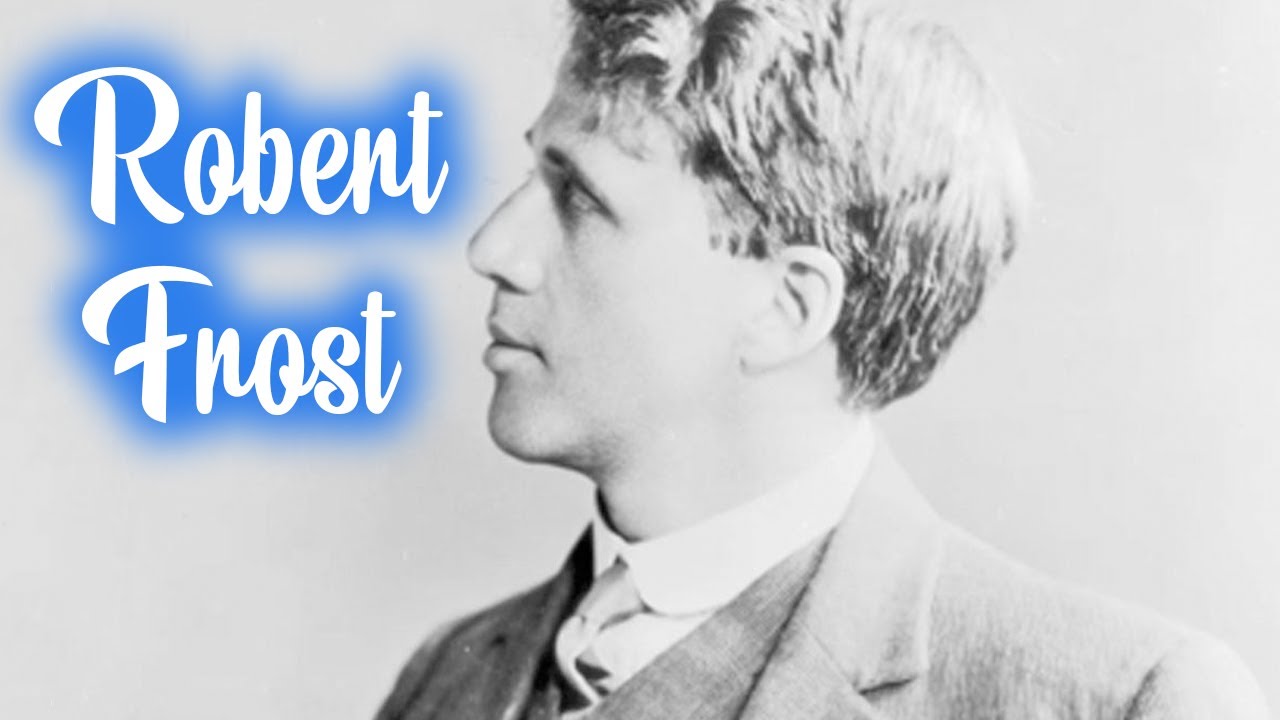
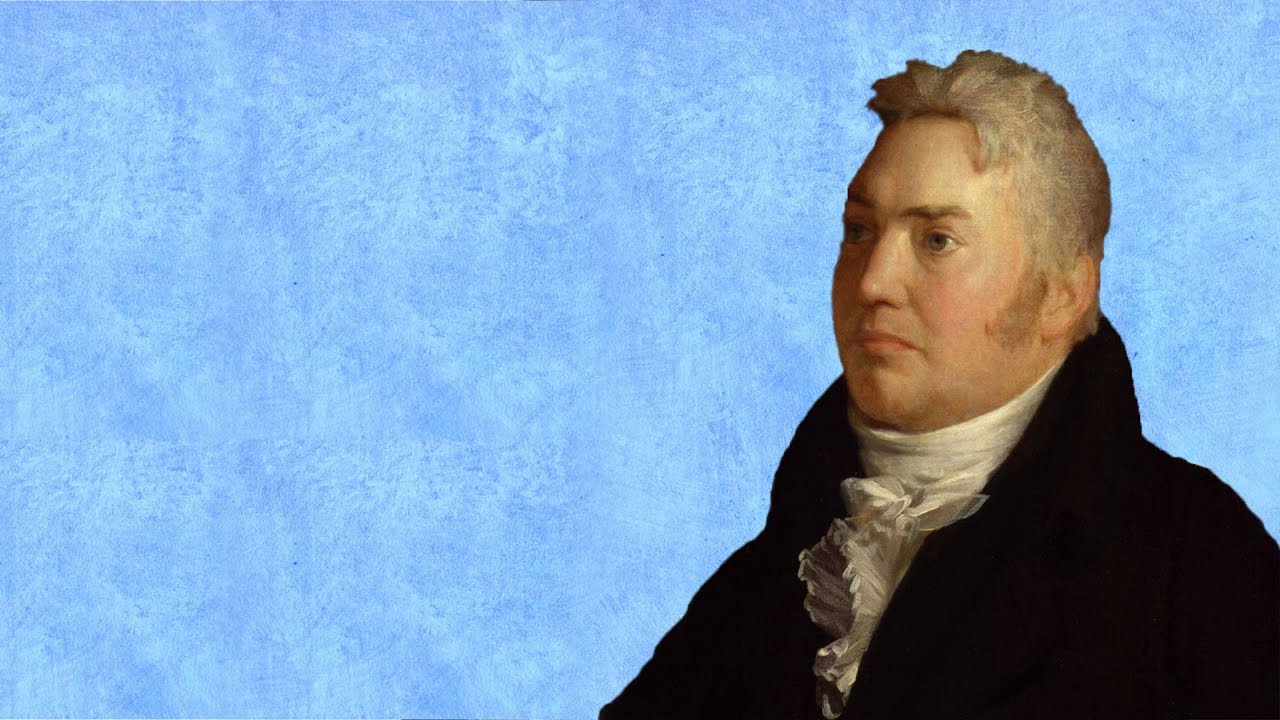
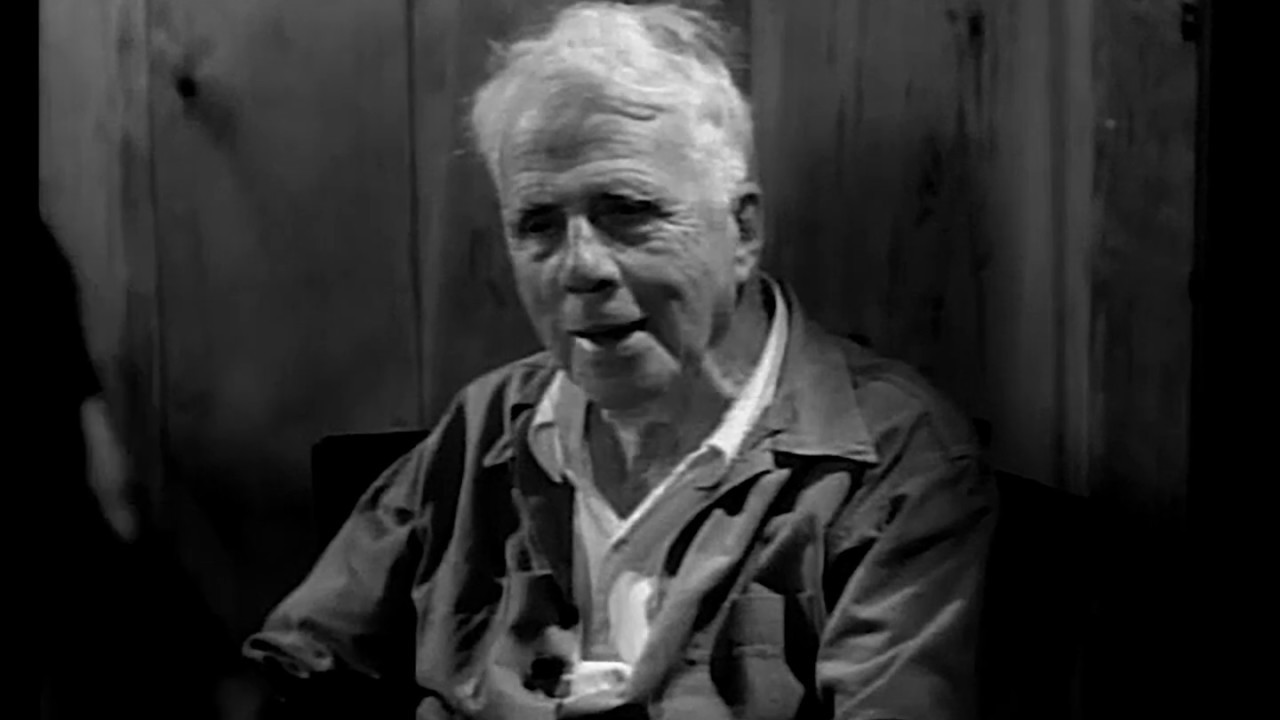
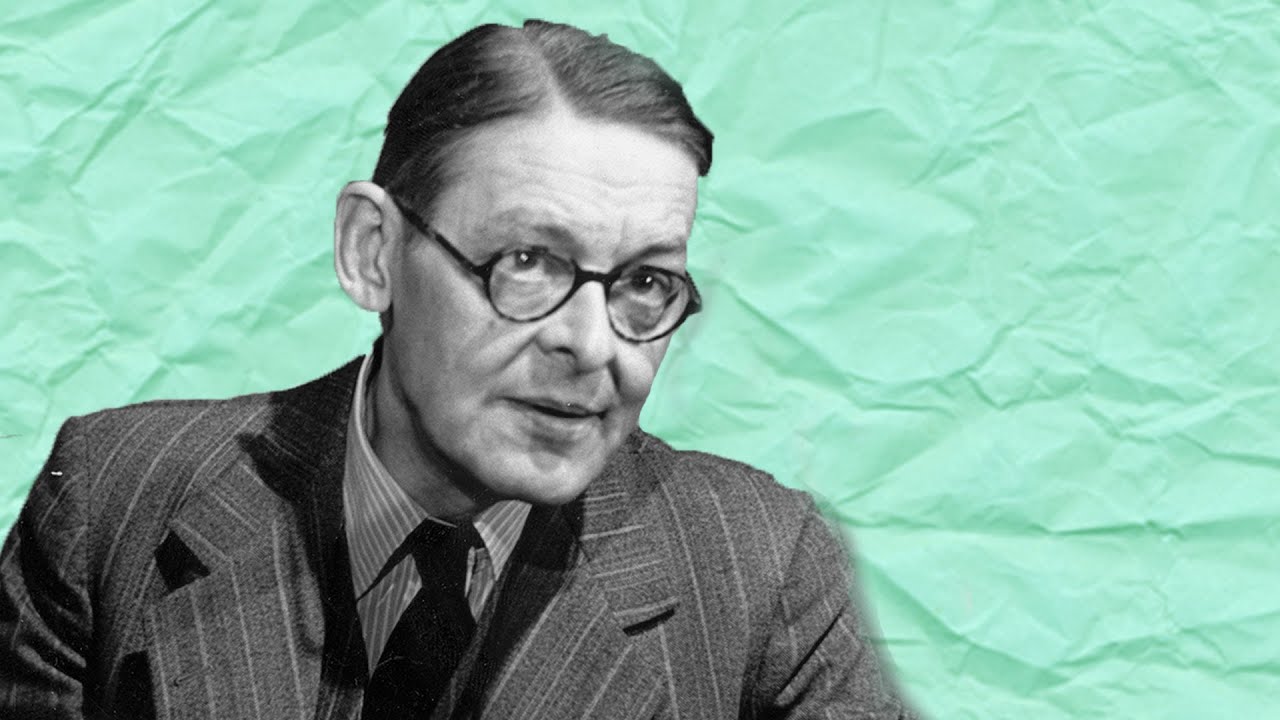
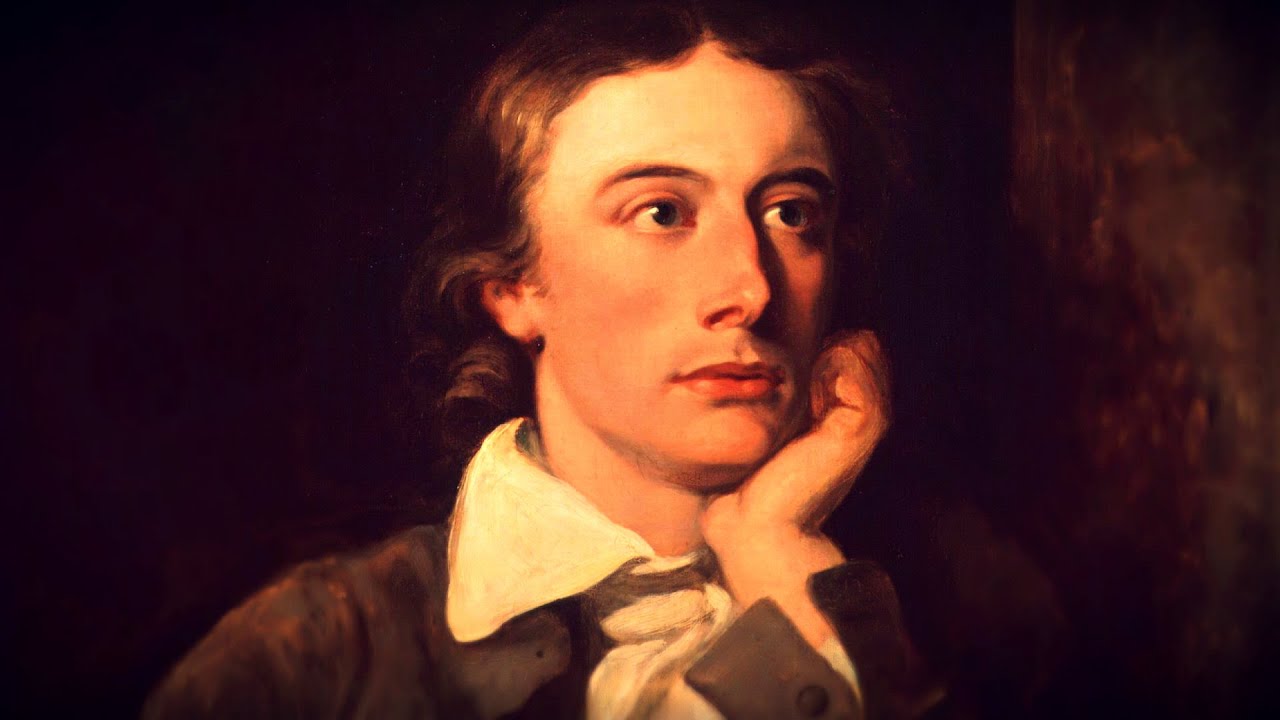
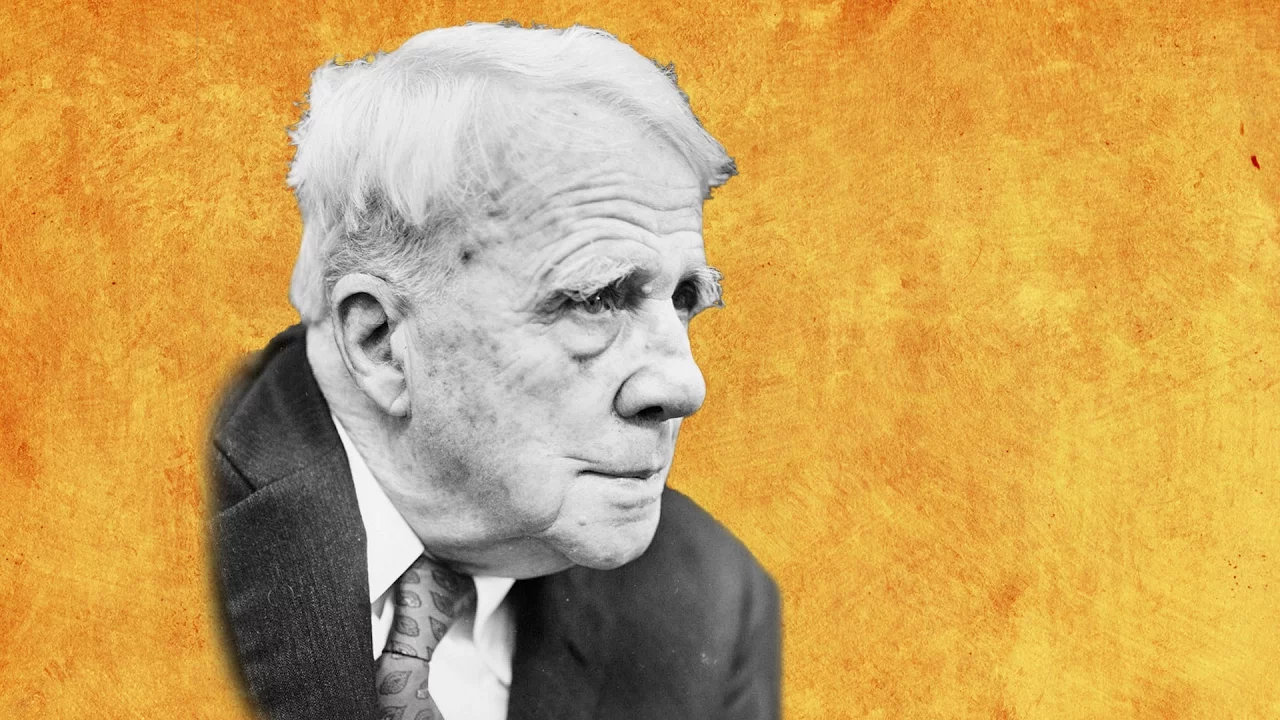
so whatever I chosen to speak about frost his dates are 1874 till 1963 he was described by TS Eliot as an I quote the most eminent the most distinguished anglo-american poet and by Robert Graves thirsts frost was the first American poet who could honestly be reckoned a master poet by world standards he's also the only writer in history ever to have been awarded four Pulitzer Prizes but his relationship with literary circles with within groups of other poets was often very strained his creative life coincided with the rise of modernism which is a problematic term and many of the modernists tried to lure frost into their camp as it were but he kept his distance literary modernism originates in the late 19th century and really takes off in the 20th and is marked by a very self-conscious display of refusal of tradition subversion of tradition in an attempt to explore new sensibilities modernists experimented with literary form following ezra pound's maxim make it new now frost was committed to traditional verse forms which he nevertheless innovated but he abhorred the modernists abandonment of regular structures and in an address to the Milton Academy Massachusetts in 1935 he declared that and I quote writing free verse is like playing tennis with the net down frost is almost revered almost as an American institution but I'm not really how sure how well-known he is here so a few words of biography Frost father was a teacher and later a journalist he died when Robert was only 11 in 1885 and the family moved to Lawrence Massachusetts under the patronage of Frost's paternal grandfather who was an overseer at a New England mill frost graduated from Lawrence High School in 1892 and he attended Dartmouth College briefly but returned home to teach and to work at various jobs including helping his mother who was also a teacher with a class of particularly rowdy boys frost went to Harvard but only for two years from 1897 to 1899 and left due to ill health and shortly before his death his grandfather Frost's grandfather had purchased a farm for Robert and his new wife whom he'd met at college Elinor in Derry New Hampshire and frost managed the farm for nine years writing poetry early in the mornings and producing many of the poems for which he would later be celebrated but ultimately his farming proved unprofitable and he returned to teaching in 1912 the family broke out and came to England living first in beckons field and in fact his first collection of poetry a boy's will was published in England in 1913 and here he struck up some very important friendships with other poets including Edward Thomas T Hume and Ezra Pound Pound was the first American to write a complimentary review of his poems but later frost found Pound somewhat overbearing and intrusive Pound was one of those modernists who tried to win him over as it were now during the first world war frost returned to America and bought a farm in New Hampshire and he settled into writing teaching and lecturing and during the years 1960 into 20 23 to 24 and then 27 to 30 eight that was the long stretch he taught English at Amherst College in Massachusetts he loved his teacher and he was clearly very much loved by his pupils so here are three images that give us a sense of of the various sides of frost this is frost the young man this is frost the farmer with an axe over his shoulder and this is frost the Pulitzer prize-winner four times over and the much revered national hero now it could be the frost reputation as a national poet has prejudiced literary critics against him when he died jf Kennedy declared and I quote his death in part brushes us all but he has bequeathed bequeathed his nation a body of imperishable verse from which Americans will forever gain joy and understanding now presidential sanction is not something that literary critics are going to be much swayed by quite the reverse I imagine it would be death to any living American poet today to be trumpeted by Donald Trump James Fox writes though his career fully spans the modern period and though it's impossible to speak of him as anything other than a modern poet it's difficult to place him in the main tradition of modern poetry by this of course Cox means modernism Frost's stands at a crossroads in American poetry between the 19th century and modernism of the 20th so was I think I'm suggesting is that I think his status has some been somewhat marred by his his status as a national poet and therefore in a sense perhaps an everyman's poet er a populist but I think this is prejudice I also think that his commitment or semi commitment to traditional forms including the sonnet form has led other readers and critics to consider him something of a reactionary rather than an innovator like the modernist but I think there's another more complex and intriguing for prejudice against his poetry and that has to do with his use of simile and the fact that his use of simile is quite extraordinary various so tonight we'll be looking at another rhetorical trope another figure of speech namely simile and exploring some of Frost's wonderful poems so to set the mood we'll begin by listening to Frost reading one of his early and very famous poems after apple-picking my long two pointed ladders sticking through a tree toward heaven still and there's a barrel that I didn't fill beside it and there may be two or three apples I didn't pick up on some bough but I am done with apple picking now essence of winter sleep is on the night the scent of apples I am driving off I cannot rub the strangeness from my sight I got from looking through a pane of glass I skimmed this morning from the drinking trough and held against the world of horror grass it melted and I let it fall and break but I was well upon my way to sleep before it fell and I could tell what form my dreaming was about to take magnified apples appear and disappear stem end and blossom end and every Fleck of russet showing Claire my instep I not only keeps the ache it keeps the pressure of a ladder round I feel the latter sway is the boughs Bend and I keep hearing from the suburb in the rumbling sound of load on load of apples coming in for I've had too much of apple picking I'm over tired of the great harvest I myself desired there were ten thousand thousand fruit to touch cherish in hand let down and not let fall for all lets struck the earth no matter if not Bros or spiked with stubble went surely to the cider apple heap as of no worth one can see what will trouble this sleep of mine whatever sleep it is worry not gone the woodchuck could say whether it's like his long sleep as I described it's coming on or just some human sleep it's a deceptively simple poem until it comes to those final four lines where the first simile is introduced Frost was concerned amongst other things to bring the rhythms of vernacular speech to his poetry so try to bear in mind his voice and his intonation his manner of reading so critics as I say have disparaged frost claiming that he's apart without technical ability without rhetorical complexity or intellectual density and one of the reasons I think this is the case is to do with a common literary critical prejudice namely the raising of metaphor / simile similes also often called the weakest form of metaphor metaphors commonly seen as the properly poetic figure of speech and simile has often been proposed as better able to express logical qualities of the mind now by way of example critic Robert Boyle who's actually very good on Jerrold man manley hopkins wrote a book specifically on metaphor in hopkins and i think there's an element of typical prejudice in the way boyle approaches metaphor and simile in his book he demonstrates that and I quote Hopkins mind tends towards expression through metaphor rather than through simile but here he's not really stating a simple fact rather he's making an aesthetic judgment he's saying that Hopkins is great poetry because of his deft use of metaphor Boyle pays virtually no attention to Hopkins use of simile not because Hopkins doesn't use it but because of hit Boyles implicit attitude to simile it's a trope that's much less poetic than metaphor and he writes to a mind which prefers the clarity and order of content simile is the natural expression to mind which hungers for the reality of being even involved as being is in the darkness of unintelligibility mystery and confusion metaphor is the natural expression so if a boil metaphor is the creative force of the imagination he says simile deals with relation between beings not directly with being itself hence since the two sides of the simile both exist outside the mind simile can be used by the scientist now the implication here is that the quest for knowledge undertaken by the scientist is that the furthest remove from the poet's pursuit and I don't believe this is necessarily always the case and as I hope to show it's not the case in the poetry of Robert Frost now Frost's use of simile across the years is strongly related to the growing complexity of his intellectual convictions about what we can know about our self selves and being in the world sometimes he uses simile to clarify endorsing one of Boyle's definitions this may be true of his early poetry but in his mature poetry the trope is put to work in different in more complex ways his struggle to express the inexpressible is made especially visible in his long efforts to come to terms with this figure of speech to mold its logical structure as Boyle would say so that it suits his expressive needs and I think mastery of this figure of speech is perhaps more difficult than mastery of metaphor itself there's more to simile and metaphor than meets the eye so to speak philosophers of language often use the Shakespearean example of Romeo and Juliet Romeo declares that Julia it is the Sun this is patently untrue Juliet is a young woman and the Sun is a star I thought it was a planet but I was corrected by my son in this example the metaphor is indistinguishable many argue from simile what we understand is that Juliet is like the Sun similarly being introduced by the like so here metaphor and simile amounts the same thing in both cases an interpretive response is required of us Juliet is warm brilliant Romeo's world revolves around her and so on in these sentences Juliet on the Sun are alike so what exactly do we understand simile to be it's a figure of speech in which a comparison is expressed by the specific use of a word or a phrase such as like as Van seems or Frost's favorite as if the technical terms tenor and vehicle have been used and new terms have been proposed but this remains the sort of dominant way of looking at simile Turner and vehicle so in the statement Juliet is like the Sun jewel it is the tenor and the Sun is the vehicle now similes exist on an extraordinary scale from those which can be immediately assimilated and understood and which clarify to those that burm use or am use so let's consider some at the far end of the scale the earth is blue like an orange here the tenor is the earth and the vehicle is the orange this is the surrealist part French surrealist Paul Lu are well we've seen images of the Earth from outer space which show it to be blue and we know that the earth and oranges are both roughly speaking spherical so the earth in an orange can surely be likened one to the other but there's a problem oranges are orange in colour let's take another rather extraordinary simile this is TS Eliot laughed like an irresponsible fetus now assuming that we know to whom that he refers where do we find an irresponsible fetus whose laugh we can study Elliot adds to the simile and gives clues for its interpretation by way of metaphor and further simile his laughter was Submarine and profound like the old man of the seas hidden under coral islands where bodies of drowned men drift down in the green silence dropping from fingers of surf that's from mr. apollon acts so although the the simile that's first proposed seems very very surreal very strange we begin to understand it within the context I can't resist quoting a couple more lines from mr. pollen acts which I particularly like I looked for the head of mr.
pollen acts rolling under a chair with seaweed in its hair mr. pollen acts by this point has lost his head in fact it appears that mr.