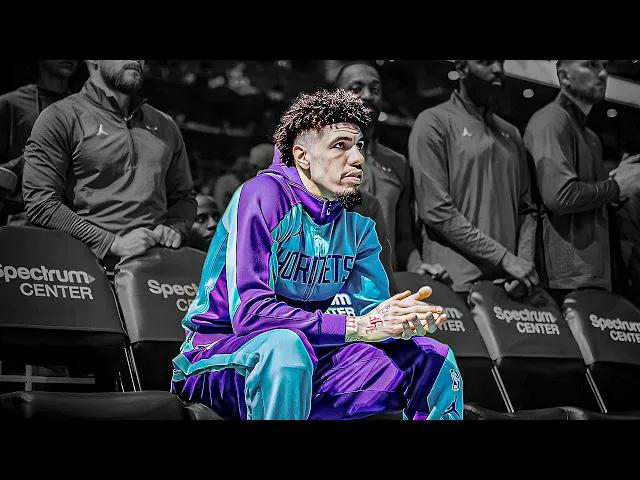
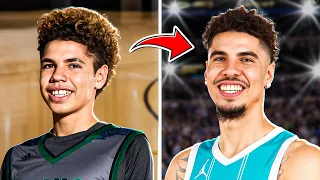
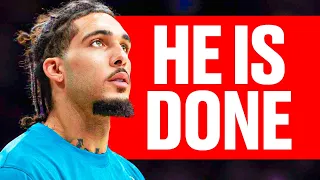
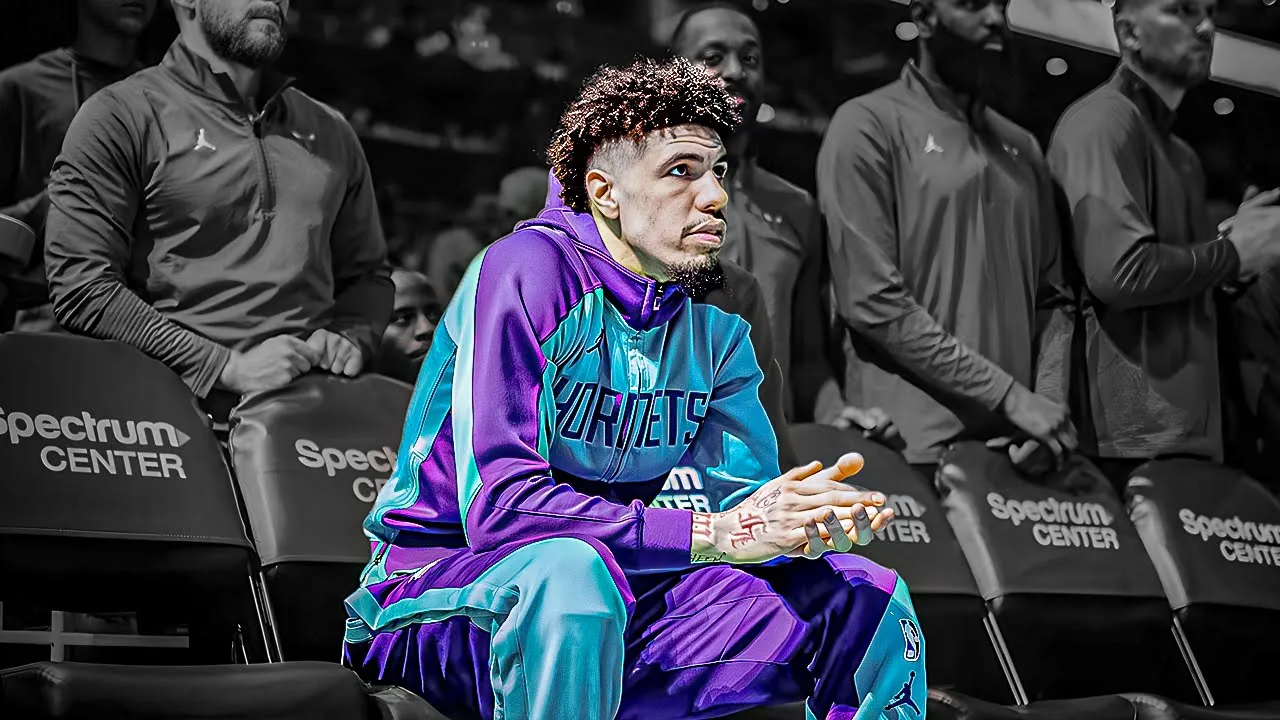
LaMelo Ball is the fan favorite—number one in fan voting- yet, he’s missing from the All-Star game. obviously the fans had lamelo ball number one who's having a terrific year and the players had him number three the media had him number seven and he doesn't make the uh the cut The NBA keeps switching up the All-Star format, all in a desperate bid to boost ratings. But they keep missing the point.
And the truth is, even if you’re not a die-hard LaMelo fan, you can’t help but notice something’s off. But this whole setup dates back to that 2016 controversy that flipped the fan vote system on its head. So, how did the guy who got the most love from fans and even some players end up sidelined?
Here's why LaMelo Ball isn’t an All-Star. LaMelo Ball made history. He topped the fan vote for All-Star starters.
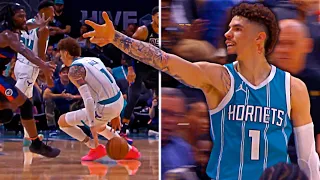
Yet, he wasn’t picked for the game. The league is desperate for ratings but they keep refusing to let the people see who they want to see and plays like this. Fans love LaMelo’s flashy handles and killer passes and just his street-style football.
This even made Michael Jordan come out to say that Lamelo has exceeded everyone’s expectations already. We finna see Lamelo Ball. That’s not Lamelo.
But it’s Michael Jordan. Michael Jordan? Can i get a pic?
Michael Jordan where Lamelo at? Michael! So, why isn’t he in the All-Star Game?
It’s a crazy scene. The league says it’s about balance so they mix in votes from players and media. But that just muddies the water.
Rather than let the fans see who they want, they get a roster filled with names the media favors. And obviously, the media has its own agenda. They love drama and controversy and don’t always pick the best.
They lean towards the already established or hyped players. But deep down, every true NBA fan knows LaMelo is a game-changer. I mean this guy is in contention for the clutch player of the year.
You see, this isn’t just a numbers game. It’s a clash of opinions and in the end the media and players win. But there's a big problem.
What’s the point of fan voting if the final cut ignores it? Maybe the league is scared of upsetting the status quo. They may fear that the fans are too wild in their choices.
But on this one, the NBA dropped the ball on fan engagement. Let me explain. LaMelo Ball dominated the fan vote, coming in at No.
1 among East guards. His fellow players ranked him third—right behind Donovan Mitchell and Jaylen Brunson. Then the media further pushed him down to seventh.
The NBA uses a weighted system: 50% of the vote comes from fans, 25% from players, and 25% from the media. That mix is supposed to balance out the hype with a bit of expert insight. But apparently this doesn't apply to LaMelo.
It shows a clear bias. The media seems to favor names that fit their narrative. They love to push the stories of players who fit the mold of what they think an All-Star should be.
Now, as wild as this is, it's not the first time it's happening. We witnessed something like this back in 2016. Back then, there was a massive international push for Zaza Pachulia that forced the league to change how votes were counted.
Fast forward to today, and you see that same skepticism creeping in. Coaches, whose votes are kept secret, have always been wary of LaMelo’s flashy style and he’s showboat personality doesn’t help either. no one in practice could guard me so it's really nothing we can put the camera on him too just put the camera on him that man right there that's the man who can't guard me turn it left I'll take his ankles every day go one more see the boy in the hoodie he hiding for a reason.
They worry he’s more about the show than about winning. And the media? They love drama.
They love to spin stories that make it seem like LaMelo’s game is just a circus act, even though his numbers prove otherwise. I mean, we saw this guy torch teams like the Celtics, Trae Young’s Hawks and what’s with this shot. When you put it all together, it feels like the system is rigged against him.
It’s like the league doesn’t trust what the fans are saying. They think, “Nah, he’s not as good as the guys we picked. ” And that’s a huge problem.
It undermines the very idea of fan engagement. And in today’s game, where social media is king and every fan’s voice can be heard, that's just a bad idea. This is a reminder that in the NBA, numbers and hype don’t always line up.
And when you see that happen, you have to ask: Who or what really gets to decide what makes an All-Star? He already has the popularity so what's left? The numbers?
When you break down LaMelo Ball’s numbers, the case for his All-Star inclusion is crystal clear. This guy is averaging over 28 points per game, which puts him right up there with the league’s top scorers. Not only that, but he dishes out around seven assists and pulls down five rebounds on average every night.
These numbers aren’t just impressive on their own—they actually beat the stats of many players who are currently considered reserves. But here’s where things get tricky: The Charlotte Hornets, despite LaMelo’s outstanding plays, are struggling to win games. Their record is pretty dismal right now which feeds into the narrative that his numbers are “empty.
” Now, contrast that with the Cleveland Cavaliers. When a team is winning, even players with average numbers can shine. The Cavs managed to snag three All-Star selections simply because they are winning.
It’s a double standard that really highlights a major flaw in the way All-Star selections are sometimes made. When you have a team like the Hornets that’s not racking up wins, every great performance from LaMelo gets painted as an outlier or even as a product of bad teammates. Meanwhile, on a winning team, players get the benefit of the doubt, and their numbers are seen as proof of their value.
But how can LaMelo’s talent be denied with what he's doing? This guy destroyed Luka Doncic and Kyrie Irving at the peak of their powers. He ended that game with a 30-point triple double.
His ability to create space, make smart passes, and score from all angles is something every basketball fan can appreciate. His stat line is proof that he’s one of the best in the league. Yet, if you look at other teams, you’ll see that players with similar or even lesser numbers get rewarded with All-Star nods simply because their teams are successful.
The real issue here is not LaMelo’s talent—it’s the team dynamics. A winning record makes a player's resume more outstanding. The Hornets’ struggles have turned what should be a clear statistical case into a debate about the context in which those numbers were produced.
When your team is beating opponents consistently, every assist, every rebound, every shot makes a statement. But on a team that’s losing, even the most dazzling stats can be dismissed as a fluke or as an artifact of a poor system. Yet, LaMelo Ball is putting up numbers that would demand attention on any other team.
This double standard begs the question: if the Cavs can have average numbers and still get multiple All-Star selections because they win, does that mean the All-star selections are about team success? Why should putting up all-star performances like LaMelo, be left out just because his team isn’t winning? Does this mean the current All-Star selection process is unfair?
Or is this just another example of how team success can determine how a player gets ranked? At the end of the day, LaMelo Ball’s All-Star snub isn’t just about him. It's a glaring example of how the NBA’s selection process can overlook true individual brilliance.
Look at it: here we have a guy averaging over 28 points, seven assists, and five rebounds per game—stats that clearly rank him among the league’s elite. Yet, he isn’t making the All-Star game. The weighted voting system, which splits the vote 50% to fans, 25% to players, and 25% to the media, has skewed the outcome.
The media, favoring traditional, more “serious” players, pushed him down to a lower spot. When you combine that with the fact that coaches—whose votes remain hidden—have long been skeptical of his flashy style, it all becomes clear. This snub isn’t just an isolated incident; it’s a symptom of a larger problem in how player value is measured against team success.
Take Cleveland for example. Their winning record helped secure three All-Star selections, even if some of the players didn’t put up superstar numbers. Then we have the Hornets who couldn't even get one player in even with LaMelo's insane numbers.
When you see a guy dropping 28-plus points, dishing out seven assists, and grabbing five rebounds, it should speak for itself. His numbers don’t lie. But then, this issue isn’t just about statistics; it’s about the message it sends to fans and players alike.
If the most popular player among fans is left off the roster, what does that say about the league’s commitment to its own audience? The fact that LaMelo is the fan favorite, yet gets sidelined because of media bias and a secretive coach vote, creates a disconnect. This might explain why the NBA ratings are so low.
It means there's a mismatch between what the fans want to see and the final product on TV. The weighted voting system was introduced to balance out the extremes, but in this case, it has reinforced a double standard. Coaches and media tend to favor players who fit a more traditional mold or who play on winning teams.
Meanwhile, the all-star performing players, don't make the cut. LaMelo Ball is a perfect example of this. His individual performance is off the charts, yet the overall poor team record of the Hornets casts a shadow over his achievements.
So, is it right to overlook a player’s brilliance simply because his team isn’t racking up wins? Should the All-Star roster be a true reflection of fan passion and individual talent, or should it be reserved only for players on winning teams? Let us know what you think in the comments below.
And if you enjoyed this video then watch how Michael Jordan was totally right about Drfting LaMelo Ball next.