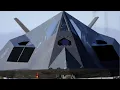
On the night of March 27, 1999, a bizarre-looking, black-painted airplane known by its call sign Vega-31 and nicknamed 'Something Wicked,' sliced through the Serbian night sky. Having just delivered its powerful radar-guided payload on strategic targets around Belgrade, Lieutenant Colonel Dale Zelko piloted the Lockheed F-117— the world's first operational stealth aircraft. Designed to be invisible to radar and silent in operation, Zelko flew in what should have been undetectable peace.
Suddenly, the tranquility of the cockpit shattered as the radar warning receiver blared urgently, signaling the approach of two missiles. As the flames grew and the deafening high-pitched whine of the missiles intensified, Zelko, with his heart in his throat, realized that the impossible had happened. He and his silent airframe had been seen.
On this night, the Lieutenant Colonel and the United States Air Force would come to understand that the enemy, led by an enigmatic commander, possessed something perhaps more crucial than technology: strategy. The relentless pursuit by Soviet surface-to-air missiles against American bombers that took so many lives and resources in the Vietnam War painted a stark reality: the future of aerial combat demanded invisibility. In 1976, DARPA entrusted Lockheed with the Have Blue project, a stealth technology demonstrator, and its success led to increased funding for stealth advancements, culminating in DARPA awarding the company a contract for a full-scale aircraft.
While global powers focused on air dominance fighters, Lockheed's Skunk Works, in partnership with the U. S. Air Force under the classified codename Senior Trend, embarked on the unprecedented task of creating a fully functional stealth aircraft capable of eluding radar detection.
A mere 31 months post-contract, the prototype took its inaugural flight at Groom Lake, Nevada, in June 1981, achieving initial operational capability by 1983. For over a decade, the true nature of the Senior Trend initiative was known to only a select few within the Pentagon. In May 1989, a low-quality image of the model was featured in a magazine, alluding to its creation.
But its true debut was yet to come. In April 1990, a diverse crowd of government officials, journalists, and civilians convened at Nellis Air Force Base, Nevada, for a landmark event. Under the bright Nevada sun, the landing of two F-117 Nighthawk aircraft confirmed long-standing rumors: the U.
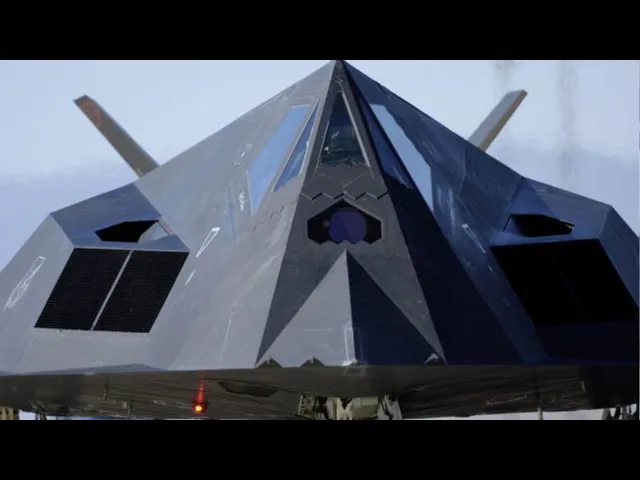
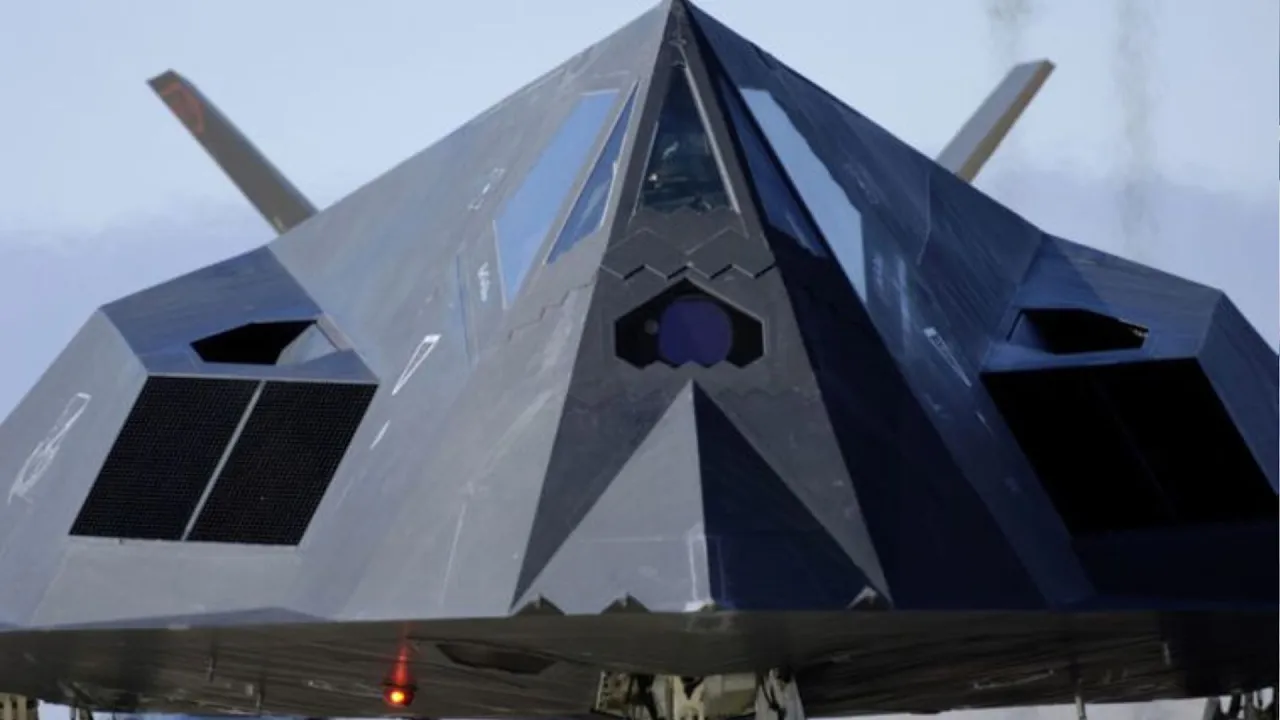
S. had mastered stealth flight. The Lockheed F-117 is a single-seat, subsonic twin-engine attack aircraft with a groundbreaking design that fundamentally altered how aircraft could evade detection.
Its distinctive angular shape, comprising flat panels and sharp edges, was meticulously engineered to scatter radar waves away from the source, minimizing the radar cross-section visible to enemy defenses. This geometric precision in design meant that instead of reflecting radar waves back to their origin— revealing its location—the F-117 redirected them, significantly reducing its detectability. These angular panels are coated with radar-absorbent materials, which soak up and dissipate radar energy.
This is crucial for mitigating the radar signature that cannot be eliminated through shape alone. The F-117’s design also focused on reducing its infrared signature and noise levels, embedding its engines deep within the fuselage to both shield them from radar and diminish heat emissions detectable by infrared sensors. Through these combined features, the F-117 Nighthawk embodied a true leap forward in aircraft technology, especially as, by its debut, the aircraft had been operational for seven years.
Lockheed produced 64 F-117s—59 production models and five prototypes for various testing endeavors. As the Cold War drew to a close, it seemed that the billions invested in the stealth fighter might have been in vain. However, the Nighthawk first saw action in December 1989 during Operation Just Cause, targeting the Panamanian Defense Forces' barracks to help oust dictator Manuel Noriega and restore democratic governance.
This mission, though successful, left unresolved questions about the aircraft's effectiveness against a more challenging adversary. Over a year later, the Nighthawk was selected for critical early missions in the Gulf War against Iraqi positions. With its reputation on the line, there were apprehensions about its performance.
On the night of January 16, 1991, ten Nighthawk pilots—known within Air Force circles as "Bandits"—evaded Iraqi radar to time their arrival over Baghdad perfectly with the start of the air war at 3:00am. Each F-117 carried internally housed 2,000-pound GBU-27 laser-guided bombs within a bay coated in radar-absorbent material to minimize detection, though opening these bay doors momentarily increased radar visibility. The mission exceeded expectations.
On the Gulf War's opening night, the F-117s were the only coalition jets to strike targets within Baghdad undetected. Throughout the conflict, they executed over a thousand sorties and thousands of tons of ordnance, targeting crucial communication hubs and research, development, and storage sites for nuclear and chemical weapons. Despite its designation as a "Stealth Fighter," the F-117 quickly became synonymous with precise attack and bombing operations.
As the 1990s drew to a close, the Nighthawk was about to face its most severe test yet. On the night of March 27, 1999, four F-117 Nighthawks lifted off from Aviano Air Base in northern Italy. Vega 31, known as 'Something Wicked,' was piloted by Lieutenant Colonel Dale Zelko, a veteran of Operation Desert Storm.
At the time, the United States Air Force was just three days into Operation Allied Force, a NATO campaign aimed at ceasing the ethnic cleansing in Kosovo perpetrated by Slobodan Milosevic's regime. The mission sought to halt violence by targeting Yugoslavia's military and strategic economic infrastructure through widespread airstrikes. Among the aircraft participating, the F-117 Nighthawks were tasked with delivering their payloads on the highest value targets, leveraging their advanced stealth capabilities.
Seeking to elude enemy detection, these stealth aircraft flew at higher altitudes, typically accompanied by EA-6B Prowlers tasked with detecting, jamming, and neutralizing enemy radars. However, on that evening, inclement weather grounded the Prowlers. The Nighthawks, lacking onboard radar and having retracted its radar warning receiver for the mission, were essentially flying blind.
Despite these risks, NATO's trust in the stealth fighters' design to avoid radar detection was unwavering, and 'Something Wicked' along with its squadron proceeded with the mission. Unbeknownst to them, their operational security had been breached. The world's first stealth aircraft were under surveillance.
Despite possessing dated S-75 and S-125 missile systems from the 1950s and 1960s, dismissed by NATO as minimal threats, Yugoslavia would compensate for the lack of technology with a clever strategy. At the helm of the 3rd battery of the 250th Missile Brigade of the Yugoslavian army was Colonel Zoltán Dani, a key figure in orchestrating the air defense strategy during the war. He was a highly motivated commander who studied earlier Western air-defense suppression tactics, as well as every bit of information available on stealth technology, with the ultimate objective of learning how to bring down an American aircraft.
He believed aircraft could be less visible but never, ever invisible. Dani's mastery turned the S-125 "Neva" system, typically stationary, into a mobile hunter. Through intensive training, his unit could relocate these missiles in just 90 minutes, nearly half the usual time, enabling swift ambush tactics along suspected flight paths.
Implementing a unique "20-second rule" for radar activation minimized the risk of detection before relocating. Dani used decoys, including fake missile sites and radar signals from old MiG fighters, to trick NATO forces and protect his real missile units from being targeted. This strategy of constant movement and deception meant not a single Serbian missile unit was destroyed in the entirety of the war.
But more than that, Colonel Dani also discovered and exploited a weakness in Western technology. After experimenting with the Soviet-made P-18 early warning radar system, he discovered that when tuned down to the lowest possible bandwidth, so low that NATOs equipment was not even calibrated to consider it for radar-warning purposes, it was capable of identifying an F-117 flying within 15 miles. Infiltrating NATO communications provided Dani and his team with real-time operational insights.
Coupled with civilian spy reports from Italy, they meticulously mapped NATO's routines, discovering predictable flight patterns of the F-117s. Armed with this intelligence, on the night of March 27, Dani awaited the moment one of them would become most vulnerable—opening its bomb bay doors. After sunset, when the skies had obscured, Colonel Dani and his unit set up the S-125 missile system in the way of the F-117's suspected route.
Suddenly, the battery's P-18 radar detected Something Wicked and the three other Nighthawks, but when the high-band targeting radar activated for Dani's signature twenty-second burst, it failed to acquire a target. That night, however, Colonel Dani was alerted by his spies in Italy that the radar-jamming Prowlers were grounded due to the weather. Willing to take greater risks, the unit decided to try again.
Instead of relocating, they performed a second reactivation of the targeting radar, but it still did not produce results. Dani knew he was close, finally, on the third try, barely after Lieutenant Colonel Dale Zelko opened his bomb-bay doors to release two Paveway laser-guided bombs on targets near the Yugoslav capital of Belgrade, causing its radar cross-section to briefly bloom, the S-125M battery locked onto Something Wicked. Only eight miles away, seizing the moment, at 8:15pm, the Colonel and his unit launched several radar-guided V-601M missiles.
Now, all they had to do was wait. In an instant, pilot Zelko saw two bright trails piercing through the clouds beneath him. Propelled at three-and-a-half times the speed of sound by a solid-fuel rocket motor, the sight was almost unbelievable.
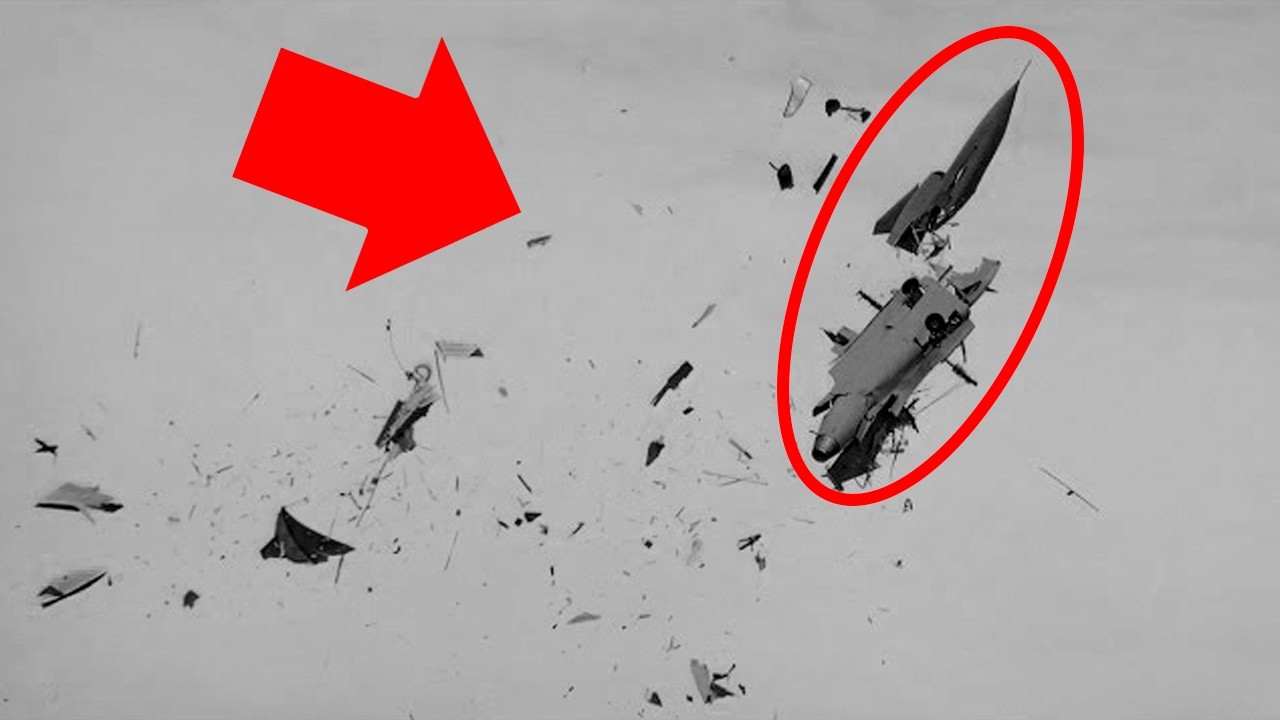
As they closed in on the Nighthawk, one of the nearly 20-foot-long missiles skimmed dangerously close, violently jarring the Nighthawk with its turbulence. But the second missile was much more devastatingly accurate. With its detonation, a 154-pound proximity-fused warhead shook the skies by spraying 4,500 metal fragments in the air, an explosion so large it was seen from a KC-135 Stratotanker flying over Bosnia.
The massive blast caught Zelko's jet, sending it tumbling through the air. According to Zelko: [QUOTE] "It went from extreme violence to instant calm like somebody flipped a switch. " Plummeting toward the earth, Zelko grappled with the overwhelming forces that nearly pinned him inside the cockpit, struggling desperately to activate the ejection mechanism and escape just moments before impact.
Once the pilot ejected out of the doomed jet and his parachute opened, Zelko quickly used his survival radio for a mayday call. Despite his training, he contacted the nearby KC-135, knowing his high altitude could extend the signal's reach. Anticipating capture, he aimed to report his safe condition immediately.
Following a successful landing, Zelko hid in an irrigation ditch and only narrowly escaped capture by Serbian search parties within only a few hundred feet of his position. Thankfully, an Air Force combat search and rescue team saved him the following morning. After striking the ground at low speeds and in an inverted position, the unpiloted F-117 landed in enemy territory, mostly intact.
Still, the United States did not attempt to destroy the wreckage, as it was based on technology well over 20 years old. This decision, however, stunned analysts and pilots alike. Especially due to Serbia's connections to Russia.
As expected, the model was sent piece by piece to China and Russia to be reverse-engineered. For his part, Colonel Dani became a national hero, and the incident was a great piece of propaganda for the Milosevic regime. A photo of the shot-down stealth aircraft was used in posters that mockingly stated: [QUOTE] "Sorry, we didn't know it was invisible.
" This episode served as a humbling lesson for the U. S. Air Force, revealing the vulnerability of even the most advanced stealth aircraft to what was deemed obsolete technology.
Despite the 1999 downing exposing faults in stealth technology, the F-117 Nighthawk continued to serve in various capacities into the new millennium. It was deployed to Afghanistan in response to the September 11 terrorist attacks, conducting precision strikes against Taliban and Al-Qaeda targets. The Nighthawk also played a role in the early stages of the Iraq War, targeting key leadership and military installations.
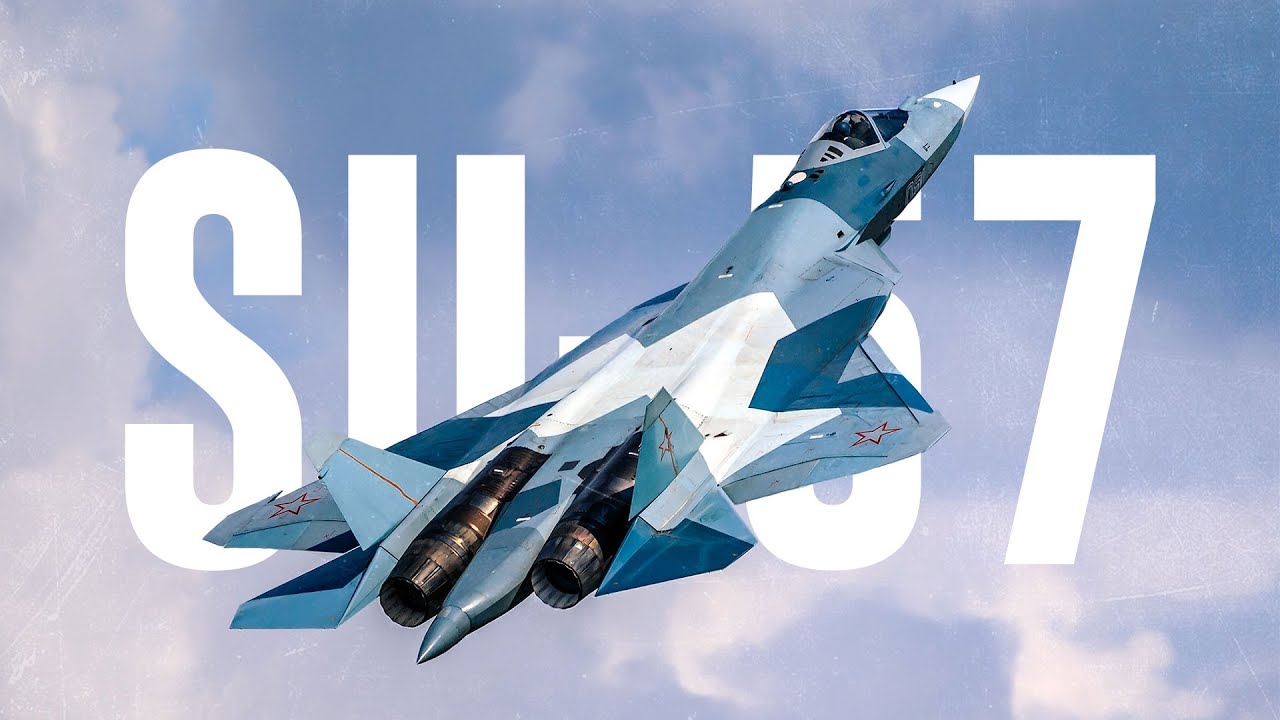
The F-117 laid the groundwork for all modern stealth aircraft, including the B-2 Spirit bomber, the fifth-generation F-22 Raptor fighter, and the multirole F-35 Lightning II. Similarly, nations like China and Russia have developed their own stealth aircraft, the Chengdu J-20 and the Sukhoi Su-57, incorporating lessons likely gleaned from the F-117's innovations. Officially retired from the United States Air Force in 2008, the F-117's operational flight typically ceases.
Yet, remarkably, sixteen years later, F-117s are still spotted in the skies—not only serving in training as adversary aircraft and cruise missile surrogates but also supporting research, development, testing, and evaluation activities related to next-generation defense programs. While the full scope of the F-117's current activities remains under wraps, and the exact number of airworthy aircraft is uncertain, it's likely that several remain in service. Decades after its introduction, the F-117 Nighthawk, with its angular design and striking black paint, retains a futuristic allure.
Though sightings are rare, the ongoing use of the F-117 in various capacities is a powerful reminder of its enduring significance and exceptional capabilities.