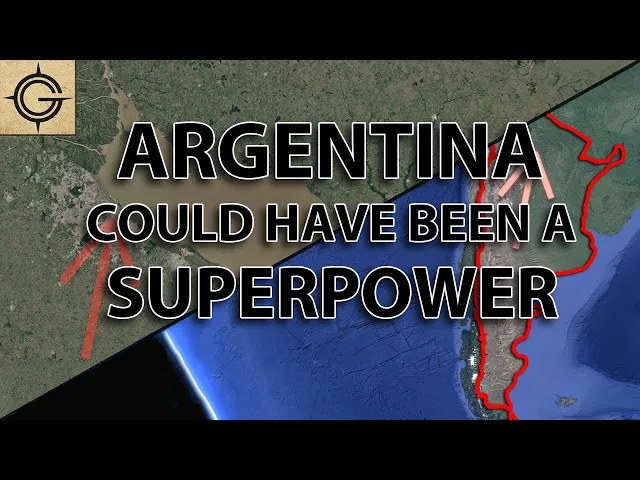
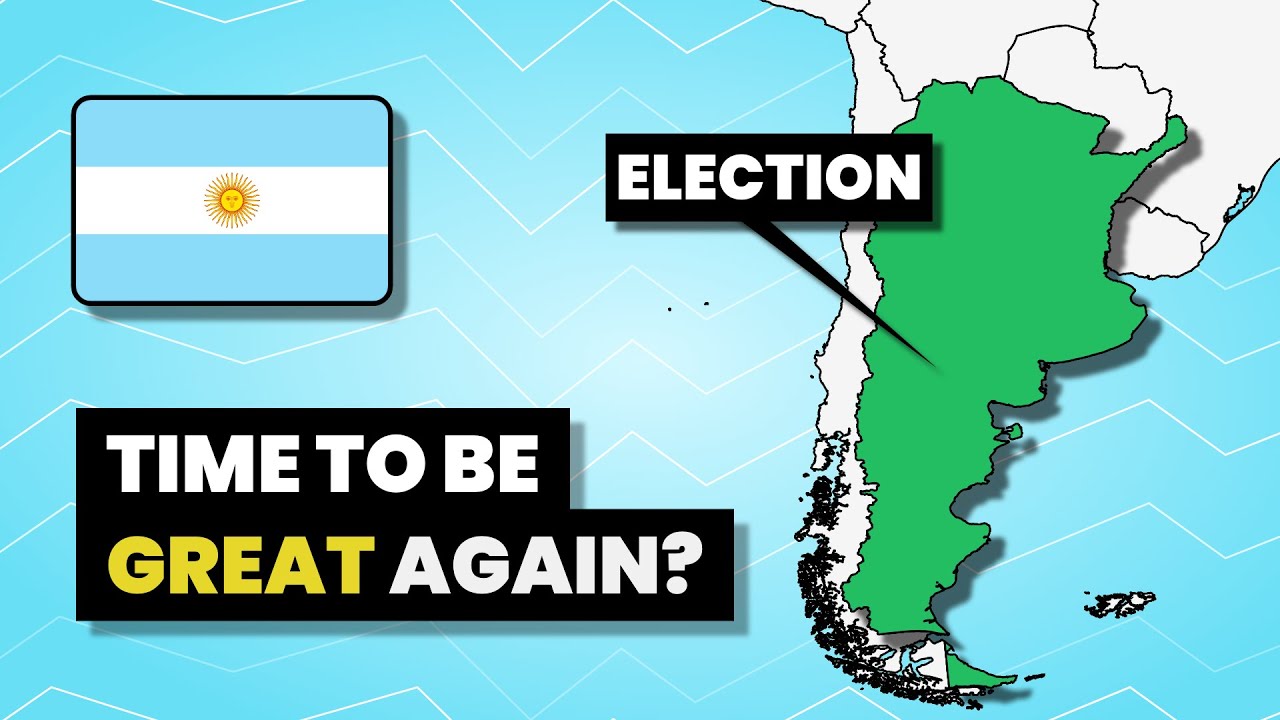
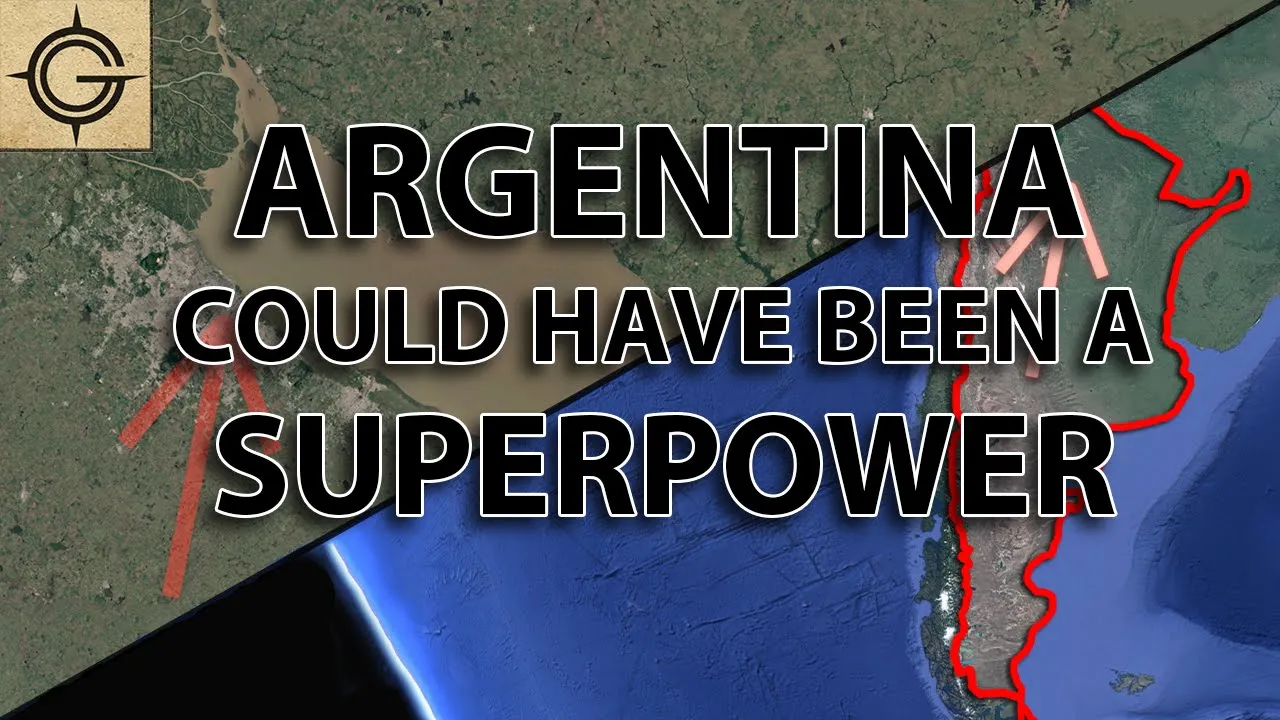
argentina should be one of the most powerful countries in the world its geography set it up for success for starters it has some of the best agricultural land on earth this is the pompous region it encompasses the southern tip of brazil and most of uruguay but the majority of the pompous is in argentina the land is flat the soil is fertile precipitation is enough to grow crops and it's consistent throughout the year and the year-round temperatures are mild averaging at about 60 degrees fahrenheit or 16 degrees celsius altogether argentina has 32 and a half million
hectares of arable land placing it ninth in the world but much of argentina's land that isn't arable is still usable for producing food though most cattle grazing occurs in the fertile pastures of the pompas the red on this map is land use for livestock grazing most of this land is not suitable for growing crops because of inadequate rainfall but there is enough rainfall for cattle grazing at low densities but argentina has other geographic benefits besides just suitable land for agriculture the country is naturally protected from potential serious invaders to the west is the andes mountains
these mountains cover argentina's entire western border the tallest of which reach nearly 7 000 meters in elevation and sit directly west of argentina's heartland and capital buenos aires the tallest mountain outside of asia is located here this is aconcagua which sits at 6961 meters or 22 837 feet to the east argentina is protected by the atlantic ocean and to the north though to a lesser extent by multiple rivers and forest cover and argentina's geography just keeps getting better making it an even bigger surprise that it's not a thriving nation but first today's sponsor it's no
secret modern argentina is struggling otherwise i wouldn't be making this video in recent years argentina has been rocked by sky-high inflation for most of 2022 it's been about 60 first the united states 8.6 but in early july it suddenly jumped a further 20 overnight now inflation is a worldwide problem and unfortunately many of the solutions rely on government action which leaves citizens scrambling for solutions so if you're losing eight percent a year by keeping your money in the bank and most major institutions predict stock market returns below five percent for the next decade they won't
be keeping up either so what can you do to protect and grow your money right now you can look to new investments like one that's been used as an inflation hedge and portfolio diversifier for decades fine art this art is a physical object with a fixed price and its outperformed gold real estate and the s p 500 when inflation is over three percent which is why people have been investing in art like there's no tomorrow one of the heads of bank of america is even advising clients to invest in art and with masterworks you can
invest in art without spending millions or knowing anything about the art market they've delivered over 30 net returns to investors for the last three years running from selling paintings their members invested in of course past performance is no guarantee of future results but you can see why some of their offerings sell out in just a few hours there's a waitlist to start investing with masterworks but you can skip it by using my link in the description for vip access as stated before these rivers provide protection but they also provide fresh drinking water electricity and much
of these rivers are navigable connecting communities as well as giving inland communities access to the sea access to the ocean is kind of a big deal it gives a country easier and cheaper access to global markets and important sea resources such as fishing which argentina takes full advantage of its nearly 5 000 kilometer coastline give it quite a bit of ocean territory allowing the country to catch nearly 1 million tons of fish per year landlocked countries experience 6 percent less economic growth than non-landlocked countries there is not a single highly developed landlocked country as measured
by the human development index outside of europe european landlocked countries are kind of an exception to the rule because most have the benefit of being located next to or within other highly developed countries to trade with and nine of the 12 countries with the lowest human development index scores are landlocked argentina has numerous locations with ideal conditions for building year-round ports not all are natural harbors but the conditions are good enough for building artificial ones this is especially true of the rio de la plata which is shared with uruguay to the north with a maximum
width of 220 kilometers or 140 miles this is the widest river in the world if you consider it a river some say it's better described as an estuary gulf or a marginal sea bueno saidas sits on the rio de la plata's shores the city was originally founded as a port in 1580 its modern port is currently the fifth busiest port in south america argentina is also rich in minerals argentina is ranked third in the world in lithium reserves and fourth in production it's ranked ninth in the production of silver 17th in gold and seventh in
boron argentina is the largest producer of natural gas in south america and it's the 18th largest in the world in natural gas reserves it's ranked second in south america sitting only behind venezuela and it's ranked 32nd in the world in oil reserves it's ranked third in south america sitting only behind brazil as well as once again venezuela who actually has the most in the world and argentina is ranked 34th in the world all of these beneficial geographic features should have made argentina into a pretty powerful nation if not a superpower and at one time it
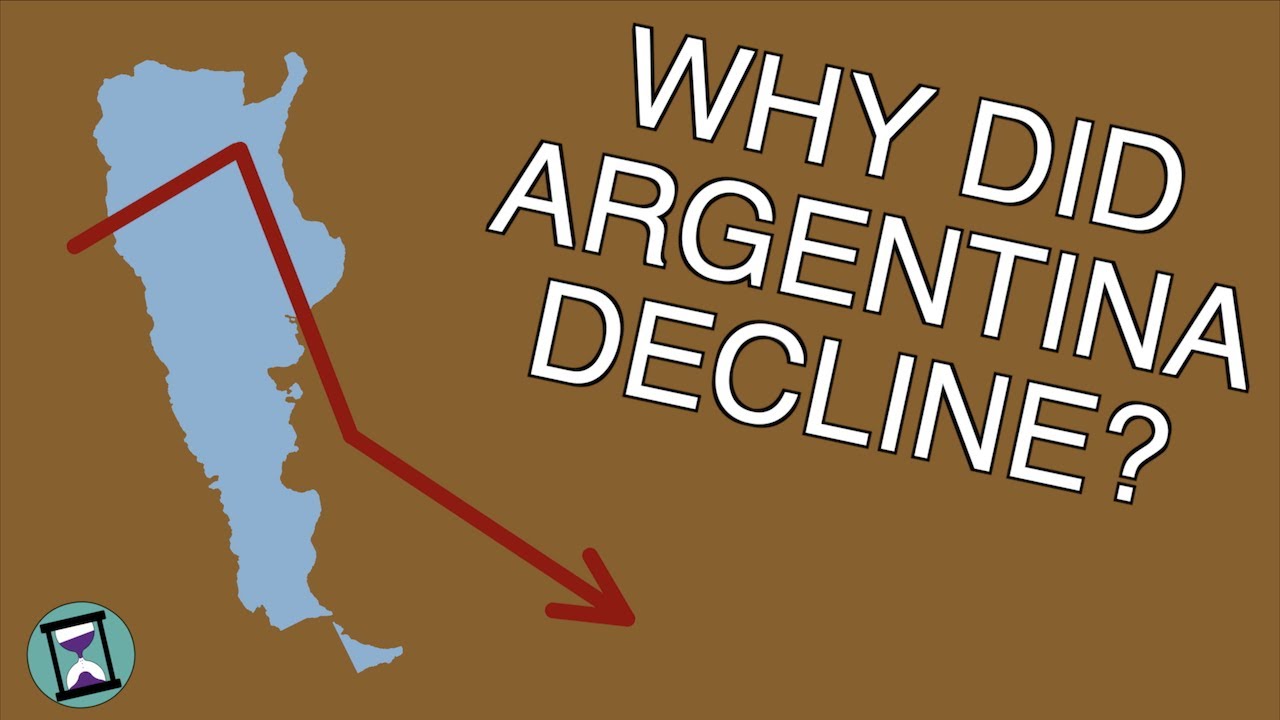
was looking like argentina may one day be in 1896 argentina's gdp per capita was actually higher than the united states in 1913 argentina had between the 7th and 10th highest gdp per capita in the world depending on the source you're looking at and it was richard the notable european countries such as germany italy france and its former colonizer spain but today it sits at 89th so what happened the reasons for argentina's decline are complex and widely debated but i'm going to do my best to summarize what are typically listed as the reasons for argentina's decline
when the spanish colonized much of the new world which included the land that now makes up modern day argentina the spanish took the land from the natives and gave it enlarged tracks to conquistadors and others that contributed to the colonization this land was then used to make a profit typically by farming these were called haciendas this land gave the owners more power and influence to acquire more land and the process continued this land and agricultural production that would eventually become part of the sovereign state of argentina was in the hands of a powerful few the
land was passed on and this situation survived independence and civil wars and argentina continued to grow its wealth largely by expanding its agriculture and exporting what it produced while at the same time the united states was becoming more and more industrialized argentina's land-owning elite had no motive to industrialize and they used their influence to create an economic policy which would continue to grow its agriculture industry it's been argued that this undiversified heavily export-based economy was destined to eventually result in argentina's decline in july of 1914 world war 1 began the war disrupted the international trade
and sent argentina like most countries into a recession it also halted the millions in foreign investment coming into the country that same year the panama canal was completed leading to less stops in argentina for ships heading to asia this also caused foreign investment to be diverted from argentina to the caribbean and asia after world war 1 ended in 1929 the great depression hit making matters worse as a result economic policy shifted from a heavy focus on exports to growing the domestic economy high tariffs were put in place to encourage industrialization and substitutions within argentina but
this was largely ineffective and gdp growth was slow the economy continued to suffer through world war ii a man named juan pedon was elected as president in 1946 paran promised higher wages and benefits for the working class he nationalized many industries rejected foreign assistance and investment and furthered import substitution policies pedon implemented many social programs that were beneficial to his citizens but the low growth economy couldn't afford them so more money was printed to pay for them and so inflation rose perron stayed in office until 1955 when he was overthrown and exiled as part of
a coup while most of the world enjoyed the post-world war ii boom argentina along with the rest of latin america experienced slow growth nevertheless pedron remained popular he was allowed back in the country in 1973 after an ally won the presidential election that president stepped down and perron won a new election and things got worse from there though slow the economy had grown over the decades following world war ii but between 1975 and 1990 gdp per capita fell by more than 20 percent erasing a large chunk of that growth and inflation averaged 300 percent per
year the 1970s energy crisis the collapse of the bretton woods system the death of perron less than a year after he was elected and the political chaos that followed are all reasons for the decline during this period foreign investment dwindled and argentina went deep into debt argentina actually had a short period of strong growth before in 1998 falling into what is called the argentine great depression which was primarily caused by external shocks as well growth resumed in the following years and the future looked bright until things took a downturn once again as stated earlier in
the video in 2022 inflation is high the economy was already unstable and the government was deep in debt this combined with a couple major events outside of argentina's control has forced the government to print money to pay for social programs now with all of this being said some argue that despite argentina's gdp per capita being so high at its peak it never really declined because it wasn't doing that well to begin with let's look at some other statistics only 63 percent of the country's citizens were literate in 1914 and that number was even lower if
you take out immigrants by comparison just over 90 percent of the u.s population was literate in 1910 other indicators of wealth such as infant mortality rate and life expectancy were also below what you would expect for a wealthy country though not impossible at this point it's unlikely argentina will ever become a superpower that ship has probably sailed too many other nations are well out ahead in wealth influence population and military might now i know i just spent a large chunk of the video talking about argentina's failures but compared to other latin american countries it actually
isn't doing that bad only three have a higher gdp per capita even after all its ups and downs its physical geography has remained the same which has provided it a safety net and allowed it to keep bouncing back and if we look at larger periods of time argentina's wealth is trending upwards if i'm being optimistic life in argentina will continue to improve over the long run even though at the moment the economy and the people of argentina are certainly suffering if you enjoyed this video please hit the like button and subscribe if you haven't already
thank you to all my patreon and youtube members for supporting the channel and thank you all for watching [Music] [Music] you