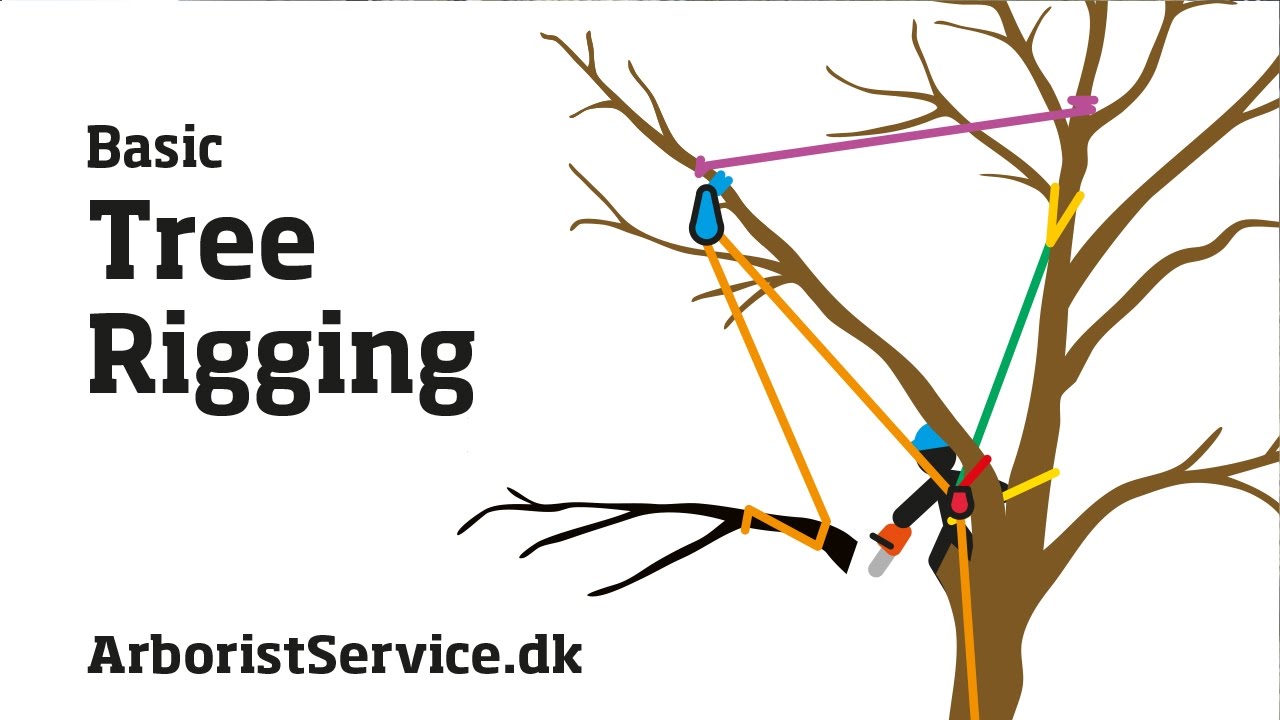
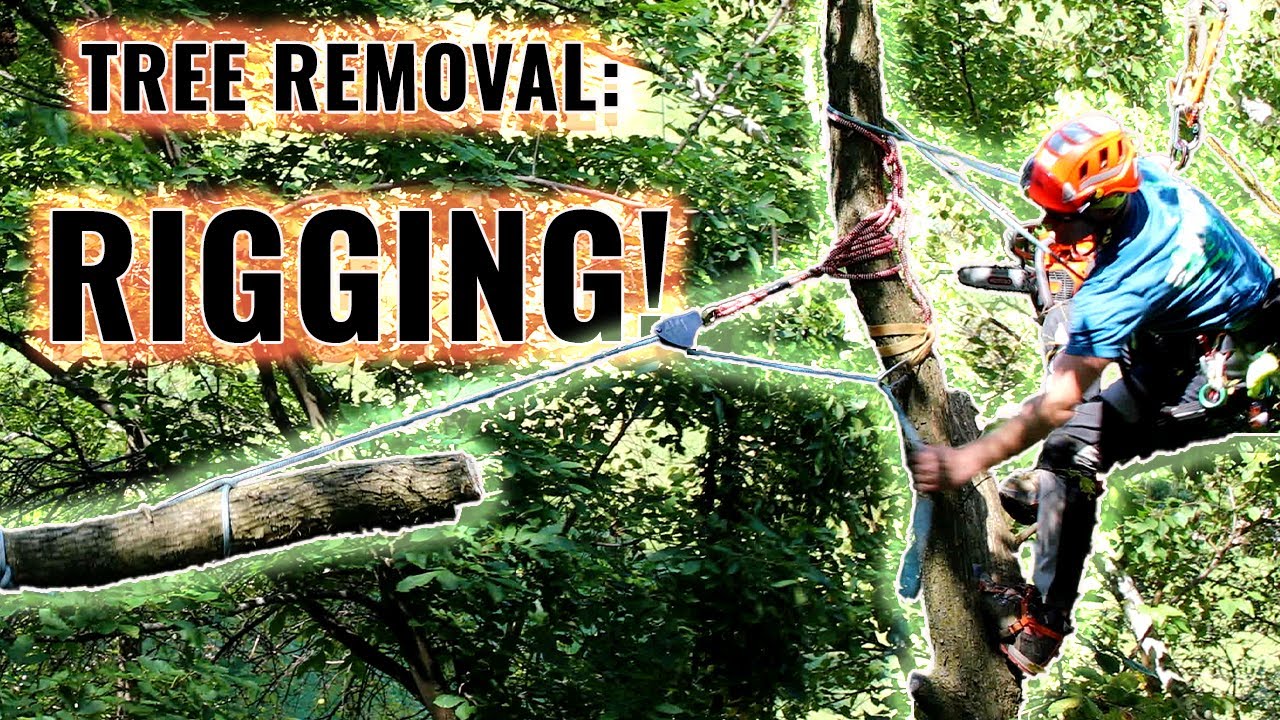
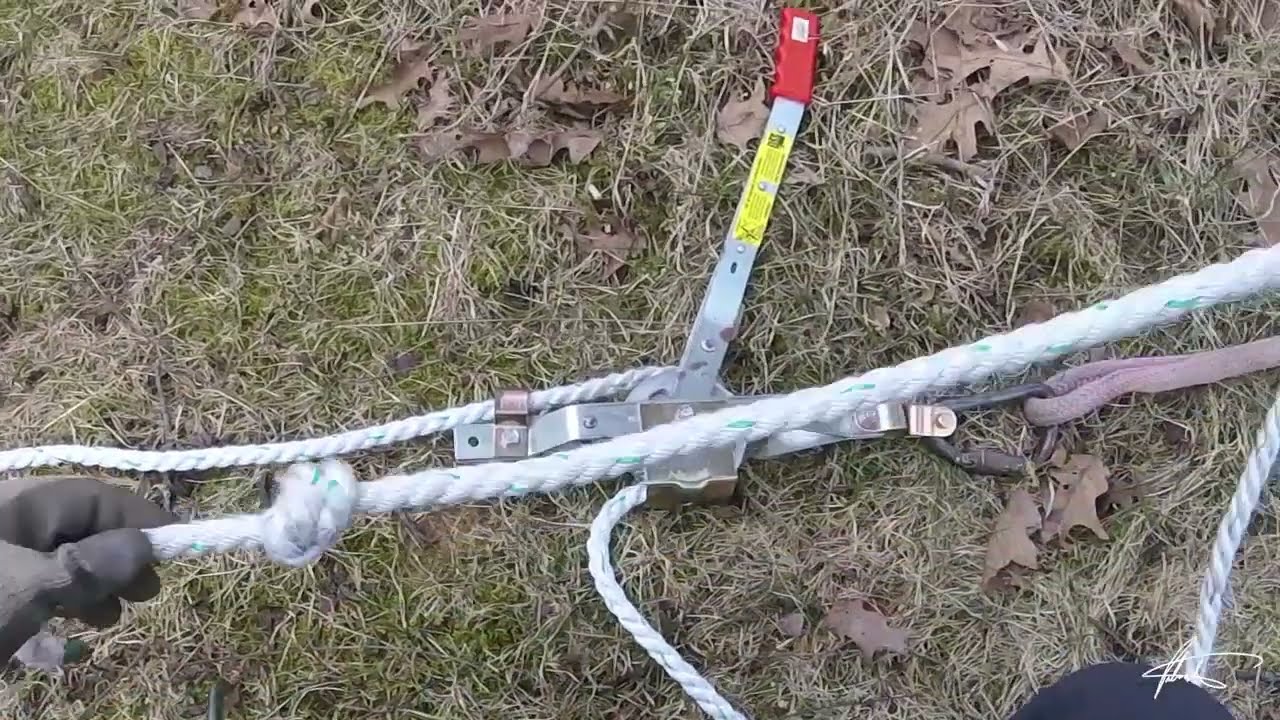
this module of the basic guide to tree fing is meant to cover the situation where it is felt that a bit more than wedges will be needed and the tree will need to be pulled down ropes can be designed to have little stretch in which case they are referred to as static ropes they can also be designed to have a lot of stretch in which case they are referred to as Dynamic ropes or for our purposes energy absorbing ropes stretchy ropes are best for tree rigging work where the Rope will have to catch a heavy limb that has just been cut from high in the tree because the rope's resistance increases gradually as it stretches such a rope will gradually slow and stop the fall as compared to a static rope that would experience a very powerful jerk when the line line goes talked the very high very brief impact load would be more likely to snap the Rope than if the load was accepted gradually here the term gradual is relative as the whole thing takes place in probably less than a quarter of a second when it comes to pulling down a tree however we want a rope that will stretch as little as possible the biggest reason is that we want to minimize the amount of work required to exert the necessary Force let's imagine that the force we need to generate in the Rope is 150 lb and that our rope extends 100 ft to the tree let's also imagine that we have one rope that will stretch 15% before it exerts that tension and another rope that will stretch only 2% before reaching that tension in the first case we will have to pull 15 ft of rope to us as its resist distance grows steadily to 150 lb in the second case we will only have to pull 2 fet of row to us as its resistance grows to 150 lb since work is the product of force times distance the stretchy rope will require us to do 7. 5 times as much work to reach the 150 lbs of tension another reason we want to use a static rope has to do with the amount of tension increase we can induce in the taut rope by pulling it sideways we will explain that in more detail later a third reason we don't want a stretchy rope has to do with the disaster situation where we've pulled the Rope enough to cause it to rupture this chart shows some of the stretching that common rope types can experience when pulled to 20 and 75% of their breaking strength let's imagine that we are using a nylon rope stretching 100 ft to our tree the 42% indicates that the Rope will stretch by 42 ft by the time it reaches 75% of its ultimate tensil strength we can extrapolate to estimate that the Rope will break when it is stretched by 50 ft let's further imagine that the Rope is 3/8 in nylon with a minimum breaking strength of 3,240 lb and a weight of 3. 6 lb for that 100t length with our bad luck we will have used a strong winch to get it to fail at 3,240 lbs of tension and the Rope will snap at the tree and begin to fly back at us as the calculations show the stored energy due to the stretch will have the Rope flying back back at us at around 800 mph over Mach 1 air resistance will bring that down some but the risk of injury will still be great in most cases you will want a minimum of50 ft of rope so we go to our local hardware store in search of a reasonably strong but inexpensive rope the pretty blue 3/8 in polypropylene rope catches our r i at just $10 for 100 ft length it has a working load limit of 244 lb but we can't pull that hard anyway we'll grab two bundles so we can tie them together to get our 150 ft length if we're lucky somewhere on the package it will warn us that doing so reduces the strength up to 50% this particular packaging also States never stand in line with rope under tension we head home with $20 worth of rope about the minimum we should spend to manually pull down a tree now let's say we want a better margin of safety and a slightly less stretchy rope if we're lucky our store carries half in double braid polyester rope its maximum load is way up to 1,900 lb unfortunately that comes at a cost of .
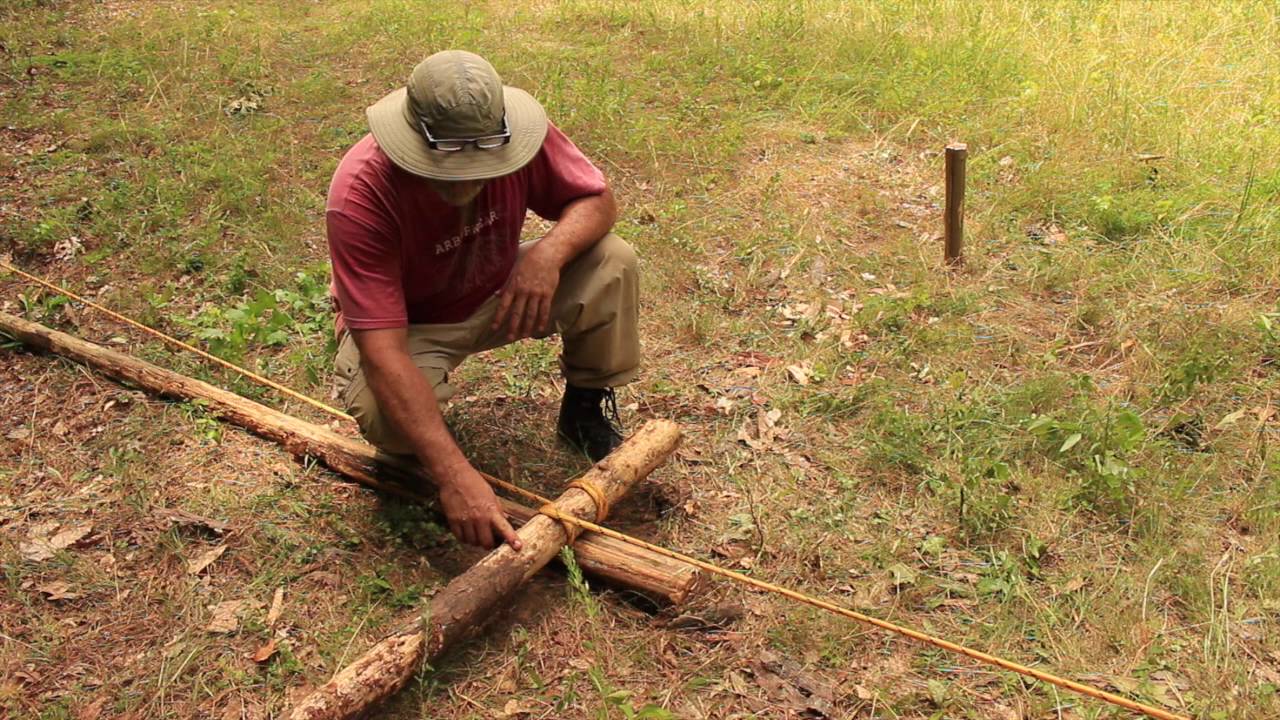
99 per foot so our 150 ft rope is now going to cost us nearly $300 this just started getting serious if we want to get a bit more serious we can go to the internet and order from an arborist supply house we should be able to find some good static rope there such as some 5/8 in HTP static from from Sterling rope that rope has a minimum breaking strength of 13,000 lb and stretches only 1. 8% when stretched to its working load limit of 1,300 lb at $250 it is a big improvement over the polyester finally we can get to pulling the video on back leaners contains some cautionary notes about how pulling ability was often overestimated and the force required was often underestimated anytime the pull required is more than what a standing person or several standing persons can provide a good strong Anchor Point is needed preferably the bottom of another tree assuming we have a second tree at a favorable location to be a good Anchor Point we want to to tie our rope around it as tightly as possible bracing against the side of the tree we wrap around and over the Rope pulling it back towards the tree which further shortens the length and we come around the tree again and we have to tie that off with only the bite to work with I usually find uh two hitches is sufficient our rope will now have as much tension as we can provide with a straight pull now it's time to consider doing some side pulling the side pull does two things it lets us significantly increase the tension in the pulling rope and it lets us adjust the direction of pull to be more in line with the direction we want we can actually calculate how much tension we can add with a secondary pull as a first step we have to determine spring constants for the stretchiness of the ropes we use hooks law f equals KX to determine K the spring constant for our first case let's assume we have a pretty strong nylon rope 5/8 in in diameter with a breaking strength of 9,350 lb nylon and polypropylene ropes are fairly stretchy on average they will stretch 20% when they are stressed to 20% of their braking strengths for a 100t rope X will be 20 ft and the force needed will be 20% of 9,300 50 or 1,870 lb since k equals F divided by X the spring constant for this particular rope will be approximately 93. 5 lb per foot if we consider a 5/8 in static rope we find that its spring constant is 333 lb per foot approximately 3 and 1/2 times stiffer assuming we can put 150 lbs of tension into our first rope and tie it around an anchor tree 100 ft away from the tree we wish to pull down next we can tie a rope to the middle of the first one and pull it sideways with the same 150 lbs of pull those of you who are really interested can stop the video and go through the math but the bottom line is that this side pull will add an additional 151.