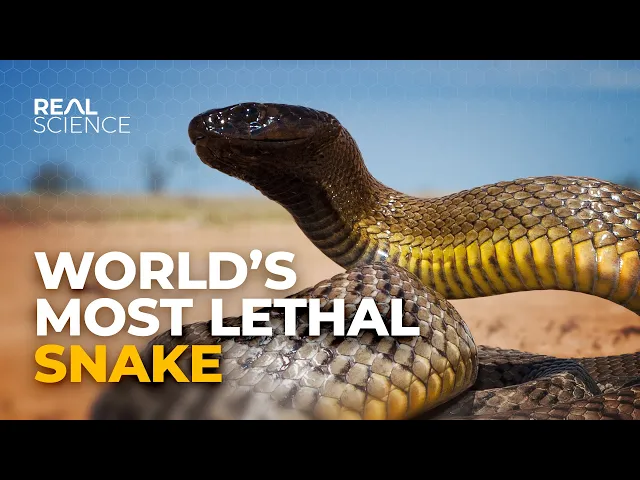
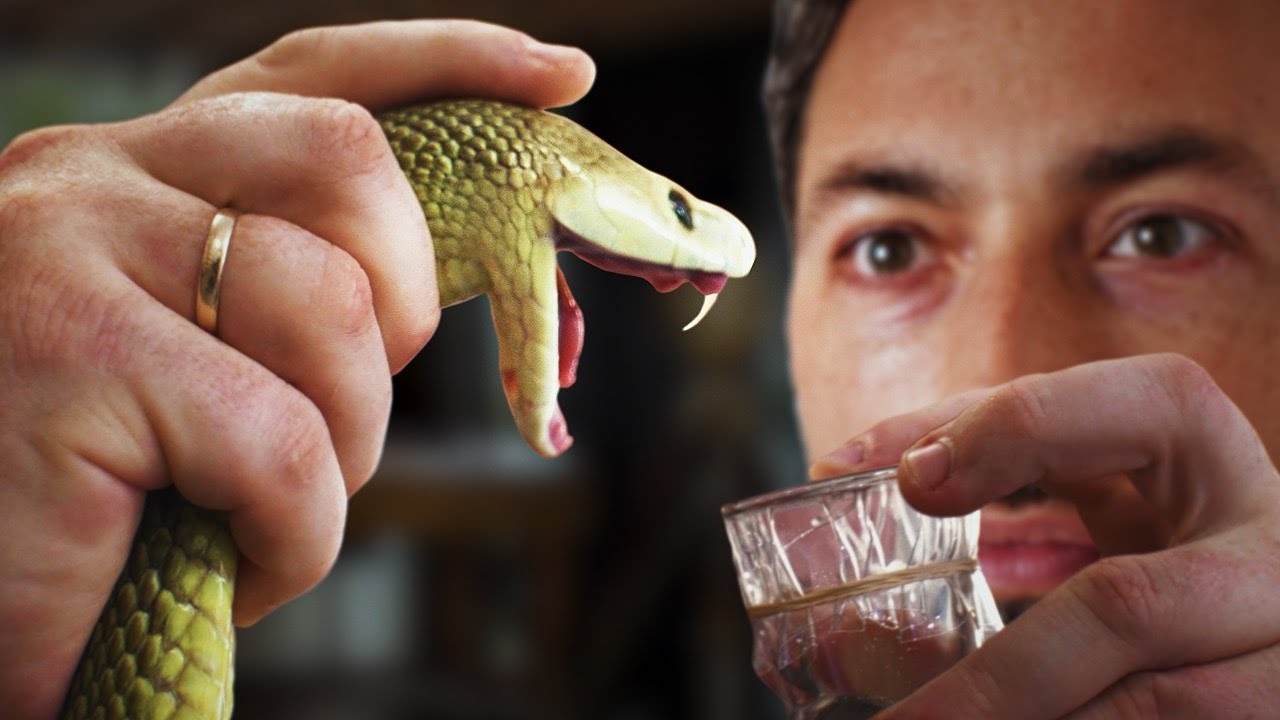
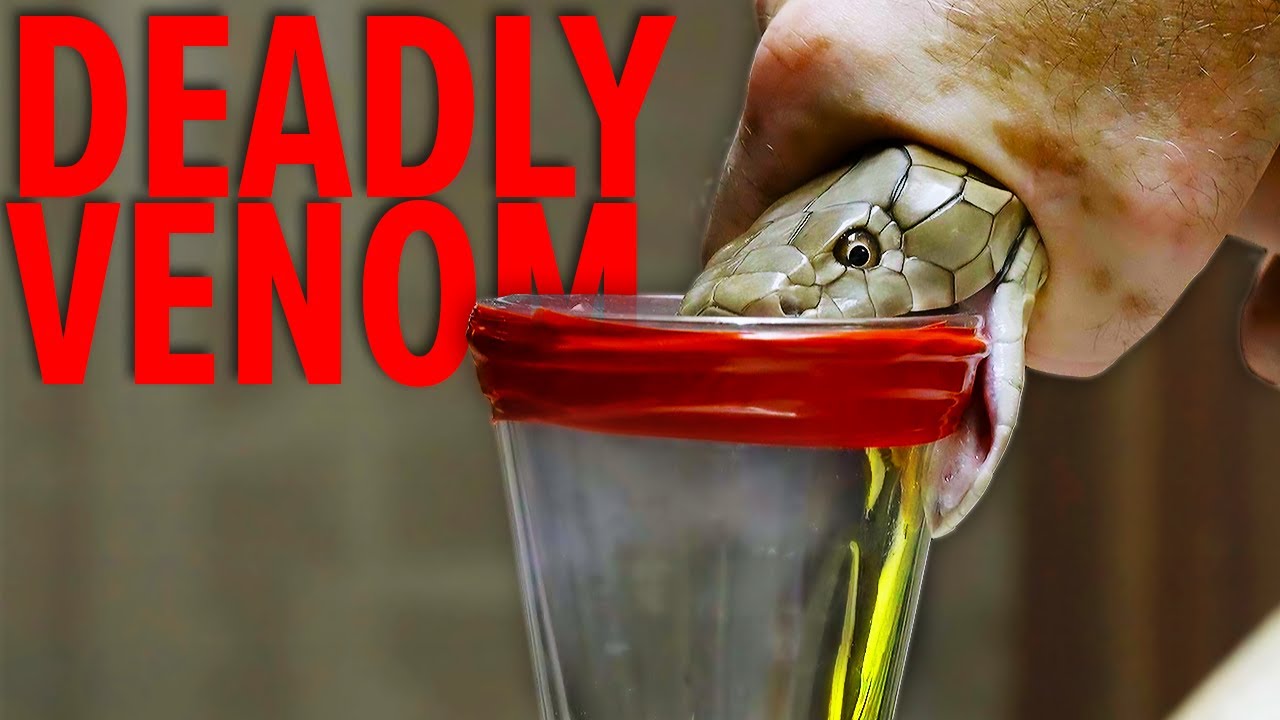
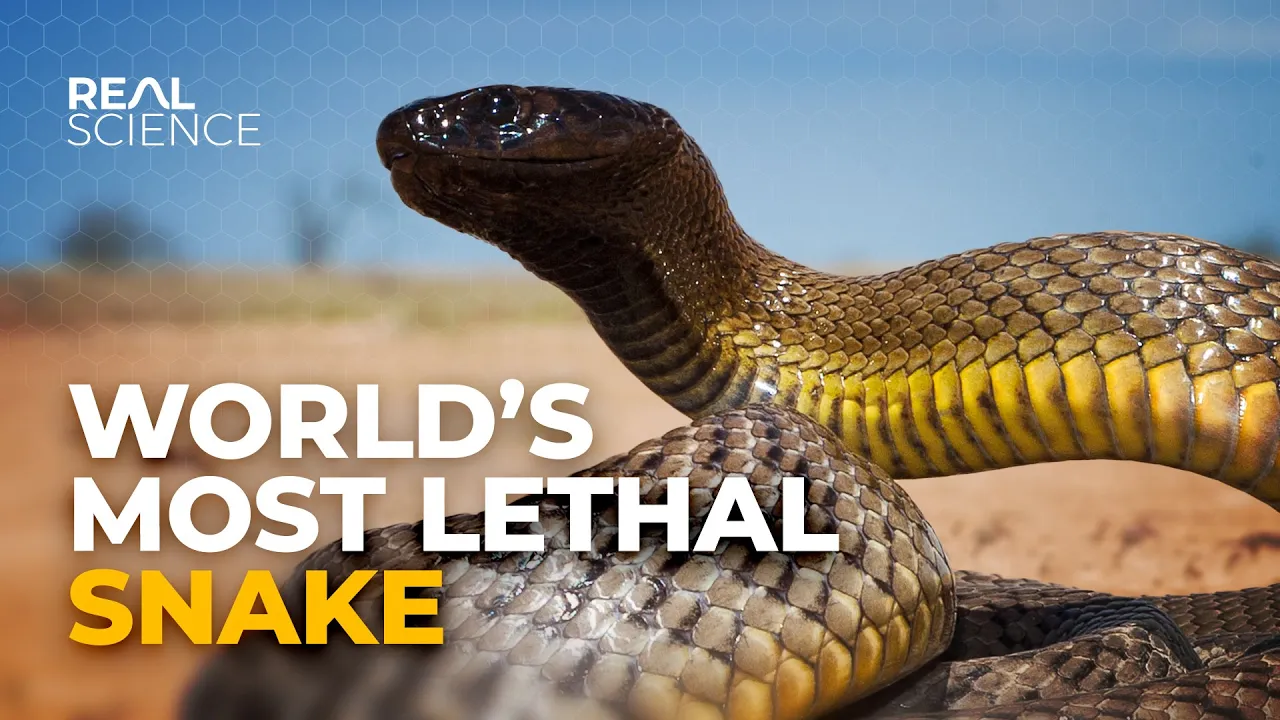
if you happen to be walking out in the Aid open Plains of Southwest Queensland Australia you might see the black head of a snake appearing out of a crack in the dry ground basking in the intense heat of the Australian sun while it might not look as immediately threatening as a cobra or a rattlesnake this is an animal you want to avoid at all costs it's the inland taipan the most venomous snake in the world according to to its lethality rating the ld50 its venom is about seven times more deadly than that of the hook
noosed sea snake around 23 times more potent than the Indian cobra and 72 times more deadly than the Venom of the king cobra one bite from the king cobra releases on average 420 mg of Venom enough to kill around 2600 mice but one bite from the inland taipan which only releases about 44 Mig of Venom on average could kill up to 220,000 mice and in some cases Inland taipans have been shown to inject over 110 mg of Venom in a single bite that's enough to kill half a million mice or over 100 humans even a
small bite from an inland taipan can cause permanent damage and if you're not given the taipan antivenom within 45 minutes you'll most likely bleed out from your wound your kidneys will shut down and your body will go into paralysis leading to respiratory failure and death before antivenom was readily available every bite from an inland taipan was fatal but why is it so lethal and how does it do so much damage to the human body and how did it evolve to become the most dangerous venom in the world to understand why the Taipan is so deadly
we first need to understand where Venom emerged in The evolutionary tree like so many hunting and feeding traits in animals Venom in snakes appeared due to dramatic changes in geography and habitat over millions of years it's not clear exactly when and how Venom appeared in snakes it could have either come from a single origin around 170 million years ago leading to toxicity in the Venom of many diverse reptile species or it could have evolved independently across multiple lineages so we might not know exactly when it evolved but it's generally understood why it evolved based on
fossil records it's been suggested that the first snakes caught and killed their prey by mechanical constriction like modern constrictors these early snakes had robust vertebrae and short but powerful muscles between the vertebrae allowing the spine to flex at multiple positions a snake constricts its prey by capturing it within several Loops in the spine and then applying pressure using the short distances between the vertebrae to create tight angles within the loops the prey's blood flow to vital organs the brain and the heart is restricted causing the animal to fall unconscious and eventually die from Cardiac Arrest
the forestr habitats of the Jurassic era were perfectly suited to this exact sort of pred a snake could hide in the dense undergrowth patiently waiting for its prey to pass grabbing it quickly and trapping it between the loops of its spine before it could escape the relationship between a snake's method of killing their prey and their habitat is something we still observe today we tend to find constricting snakes like boas in jungles and dense environments as these habitats are perfect for ambushing their prey but what happens if you open up the envir enironment During the
myos period from about 23 to 6 million years ago environments across the world began to slowly change the air became cooler the conditions drier and differences in local climates became more pronounced leading to areas opening up to form savanas these were perfect for the development of rodent and bird life but less ideal for the constricting snakes the snakes that were ideal deide suited for constriction weren't suited to chasing animals across these new more open Landscapes this required longer multi- segmented muscle change instead of shorter more powerful blocks of muscles used for constriction and so if
snakes needed to chase their prey they also needed a new way to immobilize and kill them Venom over millions of years of evolution snake venom has developed into a complex cocktail of biological toxins that can stop prey dead in their tracks in most cases the amount into toxicity of the Venom delivered by a bite is far beyond what is required to kill a single animal but why does it need to be so lethal it's because Venom serves many different functions it prevents prey from escaping it calms them down stopping a return attack and it also
very importantly begins the process of digestion killing the prey is an added bonus not just because it means that they can't run away but also because it speeds up the process of extracting the necessary nutrients from the animal but what's really astonishing about snake venom is not only has it evolved to be highly toxic to a snake's Target prey venom has also found more than one way of achieving this toxicity the Black Mamba native to Africa and the coastal Taipan native to Australia are both members of the elapid genus they both have similar body sizes
color and Venom toxicity and they both hunt similar sized mammals like rats and mice but the biological components of their venom is very different the black mambas Venom is mostly made up from so-called kunet type peptides and three-finger Alpha neurotoxins but the coastal typan Venom is made up of mostly phospholipases beta neurotoxins which have a completely different mechanism of action to Alpha neurotoxins we'll get on to how these different toxins work later but this is just one example of convergent evolution the Venom of these two species are designed to do exactly the same thing but
have a very different composition we see these large and small variations in venom composition in similar snakes across the world let's take the three australasian taipans as another example the central range is Taipan found in the mountainous regions of Western Australia the coastal Taipan found along the east coast of Australia and the southern border of Papa New Guinea and of course the Inland typan found in the outback of Western Queensland each species survives on an entirely Maman diet and they all eat similar sized animals but there are surprising variations in the composition of their Venoms
the central ranges Taipan like the black mamba has venom made up from almost entirely three finger Alpha neurotoxins coastal Taipan Venom as we saw before is mostly made up from phospho lipase beta neurotoxins and the Inland typen has a deadly combination of both of these types of neurotoxins it's difficult to say exactly why the Inland typan has evolved such a potent Venom it might be because of the scarcity and difficulty of catching its prey in the open areas of the Outback but it could also be as a result of random gene mutations that haven't been
selected against either way there's no denying its toxicity despite how powerful its venom is the inland typen will bite its prey multiple times recoiling after each strike to allow the Venom to Surge through the body it injects a mixture of toxic proteins into the bloodstream and subcutaneous fat which begin to act instantly first one type of enzyme breaks down the proteins in the blood and the blood vessels loosening the connective tissue weakening the walls of the capillaries and triggering inflammation in the body alongside this another type of enzyme helps to increase the rate of absorption
and spread of the Venom acting as a sort of Venom accelerant so what actually kills the animal well first there are the hemotoxins Inland typan Venom contains a number of proteins which encourage clotting of the blood on small amounts of blood outside the body body this can cause it to turn into jelly causing almost complete coagulation but when acting on much larger volumes of blood inside the body the opposite occurs thousands of small clots are formed very rapidly using up almost all of the blood clotting factors so instead of causing coagulation of the blood it
actually prevents blood from clotting at the sight of the injury leading to potentially lethal external bleeding the next next organs that are vulnerable are the kidneys these might be directly damaged by certain proteins in the Inland typan Venom or what's more likely indirectly damaged by toxins that affect the muscles these myotoxins specifically Target muscle fibers causing the release of damaged muscle tissue into the bloodstream the kidneys then kick into action trying to remove the damaged tissue from the blood but the myoglobin in the muscle fibers is toxic to the kidneys blocking the kidney complex filtration
system and causing the organs to fail on top of this the now severely damaged and almost dead skeletal muscle pulls large amounts of fluid from the blood sending the body into shock but if the Animal by some miracle manages to survive the bleeding and kidney failure caused by this first set of toxic proteins There is almost no chance it will survive the effect effect of the second set the neurotoxins the proteins that are primarily responsible for the Venom's remarkable lethality as we saw with black mamba and coastal Taipan Venom these toxins are separated into two
categories Alpha and beta neurotoxins the alpha neurotoxins in Inland typ and Venom are fast acting deadly proteins targeting acetal choline receptors at the junction between the muscles and the nervous system acetal Coline is a vital neurotransmitter which allows the nervous system to communicate with the muscles controlling the contraction and relaxation of muscle fibers so when the Venom's Alpha neurotoxins bind to these receptors they prevent acetylcholine from binding stopping communication between the brain and the muscles leading to Rapid muscular paralysis but despite how dangerous this sounds this process is relatively easy to reverse The Binding of
thep toxin to the receptor isn't very strong and if you're bitten the paralysis caused by these toxins can be overridden by administering an antivenom as long as it's injected within 30 minutes of the bite but things aren't quite as simple for the other type of neurotoxin in Inland typen Venom the beta neurotoxins these are much slower acting but considerably more lethal the primary beta neurotoxin in inland taipan Venom is called called parado doxin and is part of a family of enzymatic proteins that are found naturally within cells but in most cells their activity and concentration
are carefully controlled due to the dramatic effect they can have on the cellular Machinery paradoxine primarily acts on the components of the cell membrane specifically targeting the chemical bond which joins the longchain fatty acid to the glycerol molecule within a phospholipid paradoxine breaks this bond which by itself is enough to cause significant damage to a cell potentially rupturing the cell membrane but it's actually the product of this reaction that causes the biggest problems when the phospholipid is broken it releases a fatty acid chain specifically a molecule called arachadonic acid and it's this that ultimately leads
to permanent paralysis and death again like with the alpha neurotoxins the site of action of paradox oxin is the neuromuscular Junction the point of connection between the nervous system and the muscles if paradoxine gets into the pre synaptic cell it'll start by breaking down phospholipids to produce arachidonic acid which then triggers a stream of calcium ions to be released cells are very sensitive to changes in the amount of certain ions in this large increase in calcium ion concentration causes almost all of the acetyl choline to be released relased from the synapse the acetyl choline travels
across the synapse and binds to its receptors causing them to become desensitized and turn off for a short period of time by itself this wouldn't be enough to cause paralysis but now there's a critical problem with the communication system almost all of the acetyl choline has now been used up and even if the cell wanted to make more it can't because the arachidonic acid has also prevented reuptake of choline the molecule required to make acetal choline but this isn't the only problem caused by parado doxin if it gets into the post synapse it can also
deactivate acetylcholine receptors completely again the same thing happens phospholipids are broken down into arachidonic acid which causes a massive release of calcium ions but this time the calcium ions activate enzymes which turn off the acetylcholine receptors even causing them to be removed from the cell membrane for a number of hours the result of all of this is a complete and irreversible shutdown of the neuromuscular Junction the brain can't consciously or unconsciously communicate with the muscles and the body is totally paralyzed the lungs can't inflate the heart stops beating and the animal dies of respiratory failure
there are many types of these these beta neurotoxins found in different snake Venoms but paradoxine is the most potent of them all this by itself would make the Venom lethal but when combined with the many other toxic proteins that affect multiple systems and organs in the body it makes inland taipan Venom not only the most dangerous snake venom in the world but also one of the most dangerous naturally occurring toxins ever to be discovered the natural world can be equally devastating and astonishing while it's fair if you don't want to Marvel at The Wonder of
snake venom up close or even come within 1,000 ft of an inland taian it's hard to deny that they are incredible creatures the best appreciation for the natural world comes from understanding it and understanding it comes from grasping Concepts across many subjects from chemistry to biology to math to physics and since it's been a while since my high school and college science classes I like to brush up on these Concepts to engage my brain and to help continuously fulfill my curiosity for the natural world and to do this I use brilliant brilliant is an amazing
tool for learning stem interactively it's less like a college textbook and more like a series of quizzes puzzles and funny animations that make the learning engaging often times the courses feel like a game or Riddle That leave me feeling satisfied when I get the answer right but if you get stuck on a particular question brilliant doesn't penalize you or impede your progress instead they give you an in-depth explanation to guide you to the right one so you can learn from your mistakes there are so many courses to dive into from algorithm fundamentals to logic and
probability to mathematical fundamentals which is the course I'm currently working on this course covers the foundational ideas of algebra number Theory and logic that come up in nearly every topic across stem to get started for free visit brilliant.org sreal science or click on the link in the description and the first 200 people will get 20% off brilliant's annual premium subscription and if you're looking for something else to watch right now you can watch our previous video about the Spy pigeons of the Cold War or watch engineering's latest video about the way engineering solved the mystery
of the Concord crash