Let me tell you something that changed my life forever. I was 25 years old, broke and wondering why some people seem to have everything while I had nothing. That's when I met my mentor and he said something that hit me like a lightning bolt.
Jim, if you want to be wealthy, you don't need to change what's happening around you. You need to change what's happening inside you. See, most people think wealth is about luck, connections, or being born into the right family.
They're wrong. Wealth begins in your mind. It starts with how you think, what you believe, and the mental pictures you paint about your future.
The wealthy don't have different opportunities than you do. They have different thoughts than you do. I've studied wealthy people for decades, and here's what I've learned.
They all have one thing in common. They trained their minds to think like wealthy people think. They developed what I call wealth consciousness.
This isn't some mystical concept. It's as practical as learning to drive a car or tie your shoes. Most people are walking around with poor thinking patterns, wondering why they get poor results.
They say things like, "Money doesn't grow on trees or the rich get richer and the poor get poor. " Well, if that's what you believe, that's what you'll experience. Your mind is like a garden.
Whatever seeds you plant, that's what will grow. I remember when I first started making real money, people would ask me, "Jim, what changed? " I'll tell you what changed.
I changed. I stopped thinking like someone who would always struggle and started thinking like someone who would prosper. I stopped seeing problems and started seeing opportunities.
I stopped making excuses and started making plans. The difference between rich thinking and poor thinking is night and day. Poor thinking says, "I can't afford it.
" Rich thinking says, "How can I afford it? " Poor thinking sees obstacles. Rich thinking sees stepping stones.
Poor thinking focuses on what's missing. Rich thinking focuses on what's possible. But here's the key.
This transformation doesn't happen overnight. Your mind has been programmed for years, maybe decades, with certain beliefs about money and success. Some of these beliefs are serving you well.
Others are holding you back like an anchor holds back a ship. When I was growing up, my family didn't have much money. I heard phrases like, "We can't afford that.
" And money is the root of all evil and rich people are greedy. These phrases got planted deep in my subconscious mind. And for years, without even realizing it, I was sabotaging my own success because of these limiting beliefs.
Your mind is incredibly powerful. It's working 24 hours a day. seven days a week moving you toward whatever you focus on most.
If you focus on lack, you'll create more lack. If you focus on abundance, you'll create more abundance. It's not magic.
It's how your mind works. The wealthy understand this principle. They guard their minds like a fortress.
They're careful about what they read, what they watch, and who they spend time with. They know that their mental environment shapes their financial environment. So, the first step in training your mind to attract unlimited wealth is to take responsibility for what goes into it.
Stop feeding your mind junk food. Stop watching the news that fills you with fear and negativity. Stop hanging around people who complain about everything and dream about nothing.
Start feeding your mind success stories. Read biographies of people who built wealth from nothing. Study their strategies, their mindset, their habits.
Listen to educational programs instead of music that talks about being broke and struggling. Surround yourself with people who are going somewhere in life. Your mind is your greatest asset, but only if you train it properly.
Most people let their minds run wild, thinking whatever thoughts happen to pop up. That's like letting a garden grow wild and wondering why you get weeds instead of vegetables. Wealthy people are gardeners of their minds.
They plant seeds of possibility, water them with knowledge, and harvest the results through consistent action. They understand that every thought is either moving them toward wealth or away from it. There's no neutral territory.
Now, let me share with you the process of reprogramming your mental software for wealth. Your current beliefs about money were installed in your mind through repetition over many years. The good news is you can install new beliefs the same way, but it requires intention, consistency, and patience.
First, you need to identify the limiting beliefs that are running your financial life. These beliefs usually sound like absolute statements. I'll never be rich.
Money is hard to come by. I'm not good with money. You have to work hard for every penny.
Write these beliefs down. Get them out of your head and onto paper where you can see them clearly. Next, for every limiting belief, create a new empowering belief.
Instead of I'll never be rich, try I am becoming wealthier every day. Instead of money is hard to come by, try money flows to me easily when I provide value. Instead of I'm not good with money, try I am learning to manage money wisely.
But here's the critical part. You must repeat these new beliefs over and over until they become automatic. Your subconscious mind learns through repetition.
That's how the old beliefs got there and that's how the new ones will take root. I recommend writing your new beliefs on index cards and reading them every morning and every evening. Say them with emotion.
See yourself living these new beliefs. Feel what it would be like to have unlimited wealth flowing into your life. Some people think this is silly.
They say, "Jim, that's just positive thinking. " No, it's not just positive thinking. It's reprogramming your mind for success.
Athletes visualize their performance before they compete. Musicians mentally rehearse before they perform. Why wouldn't you mentally rehearse being wealthy?
The wealthy also study other wealthy people. They read their books, listen to their interviews, and model their strategies. Poor people avoid learning about wealth.
They say things like, "I don't want to think about money all the time. " Well, if you don't think about money, money won't think about you. I spent years studying successful people, and I noticed they all had certain thought patterns in common.
They think in terms of possibilities, not limitations. They focus on solutions, not problems. They see opportunity in every challenge.
They believe in their ability to create value and attract wealth. You must also learn to think like an investor, not just a consumer. Poor people spend money.
Rich people invest money. Poor people buy liabilities that take money out of their pockets. Rich people buy assets that put money into their pockets.
But the most important mental shift is understanding that wealth comes from value creation. The marketplace doesn't pay you for your time. It pays you for the value you bring to the marketplace.
The more valuable you become, the more wealth you can attract. This brings us to what I call the wealth attraction formula. It's simple but powerful.
Become more valuable and you'll be worth more. Develop skills that the marketplace rewards and the marketplace will reward you handsomely. Most people have this backwards.
They want to make more money so they can become more valuable. But it doesn't work that way. You must become more valuable first, then the money follows.
It's like planting a seed and expecting fruit before the tree grows. You must invest in your personal development before you can expect financial development. I learned this lesson the hard way.
When I was struggling financially, I thought the answer was working more hours. I was wrong. The answer was becoming more valuable during the hours I worked.
I needed to develop skills, gain knowledge, and increase my ability to solve problems and serve people. The wealthy understand that their income is directly tied to their value in the marketplace. A janitor might work just as hard as a brain surgeon, but they're not paid the same because they don't bring the same value to the marketplace.
This isn't unfair. It's economics. So if you want to increase your income, you must increase your value.
Learn new skills, gain new knowledge, solve bigger problems, serve more people, help others achieve their goals, and you'll achieve yours. The wealthy think in terms of multiple income streams. They don't rely on just one source of income.
They create value in several areas and build wealth from multiple directions. This isn't just about making more money. It's about creating financial security and freedom.
I want you to think about what skills you could develop that would make you more valuable. What problems could you solve for people? What services could you provide?
What knowledge do you have that others would pay to learn? Don't say you don't have any skills. Everyone has skills.
The question is whether you're developing and packaging your skills in a way that creates value for others. Your combination of skills, knowledge, and experience is unique. No one else has exactly what you have.
But here's where most people get stuck. They know what they should do, but they don't do it. They have the knowledge, but they don't take action.
Knowledge without action is worthless. It's like having a car without gas. It looks good, but it won't take you anywhere.
The gap between knowing and doing is where dreams go to die. I've met thousands of people who know exactly what they should do to become wealthy, but they're still broke because they don't do what they know. Why don't people take action?
Fear. Fear of failure. Fear of rejection.
Fear of success. Fear of looking foolish. Fear of working hard and not getting results.
Fear paralyzes more dreams than failure ever will. But here's what I've learned about fear. It's not your enemy.
It's your compass. Whatever you're most afraid of doing is probably exactly what you need to do to grow. The wealthy have learned to use fear as a guide, not as an excuse.
When I started my first business, I was terrified. I had no idea what I was doing. I was afraid of failing and looking like a fool.
But I did it anyway because I was more afraid of staying broke than I was of failing. Fear never goes away completely. Even after decades of success, I still feel fear when I'm about to try something new.
But I've learned that courage isn't the absence of fear. Courage is feeling the fear and taking action anyway. The wealthy take action despite their fears because they understand something that poor people don't.
The pain of discipline weighs only ounces, but the pain of regret weighs tons. It's better to try and fail than to never try at all. I want to tell you about a conversation I had with a millionaire friend of mine.
He said, "Jim, I make most of my money when I am uncomfortable. " That hit me hard. Most people seek comfort.
They want guarantees. They want to know for certain that something will work before they try it. But certainty is the enemy of growth.
The wealthy have learned to be comfortable with being uncomfortable. They understand that growth happens outside your comfort zone. They take calculated risk because they know that the biggest risk is not taking any risk at all.
When you're afraid to take action, ask yourself this question. What's the worst that could happen? Usually, the worst case scenario isn't as bad as you imagine.
You might lose some money, but you can make more money. You might fail, but you can try again. You might look foolish, but people forget quickly and move on.
Now, ask yourself, what's the best that could happen? What if you succeed beyond your wildest dreams? What if this action changes your life forever?
What if this is the breakthrough you've been waiting for? The wealthy focus more on the potential upside than the potential downside. They know that one good decision can make up for many bad ones.
One successful investment can change everything. One great business idea can create generational wealth. But you'll never know unless you take action.
Knowledge is not power. Applied knowledge is power. You can read every book about swimming, but until you get in the water, you don't know how to swim.
You must also understand that failure is not the opposite of success. Failure is part of success. Every wealthy person I know has failed many times.
The difference is they didn't let failure stop them. They said, "No way. I'm not going.
I failed at my first business. I failed at my second business, too. But each failure taught me valuable lessons that I use to succeed later.
Failure is expensive if you don't learn from it. But it's priceless if you do. " Here's something most people don't understand about failure.
It's feedback. When something doesn't work, it's not telling you to quit. It's telling you to adjust.
It's like a GPS in your car. When you take a wrong turn, the GPS doesn't tell you to give up on your destination. It recalculates and gives you a new route.
Wealthy people treat failure the same way. They see it as course correction, not as a reason to quit. They ask themselves, "What did I learn from this?
How can I do it better next time? What would I do differently? I remember a businessman who lost his first million-dollar company to bankruptcy.
Instead of giving up, he studied what went wrong. He identified his mistakes, learned new skills, and started again. His second company made him $10 million.
He told me, Jim, losing that first company was the best thing that ever happened to me. It taught me what I needed to know to succeed. The key is to fail fast and fail cheap.
Try things, learn from what doesn't work. Adjust your approach, and try again. Don't spend years planning the perfect business.
Start with what you have, where you are, and improve as you go. Most people are paralyzed by the possibility of making mistakes. But here's the truth.
You're going to make mistakes whether you take action or not. If you don't take action, you'll make the mistake of missing opportunities. If you do take action, you might make tactical mistakes, but you'll also make progress.
I'd rather make mistakes while moving forward than make the mistake of standing still. At least when you're moving, you're learning and growing. When you're standing still, you're just getting older.
Consistency is more important than perfection. Small actions taken consistently over time create extraordinary results. This is what I call the compound effect.
Just like money compounds when you invest it, actions compound when you repeat them. If you read just 10 pages of a good book every day, you'll read over 3,000 pages in a year. That's about 10 books.
If you do that for 10 years, you'll have read 100 books. Do you think reading 100 books on wealth and success might change your financial situation? Of course, it would.
But most people don't do the small things consistently. They want big results from small efforts. They want to read one book and become wealthy.
They want to take one seminar and transform their lives. It doesn't work that way. Building wealth is like building muscle.
You don't go to the gym once and become strong. You go consistently over time and gradually you build strength. Wealth building works the same way.
Small consistent actions compound into extraordinary results. The wealthy understand this principle. They don't look for get-richqu schemes.
They build wealth slowly and steadily through consistent value creation and smart financial habits. This brings us to the final piece of the puzzle. Creating your wealthb buildinging system.
You need a plan and you need habits that support your plan. Most people don't plan to fail, but they do fail to plan. Your wealthb buildinging system should include clear goals, daily habits, monthly reviews, and annual planning.
You need to know where you're going, how you're going to get there, and how you'll measure your progress. Start by setting specific financial goals. Don't just say, "I want to be rich.
" That's not a goal. That's a wish. A goal is specific and measurable.
I want to have a net worth of $1 million by age 50 is a goal. Break your big goals into smaller goals. If you want a million in 20 years, that's $50,000 per year.
If you want $50,000 per year, that's about $4,000 per month. If you want $4,000 per month, that's about $130 per day. Suddenly, a million doesn't seem so impossible.
You just need to create $130 of value every day. That might mean learning new skills to increase your income, starting a side business, or investing money consistently. The key is to make your goals so clear and specific that you know exactly what you need to do every day to achieve them.
Vague goals produce vague results. Specific goals produce specific results. You also need to develop wealthbuilding habits.
Rich people have rich habits. Poor people have poor habits. Your habits will determine your future more than your wishes, your wants, or even your goals.
What are wealth-b buildinging habits? Reading instead of watching television, investing instead of spending. Learning instead of entertainment, planning instead of hoping.
Associating with successful people instead of unsuccessful people. The habit that changed my life more than any other was reading. I started reading books about success, business, and personal development.
The more I read, the more I learned. The more I learned, the more I earned. But reading isn't enough.
You must apply what you learn. I kept a journal where I wrote down the key ideas from every book I read and how I plan to use those ideas in my life. This turned knowledge into power.
You should also surround yourself with people who support your wealth-b buildinging goals. Your associations will determine your destinations. If you spend time with five millionaires, you'll become the sixth.
If you spend time with five broke people, you'll become the sixth. This doesn't mean you should abandon your friends and family. But it does mean you should be intentional about who you spend your time with and who influences your thinking.
Successful people think differently than unsuccessful people, and their thinking is contagious. Let me tell you something that might be hard to hear. Some people in your life don't want you to succeed.
Not because they're bad people, but because your success makes them uncomfortable. It reminds them of their own lack of progress. When you start growing, some people will try to pull you back down to their level.
I call these people dream stealers. They're the ones who say, "That'll never work. You're not smart enough.
You don't have what it takes. " Or, "Who do you think you are? " They disguise their negativity as concern, but what they're really doing is projecting their own fears and limitations onto you.
You must protect your dreams from dream stealers. Don't share your big goals with small-minded people. Don't ask broke people for financial advice.
Don't ask unsuccessful people how to succeed. It's like asking someone who's never been married how to have a happy marriage. Instead, seek out people who have achieved what you want to achieve.
Study them. Learn from them. Model their behaviors and attitudes.
If you can't meet them personally, read their books, listen to their interviews, watch their presentations. I spent years studying successful people, and I noticed something interesting. They all had mentors.
They all learned from people who had gone before them. They didn't try to figure everything out on their own. They found people who had already solved the problems they were facing and learn from their solutions.
Join organizations where successful people gather. Attend seminars and conferences. Find mentors who have achieved what you want to achieve.
Read their books. Study their strategies and model their habits. You must also measure your progress regularly.
What gets measured gets improved. Review your financial situation monthly. Are you moving toward your goals or away from them?
Are your habits supporting your wealth building or sabotaging it? Be honest with yourself about your progress. If you're not moving toward your goals fast enough, something needs to change.
Maybe you need to develop new skills. Maybe you need to work harder. Maybe you need to work smarter.
Maybe you need better habits. Here's a powerful exercise I want you to try. Every Sunday evening, sit down and review your week.
Ask yourself these questions. What did I do this week to move closer to my financial goals? What opportunities did I miss?
What could I have done better? What will I do differently next week? This simple weekly review will keep you focused and accountable.
Most people drift through life without ever checking their progress. They wonder why they're not getting ahead, but they never measure whether they're actually doing the things that lead to wealth. Many people make the mistake of measuring their wealth by their income.
That's wrong. A person making $50,000 a year who saves and invests 20% is building more wealth than a person making $100,000 a year who spends it all. Wealth isn't about how much you make.
It's about how much you keep and how wisely you invest what you keep. I know people making millions who are broke because they spend more than they make. I also know people making modest incomes who are wealthy because they live below their means and invest the difference.
Track your progress, but don't get discouraged if it's slower than you'd like. Building wealth takes time. It's like planting a tree.
You plant it today, but you don't get shade tomorrow. You water it, fertilize it, and protect it, and eventually it grows into something magnificent. Be patient with the process, but urgent with the actions.
Don't wait for perfect conditions. Don't wait until you know everything. Don't wait until you feel ready.
Start now with what you have, where you are, and improve as you go. Remember, building wealth is not a destination. It's a journey.
There will be setbacks and challenges along the way. The key is to stay committed to your vision and persistent in your actions. Let me leave you with this thought.
Everything you need to become wealthy already exists. The books have been written. The strategies have been tested.
The examples have been set. The only question is whether you'll do what wealthy people do. You have the same 24 hours in a day that every wealthy person has.
You have access to the same information they have. You have the same opportunities they have. The only difference is what you choose to do with what you have.
The time to start is now, not tomorrow, not next week. Not when conditions are perfect. They'll never be perfect.
Start where you are with what you have and improve as you go. Train your mind to think like a wealthy person thinks. Develop skills that create value for others.
Take consistent action despite your fears. Build habits that support your wealth-b buildinging goals. Surround yourself with people who believe in your success.
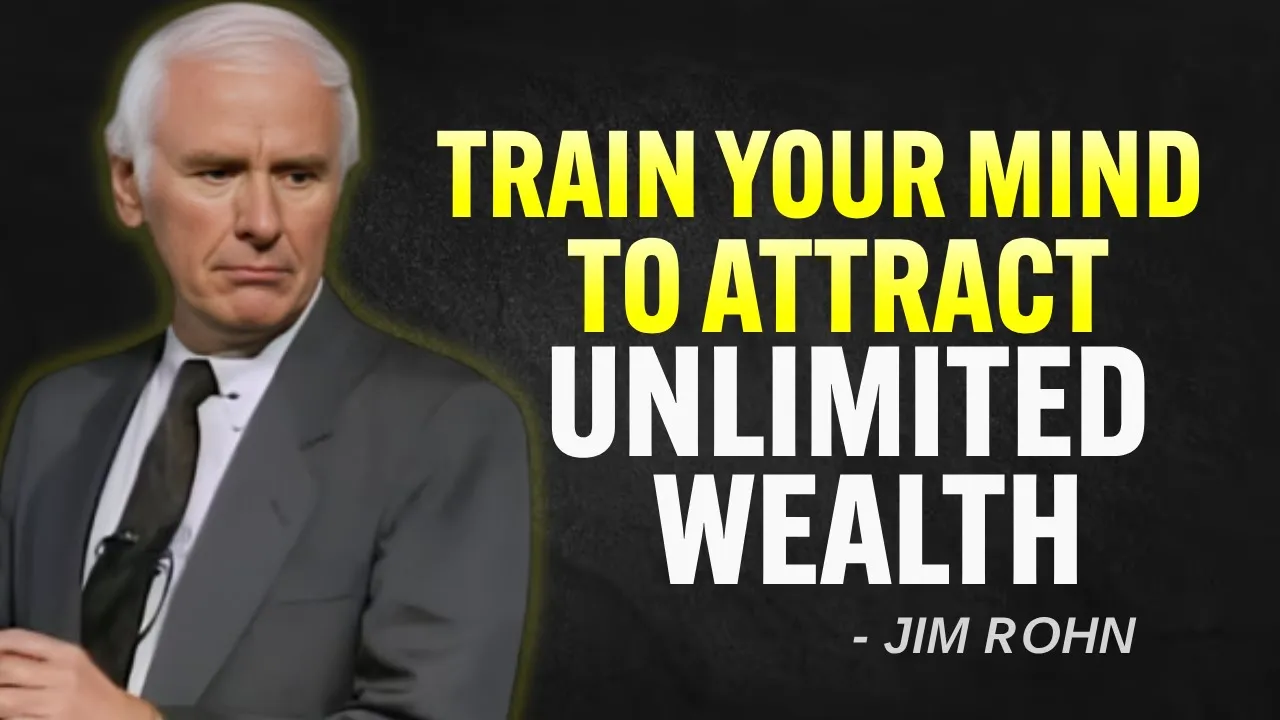
Your mind is the most powerful wealth-b buildinging tool you have. Use it wisely and unlimited wealth can be yours. The choice is yours.
The time is now. Your wealthy future is waiting for you to claim it.