It's like beyond all hope like tragedy is imminent you've lost there's scars there's blood there's death and yet there's like a glimmer of intense poignant hope and joy that comes through so lwis inherited this view of you catastrophe and he felt like the gospel is something that you can't just reduce to either the crucifixion or the resurrection you have to hold them both Together so there's this shadow of death and defeat and tragedy and shame but at the same time there's this motif of reunification and unity and love the whole reason why Christ came to
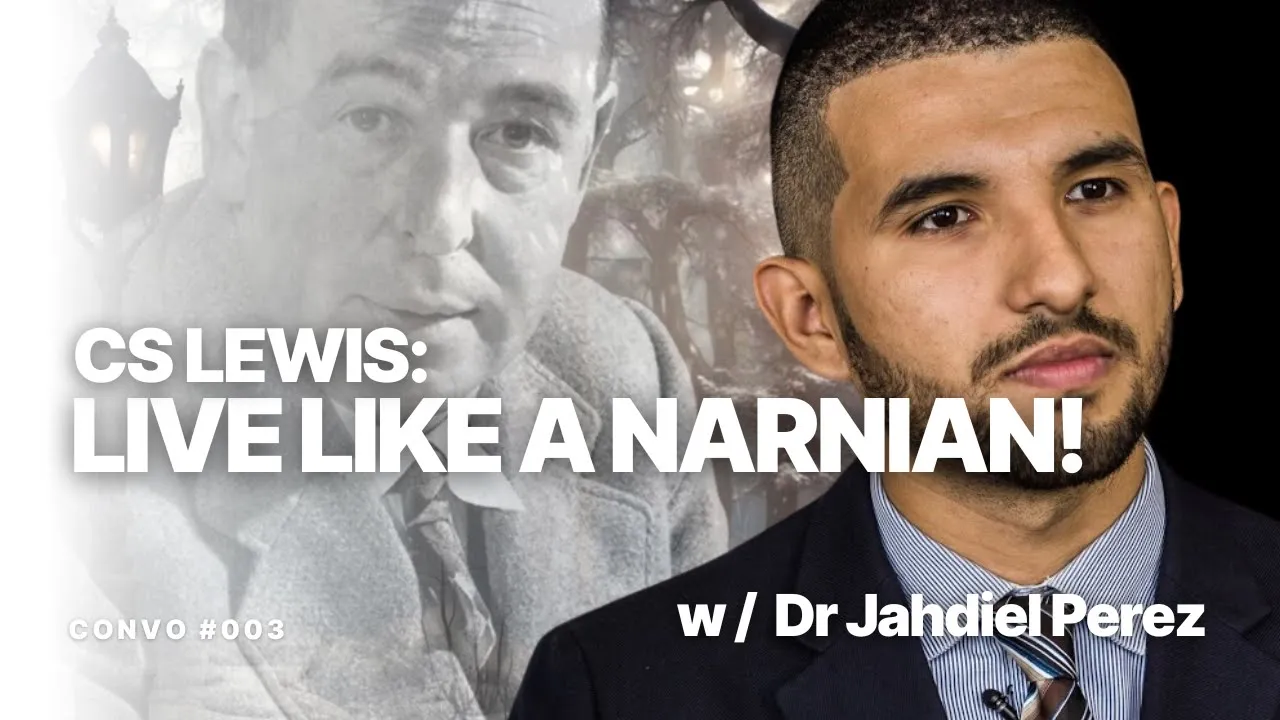
redeem us is to reunite us with our beloved which is which is God and to introduce a new kind of life [Music] good day everyone Dave Dean here and I'm excited to share with you a conversation I've just had with a friend and Scholar Dr Jil Perez who is joining us from the east coast of the USA Dr Perez holds an MA from the University of Massachusetts in Boston an MD from Harvard University and a dill from the University of Oxford in the UK and he currently serves as an assistant professor in Humanities and Sciences
at Villanova University I got to know Jil during my time at Oxford when he was the president of the Oxford CS Lewis society and neck deep in his doctoral studies and it's the fruit of That labor that we're going to be talking about today jadil is a humble brilliant passionate educator and today we'll be discussing his significant contribution to louisian scholarship and the intricate threads of joy and sorrow woven throughout Lewis's life literature and Theological formulation so whether you're a seasoned scholar a casual reader of Lewis works or someone just exploring the big questions of
life I think this conversation will be of a Benefit to all of us as we navigate our own experiences of joy and sorrow with a synthetic Vision that speaks to the very heart of what it means to be human and to Hope and seek meaning in a world that is often both beautiful and broken well welcome Dr Jil Perez mate it's good to see you again good to see you too I'm really excited about being with you yeah and look I'm just excited that I get to call you Doctor uh because I think it was
What five years ago that we were there together at Oxford uni you were neck deep in your doctoral studies but a big congratulations to you for making it through that means a lot to me yeah I I still can't believe it's happened already I'm just really grateful to God and you know to friends like you I still have the Valley of Vision book that you gave me for my birthday I don't know if you remember that we went out to a burger joint and it's been one of the Best gifts I've gotten so far so
I really appreciate that I do remember autonomic burger and that was just before everything shut down with the ominous Co virus that was coming through yeah yeah so where have you um landed now because you're not in Oxford anymore you've headed back to the States what are you up to yeah so I'm just starting my assistant professorship at Villanova University in the humanities Department I'm the uh Professor of humanities and the Sciences there and it's just a match made in heaven I love the students the colleagues the culture and and you get a real chance
to speak into the lives of students who are asking the kinds of questions that you're raising uh throughout your ministry and platform here uh for instance in one of my classes I teach a class just called God which is pretty intimidating it's just a class on uh different approaches to Exploring the the God and religion question and I asked my students hey what's one question that you hope will explore together and a lot of them will say I don't know what to believe and I'm like wow that's really interesting that you would come to a
university class to decide what to believe about these really big questions so it's it's a privilege and it's a it's a thrill it's really fun so I'm going to be here I think long term uh it's a tenure track Job it's been a huge blessing and um yeah I'm just really happy and grateful for her that's really exciting well we're here to talk uh about some of your research that you're doing back across the pond there at Oxford in the UK H but before we get into that I'd love to hear some of the backstory
and what sparked your interest in CS Lewis and and how that that passion LED you to pursue scholarly work at Oxford uni yeah that's a great question so like Many people I I had a very personal encounter with um with ls so I first read a Spanish translation of his imir Christianity by total uh accident you know now I say that it was Providence but I was living in guara Mexico I just wanted to practice my Spanish reading I went to my uncle's personal library and he had meoch christianism there I took it out and
I just started reading it just to read in Spanish and the thoughts and the form of writing actually really Captivated me and reminded me of one of my favorite games growing up which is chess and there was something about the structure you know Lewis says this but his uh interlocutor says this and then Lewis responds this and this back and forth movement that reminded me of Chess and that moment was really powerful for me because I felt like God was inviting me um to play a game with him and that was enough just to completely
awaken me awaken my interest Into these deep questions and that was the the pivotal turning point for me in my whole um life really my my intellectual life my trajectory it was that encounter with Lewis and I never thought I'd go to you know Oxford and and and and study him uh at a at a doctoral level but but God opened the doors to to do that and uh it's just been a huge rewarding and uh a blessing really so I'm really grateful for that opportunity so it started very personal And then I realized oh
there's some scholarship that could be done here and um and that's how it worked out yeah well I I think correct me if I'm wrong one of your supervisors at Oxford was Alistar McGrath is that correct that's correct alist McGrath and Michael Ward Michael Ward yeah uh well Alistar I I recently read a couple years ago now uh his biography S Lewis of life and he makes mention in there of um a long-term friend Owen Barfield who once Remarked that there are basically three cious lewises you've got Lewis the bestselling author of novel you've got
the Lesser known Lewis the Christian apologist and the Lesser known still Oxford Dawn and literary critic and your research uh seems to bring in a fourth dimension or perhaps a a subo to the second lesson known LS the uh the Christian writer in in that you're really looking at Lewis the Theologian now as I understand your dissertation And uh your Dill that was the first ever submitted on CS Lewis to the faculty of Theology and religion at Oxford University could you just uh tell us a little bit about why you think Louis the Theologian has
been so untapped so this really struck me as um like something I really didn't expect when my adviser told me hey do you know that you're doing the first uh theology dissertation from Oxford and I thought there's no way I mean he's been dead for About 60 years and there were American students that were writing doctoral uh research on him while he was alive so as early as 1949 and um it's just shocking that it took Oxford almost 60 years to see in him some theological potential and there's many different reasons for this but Lewis
is very clear and in the biography that you read uh he was a reluctant a reluctant convert a reluctant Theologian right he felt like Academic professional theology had forgotten about the audience that it's intended to reach which is the the normal everyday uh believer and he says you know if my friend Austin frer who was a professional Theologian had just written popular works there would have been no need for a CS Lewis he says in one of his letters so he felt like um he was called to do this and that led him to be
disadvantaged career-wise so Oxford never offered him a full Professorship um because he never studied Theology and never taught Theology and yet he's writing the screw tape letters the problem of pain uh Mere Christianity these International bestsellers even though this was not the thing that he made his living by so they thought that how this guy can't be serious if he's writing uh the screw tape letters the great divorce so it wasn't until he went to Cambridge University in 1954 that Oxford thought Oh no you know we're going to lose him they made a counter offer
but it was too late by then so Oxford really didn't see him as a serious as a as a theological thinker worth taking seriously and you can see in some of the testimonies of of theologians that started growing up after Lewis um theologians like Al McGrath and T Wright row and Williams they all share a similar theme that as they were preparing in their theological studies Lewis was uh seen as someone who Is embarrassingly simplistic someone who doesn't offer robust insights into really complicated questions and if you also track how Lewis is described in different
encyclopedias of theology in the following decades he's almost never listed even in Evangelical encyclopedias he's almost never listed as a as a theologian right he's he's listed as a student of literature as a literary writer but not really as a theologian and I think what alist McGrath has showed is that um has shown is that it's not really up to you completely whether you're described as something you know it's up to communities that accept you and receive you as a as a as an insight as a voice as a trustworthy guide and McGrath just makes
a really good argument that hundreds of thousands of Christians all over the world have seen something worth taking seriously in Lewis's theological writings and that by any definition uh We should count him among the theologians or theological thinkers that we can take seriously even at The Graduate level that's really interesting uh I I mean there's a bigger conversation there about identity formation isn't there in terms of communal kind of acceptance and um recognition and so on but if I'm hearing you correctly it sounds like because of Lewis's um burden for communicating certain ideas in a
certain Way he basically sacrificed yeah reputation um and I guess uh possibility in the academic world world uh because of this burden that he s to communicate yeah big ideas to the masses which which really is its own form of um I guess intelligence in in that you know you've got different kinds of academics those who reach out and and push the envelope and creating new ideas who often uh find it very challenging to communicate those down but then you've got those great Synthesizers of ideas who do have that unique gifting and calling sounds like
Lewis is probably in that space But even then his work the Lesser known work of Lewis the um the literary critic very much was steeped in Academia wasn't it yeah and let me just make a a comparison quickly and not just because you're uh interviewing me but you come from a background where you were doing really well off right you were in the uh I believe in the engineering field and you Felt like God was calling you to a specific kind of ministry and even though you were going to you you were going to give
up certain benefits or professional advancement you you felt like this is what God was calling you to do Lewis did the same thing right it cost him promotions it he did not like teaching undergraduates he just hated it and yet he had to do it for so long because they didn't promote him to a full professorship but he felt that i' Rather be doing what God is calling me to do than do something for my own advancement even if it's um but it's not perfectly aligned with what God's calling him to do so I really
admire that it gives me kind of Courage when I start thinking about um different possibilities in the future but anybody that feels like God is calling them to do something even though it's going to cost them a professional advancement or even income Lewis is someone that you Can look up to as an example for that I appreciate that and I'm encouraged by that and let me speak personally there is nowhere I'd rather be I get to speak to a friend who studied Lewis about nania like and this is my job so here we are well
let's try and communicate some of these big ideas in very leis style then down to um those that are listening and try and unpack a little bit here on your dissertation now the title of your dissertation hope Hopefully I pronounce this right love is tears the cipic theological vision of CS Lewis can you explain what that means and perhaps just give a very brief overview of the abstract yeah that's a great question so this is the title of my dissertation that I that I completed at at Oxford I'm working on making it a monograph so
so everybody can read it so I'd appreciate prayers uh on that but the title is love his tears which is the title of one of Lewis's um poems he was He was a poet an aspiring poet for for about the first like 25 years of his life until he finally kind of said okay I'm not going to be a poet but he always kept that poetic insight and he wrote uh a poem where he starts describing love and it says love is as hard as Nails it's as Fierce as fire and one of the lines
is love is tears right and the thing about tears is that you can cry from sorrow and from Joy and and I thought it was a very powerful image to To capture what I'm trying to express in the dissertation which is referen in this word it's a very strange word uh but it's it's caral liic right or carpi this is a Greek word that many uh Christian Mystics were using uh especially in the seventh century with St John climacus who was one of the one of the uh you know mystical fathers but in his book
latter of divine Ascent you find this word car carpi or caral lipic and it basically means joyful sorrow or Sorrowful Joy it adds the two words one meaning Joy one meaning sorrow and I thought wow this is a really interesting and Rich concept not just joy and not just sorrow but their unification into something else some like a third thing and basically the whole dissertation is arguing that this is a really appropriate and Rich way to describe CS Lewis's theology his imagination his vision that each element synthesizes uh these two different poles Right the joyful
pole and the sorrowful poll and I think it's very easy to let go of one or the other and maybe we could uh discuss this further but what I really appreciate about Lewis is that he managed to hold these two intention he managed to synthesize them and I think that's really important especially at a time like this yeah absolutely they shall sew in tears shall reap in Joy Proverbs 14 and I'm just curious does does one uh come To Oxford University with an awareness of sorrow and joy in the writings of Lewis and that's what
I'm going to write on like what was the impetus or the the Catalyst for this particular area in yeah your Pursuit was it was it something that you stumbled upon while at Oxford or um yeah what did absolutely this is such a great question my original proposal was just focusing on Lewis and laughter and humor and that's what I got accepted with that's what They allowed me to start with and I did about two years of research focusing exclusively on what is Lewis doing with humor with rhetorical laughter in his writings and it wasn't until
about yeah like a year and a half two years in that I had a discussion with Michael Ward my my supervisor and he said I I think you're only getting half the picture like yeah there's laughter and levity but there's also gravity and sorrow and loss wouldn't it be interesting to look At both of these things at the same time and that just fit perfectly um my interest and and and the way that the research was going so it developed that was a big shift that the research took and I think if you talk to
any doctoral student they go in with one idea and it's never usually the original idea right it's always taking twists and turns but at the end you look at it and you say yeah I think it's better off uh having developed in that way so it was Definitely a development at Oxford and and I have a lot to thank uh Michael Ward for his Insight yeah and Michael Ward for anyone listening he has done some fascinating work on the planetary I guess symbolism behind the nania Chronicles I'll just leave that one to you and and
Google to check out but that's super super interesting I remember shaking his hand at the kilms of all places as we you and I were there actually listening to the Late Walter Hooper the last editor of CS Lewis give a reading there so that was a really special evening um okay let's get into some of the specifics here then of your dissertation so I'm Keen to just try and walk through the the basic flow as I see it and and you can correct me if if I'm pushing you in the wrong direction here but you
begin your your discussion of this Dil in Christian thought where Christianity is sometimes criticized on the one hand For insufficiently engaging with the tragic aspects of Life uh while on the other hand seems to fail at fully affirming the joyful aspects of life and You observe how this these accusations of of of both escapism from the tragedy and joylessness in I guess the the ordinary everyday of Life presents two kind of dilemas and and opposing criticisms can you just unpack those accusations and whether or not you think they Actually have basis and and are valid
and fair enough as they relate to Christianity yeah that's a great question um so on one side you have critics like uh you know Marx Freud James Baldwin among among uh you know many others that think Christianity is a form of escapism right think about Freud right that you're constantly escaping from tragic elements that you you're not grown up to face you're not prepared to face headon so we just invent this thing Called God this realm called heaven and it's constantly distracting us so that we don't really have to reckon with suffering and oppression uh
concretely so on the one hand you have a bunch of critics that are uh making that similar claim philosophically uh theologically literarily but then on the other hand you have people like uh you know n David Hume Milan CA the Czech writer uh that are expressing something that Can be captured in one of Charles swinburn line in his poem him to pany and he says this really fascinating claim he says thou has conquered o pale Galilean the world has grown Gray from thy breath I just repeat that again thou has conquered o pale Galilean the
world has grown Gray from thy breath and he's basically lamenting he's saying the world used to be so colorful so much fun so much Joy when the pagan gods reigned Now that this pale Galilean Jesus came to power everything's grown gray and dull and boring and I found that this idea tracks well with how many people tend to feel about the Christian faith that it requires a kind of tolerance for boredom like why would anybody want to go to church on a Sunday morning uh reciting these prayers reading this boring book The Bible right and
I found that oh not only is this an argument that academics are making but it's Al it Also has some cultural purchase the idea that hey if you want to if you want to be happy don't become a Christian right and this was part of what n's point in in naming atheism the FR Vish right the happy joyful frolicking science right the gay science right if you want to if you want to be happy become uh you know become your own God sort of you know don't don't follow established religion so I found that there
was these two criticisms of Christianity that are Being made almost in the opposite direction and I think that there's something to them so in my work I want to say sure there are forms of Christianity there are forms of Christian thinking that lend themselves to this that lend themselves to these criticisms right on the one hand you have th uh you have these kinds of Trends right you have what's called Resurrection ISM this is a term that uh Uh Douglas John Hall coined and it it just basically means that the resurrection cancels out the crucifixion
um this is very influential in my Pentecostal upbringing right where everything is about you know power and and Christ as the Victor the idea being that the resurrection canell all the tragic elements of the Cross right so we don't really have to worry about the cross too much about crucifixion about the the Horrible death that Jesus went through that was just kind of a mean to this greater end which is glory and Redemption and sanctification so I want to say that certainly there are ways of thinking about that there are ways of thinking about the
theological virtue of hope that can be very Escapist as well like if we think that hope is just optimism it's just buoyancy is just you have to be cheerful all the time that can that Can be a form of denying the the reality and gravity of suffering so on the so this is what I want to say these criticisms are not baseless right we have to give them their respect we have to recognize when they're accurate but I want to say we should see that as a challenge we should try to live out our Christian
faith we should try to live out our theological thinking in ways that protect from these criticisms so I take them almost as cautionary tales as Ways of doing theology better yeah I I can attest to that in own life and from my own experience in terms of the the bases to some of these and I think it is a a point to reflect on just what it is we believe and and the way that that does affect how we live in the here and the now I'm C I'd like to press well look there's a
question that I've had that I'm been bugging to ask a S Lewis scholar for some time and I've got one now so here It is the the issue of theodism which is one of the the points that you raise in terms of a theodicy basically not engaging seriously with the tragedy of life it's this theory of how you know an all loving all powerful all good God would would allow suffering and so some people would say that the the theories that Christians put forward over the centuries or Millennia have just been too detached from the
the gritty grind of reality and it's interesting in the Life of CS Lewis himself because he writes in 1940 an excellent work on the problem of pain um that really treats this question of pain and and suffering in life so you know that's World War II era um as as an object of study that he has pcing insights into but then 20 years later it's not an object of thought for him he loses his wife and he's now subject to pain and suffering and he pens that little book a grief observed under a Pseudonym NW
Clerk and it it strikes me that here you have the problem of pain theoretical philosophical it's examined from a distance a grief observed deeply personal and it's visceral and you would read that and not know what this guy thinks about God other than he's disappointed at the door slammed in his face and the sound of bolting and double bolting from the inside and then silence you know to quote Lewis is that an example would you say of the way that Even in the the the writings of Lewis we have both a um a treatment of
yeah the visceral and the theoretical problem of pain in one that's trying to keep the balance of both even if that was an unintentional um outcome that is a very astute question I think that the division the general division maps on somewhat well a grief observe being very subjective he never intended to publish it in fact there was his friends that pushed him to Publish it but he he believed from a young age actually um that writing for him was a way of coping with very difficult times in his life and you can see the
similar so in surprised by Joy he says that at the end when he's converting that whenever he lifted his mind from his work is when he felt the study unrelenting approach of him who he so earnestly desired not to meet being God right so even then you can see that oh he's trying to hold Something at Bay by writing right that it's the same Dynamic when he loses his wife right he's trying to hold at Bay the the crippling grief and anxiety and fear by trying to process it and writing so it's a very subjective
work the problem of pain is a philosophical work it's a theological work but what I admire about it is that he also tries to engage himself subjectively so he says things like this oh you wonder what I you wonder what I'm Like when I'm facing real suffering he says easy I'll tell you I a great C coward he says I'm a great coward and he starts to describe even these images that he experienced uh in in in in World War I where he he he fought in the front lines of France and he starts to
experience these Bo these bodies that are crushed like Beatles and he has these very Vivid metaphors and he's using he's trying to explore the subject not just intellectually but Imaginatively as well so I think you're you're tracking on to something that there is clearly a difference in these two different uh approaches to the topic but I'd want to say also that there are some subjective elements that are really interesting in the problem of pain that you wouldn't find uh in in in many not all but many contemporary analytic approaches to the subject right so you
you wouldn't find that kind of subjectivity I think in someone like Plantinga or or Richard swinburn right but you see it in someone like Lewis where he says listen I'm trying to be sensitive I'm trying to get myself per personally involved in this discussion but most importantly he said my priority is not alienating anyone from the truth right not alienating anyone from the truth another way of thinking about it and this is the last thing I'll say and I'd love to know what you think is you can see that in the problem of pain he's
Trying to get at truth and meaning is kind of secondary where in a grief observe meanings primary right he's trying to say well what what does suffering mean when you're in it right and then the Rays of Truth are almost uh they come in towards the end how does that track for you dve uh David does that make sense yeah well I'm just I'm thinking here of I think another influence behind Lewis and that is Um McDonald so he's got that essay on Truth where he talks about and I'm going to paraphrase it I have
it off my head he talks about the truth of a flower you know you can cut it up put it underneath a microscope and analyze it or you could pick it up and smell it and so um the it strikes me that in a grief observed it's it's an embodied uh appreciation of the subject he's writing about in contrast to the the more object of thought in in the Problem of pain although as you say that it sounds like there are some subjective Dimensions which I'd like to go back and double check so um both
are true it's just kind of in different modes um or modes of being to be a little bit abstract so yeah and which one's more true or less true I don't think that's the right question uh really it's it's an appreciation of it from different angles and both of them together complement the totality of what we Understand to be the true the good and the Beautiful yeah yeah yeah I could say it better myself that's great different perspectival approaches to the same same thing which that was an unintentional um you know segue to what we're
talking about here because when it comes to this dilemma we're talking about different perspectives aren't we ultimately of of the the the same thing and it was really interesting as I was considering your Dissertation um on the joylessness which so if if the if the the tragedy angle is more of a doctrinal criticism of Christianity uh then on the joylessness that's more of a historical criticism in that you know n and others as you said Christianity is boring why go to church on a but I was really fascinated by the insights you shared from Lewis
about his view on laughter and uh the humor that he saw in some of the gospels I had Never thought for example the the idea that um uh Jesus pointing out the obvious healthy people don't need doctors could be seen as as humor um I'm not sure if you've watched Dallas Jenkins the chosen but I think in that you know he's playing in the spaces of silence really well in this art that is an embellishment of the gospels uh but he seems to have done something that really resonates with the Audience today and that is
feeding into the laughter of Jesus his smile his interaction with the children um you know and and we do see traces of this in the gospels as well Luke 7 he's accused of being too joyful when hanging out with tax collectors and sinners so it that was a a refreshing other angle to all of this from the Goss that I'd never considered before yeah I think this this the criticisms really Powerful and um and I argue that n is the one that philosophically confronts us with with what's at stake if we ignore levity and laughter
as a theologically appropriate mode of thinking about God some other philosophers have picked up on this that that God uh you know James Martin uh wrote this book Between Heaven and Earth and he starts off by saying that he they were at a mass once and one of his fellow priests um couldn't stop laughing During the mass right and then the Elder of the entire Community chastises him for excessive levity and then the priest tries to defend himself and says no I don't I don't think it was excessive and and the director says all levity
is excessive all levity is excessive and there's something really interesting about that where it's like well where what where is the place of levity in my relationship with God right when I pray I'm very serious when we're at church Supposed to be serious occasionally laugh at the pastor's jokes you know but it seems like levity is a very secondary thing and yet we talk about Joy being very censal and I think part of what n confronts us with is what happens when we divorce Joy from physical expressions of levity um so it's trying to kind
of bring reunite these two things and saying hey levity is okay we can counterbalance it with appropriate Gravity but so far gravity being serious being appropriate being decorous has kind of led the way and how Christians uh I think think especially after the 20th century so there's a whole movement after the Holocaust the showa where people think no how could we possibly enjoy life how could we possibly laugh when there's so much tragedy so much oppression so much Carnage in the world so we need to actually double down on tragedy and seriousness because this is
The appropriate ethical response to such a broken world now there was a there was a counter attack to that with with people like Harvey Cox who tried to revive this idea of the Feast of um you know the Feast of fools there's also the Feast of the ass right there's so many different like almost lurgical expressions of levity and embodied uh laughter so there was a counter wave of people saying no no no actually if we look and read Closely into the scriptures into tradition uh we see holy Folly the the the you know the
tradition of the the sacred fool uh we see Jesus pointing out as what you said being kind of ironic and subversive different ways of reinterpreting the tradition um so there's like the tragic wave and then the comic reaction and I'm trying to say Lewis keeps the course right he kind of Unites both of these approaches and I Think that that's really important to to kind of avoid extremes yeah and I mean So classically speaking horns of dilemma they're kind of a l lose situation where either side gets skewered by the different problems but um you
know as I look at at Jesus in the gospels he is the master of escaping the horns of dilemma usually by asking questions that expose the assumption underneath and what I appreciate about Lewis and what you've exposed here is How he doesn't see that horns of dilemma in this case with these um opposed criticisms of Christianity as as something to be afraid of in fact it's an opportunity he would see it as a positive sign towards the fact that perhaps Christianity is a bigger vision of something it's it's more full orbed and and he just
basically doesn't get skewed left or right he just kind of headbutts the bull so to speak um and so we've Talked now about these attending dilemmas in their criticisms um when you think about it that's it's trying to break apart the cohesion of the Christian worldview or vision and having seen how Lewis isn't you know taken by that but sees it as a positive sign um the way he integrates the the sorrow and the joy into this tragic comic vision that's expressed across life and literature and theology to unpack that a little bit more this
Idea of the vision which is the intentional phrase there in your um dissertation title I just want to take you and the audience to a scene in one of my favorite um n Chronicles the Silver Chair I just want to read this out to try and paint the picture and then get your your view on on how this relates to that Vision so this is the Silver Chair basically puddle glum is traveling and he's held captive underground with the green witch who's Trying to enchant and manipulate him and his companions into believing that the world
above uh with the sun and the tree and the skies it just doesn't exist all there is is this underland uh in other words she's trying to limit his vision of reality now there are echoes of Plato here that I'd love to pull apart with you in a moment but um I just want to read this exert uh to you and then get your feedback on it so pum says to the witch suppose we have only dreamed or Made up all those things trees and grass and sun and moon and stars and aan himself suppose
we have then all I can say is that in that case the madeup things seem a good deal more important than the real ones suppose this black pit of a kingdom of yours is the only World well it strikes me as a pretty poor one and that's a funny thing when you think of it we're just babies making up a game if you're right but four babies playing a game that can make a Play World which licks your real world World Hollow that's why I'm going to stand by the play world I'm on aan side
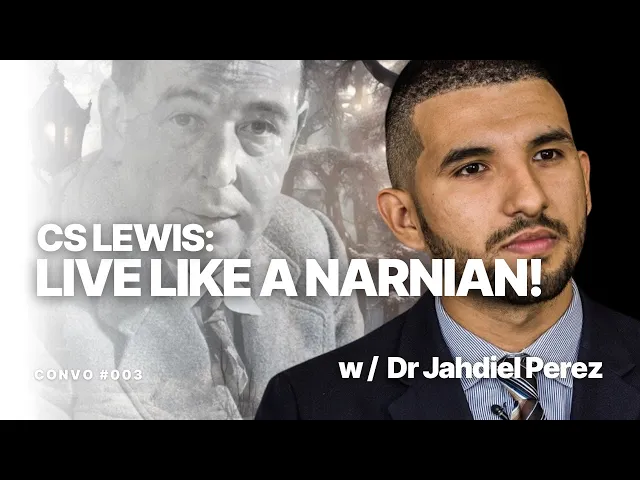
even if there isn't any Alan to lead it I'm going to live like a Naran even if there isn't any naria so despite his suffering in the Underworld a symbol of tragedy parlam holds to this vision of nania which we could see as a symbol of Hope and joy that the comedy Dimension here does that scene reflect what you're getting at in Terms of Lewis traged comedic Vision where joy and sorrow are not opposed um but intertwined in a way that gives a deeper meaning to both that's a great question I think it does reflect
the category of tragic comic or caral lipic as I mentioned earlier and this reflects Lewis's own Journey so he says in surprised by joy that he came to a point where he felt split between what his reason was telling him which was his grim facts but What his the picture that his desire painted which he said was like a mini Island you know a myth you know it was a garden it was beautiful but it wasn't true so part of what Lewis found in the Christian vision is the unification of Truth with meaning and beauty
and he's trying to say that some there's something fundamental that human beings are not just calculators we're not just uh equation solvers and finders that we're not just after the truth as Important as that is we're also meaning seeking and Beauty seeking beings right so they're stuck in underland it's a grim world there's just Grim facts they're suffering it's a tragic landscape and yet puddle glum says wait a second if all I was satisfied was with the Grim facts then sure I could be comfortable down here I could be comfortable relegating myself reducing myself to
an actor in a tragic place but in reality there's more to the Picture right you can't just silence desire for meaning and beauty and that's what he finds in the image of aan right which is a representative kind of allegorical not allegorical they the term the proper term is a supposal right of Jesus like what would Jesus look like if he lived in this world of animals called Narnia right well it would probably look like Alan so P Pam says I'm going to be on aan side I'm going to live like a Nar Even if
there isn't any Narnia even if there isn't any aen because that is way more meaningful and way more beautiful than this onedimensional reductive Grim tragic world that the queen is offering them so I think it reflects not just Lewis's own Journey but this very important Insight that we're not just truth Seekers we're Beauty Seekers we're meaning Seekers and in the Christian Vision all these three things come together let me zoom in just A little bit closer eus says in the Silver Chair that polum is always expecting the worst so he's a pessimist but he's always
wrong right he's always wrong and polam is the is the funniest character in the whole in the whole story right because he's con he really is expecting the worst he thinks he's going to get eaten he thinks he's going to get crushed by rocks he thinks oh any moment it's going to be over we're all going to die and he's wrong Every time and part of what Lewis is trying to critique there I believe is this tendency that he he saw that the tragic the tragic vision of life is somehow the truest Vision right that
being pessimistic is the only appropriate response to the world he's trying to not just expose that as false like it's not true like life isn't always as bad as the pessimist says as as the tragedian says says but at the same time he's trying to Ridicule it and say actually if you see this work out in the real world it's just kind of ridiculous there's a commedy to it right there's a comedy to um you know experiencing true joy and then just thinking oh this is this isn't real right this isn't real you know saying
oh I'm sure it's going to get worse oh I'm sure life can always get worse L is trying to say that's that's kind of a ridiculous it's kind of a ridiculous way to live that life Transcends both uh optimism and pimisi thing that it unites both of them in this very rich and real way and one of the terms that I use in my work is is tragic comic realism or or caral lipic realism right it's being real about both uh the this the sorrow and the joy and and not not reducing one or elevating
one over the other but saying they're both equally real and they're both trying to tell us something really important about not just God but the Nature of reality itself is that tracking with you David yeah what that that's absolutely tracking with me because that that phrase realism before I even encountered it in your dissertation is what struck me you know the realism of the Christian story in that it's big enough to Encompass the full range of human experiences and joy and sorrow amidst life and death um and to speak personally here you know just to
riff off this picture or this scene From um the Silver Chair and and Plato's Cave as I think about that um Plato's Cave for anyone who who's not aware is basically this this picture where there are people down under the ground chained in a cave they're only able to see Shadows on a wall that are cast by a fire behind them um those Shadows that's it that's the totality of their vision of reality but then one of these prisoners is freed they follow the path up to the surface of the Earth to the Outside world
the up the upper land where they step into the atmosphere for the first time and they're blinded by the overwhelming Brilliance of the light of the Sun and with their eyes starting to adjust um you know their senses their smells everything coming to them for the first time they're experiencing the world in its fullness uh speaking personally that is the emotional shock impact of this Fuller vision of reality with the sun and the Shadows um in what Christianity has provided for me time and time and time again and it just every time that happens it's
just a further reinforcing of this bigger embodied vision of truth that we were talking about earlier it's like stepping Christianity for me is like stepping into the Wardrobe not into the fantasy but into the reality ironically of the the totality of what truth is and so when I'm asked questions by people like David what would it take for you to Reject Christianity it's like I want to I want to ask do you understand what what you're asking you're asking me to crawl back into a cave and chain myself to the contentment of Shadows um now
you know people might say but that's just the truth David and and while I would reject that and argue against it I think it was chesteron who said if the cosmos of the material is the real Cosmos then it's not much it's it's shrunk um you know I'll just say with my mate pter Glum that I'm going to stand by the play world uh and and I don't mean that in a in a fanciful fictitious sense I mean that in the sense that it actually is big enough to take the total um Encompass all of
the lived experiences of The Human Condition yeah I think this is part of what something that I've been thinking about recently um is Pascal's wager and I think I think it's a lot more robust than it gets credit for Actually the wager being um if you're not certain of anything right you're just like placing bets almost in in a casino right playing a game you have to place a bet well what's the best bet to make and he goes through the uh probabilistic you know argument and says look even if there is no God even
if the percentage of there being a God is just like 1% right the smartest bet to make is still to believe right but he but he also people think that's just an Intellectual argument he also applies it to the question of what is the good life right like even if we don't know even if it's highly probable that we're wrong the best best to make is to live as if uh God were real as if the good life were pursuing God pursuing virtue pursuing uh wisdom truth goodness and Beauty right and you start to see
similar logic with puddle glum where he says look let's suppose which isn't a great supposal but let's suppose it Wasn't true are are you realizing what you're asking me to reject right David like what you said like there's so much Beauty there's so much truth there's so much goodness um even if it were not true it still kind of wins on other grounds almost I mean that's a different way of putting it I do believe that truth is really important but at the same time we have to see like there's so much more right there's
there's goodness There's Beauty there's meaning and part of what the Christian Vision gives is a Unity of these things which is so precious and unique that it's really hard to turn down once you see it uh clearly yeah and and obviously this connects as well this bigger vision of um um this the natural and the supernatural connects in as well to AR Lewis's argument from desire do you want to just quickly sketch that one out for us and how that relates to this this Bigger Vision so the argument from desire runs something like this every
natural desire that human beings have has some form of fulfillment right so we're talking about purely natural desires we're not talking about desire that we've learned over time or through technology or through uh you know fiction or fantasy we're talking about purely natural desires like our desire for like food right our desire For water our desire for reproduction for sex right he says wouldn't it be really weird if we've had this desire for food but it didn't exist like would that would be really strange wouldn't it wouldn't it be weird if you were thirsty but
there was no such thing as water or liquids right wouldn't it be strange if you felt sexual appetite sexual hunger but there was no such thing as sex right wouldn't that be really strange so he says he startes to say Look don't you find in yourself a kind of desire for capital J Joy right for like perfect kind of Joy perfect happiness right um wouldn't it be weird like how do you explain this desire that we have that every single human being has now that doesn't mean that you're going to achieve it you you could
not right he says you could die in the desert from lack of food or lack of water but it does give us a very strong hint and suggestion that we come from That kind of world where these things actually exist and famously he says in in Christianity if I find in myself a desire that no natural thing can satisfy nothing in this world can satisfy the most likely explanation is that I was made for another world right now this is not a deductive argument but it's trying to say pay attention to the clues right pay
attention when you try to find satisfaction it always uh is temporary it always Fails why are we unsatisfied with that like where did this idea come from that there's something more and he says well maybe we are made for a world in which there is more in which there is more meaning more Beauty maybe that other world is with God it's something like that desire is a signpost to this bigger vision of reality um as mentioned at the outset so Lewis uh is not necessarily notable for being a a theologian per se although I guess
We're pushing against that now with the the contribution that you've made to the academy but I think frankly you've done an outstanding job of demonstrating that he wasn't just a literary critic or popular apologist but had some deep theological Reflections to offer um offer the world and given this I just want to bring this now to the central person of the Christian faith and that is Jesus Christ um how do you see this tragic comedic Vision Relating to him because it strikes me that um what we find in the events of his life and death
tragedy and Resurrection comedy um is just speaking right to this Fuller embodied Vision uh that you've been researching and writing about can you just elaborate on that in terms of How It's embodied in The Passion of Christ himself yeah this is a great question and I have to go back to his friend tolken who was very important in in in actually leading Lewis to to converting to Christianity to reconverting to Christianity so tolken described the gospel with this phrase called UK catastrophe which is the good catastrophe the good downturn emically and he tries to depict
this in several moments of The Lord of the Rings where it's like beyond all hope like tragedy is imminent you've loss there's scars there's blood there's death and yet there's like a glimmer of intense Poignant hope and joy that comes through right um it's this image of for instance I mean there's different moments where the UK catastrophe can come in but one that has struck with me is if you read Lord of the Rings and I highly recommend it it's a very thick book it's the kind of thing you can brag about a humble brag
about uh around certain people but I highly recommend if you haven't di uh if you haven't tackled it yet it's a reward it's a rewarding reading but After Frodo and uh and Sam you know they destroy the the ring spoiler alert for anybody who who hasn't read it yet right I was thinking it's over it's over right they won good good one um evil lost right tolken shows us a a much more complicated ending where the tragedy remains there scars that remain there separation between Frodo and his and his friends but there's also it's also
mixed with a kind of Victory right so Lewis inherited this view of you catastrophe And he felt like the gospel is something that you can't just reduce to either the crucifixtion or the resurrection you have to hold them both together it's a good catastrophe that Christ was incarnate that he lived his life and that he gave his life for us and that he resurrected right this is a good good catastrophe and just to zoom in a little bit closer through this lens of tragic comedy or or or Caroli there's this view that in order For
God to become man in Jesus Christ he had to empty himself of certain Divine attributes right it's called This is called the doctrine of kinosis right where he had to empty himself of uh different kind of attributes like omniscience being being um you know there's certain Divine attributes that that Christ had to like almost leave in heaven right suspend to become limited to a particular body in a particular time and place well what's Fascinating about tragedy classically conceived is that it requires a kind of condescension so it's this kind of fall so it starts with
an elevated figure think about edus for instance uh an Ed and edus Rex he starts as a king right he's he's he's he's he's the king through a series of um develop ments you know he figures out who he really is that he murdered his father that he he uh his his wife is actually his mother it's really tragic but the tragedies end With A dissension right with with a kind of fall that's very similar to what's going on in the kosis right for in order for God to become a specific human being limited by
time and space a kind of being that feels hunger that all these different natural qualities right he had to give up some Divine attributes it's a kind of condescension really which is a was which is a tragic um Motif and it's always headed towards the Crucifixion right like that his life is just one s sign okay I've come here for this event I'm not just going to live and redeem life itself redeem different experiences but it's going to it's culminating in a specific event which is the crucifixion so there's this shadow of death and defeat
and tragedy and shame but at the same time there's a motif of reunification and unity and love right the reason why Christ had to come into The picture is to unite us to God and I don't know if you've noticed but many comedies end with some sort of wedding with some sort of reunification of lovers of life and this blew me away when I started studying it that even now comedies on Netflix or or romantic comedies um this this would have been a a a like of course comedies are romantic that's how they end right
if you look at Shakespearean comedies it's the lovers um you know reuniting coming together There's a new life coming into the picture so both of these two tragic uh both of these two comic qualities reunification with a lover and the production of New Life coming into the picture we see that in the gospel as well that the whole reason why Christ came to redeem us is to reunite us with our beloved which is which is God and to introduce a new kind of Life a new kind of generation into the picture so even thought of
as classically which is the View that Lewis would have ascribed to there are these kind of literary Staples of tragedy and comedy that are interwoven in the gospel story and what's interesting there is that this isn't just a western philosophical angle to take because obviously the wedding of the Lamb in in the New Testament the great finale there is steeped in Jewish Eastern Middle Eastern ancient near Eastern um ideas of of weddings and the process thereof and All of the rest so again it speaks to this bigger Vision that is for all Humanity not any
particular cultural East West divide um but look as I've thought about love is tears and and the cross as you've just beautifully laid it out there it it just reflects that on a you know on a personal level it just reflects that love so often involves suffering precisely because it's for the Beloved you know um yet in the case of the the passion it's that very suffering That deepens and enriches our ultimate joy in the resurrection I mean in order for that the very idea of a resurrection itself uh presupposes a death uh so it's
precisely through the sorrow that the joy comes is precisely because love is tears that the Christian hope is that one day we shall arrive upon Shores where there are no more tears and um yeah I think talking for his part at the end of the lot of the Rings really does capture that in a in a striking way um Look I I'm thankful for your time here I want to try and draw this to a close I guess as I've been thinking through this in terms of um you know the so what factor for believers
and non-believers alike um so questioning Christianity our Focus is on connecting the Christian story to Life's deepest question so there is that narrative Arc uh so to speak that we're thinking through here in terms of how to apply all of these big questions of life to What the the Christian story has to share so building on your research here then uh particularly his Lewis's use of imagination um and desire in these signposts to help invoke an awareness of the greater realities of joy and sorrow how do you think that can help the church today in
our Evangelistic efforts of communicating the gospel is there a need for a more imaginative apologetic approach in our current cultural context I think that there is that's Another great question U let me start with a saying that I like that the Theologian Kevin J van huser said he said human beings are not just storytellers we're story dwellers right we dwell in we live and have our being in stories right in kinds of narratives so a lot of apologetics and evangelism has focused mostly on arguments right communicating arguments trying to persuade people of the truth of
Christianity which is very important and I think fundamental but we also want to pay attention to what is the story that we're inviting uh people to dwell in and it's our task as as communicators to show that the Christian story is just a richer more beautiful truer story story than the options that are out there and I'm open it's important to be open I'm open to being shown a different story I'm open to being proven wrong and saying wow you know but really when I look at the different options on the Table uh naturalism different
religions atheism right I don't find this kind of story that mixes perfectly that keeps in Balance truth beauty meaning right and I think that's really important that people are starving for a kind of meaning to know that they matter so for instance the movie the movie uh Deadpool and Wolverine came out which I'm sure Christians will have very different uh perspectives on it's a very vulgar movie but very interestingly Deadpool has a Crisis of meaning right and he says I just want to matter right I just want to matter and that's kind of the motivation
of the entire film but it's speaking to this wider cultural moment where human beings especially with the rise of AI especially with social media how do I know that I matter right how do I know that my life matters how do I know that my life has meaning and I think the beautiful thing of the Christian Gospel is that it's the kind of story that can Give your life meaning right they can give your life Beauty and truth and and I think that that's really important to take a holistic approach that it's not just about
the persuasive arguments it's about what do these arguments mean what picture of reality are they pointing towards and I think that's that's the that's the takeaway that I would have for from this yeah and you know it was Charles Taylor I think who used the language of Disenchantment uh and disillusionment and I think that is what somebody like a Lewis really has to offer he captured the imagination of a generation uh with the chronicles of n talking as well and I think if we can be pursuing creative ends like that I mean there's a world
out there comping for our affections and our attentions and a lot of you know I should invite you back so we can talk about the relationship between truth goodness and Beauty Sometime because there are a lot of things out there that are projected as beautiful that are actually not truly beautiful and and yet they're winning the the attention and affection of a whole generation today so how the church can be focused um in showing yeah the truth goodness and beauty of the Gospel that would be a very interesting conversation to have in in another Forum
but Jil thank you so much for your time here I'm I'm I'm appreciative of the Work you've done it's definitely enhanced my vision of my own life but also the literary work of of of Lewis there's something now like Michael Ward's um work on the planetary symbolism now when I'm reading Lewis I can't help but see the tragedy and sorrow Motif threaded throughout his various works so I'm going to keep an eye out for that uh what are you working on at the moment and is there any any um upcoming Projects that uh that are
ongoing for you right now yeah first of all let me just say I appreciate this invitation I appreciate you taking the time to read my research and work cuz you you you write it just for two examiners right and you're lucky if you know three or four people read it but knowing that that there's interest out there it just means the world to me so I just want to thank you for that um currently I'm taking a year pausing My CS Lewis research because I got this Grant from the John Templeton Foundation through the University
of Birmingham to look into the psychology of religion and I'm trying to analyze uh the theodicy debate through a psychological lens so as as some of you may know there's kind of two camps that are it's not really camps actually there's just a like tidal wave of interest in a movement called anti- theodism which is the view that we Shouldn't do Theo anymore we shouldn't try to answer the problem of evil we should just admit that it has no answer and kind of move on and reformulate our ideas about God and my project is looking
at well what are the empirical claims that they're making about human psychology and what does the evidence say and my argument is something like actually human beings psychologically need meaning and need Detachment from suffering in order to cope better with It and that's what the Odyssey tries to provide is meaning for suffering and a kind of Detachment from from um these kinds of experiences so yeah I'm taking this year to to do that I'm on track and I'll be publishing on that hopefully early next year but then next year is returning to CS leis scholarship
and Publishing my my my dissertation as a monograph so just keep your eyes out and uh I will let you all know when that comes Out that's very exciting we we'll be looking forward to reading both of those and we'll have to just get you back to to get an update on this latest project Dr Jil perz yeah thank you so much for your time mate and again really appreciate all of the the hard work that you've put into this and it's just so exciting to see you all these years later down the track now
as you're pursuing a career um from that time that you and I first met Uh there at Oxford so no no I appreciate it thank you so much for this invitation at talking through these ideas helps me understand them even better so I really appreciate this opportunity and yeah more power to you and and I wish you the best with with the ministry and and the and the podcast thanks mate may God bless you and the family likewise and I hope to be back With you too cheers mate [Music]