For decades, they said there was nothing to review, that birthdays were pagan, dangerous, unnecessary. They built an entire theological framework around two brief biblical passages, and millions of Jehovah's Witnesses around the world accepted this teaching without question. Children grew up watching their classmates celebrate while they sat in silence.
Parents navigated uncomfortable conversations with teachers, employers, and family members. and anyone who dared to question the policy was swiftly corrected or worse accused of apostasy. But now something has changed.
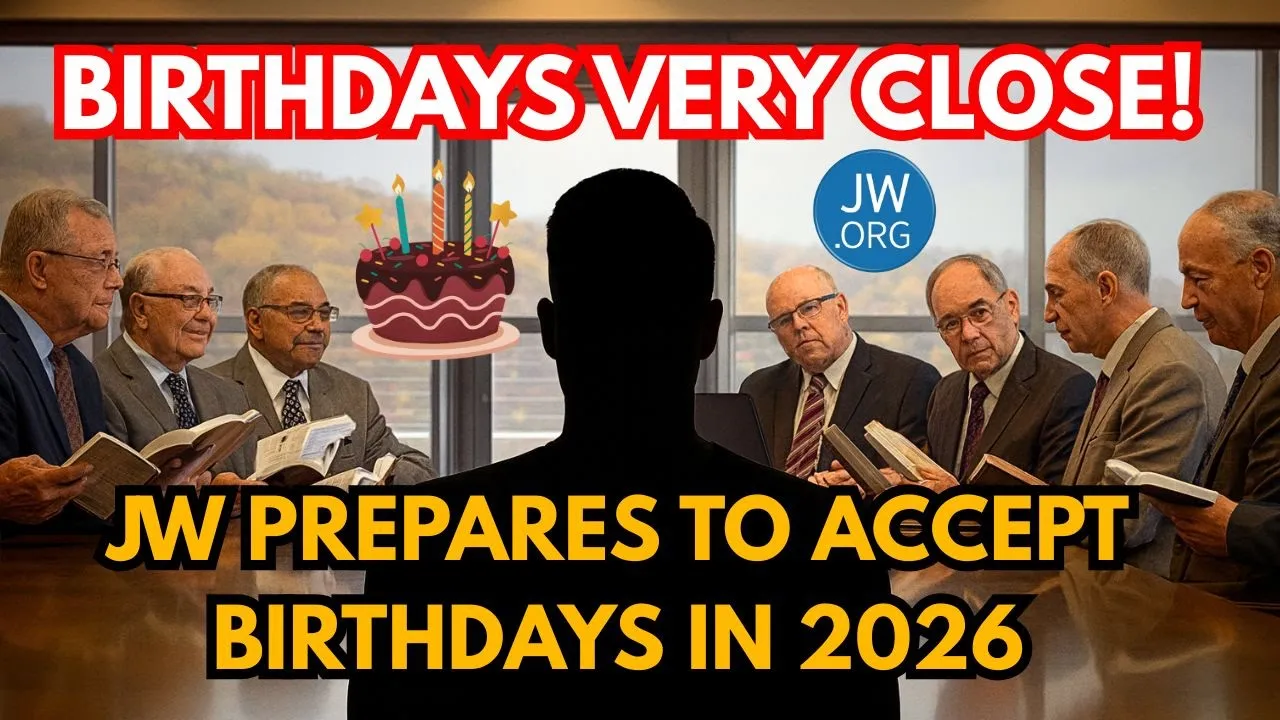
An internal document circulating among writing committees at Warwick headquarters is pointing to something that would have been unthinkable just 5 years ago. According to sources close to the organization's inner workings, the governing body is actively evaluating whether to allow, at least partially, the celebration of birthdays starting in 2026. Today, I'm going to walk you through what was leaked, who's pushing for this change, and why this could be the biggest doctrinal earthquake since the 1995 generation teaching reversal.
Because if this happens, and I believe the evidence suggests it will, we're witnessing the collapse of one of Jehovah's Witnesses most distinctive and controversial prohibitions. And the implications go far beyond birthday cakes and candles. Part one, the beginning of the noise at Warwick.
Inside Warwick headquarters, something unusual started happening over the past 18 months. The mail room, the digital correspondence team, and the various committees responsible for handling member inquiries began noticing a pattern they hadn't seen before. Letters were arriving.
Physical letters, which in the digital age is already noteworthy. But more than that, emails were flooding in and electronic forms on the organization's website were being submitted at an unprecedented rate. And they weren't about the usual topics.
These weren't questions about blood transfusions or holiday decorations. These were specifically about birthdays. Young people were writing in, many of them baptized members in good standing, asking the organization to reconsider the prohibition.
Parents were reaching out explaining the difficulties their children faced in schools when they couldn't participate in birthday celebrations. Some letters came from employers asking for clarification on the policy, creating uncomfortable workplace situations. But here's what made this different from previous waves of correspondence.
This time it wasn't just the youth or frustrated parents. Elders were writing in. Congregation elders, men who had served for decades who had enforced this very policy from the platform and in judicial committees were now quietly, carefully asking whether the organization had ever truly examined the biblical basis for this prohibition.
They were pointing out inconsistencies. They were asking questions that had no easy answers. The volume was unexpected.
It was sustained and it was impossible to ignore. According to the leaked information, this steady pressure from the grassroots level pushed the issue into a committee that normally avoids addressing sensitive doctrinal matters. The birthday question, which had been considered settled doctrine for over a century, was suddenly back on the table, and this time it wasn't going away.
What happened next is perhaps the most revealing part of this entire story. According to the source, the writing committee did something they rarely do. Instead of immediately drafting a response that reinforced the existing prohibition, instead of preparing another Watchtower article explaining why birthdays are wrong, they actually investigated the practice.
They looked at the evidence. They examined the arguments, and what they discovered was deeply uncomfortable for an organization that prides itself on biblical consistency. The committee's research uncovered something that many ex-witnesses and critics have been pointing out for years, but which the organization has always dismissed.
Numerous practices currently accepted and even encouraged among Jehovah's Witnesses have demonstrable pagan origins. Wedding rings, for example, have roots in ancient pagan rituals. The wearing of ties, the use of certain architectural elements in kingdom halls, even some of the terminology used in organizational structure, all of these can be traced back to non-Christian sources.
But the organization has deemed these practices innocuous, harmless, stripped of their original meaning. This created an immediate logical problem. If the primary argument against birthdays is their pagan origin, but the organization accepts dozens of other practices with similar origins, then what's the actual principle at work here?
Is it really about paganism, or is it about something else? Is it about control? Is it about maintaining a distinct identity that separates Jehovah's Witnesses from mainstream society?
The committee's findings were documented in an internal report that, according to the leak, was far more honest and self-critical than anything that would ever appear in official publications. The report acknowledged the inconsistency. It recognized that the pagan origin argument, which had been the cornerstone of the birthday prohibition for generations, simply didn't hold up under scrutiny.
And once that realization took hold, it became impossible to put the genie back in the bottle. Analysis meetings were scheduled. The issue was escalated and it landed exactly where such issues always land in this organization before the governing body itself.
In late summer of 2025, during one of the governing body's regular weekly meetings, the birthday issue exploded. According to the leaked accounts, this wasn't a calm, reasoned discussion. This was a heated, tense, emotionally charged debate that revealed deep divisions within the leadership of the organization.
The meeting that day wasn't just about birthdays. It was about how Jehovah's Witnesses see themselves, how they relate to the outside world, and how much they're willing to change in order to survive in the 21st century. The vote, when it finally came, was stunning.
Five members of the governing body voted in favor of liberalizing the birthday policy, specifically reframing it as a matter of conscience, similar to what the organization has done with beards, clothing styles, and secular music. Five members voted against it, arguing that sudden doctrinal changes would confuse congregations, undermine confidence in the leadership, and potentially trigger a wave of questioning about other long-held teachings. This deadlock is significant for several reasons.
First, it reveals that the governing body is not the unified spirit-directed body that members are led to believe. Half of the leadership was ready to overturn a teaching that has been in place since the organization's founding. Half of them looked at the evidence and concluded that maintaining the prohibition was no longer tenable.
But the other half wasn't convinced, not because of biblical arguments, but because of concerns about organizational stability and member reaction. The atmosphere in that meeting room was reportedly extremely tense. Voices were raised.
Old grievances surfaced. The birthday issue became a proxy for larger debates about the direction of the organization, about whether Jehovah's Witnesses should continue isolating themselves from society or whether they should adapt and modernize. And for the first time in recent memory, there was no consensus, no clear majority, no obvious path forward.
The governing body was split right down the middle, and everyone in that room knew that whatever decision they made would have massive consequences. In the aftermath of that contentious meeting, various proposals began circulating among governing body members and senior staff at Warwick. Some of these suggestions read like careful social experiments, attempts to change the policy without admitting that the policy was ever wrong.
This is classic Watchtower strategy. When they need to reverse a teaching, they don't announce a reversal. They reframe it.
They introduce new language. They create the impression that this was always the correct understanding and members simply hadn't grasped it until now. One proposal suggested transforming birthdays into a matter of conscience, placing it in the same category as beards, which were effectively prohibited for decades, but have recently been permitted.
This approach would allow members to celebrate birthdays if their conscience permits, but would maintain enough ambiguity that hardliners could still choose to abstain and criticize those who participate. It's a compromised position that satisfies no one completely, but offends no one enough to trigger rebellion. Another suggestion was even more telling.
Some within the leadership proposed changing the terminology altogether. Instead of birthday, which carries all that historical baggage and pagan association, they suggested using phrases like life anniversary or annual celebration of life. This might sound absurd to outsiders, but it's exactly how the organization operates.
By creating their own language, they can claim that what members are doing isn't technically a birthday celebration, even though it functions identically. It's semantic gymnastics, but it's also effective. It gives members permission to participate in what is essentially a birthday party while maintaining the fiction that they're still following organizational guidelines.
The beauty of this approach from the organization's perspective is that it provides plausible deniability. If critics point out the inconsistency, the organization can respond that these life anniversaries are completely different from pagan birthday celebrations. They're not honoring the person.
They're not engaging in self- worship. They're simply acknowledging another year of life in a way that brings glory to Jehovah. It's a distinction without a difference, but it's the kind of distinction that the Watchtower excels at making.
And for many members, especially those who are tired of being excluded from birthday celebrations, any permission is better than continued prohibition. Even if that permission comes wrapped in carefully crafted language designed to obscure what's really happening. But here's where things get truly fascinating and where the entire doctrinal foundation for the birthday prohibition begins to crumble.
As part of their internal analysis, a biblical research team at Warwick conducted a thorough examination of the scriptural basis for the birthday ban. They looked at the only two birthday celebrations mentioned in the Bible. The first is Pharaoh's birthday in Genesis 40, where the chief baker is executed.
The second is Herod's birthday in the Gospels, where John the Baptist is beheaded at the request of Herodiius's daughter. For over a century, the Watchtower has pointed to these two passages as proof that birthday celebrations are inherently wrong, inherently dangerous, inherently displeasing to God. The logic was simple.
The only two birthdays mentioned in scripture both resulted in someone's death. Therefore, God must disapprove of birthday celebrations. Therefore, Christians should avoid them entirely.
But when the research team actually examined these passages in context, when they looked at what the text actually says rather than what the organization has always claimed it says, they reached an uncomfortable conclusion. The sin in both passages wasn't the celebration itself. The sin was the arrogance of the individuals involved, the violence they committed, the abuse of power they demonstrated.
Pharaoh wasn't condemned for celebrating his birthday. He was condemned for his oppression of the Israelites. Herod wasn't condemned for having a birthday feast.
He was condemned for his weakness, his lust, his willingness to execute a righteous man to satisfy a vengeful woman's grudge. In other words, the traditional argument doesn't hold up to basic textual analysis. The Bible doesn't condemn birthday celebrations.
It condemns pride, violence, and moral corruption, which happen to occur in the context of these two specific birthday parties. This is a crucial distinction, and once you see it, you can't unsee it. The entire doctrinal edifice collapses.
And for many members of the governing body, this realization opened a Pandora's box of doubt about other long-held teachings. If the biblical argument against birthdays is this week, what about other prohibitions? What about the ban on celebrating holidays?
What about the restrictions on political involvement, on higher education, on association with ex-members? If one major teaching can be shown to rest on faulty biblical interpretation, how many others might be equally questionable? This is the dangerous precedent that some governing body members recognized.
This is why half of them voted against liberalizing the birthday policy. Not because they believed it was biblically sound, but because they feared where such questioning might lead. Faced with this deadlock, faced with the implications of their own research, and faced with the reality that the birthday question wasn't going away, the governing body had to make a decision.
But here's what's so revealing about how this organization functions. They couldn't bring themselves to simply vote yes or no on changing the policy. The stakes felt too high.
The potential backlash felt too dangerous. No one wanted to be the person responsible for overturning a teaching that had been in place since Charles TA Russell's time. So, someone proposed a compromise, a classic bureaucratic move that delays the actual decision while giving the appearance of taking the issue seriously.
They would vote not on whether to change the policy, but on whether the issue merited further in-depth study during the next service year. They would vote on whether to make this an official topic of doctrinal analysis with research, discussion, and eventual recommendations to be presented in 2026. And that vote passed.
The majority of governing body members agreed that yes, this topic deserves serious examination. The birthday question officially became a priority issue for 2026. It entered the internal reports and strategic planning documents that guide future doctrinal changes.
It became part of the organizational machinery that eventually produces new light and revised understandings. Now, here's why this matters so much. This is exactly how major doctrinal changes happen in this organization.
They don't happen suddenly. They don't happen because someone has a revelation. They happen through this slow deliberate process of internal review, committee analysis, and gradual consensus building.
The 1995 generation change followed this same pattern. The acceptance of organ transplants followed this pattern. The liberalization of the beard policy followed this pattern.
First comes the internal questioning. Then comes the committee review. Then comes the official study.
And finally comes the announcement presented as new life from Jehovah. Even though it's really just the culmination of years of internal pressure and pragmatic calculation. So while birthdays aren't officially permitted yet, while the policy hasn't formally changed, the machinery is in motion.
The process has begun. And once that process starts, it rarely reverses course. 2026 isn't just a random year mentioned in a leaked document.
It's the target date for resolving this issue one way or another. And based on everything we know about how this organization operates, based on the internal momentum that's already building, the most likely outcome is that some form of liberalization will occur. But let's step back and ask the obvious question.
Why now? Why is the governing body seriously considering overturning a teaching that has been central to Jehovah's Witness identity for over a hundred years? The answer has nothing to do with biblical truth and everything to do with organizational survival.
According to the leaked information, there are three primary strategic motivations driving this potential change. First, there's international pressure in Europe and North America. Particularly, the birthday prohibition creates significant friction with schools, employers, and government agencies.
Parents face investigations from child protective services when their children are excluded from classroom celebrations. Employers struggle to understand why witness employees can't attend office birthday parties. And in an era where religious organizations are under increasing scrutiny, where governments are questioning the taxexempt status and charitable designations of groups with extreme policies, the birthday ban makes Jehovah's Witnesses look unnecessarily rigid and potentially harmful.
The organization's legal departments have been dealing with an increasing number of cases where the birthday policy creates problems that cost time, money, and public goodwill. Second, and perhaps most critically, there's the issue of youth retention. The generation born after 2000, the young people who are now reaching baptism age and beyond, they're not buying it.
They see the birthday prohibition as ridiculous, arbitrary, and oppressive. They watch online videos explaining the weak biblical basis for the ban. They read ex-witness testimonies about the psychological harm of being excluded from celebrations and they're leaving the organization in unprecedented numbers.
Youth baptism rates have been declining steadily. Meeting attendance among young people is dropping. And when these young people do leave, the birthday prohibition is often cited as one of the policies that made them realize the organization's teachings aren't based on solid biblical principles.
The governing body knows they're losing the next generation, and they're desperate to stem the bleeding. Third, there's the matter of public image. The organization has been battered by abuse scandals, by legal defeats, by negative media coverage, by government investigations in multiple countries.
They need positive press. They need to be seen as reasonable, modern, and willing to adapt. Allowing birthdays would be a master stroke of public relations.
It would generate headlines about how Jehovah's Witnesses are becoming more moderate, more open, more willing to let members make their own decisions. It would give the organization something positive to point to when critics accuse them of being a high control group. It would make recruitment easier, especially among families with children who are understandably hesitant to join a religion that would exclude their kids from birthday parties.
These are pragmatic, calculated reasons. They have nothing to do with spiritual enlightenment or divine guidance. They're about survival, about adapting to a changing world, about maintaining membership numbers and financial contributions in an era where traditional religion is declining everywhere.
And that's the real story here. That's what this leaked document reveals. The governing body isn't reconsidering birthdays because they've discovered new biblical truth.
They're reconsidering birthdays because the old policy is no longer sustainable. So here's where we stand. The change isn't confirmed.
No official announcement has been made. No Watchtower article has been published. But based on the leaked information, based on the internal momentum, based on the strategic pressures facing the organization, we are closer to this change happening than any active Jehovah's Witness currently realizes.
And 2026 may very well be the year when the Watchtower makes its biggest doctrinal pivot since the overlapping generations teaching. And here's what you need to understand about how this will play out. When it happens, and I believe it will happen, the announcement will be carefully crafted to make it seem like this was always the correct understanding.
They'll introduce new language, new explanations, new biblical interpretations that somehow make the reversal sound like progress rather than admission of error. They'll say this is evidence of Jehovah's progressive revelation of new light shining on old truths. They'll praise members for their faith and patience as the organization has navigated these complex scriptural issues.
And anyone who questions the change, anyone who points out that this directly contradicts decades of teaching, anyone who asks why families were torn apart and children were traumatized over a policy that's now being reversed, those people will be accused of lacking faith, of not keeping pace with Jehovah's Celestial Chariot, of failing to appreciate progressive light. The organization will never admit they were wrong. They'll never apologize for the harm caused by this prohibition.
They'll simply move forward as if this was always the plan, and members will be expected to adjust immediately and without complaint. This is how authoritarian organizations maintain control even as they change course. They control the narrative.
They rewrite history. They gaslight their members into believing that what's happening now was always what was supposed to happen. And for many Jehovah's Witnesses, especially those who desperately want to believe in the organization's divine guidance, this will be enough.
They'll accept the new teaching. They'll celebrate birthdays if they choose. And they'll never allow themselves to ask the obvious question.
If the organization was wrong about this, what else might they be wrong about? That's the question that terrifies the governing body. That's why half of them voted against even studying the issue.
Because once you start pulling at these threads, once you start questioning long-held teachings, the entire tapestry begins to unravel. And they know it. They've always known it.
That's why they fight so hard to maintain doctrinal consistency even when the doctrines make no sense. But eventually, pragmatism wins. Eventually, survival instinct overrides ideology and we may be watching that transformation happen in real time with this birthday policy.
So, keep watching, keep paying attention because 2026 is coming and with it may come the vindication of everyone who ever questioned this teaching, everyone who ever suffered under this prohibition, everyone who ever knew in their hearts that there was nothing wrong with celebrating another year of life. The truth, as they say, will set you free.