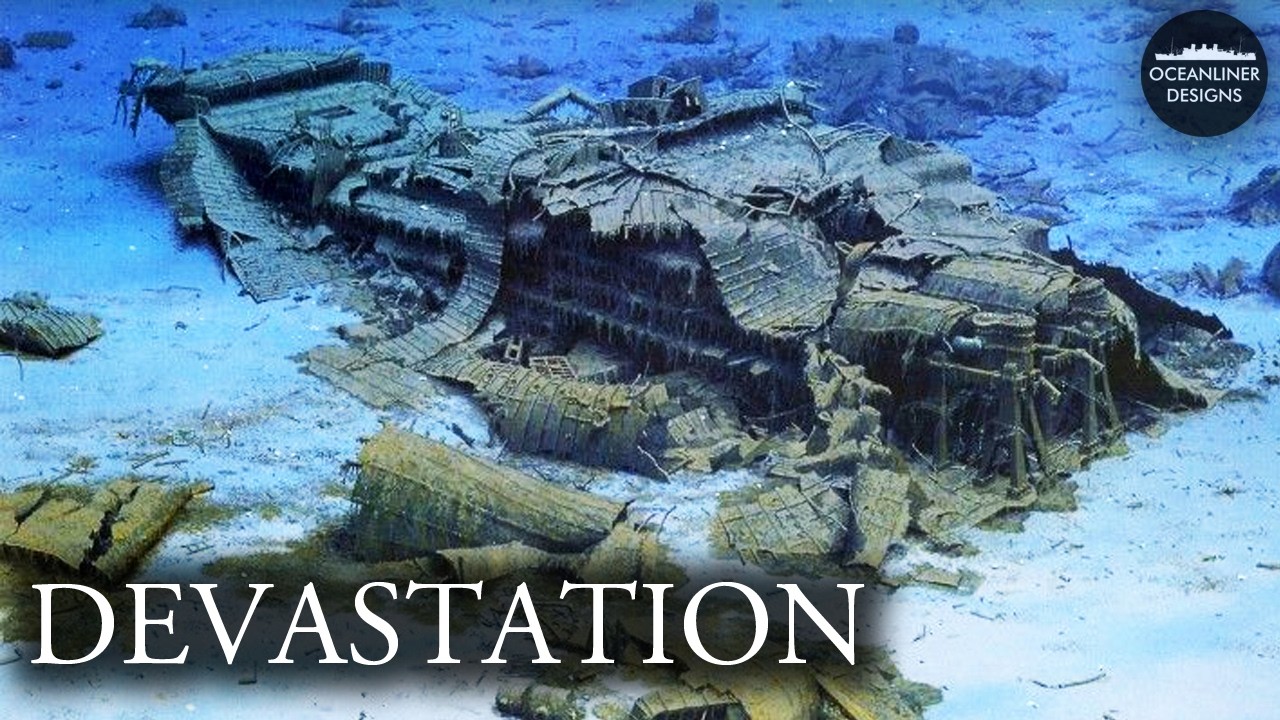
the day is September 1st 1985 the local time 1248 in the morning the research vessel no sails some 400 nautical miles off the coast of New Finland a series of cameras and sonar equipment is scanning the ocean floor as Dr Robert Ballard and his team take turns watching the video feed from the surface up until now it's been an endless stream of smooth sand with the occasional sea creature suddenly noticeable debris appears on screen then a massive boiler and finally out of the cold Darkness a huge steeled wall after over 73 years human eyes are
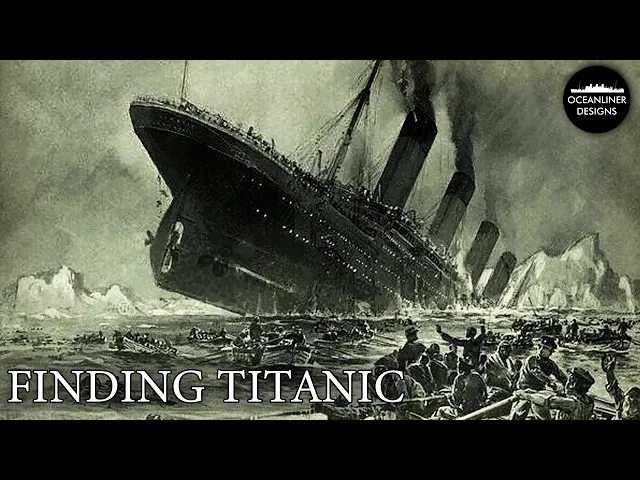
once again gazing upon Titanic and she's been found while Titanic may have sat alone at the bottom of the ocean for seven decades until Dr Ballard's Discovery her long isolation was certainly not due to a lack of Interest or trying quite the opposite in fact ladies and gentlemen I'm your friend Mike Brady from ocean liner designs and this is the fascinating true story of how the Titanic was [Music] [Music] discovered immediately after the Titanic had sunk the families of victims and survivors came together to discuss plans to try to locate the wreck within only a
few months after Titanic had disappeared beneath the waves in 1912 the Guggenheim Aster and Wier families formed a Consortium they contracted the Meritt and Chapman Derek and Wrecking Company to locate and raise the wreck they had hoped that by bringing Titanic back to the surface they could collect the remains of their relatives for a proper burial and retrieve their personal possessions the plan ultimately went nowhere as there was no technology at the time to even locate the wreck never mind raising it shortly thereafter in the spring of 1914 a plan was designed to raise Titanic
by either using magnets or balloons but neither of these plans got beyond the initial stages because they were deemed too expensive mere months after this failed proposal and Europe then found itself entrenched in four years of fighting for the first world war an interest in Titanic and her Discovery took a back seat for the collective mindset now it wouldn't be until 40 years later that the first actual attempt to locate the wreck would be underway in July of 1953 risden Beasley limited a Southampton based deep sea salvage company charted the admiralty Coastal Salvage vessel help
to carry out an expedition the plan for finding Titanic's wreck was to set off a series of underwater explosives and then use sonar to record the echo profiles this and subsequent missions in 1954 were obviously failures the next set of serious attempts to locate Titanic were in the early 19s 1980s eccentric self-made billionaire Jack Grim had already tried to find Noah's Arc the Loch Ness monster Bigfoot and the hollow Earth then he turned his attention to Titanic before the mission had even begun Grim had already secured a book deal a song label and a documentary
to be narrated by famous actor and orator awson Wells now Grim would make use of s scan technology in a search for Titanic sidescan technology works by towing a sonar device which emits pulses down to the sea floor the resulting picture features light and dark areas hard objects like a shipwreck show up as a dark area equipped with this mapping technology grim and his team set out for the North Atlantic on the research vessel hjw Fay the mission was plagued by bad weather from the start and faulty equipment and after just 3 weeks Grim returned
home with no sign of Titanic he set off once again in 1981 for an expedition that would prove to be much more eventful when once again was a deterring factor but it was on this Trip's last day that a strange shape was spotted on the ocean floor the object appeared to be a blade from a propeller Grim returned home and claimed he'd discovered Titanic or at least part of it but scientists accompanying Grim were at odds with him over this claim there was no substantial evidence to back up Grim's testimony he set out one last
time in 1983 but weather once again failed to cooperate and the voyage ended prematurely in a Twist of tragic iron using what we know of the Rec's location today it's been determined that the sonar equipment Grim used in 1980 passed right over the wreck but failed to detect it and then the sonar used in the 1981 exhibition came within just a mile and a half of the ship Jack Grim passed away in 1998 despite all evidence to the contrary he never backed down from his claim that he had been the first person to discover Titanic
now Jack Grim may have failed to discover Titanic's location but he came tantalizingly close with researchers narrowing down on the rec side it was a matter of when not if Titanic could be found enter Dr Robert Ballard accompanied by his team armed with his own technology and funded in secret by a US Navy Expedition the world was on the verge of the most famous discovery of modern history Robert Ballard was born in Kansas but raised in San Diego California it was here that he developed his fascination with the ocean after viewing Disney's 20,000 Leagues Under
the Sea at 12 years old Ballard knew he wanted to be a Captain Nemo type and explore the world Beneath the Sea Ballard's interest in the sea would carry him through his studies and his career he attended the University of California in Santa Barbara earning degrees in chemistry and geology while a member of The Reserve officer training Corps he entered the Army two years later he requested a transfer to the Navy then he was assigned to the Woods Hall oceanographic research institution where he became a full-time Marine scientist with a doctoral degree in Marine geology
and geophysics that was around this time when he started to partake in underwater Expeditions when he took submersibles to explore the Mid-Atlantic Ridge a chain of underwater mountains and while Dr Ballard was always interested in exploring the world beneath the waves he confesses still that he was never really a Titanic fanatic however he did recognize the enormity of potentially finding her saying that quote Titanic was clearly the big Mount Everest at the time so many others had tried many thought that I would have succeeded or I should have succeeded but didn't several decades after that
fateful viewing of 20,000 Leagues Under the Sea Dr Ballard and his team turned their attention to the most famous ocean disaster of all time Ballard first considered a Titanic expedition in 1973 and his first attempt to discover Titanic actually took place in 77 3 years before Jack Grim's initial attempts Ballard took the deep sea Salvage vessel sea probe out to Titanic's last known location in search of the wreck essentially the sea probe was a drill ship ballad and his team attached some sonar equipment cameras to the ship's drilling pipe but the Expedition failed rather in
ceremoniously when the drilling pipe broke 5 years later in 1982 Dr Ballard approached Deputy Chief of Naval operations Ronald thunman of the US Navy in the hopes of funding an expedition to finally locate Titanic thunman and the US Navy were not interested in this proposal but they did have a counter proposal in mind for Dr Ballard now the US Navy had lost two nuclear submarines in the 1960s the thresher and the Scorpion the cause of their disappearances had been a mystery to the Navy ever since and they had hoped that their Discovery could at least
lead to a theory as to why they'd been sunk so they offered to fund Dr Ballard's mission to Titanic on the condition that if he found the missing submarines he could then use the rest of the financing and time allotted to look for Titanic the mission would also have to be top secret Ballard spent 2 years researching the mission and then he sent off in 1984 he discovered both missing submarines and then in 855 he finally conducted a second expedition to map The Wreck of the Scorpion with his obligation to the US Navy now complete
he was able to turn his attention fully to Titanic but by this point the funds were low with just enough money on hand to give him 12 days to locate the wreck it was like looking for a needle in a hay stack with time and money running out Dr Ballard narrowed his search field down to just 100 Mil and set off aboard the research ship no now the no was owned by the US Navy but operated by the Woods Hall oceanographic institution The 245t Vessel was launched in 1968 and delivered to Woods Hole In 1970
she was equipped with a dynamic positioning system capable of maintaining a precise position on the sea surface along with other sophisticated navigation and communication equipment Dr Bard brought along several other pieces of advanced technology ology to Aid in his search Angus or the acoustically navigated geological underwater survey was an Imaging sled towed behind by the nor it was the first unmanned search and Survey System developed by the Woods Hole oceanographic Institute it was designed to work primarily an extremely rugged volcanic terrain now one advantageous feature of Angus was that it maintained a continuous visual contact
with the sea floor it was equipped with three large capacity 35 mm cameras containing 4 100 ft of film now this was enough to provide a total of 3,200 photos on a single Mission now each camera had different focal length lenses so that in total the three could work together to photograph a section of SE floor some 200 ft in width strobe lights used to illuminate the bottom allowed Angus to be flown higher and sea further than conventional deep sea photographic systems the sled was highly portable and photos taken by Angus could be developed on
board the no using warm seaw water for analysis within 4 hours hours now this quick turnaround time meant that the scientists were able to monitor the survey in progress and modify their track accordingly ultimately Angus was used to film the wreck was the only vehicle to be used in both the 1985 and 1986 Titanic Expeditions Dr Ballard and his team also used the ROV or remotely operated vehicle Argo in their search for Titanic Argo was developed and designed in-house by Woodall ocean of graphic built largely with commercially available components and specially developed software the sled
consisted of a system of Television cameras and sonar equipment it could acquire wide angle film and television pictures while flying 50 to 100 ft above the sea floor it was also capable of zooming in to capture Exquisite detail an array of cameras look both forward and down and strobes and incandesent lighting illuminated the ocean floor unmanned or tethered systems like Argo can operate 24 hours a day and Argo was capable of operating at depths around 6,000 M or 20,000 ft this meant that around 98% of the ocean floor was in reach Argo was a run
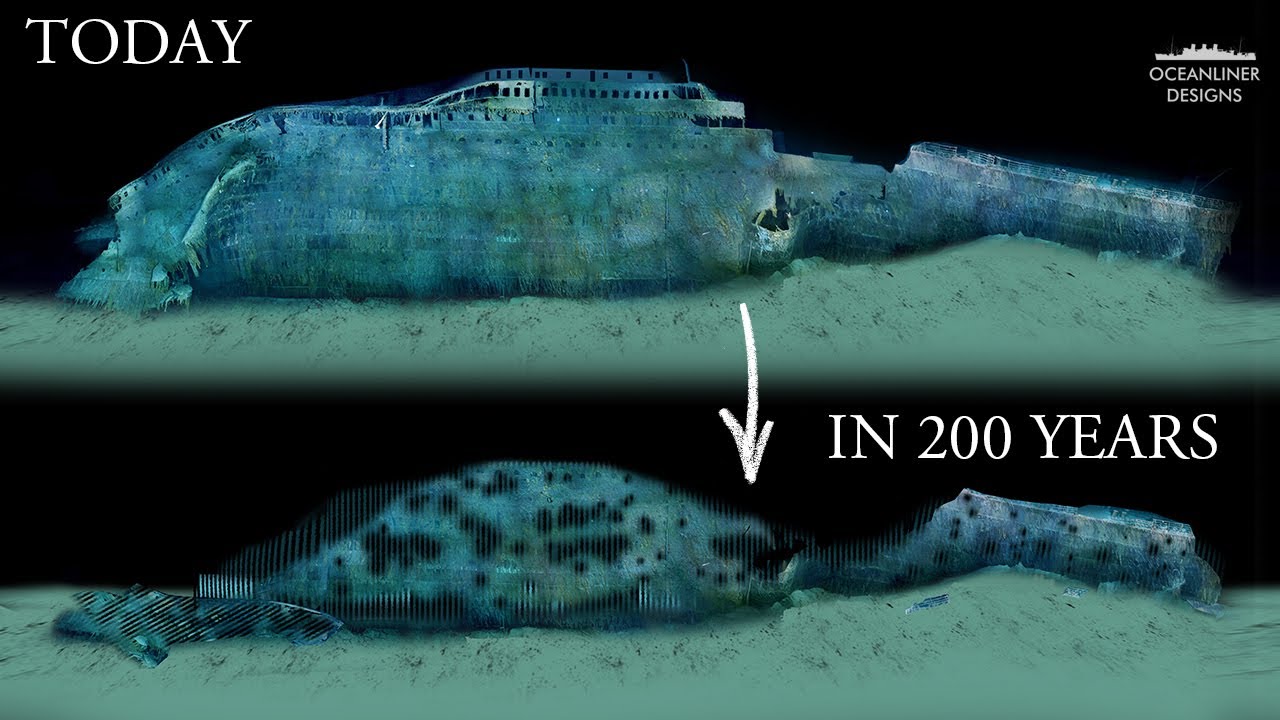
anytime go anytime system so it's no surprise that it was the device that finally found Titanic and sent back the very first pictures Titanic's Discovery was with absolutely no hyperbole or exaggeration an historic event once the news reached the shore the world was absolutely enthralled the most famous ocean liner of all time had been found the final resting place confirmed now more time would be needed to answer many of the Titanic's Mysteries and confirm certain theories but her initial Discovery answered perhaps what was the most argued over fact since the sinking Titanic had indeed split
into two sections after the sinking the British Rec commission held an inquiry from May to July of 1912 the purpose of this inquiry was to establish a detailed account of Titanic's sinking at this inquiry several witnesses said they had seenan Titanic split in half while a few others said it didn't some said it was too dark and they couldn't see either way Second Officer ligh Haller the most senior surviving member of the crew and therefore perhaps the most influential voice at the inquiry insisted that the ship did not split saying quote it is utterly untrue
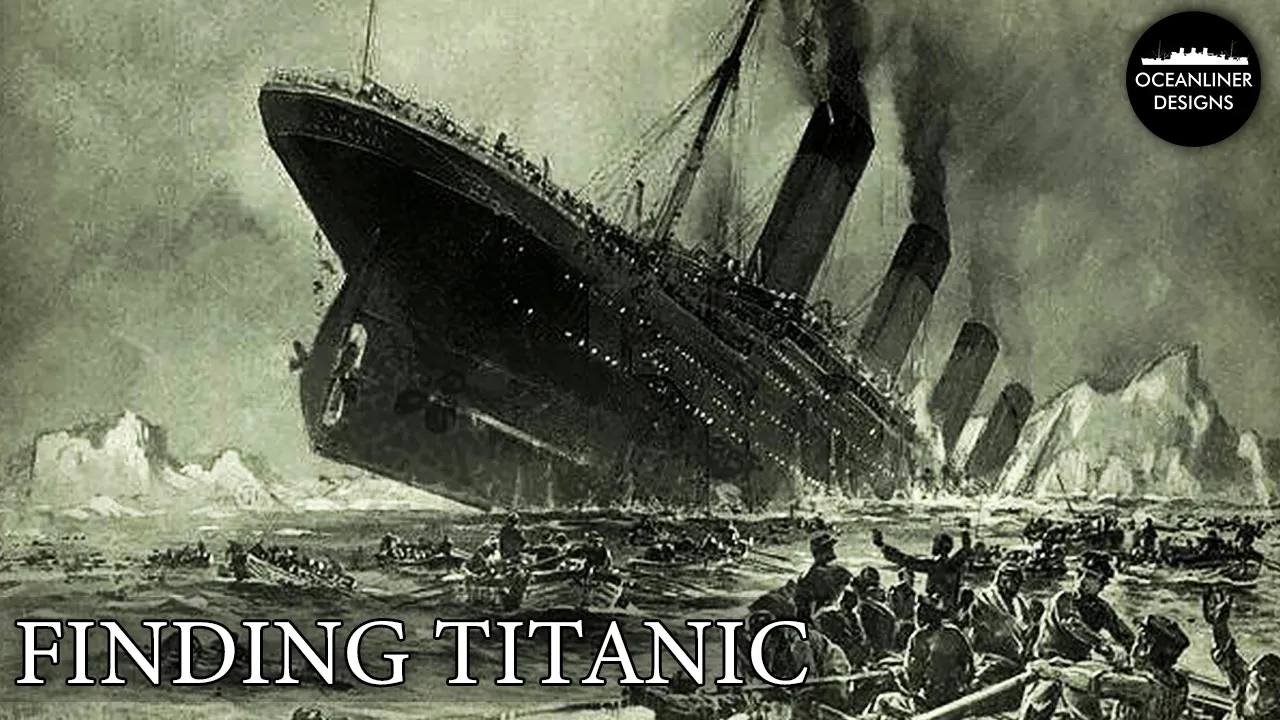
the ship did not and could not have broken in two despite several accounts of the ship breaking apart it was generally believed and accepted for decades that Titanic sank in one piece Dr Ballard's Discovery had put the debate to rest had validated the testimony of all those that insisted she'd broken apart the W consisted of two main sections the bow and separated by about a third of a mile the stern and then in between a massive debris field now that Titanic's location was confirm Dr Ballard could plan a follow-up visit equipped with technology to allow
man dives down to the wreck and Dr Ballard Revisited the Titanic recite again in 1986 this time aboard the ship RV Atlant 2 The Vessel was the support ship for Alvin a submersible design for deep sea exploration the concept for the Alvin had actually begun way back in the 1930s When Alan Vine an engineer at Woods Hall oceanog graphic had an idea for deep sea exploration he wanted to create a vessel that could withstand the immense pressure found at the bottom of the ocean while also capturing data for research after 30 years of hard Planning
Development and advances of Technology Alvin went from conception to reality and was placed into service by the US Navy on June 5th 1964 the 17 ton submersible allowed for two scientists and One Pilot to dive to the depth of 4500 m or 14,800 ft for up to 9 hours at a time Alvin featured modern day technology for research and for safety and featured a titanium energy release sphere that could eject and Float occupants to Safety in the event of an emergency Alvin's design and Technology made it a perfect companion to bring human beings up close
and personal with Titanic for the first time in over seven decades in the summer of 1986 Alvin made 11 Dives down to Titanic carrying Dr Ballard and two companions Alvin was also accompanied by a small ROV named Jason Jr now this ROV was built for the Titanic expedition specifically it was attached to Alvin via a 300t fiber optic cable and could be stored safely in bespoke housing at the front of the submersible the ROV was equipped with one video camera and 135 mm film camera with a strobe Jason Jr allowed the research team to get
closer to Titanic than they ever could with just the Alvin the ROV first entered the rire and open cargo hatch on the bow this area of the ship was filled with debris but Jason junr was able to move on and enter through the opening of the grand staircase where the doed housing used to be the long fiber optic tether connected to Alvin and allowed the r to descend several decks Jason junr gathered more photos and videos by entering near the ship's officers quarters and in all the team captured hours of video and over 57,000 photographs
of the Titanic since that fateful September Day in 1985 dozens and dozens of manned and unmanned Dives to Titanic have been undertaken her location is no longer a mystery the technology to visit her now is readily available with the ship and her sinking now prominently back in the public conscious there's no shortage of funding to support these kinds of expeditions in the 39 years since Dr Ballard's Discovery many of these Expeditions have provided us with Clues as to what happened the night of the disaster many Survivor testimonies have been validated Titanic serves as a study
for deep sea marine life as well scientists can observe the effects of Steel the longer it sits on the bottom of the ocean most importantly though the Titanic's Discovery it's ensured that she will never be forgotten we'll forever have a glimpse as to what happened that fateful night in April of 1912 to all those that sailed on Titanic those that were lost and those that survived their stories will continue to be told time and time again Titanic shows us that although some things may be lost they're never truly gone and if you look hard enough
you just might be able to bring them back ladies and gentlemen it's your friend Mike Brady from ocean liner designs thank you so much for watching this video If you enjoyed it please leave a comment below don't forget to subscri subscribe to the channel because we get new videos out weekly if you want to support my work and get really cool perks like behind the scenes and Early Access please visit my patreon in the link in the description below or sign up as a YouTube member come and join the crew as always stay safe stay
happy I'll see you again next time