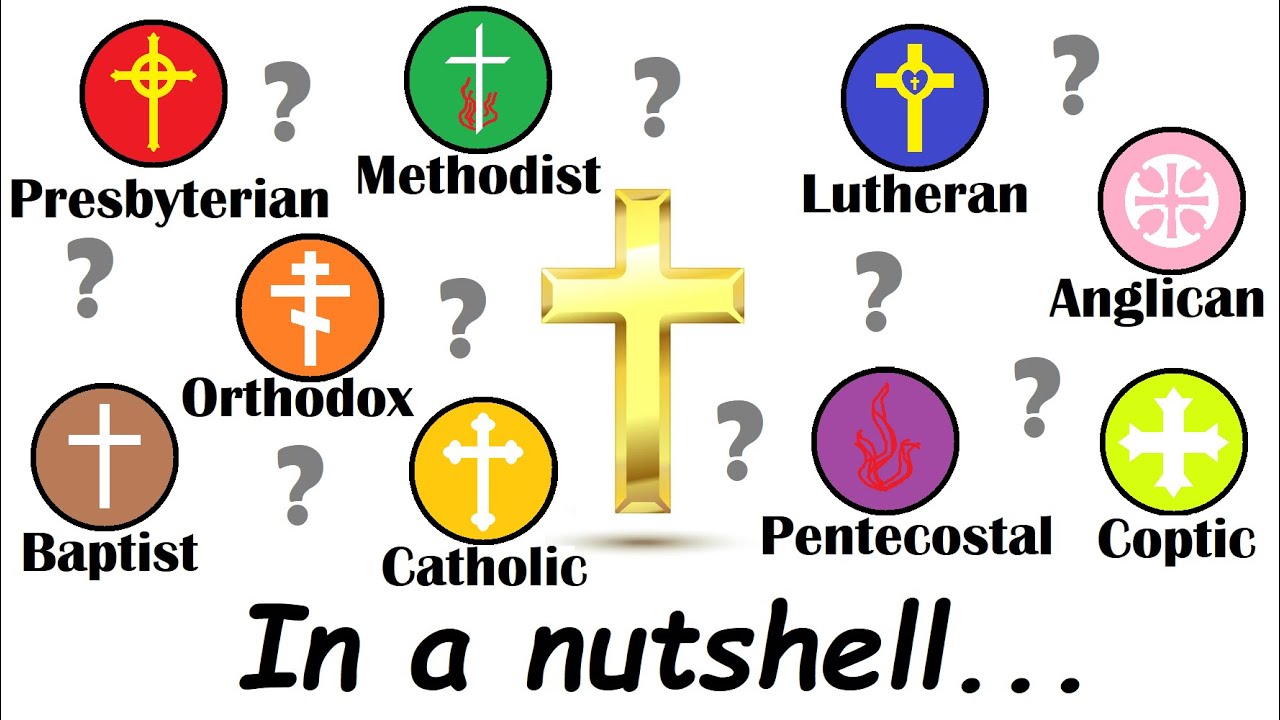
So we've all heard of this book called the Holy Bible. And if you took the time to read it you would find that make some pretty outrageous claims claims about God's Son Jesus Christ. People believe that he was the Savior and they worshipped him as God.
It claims that Jesus performed miracles and then he died by crucifixion under Pontius Pilate. Claims that he was buried, that he rose again from the dead after three days, and that he appeared allive to his disciples afterwards. It states that he ascended into heaven and he will, one day, come again to earth.
Furthermore, the Bible states that God loves us and wants to have a relationship with us. Overall, I think everyone Christian or non-christian can agree that the Bible is a pretty crazy book. But if you think about it anyone can make claim, and just because it's written on paper or in a book, doesn't mean it's true.
I'm look at the Affordable Care Act: they claim it's great but actually. . .
okay moving on now going back to the Bible. There seems to be a little tension behind the book people hated people love it people don't care, but either way, it's the best selling book of all time. And people devote their whole lives to studying the crazy thing so I have to ask the question why?
Why should anyone to vote their life to what a book has to say? They would have to be pretty convinced now what it says is true. In our last video, we talked about some claims that the Bible makes.
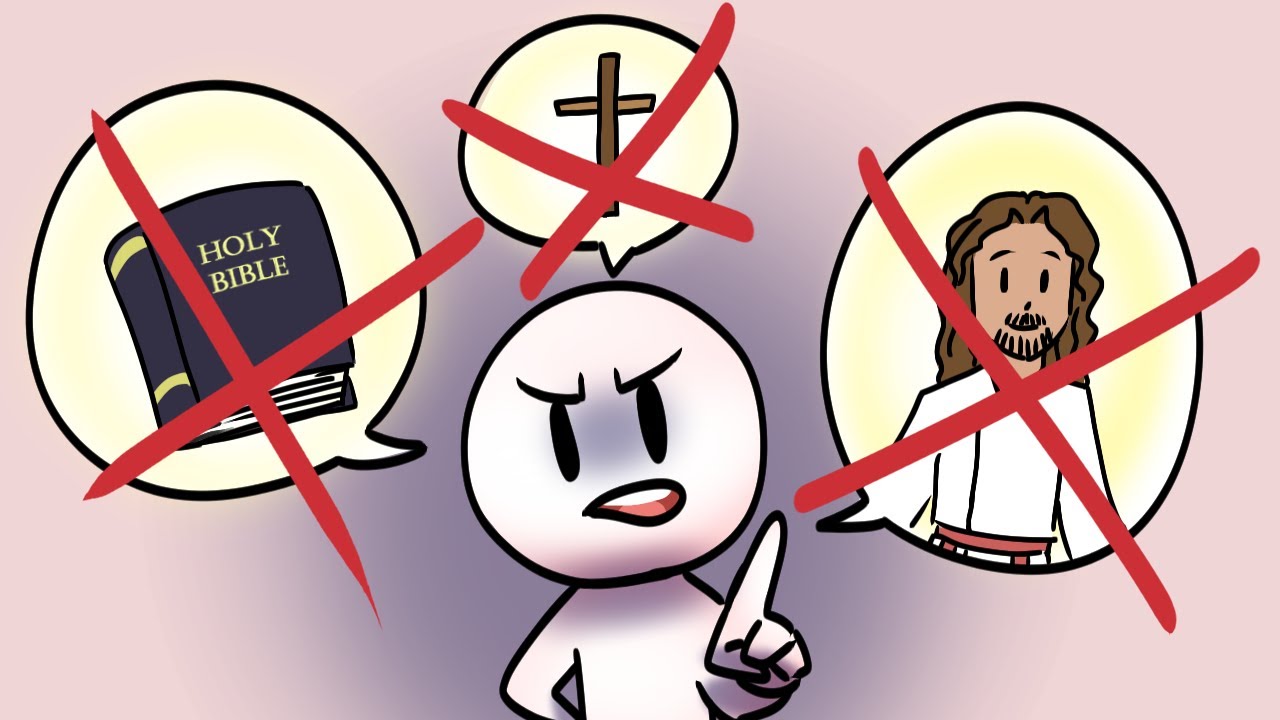
So when this video we'll be answering the following question: Why in the world should I believe the Bible? More to the point, why should I even care? "I don't believe the Bible," you may say Well basically, if you don't believe the Bible is true that's your opinion.
But what if there is some possibility at the Bible's correct? That there is a heaven and the hell? Then what?
are you 100 percent for sure positive that the Bible is wrong? Because if you are wrong, I would say that a lot is at stake. All I'm saying, is that before you dismiss the Bible as some crazy religious book, At least look at the reasons why you should believe it.
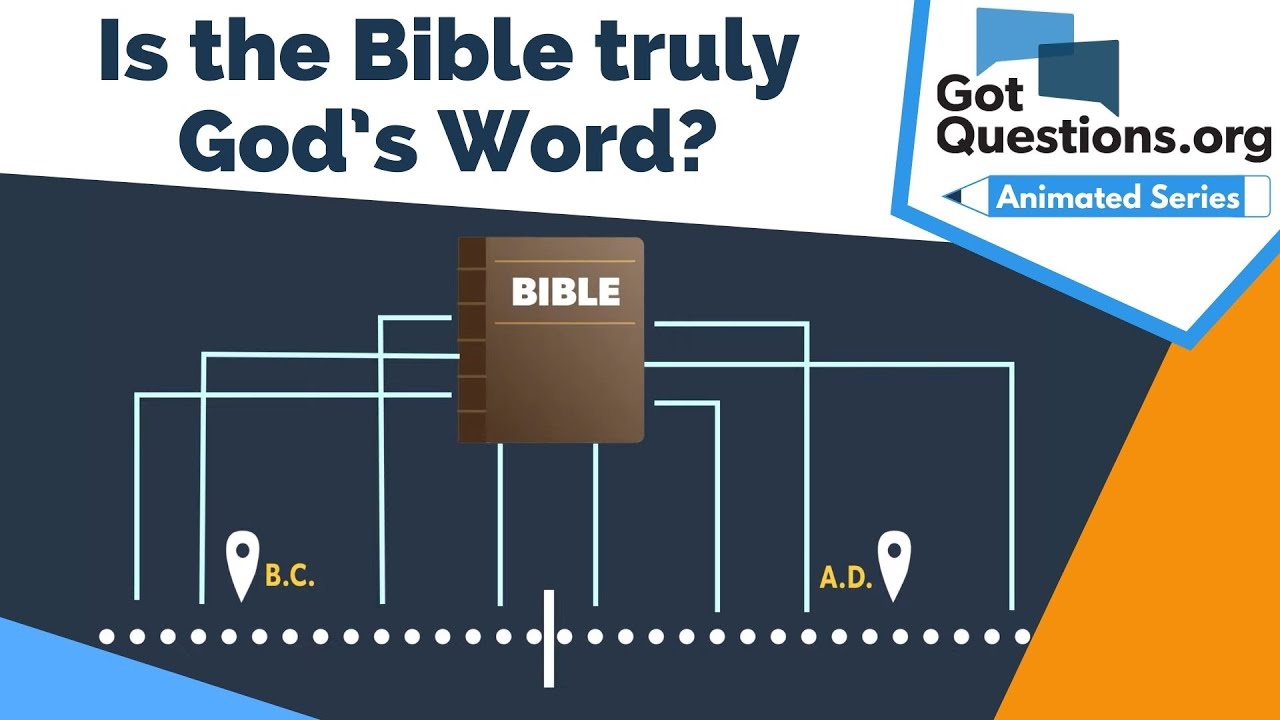
Let's begin by explaining what the Bible is. First off, the word "Bible" comes from the Latin word Biblia which means "the books" or collection of books. simply put the Holy Bible means the Holy collection of books.
The Bible is divided into two different parts: the Old Testament, which explains history before the time of Jesus Christ, and the New Testament which explains the history during and after the time Jesus Christ. So now that we briefly describe what the Bible is, let's look at why one would call it reliable. So the Bible has sixty six different books, but these books weren't already by one guy.
Some are written by Moses by the Apostle Paul by some Jesus's disciples but let's focus on what some of the authors claim about what they're writing. Luke was a doctor and a follower of Jesus. He wrote one of Jesus' four biographies also known as the Gospels.
In fact, there the first four books of the New Testament, case you want to read them. They are titled Matthew, Mark, Luke and John. You can guess which one was written by Luke.
That's right, he wrote John. I'm kidding. Anway, in Luke chapter 1 verses 2 through 4 it reads, Just as those who from the beginning were eye-witnesses and ministers of the word, delivered them to us it seemed good to me also having had perfect understanding of all things from the very first to write to you in orderly account that you may know the certainty up those things in which you were instructed.
Peter one of Jesus's disciples says in his book, "For we did not follow cunningly devised fables when we were made known to you the power and coming up our Lord Jesus Christ but were eye witnesses of his Majesty," quoting 2nd Peter 1:16 What's the point? The accounts they're making are based on eye-witnesses! This isn't some second hand source.
What we are reading came from people who witnessed and saw Jesus Christ. It proclaims certainty. Even Peter says this isn't a fairy tale this is in a fantasy this isn't made up like all our government's claims to get us out of debt.
. . Oooh, moving on.
Well, let's look at more passages about what God's Word claims. 2nd Peter 3:16 states that, "All Scripture is given by inspiration of God and is profitable for doctrine, for re-proof, for correction, for instruction in righteousness. " So pretty much all Scripture is inspired or breathed by God.
And can be used to correct us and help us live awesome lives. 2nd Peter 1:21 states, "Holy men of God spoke as they were moved by the Holy Spirit. " So what does this mean?
Many people state that God's Word can't be all that great because it was penned by Man. Here it makes the statement that no prophecy of Scripture came by man. But holy men of God spoke as they were moved by the Holy Spirit.
So who wrote God's Word? Man? No.
The Bible claims that God put His Holy Spirit into man, thus writing his Word. Now that we know that the authors claim to be speaking truth, and that they are eye witnesses, let's continue. One test we can use to see if the authors are telling the truth, is called honesty test.
It looks to see if the authors wrote any embarrassing material about themselves. The fact that they would write something embarrassing about themselves is significant because it means they were more concerned about reporting truth than recording an awesome biography about them. If they want to lie about Jesus it wouldn't make sense for them to make up embarrassing stories to portray who they were.
If they wanted to lie, then why not make up a lie that makes them look good? Well, does the Bible record anything embarrassing? Yes!
Jesus called Peter "Satan. " That's not a good name to be called by the way. At the garden of Gethsemane, Jesus tells His disciples to pray.
Jesus leaves and returns to find them all asleep. So He wakes them up, tells them to stay up and pray, but they fall asleep again. So why were they told the stay awake?
Because Jesus was arrested right after that. Oh, and what happened when they were surrounded by soldiers ready to arrest Jesus? All those disciples book it!
They ditched their best friend in a heartbeat. Then Peter denies Jesus three times, pretending he didn't know Him. One time to a little girl.
and then he cries his eyes out while the other disciples go hide somewhere. and to top that off, before all of this, the disciples were all debating on which of them were the greatest. .
. in front of Jesus! Anyone detecting some embarrassing material?
So why is this embarrassing thing important again? Because all the disciples except for John died brutal and horrible deaths for their faith. Some were crucified, stoned, beheaded, thrown into ovens hanged and if all these disciples were lying about their experiences with Jesus, why would they die for a lie?
All they had to do was renounce their faith. They would only have to say okay I was wrong Jesus wasn't God. Then their lives to be spared.
Why would they all be willing to die? You know what they're embarrassing stories to tell me? That the authors weren't concerned with themselves.
They were concerned with were relaying truth. Now another question comes up, how do we know the Bible isn't like the telephone game? How do we know if what we're reading is still what the authors wrote thousands years ago?
This telephone test allows us to see if the document have reached us accurately. We look at what's called a time gap. A time gap is the gap of time from when the author wrote the original to the time when the first copy was written.
You see, back then, they would write letters to each other you probably wouldn't survive back then because texting didn't exist. Anyway. .
. People would hand-write and copy exactly the original documents. Documents written by Paul, Peter, John, etc.
These hand-written documents, originals and copies, were called manuscripts. The smaller the time gap between the original and copy, the less room for error. So let's look at some documents outside the Bible.
Pliny the younger was a Roman historian and the time gap from when he first wrote his manuscripts to the copies we have is seven hundred and fifty years. Caesar's time gap for his manuscripts is 1000 years. And Plato's tetralogy is is 1200 years.
The time gap for the New Testament only 50 years. That's right, 50 years. The copies we have the New Testament were within 50 years of the life of Jesus.
the first biography we have Alexander the Great is for a 400 years after he lived, and no one questions his existence. yet we have 4 biographies of Jesus within 50 years of his life and everyone has a problem with Him. The evidence we have of Jesus easily outweighs all other ancient figures in history.
If we don't trust in the records of Jesus, then we have to throw out everything else we know or think we know about ancient history. That means throwing out everything we know about Caesar, Plato, Alexander the great, all those other dead guys. Now, let's look at how many manuscripts we have of the New Testament.
Let's think this through. We want more manuscripts, right? The more manuscripts we have, the more evidence we have and the better chance we have at getting back to the original.
Let's look at Caesar first. All that we know about Caesar, who was a contemporary of Jesus, is all written on 10 manuscripts. Now look at Plato's tetralogy: Everything written in 7 manuscripts.
All that we know about Tacitus, one of the greatest Roman historians, in 20 manuscripts. Now, let's look at the number of New Testament manuscripts. Let's guess how many.
You're right! 24,633 manuscripts. and counting.
. . look at you so smart.
. . Now guess which historical document has the next most manuscripts.
And how many copies there are. It's the Illiad by Homer. And has about 643 manuscripts.
It's a close second trailing the New Testament by only 24,000. Notice my sarcasm? Everything we know about Caesar is in 10 manuscripts and no one questions what he said or what he did.
No one questions Plato or Tacitus, but for some reason at ton of people have everything against the Bible, yet it overwhelmingly has the most evidence and manuscripts supporting it. Now that we've covered the honesty test and the telephone test, let's look at the corroboration test. This ask the question, "Do other historical materials confirm or deny the testimony the Bible?
" So let's look at early writers outside the Bible that talked about Jesus. There are 9 non-christian sources that mention Jesus within 150 years his death plus another 33 Christian sources. Altogether that 42 other sources besides the Bible that speak about Jesus.
Tiberius Caesar, the Roman Emperor at the time of Jesus, has 10 sources that mention him within 150 years of his life. Jesus has four times as many historical references that speak of Him. Even if you took the Bible out of it, we can know from other sources that Jesus lived, that people believe he was the Savior, that they worshipped Him as God, that he did miracles, and that he died by crucifixion under Pontius Pilate, that he was buried, and rose again 3 days, and appeared to his disciples afterwards, that He ascended into heaven, and that you will one day come again.
You see, here's the thing many people claim that the Bible is just a book. They believe it some crazy religious thing only meant for people crazy enough to believe it. But that's not true.
I mean, it is crazy but it's not just a book. It's a letter. A love letter that God wrote to touch the hearts people here so that they can know him.
Romans 5:8 "But God demonstrates His own love toward us in that while we were still sinners, Christ died for us. " 1st John 3:16 "By this we know love, because he lay down his life for us. " The Bible tells us that God loves us, and how do you know that?
By looking at the cross of Jesus. We're sinners, deserving of death. But Jesus died anyway so we can spend an eternity with Him.
We went through the honesty test, the telephone test, and the corroboration test. The Bible stood the tests. God stands before us now his work the real question is: "Will you hear him?
" Do you read the Bible just to get through it? Or are you letting God's teachings go through you? The Bible is more than just a book.
It's God's Word, and he wants to tell you how much he loves you. Why in the world should do you believe the Bible? Because: it's reliable, it has evidence, it's been proven, it points to truth, and the truth is: God loves you had to tell you some way.
So the reliability of the Bible is a huge topic. And there was no way I can cover it in one YouTube video. So check out some of the sources that help but the making of the video.
Our next video will be out February and we'll be answering the question, "Who in the world was Jesus? " Who was he? Who did claim himself to be?
Why was he such a big deal? Should be fun. In the meantime, I want to encourage you to read the Bible.
Because the Bible is the way God talks to us and he wants to talk to you. What we just learned tells us there's a lot of weight behind what the Bible has to say. So when God says He loves you, I believe, He actually means it.