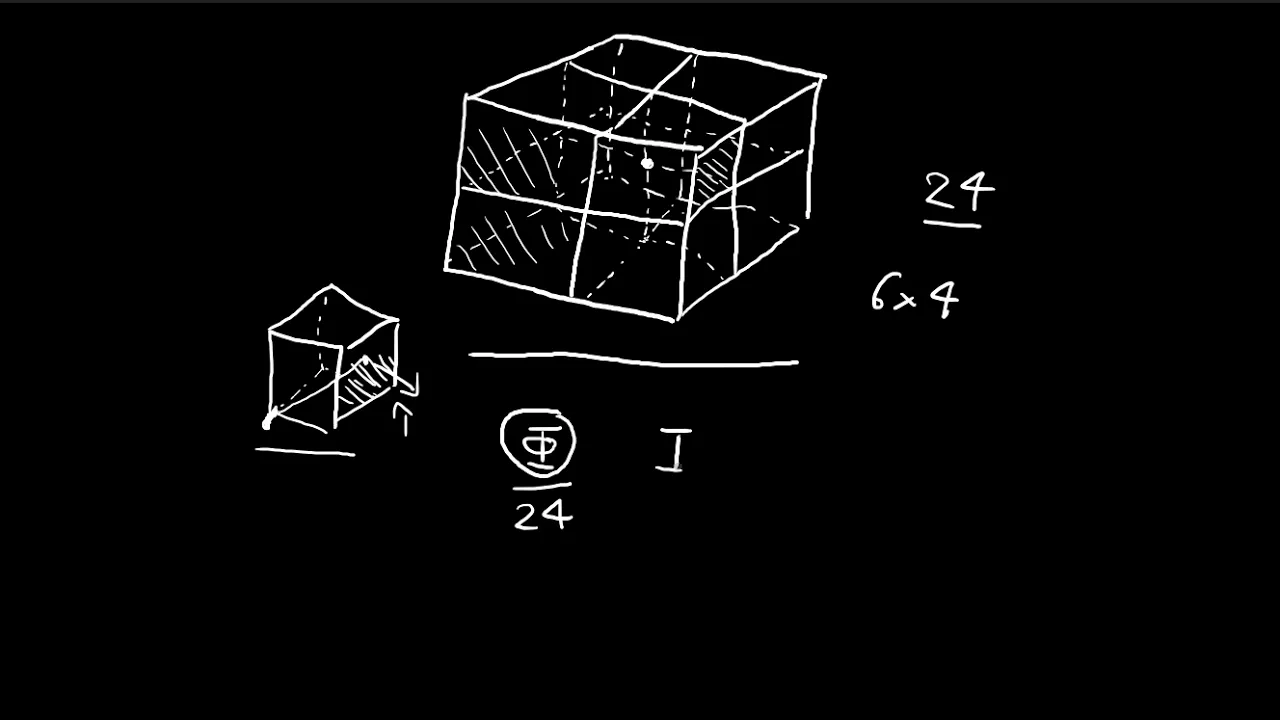
so here we have the problem pause this video if you need to so I'm just gonna move on to a solution so at first it seems that we're faced with a rather daunting task so we have a cube and then we're being asked to find the flux through one of the surface so usually usually using current conventional calculus methods this is going to be pretty messy so you need to find the flux through this surface you need to find the normal you need to vary the distance from the surface to the charge so the calculations
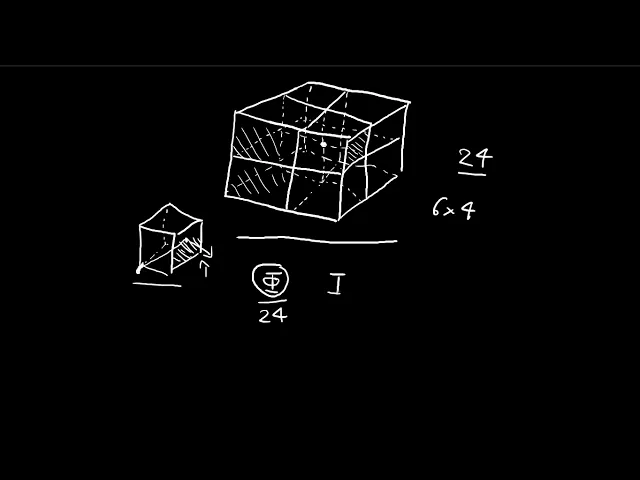
are going to get really messy so the trick to get ourselves to save ourselves all that effort is to consider this configuration here so instead of one cube I have eight cubes here and with the charge being in the center because you see that all of these sides are are all symmetrical you can expect that the flux through each and every single one of these surface is going to be the same so we're being asked to find the flux through one of these surfaces so if I can find the flux through this entire big gigantic
cube I can just divide it by the total number of these smaller surfaces which is what I'm codified and if you account you can see that they're actually 24 of them so it's just 6 times 4 so we have actually 24 of these small squares so if you find the flux through this entire cube and then divided so the entire flux of the entire cube and then divided by 24 this is going to be the answer that we want so the flux is in one of these smaller smaller surfaces so the problem is to find
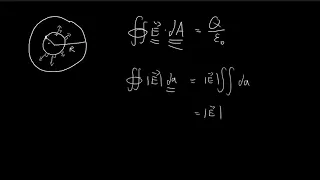
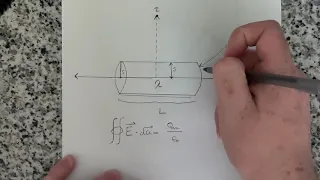
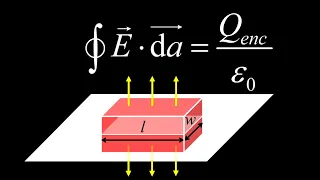
this flux it so the flux through the entire a cube so how do we find it so the trick is to observe that the cube is actually a closed surface so we can actually apply Gauss's law so the flux through the entire cube this is going to be equal to the total number of charge enclosed by the surface divided by epsilon you see that the total amount of charge enclosed by this cube it's only this there's only one one point one a point of charge inside so that's just Q divided by epsilon and so that's
it that is the flux of the entire EQ so we found this expression here so that by dividing with by 24 we have essentially found flux through this smaller surface and so our final answer is so the flux through this surface is actually equal to Q divided by 24 Epsilon so by considering this configuration here we've saved ourselves ourselves a lot of cumbersome calculations so this is our answer