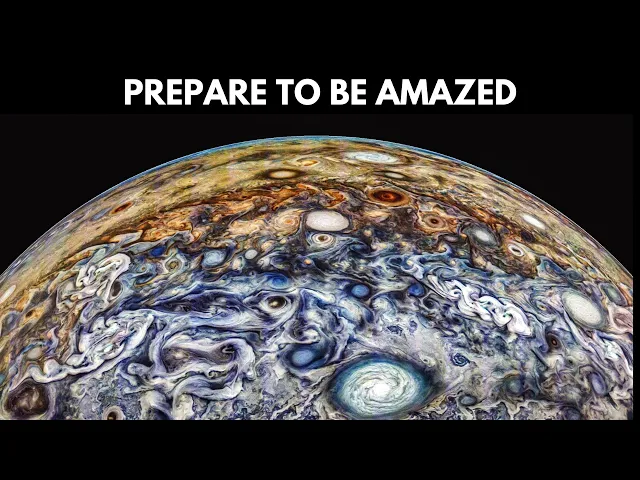
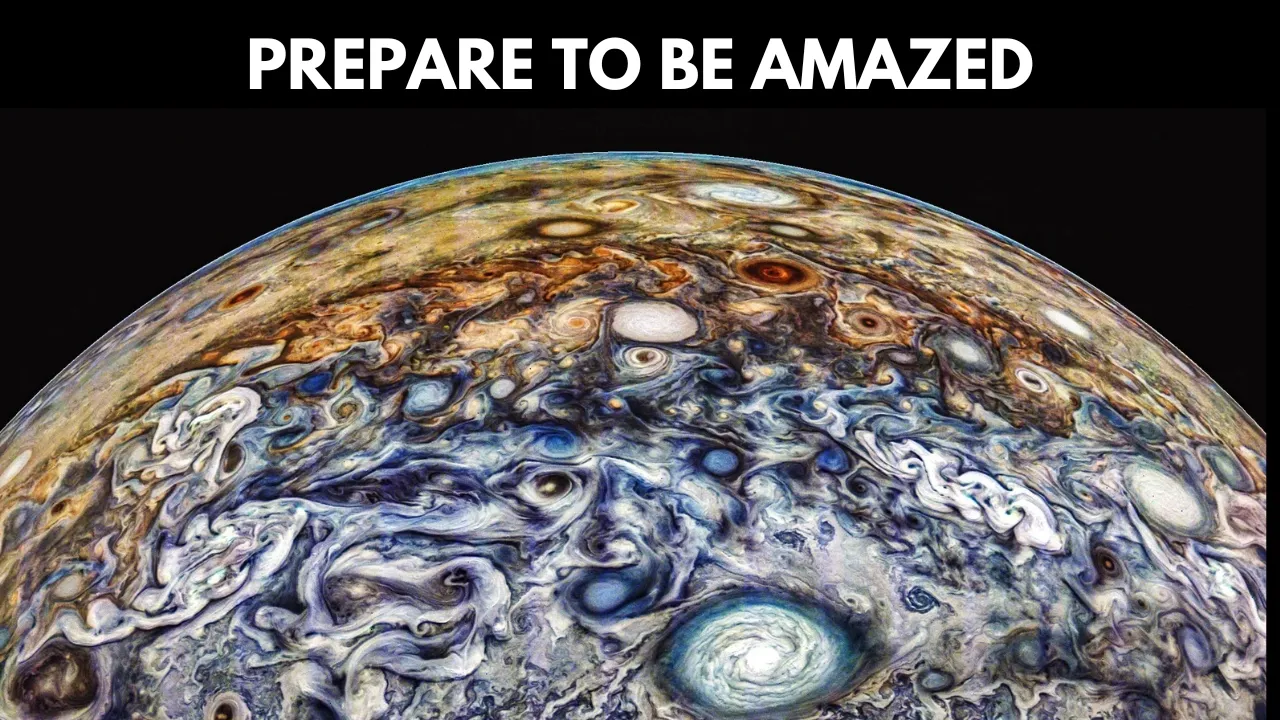
At first glance, this might look like a painting, but it's actually something far more majestic. What you're seeing is a real image of Jupiter captured by NASA's Juno Cam aboard the Juno spacecraft. These new visuals offer a view of the gas giant unlike anything we've seen before, revealing the planet's swirling atmosphere in breathtaking detail.
Juno launched in August 2011 and arrived at Jupiter in July 2016. Carrying a suite of state-of-the-art instruments, each was designed to peel back a different layer of Jupiter's secrets from a magnetometer that measures its immense magnetic field to a microwave radiometer that probes deep beneath the clouds. And then there's Junoam.
Unlike the rest of Juno's instruments, Juno Cam wasn't originally intended for rigorous scientific study. Instead, it was designed as a public outreach tool to bring the beauty of Jupiter closer to people back on Earth. But in a delightful twist, Juno Cam has far exceeded expectations.
Junoam becomes particularly important during Juno's closest passes to Jupiter, known as Paraj. when the spacecraft swoops near the giant planet along its elliptical orbit. These moments create perfect conditions for Juno Cam to snap the clearest, most detailed images of Jupiter we've ever seen.
But Junoam isn't just about visuals. It's about participation. What truly sets it apart is how it invites the world to join the mission.
NASA makes Juno Cam's raw images publicly available, encouraging citizen scientists and space enthusiasts everywhere to process and enhance them. This open approach has led to some of the most stunning and artistic views of Jupiter ever seen, revealing fine cloud structures and storm patterns that might go unnoticed in the unprocessed pictures. Take this for example.
One of the most breathtaking images from Juno captures the northern circumpolar cyclones on Jupiter. You can see nine cyclones forming a stable yet dynamic pattern. One sitting at the center while eight others rotating around it arranged in a nearly perfect octagon.
It's a sight unlike anything on Earth. Each of these storms is a swirling giant. some as wide as 2500 to 4,300 miles, making them as large as entire continents on Earth.
But what keeps them so stable? It's a complex balance of forces. They are sustained by mutual interactions between the cyclones, Jupiter's rapid rotation, internal heat, and intense atmospheric pressure.
Together, these conditions prevent the storms from merging or drifting apart. maintaining one of the most fascinating and stable storm systems we've seen in the solar system. Over the years, Juno Cam has captured some of the most detailed images ever taken of Jupiter's atmosphere.
You can see spiral arms, tiny turbulent patterns, and even changes in the types of clouds. In this particular image series, Juno was flying just 6,800 m or about 11,000 km above the cloud tops, close to the planet's north pole. From that close, every storm and cloud swirl looks sharp and dramatic.
Thanks to the work of citizen scientists, we can see the clouds in a more three-dimensional way, almost like looking into a living, breathing system of storms and gases. Another breathtaking image captures the colorful, intricate patterns in a jetream region of Jupiter's northern hemisphere known as Jet N3. This dynamic zone reveals just how complex Jupiter's atmosphere really is.
Unlike Earth, Jupiter's cloud tops aren't flat. The bands and storms we see stretch deep into the planet, reaching down about 1,900 m or 3,000 km below the visible surface. This gives Jupiter its layered textured appearance.
In the image, you can spot a patch of bright white clouds near the center right. These are high alitude pop-up clouds that rise above the surrounding atmosphere, similar to how thunderstorms rise above the clouds on Earth. At the time this image was taken, Juno was about 6,000 mi above the cloud tops.
Besides capturing Jupiter's swirling storms and delicate cloud filaments, Juno Cam has also done an incredible job of photographing the planet's powerful jet streams. These are fastmoving wind currents in Jupiter's atmosphere, and they play a big role in shaping the planet's iconic striped appearance. Unlike Earth's jet streams, which are mostly limited to certain latitudes, Jupiter's jets run all across the planet, flowing mainly from east to west or west to east in wide bands.
Some of these zonal winds reach speeds of several hundred mph, faster than the most powerful hurricanes on Earth. These jetreams form at the boundaries between Jupiter's colorful belts and zones, where the wind directions sharply change. They are powered by a mix of Jupiter's rapid rotation, which is the fastest in the solar system, and the heat rising from deep within the planet.
Juno even captured a lightning bolt on Jupiter. On Earth, lightning bolts originate from water clouds and happen most frequently near the equator. While on Jupiter, lightning likely also occurs in clouds containing an ammonia water solution and can be seen most often near the poles.
Over the years, Juno Cam has also turned its lens towards Jupiter's moons, capturing some truly striking images, especially of Io, the most volcanically active body in the solar system. While Juno's recent observations have been vital, Io's exploration began decades ago when Voyager 1 flew past Jupiter and captured the first close-up images of the Jovian moon. What scientists saw was shocking.
Massive volcanic plumes erupting hundreds of miles high into space. This was a groundbreaking discovery. No one had expected to see active geology on a small distant moon.
That moment changed everything. Io went from being a mysterious speck in the sky to one of the most geologically fascinating worlds we've ever encountered. And now, thanks to Juno and Juno Cam, we're getting even closer looks.
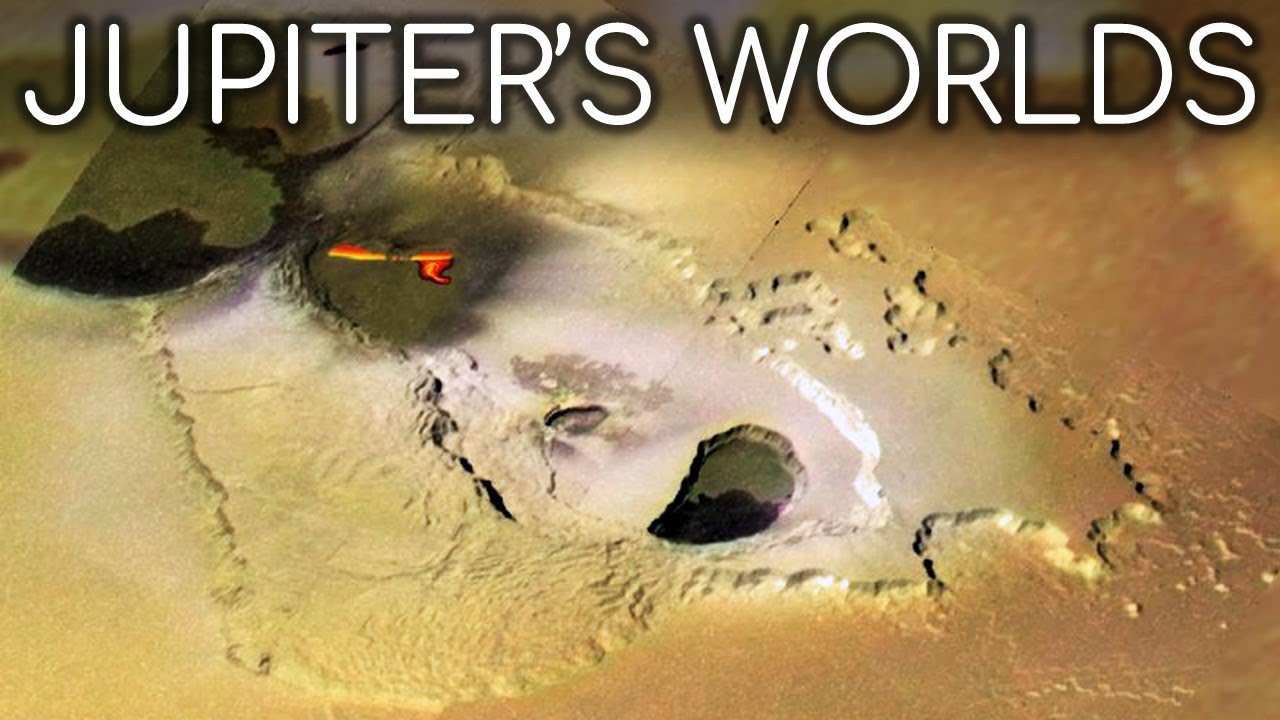
This is the sharpest image of Io captured in a generation taken during a historic close flyby by NASA's Juno spacecraft. In this pass, Juno came within just 930 mi or 1,500 km of Io surface, the closest any spacecraft has been to this volcanic world in over 20 years. And the view did not disappoint.
You can see evidence of an active volcanic plume, tall mountain peaks casting long shadows, and even lava lakes, some with what appear to be islands in the middle. These features give scientists a rare, detailed look at Io's violent and everchanging surface. One of the most exciting discoveries by Juno is a new volcano near Io's equator stretching about 110 mi or 177 km wide.
This volcano didn't appear in images taken by NASA's Galileo mission back in 1997, which means it likely formed sometime in the last two decades. Juno's close flybys of Io also provided some of the most detailed views yet of Loki Patera, which is the largest and most active volcanic depression on the moon and was first captured by Voyager 1 during its flyby of 1979. Juno revealed a vast lava lake about 200 km wide on Io with a surface so smooth that it reflected light like volcanic glass.
This suggests that parts of the lake had recently cooled and solidified. The images also showed a series of small islands, each roughly 3 km wide, and scattered across the lava lake. Remarkably, these islands appear to have remained in the same position for over 40 years based on comparisons with past spacecraft data.
These observations have deepened our understanding of how Loki Peter behaves and confirmed its status as one of the most dynamic volcanic features in the solar system. Talking about Jupiter's moons, this breathtaking moment captured by Juno Cam stands out as a true masterpiece. In the image, you can see Ganymede, Jupiter's largest moon, casting a perfect shadow on the gas giant swirling atmosphere.
It's a scene that looks almost like a solar eclipse as the massive dark oval cuts across the flowing bands of clouds below. Juno has completely reshaped how we understand Jupiter. This mission has revealed that the gas giant is far more complex than we ever imagined.
And in doing so, it's overturned several long-held ideas about the planet. Take the Great Red Spot for example. This giant storm has been raging for centuries.
And for a long time, scientists thought it was mostly a surface level feature, but Juno discovered something surprising. It actually extends over 300 km deep into Jupiter's atmosphere. That's deeper than any storm on Earth, showing that Jupiter's weather systems are connected far below the visible clouds.
Juno also changed what we thought we knew about Jupiter's auroras. On Earth, auroras are powered by solar wind, but on Jupiter, they're driven by the planet's rapid rotation and intense magnetic field. This means Jupiter has its own unique auroral system powered from within rather than from the sun.
And perhaps one of the biggest surprises was about Jupiter's core. Scientists once believed the planet had a small, dense, earthlike core. But Juno found that Jupiter's core is fuzzy and spread out.
This suggests that Jupiter might have gone through a massive collision early in its history, which disrupted its core and changed its internal structure. Originally, Juno was supposed to complete just 32 orbits and then dive into Jupiter's atmosphere, ending its mission. However, because of the incredible discoveries it made, NASA extended the mission until at least September 2025.
Like the Cassini mission to Saturn, Juno has become one of NASA's most valuable space missions. Its data will continue to be studied for decades, helping us unlock more secrets of Jupiter and its moons and deepening our understanding of how giant planets work, both in our solar system and beyond.