There are no survivors after a volcanic eruption on the country's White Island. >> New Zealand scrambled to save people caught in a deadly volcano eruption. The most severe burns were ones that had no skin left.
It was just kind of dripped off them like wax. Let's get off of here. Jesus.
What was supposed to be a once-in-a-lifetime opportunity to get up close and personal with Whakaari volcano, also known as White Island, turned into a deadly tragedy within seconds. At first, tourists are in awe when the volcano begins to emit small clouds into the sky. [music] They even pause to take photos.
Then, chaos. For a lot of them, it's already too late. 22 people lose their lives that day, while 25 survivors suffered life-altering injuries.
The higher the um the level, the more serious of an eruption. Level three is an eruption. Oh, really?
So, we're on a level two nearing level three now. You heard that right. The tour company knew there was heightened activity, heightened risk, and it gets worse.
Despite frantic calls for help, emergency services are told to stay away from the island. But, more on that later. How were the warning signs leading up to this tragedy ignored?
There's no way in this world that any of us would have put people on the island if we'd thought for a moment, not 1 millisecond, that there would have been a result like this. Why did two tour guides stay on the island after the eruption? >> I think a a huge part of us being able to find those people still alive was because of of those two boys' actions.
And who told emergency workers to stay away from the island? The information we were receiving at that time was that it wasn't safe to land on the island. He was the one that uh let us know that yeah, the paramedics weren't weren't coming.
We'll break down how this horrible tragedy happened and what it took for the survivors to make it out alive. Whakaari is situated 30 mi off the coast of Whakatane, North Island, New Zealand. The active marine stratovolcano attracts tourists from all walks of life, families, newlyweds, or people simply up for an adventure.
Many of the tourists on this fateful day are from Ovation of the Seas, a cruise ship that offered this specific excursion as an optional day trip. The way the brochure made it sound, it was just walk up a little hill and you're looking down into the crater of a volcano, which where else in the world can you see that? Now, when you hear volcano, you probably think of lava erupting everywhere, but that's not the case with White Island.
Instead, its eruptions are driven by hot steam, which shoots out ash, gas, and rocks. The gases mix with rainwater in the crater, giving it a majestic green color. Aside from being a tourist attraction that helps the local economy, the island also serves as a significant piece of land to the local indigenous Maori tribe, Ngati Awa.
Whakaari is also not only a living, breathing being, ancestor, but to others, she's also an icon. One of the more popular companies to escort people to the island with a tour guide was White Island Tours, which sent out the boats on this very day. And it's a trek, 90 minutes by boat, followed by a 2-hour round trip hike, then back.
The volcano actually erupted in 2013 and in 2016, just 3 years before the fatal 2019 eruption. But luckily, those eruptions happened at night. So, no one was there, and no one got hurt.
For some, that was enough of a warning of what was to come. My personal point of view is they should have stopped tourist activities, particularly in terms of landing on the island. Months before the tragedy, New Zealand's volcanic monitoring authority placed a level two warning on the volcano, the highest it can be before an eruption.
That's because we could see tremor in the volcano [music] increasing over those those months. And we could also see some increases in that that gas that we're monitoring at the volcano, indicating that unrest was was up. Then, two weeks before December 9th, they put out a notice stating White Island may be entering a period where eruptive activity is more likely than normal.
Many tourists aren't aware of this, and White Island Tours, as well as Ovation of the Seas cruise ship, either downplay the risk or refuse to tell their passengers about the level two status. It really hurts and upsets me and frustrates me that we weren't told. It's a major factor in making an informed decision about going on the island and visiting it.
And it's just such a huge huge piece of information to be left out. On December 9th, 2019, White Island conducts a tour as usual. And then, within the blink of an eye, everything changes.
The company has two boats shuttling tourists, the Phoenix and the Te Puia Whakaari, each carrying between 30 and 40 people. When the boats get close to shore, groups of eight to 10 people are shuttled to the island in zodiac boats. Sounds fun so far, right?
A little rough, a little wild, living up to the adventure as advertised. Now, another option is to fly to the island by helicopter. For pilot Brian Depauw, this is his first day flying solo.
A dream come true that would soon turn into a nightmare. When tourists first arrive on the island, whether by air or water, they're given hard hats for protection, respirators to help them breathe as they get closer to the crater, and candy to suck on to avoid throat irritation. With all the natural sulfur admitted on the island, it's a toxic environment that humans can't tolerate for too long.
The group being shuttled by the Phoenix is the first to reach the island, and they get exactly what they had paid for. An incredible view of Whakaari, and an opportunity to take photos by the open crater. But, some people notice the water looks darker.
It's more ashy and gray than the green color they expected. It's a sign. They make their way back to the jetty and start heading back to the mainland.
Those on the Te Puia Whakaari start their tour split into two groups. Group one reaches the crater, takes photos, and continues on heading back toward the jetty. Group two, led by veteran tour guide Hayden Marshall Inman, heads to the crater passing Brian and his tour group, who are on their way back to the helicopter.
Now, Hayden's done over 1,100 tours. So, today is just another run-of-the-mill day of adventure. He tells the group they can't stay at the crater's edge for long as the gases aren't safe to be around.
Two to three minutes max for photos, so folks don't breathe in too much of the toxic gas. Despite Hayden's recommendation, people linger. After everyone gets a photo, group two starts to make their way back to the jetty.
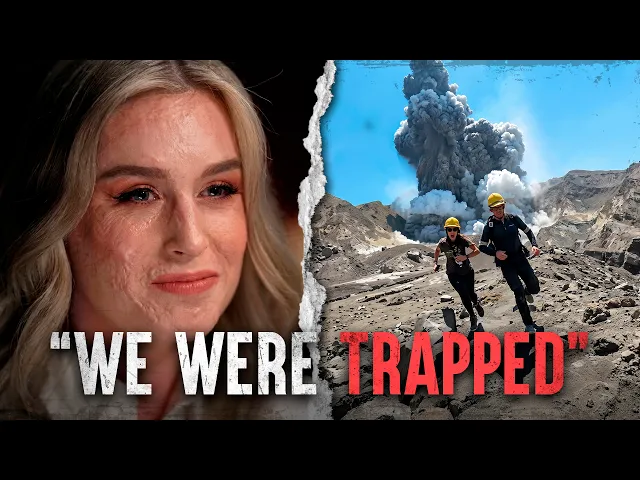
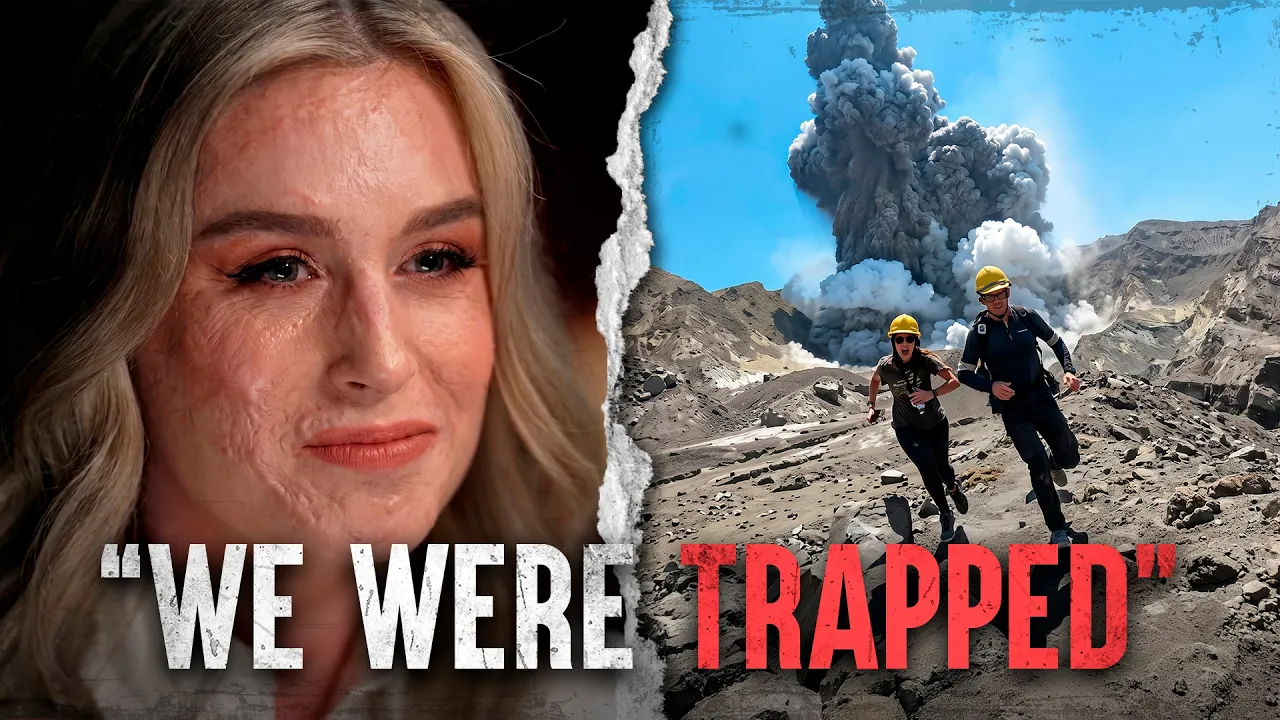
But then, something unexpected it We just started seeing black smoke coming out of the >> [music] >> crater. And the first thing we did was take a photo and not realizing that's an eruption and the danger. The black smoke starts to grow into an eerie cloud.
For many people, it seems like a rare sighting they're lucky to capture. They start heading back to the boat. Then, just 7 minutes later, when they're about 350 ft away from the crater, it erupts.
And I heard a tremendous loud noise. It sounded like a tree breaking in half. Just a instant crack.
In total, 47 people are still on the island, including both groups from the Te Puia Whakaari and Brian's group. And then only a few seconds later, we heard the front tour guide scream, "Run! " And that's when we realized crap.
Run! Within seconds, debris is flying. Scalding hot ash, steam, and toxic fumes overtake the island.
Some try to take cover behind nearby rocks, but the pain is immediate. The visibility went to zero. I could not see my hand in front of my face, and it was just hot.
Everything was burning. You could feel your skin burning. >> I could see my hand and I could see nails hanging off and skin loose.
But it's not just their skin that's affected. The toxic fumes make breathing nearly impossible. You could hear the sound of all the rocks hitting the ground and people just screaming.
Um cuz no one knew what to do. Everyone was just petrified. And then when it hit, it was just darkness.
The helicopter pilot, Brian, makes a smart life-saving decision. He tells his group, who are closer to the water, to dive in and stay under as long as they can. Three people in his group make it into the water with Brian, but two others are burned alive by the hot ash.
Sadly, they never [music] make it. The first time Brian comes up for air, it's pitch black. The group further from the crater ends up covered in ash.
Some are more injured than others. And once it's over, their tour guide yells for them to head toward the inflatable boats. There's a frenzy to get off the island, and people start pushing each other.
Some are so badly injured, they don't have the strength to walk. Others are burnt so severely that their skin is melting off. Going down the ladder, I grabbed on it, and my hand just slid cuz all the skin was just peeling off my fingers when I tried to grab it.
The tour group on the Phoenix, which is headed back to the mainland, initially doesn't realize the severity of the situation. Many of them are on the deck when the eruption happens. I was just aware of of a commotion amongst other people on the deck that just made me turn around.
There was There wasn't I didn't hear anything other than other people being reacting to something. Then, they're rushed inside a cabin. The eruption itself only lasts about 2 minutes, but for the remaining survivors on the island, it feels like a lifetime.
They're fighting for their lives. For the group closest to the crater, survival seems impossible. The steam that burst from the volcano is almost 400° and if that isn't enough, they also have to endure breathing in ash and sulfur.
For context, that's enough heat to melt your skin and even cause internal injuries like lung damage. Miraculously, some of them managed to make it out alive. One of the guides holds her sunglasses and gas mask against her face.
Others keep their eyes closed and hold their breath. Those who have more layers of clothing on aren't burned as badly by the ash, but nothing can stop the steam. These are all crucial survival tips that can be the difference between life and death.
But the fight for survival is far from over. Time is of the essence. With no medical services on the island, things aren't looking good.
The only people who can help immediately are on the Phoenix, which turns around and heads toward the survivors while notifying the Coast Guard. Now, remember, it'll take paramedics 90 minutes by boat from the mainland or an hour by helicopter from Auckland. As the Phoenix gets closer, it passes through a cloud of ash, turning everything black.
Then, they see how catastrophic the blast is. This wasn't just an ash cloud that rolled. There was a force that could push a helicopter off where it sat and to break the rotors.
That's when you start to realize that that there's going to be injuries. Those on the Phoenix help the survivors on board until it reaches capacity. Other crew members, like Paul Kingi, stay on the island to look for survivors and comfort those who watch as the Phoenix pulls away.
I mean, just imagine how some of the survivors felt seeing that boat pull away. The good news is that the authorities are expected to arrive within an hour and a half, but for burn victims, the first 60 minutes are the most crucial. This is known as the golden hour.
[music] Helicopters start to appear overhead. But, they're not who you'd expect. >> we were receiving at that time was that it wasn't safe to land on the island.
Now, despite there being a no-fly zone in effect due to the ash and debris, local pilots Tim Barrow, Tom Story, Jason Hill, Mark Law, Graham Hopcroft, and John Funnell immediately spring into action. Shout out to those guys. They're true heroes, and you'll see why.
After circling the island and spotting survivors, the helicopter pilots descend through the ash and, using whatever supplies they have, rush to help. We got to got to the victims and started helping them, putting on gas masks, giving them water, putting them in a recovery position, making them as comfortable as we can, just reassuring them that we we are there, we are there to help, and we are going to get you off the island, and you're not alone. Now, under the impression that the search and rescue team is on its way, the pilots push for immediate support.
They need backup. Then comes the bad news. Even with the local pilots confirming it's safe to land, the emergency rescue is called off.
We just realized that it was up to us now. Um yeah, we didn't have all the right equipment, so we just did what we could um with what we had, and all we had was us, so As the Phoenix rushes back to the mainland, those on board during the eruption do whatever they can to help the 26 survivors they pick up. Some start filling the first aid kits on board with water and pouring it on their burns in hopes of relieving the pain.
We could do was just try and cool them with fresh water. For some, the cold water helped. For others, it was only making things worse.
That boat ride was agonizing. So, we're burned horribly. We're laying in the sun being splashed with salt water and ice cold air while we're uh completely burned.
So, it was excruciatingly painful. 21 survivors are left on the island. Over the course of 30 minutes, the screams of people start to become less frequent as unfortunately many of them die.
One young man, Jesse Langford, who is part of the group closest to the eruption, realizes he needs to try to signal for help by walking to the shore. But, that would mean leaving his sister and parents behind. His sister is nowhere to be seen, and his mother and father are struggling to breathe.
He has no other choice. Now, Jesse is also badly burned, and every step toward the shore is accompanied by agonizing pain. Still, he knows this is his only chance to save his family and himself.
As the Phoenix is about to leave, tour guide Paul Kingi spots Jesse and quickly helps him off the island. Jesse pleads to rescue his family, but Paul insists that they need to go now. Emergency personnel are set up on the mainland and ready to receive any victims coming from the water to transport them to the hospital.
The pilots also transport 12 survivors to the hospital, all in need of critical care. Sadly, some of them die on the way. Eight bodies are left on the island.
Two of those bodies were employees of White Island Tours who sacrificed their own lives to save others. >> 100% certain that Tipene and Hayden actually come across that group and help them and started offering them first aid. And I think a huge part of us being able to find those people still alive was because of of those two guys' actions.
While the victims in the hospital undergo surgeries, their families are wondering how this happened in the first place and who will be held responsible. How much responsibility is on the participant in the tour to do their own research to find out how safe or unsafe something is? I would say none.
And that's because they're relying on this company to do that for them. A year after the disaster, they sued Royal Caribbean arguing [music] that sending passengers to White Island the day it erupted was like playing a game of Russian roulette. For the victims who did survive, many were put in medically induced comas and needed [music] dozens of surgeries including skin grafts to help with burns as well as internal injuries.
Four days after the eruption, the New Zealand military goes to the island to recover the bodies of the deceased. Given the severity of the burns, some are difficult to identify. Two are never recovered.
[music] Tour guide Hayden Marshall-Inman and Jesse's sister, Winona Langford, were swept out to sea after a thunderstorm flooded the area where they were left. There's not a day go by that you don't think about both Winona and Hayden? Cuz as we said to Hayden, Hayden would always be the last man standing.
He's He's become the Mhm. The guardian of Whakaari and and he he had opportunity to come home and he chose to stay and and look after Winona, so. People questioned why emergency crews were told not to go to the island even though local pilots were able to land.
On that day, we were receiving huge amounts of information from multiple people. Who else's information would have been more important than the perspective of the two pilots who were on the island at the time? By the time the emergency personnel arrived, all the survivors had already been rescued from the island.
Looking back, St. John's medical director admits they could have arrived earlier. Had we gone to the island sooner, I'm absolutely medically confident we were not unfortunately we were not going to save any more additional people.
Stephanie Browitt survived but lost eight fingers and needed more than 20 surgeries. After 6 months in the hospital, she was released but still carries the pain of knowing she lost her father and sister that day. Now, after the eruption, New Zealand's workplace safety regulator launched a sweeping investigation charging 12 different companies and individuals connected to the tours on the island with health and safety violations.
And some of the victims took legal matters into their own hands. Browitt and her mother sued Royal Caribbean claiming the company should have made its passengers aware of the risks before offering the excursion. A day before the trial, they settled for an undisclosed amount.
As you delve deeper, you come to understand it actually wasn't unforeseeable. It was actually quite predictable. Aside from Royal Caribbean, six of the accused had their charges dismissed while the other six pleaded guilty.
Whakaari Management Limited, which licensed tours to the island, was hit with fines totaling over $900,000. Now, at the end of the day, nothing could ever make up for the loss the victims' families have suffered. For some, this was the closure they needed.
Since the eruption, the island has been closed to the public, something the local Maori tribe wanted to implement for a while given its significance to their culture. And even though they didn't support the tours, the Maori were some of the first people to open their doors to the victims [music] and console those who lost loved ones. Our deepest condolences go out to all the victims and their loved ones who have suffered [music] from this.
Now for those of you who like to go on dangerous adventures, I'll just say this. Always do your own research to determine the risk level and decide whether it's worth the experience. Sadly, this isn't the first time a corporation has ignored warning signs leading to a deadly outcome.
Check out our episode on the deadliest flash floods where a camp's negligence cost the lives of dozens of campers and staff. We'll see you next time on another episode of How to Survive.