hello my friends today is August 31st and this is Market's weekly so finally August is drawing to a close and it's been an exciting month now remember not too long ago it seemed like the world was falling apart but today here we are spitting distances from all-time highs now whether or not this is a double top or we're just going to blast through I think it's going to come down to the jobs market report this coming Friday but until then let's talk about three things first let's talk about some of the important economic data we got the past week where it seems like overall the US economy continues to do well but there are some definite cracks secondly as we enter into September Market participants over the past say hundred years have noticed that September tends to be a pretty bad month for stocks and for gold so let's talk a little bit about seasonality and and lastly there's some really interesting research from the FED just out the past week on the internationalization of the Chinese R&B where the R&B whereas far from being an international Reserve currency is making definite strides towards that direction okay starting with the economic data so last week I think the most important economic data was the GDP data where the second quarter GDP data was revised from 2. 8% up to 3% now at the same time we also got consumer spending data that was better than expected and inflation data that was lower than expected so the fed's favorite measure of inflation core pce printed at 2. 6% where it's been for the past few months 2.
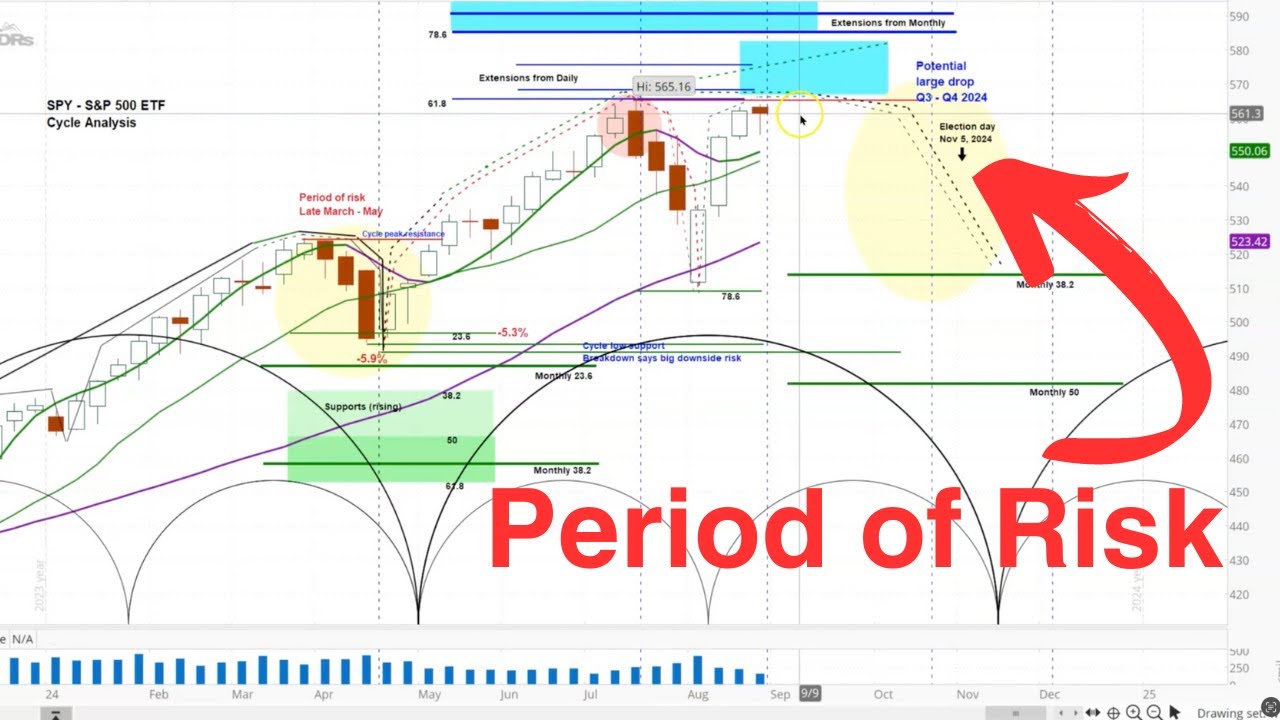
6% obviously just a little bit above their 2% Target now the Atlanta fed's GDP nowc casting website which takes into account all the latest economic data try to forecast what current quarter GDP is was revised higher from 2% to 2. 5% so looking across the totality of this macroeconomic data suggests that the US economy continues to do fine obviously three if we're growing at 3 3. 0% the past quarter we are not in a Recession full stop and as inflation gradually comes down it looks like we're not in danger of a Resurgence in inflation either at the moment of course things could change going forward but so far I think it's very clear that the US economy continues to be in a soft Landing but that's not the only interesting data that we got the past week now what caught my eye was the earnings report from Dollar General now Dollar General reported their earnings the past week and their stock totally imploded by about 30% for those of you who aren't familiar with Dollar General they're basically a chain of discount grocery stores that serve let's say primarily rural areas in the US now the United States is a ginormous country and there are many say towns with only a few hundred people there at those towns there's usually just one grocery store and it's usually the Dollar General or one of its competitors so Dollar General is a good I guess a good ins good window into how the lower income consumers are doing now management of Dollar General General at uh through their press release noted that they are observing that their clients are are getting stretched so it seems like even as the aggregate US economy continues to do well more and more people among the lower income segment are struggling it maybe over time that will gradually expand in effect consumers higher up in Inc construction as well now when we look at consumer sentiment data it looks like structurally speaking consumer sentiment uh basically has been lower over the past few months than uh than we would see in earlier years and also consumers are feeling that it's more more difficult to find a job now this suggests that again as we all see the US economy while not in a recession at the moment is definitely slowing and I think whether or not we actually do tip into recession is probably going to do uh come down to what happens in November where we have potentially huge policy shifts but heading into that there's going to be more uncertainty and people are probably going to cut back so uh we're likely going to be in a slow patch uh for the coming months as I wrote about in my blog the past week okay the second thing that I want to talk about is seasonality now you know the funny thing is that the stock market actually has pretty predictable seasonality for example the stock market tends to do very well in the beginning of the year now smart people like Jim Caron have noted that you know this probably has to do with the fact that when asset managers come into the year they are flushed with assets new mandates and they have to put money to work now over the past say 100 years one of the things that we've reliably observed in the stock market is that September tends to be a pretty bad month now looking at this uh year-to-date returns over the past say almost 100 years you can see that uh stock market tends to go up go up go up earlier in the year and then when it comes to September and October tends to do pretty poorly now academics have also noticed this and they've written papers on the seasonality aspect of the market not just in the US but looking across the world as well and the truth is no one really quite knows why we have this very obvious seasonality as some people make hypothesis like for example a lot of Market participants are away on vacation during summer as they come back in September they rebalance their portfolios say maybe they want to do 6040 and suddenly uh because the equity Market went up a lot they rebalanced by selling equities and buying more bonds or or something like that but basically as people come back to work maybe they they rebalance their portfolio and that involves some selling some people also think that you know a lot of funds have their uh fiscal year end in September and maybe at that time they have some withdrawals redemptions from their investor Bas and so they have to sell stuffs and uh meet redemptions but in any case this is seasonality is something that is is reliably observed so September can be a bad month for stocks and it certainly has been the past few years but in addition to that though September seems to be a pretty bad month for Gold now it looks like as Bloomberg is writing that September has been a curse for gold over the past few years where you see actually pretty sizable drops in the price of gold uh by a few percent now I think this is particularly interesting because gold as we looking at this chart now uh really has been going up a lot this year and it looks like it's just at the cusp of new all-time highs similarly with the stock market so we're hitting into a time where we have bad seasonality and if this month is like the past months it could be bad bad news but remember seasonality also suggests that things will get better as we enter into the last month of the year uh the Santa rally so to speak but in any case it's worth watching okay the last thing that I want to talk about is this really interesting research done by the FED where uh this person I Professor burwitz is doing a pretty comprehensive overview of the state of the Chinese R&B now how do we evaluate whether or not a currency is becoming an international currency well there's you know there's not one rule but usually people think of it uh across a few Dimensions they can look at the share of fign reserves this this currency share of farm reserves or how often it's used in international transactions how often it's used in international debt markets or International Banking and so forth so they came up with this index on the internationalization of Aur Cy and they noticed that compared to the dollar the Chinese R&B is you know not an international currency however though it's very clear that the pace the trajectory is clearly moving in that direction now when you look at the role of China's GDP let's say um relative to the world you notice that the Chinese R&B as a percentage of um let's say influence in the world is disproportionately weaker than China's GDP as a proportion of the world so it does make sense for this to continue to increase now looking deeper uh the the research suggests that across a number of Dimensions the Chinese R&B is is definitely improving and the Chinese government is making a concerted attempt to try to improve the internationalization of the R&B uh they're doing this in a few ways they're setting up clearing B s across in different countries in the US uh it's JP Morgan as as well as one of the major Chinese State Banks and the Chinese are also setting up actually R&B swap lines with many countries uh interestingly not with the US so in case of course anyone needs R&B they can draw on the R&B swap lines uh one interesting fact in the research is that uh basically when there's stress in the world people don't draw on their R&B STP lines tends to happen actually is that countries who have very poor credit like Argentina uh draw on their R&B swap lines because they really need cash but you know that could change over time and so looking at looking deeper in this data you notice that now internationally global trade tends to be conducted in dollars but now uh Chinese exports they are increasingly being invoiced in R&B and that makes total sense of course if you are Chinese company and you're selling stuff um you know I think it's reasonable to expect payment in your own currency so that is definitely increasing and you can see that overall over the past few years the share of farm reserves held in Chinese R&B is also still very low but the trend is higher and in addition to that when you look at uh the share of Chinese R&B used in FX transactions it's it's gradually increasing and now is actually more than used more frequently than uh the Canadian dollar so this is painting a picture that oh the R&B is still you know very far from a reserve currency but they're making strategic steps to try to make its adoption increase now one major roadblock to the internationalization of the R&B is the capital account so China of course as we all know has a I guess managed currency where the R&B is allowed to appreciate or depreciate against the basket of currencies within a certain band now one way to implement this is to have Capital controls where the government restricts how much money uh people can take out of the country now this has always been a sticking point for foreign investors because well let's say that you have a lot of R&B because you want to uh make R&B payments or maybe you want to invest in China well one day maybe let's say you run a file of the government or maybe there's some serious stress in the markets maybe your account H is limited where you can't withdraw money when you really need it uh this is a can to say Gates and withdrawals from from an invest investment fund say you put money in investment fund but when you really need it suddenly uh because of gates you can't get your money back so Capital controls are similar and obviously that's going to make international investors a bit more hesitant to invest uh invest in China but that's something of course that can ultimately be changed in the future although that would require giving up power by the government which governments tend to not want to do all right so that's all I prepared for today thanks so much for tuning in and if you're interested in my thoughts remember to check out my blog at fed guy.
com or if you're interested in learning more about markets check out my courses at Central Banking 101.