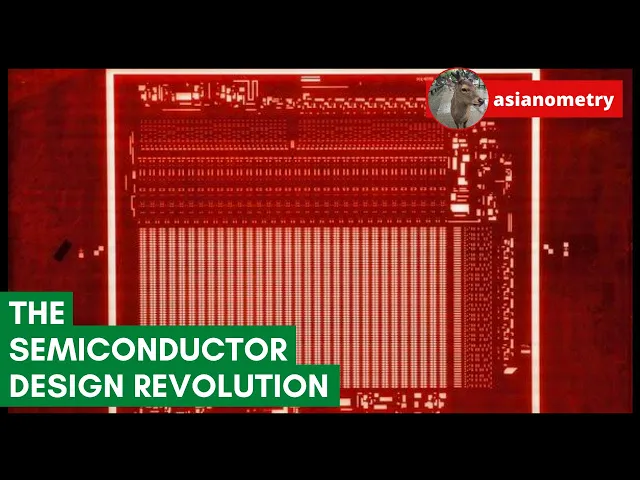
in the early 1970s it became clear that integrated circuits were going to be a big deal new electronic systems had the potential to remake modern society but as chips swelled to tens of thousands of transistors designers began struggling with their increasing complexity it threatened the advancement of the industry then in 1980 two computer scientists carver mead and lynn conway released a textbook that sparked a semiconductor design paradigm shift in this video we look at how vlsi systems design revolutionized the industry but first i want to talk about the asionometry patreon if you like what this
channel does you can support the work by joining the early access tier early access members get to see new videos and selected references for them before they are released to the public so head on over to the patreon page and take a look i deeply appreciate anything you'd be able to sign up for thank you and on with the show in 1971 intel released the market's first commercial microprocessor the intel 4004 manufactured on two inch wafers using 10 micron lithography technology the 4004 had 2 300 transistors it was a technical breakthrough intel originally intended to
exclusively sell the 4004 to a japanese company called busicom busicom had wanted a set of integrated circuits for their line of electronic calculators however intel eventually decided to introduce the microprocessor to the open market they advertised it as a new era in integrated electronics and for once the marketing was right on the dot integrated circuits were the future however there was a big problem that many companies and manufacturers faced when making sophisticated integrated circuits you only needed a genius the 4004's designer federico fajin had been a unicorn he understood computers designed both logic and circuits
and was experienced in developing both process and product he used his intimate knowledge of silicon gate technology to develop a literal piece of art federico and lead busicom engineer masatoshi shima literally cut out strips of ruby lift themselves so that the lithography machine can transfer this beautiful chip design from paper to wafer throughout the 1970s the only people capable of designing chips were like fajin people who knew everything about semiconductors from the gates to the fabrication process and early on this worked barely by the end of the decade however it became clear that this cannot
continue development was advancing forward at a rapid pace new roles and specializations were being created and even the geniuses were having trouble keeping up by now it was becoming clear that within 10 to 20 years commercially sold chips were capable of having millions of transistors on them if the designers could keep up thus in 1976 caltech and xerox park the famous research lab in palo alto embarked on a joint research project to easily create silicon systems for personal computers two of the people named to the project were a caltech professor named carver mead and lsi
systems group leader lynn conway mead served as a high-level consultant to intel and had popularized the moore's law term after gordon moore's 1965 article conway had been an expert in computer architecture with experience at ibm together the two created a standardized system design methodology tied together with a set of simple design rules vlsi which stands for very large scale integrated circuits for inspiration conway hearkened back to the days of dc and ac at the turn of the century dc technology was dominant but had started to show its age on the other hand ac was emerging
and showed a lot of potential but few people knew how to use it calculating the voltages across ac networks at the time required calculus a lot of time and much difficulty then in 1893 an american immigrant from germany named charles steinmetz broke the logjam by crafting a series of design rules that simplified the math and produced predictable results conway envisioned her vlsi principles doing the same taking all the accumulated extremely complex knowledge on logic design circuit design and circuit layout and turning it into an elegant set of simple rules these rules can be used to
design entire whole systems not just circuits stay within the design rules and everything will work the way it is supposed to the most important task in vlsi design is to harness and manage complexity to do this vlsi looked to concepts of software programming to bring structure to designing tens of thousands of transistors abstraction hierarchies of systems and subsystems and the use slash reuse of common blocks it introduced the design process flow that i talked about in my previous video you design the chip from the top down start with the overarching structure define the circuits and
then finally connect those circuits together critically conway came up with the idea of defining all the design rules using length ratios rather than length dimensions the basic length unit would be a unit conway called lambda lambda-based design allows semiconductor designers to smoothly transition from one node process to another as those processes shrank now each circuit block could be shared and reused without concern about the node they were originally designed for with vlsi you can create a specific product using generic components pulled out of a standard cell library in this way it made hardware much like
the software it ran on a particularly unique feature with silicon but how to popularize the idea in june 1977 during an evening team brainstorm session conway hit upon the idea of turning their new design system into a textbook self-published using parks computers the book might help disseminate their ideas spoiler alert it did over the next few months a variety of authors including mead and conway the principal author worked on the book titled introduction to vlsi systems they added practical examples to help illustrate the principles and they worked with and received feedback from university professors around
the country using a newfangled thing called the arpanet then conway was invited to go to mit in 1978 and teach a vlsi course to some senior and master's level students she designed the course to get students designing as soon as possible rules and concepts in the first half projects in the second half despite only having primitive eda tools and at certain times were checking their work by hand the students produce correct working designs one student guy steele jr designed a complete lisp microprocessor he would later design the original command set for emacs hewlett packard used
a six micron silicon gate process to produce those designs and shipped the final chips back to mit in january 1979. conway's 1978 mit course spawned many others around the country 120 universities were offering vlsi courses by 1983 and they were a revelation for young chip designers the textbook would be translated into various languages including russian illegally a guy stanford jim clark learned vlsi from lynn conway in one summer at xerox park he went on to design the geometry engine chip a revolutionary graphics processor later on he would found silicon graphics vlsi reimagined chip design has
something modular allowing for the separation of semiconductor design and its manufacture specialists can now focus on optimizing one part of the process without also needing to become experts in another in 1978 darpa identified vlsi technology as a space of interest and began funding additional research at universities like berkeley mit carnegie mellon caltech and more the program was very open researchers can share whatever they found and very little was classified by 1982 darpa was spending nearly 100 million dollars a year on his vlsi program the program eventually spun off into multiple initiatives surrounding computer aided design
workstations and risk architectures many of these innovations are still used to this day there remained one thing missing mead and conway envisioned a semiconductor industry exploding with small chip companies doing all sorts of niche things sort of like a cambrian explosion of weird and fun semiconductor startups however that did not happen right off the bat and the reason was money the immense capital expenditures associated with cutting-edge semiconductor manufacturing kept companies out of the industry at the end of the first 1978 mit course students got to actually use the chips they designed this particular effort would
eventually lead to the multi-project chip where multiple designs can be fabbed on a single wafer saving on cost this technology was transferred to usc which in 1981 launched moses an e-commerce service provider for u.s universities students submitted their designs to moses over the internet moses batched them together and quickly fabbed them moses was the first independent foundry but it restricted itself to american academia various other countries launched their own versions for instance francis circuits multi-projects or cmp over in taiwan morse tang accepted an offer to found and lead a new semiconductor company reflecting upon his
industry experience he decided this company would service small semiconductor design teams without a fab of their own taiwan semiconductor manufacturing company or tsmc turned the most service into a commercial enterprise and this simple idea would in turn make tsmc into a 600 billion dollar giant the golden age of vlsi ended in the 1990s has processors advanced to the point where using and reusing standardized ip blocks started to interfere with chip size and performance standard cell blocks wasted space and that could no longer happen that being said the vlsi paradigm helped push the industry for over
a decade helping to fuel the hundred billion electronics boom of the 1980s reflecting on it vlsi was as much a philosophical breakthrough as it was a technological one the way it aligned and organized the thoughts of a generation of students is worth learning has today's semiconductors reach new unprecedented sizes and complexities all right everyone that's it for tonight thanks for watching if you enjoyed the video consider subscribing check out the newsletter or follow the twitter want to send me an email drop me a line at john asian armature.com i love reading your emails introduce yourself
suggest a topic or more until next time i'll see you guys later