this is not directed at all atheists but many have an odd confusion about the evidence for God many atheists insist that God's existence must be empirical or scientifically proven otherwise there is no reason to believe a designer exists the assumption here is that the only reason we should believe something is true is if there is scientific proof for it but this line of reasoning is not how we operate in several subjects there are many things we accept is true they cannot be scientifically verified see science works through inductive methods we do an experiment a hundred
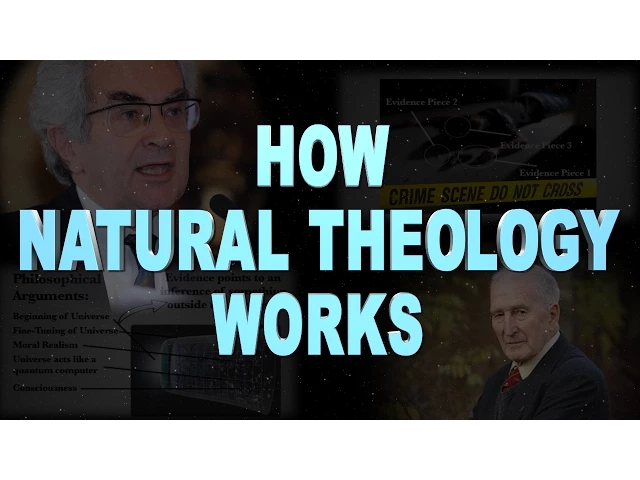
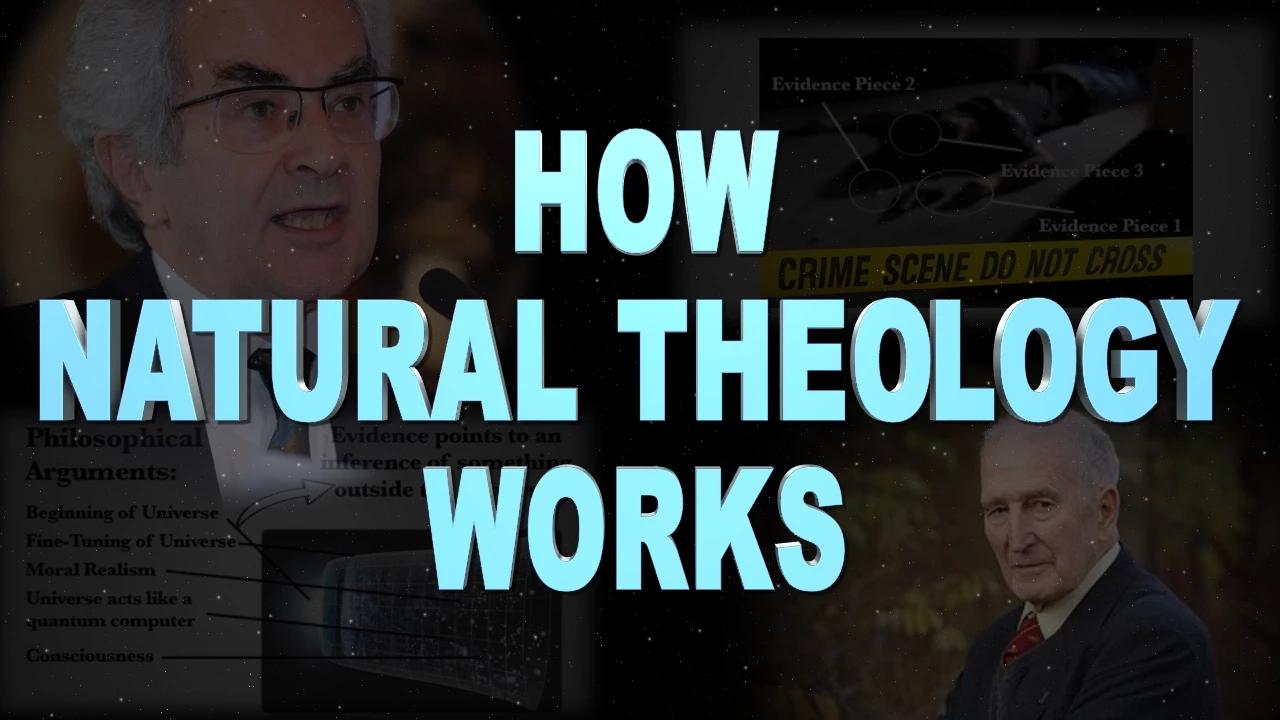
times and if we get the exact same result every time we conclude that it is scientifically proven and that we will continue to get the same result however for many subjects we cannot use the same method to reach conclusion dr. John Lennox explains by looking at forensics if we stumble across a crime scene and find a person dead we cannot say well I don't know let's run the experiment again and see what happened such a method would be absurd in figuring out who the murderer is instead we have to deduce a conclusion from the evidence
left at the scene we have to evaluate what has been left behind and reach a logical inference so in other words we have to apply the methodology that is appropriate to the claim so when we look at subjects like history forensics or philosophy we cannot run experiments or take scientific measurements to determine a conclusion instead we have to evaluate evidence and deduce an inference which is why the question does God exist is not a scientific one we cannot run an experiment to determine if he exists any more than we can run an experiment to determine
who committed a murder or where do the first humans originate or if two people are in love in some instances we can do experiments on the evidence we have but we cannot replay an event or take measurements we have to apply the proper method for reaching a conclusion for the claim so when we start looking for answers to specific things that are by definition outside the natural world we obviously cannot do a scientific experiment that is like saying show me the empirical proof in space-time for something that exists outside of space-time it is simply nonsense
CS Lewis thought that would be like Hamlet going into the castle attic to look for Shakespeare Thomas Nagel says if God exists he is not part of the natural order but a free agent not governed by natural laws he may act partly by creating a natural order but whatever he does directly cannot be part of that order so to find answers for things that are outside the natural world we can only study the evidence left in the natural world and reach the most rational inference as to why certain things are the way they are this
is what the aim of natural theology is it is not attempting to prove a designer exists like one proves a scientific fact through measurement or observation rather these philosophical arguments take the evidence we can evaluate and reach the most rational inference to explain things where science cannot go because a logical mind seeks the most rational inference to the evidence science is great for explaining things within nature within space-time and we should keep studying signs to form a better view about the natural world only in a rational person would suggest otherwise but an entire world view
only containing science without philosophy will only give you half the picture the Atheist philosopher Thomas Nagel in his book mining cosmos argues a materialist worldview will always lack explanatory power for fundamental things we believe exist now even if he is wrong about some of his predictions his basic point still holds true regardless of how many natural explanations we find we'll never be able to naturally explain why there are natural explanations in the first place the natural cannot explain the natural because it is not infinite and exists contingently science cannot explain why there is science yet
the natural order calls out for an explanation Nagel says systematic features of the natural world are not coincidences and I do not believe that we can regard them as brute facts not requiring explanation regularities patterns and functional organization call out for an explanation the more so the more frequent they are the logical mind seeks the most rational inference to explain the natural order which is all these philosophical arguments are doing so I implore atheist to keep this in mind when trying to respond to the arguments from natural theology we theists are not arriving at our
conclusion that God exists like one arrives at a scientific conclusion we are instead reaching the most logical inference from the evidence we are presenting now some might still have an issue with this and argue that since we cannot scientifically verify something outside the universe we shouldn't make inferences about what constitutes the best explanation so we should not draw any conclusion and just say we don't know for now well this is fine to say but if one says this they have to accept the ramifications as well in saying I don't know you are also admitting you
truly do not know and lack a position to argue from not only do you not know the best explanation but you also do not know if the theist is correct you cannot say you do not know but know that it is wrong to infer a designer in other words pleading I don't know means you have no opinion on the evidence for either side you can't argue against the theists position because by saying you don't have a clue how do you know we theists are wrong to infer a designer if you say this then try to
argue against the theists position you are basically saying I don't know but I know the theist is wrong which refutes your claim that you don't know because you wouldn't argue against theism if you didn't think there was knowledge we were wrong so I don't know plea means attempting to argue against theism is pointless because if you don't know then you cannot say theism is wrong because to do so is a knowledge claim that we are incorrect also if you're going to plead I don't know then you should also conclude you're ignorant on your own position
so you really don't know if it is right to say I don't know so this position becomes self-defeating a different approach a theist will take is to assert the claim that extraordinary claims require extraordinary evidence which was made popular by Carl Sagan however this is a very vague claim first of all what does it mean to qualify as extraordinary there is no scientific way to measure if something is extraordinary claiming something extraordinary is totally subjective whereas extraordinary for one person may not be the same for another what you don't think this is amazing when I
saw this at the 1904 World's Fair I nearly crapped my pants so why should a theists force their view of what is extraordinary on others it is purely subjective and therefore objectively meaningless ironically many physicists say the degree of precision behind the fine-tuning of the universe is extraordinary Roger Penrose says they are extraordinary figures Paul Davies says the impression of design is overwhelming so the Atheist should not force his view of what qualifies as extraordinary on others as an objective claim if that is the case then perhaps the physicist studying the fine-tuning of the universe
should do the same but furthermore if this is true this is itself a claim and wouldn't it be fair to say that a claim that establishes the validity of all other claims be extraordinary in itself so saying extraordinary claims require extraordinary evidence is an equally extraordinary claim but the problem is there is no evidence for this so this statement doesn't just lack extraordinary evidence it lacks any evidence another attempt to dodge theistic arguments is to argue that future scientists will find natural explanations for the evidence we use to infer a designer so essentially they're relying
on induction that in the past we have found natural explanations for phenomena that people use to attribute to God or gods so the current evidence for God's existence will later in the future be explained by natural forces and we do not need to invoke design but the problem is this reasoning relies on the problem of induction claiming because we have found several natural explanations in the past doesn't deductive Lee follow we can conclude there are natural explanations for these other things imagine we conclude a detective solved a crime because he has solved 100 prior cases
each crime reaches a solution based on the evidence for that particular case we do not conclude one is solved because 100 others were solved prior likewise we do not conclude the philosophical inferences to a designer have natural explanations because science has found natural explanations two completely different things at once puzzled man that is an absurd line of reasoning instead we have to evaluate the evidence for that particular subject and reach the most rational inference as to what the evidence is suggesting but furthermore arguing scientists in the future will find natural explanations to evidence that points
to a designer is essentially arguing for a god of the gaps what is basically saying well I can't solve this therefore smarter people will figure it out for us and I don't need to worry about it this kind of reasoning doesn't offer a conclusion and it is simply an attempt to fill a hole with the unknown knowledge of future humans with this line of reasoning I could simply say the future scientists will find irrefutable proof that God exists and you can really argue against that so appealing to the Future doesn't change the best evidence we
have now so trying to refute philosophical arguments doesn't work this way either if atheists really want to refute theism they have to either show that God is logically impossible or offer a better inference than that of a personal designer however none of the Atheist rebuttals to theistic arguments do this their main attempt is to try to discredit the possibility that a designer can be the explanation however since God is not an impossible concept even if the Atheist rebuttals were good they cannot completely negate the possibility of a designer and most importantly they do not offer
a more rational inference in place of a designer so atheists can hammer away at the arguments from natural theology but they still lack explanatory power for the evidence or a better inference so still the most logical conclusion we can draw is that of a designer which makes me wonder if no one can offer a better inference to the arguments from natural theology what's wrong with theism what is wrong with the inference that there is a deistic first cause it is not forcing anyone to an actual religion or system of spiritual beliefs it also doesn't entail
belief in the afterlife and it still leaves open the possibility that one could change his or her view if new evidence or theories are introduced of course I would argue it is rational to go beyond deism but that can be another subject what is wrong with basic deism and taking the same route as Anthony flew I have followed my how academic life on the principle Plato scripted his Socrates to proclaim we must follow the argument wherever it leads and the result of following this principle eventually led me to something I didn't at all expected but
as it was the truth I had to accept it but I was interested in truth when most theists argue from natural theology we are not trying to trick a theist we are simply following the evidence to where it leads and pointing out a designer is the most rational inference we can draw and is the best explanation after that we can have a discussion of any particular faith is correct but we are not jumping to that point from just natural theology all we are doing is drawing the most rational inference that there is a designer and
implore others to think logically about the evidence as well