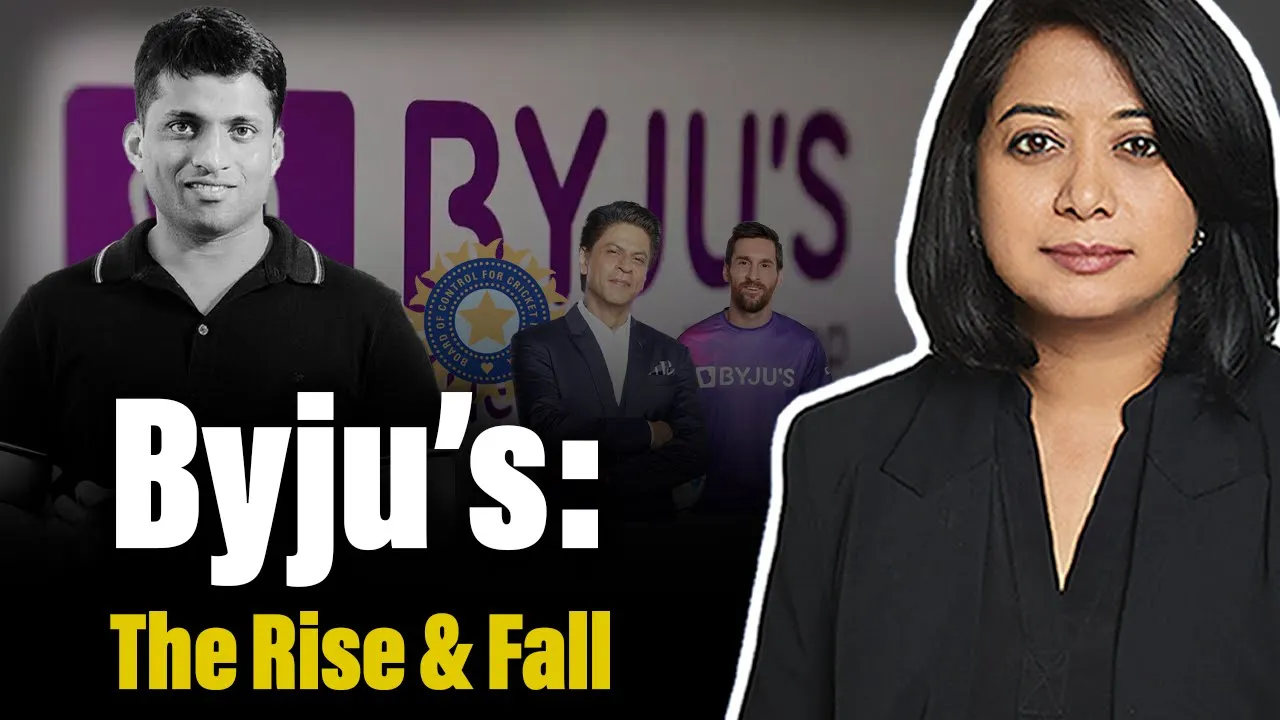
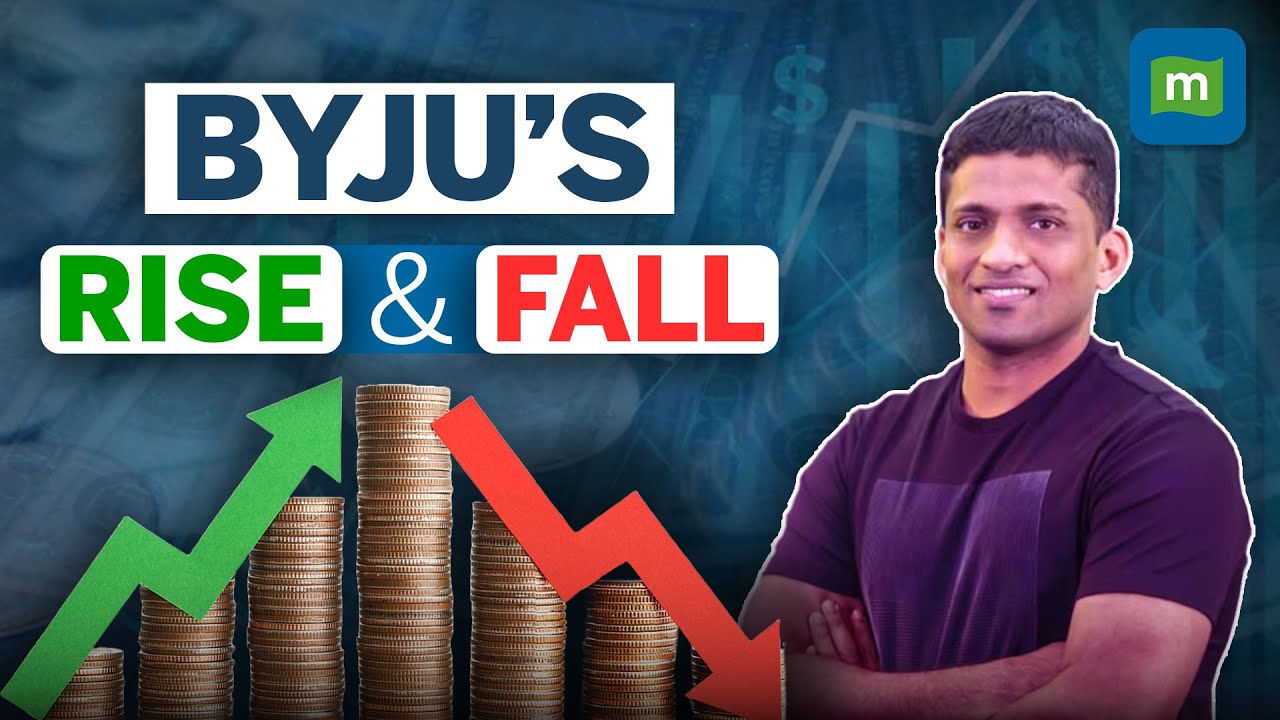
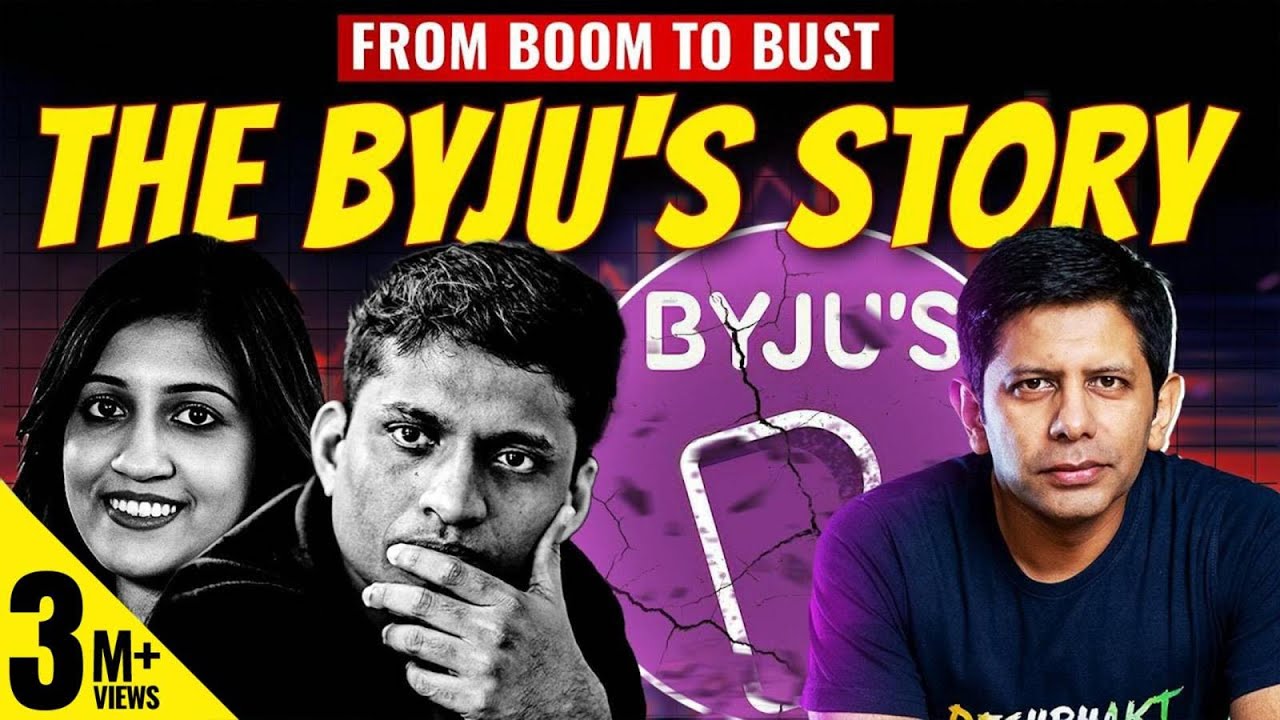
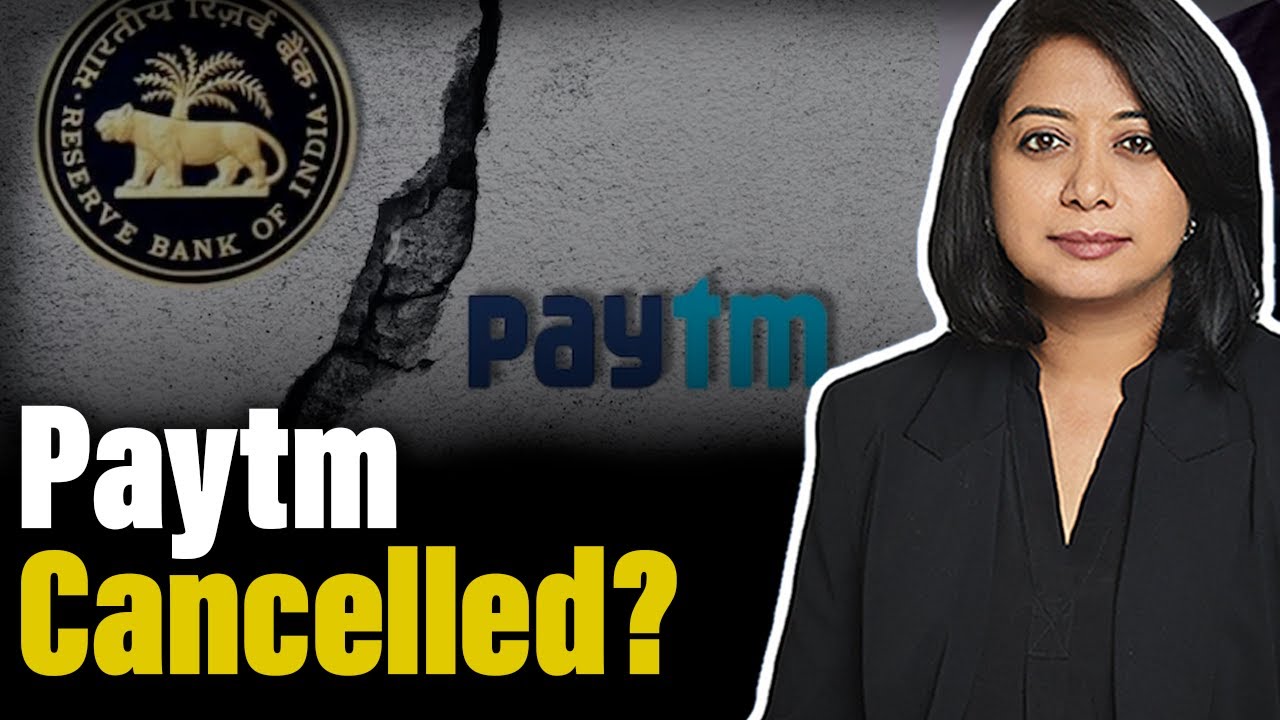
just two years ago BYU was valued at $22 billion it was the biggest edutech startup not just in India but also the world it had brand ambassadors like Shah ruk Khan and Li Messi it sponsored the Indian cricket team it sponsored the FIFA World Cup in Qatar its founder BYU rindra was a blue-eyed boy of the Indian startup industry cut to today 2 years later the value has dropped 99% and a group of the shareholders are now in a meeting to remove a renon his wife and his brother from the board another group of shareholders have actually approached the national company law tribunal accusing them of mismanagement and oppression what happened to this flourishing startup that was once the darling of the investors let's take a look at this massive [Music] story but to begin with to understand where all of this came from we have to understand where beu rindra came from the founder now he was the son of school teachers a physics teacher and a mathematics teacher in aroori village in Kun in Kerala now he was apparently brilliant he was an engineering graduate and he started teaching maths to some of his friends who wanted to take the cat to do their MBA he was not personally interested in taking the cat himself but everyone he helped apparently did really well words spread and soon from just friends and Friends of Friends he started making this a full-time job he went from teaching a few friends to filling entire auditoriums because he was simply that good at it he then started a company called think and learn back in 2011 now it began to offer focused training to students for board examinations especially students from the e8th to the 10th who were doing entrances after the 10th and then expanded to neat and Cat and I and also gr and GMAT word spread of how brilliant he was and his incredible success rate by 2018 he had 15 million subscribers to his edutech firm and he became a unicorn around much fanfare the real dream run was between 2015 and 2021 the first investment came from R in capital which was run by mundas Pai back in 2013 because word spread around manipal University where mundas Pai is invested that the students of manipal University were rushing to this one particular class when they made some phone calls to find out who that class was conducted by it turned out it was by Jura vinen by Jura vinen then got his first investment from mundas B now in 2016 there was another massive investment that came in this time from Mark Zuckerberg I you had gotten many rounds of funding but really the big one after seoa Iran capital and Safina group came from Mark Zuckerberg and Priscilla chance firm called the chance Zuckerberg initiative which actually gave them $50 million in a round the startup value was now at the end of this round $462 million the next big milestone was a valuation of $1 billion this happened in the middle of 202 20 the company became the blue-eyed startup for Mari foreign investors which in turn made it the country's most valued the second most valued startup in India second to PTM now if you want to know what happened to PTM there's another video we've just recently put up you can take a look at what happened to that startup and now we're talking about the number two startup in the country which is beus a US firm called Bond invested an undisclosed amount within just 9 years of existence the edch startup was now valued at a headline grabbing 105 billion there was a flurry of Investments that came in just as the pandemic began because you'll remember when the pandemic began all the students of our country were suddenly online and there were a few online businesses that had mastered edutech as a system beus was the front runner in all of that by 2019 the company had 35 million registered students of which two . 8 million were paid subscribers the numbers expanded substantially during the covid-19 pandemic as students turned to online classes more and more let me take you through how those numbers grew the numbers nearly doubled from the first year of the pandemic where it was 4. 2 million it became 115 million registered users by 2022 that's when the big money was raised but what did they use the big money for well first of all marketing and of course the uh big sponsorships and the big stars that they signed on between fy16 and fy22 which was just 7 years the company spent 8,029 CR rupees in advertising alone roughly 69% of its operating revenue of that time actually went in marketing now its marketing profile included like I told you Shah ruk Khan was dropped in in 2017 with an annual fee of 4 CR rupees per year when Oppo existed its deal to sponsor the Indian cricket team beu jumped in now this was an opportunity it picked up in 2019 and it was paying the BCCI roughly about 4.
6 CR rupees a year for each bilateral match in India and 1. 56 CR rupees for each International match now lavish marketing also involved sponsoring the Indian cricket team the Qatar World Cup which costed about $30 to4 million from what we understand signing football legend Lionel Messi for three years for 5 to 7 million annually and of course big Acquisitions now that money was also spent as baiju went up buying out other companies in the space 2. 6 billion spent on acquiring other edutech startup companies there was Akash educational which was a chain of physical coaching centers for close to $1 billion a more controversial acquisition was whad junor for 300 million also an acquisition of a company called topper for 150 million and us-based osmo and a reading platform called epic for 500 million and 120 million they were also in spite of the the money that uh the company raised they also took a massive loan a massive loan of 1.
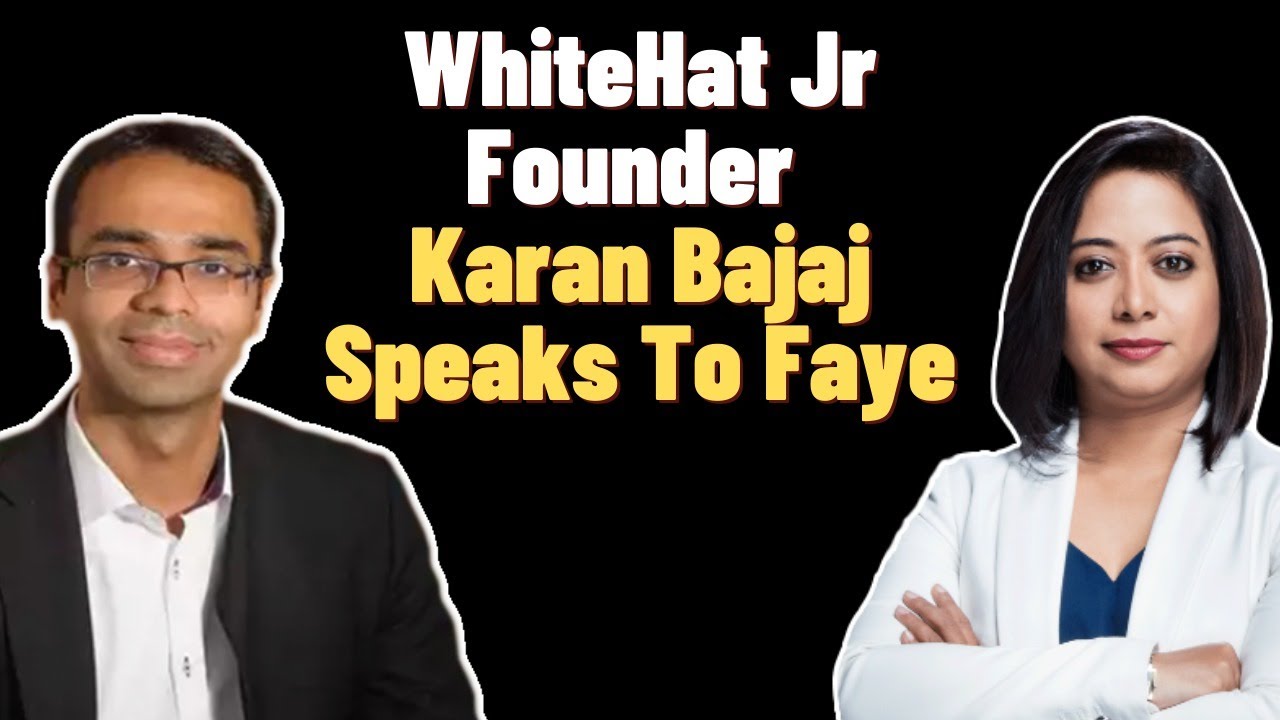
2 billion that it took from a group of overseas investors now this was not a normal bank loan like you and I will take where we will pay emis uh this was what is called a Term Loan B which is you know the the basis of this loan is a little different where basically they take a loan uh they pay the interest and the total principal towards the end of the term and they don't have to pay monthly payments what they have to do instead is play a small percentage of that interest U on a regular basis and the interest was pretty low at 5 a half% compared to what you and I would pay on a loan right now so it seemed like a really good loan but here there was a company that was spending a large amount of money that had also taken this massive loan uh was growing tremendously during the pandemic and then the pandemic ended and the music stopped to begin with parents it started with complaining parents disgruntled parents began alleging that the company its aggressive sales pitch had misled them they alleged that Baus had fed into the insecurity of Indian parents that their students or their children would not do well and with incessant cold calls and sales pitches they forced them to actually uh sign up to BYU by telling them things like their children would never do well if they don't sign up in fact BBC did a story about this where it spoke to parents who said that the services were promised on one-on-one tutoring and assigning a mentor to assess the child's progress none of this have ever really materialized and parents started demanding refunds context news did a report that said Baus would send their agents door too salespeople who would go into houses of low-income families and pressure parents into buying cses many times sending them into debt apparently these sales people said things like your daughter will be poor like you if you don't take this score so you should be ashamed of yourself for stopping her from succeeding in life accordingly parents were cered um into taking up these courses the National Protection of child rights got involved and conducted an investigation into the company where it alleged at the end that the company actually bought data like phone numbers of parents and parents with small children to coarse them into buying courses and all this led by Jews uh promising that it will stop exploiting families and low-income families specifically into buying its courses in countless different cases that were filed in consumer courts of across the country byus was ordered to pay damages to customers in disputes related to refunds and deficiencies in Services BBC in its report also notes that sales Executives were under immense pressure to meet completely unrealistic sales targets that they were working 12 to 15 hours a day trying to get more and more people to sign up for these courses the second set of unhappy people were investors they were unhappy with the way this giant company was being run apparently it had no full-time CFO for a company of this size concerns were made worse physical classrooms started to open up and finances started dwindling now the lack of CFO also meant the company was defaulting and submitting its financial statements in the year 2020 to 2021 despite the government sanctioned extension thanks to the pandemic B's also struggled in releasing its audited accounts for 3 years in a row and when finally those accounts were in fact at least the numbers were deeply problematic independent auditor Deo quit in 2023 after refusing to sign off on the company's financials saying that they were dodgy the company hired a CFO in April 2023 Ajay goel who came in from the vanta group but he quit in just 6 months also problems were starting to mount the next thing that happened was the revenue dropped now when Baus finally released its audited statements like I told you they were big problems they showed a loss of 45 billion rupees in their books now beu said the problem with this was accounting practices but everybody pointed out to the massive marketing spend that they had spent a lot of their money on fin shots had actually said beu had calculated some of its operating expenses like salaries and marketing actually as asset building in order to improve its pnl and this became the next problem for for example according to fch in March 2020 its total salary expenses of about 900 CR rupees the company showed a little over 500 CR rupees as intangible Assets in their balance sheet and it showed the remaining 420 CR rupees actually as salaries in the profit and loss account so he was trying to capitalize this expense but that didn't work and it actually made things a lot worse for the company now let's go back to that shopping spree where it went out and bought a lot of smaller companies that really paved the way for the downfall white hat junr and osmo accounted for nearly 45% of the losses of fy22 the only asset that was really performing was Akash which was the physical classes white hat Junior was a spectacularly bad buy for this company and if you want to know why take a look at the this one interview that I did with the founder of whiteart Junior Karan Bajaj 3 years ago it's sort of self-explanatory if you watch all of it it was ACC coding platform that has several problems with misleading marketing the next angry guy was BCCI the company renewed its cricket sponsorship in 2022 at a 10% bump up but it didn't have the money to pay and so then that started to unravel it attempted to wiggle out of that deal early but the BCCI would have none of it the BCCI actually took BYU's to the National company law tribunal in November claiming that it was owed 160 CR rupees in dues finally the creditors who had given that massive loan of $1. 2 billion they got angry next now BYU typically had about five or six years to repay the amount but as the company's crumbling finances became public the original lenders began trading that loan on the market which is what it was allowed to do and by September 2022 the loan was trading at a 30% discount to its value in May last year the lenders took beus to court in the US in June beus counter sued the lenders saying that their actions were predatory now even though beu offered to pay back that entire amount those legal battles continue and are unresolved in January this year 80% of the lenders who are part of that $1.




![[EXCLUSIVE] BYJU's Founder on Layoff, Social Media Backlash & Future of the Company](https://img.youtube.com/vi/4erSfOlKvhA/maxresdefault.jpg)