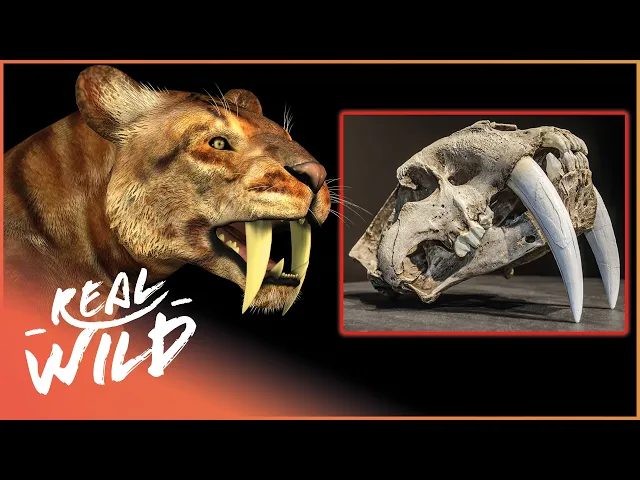
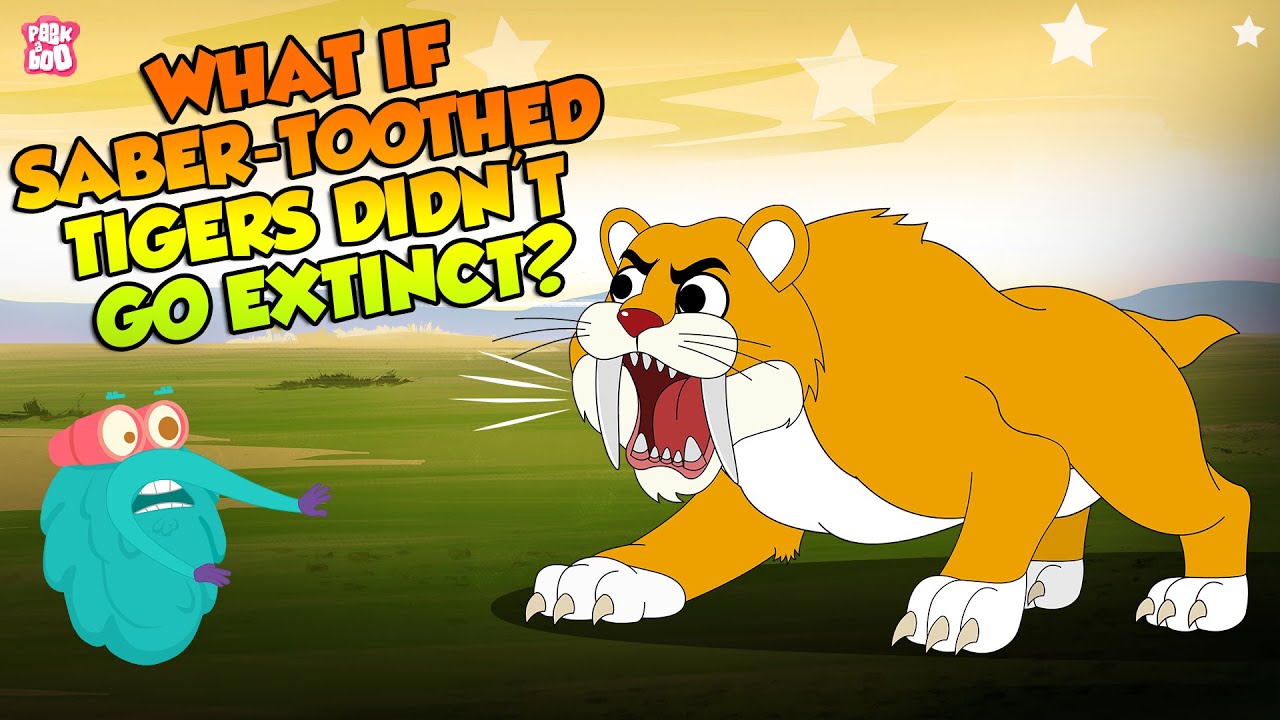
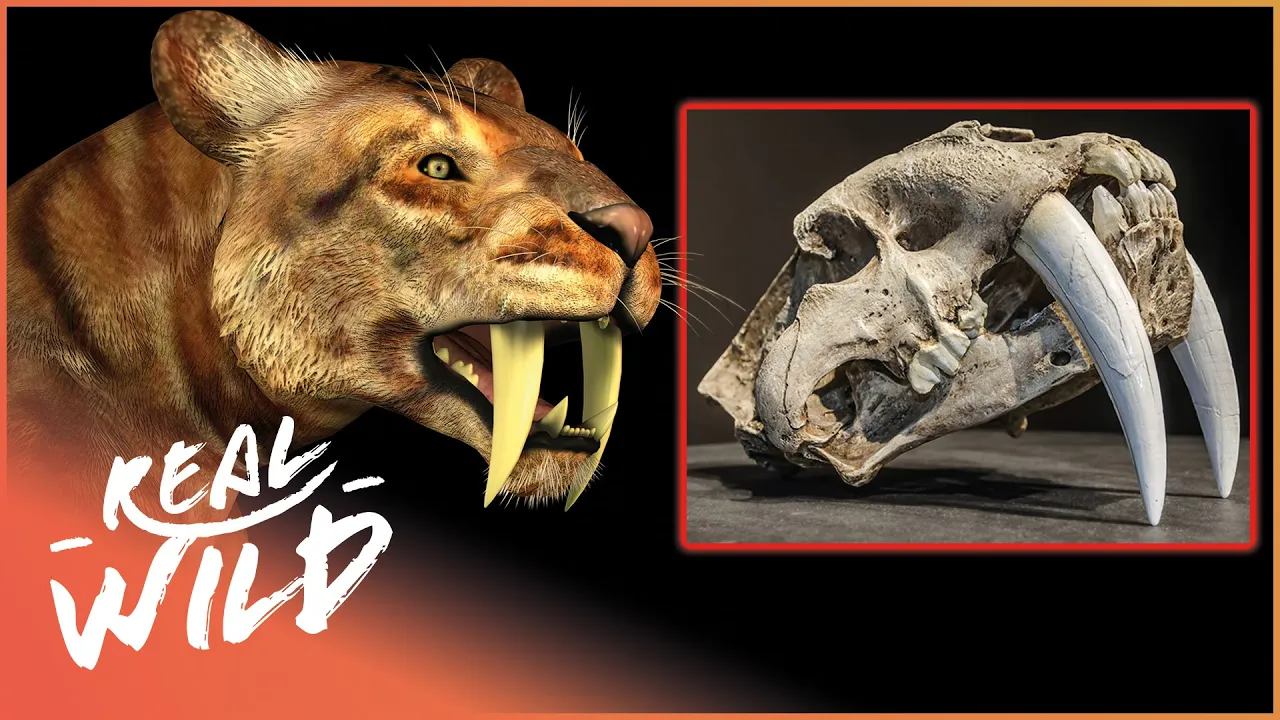
[Music] laughs [Applause] [Music] [Music] foreign [Music] this fertile wooded Valley is a land of giants in it one creature rules above all others a highly evolved killer for a million years this top predator has lived unchallenged it is Smilodon Fatalis the saber tooth but this formidable animal with no Predator to fear and plentiful game to eat is about to disappear forever [Music] eleven thousand years later a city of freeways and skyscrapers has arisen from the valley [Applause] yet it has not totally obliterated all traces of the Sabretooth evidence Still Remains beneath downtown Los Angeles the
Rancho La Brea Tar Pits is one of the world's most extraordinary fossil sites these pools of tar contain a record of Life stretching back into the Ice Age [Music] paleontologists have Unearthed millions of fossilized bones for Blair van volkenberg it's a gold mine believe it or not this Black Swamp that I'm standing in the middle of is a paleontologist's dream I mean it is hard to believe looking at it but it is Chaka black with bone I mean from all the tar pits that are in this small area there are over 4 million specimens that
have been found things as small as rodents and as large as mammoths this paleontologist's dream is the result of an accident of ancient geology tar seeps from under the Earth through cracks caused by California's frequent earthquakes pools of deadly oil formed just below the surface I hope you're thirsty and you might walk out touch that water [Music] a large and heavy animal that you'd find your feet sinking and you would struggle but that would actually probably drive you deeper as you struggle and pretty soon you'd be in a position from which you were no longer
able to get yourself out of uh [Music] watch on mobile devices or the big screen all for free no subscription required download vli now it would have been a slow agonizing death and even today we see things getting stuck it's not that this process stopped 10 000 years ago it's still happening you can see the tar coming up on the surface and over here you can see a little yellow rumped warbler that probably innocently saw some water or saw a bug on the surface and swoop down to get it and never took off again tar
is one of Nature's great preservatives so even the smallest of Bones remain paleontologists can reconstruct the past using the bones of the animals that they find especially when they're beautifully preserved as they are at Rancho La Brea you can reconstruct the strength of the animal you can reconstruct the size of the animal you can reconstruct its feeding habits from its teeth the preservation at La Brea allows us to reconstruct the entire fauna with relative ease but Rancho La Brea is famous for reconstructing one creature above all others the saber tooth over 2 000 of them
have been recovered now we can probably guess that this might be a female it's hard to tell because female and male sabertooths were about the same size so we need to really do a lot of detailed measurements to actually figure that out and it really illustrates how well the tar preserves these fossils there's just no Distortion the cat is very beautifully preserved and it's very easy for us to think about them moving around the landscape here recreating at least for a paleontologist it's easy to recreate them in our own mind and see them roaming The
Plains of Los Angeles some 11 000 years ago foreign [Music] this female saber-tooth is nine years old she's very similar to a male cat up to a meter high at the shoulder and the weight of four men she's tracking her prey searching for the scent left by a large game like bison or horses the saber tooth is often thought of Simply as a lion with big teeth but it's a very different animal she's twice as heavy as a modern line built more like a bear with stocky muscular shoulders shortened hind legs and a stunted tail
all designed to deliver power to her killer canines so why did the saber tooth evolve its bizarre body and even stranger teeth and is there a link between them and the animal's Extinction obviously one of the most remarkable things about saber-toothed cats are these saber-like canine teeth that they have and these are the longest canine teeth of any carnivore that ever existed at least for the size of the cat they're definitely the longest and they're very sharp actually on the back Edge and they're narrow from side to side and knife-like and cross-section clearly the teeth
were vicious weapons but little is understood about how the Sabretooth used them to kill the find out means looking at the muscular structure of the entire body but there's a problem the Tar Pits preserve bone not muscle so one paleontologist has turned to Modern Cats to investigate this the nearest match isn't a speedy Runner like a cheetah but the slower moving Jaguar this zoo animal died of natural causes now it's helping Virginia Naples to find out how its ancient saber-toothed relative actually behaved as a predator the biggest mystery about saber-toothed cats is how an animal
with very long and very sharp but very thin and brittle teeth could have been able to make a bite without these teeth being broken and how were they able to use their muscles in order to generate enough Force to make the bite understanding how the Jaguar's biting muscles attached to the skull allows Virginia to compare the awesome power of the saber-toothed spite the saber-toothed cat in addition to being larger than the Jaguar skull is different in shape and you've got much greater space here for this muscle than you do in this animal so we can
assume this muscle was bigger and therefore could exert more Force than the corresponding muscle in the Jaguar which would help to give this animal a stronger bite the skull also reveals the mouth could have opened some 30 degrees wider than the jaguar and other Modern Cats to administer The Killing bite the shape of the skull and the heavy body both show the creature had evolved to Ambush lone animals we've got an animal here with very heavy limbs short legs to hide an ambush and sneak up on its prey this animal was much bigger relatively speaking
much heavier with even heavier muscles if this animal could not run particularly fast this animal would have been even more dependent upon hiding from its prey and then pouncing on it at the last minute [Applause] alone bison has moved into the female's hunting ground in search of fresh grazing without the protection of a herd it's exposed to a terrible risk the female Sabretooth is hungry and she has two new Cubs to feed a massive bulk means she can eat around 30 kilograms of meat in one go as a slow Runner good cover is vital to
the success of her ambush if she can pounce she's capable of severing a bison's jugular and crushing its windpipe with a single bind yet even for a predator as deadly as the Sabretooth Ambush hunting is a high-risk strategy she's paid a price for her kill injuring her back while wrestling the two-ton bison to the ground proof that hunting could take a heavy toll on sabretooths comes from the bones found at La Brea paleopathologist Chris Shaw finds hundreds of similar injuries on Sabertooth bones many of which he thinks were caused by bringing down large prey being
a large vicious carnivore is an awfully risky business no matter where you are in the world we have this very nice example of a pelvis of saber-toothed cat this side is normally developed looks and shape is very normal on the other side however we have a very traumatic injury what happened here was that the thigh bone itself had dislocated from the joint and there was complete destruction of cartilage which affected this area by bacteria getting in here and causing a massive infection over 5000 mangled saber-toothed Bones have been found at La Brea for Chris they
are not only evidence of the high-risk hunting strategy saber-tooth pursued but how group Behavior may have evolved to help injured animals the incredible thing is that these crippling injuries did not kill these animals what killed these animals was the La Brea tarpits getting entrapped in the La Brea tirpids to me these injuries indicate that these animals were social animals and being part of a social group affords these really seriously injured individuals the opportunity to feed a group kills and also to be protected by the rest of the group several hours have passed since the kill
and the injured female has eaten her filled she's joined by her cops while they eat she nurses her wounds a male comes along he's her two-year-old son she tolerates his presence in fact this social behavior helps defend the Kill from scavengers [Music] the Sabretooth thrived as long as there was prey and adequate cover from which to attack it [Music] but while life seems abundant this saber-toothed family are already facing a threat that would prove decisive I ran them their Valley Home is changing and their reign as the top predator is about to end forever foreign
[Music] for a million years this saber tooth along with the rest of her species is suddenly facing extinction the fossil record at the La Brea Tar Pits reveals that a catastrophe overwhelmed many species not just the saber tooth but many other animals disappeared too about 11 000 years ago something strange happened and we find no more of these sabertooths anymore in this tar pit or anywhere else in North America and along lost alongside them are the dire wolves and the mastodons the mammoths the camels the horses all the things they preyed upon in fact this
saber tooth is probably one of the last saber-toothed cats that existed in North America this land of giants many of the largest animals like the mammoth died at dating their remains shows this coincided exactly with the end of the last ice age for a hundred thousand years global temperatures had been around 10 degrees Celsius colder than today but by 11 000 years ago the climate was warming up in Arizona Sonoran Desert paleobotanist Julio Betancourt has discovered compelling evidence revealing what conditions were like when the Sabertooth ruled and the DraStic change that was about to overwhelm
it today the Sonoran Desert is very dry but Julio's Discovery reveals that it wasn't always like this [Music] and evidence for this comes from an unlikely animal the pack rat this seemingly unremarkable rodent reveals a major environmental change was unfolding at the same time as the saber-tooth disappeared all because of how its ancestors built their nests 12 000 years ago well here's what all the excitement is about this is actually a pack rat Nest right here that was occupied by a pack rat in this particular case about 12 000 years ago packrats use these Rock
shelters for cover and they bring in a lot of plant material from about 50 meters 60 meters away the plants the Pack Rat built its nest from have been preserved in a unique way the Pack Rat oftentimes pees all over these uh piles of of plant remains and as the urine evaporates it crystallizes and holds all of this material together like Amber but most significantly the preserved plant remains confirmed forests grew here during the Ice Age when it was colder and wetter the beauty of it is is the that the preservation is actually Exquisite we
see here for example that there are the needles or the leaves of a of a pine we also have junipers and Oaks so we know that there were Pine Juniper and Oak Woodlands covering most of the Sonoran Desert at the end of the last ice age before big herbivores and things like saber-toothed tigers became extinct but the packrat evidence from a thousand years later tells a very different story The Pine and Oak forests were disappearing the Ice Age was coming to an end heralding massive environmental changes that continue to this day so the overall trend
for the southwestern United States and Southern California since the last ice age has been towards hotter drier environments and towards more desert vegetation but how could changing vegetation be linked to the extinction of a carnival like the Sabertooth while the change didn't affect the female and her Cubs directly it it did affect their food supply in vital ways ironically paleoecologist Greg McDonald believes it actually increased it the biggest mystery that we have to look at is the fact that not everything goes extinct but you have animals that do survive here in North America you have
mammoths mastodons horses they all disappeared and yet other groups of animals like the North American Antelope the American Bison a lot of those animals did survive and did quite well increased in numbers and and spread out horses didn't return until Spanish conquistadors reintroduced them a mere 500 years ago scientists must explain their Extinction and also why the Bison survived and thrived to solve this puzzle Greg must investigate how different animals cope with the changing vegetation this is not a job for the squeamish talking about why some animals became extinct and other ones survived one of
the clues that we can look at is actually in their dunk if we tear apart the droppings of a buffalo and look at the plant fibers inside we can see that they're very fine and that's because they chew their food twice if we look at horses animals with a simple stomach you can see that the plant material is much coarser what this means is is that Buffalo the ruminants get a lot more nutrition out of the plant material than what the simple stomached animals like the horse can do as the variety and nutritional value of
plant life changed it now seems the ruminants had an inbuilt evolutionary advantage the variety of plants living in an area is changing and this probably creates a a crisis and those animals that are better at getting the nutrients out survive like the Bison whereas those that are not as good are going extinct like the horse but for the saber-tooth the proliferation of Bison means hard times despite the fact she's beautifully designed as an ambush Predator she's becoming peculiarly vulnerable in drier more Open Country there's less cover and she'll struggle to hunt using her highly evolved
Ambush skills she need to chase down her prey but she simply isn't Built For Speed bison farmer Larry Toller appreciates how hard it is to hunt bison the killer basins damned hard they don't like to separate from each other they stay very as a very close tight-knit group they protect the babies to get one separated is almost impossible because the herd doesn't want it to happen the ability to hunt successfully always a tricky business was now even more difficult Not only was there less cover to ambush from fossil discoveries show Greg McDonald that the Bison
were evolving a powerful new defense mechanism one of the things that we see happens is they become smaller this does have advantages though because a smaller animal does not require as much food for survival and you can pack more animals into a given area which means you can have larger herds which has the advantage of more eyes more animals on the watch out for predators thank you the growth of large bison herds was another terrible blow to the saber-toothed's chances of survival [Music] as the Ice Age ended solitary prey is hard to find many prey
species have disappeared others like bison have safety in numbers [Music] so while there's plenty of meat on the roof catching it is very hard for an ambush predator despite being beautifully designed to pounce and kill now everything is working against her in bigger groups the Bison spot danger more easily across the open land they've seen her coming and can easily OutRunner superb adaptation to an Ice Age environment didn't help the female saber-tooth once that environment changed in a different world the Predator at the top of the food chain is even more vulnerable to annihilation [Music]
starving the female Sabretooth has had to abandon her Cubs she'll never reproduce again forced to survive on carrion the smell of Rotting Flesh lures her to the deadly tar pit hunger overpowers her sense of caution and drives her to the edge of the black abyss thank you [Music]