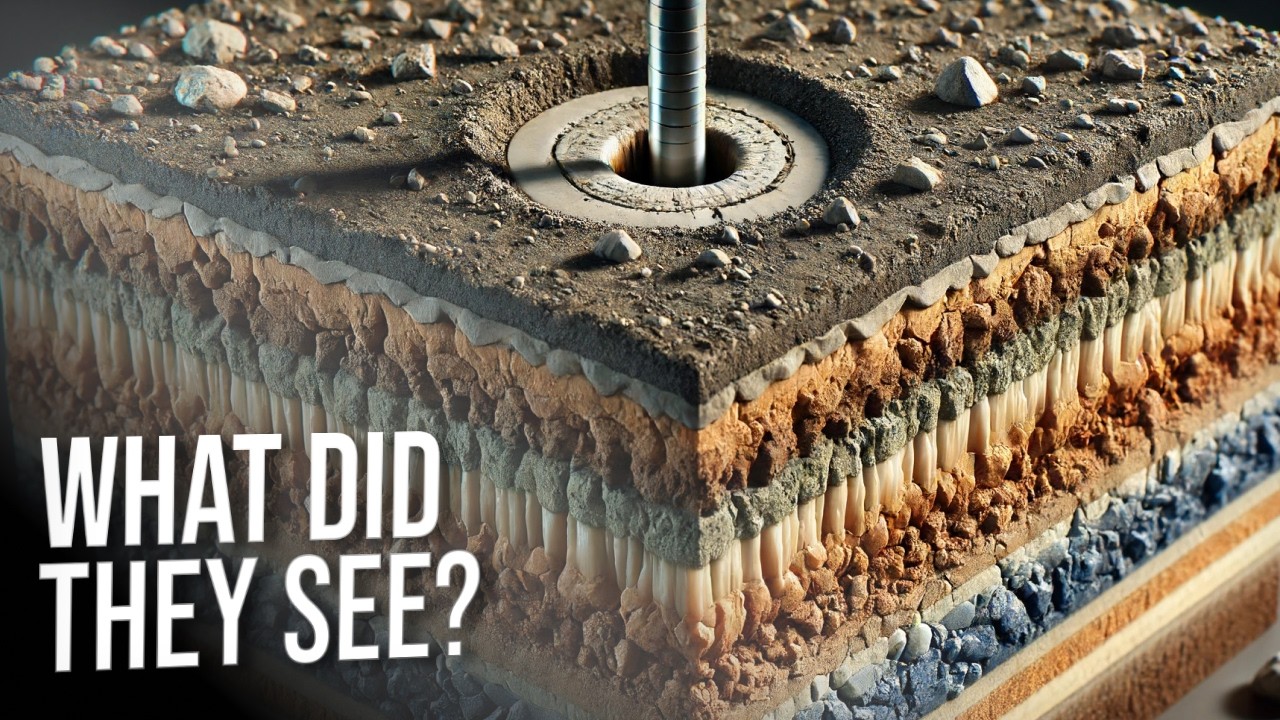
imagine standing in a place where gravity seems to defy the laws of physics from mysterious areas where cars roll uphill to bizarre spots where objects float in midair there are some places in the world where gravity doesn't seem to work as it should but first we need to understand what gravity actually is what is gravity put simply gravity is one of the most fundamental forces in the universe it controls everything from the movement of planets Stars galaxies and even the trory of light even though it is the weakest of the four fundamental forces of nature gravity's effects can be felt over vast distances and it influences the behavior of all objects with mass it's what keeps the large scale structure of the universe together and it keeps the planets in orbit and it's why we remain firmly on the ground but there are a number of things that affect how strong it is let's talk about the basics of gravity gravity is defined as being the force of attraction between two masses the larger the mass of an object the greater is gravitational pull Isaac Newton was the first to mathematically describe gravity in the 17th century with his law of universal gravitation which states that every Mass exerts an attractive force on every other mass and while Newton's law describes how gravity works it really doesn't explain why it works and this revelation will only be made hundreds of years later by Albert Einstein's general theory of relativity which was published in 1915 this shows that gravity isn't a force in the traditional sense but instead something that's the result of the way that space and time curve around massive objects Einstein said that massive objects like planets and stars distort the fabric of SpaceTime and they create a well that other objects can fall into smaller objects like spacecraft or human beings move along the Curves in this warp SpaceTime which we perceive as gravitational attraction for example the Earth orbits the Sun not because the sun is pulling it with a force but because the Sun's mass curves SpaceTime in such a way that the Earth follows a curved path around it the best way to think about this is by imagining a heavy ball placed on a stretched out sheet of fabric the ball will create a dent around it in the center and smaller objects when they're rolled onto the fabric will move towards the ball because of the curv surface it's this theory that also predicts strange phenomena like gravitational time dilation where time moves slower in stronger gravitational fields gravitational lensing where gravity can bend light and the existence of black holes where gravity is so strong that not even light can escape how about some things that affect gravity well there are six main factors that will determine how much of an effect that the gravitational force from an object will have on something else one is mass The more mass of an object is the stronger its gravitational pull so for example the sun which has about 330,000 times the mass of the Earth exhibits a much stronger gravitational force and this is why the planets in our solar system orbit around it similarly black holes which pack a orous Mass into a very small area have gravitational pulls so intense they can trap light on Earth gravity is responsible for the weight that we feel as our weight is the product of the way gravity interacts with us this is why if we set foot on Mars where the gravity is weaker we would weigh less number two is distance the further two objects are away from each other the weaker the gravitational force is between them this is because gravity follows what's known as an inverse Square law and this means that if you double the distance between two objects the gravitational force between them is reduced four-fold this is why astronauts in orbit such as on the International Space Station will experience micro gravity because they're far enough from Earth's center that the gravitational pull is much weaker but it's not gone altogether three is the distribution of mass the way that mass is distributed within an object can also influence gravitational effects a spherical object like a planet has a gravitational field that acts as if all the mass were concentrated at its Center in reality though this mass is unevenly distributed such as in mountains ocean basins or underground structures and in these places there can be local variations that are known as gravity anomalies it's this factor that explains most of the fluctuations in gravity on Earth four is the rotation the rotation of a planet can affect how gravity is experienced on its surface for example Earth isn't a perfect sphere it bulges slightly at the equator because of its rotation as a result gravity is slightly weak weaker at the equator than at the poles because the object at the equator are farther from the planet center further to this the centrifugal force that's caused by the Earth's rotation slightly counteracts gravity at the equator and reduces the gravitational force that's felt there even further number five is tital forces these tital forces happen because of the difference in gravitational pull that's being exerted by one object on different parts of another for example the moon's gravitational force on the earth is what causes tides as the side of the Earth that's closest to the moon experiences a stronger gravitational pole than the side that's farthest away from it in a similar way as well as holding the moon in orbit around the Earth the Earth's gravity exerts tidal forces on the moon this causes its rotation to synchronize with its orbit and this is why we always see the same side of the moon when we look at it number six is relativistic effects while it's not something that we experience or at least perceive from the earth in a very strong gravitational field time slows down and space is curved these effects are most clear near massive objects like black holes or neutron stars for example near the Event Horizon of a black hole gravity is so strong that SpaceTime becomes infinitely curved and any object falling into it will appear to freeze in time from the outside if you're looking at it if you happen to be the object that falls into the black hole time in the rest of the universe will appear to speed up and you'll see billions of years pass in a Flash let's talk about gravity on the earth now there are then various different places where gravity can be shown to be working slightly differently on Earth and these can be split into two different categories those where gravity is actually stronger or weaker than normal and those where for completely different reasons there's the illusion that gravity has completely stopped working let's take a look at places where gravity actually works differently Mount Nado hcan in Peru Mount Nevada hcon is in the Corda Blanca range of the Peruvian Andes as well as being the highest mountain in Peru it's also the highest point in the tropics with an elevation of 22,000 ft or just over 6,700 m above sea level this combination of height and its position mean that it's a place where gravity can noticeably be measured to behave slightly differently from what we experience at sea level the peak of the mountain is so far from the center of the earth that according to the inverse Square law of gravity the gravitational pole will be weaker than at lower altitudes this works in combination with the fact that the mountain is close to the equator and as the Earth bulges around the middle it puts the peak even further away from the center than an equal height Mountain would be somewhere else this all means that Nevada hcan has some of the weakest gravitational pull on Earth and a person standing at the summit would weigh slightly less than they would at sea level scientists have calculated that the gravitational acceleration here is around 9. 76 m/s squared which is just a little less than the 9. 8 m/s squared that we experience at sea level but this this is still enough to be classed as an anomaly as well as making us lighter objects fall slightly slower at the top of this mountain compared to lower altitudes and interestingly the reduced gravitational pole also means that the internal systems of our bodies including our cardiovascular and respiratory functions respond differently here at these altitudes combined with the low oxygen levels at these Heights this is why climbers experience an increased strain on their health they must carefully acclimatize to the environment Hudson Bay in Canada covering an area of 470,000 square mil or over a million square km Hudson Bay which is in northeastern Canada is a huge geographic feature that's been important for local communities for thousands of years more recently though scientists have discovered that it's also the site of a gravitational anomaly and to begin with no one had any idea why it was found that in this region the force of gravity is slightly weaker than in other parts of the world and while the difference is Tiny seeing a reduction of 5,000 of a percent is still significant enough to have drawn the attention of geophysicists looking to explain why gravity is behaving differently in the Hudson Bay Area following an extensive study the gravitational anomaly is now mostly thought to be down to two main factors post glacial rebound and the presence of the laurentide ice sheet during the last ice age these geological events were crucial in the formation of this Region's landscape and they've left a long lasting effect beyond what you can see post glacial rebound is the name that's given to a slow process that sees the Earth's crust rise after being crushed under the weight of massive ice sheets most of Canada was covered during the last ice age which ended around 10,000 years ago and the laurentide ice sheet which was one of the largest was about 2 mil thick in some places which would have exerted a huge amount of pressure on the Earth's surface and caused the crust to sink when the ice melted this pressure was relieved and the Earth's crust began to slowly recover this process however is still ongoing and the crust is not yet fully returned to how it was before the Ice Age this slow rebound creates a subtle but measurable difference in gravity because the mass of the Earth beneath Hudson Bay is still displaced compared to other regions the laurentide ice sheet had another major effect on the Region 2 because it displaced a huge amount of mass from Hudson Bay when the ice melted it left behind an area that is less dense than surrounding areas this difference in density affects the distribution of Earth's mass and as a result the gravitational pull essentially the gravitational force in Hudson Bay is slightly weaker because there's less Mass beneath the surface compared to other parts of the planet all right how about chinaso in Ecuador if you were asked where the farthest point on land from the center of the earth is most people would probably guess the peak of Mount Everest because it's the tallest mountain in the world well due to our planet shape though this isn't actually correct and the true answer is the little known Mount chimaru which is in the Andes mountain range of Ecuador standing at a height of 20548 Ft or 6,263 M Chimborazo has become as a result an interesting place to study how gravity varies across the globe the Earth isn't a perfect sphere but what's known as an oblate spheroid where it bulges slightly at the equator and is flattened at the poles this bulge is caused by the Earth's rotation meaning that locations near the equator like Chimborazo are far from the Earth's center compared to places at higher latitudes the effect makes such a distance that despite being around 8,500 ft or 2600 M shorter than Mount Everest the peak of chimazo is actually around 6500 ft or 2,000 M further away from the center of the earth this increased distance from the earth center at chaso Summit directly affects the gravitational force that's experienced there again because of the inverse Square law Studies have shown that the gravitational acceleration up there is about 9.
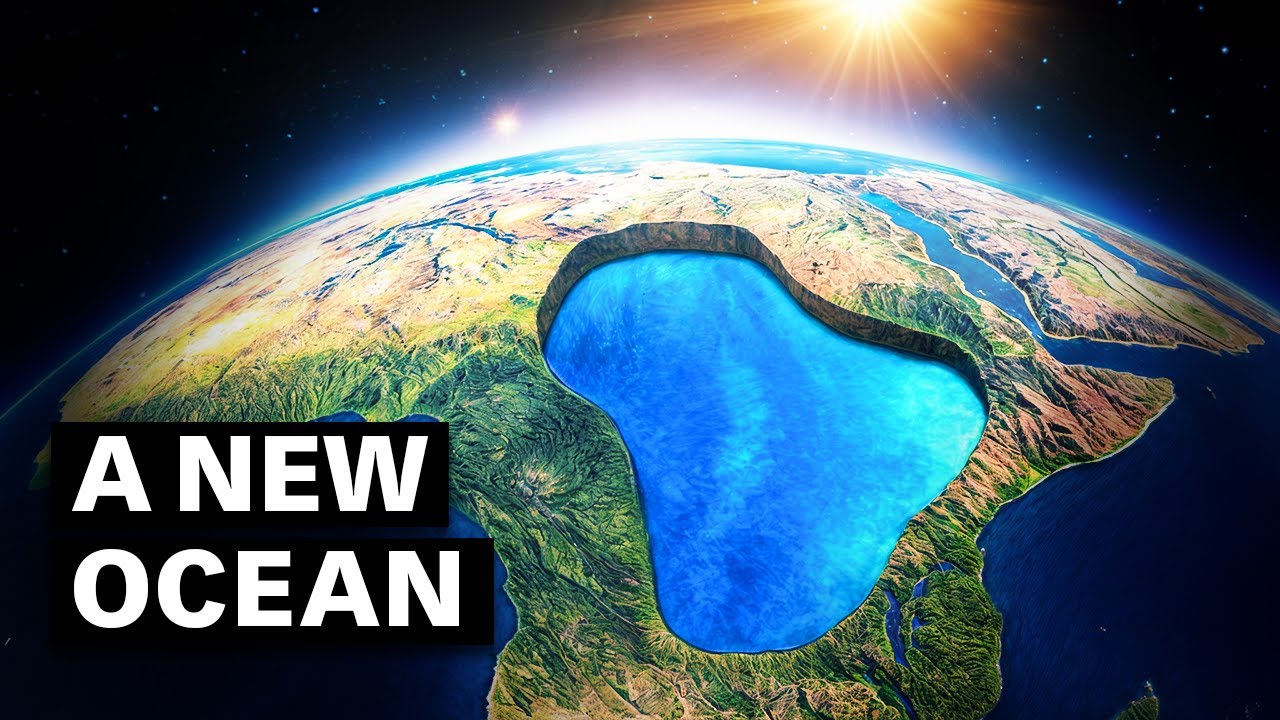
76 3 m/s squared compared to the average of 9. 8 m/s squared and that would be enough to make you weigh slightly less and put some added pressure on your body to function in the same way as it does at lower altitudes chimber Roo's gravity anomaly is important to know about and to measure for researchers in the field of geodesi which is the science of measuring the Earth's shape gravity field and surface they can use the data from places like here to refine models of the Earth's gravitational field which is important for our satellite navigation geophysics and understanding the planet's internal structure bangui in the Central African Republic Bango is the capital of the Central African Republic but it's also home to one of the most difficult to explain gravitational anomalies on Earth known as the bangui gravity anomaly it's a region where gravity behaves unexpectedly with a stronger gravitational pull than would otherwise be expected based on the area's landscape this anomaly has been a mystery for some time and while its exact cause remains uncertain there are several theories about why gravity is different here it was first detected through satellite-based gravity metric measurements and groundbased studies which revealed that the pull here in this area is significantly higher than in surrounding regions there aren't any of the geological formations you would usually look for in cases like this like large mountains or dense rocks and it's particularly surprising because the region around bangui is relatively flat and geologically stable there are no major tectonic plate boundaries significant volcanic activity or dense mountain ranges that would usually be linked with a heightened gravitational force the leading Theory right now for this anomaly is that the area might sit on top of a previously undiscovered and completely buried impact crater which could have been caused by a large meteorite strike that happened millions of years ago meteorite impacts compress materials in the Earth's crust and would result in a concentration of denser rock materials beneath the surface this theory is supported by the fact that the anomaly is circular which is consistent with the shape of impact craters elsewhere found on Earth while there's no visible crater at the surface erosion and sedimentation over millions of years could have concealed the original impact site leaving only the gravitational anomaly as evidence another possibility is that the anomaly is caused by dense rock formations deep beneath the earth's surface these could be what remains of ancient geological processes such as the uplifting or folding of the crust which Left Behind unusually dense materials in the region this would account for the higher gravitational readings too and lastly there's also been the suggestion that this anomaly could be related to mantle plumes or variations in the Earth's mantle where hot less dense material Rises towards the surface and has complex interactions with the surrounding rock this explanation is seen as less likely though because mantle plumes are usually associated with volcanic activity which is not present in this region let's take a look at the Indian Ocean gravity anomaly the Indian Ocean gravity anomaly is another one of those more mysterious gravitational ones on Earth it's found in the central part of the Indian Ocean this region has an unusual deviation from the expected gravitation field where gravity is significantly lower than it should be this anomaly is found south of the Indian subcontinent and north of Antarctica and it covers a large area of the ocean where the gravitational pull is weaker than in the surrounding regions it's an area where the Earth's gravitational field dips by more than 100 milligals which is a unit used to measure gravitational variations compared to what would be expected based on the local topography essentially something below the surface is creating a lack of mass or a different distribution of mass than GE ologists and physicists would normally expect still no one knows for certain what's causing this but there are several theories the most likely explanation is seen as having to do with mantle Dynamics the Earth's mantle which Lies Beneath the crust is constantly moving because of the heat from the planet's core which causes convection currents these currents can create upwellings and downwellings of material that are denser or less dense than the surrounding mantle in the case of the Indian Ocean gravity anomaly the theory is is that a large lowdensity region in the mantle is creating the gravitational dip another suggestion is that the anomaly is caused by the remnants of ancient tectonic plates or subducted slabs of oceanic crust that have sunk deep into the Earth's mantle over millions of years these sunken slabs could have altered the mass distribution below the surface and affected the gravitational field above some scientists think that the remains of ancient teus ocean plate which moved beneath the erasion plate might still be within the Earth and contributing to the anomaly because of the potential to learn more about the Earth's mantle the Indian Ocean gravity anomaly continues to be an area of active research modern satellite technology such as data from the gravity recovery and climate experiment Mission has provided more detailed insights into the Earth's gravitational field here allowing scientists to map the anomaly with greater precision and hopefully one day be able to explain it the Great Rift Valley in East Africa the Great Rift Valley is one of the most geologically active regions on Earth it's known for its tectonic activity and stunning Landscapes it covers a distance of 3,700 M or 6,000 km from northern Syria to central mosm Beque in the future it's expected to form an ocean in the middle of Africa and those extreme forces are not only affecting the geography of the region but also the gravity that's experienced there this rifting process which has been shaping the region for millions of years involves the gradual movement of tectonic plates as the African plate splits into the Somali and Nubian plates this is cre creating enormous cracks and depressions in the Earth's surface along with volcanic activity and seismic events and as a result the Great Rift Valley has a unique distribution of mass beneath the surface one of the most important factors that contribute to the lower gravity in parts of the Great Rift Valley is the presence of the rift valley and deep depressions these low-lying areas such as the danakil depression in Ethiopia are formed as the Earth surface stretches and sinks the reduced mass in these valleys leads to a weaker gravitational pull and things are then made more complex by volcanic activity interestingly the gravity in the rift valley doesn't behave the same across the entire region while many parts of the rift experience weaker gravity there's also areas where gravity is slightly stronger such as the Ethiopian Highlands and mount kilamanjaro the South Atlantic anomaly or SAA is a region where the Earth's magnetic field is significantly weaker compared to other areas stretching from South America to the southern Atlantic this anomaly is mainly known for its effects on our planets magnetic field but it also has connections to gravitational variations in the area it's a region that's become important because it impacts the operation of satellites space missions and even on the International Space Station where astronauts experience increased exposure to Cosmic radiation as they pass by the weakened magnetic field in the SAA is caused by complex interactions with the Earth's core Earth's magnetic field is generated by the motion of molten iron and nickel in the outer core which is a process known as the geodynamo and over time this process can create regions where the magnetic field is weaker as is the case with the South Atlantic the SAA is an area where the inner Van Allen radiation belt which is a ring of charged particles in space that are trapped by Earth's magnetic field comes closest to the Earth's surface exposing satellites and spacecraft to higher levels of radiation as a structure beneath the crust is enough to affect the magnetic field then maybe it's no surprise that there are gravitational anomalies too in the South Atlantic some Studies have suggested that these could be related to mantle convection where this convection current of molten rock in the mantle cause variation in the distribution of mass beneath the earth's surface but the SAA region doesn't have large changes in gravity like some other locations like the Hudson Bay gravity anomaly or the Great Rift Valley but scientists have detected small variations in the gravitational field using satellites researchers think that this could be linked to the South Atlantic tectonic plate and its interaction with the surrounding plates most of the tectonic plates can cause changes in the density of the Earth's crust which in turn leads to small variations in the gravitational field as well as this the slow movement of molten material in the mantle beneath the SAA could be influencing both the magnetic field and the gravitational anomalies the chickaloo crater which is on the Yucatan Peninsula in Mexico is one of the most important geological features on Earth because of its connection to the mass extinction event that wiped out the dinosaurs around 65 million years ago the enormous impact crater with an estimated diameter of around 90 3 m or 150 km was formed when a massive asteroid which was believed to have been around 6 to 9 M or 10 to 15 km in diameter collided with the Earth the chickalo impact is widely seen as the primary cause of the Cretaceous paleogene Extinction event which led to the extinction of roughly 75% of Earth's species including non-avian dinosaurs it's obviously then a huge historically significant place but Studies have shown longlasting effects of the impact too but Studies have shown the long Las in effects of the impact as the chickalo crater also has some interesting gravitational anomalies after such a massive event the area around the crater shows measurable variations in gravity due to the differences in density studying the chickaloo impact crater isn't easy after tens of millions of years it's now buried beneath layers of sediment in fact gravitational measurements are one of the most effective tools to fully understand its structure after an impact of such magnitude the distribution of mass in the Earth's crust was changed and this has created areas with both higher and lower gravitational forces within the chickaloo crater there is a noticeable negative gravitational anomaly at the center of the impact site this means that gravity is slightly weaker the asteroids impact displaced massive amounts of rock and created a central depression filled with less dense fractured and melted material these materials are less dense than the solid undisturbed rocks surrounding the crater and are what have resulted in a weaker gravitational pull in the region around the rim of the though there's a positive gravitational anomaly where gravity is stronger as the asteroid hit it caused a rebound effect which created a raised ring of dense material around the outer edge of the crater and it's this ring which is known as a peak ring that contributes to the stronger gravity in that area the South Pole in Antarctica is one of the coldest and remote places on Earth and while it's mostly known for its role in the planet's magnetic field it does have some unique gravitational characteristics too found at the southernmost point of Earth these differences in gravity are the result of a combination of factors including its location on the planet the thickness of the Antarctic ice sheet and the shape of the Earth itself at the South Pole gravitational acceleration is around 9. 83 m/s squared compared to the typical 9.