[Music] [Applause] [Applause] dreams what's your dream when I was a kid I imagined myself in a professional baseball stadium I was down on the field right before the game taking batting practice and Fielding grounders the wind was blowing out the national anthem played and the first pitch was thrown my dream was to be a player on a Major League team a pitcher this dream did not come to pass but I am on a team it's a scientific team I am a plant evolutionary biologist I study how plants change over time and I have a new
dream now I'm dreaming about how the plants that we grow for food our crops can better meet the needs of people can rebuild our soil and can help the planet together with my teammates we are reimagining agriculture I grew up in the Chicago area and relocated to St Louis in my early 20s not to play baseball but to attend graduate school how many times over the past quarter Century have I made the drive home to Chicago driving driving north out of St Louis takes you through an agricultural landscape that is blanketed in crops as far
as the eye can see did you know that St Louis is located within 500 miles of the of 50% of the agriculture in this country fields in our region are planted primarily with two crops corn and soybeans our Rich soils uh produce one of the most productive agricultural systems in the history of the world but what do we know about this agricultural system Cor corn and soybeans are short-lived plants in your garden do you have things that you replant every year geraniums patunas tomatoes basil a seed germinates it makes roots and leaves and fruits and
seeds we Harvest it and then it dies this whole process takes place over the course of just a few months biologists call these plants annual plants now if you look out over a field of annual plants like corn you'll notice there's only one kind of thing planted in this field this is called a monoculture when short-lived plants that live for one year are all planted together in a field that has one thing that is called an annual monoculture an annual monocultures are the foundation of industrialized agriculture but and ual monocultures present some big challenges short-lived
plants have relatively short root systems that live for just a short period of time roots are important for plants but they're also important for soil they contribute to its formation they hold it in place and they even help rebuild it now remember that annual monocultures like corn and soy are harvested at the end of every year and that can leave soil bare without the presence of living Roots soil is more vulnerable to flooding and to erosion and in the presence of extreme weather this can lead to some not great outcomes in the worst case scenario
think of something like the dust bows in the 1930s but it's not just in the 1930s where these challenges uh took place scientists estimate that about half of the world's top soil has been lost in the last 150 years now I'd like to invite you to take a step back out of Agriculture and let's first stop in your garden in your garden do you have things that live for more than one year maybe uh Magnolia tree or a rose bush these are called perennial plants perennial plants live for multiple years now let's take another step
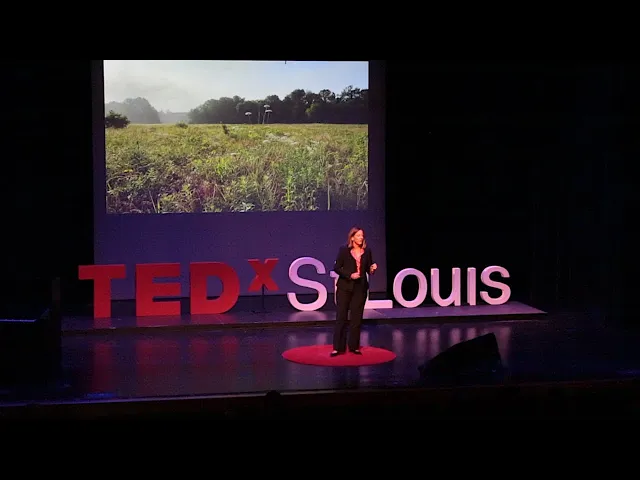
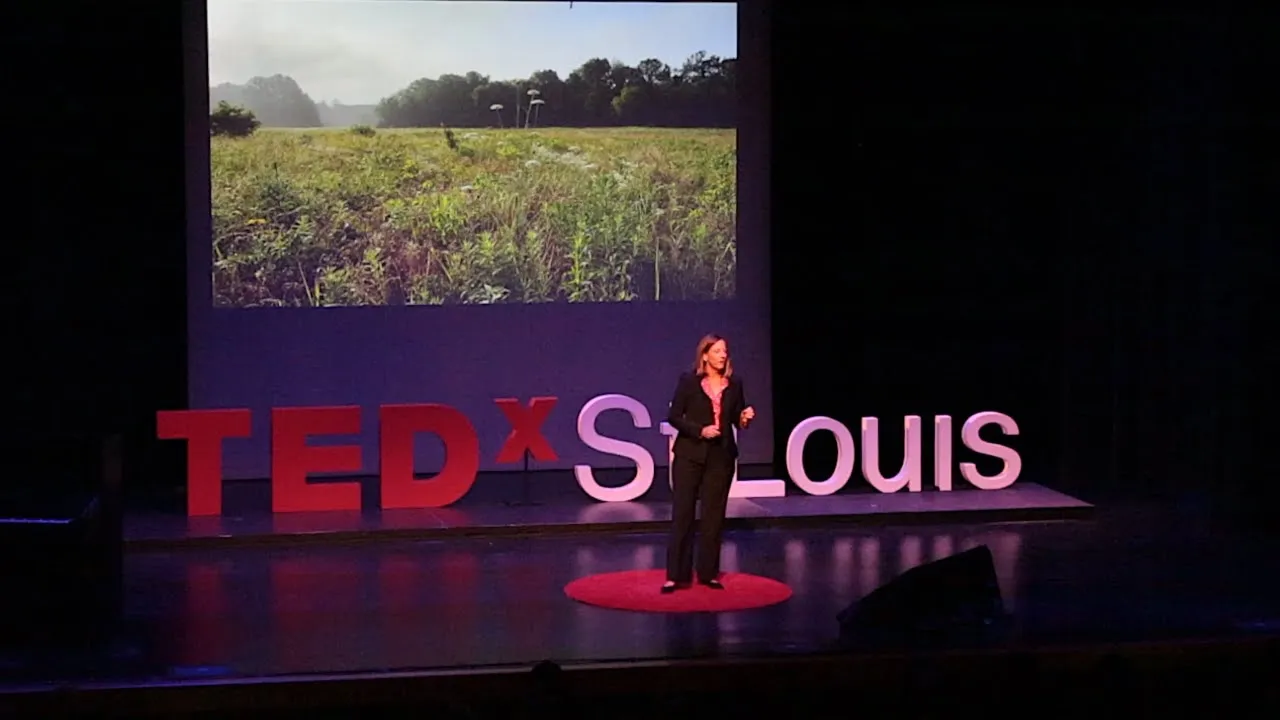
out of your garden way out and head out into nature how do plants grow in nature well as it turns out most natural ecosystems are made up of long lived or perennial plants so when you think of nature what comes to mind for you maybe it's a forest or maybe it's a prairie like the one shown here how many of you remember the show Little House on the Prairie I loved that theme song I can still hear it playing in my head the Prairies that surrounded the Little House were actually natural grasslands made up of
long- lived plants growing together in mixtures now unlike annual plants short-lived plants which have modest root systems perennial plants make enormous root systems that penetrate deep into the soil help to rebuild it and help to uh return soil fertility less than 200 years ago roughly 60% of my home state of Illinois and about a third of Missouri was covered in in Prairie today less than 100th of 1% of that natural Prairie that again was made up of those deeply rooted perennial plants remains it's not just here in the Midwest where we've seen this transition most
of the world's food is now produced on the fertile soils that developed as part of natural grasslands which have now been replaced with agriculture it is sobering to reflect on the loss of these natural landscapes their resident biodiversity and the native cultures that stewarded stewarded this these diverse communities of plants but there is another hidden loss associated with the transition from nature to agriculture this transition is resulting in a radical transformation below ground that's associated with increased erosion decreased soil fertility and decreased uh soil biodiversity in short the transition from natural ecosystems where long-lived plants
grow together in mixtures to agriculture where short-lived plants are grown in mod monocultures is having long-term and widespread consequences for the land and for the planet and this brings me back to the topic of Dreams Can we reimagine an agricultural system where longlived crops perennial crops grow together in mixtures that both feed people and help the planet at first glance this seems about as likely as a kid like me playing professional baseball corn and soy have been grown by people for thousands of years a wholesale remaking of our agricultural system seems absurd but a lot
of crazy things have happened in the history of humanity when I was a kid our phone was the size of a large shoe that was attached to the wall with a cord NCAA basketball championship games at least some of them look a lot different today than they did 40 years ago things change not saying it's going to be easy but if your life's work can be accomplished in your lifetime you're not thinking big enough this is what Wes Jackson said Wes is a plant geneticist uh and a co-founder of a nonprofit research organization in salinaa
Kansas the land Institute that is leading the global effort to transform agriculture with perennial crops natural ecosystems West says have evolved to be sustainable why can't we make our agricultural systems a little more like nature why can't we develop perennial CR CRS that grow together in mixtures and maybe to start it's a very simple mixture it's just maybe two perennial crops growing together in alternating rows that maintain the Integrity of our agricultural system that can be harvested mechanically and that can scale at the level needed to meet the needs of people the positive benefits of
perennials are clear they make huge root systems that grow deep into the soil they hold that soil in place they rebuild soil fertility they rebuild soil itself and they even sequester carbon by taking large amounts of carbon dioxide a greenhouse gas and shuttling those below ground to build those root systems so in your garden maybe you're thinking I think I've got some perennial crops I've got an apple tree I've got a grape vine I've got a pantry and you're right these are perennial crops they're perennial Woody crops and they're some of the earliest and most
ancient domesticated plants that we have but what about perennial grains and beans things that are similar to what we find on the Prairie perennial versions of corn and soy these until recently didn't exist they were never domesticated by early farmers some people say it's not possible but exciting recent discoveries suggest otherwise for more than 40 years scientists have been driving the evolution of new perennial grain crops the research team that I lead here in St Louis is part of that effort one of the crops that we're working with is a perennial wheat relative called current
kza makes an edible grain that can be brewed into beer it can be milled into flour and it can be used in baking just ask my kids who now ask for on demand Kerns of Pancakes karza chocolate chip cookies kernza coffee cake you name it karza makes an enormous root system and it's absolutely delicious it's not just kza another example was a announced in a in a landmark paper published just last year the evolution of a perennial rice this perennial rice yielded produced the same amount of grain as an annual rice That Grew right next
to it it also had more soil organic carbon a measure of soil fertility than the annual rice so can we reimagine agriculture where perennial crops longlived crops grow together in mixtures that feed people that rebuild soil and that help the planet I believe we can I'll leave you with just two thoughts first reimagining agriculture is about science it's about it's about farming it's about economics it's about a lot of different things but at its core it's about a dream and dreams are how change starts second dreams need teams it will take a global team to
re-envision what our agriculture looks like in the future my job on this team is as a scientist what could your job be maybe some of you will be perennial grain Farmers maybe you will be Educators maybe some of you will be policy Developers or maybe you will be like my kids and be consumers of The Perennial grains of the future this team has room for everybody what role will you play [Applause]