Everybody thank you so much for joining us here today it is my honor and pleasure to introduce our faculty speaker today uh Professor ignasio too ignasio too has been working at the adakam large millimeter and submillimeter array or Alma observatory in Chile for the last 13 years he is part of the Department of science operations and is currently the lead of the data science and analytics Initiative at the observ and has been in charge of the scheduling subsystem since 2019 usually annoying everyone with things that need to be improved he loves his job and likes
to share with everyone interested his unusual in educational informational history everybody again it is my pleasure to introduce ignasio Toledo thank you for that wonderful introduction uh I'm happy and I'm honored to have been invited once more To give this master class uh and I hope it's uh it's uh it's useful or inspiring for as many of you as possible uh I'm going to start sharing my presentation here okay so I think that now it's on your screens perfect okay so this uh class is called uh astronomical observatories looking at the visible and the invisible
ER well like CH mentioned I Have been working in Alma for the last 13 years and uh my career path has been kind of diverse so I'm not longer doing investigation or research myself but I work mainly on the operations of the observatory now and uh the idea is to share with you two or three different topics one is first uh introduction to what is science no I don't know I know that this is a really diverse public that is here attending today you are coming from very different Parts of the world and you have
different interests and in different careers and I think that it's not obvious why astronomy is a science and what is exactly a science at least in the context of this master class H what I when I talk about science I want you to have a pretty clear idea of what it means and why astronomy Falls there and uh then I'm going to go a little bit on the specificities or the specific topics related to an astronomical observ at how Does it work and if the time is there if the time is enough uh then I
will talk you a little bit about the challenge and how the people from very different uh backgrounds and and and Fields can actually collaborate in these uh observatories today it's not longer an area where you only need astronomers and nobody else is a field where you need collaboration from many people from different fields Engineers um people from Administration People that knows about budget people that knows about politics and also the scientists so let's start with this section one and and talk about a little bit about the astronomy uh I'd like to say that it's not
like I said in the previous like was noted in the previous slide these are not all my original ideas necessarily I'm just doing like a synthesis of what I have been reading over the years and out of My experience uh but I think that most of you might have might perhaps he that astronomy is seen as the oldest science uh discipline ER the origins they trace back to the ancient civilizations because even when we didn't understand what was on the sky the all the civilization is already starting to use what we see on the sky
for navigation agriculture tank keeping no and and and that's why uh where the astronomy as a Science started a long long time ago uh and later ER it was thanks to this need to have more accurate predictions for these previous uses like navigation Agriculture and T Tek keeping that physics got to be started with Kepler Galileo Newton and others in those times H they we are aiming to solve these problems that we saw on the skies and this is when physic started and the science as we know it today Started uh one thing that I
also like to to share here uh is what I think and is the astronomy most remarkable Discovery over all of this year if you want to summarize what astronomy has taught us is that we know now that the starts are made of atoms of the same kind as those of Earth and that may seem like a very simple statement but the amount of knowledge and the amount of experiments and the amount of people working for the Last centuries to be able to say this thing is amazing no and and it's it's overwhelming in a in
a way so science then uh is the process where we use the scientific method to solve a problem basically we experience every day different phenomena we see see we see things happening around us and the scient ific method what it does is that from this observation that we make in our daily experience we think of Interesting questions and here's where the science start is that we formulate an hypothesis we try to explain with some rules or some ideas why this thing that we are seeing is happening okay and what is different from other knowledge areas
uh of the human of the human knowledge is that then we start to develop testable predictions and we gather data to tested predictions and if those data that we Gather if that experiments that we do actually support the hypothesis or the idea that we create that that we we we want wanted to test then we say that we have learned something new and we develop a general theory about how things work okay and and the main thing I think is is this thing that we formulate the hypothesis we tested again the data and we do
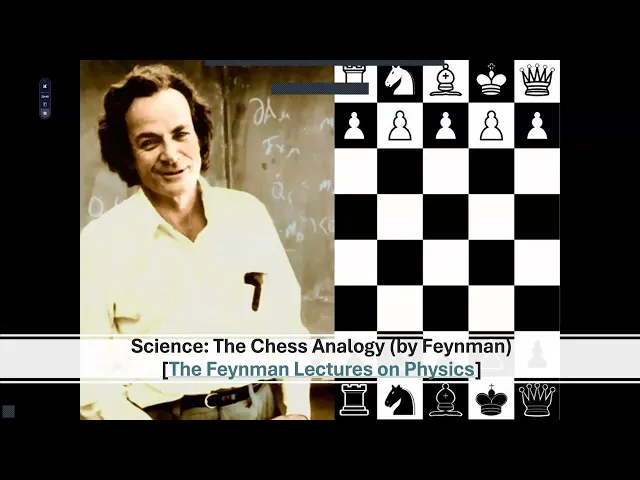
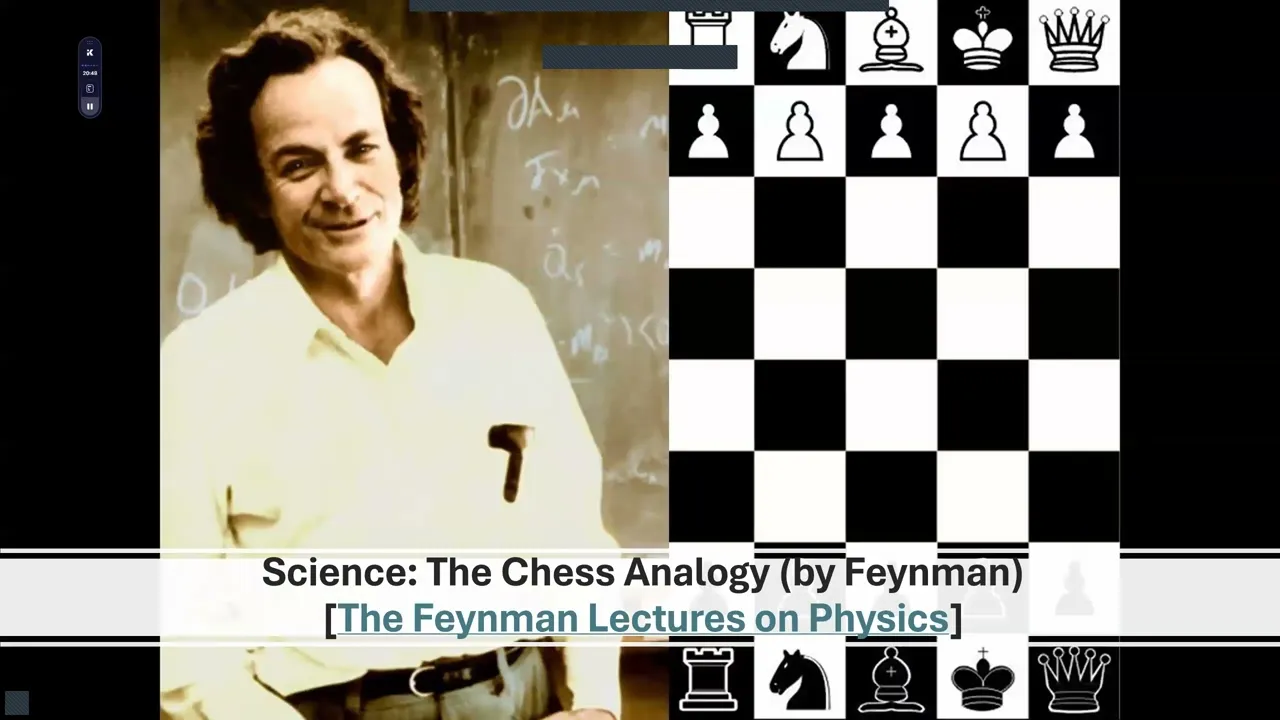
experiments to test that the hypothesis are correct in the long term and if they are right we say That our Theory or our hypothesis is valid okay so this might be kind of difficult to explain so like in the air so I always like to brought up this analogy of science uh with one particular example that fan a famous physicist was a Noel Prize winner as well uh he has a really good analogy on describing what how science work and this example has to do with putting yourself in this uh in a place where you
actually are able to Watch a chess game happening okay and let's see let's think that you are watching this chess uh mat this chess game but you don't know anything about it you don't know the rules no so the only things that you have is that you can observe a match over a long period of time to try to understand how the things are happening in the chess game so the chess board and the pieces will represent here the phenomenas or the or the or the or the things that we want to Understand the process
that we want to understand and the rules for moving these spaces around are going to represent the natural laws that govern this phenomena so how we start to apply science first we start to collect data on how things happen on the chess board so first thing for example could be that you see that they are white pieces and there are black pieces and you start to learn that there is a first rule that one when once a white piece is move The next movement will be from a black piece and once a black piece is
moved then the next movement is going to be a white so first rule is that things happen in such a way that you move black piece and then you move out white piece and you could test this theory of You by watching how the game develops on time no then for example you could see the Rook sorry the the movements of the pawns and start to learn some specific things about the pawns and for example With time you could come out with a theory that say that the pawns always move a single space in One
Direction okay and it's always in the uh in this case of I was sh my screen the vertical Direction and that would be your theory and if you keep watching the game you will find out that it's a correct until at some point you see that sometimes the pawn will move into a diagonal Only One Direction but in a diagonal and not in this hor in this vertical path and you Will see that that's a new law because it has to do with having an opposite uh Pawn in or an opposite piece in that uh
in that square and then you are able to move the white Pawn or the black p Pawn in this direction so this is how science work in the sense that when you see this match on goinging uh you start to creates these rules about how things work the interesting part is that your rules with time might Be seem to be wrong and that means that you're going to have to go and develop new theories for example you can L you have have learned how the king and the Rook move in the in the in the
in the in the table in the chess game no uh and you spend a lot of time thinking that you already understand how the king and the The Rook move and suddenly you see this thing happening that at some point the king and the Rook they change their positions at the same time and They move from this position in the left side to this other position in the right side and this move in chess is called the chess castling and the thing is here that two of your lws have been broken if you have been
seeing this game with time first that you are seeing that two pieces moved at the same time when previously we thought that only one piece can move at a time and the other thing is that the king move and The Rook move at basically that's the thing that Changed sorry about that the thing that changed is that they both move at the same time and that's a new law and you have learned in a new law and you have to update your ideas on how this phenomenon happen I hope that it's kind of clear where
where I want to go here the idea is that we tried Sciences about developing theories and rules that allow us to explain how things happen in this case We are creating or we are developing the rules of the chess game that we need to know in advance and science keeps testing these rules every day let's go with the next is a slide and if we go out from the chess to the actually uh way that that we we have learned about our universe uh in here we can I can present to you a little bit
of the historical Journey uh of astronomy where we have been trying to explain one thing create one Theory And then we find a new question that we have to solve from another way and so forth so basically as I said before the first uh developments of astronomy has to do with the seeing the movement of the Sun the moon and the stars and using it for timekeeping uh of the seasons and that could also help you for example to decide when was the vi moment to uh do the agriculture no of your of your crops
no and uh and then you could also keep track of when this summer was going to Come winter Autumn Fall and keep track also of the time uh when it's day when it's night and everything so the first thing about astronomy was trying to to understand how the things in the sky move the moon the stars the the and the sun H because that could help you to keep track of the time basically no with time the people started to realize that starts also wear a good way to ER navigate around the globe uh remember
that at those old times there was no GBS Uh nor very good maps or or available no so one way of actually learning sorry of actually navigating and finding your way around was by checking the position of the stars in the sky depending on where is the starts that you know where position on the sky you could find out where you were on the world and actually find out where was the North and keep moving in that direction or moving to the east or west or south or whatever so the next Development of astronomy had
to do with developing a system to to create a map a catalog of the star positions in the sky so it could have the navigations one thing that was always a problem for a long long time until the time when Kepler and Newton and Galileo show up was that we knew more or less and in some case with really good accuracy the position of the starts and the movement of the sun and the moon no I mean there's old Civilizations that have already been able to predict when a sun eclipse or a moon eclipse would
happen uh that movements of the sun and the moon were known from a long long time ago and there were models that could that could be used to predict when they were going to be in different parts of the sky the thing that nobody was able to solve and there was a big efforts in trying to solve that was how to explain the movement of the Planets I don't know if you have been able to see this at night uh or or you have were familiar with the movement of the planet but basically if you
don't know anything about the planets and you see skies and then you see so a thing that you think that is a star suddenly you will find out that there are like six or seven of them of these stars that are moving with respect to the other stars they are not following the same movement daily movement that all the Other star have no and people tried for ages to understand or create an idea of how the planets move so you can predict their position in time and that was the next step in the astronomy because
that's where they come out with a theory where they say Okay perhaps if you assume that these planets are closer to us than the other stars and that is we and those planets that are orbiting around the Sun and not the Sun moon and the planets around us and if you no Longer think that things has to move in perfect circles but they can move also in ellipses then if you assume all of that you come out with a pretty good model where finally humans were successful in predicting the positions with great accuracy of all
the planets in our solar system and this was a huge step because this is how we learned the CER laws and Bas and and finally the law of Newton Newton no that came out as the Foundation of the modern physics at the end and uh after we those laws were created there those fundamental laws of the physics that started with Newton with time we want we went into a more difficult questions there was not enough just to predict the movements of the things in the sky but we started to wonder well what is are the
things that we see in the sky no how far away are from us are what is a star no it's a lamp that is really far Away who put it there what are the planets the planets are yet start or or or there already kind of a stuff and this started to happen once that the telescope uh showed was was uh created and then used to look at the sky and then people starting to see that the actually the sky was much more complex and uh and and surprising uh than we saw with our own
eyes with our own Naked Eyes with the telescope for example Galileo was the first to look at one of Those planets and find out that it they were not like the other stars because they were not a point of light but they were a circle like a an object that has a size like the moon no like really really far away but it was a body it was not a a point of of of light so we started the next part of the Journey of astronomy that end up that is that brought us to our
current knowledge which has to do with understanding how the universe is made what are the Components of the universe and what is our position in this universe and with the telescope we started to uh learn how to use the light uh to understand this information the the sorry to understand uh how the universe is uh is create so not how not how it's created but how the universe work and what are the components of the universe uh and little by little we keep moving forward we find out that the sun is one of is a
star so all the other Stars are just like our sun in a way uh then we started to find out that there was the universe was really big that not everything was at the same distance after the planets the moon and the sun uh but that the stars that we you current we see with our own eyes on the skies we are distributed in something that it was called the Milky Way a Galaxy and and then we find out that this galaxy was not the whole universe but a single object within a b much Bigger
Universe where you have thousands and millions of galaxies uh it's amazing to think that actually it's only in the last 100 years that we have understand the of our universe people in 19 100 years ago they didn't know that we live in a galaxy or and they were not sure if other galaxies existed and also for example another thing that is relatively new is that we now know that there are other planets around the other stars the first planet That is not part of our solar system to to be discovered was just discovered in 1995
so it's around 30 years ago and as of today we know 5,000 planets that are not part of our solar system uh and and that has been a whole new field in astronomy uh and with all of that this is how we learn at the end that we were connected to the stars that the stars and the universe are made of the same stuff that we are made so we are part of The universe we are not a a a a particular different kind of thing that has nothing to do with this big universe around
so this is why the starts are made of atoms statements is really powerful before moving forward I want to finalize this partk with saying that science is not the only way that the humans have has to know to to gather knowledge no science is not like the wisdom that will explain everything to Us no science has some limitations and there are some challenges related to the scientific method no one particular challenge before going into the limitations is that for example for us the experiments cannot be like uh for us I mean in astronomy there's a
big challenge which has to do what we cannot create or do test of the stars in the in the in our Earth I cannot test how a star is made by going into a laboratory and created a new sun and test my theory Of how the Sun is made so one challenge that astronomy had for a long time that it needed to get to GA a lot of data to to be able to design these natural or squas experiments that allow us to come out with theories like that the stars are collapsed clouds of hydrogen
we cannot test that in a laboratory so there's another way to actually prove our theories by doing a statistical analysis of the sky no and that that's one limitation so not everybody not Everything can be done in a laboratory and an experiment that we can change of the variables and test our predictions but you need some time to just gather and gather more and more data from the universe and then uh try to gather all the ER or your knowledge and test your hypothesis out of there the other thing is the limitation and I think
this is important I don't think that the that science has all the truth and sometimes I even wonder what is the truth for the Science I think and not only my my my my my opinion but other people think as well is that basically yes science allow you to V predictions to create a model to make predictions that allow you to understand how things work around us okay one thing that sometimes uh we forget is that it's always a model we don't know if the reality actually works like that no but like I like I
like to say sometimes for example I don't know if you I mean I guess you you know about people that doesn't believe that the Earth is is round no and then there is a flat Earth and that actually the sun is is is going around us and not the other way around the thing is that science didn't come with explanation that the planet was round and that we go around the sun because it believe it was the truth or not no that model that we have of the or that idea that we have That the
Earth is round and it goes around the Sun works or is test because it's really successful to find out where are the things of the sky thanks to that I can take a telescope input some coordinates and the computer will make a lot of of uh of calculations following this model rules and it will point the telescope to the object that I want to see okay and all of that works because of this assumption that the Earth FS round and is moving around the Sun if somebody thinks differently and somebody comes to me and say
no but the Earth is flat or whatever my way of addressing that discussion is not by saying you are an ignorant or it's obvious that this round because it's not OB view that the Earth is from in your daily experience if you are in the same place and you never move more than 20 to 30 kilometers away from your home in your life I don't know who can actually tell me that it's obvious that the that The Earth is round and it's obvious that the Earth moves around the sun no but the thing that science
can say is that if you want to prove that the Earth is flat you have to come out with a model that is actually capable and successful in explaining how the things happen around us that's the main thing a completely different problem is what is the reality right is actually the universe as we see it with his side or other things in life For example is science going to tell you how to act with your kids or it's going to tell you what is good or what is wrong no science does not solve that kind
of problems okay so I think it's really good that we all know about the scientific method is a really powerful ER way of knowing our uh environment and the things that happen around but we also have to be aware of the limitations H so we don't get somebody to tell us that this is good Because science tells you that it's good no science cannot tell you that science just explains how things happens okay so that's how I would like to end this first section of the presentation I don't know if you can help me there's
any questions that perhaps I can take now um one quick second I did see a very interesting question in the chat um this question comes from Nanda um Nanda asks the analogy of chest movements reminds me of how problem solving works in real Life using set rules but adjusting strategies and situations as situations change would you say adaptability plays a similar role in scientific discovery yes yes I mean we have to adapt to to the changes or the things that we uh I mean when a new phenomena happens or a new things happen that we
don't understand or that our own ideas our own models don't explain we need to keep adapting and thinking about what is Missing in our model what new idea what new rule I have to brought up here in order to explain what is happening and and I think that's a really powerful uh way of working I don't know if that it was more than a question or more like a comment um a bit of both um yeah it was a bit of both there's also a a second part U to their question um ask um since
science has its limitations in explaining all aspects of Reality how do you see the role of philosophy or other nonscientific disciplines complementing scientific understanding that's a really interesting question and sometimes I and people wonders about that how how do you connect this uh with other areas of of Life philosophy and for example ethics no uh how how do you how does the science knowledge connects to philosophy or to religion or to art or To ethics no uh that is a great question I think that there are certain things in philosophy sometimes or or or or
what is called metaphysics that sometimes need to take into account what we have learned of the universe no and uh and in that aspects they will complement each other uh if a philosophical idea about how things happen in the world the it's assuming certain way that the Universe work but we have find out with Science that there is a different way to explain how the things work this should inform philosophy this should inform these other areas on new information new knowledge that you should be able to to add to your field uh right now I
don't have an really specific example where you can actually make this thing this this connection obvious but there was another thing that fan say that I found interesting that it has to Do with art for example or art which is a different activity of the of the humanity but he always wondered why the artists didn't take into consideration what we were learning of the universe and for example somebody to create a new po poem or new poet poety poetry about Jupiter for example oh I mean Jupiter was called Jupiter because it was connected to the
religious view of the Romans or or the Greeks no so now that we know what is Jupiter why artists or Philosophers cannot start making new stories new new you know new artistic representations now that we know what Jupiter is so I think that there is a connection that is still on goinging it's difficult to do but I think that is important to acknowledge these limitations that each field has and try to find ways to connect all of this world together I don't have a concrete answer of what is the best way of doing it but
I think That that's a really one awesome thing of of finding that we have limitations here but that we can uh work with others in order to keep moving forward as a human beings awesome there are a few more questions in the chat but I do want to be respectful of time maybe we'll do one more um cool um I'm jumping around a little bit um but I see a question by Miron um meon asks how close are we to identifying a truly earthlike planet That could Poss well that could potentially support life and what
challenges remain in detecting bio signatures on such planets it's a pretty good question and I think it's it's going to connect us with our with the next part of the presentation because in here we actually will go into the tools that allow us to find out that they were going to be other planets and that might be there are other earthlike planets around that will be capable of Holding life no of of of a hosting life that might be similar to ours or not so let's use that question to go into the next step which
has to do on how since we are not able to create a planet on a laboratory here how do we are we are actually able to uh to understand uh or how we have been able to understand and learn about the universe with without being able to do these things in a laboratory so to answer that questions Regarding of what when are we going to find be able to find a an earth like planet and and do this biological analysis of its atmosphere and the conditions to support life we have to understand that the big
observatories today work thanks to the light and the tel scope light is the way that we get information from the universe okay the first information that we got thanks to the light is that because we are getting light and our eyes can observe it we can Notice that the objects move in the sky that's the first thing but when we started to go a little bit further one of the first things that started to be important in astronomy were the color the colors of the objects the stars that we see on the sky and how
bright they were okay and this is an example of for example of what we learned thanks to the collection of data where we started to put together information Related of how bright is a star in this diagram here what is being what is happening is a is is an illustration no but this is a really good good known diagram in astronomy the color magnitude diagram that in one side has the information about how bright is a a star and in the order has an information of what is the color of the star and this color
magnitude diagram has been allowed us to understand that the starts B are Born then they develop and live a long life in a mature state after after finally they die no and they will die and different ways and this diagram with all the data that was collected allowed us to classif classify the different stars and for example we find out that there is a specific place in this diagram where we have all the stars that are currently in their adulthood that are mature and they are living their their own life really stable but then You
have the places where you have the stars that are getting old and really old or that already died no so thanks to the light it was possible to start this understanding of how the Stars work how the Sun work and to find out that the sun was not uh thing that was there forever infinite and time no it has a life just like we we have a life where we born and die at the end where we are we were we are born and die So the thing is that after doing all of those of
those classification the thing is that we found out along the last two or three centuries that light has provided you a lot of information no uh you canot only get how bright is a star but we can also understand why a star has different colors no and to do that what astronomers have learned to do thanks to the physicist as well and the people working in Optics is that there is a way that you can dissect the light You can take the light that is coming from a light source and if you put it through
a prism you can actually dissect the light in all the colors that if we go into a technical field these are the wavelength of the light uh if you see light as a wave no all the colors represent different wavelength of the light of the of the light and and this is what you see when you see a rainbow and basically when you put this light of the sun through a rain through a prism And you get the rainbow what is showing you here is how much light is getting in the wavelengths that we call
ultraviolet that we call Blue that we call Green that our eyes sees as green if you want yellow and red and and we started to learn for example that the light that looks to us like blue or Violet is light that is really is is light that is really energetic comes from things that are really hot while the things that are in the red side are things that are Warmer sorry colder no and if if if some is produces a color that is red then the temperature Associated to the red is colder than the temperature
of things associated to Blue I'm talking about things that emit light and the other thing that people learn after they made better prisms was that if you take this light that has been dissected and you see it with a lot of details you find out that there's not only a rainbow but there's lines obscure dark lines in that Rainbow okay and those this is a long story I'm not going to go into going into into that but after a long work of several people it was understood that these lines has to do with the components
of the source that is producing that light so depending on where you could see this black lines and these absorption lines on the Spectra on the on the red boy of a star you could find out what made those Stars what were the components of those star what atoms That a star has and this is how how we started to learn what are the stars and made of and and this is how we started to learn that the stars were made off of the same atoms of as and well this is something that I really
er er mentioned in the previous slide that thanks to this prison that allow us to desect the light we were able to understand that the color was Associated to temperatures okay so a blue start is a Hot start uh and it has its own type type A it doesn't matter right now all of this type but it's really hot 8,000 degrees Kelvin a yellow star like our sun is a star that is 5,000 Kelvin and if you see red star these are a star that have temperatures in the order of 3,000 kin so with this
it was possible to revisit this color magnitude diagram and find out that stars here are different colors because Of the temperature okay and this temperature uh for most of the life of the star will remain constant but then it could change when uh it's the they are dying or that they start with a different color because it might be much more hot uh when they are born now remember that I explained really quickly and I hope and I think it was not so clear I'll tell you the this relation between the light and colors And
I talk to you about the technically instead of talking about colors in astronomy we talk about the wavelength of the light if you have a wave I don't know if you can all see here on the slide that is in the screen that I'm moving my curves this this laser pointer through it this is a wave no uh and a wave uh can be classified by how much distance is is between one press of the wave and the next one okay so if the between these two PR of the Waves is long then we are
seeing into in light that is has red less energy okay and if you associate that to what our eyes see red colors as Associated to longer wavelength colors and in the other side if the space between the waves is smaller then you are going into are where the temperature is much higher and if we go again to what our eyes can see are the are the colors that are more close to the blue Side okay but the thing here is that our eye can only detect a really limited uh amount of a really limited range
of wavelength okay for us the rest of the light that is coming from the stars or from the universe is there but invisible to our eyes no we are capable of seeing there is a scale here in in astronomy that is called the nanometers or or if you want the Armstrong we can see things between 5,000 Armstrongs and 7,000 Armstrongs so 5,000 Armstrong is the wavelength of the things that are H red and 7 sou are the wavelength of things that are Bluer uh or or yeah that are that are Bluer or or or more
hot no but all of these things in the universe they are creating light in all of these other colors or wavelength that we don't see and astronomy has now been able to use new instruments in order to look at the Universe in these other colors that are invisible for us and why do we want to observe the light in these things that we don't see with our own eyes is because each of these uh different kind of lights or or all of these lights with different wavs are bringing us different kind of information okay for
example our eyes Are optimized to see the the the the light from the Stars so are the things that around 3,000 to 7,000 de Kelvin our eyes are really good at observing that and whatever we observe uh with the an optical telescope in most of the cases it has to do with observing the light of the stars that are in their adle hood No and we have this picture uh of the universe that is based on how we see the light of this stars that are burning f uh Constantly and our eyes are adapted to
that because what is the thing that produces most of energy near to us it's the Sun so that's why our eyes with Evolution started to adapt to use the light of the sunand to be able to detect things that happen around us but then you could go into the infrared and those are things that are cooler and now you can start to see some smaller smaller and cool red star that actually are the ones that made Most of the Galaxy and we don't see clearly in the optical okay also with the infrared light is much
easier to go through dust clouds so we can also see things that in the optical are hidden by dust clouds and there is a lot of dust clouds in in in our universe and then if you keep going to longer wavelength you have the radio uh wavelengths the ones that we do we we use it Alma and in this case you are seeing things that are really cold and you are actually able to See the light that the dust is a meeting or these clouds of where the Stars Are Born you are able to watch
to to see the light that they are emitting at that temperature okay and the other way around if you start going to the hotter areas to short the wavelength you start to see things that belong to the really hot universe and it usually has to do with really big uh stars that are producing a lot of energy and also to events like the death of a start or Supernova or really hot gas that there is in certain areas of the universe so each of these different Windows into the universe is bringing us information about ER
our universe and if we are able to put all of that together we get a really good understanding of what is going on we're going to go quickly so we can connect with Alma and what is particular to Alma and uh let me go quickly on a final aspect That will allow us to answer the question that's what me before uh and and connect to you guys so it has to do that after this not so clear perhaps uh introduction to the idea of the amount of information that we can get from light the thing
is that astronomy what has been doing since the telescope uh show up was to try to make it bigger and bigger because what the telescopes do for us is to collect Light that's is what a telescope Scopes are if our own body the only way to collect light that it has is our eye okay and if you it's around 1 cm in diameter a little bit less and if you think that our eyes are kind of a buet that is absorbing the light that is coming from outside us that's all the that buet is really
small and then you get all the light that that that F that little bucket and that's enough for us has to See uh things that are kind of really bright but when you look at the sky in the night the amount of light that is coming is really low so the only way to collect more light is to make this buckets or make our eyes bigger and this is what an telescope does basically it has a mirror or a lens that is taking the light that is coming on from a whole area and it start
to collect all that light into a single point that is called the focal point and that allows you to Things that are to see things that are really deep okay so that's the idea of the telescope the telescope help us things to see things that are really dim that are really not bright at all and in that way we can see really far away or things that are really dim and there are eight different instruments to do that I'm not going to go into that but I want to go into this last part of of
that connects us with Alma what is a what is specific to Alma And what are the challenges in technology to today and it has to do on what how Alma Works in radio astronomy and the thing is while radio waves are the same as the light that we see with our own eyes there are certain things that prevent us to observe the objects in radio waves with the same instruments and with the same details as we do in the optical telescopes no so the thing is that I told you quickly about the the size the
impact of the telescope size And yes the bigger the telescope the more light that you can collect and then of course the things more far away that you can see and you can study things that are really really dim or are really really unright so there's another thing that the size of the telescope does for you and it has to do with the amount of details that you can see so in here in the middle I'm representing the size of two different telescopes and let's assume that both Telescopes are observing the same color they both
observing in the green color Okay a telescope with a bigger size is going to be able to see much more detail than the telescope with the smaller size okay if you have a small size telescope you can see in the green for example this piece of the sky and maybe think that there is some kind of cloud here and one right the start on the center and another start down here and this is what you see but if you made your Telescope go bigger you start to see much more details and now you can see
a much more complete View and you find out that the thing in the middle was not a star but it was a group of a star it was a cluster of a star the only one that was a star was this one here and this other one here and then in the middle you have the cloud of the star the cluster and all of these details on the gas and the ne nevula that is around it so you see that there is a lot of Uh of reasons of why you have to why you want
to have a bigger telescope you're going to be able to see much more detail but there is another thing that uh in in influen it that that that that that tells you how much detail you can get and now let's assume that you have a telescope that is big but the telescope is going to be constant but you're going to observe in the ultraviolet and in the red and then the thing that it happen is that with the Same telescope the fixed size if you're Ser observe in ultraviolet you're going to get a really good
resolution much details while if you OB serve with the red you're going to get again a picture that is not good and the only way that you can get a better picture in the red is that you observe with a even bigger telescope in the red okay so the thing is that in the optical telescopes the optical telescopes are the one that can see our the the same Light that that we see with our own eyes they have been able to work to build this V that are a met in diameter I mean imagine our
1 cm eye versus an 8 m in diameter eye is something huge and they are able to observe this particular star here and that they observing serving it observing it in the red light light regime or infrared almost and they are able to observe this star that has a cloud of dust that is uh reflecting the the light of the star in the midd that Has been covered here and they can they're able to understand something about it okay so you are able to understand this particular object in the op with the optical the help
of this optical telescope you can learn a lot but if you want to learn more you want to observe the same object now in radio webs for example so the telescope used in the previous image was this one that you can see from The top and and this is how it looks up from a 34 kilm of altitude okay and why I'm pointing out this circuit here is is because if you want to observe now the same objects with the same resolution in this long wavelength in this radio wavelength you will need to have a
telescope of 16 kilom in diameter to have the same resolution in order to be able to create this image that was here on this slide in Here we observe the yellow or reddish colors with an optical telescope and the bluish colors here we are observed with Alma one is a telescope that has 8 m in diameter Alma behaves like a telescope that is 16 kilometers in diameter and that's what makes Alma special because it is not possible today to build a telescope that is 16 kilm in diameter imagine having to put a huge mirror of
16 kilm and then that you have to try to move around to point things From the skies and then you have to maintain the surface of this telescope really really clean and really really in shape it has to be really smooth in order to work that's impossible and this is where a new technique was used what is called the radio interferometer where what you do is that you pick up a huge area that is flat and you put several telescopes that they will produce they will work as a single telescope with this thing that is
called interferometer Interferometry interferometry sorry this is that is called interferometry and they will be able to produce the image that a telescope of 16 kilm would be capable of creating so I want know this was really quick and a lot of information that I get here but going back now to the question of the earth like Planet the thing is that in order to find out an earth like Planet our current optical Telescopes won't be able to observe an Earth siiz er planet with an 8m telescope because is too dim it's not bright enough so
in order to OB serve directly an Earth planet we're going to need a much bigger telescope in the optical and that's why right now they are building the new generation of telescopes that are 30 m in diameter that's one thing so we are building the technology to be able to See with Optical light this planet and those first new generation telescopes will be ready in around five to 10 years then there is another challenge the other challenge is that because we don't detect the planets directly through a an image but what we detect is the
movement of the start and how it's affected uh by the gravity of the small planet or because the planet is creating like a Eclipse it's not easy today to find out the stars that have earth like planets uh where the year last the where the amount of time that the planet needs to go around is around a year and that is in the right distance from the star in order to have temperature that are compatible with the life that we know so there's a lot of work yet to collect data for now tens of years
in order to detect this candidate Earth planet so later the new generation Telescope can observe it and confirm that that is an earthlike planet and then the other thing is Alma is also will trying to get bigger and Telescope bigger because the next step is one that you have one of those you're going to try to find out what is the components what are the components of that planet if it has an atmosphere and what are the components of that atmosphere so I would say that we are still 10 to 20 years away of actually
having the Technology to be capable to look for a twin earth that we're going to be able to study and find out if it has a condition to sustain life as we know it here but that's a huge field in astronomy right now all that it has to do with finding out where life can be created in the universe and also to answer not only if we are alone we are alone or or not also to find out if the loss of the physics of the universe Actually make that life is something that is usual
or life was just an accident those are things that we don't know about so there's a lot of collaboration there between astronomy and biology and chemistry to try to solve out this question about the how life is created in the universe so I have already been talking for more than an hour as usual I am not capable of finish all the materials a lot uh so thank you For your time and I would like now to see if you have other questions uh and that I can answer and I hope it was somehow uh inspir
ing to some of you wonderful thank you so much ignasio I I can already see in the Q&A we have a lot of really really good and interesting questions uh based off of your session um so as we're inviting Folks up to raise their hand I'm going to read out one or two of them um and then we'll start taking questions from Folks that have their hands raised um so one of the questions um that we've gotten um in this question comes from rwan in Pakistan and rwan asks how do religious beliefs philosophical perspectives and
scientific reality intersect in understanding the visible and invisible aspects of the universe interesting question difficult to answer the well one of my I say that I That had a really weird uh career path in my life and it took a long time to go through different fields one of the areas where I was I I was starting to become a Catholic priest at one point on my my life and actually I got to fall in love again with astronomy when I was with the Jesuits I was part of the Jesuit order uh being a Catholic
priest or St starting to become one I'm no longer part of that in fact Personally sadly I don't believe in God right now I don't know it's sadly or no but but but but I don't know if it if it exists or not but definitely there should be a connection between what we learn from the universe and our beliefs no uh for example it's going to be and still I think it's a great question is okay are we alone in the universe and and how is that going [Music] to ER I mean be connected with
our own beliefs no because in many religions uh what is the universe and how it was created is an important part of a religion no at the same time I really believe that religion is something that is needed but not because necessarily this is my own point of view of course it's not because you need to understand how the world world works it's much more about how we relate With with each other and it gives meaning to our life a meaning that perhaps and I think that science doesn't provide to you science is entertaining science
is interesting science can can inspire you but I don't think that it solves the question of what is the meaning of your of your life nor how we connect with others or how we behave to others so I think that there in my opinion there should be some connection with Your beliefs but at the same time I think that religion has its own problems to solve uh in ter that that that that are related to other part of of our life of our life wonderful thank you so much rwan for your question I'll do one
more question from the Q&A and then I see quite a few folks with their hands raised so we'll take some questions from those folks um this last question um from the Q&A comes from Rosio Perez Sorry if I mispronounce your name um but can you tell us what is the most important Discovery in astronomy for you and why for me yeah if it's for me personally and I think that it was not a single Discovery it took a long time but finding out how the Stars work I think is amazing uh the whole story of
how we move from This view where stars were basically point of light and then we find out that they're also the stars are just like our sun and then that we are finally able to understand how the Sun works I think that that's an amazing Discovery uh to be able to understand or have a model to understand how the Sun works and what are its components and how it's related to the life in Earth I think that's one of the most amazing Discoveries of Science and this is why I believe why one of the most
amazing amazing discoveries in the future is going to be related to the capability of the universe to create life uh if there are laws that are related to that I think that's that's the the most that was the most important Discovery to me and for the future I think that is going to be another important Discovery there's other people that looks the bigger picture and for them Understanding the size of the universe and how it was created is one of the biggest discoveries but personally I I believe that yes finding out how the Stars work
and what are they made of that's the huge the biggest Discovery in astronomy wonderful thank you so much for your question all right so I see a few hands raised I'm going to select first I'm hopping around a little bit um Samuel uh Felipe um Samuel if you'd like To unmute we'd love to take your question thanks a lot uh hello Professor uh I'm AO from Brazil I'm not from the astronomy field I'm a software developer actually and I'm starting to research about AI in the University which makes me curious about how you deal with
all the data collected from the space how you guys process and organize this data but especially if you use something like classification models or other type of Models to understand better what you have collectors thanks thanks is a it's a great question yeah I think that connects to the part of the presentation that I didn't have time to do but that has to do with the collaboration between different fields yeah right now with the new generation telescopes that are going to start working the amount of data that we are collecting is huge so we have
to work a lot with software engineers and Data Engineers to find out what what is the best way to store this data and in a format that will actually allow us to do the analysis as quickly as possible no so there is this first area where we're getting a lot of collaboration that that we need a lot from them is the area of the data collection and storage the databases that we create and then is come the part where yes astronomers are starting to use machine Learning algorithms and this is part of the work that
I do right now but it's mostly related to operations not to the science part yet there's others areas where you also are collecting a lot of data there's not only the scientific data but in here in Alma you also have this thing that you have 66 telescope and the amount of data that we're getting from different monitoring points and to track our operation is also huge and in here we we need these new tools And some data science tools that allow us to do our work more efficient but going back to the science part yeah
there's a lot going on in terms of classification algorithms detection and classification uh you are going to have to classifies events that are happening every night on the skies and really quickly and that's something that a human beings are not going to be able to do so you need classifiers algorithms That are able to check and Report events as fast as possible so we can follow up and there's other things more more in that are also interesting that has to do with the there's a lot in astronomy that because we don't have an experiment here
that we can test no we cannot create a universe and see how the universe work one way of overcoming that limitation is simulations so we are collecting a lot of data and that helps us to get a pictures of our universe now and also in The past the thing is how we connect that with our theories and for that there are simulations that take all of this knowledge together and they run a simulation to create a picture of how the universe would look today and those simulations take really long time and they really they they
produce an amount of data that is also huge so there's another field because basically you have to test thousands and millions of different simulation with different Parameters in order to tweak them to find out which are the ones that actually predict the universe that we see today so in that area there's a lot also a lot of work going on and it's kind of a feel that we are starting to to become aware of that has to do all with the AI and the data science stuff and the neural netor and this is something that
is just starting but there's a lot to do there yes thank you so much Samuel for Your question um so what we'll do now we'll move forward I see a couple more hands raised I see a hand rais by Joshua um Joshua if you'd like to unmute we'll have to take your question thank you very much Professor ignasio for that insightful session uh I would like to know maybe partly you answered some my first question was the role AI plays in navigating space in the telescope and then secondly since the Distance between the object and
the telescope influences the image that we can get why don't we have telescopes in space or do we have them which will be closer and more easier to observe thank you thanks yosa for your question that's really nice uh yeah I mean the AI was the topic that we were discussing a little bit later earlier uh I think that there is another thing before going into the Space Telescope the other thing that is interesting in the AI field has to do With a problem that actually would also uh could make some uh how do you
say it some some it could create some tools that will be really useful for other fields out of Astron uh it has to do with finding out if with eii we can actually find out new physics law no and that that you can actually from the data get the AI working alone and the AI is going to be able to create a new theory that explain how these things Work that is in part philosophy I think because it is not clear that even when we call it AI the kind of intelligence that AI has is
that kind of intelligence that is going to be able to create a law that we can understand so I just saying that because that is a lot a lot of debate and there is a lot to do there to try to find out if we are going to be able to create a model that we can understand out of the work that the AA can Do or is actually because of the way that AI works it doesn't have to do with that think just one little example s sorry that I'm extended but let's think for
example on how since a AI has a lot of a I mean it has analogy on how our brain works and there's where the neural network idea comes from the question that that you can may ask is for example I mean if if if AI works as our brain How it's going to explain the predictions that it made in physical loss because when somebody throws a ball at us no if we're playing a a game with a ball and we somebody throw throw a ball to us we go right away and move our hand and
we're able to predict where the ball is going to be and grab it we need to practice and everything but basically your brain is going to be able to learn how to predict where the Bold is going to be And then you're going to be able to grab it with your hand okay does it mean that your brain actually understood the loss of physics that made the ball move I I don't think that that's my own opinion no but there is a lot of discussion about that that if we understand how the AI brain work
Works we're actually going to understand as well what are the models that we creating and I'm not sure if that is going to be the case no because I don't Think that our brain has incorporated the gravity law uh since we are we were born I think it's doing a different thing to do this predictions that's one thing and the other thing the Space Telescope the telescopes do exist no the James web telescope is a excellent example uh the main the main reason for an optical telescope to be on the space is that it doesn't
have the atmosphere to care about because the atmosphere uh makes creates a lot of Noise when observing an object in the sky so having an a telescope in the space solve all of that problem uh we are not creating bigger uh telescope yet because of Technology limitations I would say but yes the idea is to try to build telescopes out in the space because we don't have the atmosphere and you don't have the same to deal with the gravitational forces of the earth that makes that things get really heavy so there's a lot of uh
people working on How can we make new telescopes in the space awesome thank you so much Joshua for your question um ignasio it looks like we have five minutes left but we do have two hands raised so I do want to ask you um is it all right if we have answer these two questions or do you only have time for one more let's see if I can answer both in in in five minutes okay all right well let's try to uh round this up really quickly um so Marcelo you've had your Hand up for
a while um so Marcel if you'd like to ask your question we'd love to take it yeah uh wellio thank you for your talk today was really insightful I have a really quick question to you do you know that fast H telescope in China is the world's largest single dish radio telescope how does it compare to other observatories worldwide in terms of potential Discoveries and capabilities uh from your views yeah there has not been much papers or or research that has been published yet from the fast telescope I think it has a huge role to
play especially since the Aro telescope went down in in Puerto Rico I think no uh because that was the only other similar kind of instrument in the world that was capable to do what fast Is capable of doing uh I think the the the main idea of fast is to do surveys that they will create a a catalog of new objects to observe with other instruments that are going to observe more or less in the same wavelength oh Alma doesn't observe in the ex in the in the exact same wavelength as fast we are a
little bit off uh but from the research that is done there there are are new objects that can be Discovered and later you want to with Alma or telescopes so I would say that fast it still has a lot to do for radi astronomy and it's a good and necessary complement to what the is being done in other telescopes in radioastronomy awesome thank you so much Marcelo for your question um and we'll take this last question from Ashley in India Ashley um if you can unmute we love to take your question oh hold on try
Unmuting there you are uh thank you sir for this opportunity uh as I'm from India and I'm come from uh physics background and your session was uh very knowledgeable I have one question that uh s when news one came that uh the Elon Starling satellite has been blinding radio Astron so what's your view on this a good question uh thankfully for us they are not a problem H in this particular we see we we are watching a really a specific range of the of the Electromagnetic waves and the Starling satellites uh do not interfere with
us there uh however in other radio telescopes and in even in optical telescopes they are generating a lot of noise in the optical telescopes I think that they do disturb your observations a bit but I think that there are good ways of overcoming it there's going to be developments ER I think they are using AI algorithms or machine learning algorithms to actually Detect the traces that these uh satellites leave in the images and automatically remove them no the thing is that they go really fast so it's just that they disturb your image for a little
period of time and then you can remove that signal for other radio telescopes the things are more difficult because the thing is that if the starlink satellite goes in front of the telescope and is sending a signal it could burn the electronic components of The radio telescopes so there is an initiative going on where astronomers are working with the a starlink and other satellites or other companies or countries that are sending satellites to basically keep track of in which part of the space the the the satellites are because what it has to be done there
is that if you know that these satellites are coming into your field of view you stop observing for a few seconds and then you continue Observing after they have gone through so there are this kind of uh of of of of um solutions that are being discussed in order to decrease the impact that these have in astronomy awesome thank you so much Ashley for your question um and with that um that brings us to time thank you so much ignasio again for an absolutely amazing session I'm very very sorry we couldn't get to all the
questions there were so many Good questions in the Q&A that we just weren't able to get to um so thank you so much again again wonderful session I do also want to bring Tom up here just in case if Tom would like to say a couple of words i' just like to say thank you to all the participants for joining us today the super interesting questions that you put in the Q&A and I'd also like to very much thank my friend uh and colleague ignasio for his continuing willingness to uh pres Pres Present to our
participants and the knowledge and passion and transparency about your life and your perspectives on science and the world around us uh just so appreciated thank you thanks to you Tom happy to see see you that I haven't seen you in a while yeah we'll talk in the next few days that's good I I'm really looking forward to that and uh no but thanks to you all to the Aspire initiative and to all the student that connected today Uh I hope that it was insightful for you I really love the questions that I've got uh I
don't know t or Tom or if you can copy those question and send it to me I I always try to answer some of them after the session uh and I would be happily answering them if I if I if I can and thanks to you again for for this opportunity thank you so much ignasio we'll be closing out the session so feel free to hop off whenever thank you perfect goodbye thank you Everyone all right and with that that brings this master class session to a close I want to say thank you to everybody
um for attending today um I am going to shut down the chat for two moments just so I can share the attendance Link in the chat with everybody here one quick moment all right um so you'll see in the chats the link to fill out your attend attendance forum for attending this session what you will do you'll go Through the instructions here you'll first log into your aspire account at apply. aspir leaders.org after you log in you will open a new window and you'll paste the attendance link into your browser and you'll fill out the
form once you sign in your first name last name and email address are going to be autop populated um so you guys can submit your form after that if you notice that you're name your first name last name and email are not there and You're not able to submit your form that means that you are not signed in so please make sure that you're going and making sure that you're signed in before accessing the attendance form if you are the form will be open for 3 hours after the session closes so in 3 hours the
form will close if you rush to the website now and you notice that there's a bit of a lag with the website because so many people are accessing the form do not worry it will still be open for a Few a few more hours so again 3 hours you have to submit it so you can submit any time within those three hours um this will also be made available to you on Discord in the professor Toledo chat channel for those of you that do not have access to Discord this will be sent to you in
an email um within the next 10 to 20 minutes um and lastly um if you guys are not able to fill out an attendance form before the form closes you will have to attend another master Class and fill out another attendance attendance form right um so I'm just going to share in the chat one more time the link to the attendance form thank you all so much for joining us here today and we hope to see you all in another master class thank you